Questões de Vestibular
Sobre verbos | verbs em inglês
Foram encontradas 316 questões


TEXT
Clifford the Big Red Dog looks fabulous on an iPad. He sounds good, too — tap the screen and hear him pant as a blue truck roars into the frame. “Go, truck, go!” cheers the narrator. But does this count as story time? Or is it just screen time for babies? It is a question that parents, pediatricians and researchers are struggling to answer as children’s books, just like all the other ones, migrate to digital media.
For years, child development experts have advised parents to read to their children early and often, citing studies showing its linguistic, verbal and social benefits. In June, the American Academy of Pediatrics advised doctors to remind parents at every visit that they should read to their children from birth, prescribing books as enthusiastically as vaccines and vegetables.
On the other hand, the academy strongly recommends no screen time for children under 2, and less than two hours a day for older children.
At a time when reading increasingly means swiping pages on a device, and app stores are bursting with reading programs and learning games aimed at infants and preschoolers, which bit of guidance should parents heed?
The answer, researchers say, is not yet entirely clear. “We know how children learn to read,” said Kyle Snow, the applied research director at the National Association for the Education of Young Children. “But we don’t know how that process will be affected by digital technology.”
Part of the problem is the newness of the devices. Tablets and e-readers have not been in widespread use long enough for the sorts of extended studies that will reveal their effects on learning.
Dr. Pamela High, the pediatrician who wrote
the June policy for the pediatrics group, said
electronic books were intentionally not addressed.
“We tried to do a strongly evidence-based policy
statement on the issue of reading starting at a very
young age,” she said. “And there isn’t any data,
really, on e-books.”
But a handful of new studies suggest that reading to a child from an electronic device undercuts the dynamic that drives language development. “There’s a lot of interaction when you’re reading a book with your child,” Dr. High said. “You’re turning pages, pointing at pictures, talking about the story. Those things are lost somewhat when you’re using an e-book.”
In a 2013 study, researchers found that children ages 3 to 5 whose parents read to them from an electronic book had lower reading comprehension than children whose parents used traditional books. Part of the reason, they said, was that parents and children using an electronic device spent more time focusing on the device itself than on the story (a conclusion shared by at least two other studies).
“Parents were literally putting their hands over the kids’ hands and saying, ‘Wait, don’t press the button yet. Finish this up first,’ ” said Dr. Julia Parish-Morris, a developmental psychologist at Children’s Hospital of Philadelphia and the lead author of the 2013 study that was conducted at Temple University. Parents who used conventional books were more likely to engage in what education researchers call “dialogic reading,” the sort of back-and-forth discussion of the story and its relation to the child’s life that research has shown are key to a child’s linguistic development.
Complicating matters is that fewer and fewer children’s e-books can strictly be described as books, say researchers. As technology evolves, publishers are adding bells and whistles that encourage detours. “What we’re really after in reading to our children is behavior that sparks a conversation,” said Kathy Hirsh-Pasek, a professor of psychology at Temple and co-author of the 2013 study. “But if that book has things that disrupt the conversation, like a game plopped right in the middle of the story, then it’s not offering you the same advantages as an old-fashioned book.”
Of course, e-book publishers and app developers point to interactivity as an educational advantage, not a distraction. Many of those bells and whistles — Clifford’s bark, the sleepy narration of “Goodnight Moon,” the appearance of the word “ham” when a child taps the ham in the Green Eggs and Ham app — help the child pick up language, they say.
There is some evidence to bear out those claims, at least in relation to other technologies. A study by the University of Wisconsin in 2013 found that 2-year-olds learned words faster with an interactive app as opposed to one that required no action.
But when it comes to learning language, researchers say, no piece of technology can substitute for a live instructor — even if the child appears to be paying close attention.
Patricia K. Kuhl, a director of the Institute for Learning and Brain Sciences at the University of Washington, led a study in 2003 that compared a group of 9-month-old babies who were addressed in Mandarin by a live instructor with a group addressed in Mandarin by an instructor on a DVD. Children in a third group were exposed only to English.
“The way the kids were staring at the screen, it seemed obvious they would learn better from the DVDs,” she said. But brain scans and language testing revealed that the DVD group “learned absolutely nothing,” Dr. Kuhl said. “Their brain measures looked just like the control group that had just been exposed to English.
The only group that learned was the live social interaction group.” In other words, “it’s being talked with, not being talked at,” that teaches children language, Dr. Hirsh-Pasek said.
Similarly, perhaps the biggest threat posed
by e-books that read themselves to children, or
engage them with games, is that they could lull
parents into abdicating their educational
responsibilities, said Mr. Snow of the National
Association for the Education of Young Children.
“There’s the possibility for e-books to become the TV babysitters of this generation,” he said. “We don’t want parents to say, ‘There’s no reason for me to sit here and turn pages and tell my child how to read the word, because my iPad can do it.’ ”
But parents may find it difficult to avoid resorting to tablets. Even literacy advocates say the guidelines can be hard to follow, and that allowing limited screen time is not high on the list of parental missteps. “You might have an infant and think you’re down with the A.A.P. guidelines, and you don’t want your baby in front of a screen, but then you have a grandparent on Skype,” Mr. Snow said. “Should you really be tearing yourself apart? Maybe it’s not the world’s worst thing.”
“The issue is when you’re in the other room and Skyping with the baby cause he likes it,” he said. Even if screen time is here to stay as a part of American childhood, good old-fashioned books seem unlikely to disappear anytime soon. Parents note that there is an emotional component to paper-andink storybooks that, so far, does not seem to extend to their electronic counterparts, however engaging.
From: www.nytimes.com, OCT. 11, 2014
TEXT
Clifford the Big Red Dog looks fabulous on an iPad. He sounds good, too — tap the screen and hear him pant as a blue truck roars into the frame. “Go, truck, go!” cheers the narrator. But does this count as story time? Or is it just screen time for babies? It is a question that parents, pediatricians and researchers are struggling to answer as children’s books, just like all the other ones, migrate to digital media.
For years, child development experts have advised parents to read to their children early and often, citing studies showing its linguistic, verbal and social benefits. In June, the American Academy of Pediatrics advised doctors to remind parents at every visit that they should read to their children from birth, prescribing books as enthusiastically as vaccines and vegetables.
On the other hand, the academy strongly recommends no screen time for children under 2, and less than two hours a day for older children.
At a time when reading increasingly means swiping pages on a device, and app stores are bursting with reading programs and learning games aimed at infants and preschoolers, which bit of guidance should parents heed?
The answer, researchers say, is not yet entirely clear. “We know how children learn to read,” said Kyle Snow, the applied research director at the National Association for the Education of Young Children. “But we don’t know how that process will be affected by digital technology.”
Part of the problem is the newness of the devices. Tablets and e-readers have not been in widespread use long enough for the sorts of extended studies that will reveal their effects on learning.
Dr. Pamela High, the pediatrician who wrote
the June policy for the pediatrics group, said
electronic books were intentionally not addressed.
“We tried to do a strongly evidence-based policy
statement on the issue of reading starting at a very
young age,” she said. “And there isn’t any data,
really, on e-books.”
But a handful of new studies suggest that reading to a child from an electronic device undercuts the dynamic that drives language development. “There’s a lot of interaction when you’re reading a book with your child,” Dr. High said. “You’re turning pages, pointing at pictures, talking about the story. Those things are lost somewhat when you’re using an e-book.”
In a 2013 study, researchers found that children ages 3 to 5 whose parents read to them from an electronic book had lower reading comprehension than children whose parents used traditional books. Part of the reason, they said, was that parents and children using an electronic device spent more time focusing on the device itself than on the story (a conclusion shared by at least two other studies).
“Parents were literally putting their hands over the kids’ hands and saying, ‘Wait, don’t press the button yet. Finish this up first,’ ” said Dr. Julia Parish-Morris, a developmental psychologist at Children’s Hospital of Philadelphia and the lead author of the 2013 study that was conducted at Temple University. Parents who used conventional books were more likely to engage in what education researchers call “dialogic reading,” the sort of back-and-forth discussion of the story and its relation to the child’s life that research has shown are key to a child’s linguistic development.
Complicating matters is that fewer and fewer children’s e-books can strictly be described as books, say researchers. As technology evolves, publishers are adding bells and whistles that encourage detours. “What we’re really after in reading to our children is behavior that sparks a conversation,” said Kathy Hirsh-Pasek, a professor of psychology at Temple and co-author of the 2013 study. “But if that book has things that disrupt the conversation, like a game plopped right in the middle of the story, then it’s not offering you the same advantages as an old-fashioned book.”
Of course, e-book publishers and app developers point to interactivity as an educational advantage, not a distraction. Many of those bells and whistles — Clifford’s bark, the sleepy narration of “Goodnight Moon,” the appearance of the word “ham” when a child taps the ham in the Green Eggs and Ham app — help the child pick up language, they say.
There is some evidence to bear out those claims, at least in relation to other technologies. A study by the University of Wisconsin in 2013 found that 2-year-olds learned words faster with an interactive app as opposed to one that required no action.
But when it comes to learning language, researchers say, no piece of technology can substitute for a live instructor — even if the child appears to be paying close attention.
Patricia K. Kuhl, a director of the Institute for Learning and Brain Sciences at the University of Washington, led a study in 2003 that compared a group of 9-month-old babies who were addressed in Mandarin by a live instructor with a group addressed in Mandarin by an instructor on a DVD. Children in a third group were exposed only to English.
“The way the kids were staring at the screen, it seemed obvious they would learn better from the DVDs,” she said. But brain scans and language testing revealed that the DVD group “learned absolutely nothing,” Dr. Kuhl said. “Their brain measures looked just like the control group that had just been exposed to English.
The only group that learned was the live social interaction group.” In other words, “it’s being talked with, not being talked at,” that teaches children language, Dr. Hirsh-Pasek said.
Similarly, perhaps the biggest threat posed
by e-books that read themselves to children, or
engage them with games, is that they could lull
parents into abdicating their educational
responsibilities, said Mr. Snow of the National
Association for the Education of Young Children.
“There’s the possibility for e-books to become the TV babysitters of this generation,” he said. “We don’t want parents to say, ‘There’s no reason for me to sit here and turn pages and tell my child how to read the word, because my iPad can do it.’ ”
But parents may find it difficult to avoid resorting to tablets. Even literacy advocates say the guidelines can be hard to follow, and that allowing limited screen time is not high on the list of parental missteps. “You might have an infant and think you’re down with the A.A.P. guidelines, and you don’t want your baby in front of a screen, but then you have a grandparent on Skype,” Mr. Snow said. “Should you really be tearing yourself apart? Maybe it’s not the world’s worst thing.”
“The issue is when you’re in the other room and Skyping with the baby cause he likes it,” he said. Even if screen time is here to stay as a part of American childhood, good old-fashioned books seem unlikely to disappear anytime soon. Parents note that there is an emotional component to paper-andink storybooks that, so far, does not seem to extend to their electronic counterparts, however engaging.
From: www.nytimes.com, OCT. 11, 2014
TEXT
Clifford the Big Red Dog looks fabulous on an iPad. He sounds good, too — tap the screen and hear him pant as a blue truck roars into the frame. “Go, truck, go!” cheers the narrator. But does this count as story time? Or is it just screen time for babies? It is a question that parents, pediatricians and researchers are struggling to answer as children’s books, just like all the other ones, migrate to digital media.
For years, child development experts have advised parents to read to their children early and often, citing studies showing its linguistic, verbal and social benefits. In June, the American Academy of Pediatrics advised doctors to remind parents at every visit that they should read to their children from birth, prescribing books as enthusiastically as vaccines and vegetables.
On the other hand, the academy strongly recommends no screen time for children under 2, and less than two hours a day for older children.
At a time when reading increasingly means swiping pages on a device, and app stores are bursting with reading programs and learning games aimed at infants and preschoolers, which bit of guidance should parents heed?
The answer, researchers say, is not yet entirely clear. “We know how children learn to read,” said Kyle Snow, the applied research director at the National Association for the Education of Young Children. “But we don’t know how that process will be affected by digital technology.”
Part of the problem is the newness of the devices. Tablets and e-readers have not been in widespread use long enough for the sorts of extended studies that will reveal their effects on learning.
Dr. Pamela High, the pediatrician who wrote
the June policy for the pediatrics group, said
electronic books were intentionally not addressed.
“We tried to do a strongly evidence-based policy
statement on the issue of reading starting at a very
young age,” she said. “And there isn’t any data,
really, on e-books.”
But a handful of new studies suggest that reading to a child from an electronic device undercuts the dynamic that drives language development. “There’s a lot of interaction when you’re reading a book with your child,” Dr. High said. “You’re turning pages, pointing at pictures, talking about the story. Those things are lost somewhat when you’re using an e-book.”
In a 2013 study, researchers found that children ages 3 to 5 whose parents read to them from an electronic book had lower reading comprehension than children whose parents used traditional books. Part of the reason, they said, was that parents and children using an electronic device spent more time focusing on the device itself than on the story (a conclusion shared by at least two other studies).
“Parents were literally putting their hands over the kids’ hands and saying, ‘Wait, don’t press the button yet. Finish this up first,’ ” said Dr. Julia Parish-Morris, a developmental psychologist at Children’s Hospital of Philadelphia and the lead author of the 2013 study that was conducted at Temple University. Parents who used conventional books were more likely to engage in what education researchers call “dialogic reading,” the sort of back-and-forth discussion of the story and its relation to the child’s life that research has shown are key to a child’s linguistic development.
Complicating matters is that fewer and fewer children’s e-books can strictly be described as books, say researchers. As technology evolves, publishers are adding bells and whistles that encourage detours. “What we’re really after in reading to our children is behavior that sparks a conversation,” said Kathy Hirsh-Pasek, a professor of psychology at Temple and co-author of the 2013 study. “But if that book has things that disrupt the conversation, like a game plopped right in the middle of the story, then it’s not offering you the same advantages as an old-fashioned book.”
Of course, e-book publishers and app developers point to interactivity as an educational advantage, not a distraction. Many of those bells and whistles — Clifford’s bark, the sleepy narration of “Goodnight Moon,” the appearance of the word “ham” when a child taps the ham in the Green Eggs and Ham app — help the child pick up language, they say.
There is some evidence to bear out those claims, at least in relation to other technologies. A study by the University of Wisconsin in 2013 found that 2-year-olds learned words faster with an interactive app as opposed to one that required no action.
But when it comes to learning language, researchers say, no piece of technology can substitute for a live instructor — even if the child appears to be paying close attention.
Patricia K. Kuhl, a director of the Institute for Learning and Brain Sciences at the University of Washington, led a study in 2003 that compared a group of 9-month-old babies who were addressed in Mandarin by a live instructor with a group addressed in Mandarin by an instructor on a DVD. Children in a third group were exposed only to English.
“The way the kids were staring at the screen, it seemed obvious they would learn better from the DVDs,” she said. But brain scans and language testing revealed that the DVD group “learned absolutely nothing,” Dr. Kuhl said. “Their brain measures looked just like the control group that had just been exposed to English.
The only group that learned was the live social interaction group.” In other words, “it’s being talked with, not being talked at,” that teaches children language, Dr. Hirsh-Pasek said.
Similarly, perhaps the biggest threat posed
by e-books that read themselves to children, or
engage them with games, is that they could lull
parents into abdicating their educational
responsibilities, said Mr. Snow of the National
Association for the Education of Young Children.
“There’s the possibility for e-books to become the TV babysitters of this generation,” he said. “We don’t want parents to say, ‘There’s no reason for me to sit here and turn pages and tell my child how to read the word, because my iPad can do it.’ ”
But parents may find it difficult to avoid resorting to tablets. Even literacy advocates say the guidelines can be hard to follow, and that allowing limited screen time is not high on the list of parental missteps. “You might have an infant and think you’re down with the A.A.P. guidelines, and you don’t want your baby in front of a screen, but then you have a grandparent on Skype,” Mr. Snow said. “Should you really be tearing yourself apart? Maybe it’s not the world’s worst thing.”
“The issue is when you’re in the other room and Skyping with the baby cause he likes it,” he said. Even if screen time is here to stay as a part of American childhood, good old-fashioned books seem unlikely to disappear anytime soon. Parents note that there is an emotional component to paper-andink storybooks that, so far, does not seem to extend to their electronic counterparts, however engaging.
From: www.nytimes.com, OCT. 11, 2014
TEXT
Clifford the Big Red Dog looks fabulous on an iPad. He sounds good, too — tap the screen and hear him pant as a blue truck roars into the frame. “Go, truck, go!” cheers the narrator. But does this count as story time? Or is it just screen time for babies? It is a question that parents, pediatricians and researchers are struggling to answer as children’s books, just like all the other ones, migrate to digital media.
For years, child development experts have advised parents to read to their children early and often, citing studies showing its linguistic, verbal and social benefits. In June, the American Academy of Pediatrics advised doctors to remind parents at every visit that they should read to their children from birth, prescribing books as enthusiastically as vaccines and vegetables.
On the other hand, the academy strongly recommends no screen time for children under 2, and less than two hours a day for older children.
At a time when reading increasingly means swiping pages on a device, and app stores are bursting with reading programs and learning games aimed at infants and preschoolers, which bit of guidance should parents heed?
The answer, researchers say, is not yet entirely clear. “We know how children learn to read,” said Kyle Snow, the applied research director at the National Association for the Education of Young Children. “But we don’t know how that process will be affected by digital technology.”
Part of the problem is the newness of the devices. Tablets and e-readers have not been in widespread use long enough for the sorts of extended studies that will reveal their effects on learning.
Dr. Pamela High, the pediatrician who wrote
the June policy for the pediatrics group, said
electronic books were intentionally not addressed.
“We tried to do a strongly evidence-based policy
statement on the issue of reading starting at a very
young age,” she said. “And there isn’t any data,
really, on e-books.”
But a handful of new studies suggest that reading to a child from an electronic device undercuts the dynamic that drives language development. “There’s a lot of interaction when you’re reading a book with your child,” Dr. High said. “You’re turning pages, pointing at pictures, talking about the story. Those things are lost somewhat when you’re using an e-book.”
In a 2013 study, researchers found that children ages 3 to 5 whose parents read to them from an electronic book had lower reading comprehension than children whose parents used traditional books. Part of the reason, they said, was that parents and children using an electronic device spent more time focusing on the device itself than on the story (a conclusion shared by at least two other studies).
“Parents were literally putting their hands over the kids’ hands and saying, ‘Wait, don’t press the button yet. Finish this up first,’ ” said Dr. Julia Parish-Morris, a developmental psychologist at Children’s Hospital of Philadelphia and the lead author of the 2013 study that was conducted at Temple University. Parents who used conventional books were more likely to engage in what education researchers call “dialogic reading,” the sort of back-and-forth discussion of the story and its relation to the child’s life that research has shown are key to a child’s linguistic development.
Complicating matters is that fewer and fewer children’s e-books can strictly be described as books, say researchers. As technology evolves, publishers are adding bells and whistles that encourage detours. “What we’re really after in reading to our children is behavior that sparks a conversation,” said Kathy Hirsh-Pasek, a professor of psychology at Temple and co-author of the 2013 study. “But if that book has things that disrupt the conversation, like a game plopped right in the middle of the story, then it’s not offering you the same advantages as an old-fashioned book.”
Of course, e-book publishers and app developers point to interactivity as an educational advantage, not a distraction. Many of those bells and whistles — Clifford’s bark, the sleepy narration of “Goodnight Moon,” the appearance of the word “ham” when a child taps the ham in the Green Eggs and Ham app — help the child pick up language, they say.
There is some evidence to bear out those claims, at least in relation to other technologies. A study by the University of Wisconsin in 2013 found that 2-year-olds learned words faster with an interactive app as opposed to one that required no action.
But when it comes to learning language, researchers say, no piece of technology can substitute for a live instructor — even if the child appears to be paying close attention.
Patricia K. Kuhl, a director of the Institute for Learning and Brain Sciences at the University of Washington, led a study in 2003 that compared a group of 9-month-old babies who were addressed in Mandarin by a live instructor with a group addressed in Mandarin by an instructor on a DVD. Children in a third group were exposed only to English.
“The way the kids were staring at the screen, it seemed obvious they would learn better from the DVDs,” she said. But brain scans and language testing revealed that the DVD group “learned absolutely nothing,” Dr. Kuhl said. “Their brain measures looked just like the control group that had just been exposed to English.
The only group that learned was the live social interaction group.” In other words, “it’s being talked with, not being talked at,” that teaches children language, Dr. Hirsh-Pasek said.
Similarly, perhaps the biggest threat posed
by e-books that read themselves to children, or
engage them with games, is that they could lull
parents into abdicating their educational
responsibilities, said Mr. Snow of the National
Association for the Education of Young Children.
“There’s the possibility for e-books to become the TV babysitters of this generation,” he said. “We don’t want parents to say, ‘There’s no reason for me to sit here and turn pages and tell my child how to read the word, because my iPad can do it.’ ”
But parents may find it difficult to avoid resorting to tablets. Even literacy advocates say the guidelines can be hard to follow, and that allowing limited screen time is not high on the list of parental missteps. “You might have an infant and think you’re down with the A.A.P. guidelines, and you don’t want your baby in front of a screen, but then you have a grandparent on Skype,” Mr. Snow said. “Should you really be tearing yourself apart? Maybe it’s not the world’s worst thing.”
“The issue is when you’re in the other room and Skyping with the baby cause he likes it,” he said. Even if screen time is here to stay as a part of American childhood, good old-fashioned books seem unlikely to disappear anytime soon. Parents note that there is an emotional component to paper-andink storybooks that, so far, does not seem to extend to their electronic counterparts, however engaging.
From: www.nytimes.com, OCT. 11, 2014
Using e-cigarettes in the office is becoming a burning issue.
Some UK employers have already banned 'vapers' from using e-cigs at their desk – but there is no legal reason to do so
Disponível em: <http://www.theguardian.com/money/work-blog/2014/jun/03/e-cigarette-office-smoking-vaping-tobacco> . Acesso em: 03 jun. 2014.
No texto acima, as palavras em destaque são,
respectivamente, categorizadas:


Gabriel García Márquez was a Literary Giant
With a Passion for Journalism
By Karla Zabludovsky Friday, April 18,2014
The late Gabriel García Márquez holds a special place in the hearts of journalists.
Like Charles Dickens, Mark Twain and Ernest Hemingway — or contemporaries like Pete Hamill and Tom Wolfe — García Márquez, a titan of 20th century literature, honed his writing skills as a reporter
before he became a celebrated novelist.
Even as his literary star rose, García Márquez, known colloquially across Latin America as Gabo, spoke proudly, tenderly and frequently about journalism.
“Those who are self-taught are avid and quick, and during those bygone times, we were that to a great extent in order to keep paving the way for the best profession in the world… as we ourselves called
it," said García Márquez during a speech about journalism at the 52nd Assembly of the Inter American Press Association in 1996.
Newsweek Magazine
Guardian Professional
The underlined words in the passage represent the
TIME
Dark Deeds by Anne Marie Becker. Book 4, Mindhunters. Walking away from sexy Detective Diego Sandoval ................... one of ................... things security specialist Becca Haney ever had to do, but when he’s assigned to help keep her safe from a human trafficking ring and an admirer ................... only as “the Fan,”, he’s determined to stay by her side and learn about the woman behind the passion – scars and all.
USA TODAY
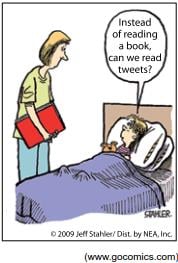
No contexto do quadrinho, o termo “can” indica uma ideia de
text:
Students Should Be Tested More, Not Less
“Testing is terrible for learning”. This often repeated saying has become accepted as true without proof. Opposition to testing and its associated ills has led to an over-generalization of the word “test” and an unjustifiable reputation as the personification of all that is wrong with education.
Henry Roediger, a cognitive psychologist at Washington University, compared test results of students who used common study methods — reading material, highlighting, and writing notes — with the results from students repeatedly tested on the same material. Roediger found that taking a test on material can have a greater positive effect on future retention of that material than spending an equivalent amount of time restudying it. Remarkably, this remains true “even when performance on the test is far from perfect and no feedback is given on missed information.”
Some tests, however, are more effective in eliciting this positive effect than others. Standardized tests, like IQ tests, are designed to measure developed knowledge or abilities. They are “summative,” as they measure students’ sum total knowledge or ability at a fixed point in time. Summative tests are not intended to shape future teaching. “Formative assessments,” on the other hand, are designed to discover what students do and do not know in order to shape teaching. They are not meant to simply measure knowledge, but to expose gaps in knowledge so teachers may adjust future instruction accordingly. At the same time, students are alerted to these gaps, which allows them to shape their efforts to learn the information they missed.
Roediger asserts that educators ought to be using formative assessments early and often in the classroom to strengthen learning throughout the unit rather than waiting until the end and giving a summative assessment.
((FROM: http://www.theatlantic.com. Acesso: 28/01/2014. Adapted.)
Mr. Day was a teacher at a school in a big city in the north of England. He usually went to France or Germany for a few weeks during his summer holidays, and he spoke French and German quite well.
But one year Mr. Day said to one of his friends, “I’m going to have a holiday in Athens. But I don’t speak Greek, so I’ll go to evening classes and have Greek lessons for a
month before I go.”
He studied very hard for a month, and then 10 holidays began and he went to Greece.
When he came back a few weeks later, his friend said to him, “Did you have any trouble with your Greek when you were in Athens, Dick?”
“No, I didn’t have any trouble with it,” answered Mr. Day. “But the Greeks did!”
(L. A. Hill. Elementary Stories for Reproduction, 1977.)

If you or someone you love is addicted to sports make sure you approach it in a proper manner. If this is your spouse and it is coming between you and him/her then you may want to seek counseling. If you personally are addicted to sports then try picking up another hobby because you may just have too much free time. Get out of the house once in a while and enjoy life. Don't let the athletic ability of others control your life.
Signs of sports addiction: mood swings during events; outcome ruins your day or even week; sports gambling; fantasy sports; attending an excess number of events; excessive merchandise; arguments and fights.

BRAZIL Science Without Borders. Disponível em:<http://educationusacienciassemfronteiras.org.scier>

The verbs “begins” (line 3), “is” (line 6) and “fails” (line 10) are all in the simple present tense.

 Conheça nossos planos