Questões de Vestibular Sobre inglês

Questões Discursivas

Foram encontradas 6.472 questões

Ano: 2019 Banca: Universidade Presbiteriana Mackenzie Órgão: MACKENZIE Prova: Universidade Presbiteriana Mackenzie - 2019 - MACKENZIE - Vestibular Mackenzie - Grupos II e III |
Q1793864 Inglês

Read the text below and answer question


Is it really possible that plant-based foods such as the Impossible Whopper are healthful?


By Cara Rosenbloom September 9, 2019 


With many American consumers interested in reducing their consumption of animal products without becoming vegetarian or vegan, the food industry has come up with a new craze: plant-based. Look around your grocery store, and you’ll see a growing number of dairy, egg and meat substitutes bearing this label.

But the industry has taken liberties with the definition of “plant-based.” Rather than focusing on whole foods such as vegetables, fruits, legumes and nuts, which is what health professionals mean when they recommend “plant-based eating,” food manufacturers are developing ultra-processed burgers out of pea or soy protein, methylcellulose and maltodextrin, and liquid “eggs” out of mung bean protein isolate and gellan gum. Then they crown this ultra-processed food with an undeserved health halo.

(…)

Plant-based ultra-processed products such as these are formulated to taste like the real deal. Thus, consumers can feel virtuous or principled for choosing plants over meat without sacrificing too much flavor. But is there any value to plant-based products that have been crushed, extruded and shaped into facsimiles of the foods they are replacing? Let’s look at that question through several lenses — considering nutrients, how processed the food is and how producing the food affects the planet.

When I was in nutrition school, the health value of food was mostly calculated based on the presence of desirable nutrients, such as fiber and vitamins, and on the absence of negative nutrients, such as sodium or trans fat. If you compare ultra-processed plant-based foods and similar animal-based foods solely on their nutrients, you’ll find they are roughly the same. 

Plant-based foods are purposely formulated to mimic animal-based foods, so plant-based milk is enriched with calcium and vitamin D to mimic cow’s milk, while veggie burgers are rich in protein and made with iron and zinc to imitate beef. But they aren’t always made to reduce the presence of less-healthy nutrients. Sometimes, the processed plant-based food will have more sodium than the processed animal-based food, and sometimes the animal food will be higher in calories or saturated fat.

(…)

Using the term “plant-based” on fast food labels is just another attempt by marketers to re-brand junk food. True plant-based eating doesn’t mean opting for an Impossible Whopper in the drive-through or scrambling up some 15-ingredient “egg alternative.” It means a diet that includes nourishing options such as black beans, broccoli and brown rice. We’re always looking for some magical way to eat junky food and achieve health. Don’t be fooled by this plant-based pretense.

Adapted from the digital edition of The Washington Post: www.washingtonpost.com 


According to the text, choose the correct alternative:
Alternativas
Ano: 2019 Banca: Universidade Presbiteriana Mackenzie Órgão: MACKENZIE Prova: Universidade Presbiteriana Mackenzie - 2019 - MACKENZIE - Vestibular Mackenzie - Grupos I, IV, V e VI |
Q1793332 Inglês

Read the text below to answer question:


Woman in India admits poisoning six family members with cyanide

Murders took place over 14-year period and each victim ate a meal prepared by the killer

A woman in the southern Indian state of Kerala has confessed to poisoning six members of her family over a 14-year period by adding cyanide to their food.
Police began investigating earlier this year when the brother-in-law of 47-year-old suspect Jolly Thomas became suspicious that she may have forged his parents’ will. 
Authorities discovered that Thomas had been at the scene of all six deaths, and that each death had occurred after eating a meal she had prepared. Up to that point the deaths had not been treated as suspicious because of the timeframe.
Thomas, a popular member of the community in Kozhikode, was allegedly motivated by wanting control of the family finances and property, police said.
According to police, the first poisoning was of Thomas’s mother-in-law, who died in 2002 after eating mutton soup. In 2008, her-father-in-law died, followed by her husband in 2011, who police said died after eating rice and curry. An autopsy conducted on his body at the time confirmed poisonous substances in his stomach, but police treated his death as suicide.
Thomas’s husband’s uncle was then allegedly given coffee laced with cyanide as punishment for insisting that a postmortem be carried out on his nephew.
In 2014, police said Thomas killed the two-year-old daughter of her dead husband’s cousin, Scaria Shaju. The cousin’s wife was then killed in 2016. A year later Thomas and Shaju married.
Shaju told police he had no idea that Thomas was behind his wife and daughter’s death, but he has been arrested along with a third person.
On Friday, police exhumed remains from the local cemetery and said that they confirmed cyanide poisoning in each of the deaths. On Monday, they said Thomas confessed to all the murders.

SOURCE: https://www.theguardian.com/world/2019/oct/07/woman-in-india-admitspoisoning-six-family-members-with-cyanide access on Oct. 7th, 2019.

Consider this excerpt and answer: “Authorities discovered that Thomas had been at the scene of all six deaths, and that each death had occurred after eating a meal she had prepared.” This suggests that:
Alternativas
Ano: 2019 Banca: Universidade Presbiteriana Mackenzie Órgão: MACKENZIE Prova: Universidade Presbiteriana Mackenzie - 2019 - MACKENZIE - Vestibular Mackenzie - Grupos I, IV, V e VI |
Q1793331 Inglês

Read the text below to answer question:


Woman in India admits poisoning six family members with cyanide

Murders took place over 14-year period and each victim ate a meal prepared by the killer


A woman in the southern Indian state of Kerala has confessed to poisoning six members of her family over a 14-year period by adding cyanide to their food.
Police began investigating earlier this year when the brother-in-law of 47-year-old suspect Jolly Thomas became suspicious that she may have forged his parents’ will. 
Authorities discovered that Thomas had been at the scene of all six deaths, and that each death had occurred after eating a meal she had prepared. Up to that point the deaths had not been treated as suspicious because of the timeframe.
Thomas, a popular member of the community in Kozhikode, was allegedly motivated by wanting control of the family finances and property, police said.
According to police, the first poisoning was of Thomas’s mother-in-law, who died in 2002 after eating mutton soup. In 2008, her-father-in-law died, followed by her husband in 2011, who police said died after eating rice and curry. An autopsy conducted on his body at the time confirmed poisonous substances in his stomach, but police treated his death as suicide.
Thomas’s husband’s uncle was then allegedly given coffee laced with cyanide as punishment for insisting that a postmortem be carried out on his nephew.
In 2014, police said Thomas killed the two-year-old daughter of her dead husband’s cousin, Scaria Shaju. The cousin’s wife was then killed in 2016. A year later Thomas and Shaju married.
Shaju told police he had no idea that Thomas was behind his wife and daughter’s death, but he has been arrested along with a third person.
On Friday, police exhumed remains from the local cemetery and said that they confirmed cyanide poisoning in each of the deaths. On Monday, they said Thomas confessed to all the murders.

SOURCE: https://www.theguardian.com/world/2019/oct/07/woman-in-india-admitspoisoning-six-family-members-with-cyanide access on Oct. 7th, 2019.

Select the WRONG alternative, according to the text:
Alternativas
Ano: 2019 Banca: Universidade Presbiteriana Mackenzie Órgão: MACKENZIE Prova: Universidade Presbiteriana Mackenzie - 2019 - MACKENZIE - Vestibular Mackenzie - Grupos I, IV, V e VI |
Q1793330 Inglês

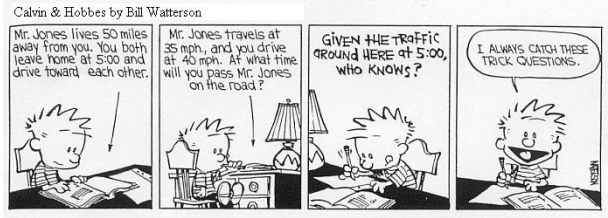
78d928ff6d20ef089534.png (608×218)

SOURCE: http://www.englishact.com.br/2018/04/calvin-and-hobbes-comic-strips.html access on Oct 7th, 2019.

By the answer Calvin gives to the Maths problem, we are sure that:
Alternativas
Ano: 2019 Banca: Universidade Presbiteriana Mackenzie Órgão: MACKENZIE Prova: Universidade Presbiteriana Mackenzie - 2019 - MACKENZIE - Vestibular Mackenzie - Grupos I, IV, V e VI |
Q1793329 Inglês
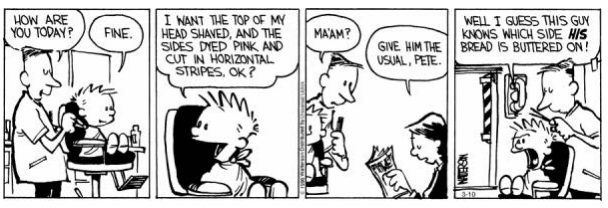
Read the following strip and answer question:
667bea06eda5e7b2440f.png (608×208)
Imagem associada para resolução da questão
SOURCE: http://www.englishact.com.br/2018/04/calvin-and-hobbes-comic-strips.html access on Oct 7th, 2019.
From the strip we can infer that:
Alternativas
Ano: 2019 Banca: Universidade Presbiteriana Mackenzie Órgão: MACKENZIE Prova: Universidade Presbiteriana Mackenzie - 2019 - MACKENZIE - Vestibular Mackenzie - Grupos I, IV, V e VI |
Q1793328 Inglês

Read the text and asnwer questions:

HOME

They rose up like men. We saw them. Like men they stood.

We shouldn’t have been anywhere near that place. Like most farmland outside Lotus, Georgia, this here one had plenty scary warning signs. The threats hung from wire mesh fences with wooden stakes every fifty or so feet. But when we saw a crawl space that some animal had dug—a coyote maybe, or a coon dog—we couldn’t resist. Just kids we were. The grass was shoulder high for her and waist high for me so, looking out for snakes, we crawled through it on our bellies. The reward was worth the harm grass juice and clouds of gnats did to our eyes, because there right in front of us, about fifty yards off, they stood like men. Their raised hooves crashing and striking, their manes tossing back from wild white eyes. They bit each other like dogs but when they stood, reared up on their hind legs, their forelegs around the withers of the other, we held our breath in wonder. One was rust-colored, the other deep black, both sunny with sweat. The neighs were not as frightening as the silence following a kick of hind legs into the lifted lips of the opponent. Nearby, colts and mares, indifferent, nibbled grass or looked away. Then it stopped. The rust-colored one dropped his head and pawed the ground while the winner loped off in an arc, nudging the mares before him.

As we elbowed back through the grass looking for the dug-out place, avoiding the line of parked trucks beyond, we lost our way. Although it took forever to re-sight the fence, neither of us panicked until we heard voices, urgent but low. I grabbed her arm and put a finger to my lips. Never lifting our heads, just peeping through the grass, we saw them pull a body from a wheelbarrow and throw it into a hole already waiting. One foot stuck up over the edge and quivered, as though it could get out, as though with a little effort it could break through the dirt being shoveled in. We could not see the faces of the men doing the burying, only their trousers; but we saw the edge of a spade drive the jerking foot down to join the rest of itself. When she saw that black foot with its creamy pink and mud-streaked sole being whacked into the grave, her whole body began to shake. I hugged her shoulders tight and tried to pull her trembling into my own bones because, as a brother four years older, I thought I could handle it. The men were long gone and the moon was a cantaloupe by the time we felt safe enough to disturb even one blade of grass and move on our stomachs, searching for the scooped-out part under the fence. When we got home we expected to be whipped or at least scolded for staying out so late, but the grown-ups did not notice us. Some disturbance had their attention.

Since you’re set on telling my story, whatever you think and whatever you write down, know this: I really forgot about the burial. I only remembered the horses. They were so beautiful. So brutal. And they stood like men.

SOURCE: Excerpted from MORRISON, Toni. Home (2012), Harmondsworth: Penguin, 2012.

The words in the box below have been undelined in the text. Choose the option that indicates the correct synonym for each of the words in the order they appear in the text:
grabbed quivered whacked scolded
Alternativas
Ano: 2019 Banca: Universidade Presbiteriana Mackenzie Órgão: MACKENZIE Prova: Universidade Presbiteriana Mackenzie - 2019 - MACKENZIE - Vestibular Mackenzie - Grupos I, IV, V e VI |
Q1793327 Inglês

Read the text and asnwer questions:

HOME

They rose up like men. We saw them. Like men they stood.

We shouldn’t have been anywhere near that place. Like most farmland outside Lotus, Georgia, this here one had plenty scary warning signs. The threats hung from wire mesh fences with wooden stakes every fifty or so feet. But when we saw a crawl space that some animal had dug—a coyote maybe, or a coon dog—we couldn’t resist. Just kids we were. The grass was shoulder high for her and waist high for me so, looking out for snakes, we crawled through it on our bellies. The reward was worth the harm grass juice and clouds of gnats did to our eyes, because there right in front of us, about fifty yards off, they stood like men. Their raised hooves crashing and striking, their manes tossing back from wild white eyes. They bit each other like dogs but when they stood, reared up on their hind legs, their forelegs around the withers of the other, we held our breath in wonder. One was rust-colored, the other deep black, both sunny with sweat. The neighs were not as frightening as the silence following a kick of hind legs into the lifted lips of the opponent. Nearby, colts and mares, indifferent, nibbled grass or looked away. Then it stopped. The rust-colored one dropped his head and pawed the ground while the winner loped off in an arc, nudging the mares before him.

As we elbowed back through the grass looking for the dug-out place, avoiding the line of parked trucks beyond, we lost our way. Although it took forever to re-sight the fence, neither of us panicked until we heard voices, urgent but low. I grabbed her arm and put a finger to my lips. Never lifting our heads, just peeping through the grass, we saw them pull a body from a wheelbarrow and throw it into a hole already waiting. One foot stuck up over the edge and quivered, as though it could get out, as though with a little effort it could break through the dirt being shoveled in. We could not see the faces of the men doing the burying, only their trousers; but we saw the edge of a spade drive the jerking foot down to join the rest of itself. When she saw that black foot with its creamy pink and mud-streaked sole being whacked into the grave, her whole body began to shake. I hugged her shoulders tight and tried to pull her trembling into my own bones because, as a brother four years older, I thought I could handle it. The men were long gone and the moon was a cantaloupe by the time we felt safe enough to disturb even one blade of grass and move on our stomachs, searching for the scooped-out part under the fence. When we got home we expected to be whipped or at least scolded for staying out so late, but the grown-ups did not notice us. Some disturbance had their attention.

Since you’re set on telling my story, whatever you think and whatever you write down, know this: I really forgot about the burial. I only remembered the horses. They were so beautiful. So brutal. And they stood like men.

SOURCE: Excerpted from MORRISON, Toni. Home (2012), Harmondsworth: Penguin, 2012.

In the excerpt: “The grass was shoulder high for her and waist high for me so, looking out for snakes, we crawled through it on our bellies.” We can understand that:
Alternativas
Ano: 2019 Banca: Universidade Presbiteriana Mackenzie Órgão: MACKENZIE Prova: Universidade Presbiteriana Mackenzie - 2019 - MACKENZIE - Vestibular Mackenzie - Grupos I, IV, V e VI |
Q1793326 Inglês

Read the text and asnwer questions:

HOME

They rose up like men. We saw them. Like men they stood.

We shouldn’t have been anywhere near that place. Like most farmland outside Lotus, Georgia, this here one had plenty scary warning signs. The threats hung from wire mesh fences with wooden stakes every fifty or so feet. But when we saw a crawl space that some animal had dug—a coyote maybe, or a coon dog—we couldn’t resist. Just kids we were. The grass was shoulder high for her and waist high for me so, looking out for snakes, we crawled through it on our bellies. The reward was worth the harm grass juice and clouds of gnats did to our eyes, because there right in front of us, about fifty yards off, they stood like men. Their raised hooves crashing and striking, their manes tossing back from wild white eyes. They bit each other like dogs but when they stood, reared up on their hind legs, their forelegs around the withers of the other, we held our breath in wonder. One was rust-colored, the other deep black, both sunny with sweat. The neighs were not as frightening as the silence following a kick of hind legs into the lifted lips of the opponent. Nearby, colts and mares, indifferent, nibbled grass or looked away. Then it stopped. The rust-colored one dropped his head and pawed the ground while the winner loped off in an arc, nudging the mares before him.

As we elbowed back through the grass looking for the dug-out place, avoiding the line of parked trucks beyond, we lost our way. Although it took forever to re-sight the fence, neither of us panicked until we heard voices, urgent but low. I grabbed her arm and put a finger to my lips. Never lifting our heads, just peeping through the grass, we saw them pull a body from a wheelbarrow and throw it into a hole already waiting. One foot stuck up over the edge and quivered, as though it could get out, as though with a little effort it could break through the dirt being shoveled in. We could not see the faces of the men doing the burying, only their trousers; but we saw the edge of a spade drive the jerking foot down to join the rest of itself. When she saw that black foot with its creamy pink and mud-streaked sole being whacked into the grave, her whole body began to shake. I hugged her shoulders tight and tried to pull her trembling into my own bones because, as a brother four years older, I thought I could handle it. The men were long gone and the moon was a cantaloupe by the time we felt safe enough to disturb even one blade of grass and move on our stomachs, searching for the scooped-out part under the fence. When we got home we expected to be whipped or at least scolded for staying out so late, but the grown-ups did not notice us. Some disturbance had their attention.

Since you’re set on telling my story, whatever you think and whatever you write down, know this: I really forgot about the burial. I only remembered the horses. They were so beautiful. So brutal. And they stood like men.

SOURCE: Excerpted from MORRISON, Toni. Home (2012), Harmondsworth: Penguin, 2012.

Considering the text, answer the question: Who were they in: “Like men they stood.” (1st line)
Alternativas
Ano: 2019 Banca: Instituto Consulplan Órgão: FIMCA Prova: Instituto Consulplan - 2019 - FIMCA - Vestibular de Medicina - Edital nº 01/ 2020 |
Q1790468 Inglês
Science Education in the United States of America

(Audrey B. Champagne.)

    Science education in the United States of America is in the midst of an unprecedented reform movement-unprecedented because the movement is driven by national standards developed with support from the federal government. The standards for science education are redefining the character of science education from kindergarten to the postgraduate education of scientists and science teachers. Unlike the education in most countries of the world, education of students in kindergarten through grade twelve in the United States is not the responsibility of the federal government but is controlled by the individual states. States have the right to regulate all elements of the curriculum-the content all students are expected to learn, the structural organization of programs across all grades, the structural organization of the yearly curriculum in each subject, teaching methods, and textbooks. Historically, and even now, the states jealously guard all their rights and resist efforts by the federal government to exercise control over matters that are the responsibility of the states. The federal government's involvement in education has been to identify matters of national priority and to provide funds and other resources to the states to meet the national priorities. So, for instance, in the late 1960s and early 1970s, when the United States felt that its perceived preeminence in scientific research and its national safety were threatened, science education was identified as a national priority. The primary purpose of the federal government's initiatives was to encourage and upgrade the science education of young people who would become practicing scientists. This effort was not perceived by the states as an erosion of their rights because it was a response to a threat to the nation and was targeted on the science education of a relatively few students. The current situation is quite different.
    The federal government's underwriting of the development of national standards for education has the potential for shifting the control of the curriculum from the states to the federal government. This initiative, supported by the National Association of Governors, is the result of the concern of political, business and industrial leaders with the poor quality of education across the nation and with the effect this poor quality has on the U.S. position in the world economy. The goal of the standards movement from the prospective of political, business, and industrial leaders is to strengthen education so that the schools will produce graduates with the knowledge and skills required of them to be productive in the workplace.
   The pedagogy and attitudes of many teachers and professors alike has been that science is for the few. So little concern or effort was applied to make science interesting or to make learning it easy. Consequently, only highly motivated and highly intelligent students survived science courses. Thus it appears education in the natural sciences develops individuals who reason well, are critical thinkers, are creative problem solvers-in short, are intelligent. But, we must ask, does education in the natural sciences produce smarter people or do smart people survive science as it is taught? While historically the answer to the question may well have been survival, the national standards are based on the beliefs that science is for all and can produce smarter people.

(Available: https://files.eric.ed.gov/fulltext/EJ608194.pdf. Adapted.)
Analyse the items usage in the text. Mark the one which is a modifier.
Alternativas
Ano: 2019 Banca: Instituto Consulplan Órgão: FIMCA Prova: Instituto Consulplan - 2019 - FIMCA - Vestibular de Medicina - Edital nº 01/ 2020 |
Q1790467 Inglês
Science Education in the United States of America

(Audrey B. Champagne.)

    Science education in the United States of America is in the midst of an unprecedented reform movement-unprecedented because the movement is driven by national standards developed with support from the federal government. The standards for science education are redefining the character of science education from kindergarten to the postgraduate education of scientists and science teachers. Unlike the education in most countries of the world, education of students in kindergarten through grade twelve in the United States is not the responsibility of the federal government but is controlled by the individual states. States have the right to regulate all elements of the curriculum-the content all students are expected to learn, the structural organization of programs across all grades, the structural organization of the yearly curriculum in each subject, teaching methods, and textbooks. Historically, and even now, the states jealously guard all their rights and resist efforts by the federal government to exercise control over matters that are the responsibility of the states. The federal government's involvement in education has been to identify matters of national priority and to provide funds and other resources to the states to meet the national priorities. So, for instance, in the late 1960s and early 1970s, when the United States felt that its perceived preeminence in scientific research and its national safety were threatened, science education was identified as a national priority. The primary purpose of the federal government's initiatives was to encourage and upgrade the science education of young people who would become practicing scientists. This effort was not perceived by the states as an erosion of their rights because it was a response to a threat to the nation and was targeted on the science education of a relatively few students. The current situation is quite different.
    The federal government's underwriting of the development of national standards for education has the potential for shifting the control of the curriculum from the states to the federal government. This initiative, supported by the National Association of Governors, is the result of the concern of political, business and industrial leaders with the poor quality of education across the nation and with the effect this poor quality has on the U.S. position in the world economy. The goal of the standards movement from the prospective of political, business, and industrial leaders is to strengthen education so that the schools will produce graduates with the knowledge and skills required of them to be productive in the workplace.
   The pedagogy and attitudes of many teachers and professors alike has been that science is for the few. So little concern or effort was applied to make science interesting or to make learning it easy. Consequently, only highly motivated and highly intelligent students survived science courses. Thus it appears education in the natural sciences develops individuals who reason well, are critical thinkers, are creative problem solvers-in short, are intelligent. But, we must ask, does education in the natural sciences produce smarter people or do smart people survive science as it is taught? While historically the answer to the question may well have been survival, the national standards are based on the beliefs that science is for all and can produce smarter people.

(Available: https://files.eric.ed.gov/fulltext/EJ608194.pdf. Adapted.)
For Instance (L22) sets:
Alternativas
Ano: 2019 Banca: Instituto Consulplan Órgão: FIMCA Prova: Instituto Consulplan - 2019 - FIMCA - Vestibular de Medicina - Edital nº 01/ 2020 |
Q1790466 Inglês
Science Education in the United States of America

(Audrey B. Champagne.)

    Science education in the United States of America is in the midst of an unprecedented reform movement-unprecedented because the movement is driven by national standards developed with support from the federal government. The standards for science education are redefining the character of science education from kindergarten to the postgraduate education of scientists and science teachers. Unlike the education in most countries of the world, education of students in kindergarten through grade twelve in the United States is not the responsibility of the federal government but is controlled by the individual states. States have the right to regulate all elements of the curriculum-the content all students are expected to learn, the structural organization of programs across all grades, the structural organization of the yearly curriculum in each subject, teaching methods, and textbooks. Historically, and even now, the states jealously guard all their rights and resist efforts by the federal government to exercise control over matters that are the responsibility of the states. The federal government's involvement in education has been to identify matters of national priority and to provide funds and other resources to the states to meet the national priorities. So, for instance, in the late 1960s and early 1970s, when the United States felt that its perceived preeminence in scientific research and its national safety were threatened, science education was identified as a national priority. The primary purpose of the federal government's initiatives was to encourage and upgrade the science education of young people who would become practicing scientists. This effort was not perceived by the states as an erosion of their rights because it was a response to a threat to the nation and was targeted on the science education of a relatively few students. The current situation is quite different.
    The federal government's underwriting of the development of national standards for education has the potential for shifting the control of the curriculum from the states to the federal government. This initiative, supported by the National Association of Governors, is the result of the concern of political, business and industrial leaders with the poor quality of education across the nation and with the effect this poor quality has on the U.S. position in the world economy. The goal of the standards movement from the prospective of political, business, and industrial leaders is to strengthen education so that the schools will produce graduates with the knowledge and skills required of them to be productive in the workplace.
   The pedagogy and attitudes of many teachers and professors alike has been that science is for the few. So little concern or effort was applied to make science interesting or to make learning it easy. Consequently, only highly motivated and highly intelligent students survived science courses. Thus it appears education in the natural sciences develops individuals who reason well, are critical thinkers, are creative problem solvers-in short, are intelligent. But, we must ask, does education in the natural sciences produce smarter people or do smart people survive science as it is taught? While historically the answer to the question may well have been survival, the national standards are based on the beliefs that science is for all and can produce smarter people.

(Available: https://files.eric.ed.gov/fulltext/EJ608194.pdf. Adapted.)
The goal of the standards movement is to:
Alternativas
Ano: 2019 Banca: Instituto Consulplan Órgão: FIMCA Prova: Instituto Consulplan - 2019 - FIMCA - Vestibular de Medicina - Edital nº 01/ 2020 |
Q1790465 Inglês
Science Education in the United States of America

(Audrey B. Champagne.)

    Science education in the United States of America is in the midst of an unprecedented reform movement-unprecedented because the movement is driven by national standards developed with support from the federal government. The standards for science education are redefining the character of science education from kindergarten to the postgraduate education of scientists and science teachers. Unlike the education in most countries of the world, education of students in kindergarten through grade twelve in the United States is not the responsibility of the federal government but is controlled by the individual states. States have the right to regulate all elements of the curriculum-the content all students are expected to learn, the structural organization of programs across all grades, the structural organization of the yearly curriculum in each subject, teaching methods, and textbooks. Historically, and even now, the states jealously guard all their rights and resist efforts by the federal government to exercise control over matters that are the responsibility of the states. The federal government's involvement in education has been to identify matters of national priority and to provide funds and other resources to the states to meet the national priorities. So, for instance, in the late 1960s and early 1970s, when the United States felt that its perceived preeminence in scientific research and its national safety were threatened, science education was identified as a national priority. The primary purpose of the federal government's initiatives was to encourage and upgrade the science education of young people who would become practicing scientists. This effort was not perceived by the states as an erosion of their rights because it was a response to a threat to the nation and was targeted on the science education of a relatively few students. The current situation is quite different.
    The federal government's underwriting of the development of national standards for education has the potential for shifting the control of the curriculum from the states to the federal government. This initiative, supported by the National Association of Governors, is the result of the concern of political, business and industrial leaders with the poor quality of education across the nation and with the effect this poor quality has on the U.S. position in the world economy. The goal of the standards movement from the prospective of political, business, and industrial leaders is to strengthen education so that the schools will produce graduates with the knowledge and skills required of them to be productive in the workplace.
   The pedagogy and attitudes of many teachers and professors alike has been that science is for the few. So little concern or effort was applied to make science interesting or to make learning it easy. Consequently, only highly motivated and highly intelligent students survived science courses. Thus it appears education in the natural sciences develops individuals who reason well, are critical thinkers, are creative problem solvers-in short, are intelligent. But, we must ask, does education in the natural sciences produce smarter people or do smart people survive science as it is taught? While historically the answer to the question may well have been survival, the national standards are based on the beliefs that science is for all and can produce smarter people.

(Available: https://files.eric.ed.gov/fulltext/EJ608194.pdf. Adapted.)
“Meet” (L22) does NOT mean:
Alternativas
Ano: 2019 Banca: Instituto Consulplan Órgão: FIMCA Prova: Instituto Consulplan - 2019 - FIMCA - Vestibular de Medicina - Edital nº 01/ 2020 |
Q1790464 Inglês
Science Education in the United States of America

(Audrey B. Champagne.)

    Science education in the United States of America is in the midst of an unprecedented reform movement-unprecedented because the movement is driven by national standards developed with support from the federal government. The standards for science education are redefining the character of science education from kindergarten to the postgraduate education of scientists and science teachers. Unlike the education in most countries of the world, education of students in kindergarten through grade twelve in the United States is not the responsibility of the federal government but is controlled by the individual states. States have the right to regulate all elements of the curriculum-the content all students are expected to learn, the structural organization of programs across all grades, the structural organization of the yearly curriculum in each subject, teaching methods, and textbooks. Historically, and even now, the states jealously guard all their rights and resist efforts by the federal government to exercise control over matters that are the responsibility of the states. The federal government's involvement in education has been to identify matters of national priority and to provide funds and other resources to the states to meet the national priorities. So, for instance, in the late 1960s and early 1970s, when the United States felt that its perceived preeminence in scientific research and its national safety were threatened, science education was identified as a national priority. The primary purpose of the federal government's initiatives was to encourage and upgrade the science education of young people who would become practicing scientists. This effort was not perceived by the states as an erosion of their rights because it was a response to a threat to the nation and was targeted on the science education of a relatively few students. The current situation is quite different.
    The federal government's underwriting of the development of national standards for education has the potential for shifting the control of the curriculum from the states to the federal government. This initiative, supported by the National Association of Governors, is the result of the concern of political, business and industrial leaders with the poor quality of education across the nation and with the effect this poor quality has on the U.S. position in the world economy. The goal of the standards movement from the prospective of political, business, and industrial leaders is to strengthen education so that the schools will produce graduates with the knowledge and skills required of them to be productive in the workplace.
   The pedagogy and attitudes of many teachers and professors alike has been that science is for the few. So little concern or effort was applied to make science interesting or to make learning it easy. Consequently, only highly motivated and highly intelligent students survived science courses. Thus it appears education in the natural sciences develops individuals who reason well, are critical thinkers, are creative problem solvers-in short, are intelligent. But, we must ask, does education in the natural sciences produce smarter people or do smart people survive science as it is taught? While historically the answer to the question may well have been survival, the national standards are based on the beliefs that science is for all and can produce smarter people.

(Available: https://files.eric.ed.gov/fulltext/EJ608194.pdf. Adapted.)
The text states that:
Alternativas
Ano: 2019 Banca: Instituto Consulplan Órgão: FIMCA Prova: Instituto Consulplan - 2019 - FIMCA - Vestibular de Medicina - Edital nº 01/ 2020 |
Q1790463 Inglês
Science Education in the United States of America

(Audrey B. Champagne.)

    Science education in the United States of America is in the midst of an unprecedented reform movement-unprecedented because the movement is driven by national standards developed with support from the federal government. The standards for science education are redefining the character of science education from kindergarten to the postgraduate education of scientists and science teachers. Unlike the education in most countries of the world, education of students in kindergarten through grade twelve in the United States is not the responsibility of the federal government but is controlled by the individual states. States have the right to regulate all elements of the curriculum-the content all students are expected to learn, the structural organization of programs across all grades, the structural organization of the yearly curriculum in each subject, teaching methods, and textbooks. Historically, and even now, the states jealously guard all their rights and resist efforts by the federal government to exercise control over matters that are the responsibility of the states. The federal government's involvement in education has been to identify matters of national priority and to provide funds and other resources to the states to meet the national priorities. So, for instance, in the late 1960s and early 1970s, when the United States felt that its perceived preeminence in scientific research and its national safety were threatened, science education was identified as a national priority. The primary purpose of the federal government's initiatives was to encourage and upgrade the science education of young people who would become practicing scientists. This effort was not perceived by the states as an erosion of their rights because it was a response to a threat to the nation and was targeted on the science education of a relatively few students. The current situation is quite different.
    The federal government's underwriting of the development of national standards for education has the potential for shifting the control of the curriculum from the states to the federal government. This initiative, supported by the National Association of Governors, is the result of the concern of political, business and industrial leaders with the poor quality of education across the nation and with the effect this poor quality has on the U.S. position in the world economy. The goal of the standards movement from the prospective of political, business, and industrial leaders is to strengthen education so that the schools will produce graduates with the knowledge and skills required of them to be productive in the workplace.
   The pedagogy and attitudes of many teachers and professors alike has been that science is for the few. So little concern or effort was applied to make science interesting or to make learning it easy. Consequently, only highly motivated and highly intelligent students survived science courses. Thus it appears education in the natural sciences develops individuals who reason well, are critical thinkers, are creative problem solvers-in short, are intelligent. But, we must ask, does education in the natural sciences produce smarter people or do smart people survive science as it is taught? While historically the answer to the question may well have been survival, the national standards are based on the beliefs that science is for all and can produce smarter people.

(Available: https://files.eric.ed.gov/fulltext/EJ608194.pdf. Adapted.)
“Thus” (L52) introduces a/an:
Alternativas
Q1785733 Inglês
Trump administration officials on healthcare

     President Donald Trump’s main healthcare policy initiative has been working to fulfill his campaign promise to repeal and replace the Patient Protection and Affordable Care Act(ACA), commonly known as Obamacare. He expressed his support for the House and Senate bills that proposed modifying parts of the ACA. The House passed its bill — the American Health Care Act of 2017 — but members of the Senate have been unable to agree on a final replacement plan, leaving most of the provisions of the ACA in place. Republicans did take one step towards changing the ACA by eliminating the law's individual mandate, which took effect in January 2019. In October 2017, the Trump administration took actions to modify the ACA. Trump issued an executive order directing members of his Cabinet to create rules that would allow small businesses to collectively buy health insurance through association health plans, expand shortterm health coverage, and expand the use of Health Reimbursement Arrangements (HRAs). The order did not make direct changes to existing health insurance rules; instead, it directed agencies to consider new rules that would be subject to a notice and comment period. Trump said that he is still committed to passing a bill to repeal and replace the ACA. Before signing the executive order on October 12, 2017, Trump said, “Today is only the beginning. In the coming months, we plan to take new measures to provide our people with even more relief and more freedom. (…) And we’re going to also pressure Congress very strongly to finish the repeal and the replace of Obamacare once and for all. We will have great healthcare in our country..”.
(Available in: https://ballotpedia.org. Adapted.)
“Policy” (L1) means:
Alternativas
Q1785732 Inglês
Trump administration officials on healthcare

     President Donald Trump’s main healthcare policy initiative has been working to fulfill his campaign promise to repeal and replace the Patient Protection and Affordable Care Act(ACA), commonly known as Obamacare. He expressed his support for the House and Senate bills that proposed modifying parts of the ACA. The House passed its bill — the American Health Care Act of 2017 — but members of the Senate have been unable to agree on a final replacement plan, leaving most of the provisions of the ACA in place. Republicans did take one step towards changing the ACA by eliminating the law's individual mandate, which took effect in January 2019. In October 2017, the Trump administration took actions to modify the ACA. Trump issued an executive order directing members of his Cabinet to create rules that would allow small businesses to collectively buy health insurance through association health plans, expand shortterm health coverage, and expand the use of Health Reimbursement Arrangements (HRAs). The order did not make direct changes to existing health insurance rules; instead, it directed agencies to consider new rules that would be subject to a notice and comment period. Trump said that he is still committed to passing a bill to repeal and replace the ACA. Before signing the executive order on October 12, 2017, Trump said, “Today is only the beginning. In the coming months, we plan to take new measures to provide our people with even more relief and more freedom. (…) And we’re going to also pressure Congress very strongly to finish the repeal and the replace of Obamacare once and for all. We will have great healthcare in our country..”.
(Available in: https://ballotpedia.org. Adapted.)
Mark the gerund which is used as a noun:
Alternativas
Q1785730 Inglês
Read the dialogue to answer.
Doctor: Have you ever fainted before? Patient: Yes, the last time you told me your fees.
(Available in:https://pages2cool.blogspot.com.)
Mark the item that does NOT match the dialogue:
Alternativas
Q1785729 Inglês
Read the dialogue to answer.
Doctor: Please, take your seat. What is your problem? Patient: Hello Doctor, please, can you give me your certificate? Doctor: Why? Patient: I took two weeks leave in my office. They asked me to get a “Doctor Certificate”.
(Available in: https://pages2cool.blogspot.com.)
We learn from the dialogue that:
Alternativas
Ano: 2019 Banca: UFRGS Órgão: UFRGS Prova: UFRGS - 2019 - UFRGS - Vestibular - UFRGS - Física, Literatura e Inglês |
Q1785243 Inglês
Instrução: A questão está relacionada ao texto abaixo.  

Adapted from: SONTAG, Susan. Agaínst
lnterpretatlon and Other Essays. Penguin Modern
Classics, Straus and Giroux, 2009. p. 3-4.
Consider the use of the modal verb in the following sentence.
The earliest experience of art must have been incantatory, magical.
Select the alternative that best presents its negative form.
Alternativas
Ano: 2019 Banca: UFRGS Órgão: UFRGS Prova: UFRGS - 2019 - UFRGS - Vestibular - UFRGS - Física, Literatura e Inglês |
Q1785242 Inglês
Instrução: A questão está relacionada ao texto abaixo.  

Adapted from: SONTAG, Susan. Agaínst
lnterpretatlon and Other Essays. Penguin Modern
Classics, Straus and Giroux, 2009. p. 3-4.
Consider the following propositions for rephrasing the sentence Whether we conceive of the work of art on the model of a picture or on the model of a statement, content still comes first (I. 50-53).
I - Content still comes first regardless of whether we conceive of the work of an art on the model of a picture or on the model of a statement. II - Content, whether conceived on the model of a picture ar on the model of a statement, still comes first. III - Whether being conceived the work of art on the model of a picture or on the model of a statement, content still comes first.
If applied to the text, which ones would be correct and keep the literal meaning?
Alternativas
Respostas
1021: D
1022: A
1023: A
1024: A
1025: C
1026: E
1027: B
1028: D
1029: C
1030: B
1031: A
1032: B
1033: A
1034: C
1035: D
1036: C
1037: D
1038: B
1039: D
1040: A