Questões de Vestibular Sobre inglês
Foram encontradas 6.367 questões


Ano: 2021
Banca:
VUNESP
Órgão:
UNESP
Prova:
VUNESP - 2021 - UNESP - Vestibular - Conhecimentos Gerais - Área de Exatas e Humanas |
Q1672487
Inglês
Examine o cartum de Sofia Warren, publicado em sua conta no Instagram em 09.03.2020.

Contribuem para o efeito de humor do cartum os seguintes
recursos expressivos:
Ano: 2021
Banca:
VUNESP
Órgão:
UNESP
Prova:
VUNESP - 2021 - UNESP - Vestibular - Conhecimentos Gerais - Área de Exatas e Humanas |
Q1672482
Inglês
Examine a anedota publicada pela comunidade “The Language Nerds” em sua conta no Facebook em 22.01.2020.
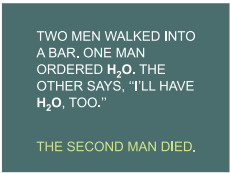
A anedota sugere que
Ano: 2021
Banca:
VUNESP
Órgão:
UNESP
Prova:
VUNESP - 2021 - UNESP - Vestibular - Conhecimentos Gerais - Área de Exatas e Humanas |
Q1672477
Inglês
Examine a tira de Alex Culang e Raynato Castro.

Para que a história tivesse um desfecho favorável à garota,
seria necessário
Ano: 2020
Banca:
UECE-CEV
Órgão:
UECE
Prova:
UECE-CEV - 2020 - UECE - Vestibular - Conhecimentos Específicos - Primeiro Dia - Prova 1 - Inglês |
Q2030423
Inglês
Texto associado
Americans May Add Five Times More Plastic to
the Oceans Than Thought
The United States is using more
plastic than ever, and waste exported for
recycling is often mishandled, according
to a new study.
The United States contribution
to coastal plastic pollution worldwide is
significantly larger than previously
thought, possibly by as much as five
times, according to a study published
Friday. The research, published in Science
Advances, is the sequel to a 2015 paper
by the same authors. Two factors
contributed to the sharp increase:
Americans are using more plastic than
ever and the current study included
pollution generated by United States
exports of plastic waste, while the earlier
one did not.
The United States, which does
not have sufficient infrastructure to
handle its recycling demands at home,
exports about half of its recyclable waste.
Of the total exported, about 88 percent
ends up in countries considered to have
inadequate waste management.
“When you consider how much
of our plastic waste isn’t actually
recyclable because it is low-value,
contaminated or difficult to process, it’s
not surprising that a lot of it ends up
polluting the environment,” said the
study’s lead author, Kara Lavender Law,
research professor of oceanography at
Sea Education Association, in a
statement.
The study estimates that in
2016, the United States contributed
between 1.1 and 2.2 million metric tons of
plastic waste to the oceans through a
combination of littering, dumping and
mismanaged exports. At a minimum,
that’s almost double the total estimated
waste in the team’s previous study. At the
high end, it would be a fivefold increase
over the earlier estimate.
Nicholas Mallos, a senior
director at the Ocean Conservancy and an
author of the study, said the upper
estimate would be equal to a pile of
plastic covering the area of the White
House Lawn and reaching as high as the
Empire State Building.
The ranges are wide partly
because “there’s no real standard for
being able to provide good quality data on
collection and disposal of waste in
general,” said Ted Siegler, a resource
economist at DSM Environmental
Solutions, a consulting firm, and an
author of the study. Mr. Siegler said the
researchers had evaluated waste-disposal
practices in countries around the world
and used their “best professional
judgment” to determine the lowest and
highest amounts of plastic waste likely to
escape into the environment. They settled
on a range of 25 percent to 75 percent.
Tony Walker, an associate
professor at the Dalhousie University
School for Resource and Environmental
Studies in Halifax, Nova Scotia, said that
analyzing waste data can amount to a
“data minefield” because there are no
data standards across municipalities.
Moreover, once plastic waste is shipped
overseas, he said, data is often not
recorded at all.
Nonetheless, Dr. Walker, who
was not involved in the study, said it
could offer a more accurate accounting of
plastic pollution than the previous study,
which likely underestimated the United
States’ contribution. “They’ve put their
best estimate, as accurate as they can be
with this data,” he said, and used ranges,
which underscores that the figures are
estimates.
Of the plastics that go into the
United States recycling system, about 9
percent of the country’s total plastic
waste, there is no guarantee that they’ll
be remade into new consumer goods. New
plastic is so inexpensive to manufacture
that only certain expensive, high-grade
plastics are profitable to recycle within the
United States, which is why roughly half
of the country’s plastic waste was shipped
abroad in 2016, the most recent year for
which data is available.
Since 2016, however, the
recycling landscape has changed. China
and many countries in Southeast Asia
have stopped accepting plastic waste
imports. And lower oil prices have further
reduced the market for recycled plastic.
“What the new study really underscores is
we have to get a handle on source
reduction at home,” Mr. Mallos said. “That
starts with eliminating unnecessary and
problematic single-use plastics.”
From: https://www.nytimes.com/2020/10/30/
The superlative forms of the
adjectives accurate, large, and easy are,
respectively,
Ano: 2020
Banca:
UECE-CEV
Órgão:
UECE
Prova:
UECE-CEV - 2020 - UECE - Vestibular - Conhecimentos Específicos - Primeiro Dia - Prova 1 - Inglês |
Q2030422
Inglês
Texto associado
Americans May Add Five Times More Plastic to
the Oceans Than Thought
The United States is using more
plastic than ever, and waste exported for
recycling is often mishandled, according
to a new study.
The United States contribution
to coastal plastic pollution worldwide is
significantly larger than previously
thought, possibly by as much as five
times, according to a study published
Friday. The research, published in Science
Advances, is the sequel to a 2015 paper
by the same authors. Two factors
contributed to the sharp increase:
Americans are using more plastic than
ever and the current study included
pollution generated by United States
exports of plastic waste, while the earlier
one did not.
The United States, which does
not have sufficient infrastructure to
handle its recycling demands at home,
exports about half of its recyclable waste.
Of the total exported, about 88 percent
ends up in countries considered to have
inadequate waste management.
“When you consider how much
of our plastic waste isn’t actually
recyclable because it is low-value,
contaminated or difficult to process, it’s
not surprising that a lot of it ends up
polluting the environment,” said the
study’s lead author, Kara Lavender Law,
research professor of oceanography at
Sea Education Association, in a
statement.
The study estimates that in
2016, the United States contributed
between 1.1 and 2.2 million metric tons of
plastic waste to the oceans through a
combination of littering, dumping and
mismanaged exports. At a minimum,
that’s almost double the total estimated
waste in the team’s previous study. At the
high end, it would be a fivefold increase
over the earlier estimate.
Nicholas Mallos, a senior
director at the Ocean Conservancy and an
author of the study, said the upper
estimate would be equal to a pile of
plastic covering the area of the White
House Lawn and reaching as high as the
Empire State Building.
The ranges are wide partly
because “there’s no real standard for
being able to provide good quality data on
collection and disposal of waste in
general,” said Ted Siegler, a resource
economist at DSM Environmental
Solutions, a consulting firm, and an
author of the study. Mr. Siegler said the
researchers had evaluated waste-disposal
practices in countries around the world
and used their “best professional
judgment” to determine the lowest and
highest amounts of plastic waste likely to
escape into the environment. They settled
on a range of 25 percent to 75 percent.
Tony Walker, an associate
professor at the Dalhousie University
School for Resource and Environmental
Studies in Halifax, Nova Scotia, said that
analyzing waste data can amount to a
“data minefield” because there are no
data standards across municipalities.
Moreover, once plastic waste is shipped
overseas, he said, data is often not
recorded at all.
Nonetheless, Dr. Walker, who
was not involved in the study, said it
could offer a more accurate accounting of
plastic pollution than the previous study,
which likely underestimated the United
States’ contribution. “They’ve put their
best estimate, as accurate as they can be
with this data,” he said, and used ranges,
which underscores that the figures are
estimates.
Of the plastics that go into the
United States recycling system, about 9
percent of the country’s total plastic
waste, there is no guarantee that they’ll
be remade into new consumer goods. New
plastic is so inexpensive to manufacture
that only certain expensive, high-grade
plastics are profitable to recycle within the
United States, which is why roughly half
of the country’s plastic waste was shipped
abroad in 2016, the most recent year for
which data is available.
Since 2016, however, the
recycling landscape has changed. China
and many countries in Southeast Asia
have stopped accepting plastic waste
imports. And lower oil prices have further
reduced the market for recycled plastic.
“What the new study really underscores is
we have to get a handle on source
reduction at home,” Mr. Mallos said. “That
starts with eliminating unnecessary and
problematic single-use plastics.”
From: https://www.nytimes.com/2020/10/30/
The phrase “The research, published in
Science Advances…” (lines 10-11) can be correctly
rewritten as
Ano: 2020
Banca:
UECE-CEV
Órgão:
UECE
Prova:
UECE-CEV - 2020 - UECE - Vestibular - Conhecimentos Específicos - Primeiro Dia - Prova 1 - Inglês |
Q2030421
Inglês
Texto associado
Americans May Add Five Times More Plastic to
the Oceans Than Thought
The United States is using more
plastic than ever, and waste exported for
recycling is often mishandled, according
to a new study.
The United States contribution
to coastal plastic pollution worldwide is
significantly larger than previously
thought, possibly by as much as five
times, according to a study published
Friday. The research, published in Science
Advances, is the sequel to a 2015 paper
by the same authors. Two factors
contributed to the sharp increase:
Americans are using more plastic than
ever and the current study included
pollution generated by United States
exports of plastic waste, while the earlier
one did not.
The United States, which does
not have sufficient infrastructure to
handle its recycling demands at home,
exports about half of its recyclable waste.
Of the total exported, about 88 percent
ends up in countries considered to have
inadequate waste management.
“When you consider how much
of our plastic waste isn’t actually
recyclable because it is low-value,
contaminated or difficult to process, it’s
not surprising that a lot of it ends up
polluting the environment,” said the
study’s lead author, Kara Lavender Law,
research professor of oceanography at
Sea Education Association, in a
statement.
The study estimates that in
2016, the United States contributed
between 1.1 and 2.2 million metric tons of
plastic waste to the oceans through a
combination of littering, dumping and
mismanaged exports. At a minimum,
that’s almost double the total estimated
waste in the team’s previous study. At the
high end, it would be a fivefold increase
over the earlier estimate.
Nicholas Mallos, a senior
director at the Ocean Conservancy and an
author of the study, said the upper
estimate would be equal to a pile of
plastic covering the area of the White
House Lawn and reaching as high as the
Empire State Building.
The ranges are wide partly
because “there’s no real standard for
being able to provide good quality data on
collection and disposal of waste in
general,” said Ted Siegler, a resource
economist at DSM Environmental
Solutions, a consulting firm, and an
author of the study. Mr. Siegler said the
researchers had evaluated waste-disposal
practices in countries around the world
and used their “best professional
judgment” to determine the lowest and
highest amounts of plastic waste likely to
escape into the environment. They settled
on a range of 25 percent to 75 percent.
Tony Walker, an associate
professor at the Dalhousie University
School for Resource and Environmental
Studies in Halifax, Nova Scotia, said that
analyzing waste data can amount to a
“data minefield” because there are no
data standards across municipalities.
Moreover, once plastic waste is shipped
overseas, he said, data is often not
recorded at all.
Nonetheless, Dr. Walker, who
was not involved in the study, said it
could offer a more accurate accounting of
plastic pollution than the previous study,
which likely underestimated the United
States’ contribution. “They’ve put their
best estimate, as accurate as they can be
with this data,” he said, and used ranges,
which underscores that the figures are
estimates.
Of the plastics that go into the
United States recycling system, about 9
percent of the country’s total plastic
waste, there is no guarantee that they’ll
be remade into new consumer goods. New
plastic is so inexpensive to manufacture
that only certain expensive, high-grade
plastics are profitable to recycle within the
United States, which is why roughly half
of the country’s plastic waste was shipped
abroad in 2016, the most recent year for
which data is available.
Since 2016, however, the
recycling landscape has changed. China
and many countries in Southeast Asia
have stopped accepting plastic waste
imports. And lower oil prices have further
reduced the market for recycled plastic.
“What the new study really underscores is
we have to get a handle on source
reduction at home,” Mr. Mallos said. “That
starts with eliminating unnecessary and
problematic single-use plastics.”
From: https://www.nytimes.com/2020/10/30/
“There are no data standards” (lines 73-74)
can be correctly rewritten as
Ano: 2020
Banca:
UECE-CEV
Órgão:
UECE
Prova:
UECE-CEV - 2020 - UECE - Vestibular - Conhecimentos Específicos - Primeiro Dia - Prova 1 - Inglês |
Q2030420
Inglês
Texto associado
Americans May Add Five Times More Plastic to
the Oceans Than Thought
The United States is using more
plastic than ever, and waste exported for
recycling is often mishandled, according
to a new study.
The United States contribution
to coastal plastic pollution worldwide is
significantly larger than previously
thought, possibly by as much as five
times, according to a study published
Friday. The research, published in Science
Advances, is the sequel to a 2015 paper
by the same authors. Two factors
contributed to the sharp increase:
Americans are using more plastic than
ever and the current study included
pollution generated by United States
exports of plastic waste, while the earlier
one did not.
The United States, which does
not have sufficient infrastructure to
handle its recycling demands at home,
exports about half of its recyclable waste.
Of the total exported, about 88 percent
ends up in countries considered to have
inadequate waste management.
“When you consider how much
of our plastic waste isn’t actually
recyclable because it is low-value,
contaminated or difficult to process, it’s
not surprising that a lot of it ends up
polluting the environment,” said the
study’s lead author, Kara Lavender Law,
research professor of oceanography at
Sea Education Association, in a
statement.
The study estimates that in
2016, the United States contributed
between 1.1 and 2.2 million metric tons of
plastic waste to the oceans through a
combination of littering, dumping and
mismanaged exports. At a minimum,
that’s almost double the total estimated
waste in the team’s previous study. At the
high end, it would be a fivefold increase
over the earlier estimate.
Nicholas Mallos, a senior
director at the Ocean Conservancy and an
author of the study, said the upper
estimate would be equal to a pile of
plastic covering the area of the White
House Lawn and reaching as high as the
Empire State Building.
The ranges are wide partly
because “there’s no real standard for
being able to provide good quality data on
collection and disposal of waste in
general,” said Ted Siegler, a resource
economist at DSM Environmental
Solutions, a consulting firm, and an
author of the study. Mr. Siegler said the
researchers had evaluated waste-disposal
practices in countries around the world
and used their “best professional
judgment” to determine the lowest and
highest amounts of plastic waste likely to
escape into the environment. They settled
on a range of 25 percent to 75 percent.
Tony Walker, an associate
professor at the Dalhousie University
School for Resource and Environmental
Studies in Halifax, Nova Scotia, said that
analyzing waste data can amount to a
“data minefield” because there are no
data standards across municipalities.
Moreover, once plastic waste is shipped
overseas, he said, data is often not
recorded at all.
Nonetheless, Dr. Walker, who
was not involved in the study, said it
could offer a more accurate accounting of
plastic pollution than the previous study,
which likely underestimated the United
States’ contribution. “They’ve put their
best estimate, as accurate as they can be
with this data,” he said, and used ranges,
which underscores that the figures are
estimates.
Of the plastics that go into the
United States recycling system, about 9
percent of the country’s total plastic
waste, there is no guarantee that they’ll
be remade into new consumer goods. New
plastic is so inexpensive to manufacture
that only certain expensive, high-grade
plastics are profitable to recycle within the
United States, which is why roughly half
of the country’s plastic waste was shipped
abroad in 2016, the most recent year for
which data is available.
Since 2016, however, the
recycling landscape has changed. China
and many countries in Southeast Asia
have stopped accepting plastic waste
imports. And lower oil prices have further
reduced the market for recycled plastic.
“What the new study really underscores is
we have to get a handle on source
reduction at home,” Mr. Mallos said. “That
starts with eliminating unnecessary and
problematic single-use plastics.”
From: https://www.nytimes.com/2020/10/30/
In the phrases “Of the total exported” (line
23) and “in countries considered” (line 24), the two
verbs are in the
Ano: 2020
Banca:
UECE-CEV
Órgão:
UECE
Prova:
UECE-CEV - 2020 - UECE - Vestibular - Conhecimentos Específicos - Primeiro Dia - Prova 1 - Inglês |
Q2030419
Inglês
Texto associado
Americans May Add Five Times More Plastic to
the Oceans Than Thought
The United States is using more
plastic than ever, and waste exported for
recycling is often mishandled, according
to a new study.
The United States contribution
to coastal plastic pollution worldwide is
significantly larger than previously
thought, possibly by as much as five
times, according to a study published
Friday. The research, published in Science
Advances, is the sequel to a 2015 paper
by the same authors. Two factors
contributed to the sharp increase:
Americans are using more plastic than
ever and the current study included
pollution generated by United States
exports of plastic waste, while the earlier
one did not.
The United States, which does
not have sufficient infrastructure to
handle its recycling demands at home,
exports about half of its recyclable waste.
Of the total exported, about 88 percent
ends up in countries considered to have
inadequate waste management.
“When you consider how much
of our plastic waste isn’t actually
recyclable because it is low-value,
contaminated or difficult to process, it’s
not surprising that a lot of it ends up
polluting the environment,” said the
study’s lead author, Kara Lavender Law,
research professor of oceanography at
Sea Education Association, in a
statement.
The study estimates that in
2016, the United States contributed
between 1.1 and 2.2 million metric tons of
plastic waste to the oceans through a
combination of littering, dumping and
mismanaged exports. At a minimum,
that’s almost double the total estimated
waste in the team’s previous study. At the
high end, it would be a fivefold increase
over the earlier estimate.
Nicholas Mallos, a senior
director at the Ocean Conservancy and an
author of the study, said the upper
estimate would be equal to a pile of
plastic covering the area of the White
House Lawn and reaching as high as the
Empire State Building.
The ranges are wide partly
because “there’s no real standard for
being able to provide good quality data on
collection and disposal of waste in
general,” said Ted Siegler, a resource
economist at DSM Environmental
Solutions, a consulting firm, and an
author of the study. Mr. Siegler said the
researchers had evaluated waste-disposal
practices in countries around the world
and used their “best professional
judgment” to determine the lowest and
highest amounts of plastic waste likely to
escape into the environment. They settled
on a range of 25 percent to 75 percent.
Tony Walker, an associate
professor at the Dalhousie University
School for Resource and Environmental
Studies in Halifax, Nova Scotia, said that
analyzing waste data can amount to a
“data minefield” because there are no
data standards across municipalities.
Moreover, once plastic waste is shipped
overseas, he said, data is often not
recorded at all.
Nonetheless, Dr. Walker, who
was not involved in the study, said it
could offer a more accurate accounting of
plastic pollution than the previous study,
which likely underestimated the United
States’ contribution. “They’ve put their
best estimate, as accurate as they can be
with this data,” he said, and used ranges,
which underscores that the figures are
estimates.
Of the plastics that go into the
United States recycling system, about 9
percent of the country’s total plastic
waste, there is no guarantee that they’ll
be remade into new consumer goods. New
plastic is so inexpensive to manufacture
that only certain expensive, high-grade
plastics are profitable to recycle within the
United States, which is why roughly half
of the country’s plastic waste was shipped
abroad in 2016, the most recent year for
which data is available.
Since 2016, however, the
recycling landscape has changed. China
and many countries in Southeast Asia
have stopped accepting plastic waste
imports. And lower oil prices have further
reduced the market for recycled plastic.
“What the new study really underscores is
we have to get a handle on source
reduction at home,” Mr. Mallos said. “That
starts with eliminating unnecessary and
problematic single-use plastics.”
From: https://www.nytimes.com/2020/10/30/
“They settled on a range of 25 percent to 75
percent” (lines 66-67) is a/an
Ano: 2020
Banca:
UECE-CEV
Órgão:
UECE
Prova:
UECE-CEV - 2020 - UECE - Vestibular - Conhecimentos Específicos - Primeiro Dia - Prova 1 - Inglês |
Q2030418
Inglês
Texto associado
Americans May Add Five Times More Plastic to
the Oceans Than Thought
The United States is using more
plastic than ever, and waste exported for
recycling is often mishandled, according
to a new study.
The United States contribution
to coastal plastic pollution worldwide is
significantly larger than previously
thought, possibly by as much as five
times, according to a study published
Friday. The research, published in Science
Advances, is the sequel to a 2015 paper
by the same authors. Two factors
contributed to the sharp increase:
Americans are using more plastic than
ever and the current study included
pollution generated by United States
exports of plastic waste, while the earlier
one did not.
The United States, which does
not have sufficient infrastructure to
handle its recycling demands at home,
exports about half of its recyclable waste.
Of the total exported, about 88 percent
ends up in countries considered to have
inadequate waste management.
“When you consider how much
of our plastic waste isn’t actually
recyclable because it is low-value,
contaminated or difficult to process, it’s
not surprising that a lot of it ends up
polluting the environment,” said the
study’s lead author, Kara Lavender Law,
research professor of oceanography at
Sea Education Association, in a
statement.
The study estimates that in
2016, the United States contributed
between 1.1 and 2.2 million metric tons of
plastic waste to the oceans through a
combination of littering, dumping and
mismanaged exports. At a minimum,
that’s almost double the total estimated
waste in the team’s previous study. At the
high end, it would be a fivefold increase
over the earlier estimate.
Nicholas Mallos, a senior
director at the Ocean Conservancy and an
author of the study, said the upper
estimate would be equal to a pile of
plastic covering the area of the White
House Lawn and reaching as high as the
Empire State Building.
The ranges are wide partly
because “there’s no real standard for
being able to provide good quality data on
collection and disposal of waste in
general,” said Ted Siegler, a resource
economist at DSM Environmental
Solutions, a consulting firm, and an
author of the study. Mr. Siegler said the
researchers had evaluated waste-disposal
practices in countries around the world
and used their “best professional
judgment” to determine the lowest and
highest amounts of plastic waste likely to
escape into the environment. They settled
on a range of 25 percent to 75 percent.
Tony Walker, an associate
professor at the Dalhousie University
School for Resource and Environmental
Studies in Halifax, Nova Scotia, said that
analyzing waste data can amount to a
“data minefield” because there are no
data standards across municipalities.
Moreover, once plastic waste is shipped
overseas, he said, data is often not
recorded at all.
Nonetheless, Dr. Walker, who
was not involved in the study, said it
could offer a more accurate accounting of
plastic pollution than the previous study,
which likely underestimated the United
States’ contribution. “They’ve put their
best estimate, as accurate as they can be
with this data,” he said, and used ranges,
which underscores that the figures are
estimates.
Of the plastics that go into the
United States recycling system, about 9
percent of the country’s total plastic
waste, there is no guarantee that they’ll
be remade into new consumer goods. New
plastic is so inexpensive to manufacture
that only certain expensive, high-grade
plastics are profitable to recycle within the
United States, which is why roughly half
of the country’s plastic waste was shipped
abroad in 2016, the most recent year for
which data is available.
Since 2016, however, the
recycling landscape has changed. China
and many countries in Southeast Asia
have stopped accepting plastic waste
imports. And lower oil prices have further
reduced the market for recycled plastic.
“What the new study really underscores is
we have to get a handle on source
reduction at home,” Mr. Mallos said. “That
starts with eliminating unnecessary and
problematic single-use plastics.”
From: https://www.nytimes.com/2020/10/30/
“At a minimum” (line 41) and “in the team's
previous study” (lines 41-43) are examples of
Ano: 2020
Banca:
UECE-CEV
Órgão:
UECE
Prova:
UECE-CEV - 2020 - UECE - Vestibular - Conhecimentos Específicos - Primeiro Dia - Prova 1 - Inglês |
Q2030417
Inglês
Texto associado
Americans May Add Five Times More Plastic to
the Oceans Than Thought
The United States is using more
plastic than ever, and waste exported for
recycling is often mishandled, according
to a new study.
The United States contribution
to coastal plastic pollution worldwide is
significantly larger than previously
thought, possibly by as much as five
times, according to a study published
Friday. The research, published in Science
Advances, is the sequel to a 2015 paper
by the same authors. Two factors
contributed to the sharp increase:
Americans are using more plastic than
ever and the current study included
pollution generated by United States
exports of plastic waste, while the earlier
one did not.
The United States, which does
not have sufficient infrastructure to
handle its recycling demands at home,
exports about half of its recyclable waste.
Of the total exported, about 88 percent
ends up in countries considered to have
inadequate waste management.
“When you consider how much
of our plastic waste isn’t actually
recyclable because it is low-value,
contaminated or difficult to process, it’s
not surprising that a lot of it ends up
polluting the environment,” said the
study’s lead author, Kara Lavender Law,
research professor of oceanography at
Sea Education Association, in a
statement.
The study estimates that in
2016, the United States contributed
between 1.1 and 2.2 million metric tons of
plastic waste to the oceans through a
combination of littering, dumping and
mismanaged exports. At a minimum,
that’s almost double the total estimated
waste in the team’s previous study. At the
high end, it would be a fivefold increase
over the earlier estimate.
Nicholas Mallos, a senior
director at the Ocean Conservancy and an
author of the study, said the upper
estimate would be equal to a pile of
plastic covering the area of the White
House Lawn and reaching as high as the
Empire State Building.
The ranges are wide partly
because “there’s no real standard for
being able to provide good quality data on
collection and disposal of waste in
general,” said Ted Siegler, a resource
economist at DSM Environmental
Solutions, a consulting firm, and an
author of the study. Mr. Siegler said the
researchers had evaluated waste-disposal
practices in countries around the world
and used their “best professional
judgment” to determine the lowest and
highest amounts of plastic waste likely to
escape into the environment. They settled
on a range of 25 percent to 75 percent.
Tony Walker, an associate
professor at the Dalhousie University
School for Resource and Environmental
Studies in Halifax, Nova Scotia, said that
analyzing waste data can amount to a
“data minefield” because there are no
data standards across municipalities.
Moreover, once plastic waste is shipped
overseas, he said, data is often not
recorded at all.
Nonetheless, Dr. Walker, who
was not involved in the study, said it
could offer a more accurate accounting of
plastic pollution than the previous study,
which likely underestimated the United
States’ contribution. “They’ve put their
best estimate, as accurate as they can be
with this data,” he said, and used ranges,
which underscores that the figures are
estimates.
Of the plastics that go into the
United States recycling system, about 9
percent of the country’s total plastic
waste, there is no guarantee that they’ll
be remade into new consumer goods. New
plastic is so inexpensive to manufacture
that only certain expensive, high-grade
plastics are profitable to recycle within the
United States, which is why roughly half
of the country’s plastic waste was shipped
abroad in 2016, the most recent year for
which data is available.
Since 2016, however, the
recycling landscape has changed. China
and many countries in Southeast Asia
have stopped accepting plastic waste
imports. And lower oil prices have further
reduced the market for recycled plastic.
“What the new study really underscores is
we have to get a handle on source
reduction at home,” Mr. Mallos said. “That
starts with eliminating unnecessary and
problematic single-use plastics.”
From: https://www.nytimes.com/2020/10/30/
“…while the earlier one did not” (lines 17-18)
is a/an
Ano: 2020
Banca:
UECE-CEV
Órgão:
UECE
Prova:
UECE-CEV - 2020 - UECE - Vestibular - Conhecimentos Específicos - Primeiro Dia - Prova 1 - Inglês |
Q2030416
Inglês
Texto associado
Americans May Add Five Times More Plastic to
the Oceans Than Thought
The United States is using more
plastic than ever, and waste exported for
recycling is often mishandled, according
to a new study.
The United States contribution
to coastal plastic pollution worldwide is
significantly larger than previously
thought, possibly by as much as five
times, according to a study published
Friday. The research, published in Science
Advances, is the sequel to a 2015 paper
by the same authors. Two factors
contributed to the sharp increase:
Americans are using more plastic than
ever and the current study included
pollution generated by United States
exports of plastic waste, while the earlier
one did not.
The United States, which does
not have sufficient infrastructure to
handle its recycling demands at home,
exports about half of its recyclable waste.
Of the total exported, about 88 percent
ends up in countries considered to have
inadequate waste management.
“When you consider how much
of our plastic waste isn’t actually
recyclable because it is low-value,
contaminated or difficult to process, it’s
not surprising that a lot of it ends up
polluting the environment,” said the
study’s lead author, Kara Lavender Law,
research professor of oceanography at
Sea Education Association, in a
statement.
The study estimates that in
2016, the United States contributed
between 1.1 and 2.2 million metric tons of
plastic waste to the oceans through a
combination of littering, dumping and
mismanaged exports. At a minimum,
that’s almost double the total estimated
waste in the team’s previous study. At the
high end, it would be a fivefold increase
over the earlier estimate.
Nicholas Mallos, a senior
director at the Ocean Conservancy and an
author of the study, said the upper
estimate would be equal to a pile of
plastic covering the area of the White
House Lawn and reaching as high as the
Empire State Building.
The ranges are wide partly
because “there’s no real standard for
being able to provide good quality data on
collection and disposal of waste in
general,” said Ted Siegler, a resource
economist at DSM Environmental
Solutions, a consulting firm, and an
author of the study. Mr. Siegler said the
researchers had evaluated waste-disposal
practices in countries around the world
and used their “best professional
judgment” to determine the lowest and
highest amounts of plastic waste likely to
escape into the environment. They settled
on a range of 25 percent to 75 percent.
Tony Walker, an associate
professor at the Dalhousie University
School for Resource and Environmental
Studies in Halifax, Nova Scotia, said that
analyzing waste data can amount to a
“data minefield” because there are no
data standards across municipalities.
Moreover, once plastic waste is shipped
overseas, he said, data is often not
recorded at all.
Nonetheless, Dr. Walker, who
was not involved in the study, said it
could offer a more accurate accounting of
plastic pollution than the previous study,
which likely underestimated the United
States’ contribution. “They’ve put their
best estimate, as accurate as they can be
with this data,” he said, and used ranges,
which underscores that the figures are
estimates.
Of the plastics that go into the
United States recycling system, about 9
percent of the country’s total plastic
waste, there is no guarantee that they’ll
be remade into new consumer goods. New
plastic is so inexpensive to manufacture
that only certain expensive, high-grade
plastics are profitable to recycle within the
United States, which is why roughly half
of the country’s plastic waste was shipped
abroad in 2016, the most recent year for
which data is available.
Since 2016, however, the
recycling landscape has changed. China
and many countries in Southeast Asia
have stopped accepting plastic waste
imports. And lower oil prices have further
reduced the market for recycled plastic.
“What the new study really underscores is
we have to get a handle on source
reduction at home,” Mr. Mallos said. “That
starts with eliminating unnecessary and
problematic single-use plastics.”
From: https://www.nytimes.com/2020/10/30/
The verbs in “...ends up in countries
considered to have inadequate waste
management” (lines 24-25) are, respectively,
Ano: 2020
Banca:
UECE-CEV
Órgão:
UECE
Prova:
UECE-CEV - 2020 - UECE - Vestibular - Conhecimentos Específicos - Primeiro Dia - Prova 1 - Inglês |
Q2030415
Inglês
Texto associado
Americans May Add Five Times More Plastic to
the Oceans Than Thought
The United States is using more
plastic than ever, and waste exported for
recycling is often mishandled, according
to a new study.
The United States contribution
to coastal plastic pollution worldwide is
significantly larger than previously
thought, possibly by as much as five
times, according to a study published
Friday. The research, published in Science
Advances, is the sequel to a 2015 paper
by the same authors. Two factors
contributed to the sharp increase:
Americans are using more plastic than
ever and the current study included
pollution generated by United States
exports of plastic waste, while the earlier
one did not.
The United States, which does
not have sufficient infrastructure to
handle its recycling demands at home,
exports about half of its recyclable waste.
Of the total exported, about 88 percent
ends up in countries considered to have
inadequate waste management.
“When you consider how much
of our plastic waste isn’t actually
recyclable because it is low-value,
contaminated or difficult to process, it’s
not surprising that a lot of it ends up
polluting the environment,” said the
study’s lead author, Kara Lavender Law,
research professor of oceanography at
Sea Education Association, in a
statement.
The study estimates that in
2016, the United States contributed
between 1.1 and 2.2 million metric tons of
plastic waste to the oceans through a
combination of littering, dumping and
mismanaged exports. At a minimum,
that’s almost double the total estimated
waste in the team’s previous study. At the
high end, it would be a fivefold increase
over the earlier estimate.
Nicholas Mallos, a senior
director at the Ocean Conservancy and an
author of the study, said the upper
estimate would be equal to a pile of
plastic covering the area of the White
House Lawn and reaching as high as the
Empire State Building.
The ranges are wide partly
because “there’s no real standard for
being able to provide good quality data on
collection and disposal of waste in
general,” said Ted Siegler, a resource
economist at DSM Environmental
Solutions, a consulting firm, and an
author of the study. Mr. Siegler said the
researchers had evaluated waste-disposal
practices in countries around the world
and used their “best professional
judgment” to determine the lowest and
highest amounts of plastic waste likely to
escape into the environment. They settled
on a range of 25 percent to 75 percent.
Tony Walker, an associate
professor at the Dalhousie University
School for Resource and Environmental
Studies in Halifax, Nova Scotia, said that
analyzing waste data can amount to a
“data minefield” because there are no
data standards across municipalities.
Moreover, once plastic waste is shipped
overseas, he said, data is often not
recorded at all.
Nonetheless, Dr. Walker, who
was not involved in the study, said it
could offer a more accurate accounting of
plastic pollution than the previous study,
which likely underestimated the United
States’ contribution. “They’ve put their
best estimate, as accurate as they can be
with this data,” he said, and used ranges,
which underscores that the figures are
estimates.
Of the plastics that go into the
United States recycling system, about 9
percent of the country’s total plastic
waste, there is no guarantee that they’ll
be remade into new consumer goods. New
plastic is so inexpensive to manufacture
that only certain expensive, high-grade
plastics are profitable to recycle within the
United States, which is why roughly half
of the country’s plastic waste was shipped
abroad in 2016, the most recent year for
which data is available.
Since 2016, however, the
recycling landscape has changed. China
and many countries in Southeast Asia
have stopped accepting plastic waste
imports. And lower oil prices have further
reduced the market for recycled plastic.
“What the new study really underscores is
we have to get a handle on source
reduction at home,” Mr. Mallos said. “That
starts with eliminating unnecessary and
problematic single-use plastics.”
From: https://www.nytimes.com/2020/10/30/
In the sentence “Moreover, once plastic
waste is shipped overseas, he said, data is often not
recorded at all” (lines 75-77), the underlined verbs
are, respectively,
Ano: 2020
Banca:
UECE-CEV
Órgão:
UECE
Prova:
UECE-CEV - 2020 - UECE - Vestibular - Conhecimentos Específicos - Primeiro Dia - Prova 1 - Inglês |
Q2030414
Inglês
Texto associado
Americans May Add Five Times More Plastic to
the Oceans Than Thought
The United States is using more
plastic than ever, and waste exported for
recycling is often mishandled, according
to a new study.
The United States contribution
to coastal plastic pollution worldwide is
significantly larger than previously
thought, possibly by as much as five
times, according to a study published
Friday. The research, published in Science
Advances, is the sequel to a 2015 paper
by the same authors. Two factors
contributed to the sharp increase:
Americans are using more plastic than
ever and the current study included
pollution generated by United States
exports of plastic waste, while the earlier
one did not.
The United States, which does
not have sufficient infrastructure to
handle its recycling demands at home,
exports about half of its recyclable waste.
Of the total exported, about 88 percent
ends up in countries considered to have
inadequate waste management.
“When you consider how much
of our plastic waste isn’t actually
recyclable because it is low-value,
contaminated or difficult to process, it’s
not surprising that a lot of it ends up
polluting the environment,” said the
study’s lead author, Kara Lavender Law,
research professor of oceanography at
Sea Education Association, in a
statement.
The study estimates that in
2016, the United States contributed
between 1.1 and 2.2 million metric tons of
plastic waste to the oceans through a
combination of littering, dumping and
mismanaged exports. At a minimum,
that’s almost double the total estimated
waste in the team’s previous study. At the
high end, it would be a fivefold increase
over the earlier estimate.
Nicholas Mallos, a senior
director at the Ocean Conservancy and an
author of the study, said the upper
estimate would be equal to a pile of
plastic covering the area of the White
House Lawn and reaching as high as the
Empire State Building.
The ranges are wide partly
because “there’s no real standard for
being able to provide good quality data on
collection and disposal of waste in
general,” said Ted Siegler, a resource
economist at DSM Environmental
Solutions, a consulting firm, and an
author of the study. Mr. Siegler said the
researchers had evaluated waste-disposal
practices in countries around the world
and used their “best professional
judgment” to determine the lowest and
highest amounts of plastic waste likely to
escape into the environment. They settled
on a range of 25 percent to 75 percent.
Tony Walker, an associate
professor at the Dalhousie University
School for Resource and Environmental
Studies in Halifax, Nova Scotia, said that
analyzing waste data can amount to a
“data minefield” because there are no
data standards across municipalities.
Moreover, once plastic waste is shipped
overseas, he said, data is often not
recorded at all.
Nonetheless, Dr. Walker, who
was not involved in the study, said it
could offer a more accurate accounting of
plastic pollution than the previous study,
which likely underestimated the United
States’ contribution. “They’ve put their
best estimate, as accurate as they can be
with this data,” he said, and used ranges,
which underscores that the figures are
estimates.
Of the plastics that go into the
United States recycling system, about 9
percent of the country’s total plastic
waste, there is no guarantee that they’ll
be remade into new consumer goods. New
plastic is so inexpensive to manufacture
that only certain expensive, high-grade
plastics are profitable to recycle within the
United States, which is why roughly half
of the country’s plastic waste was shipped
abroad in 2016, the most recent year for
which data is available.
Since 2016, however, the
recycling landscape has changed. China
and many countries in Southeast Asia
have stopped accepting plastic waste
imports. And lower oil prices have further
reduced the market for recycled plastic.
“What the new study really underscores is
we have to get a handle on source
reduction at home,” Mr. Mallos said. “That
starts with eliminating unnecessary and
problematic single-use plastics.”
From: https://www.nytimes.com/2020/10/30/
In the sentence “They've put their best
estimate, as accurate as they could be with this
data, he said, and used ranges,
which underscores that...” (lines 83-86), the
underlined verbs are, respectively,
Ano: 2020
Banca:
UECE-CEV
Órgão:
UECE
Prova:
UECE-CEV - 2020 - UECE - Vestibular - Conhecimentos Específicos - Primeiro Dia - Prova 1 - Inglês |
Q2030413
Inglês
Texto associado
Americans May Add Five Times More Plastic to
the Oceans Than Thought
The United States is using more
plastic than ever, and waste exported for
recycling is often mishandled, according
to a new study.
The United States contribution
to coastal plastic pollution worldwide is
significantly larger than previously
thought, possibly by as much as five
times, according to a study published
Friday. The research, published in Science
Advances, is the sequel to a 2015 paper
by the same authors. Two factors
contributed to the sharp increase:
Americans are using more plastic than
ever and the current study included
pollution generated by United States
exports of plastic waste, while the earlier
one did not.
The United States, which does
not have sufficient infrastructure to
handle its recycling demands at home,
exports about half of its recyclable waste.
Of the total exported, about 88 percent
ends up in countries considered to have
inadequate waste management.
“When you consider how much
of our plastic waste isn’t actually
recyclable because it is low-value,
contaminated or difficult to process, it’s
not surprising that a lot of it ends up
polluting the environment,” said the
study’s lead author, Kara Lavender Law,
research professor of oceanography at
Sea Education Association, in a
statement.
The study estimates that in
2016, the United States contributed
between 1.1 and 2.2 million metric tons of
plastic waste to the oceans through a
combination of littering, dumping and
mismanaged exports. At a minimum,
that’s almost double the total estimated
waste in the team’s previous study. At the
high end, it would be a fivefold increase
over the earlier estimate.
Nicholas Mallos, a senior
director at the Ocean Conservancy and an
author of the study, said the upper
estimate would be equal to a pile of
plastic covering the area of the White
House Lawn and reaching as high as the
Empire State Building.
The ranges are wide partly
because “there’s no real standard for
being able to provide good quality data on
collection and disposal of waste in
general,” said Ted Siegler, a resource
economist at DSM Environmental
Solutions, a consulting firm, and an
author of the study. Mr. Siegler said the
researchers had evaluated waste-disposal
practices in countries around the world
and used their “best professional
judgment” to determine the lowest and
highest amounts of plastic waste likely to
escape into the environment. They settled
on a range of 25 percent to 75 percent.
Tony Walker, an associate
professor at the Dalhousie University
School for Resource and Environmental
Studies in Halifax, Nova Scotia, said that
analyzing waste data can amount to a
“data minefield” because there are no
data standards across municipalities.
Moreover, once plastic waste is shipped
overseas, he said, data is often not
recorded at all.
Nonetheless, Dr. Walker, who
was not involved in the study, said it
could offer a more accurate accounting of
plastic pollution than the previous study,
which likely underestimated the United
States’ contribution. “They’ve put their
best estimate, as accurate as they can be
with this data,” he said, and used ranges,
which underscores that the figures are
estimates.
Of the plastics that go into the
United States recycling system, about 9
percent of the country’s total plastic
waste, there is no guarantee that they’ll
be remade into new consumer goods. New
plastic is so inexpensive to manufacture
that only certain expensive, high-grade
plastics are profitable to recycle within the
United States, which is why roughly half
of the country’s plastic waste was shipped
abroad in 2016, the most recent year for
which data is available.
Since 2016, however, the
recycling landscape has changed. China
and many countries in Southeast Asia
have stopped accepting plastic waste
imports. And lower oil prices have further
reduced the market for recycled plastic.
“What the new study really underscores is
we have to get a handle on source
reduction at home,” Mr. Mallos said. “That
starts with eliminating unnecessary and
problematic single-use plastics.”
From: https://www.nytimes.com/2020/10/30/
The words “recycling” (line 3), “littering” (line
40), and “being” (line 55) are respectively used as
Ano: 2020
Banca:
UECE-CEV
Órgão:
UECE
Prova:
UECE-CEV - 2020 - UECE - Vestibular - Conhecimentos Específicos - Primeiro Dia - Prova 1 - Inglês |
Q2030412
Inglês
Texto associado
Americans May Add Five Times More Plastic to
the Oceans Than Thought
The United States is using more
plastic than ever, and waste exported for
recycling is often mishandled, according
to a new study.
The United States contribution
to coastal plastic pollution worldwide is
significantly larger than previously
thought, possibly by as much as five
times, according to a study published
Friday. The research, published in Science
Advances, is the sequel to a 2015 paper
by the same authors. Two factors
contributed to the sharp increase:
Americans are using more plastic than
ever and the current study included
pollution generated by United States
exports of plastic waste, while the earlier
one did not.
The United States, which does
not have sufficient infrastructure to
handle its recycling demands at home,
exports about half of its recyclable waste.
Of the total exported, about 88 percent
ends up in countries considered to have
inadequate waste management.
“When you consider how much
of our plastic waste isn’t actually
recyclable because it is low-value,
contaminated or difficult to process, it’s
not surprising that a lot of it ends up
polluting the environment,” said the
study’s lead author, Kara Lavender Law,
research professor of oceanography at
Sea Education Association, in a
statement.
The study estimates that in
2016, the United States contributed
between 1.1 and 2.2 million metric tons of
plastic waste to the oceans through a
combination of littering, dumping and
mismanaged exports. At a minimum,
that’s almost double the total estimated
waste in the team’s previous study. At the
high end, it would be a fivefold increase
over the earlier estimate.
Nicholas Mallos, a senior
director at the Ocean Conservancy and an
author of the study, said the upper
estimate would be equal to a pile of
plastic covering the area of the White
House Lawn and reaching as high as the
Empire State Building.
The ranges are wide partly
because “there’s no real standard for
being able to provide good quality data on
collection and disposal of waste in
general,” said Ted Siegler, a resource
economist at DSM Environmental
Solutions, a consulting firm, and an
author of the study. Mr. Siegler said the
researchers had evaluated waste-disposal
practices in countries around the world
and used their “best professional
judgment” to determine the lowest and
highest amounts of plastic waste likely to
escape into the environment. They settled
on a range of 25 percent to 75 percent.
Tony Walker, an associate
professor at the Dalhousie University
School for Resource and Environmental
Studies in Halifax, Nova Scotia, said that
analyzing waste data can amount to a
“data minefield” because there are no
data standards across municipalities.
Moreover, once plastic waste is shipped
overseas, he said, data is often not
recorded at all.
Nonetheless, Dr. Walker, who
was not involved in the study, said it
could offer a more accurate accounting of
plastic pollution than the previous study,
which likely underestimated the United
States’ contribution. “They’ve put their
best estimate, as accurate as they can be
with this data,” he said, and used ranges,
which underscores that the figures are
estimates.
Of the plastics that go into the
United States recycling system, about 9
percent of the country’s total plastic
waste, there is no guarantee that they’ll
be remade into new consumer goods. New
plastic is so inexpensive to manufacture
that only certain expensive, high-grade
plastics are profitable to recycle within the
United States, which is why roughly half
of the country’s plastic waste was shipped
abroad in 2016, the most recent year for
which data is available.
Since 2016, however, the
recycling landscape has changed. China
and many countries in Southeast Asia
have stopped accepting plastic waste
imports. And lower oil prices have further
reduced the market for recycled plastic.
“What the new study really underscores is
we have to get a handle on source
reduction at home,” Mr. Mallos said. “That
starts with eliminating unnecessary and
problematic single-use plastics.”
From: https://www.nytimes.com/2020/10/30/
In “Nonetheless, Dr. Walker, who was not
involved in the study, said it could offer a more
accurate accounting of plastic pollution...” (lines 78-
81), there is an example of
Ano: 2020
Banca:
UECE-CEV
Órgão:
UECE
Prova:
UECE-CEV - 2020 - UECE - Vestibular - Conhecimentos Específicos - Primeiro Dia - Prova 1 - Inglês |
Q2030411
Inglês
Texto associado
Americans May Add Five Times More Plastic to
the Oceans Than Thought
The United States is using more
plastic than ever, and waste exported for
recycling is often mishandled, according
to a new study.
The United States contribution
to coastal plastic pollution worldwide is
significantly larger than previously
thought, possibly by as much as five
times, according to a study published
Friday. The research, published in Science
Advances, is the sequel to a 2015 paper
by the same authors. Two factors
contributed to the sharp increase:
Americans are using more plastic than
ever and the current study included
pollution generated by United States
exports of plastic waste, while the earlier
one did not.
The United States, which does
not have sufficient infrastructure to
handle its recycling demands at home,
exports about half of its recyclable waste.
Of the total exported, about 88 percent
ends up in countries considered to have
inadequate waste management.
“When you consider how much
of our plastic waste isn’t actually
recyclable because it is low-value,
contaminated or difficult to process, it’s
not surprising that a lot of it ends up
polluting the environment,” said the
study’s lead author, Kara Lavender Law,
research professor of oceanography at
Sea Education Association, in a
statement.
The study estimates that in
2016, the United States contributed
between 1.1 and 2.2 million metric tons of
plastic waste to the oceans through a
combination of littering, dumping and
mismanaged exports. At a minimum,
that’s almost double the total estimated
waste in the team’s previous study. At the
high end, it would be a fivefold increase
over the earlier estimate.
Nicholas Mallos, a senior
director at the Ocean Conservancy and an
author of the study, said the upper
estimate would be equal to a pile of
plastic covering the area of the White
House Lawn and reaching as high as the
Empire State Building.
The ranges are wide partly
because “there’s no real standard for
being able to provide good quality data on
collection and disposal of waste in
general,” said Ted Siegler, a resource
economist at DSM Environmental
Solutions, a consulting firm, and an
author of the study. Mr. Siegler said the
researchers had evaluated waste-disposal
practices in countries around the world
and used their “best professional
judgment” to determine the lowest and
highest amounts of plastic waste likely to
escape into the environment. They settled
on a range of 25 percent to 75 percent.
Tony Walker, an associate
professor at the Dalhousie University
School for Resource and Environmental
Studies in Halifax, Nova Scotia, said that
analyzing waste data can amount to a
“data minefield” because there are no
data standards across municipalities.
Moreover, once plastic waste is shipped
overseas, he said, data is often not
recorded at all.
Nonetheless, Dr. Walker, who
was not involved in the study, said it
could offer a more accurate accounting of
plastic pollution than the previous study,
which likely underestimated the United
States’ contribution. “They’ve put their
best estimate, as accurate as they can be
with this data,” he said, and used ranges,
which underscores that the figures are
estimates.
Of the plastics that go into the
United States recycling system, about 9
percent of the country’s total plastic
waste, there is no guarantee that they’ll
be remade into new consumer goods. New
plastic is so inexpensive to manufacture
that only certain expensive, high-grade
plastics are profitable to recycle within the
United States, which is why roughly half
of the country’s plastic waste was shipped
abroad in 2016, the most recent year for
which data is available.
Since 2016, however, the
recycling landscape has changed. China
and many countries in Southeast Asia
have stopped accepting plastic waste
imports. And lower oil prices have further
reduced the market for recycled plastic.
“What the new study really underscores is
we have to get a handle on source
reduction at home,” Mr. Mallos said. “That
starts with eliminating unnecessary and
problematic single-use plastics.”
From: https://www.nytimes.com/2020/10/30/
The sentence “The United States, which
does not have sufficient infrastructure to handle
its recycling demands at home, exports about half
of its recyclable waste.” (lines 19-22) contains
a/an
Ano: 2020
Banca:
UECE-CEV
Órgão:
UECE
Prova:
UECE-CEV - 2020 - UECE - Vestibular - Conhecimentos Específicos - Primeiro Dia - Prova 1 - Inglês |
Q2030410
Inglês
Texto associado
Americans May Add Five Times More Plastic to
the Oceans Than Thought
The United States is using more
plastic than ever, and waste exported for
recycling is often mishandled, according
to a new study.
The United States contribution
to coastal plastic pollution worldwide is
significantly larger than previously
thought, possibly by as much as five
times, according to a study published
Friday. The research, published in Science
Advances, is the sequel to a 2015 paper
by the same authors. Two factors
contributed to the sharp increase:
Americans are using more plastic than
ever and the current study included
pollution generated by United States
exports of plastic waste, while the earlier
one did not.
The United States, which does
not have sufficient infrastructure to
handle its recycling demands at home,
exports about half of its recyclable waste.
Of the total exported, about 88 percent
ends up in countries considered to have
inadequate waste management.
“When you consider how much
of our plastic waste isn’t actually
recyclable because it is low-value,
contaminated or difficult to process, it’s
not surprising that a lot of it ends up
polluting the environment,” said the
study’s lead author, Kara Lavender Law,
research professor of oceanography at
Sea Education Association, in a
statement.
The study estimates that in
2016, the United States contributed
between 1.1 and 2.2 million metric tons of
plastic waste to the oceans through a
combination of littering, dumping and
mismanaged exports. At a minimum,
that’s almost double the total estimated
waste in the team’s previous study. At the
high end, it would be a fivefold increase
over the earlier estimate.
Nicholas Mallos, a senior
director at the Ocean Conservancy and an
author of the study, said the upper
estimate would be equal to a pile of
plastic covering the area of the White
House Lawn and reaching as high as the
Empire State Building.
The ranges are wide partly
because “there’s no real standard for
being able to provide good quality data on
collection and disposal of waste in
general,” said Ted Siegler, a resource
economist at DSM Environmental
Solutions, a consulting firm, and an
author of the study. Mr. Siegler said the
researchers had evaluated waste-disposal
practices in countries around the world
and used their “best professional
judgment” to determine the lowest and
highest amounts of plastic waste likely to
escape into the environment. They settled
on a range of 25 percent to 75 percent.
Tony Walker, an associate
professor at the Dalhousie University
School for Resource and Environmental
Studies in Halifax, Nova Scotia, said that
analyzing waste data can amount to a
“data minefield” because there are no
data standards across municipalities.
Moreover, once plastic waste is shipped
overseas, he said, data is often not
recorded at all.
Nonetheless, Dr. Walker, who
was not involved in the study, said it
could offer a more accurate accounting of
plastic pollution than the previous study,
which likely underestimated the United
States’ contribution. “They’ve put their
best estimate, as accurate as they can be
with this data,” he said, and used ranges,
which underscores that the figures are
estimates.
Of the plastics that go into the
United States recycling system, about 9
percent of the country’s total plastic
waste, there is no guarantee that they’ll
be remade into new consumer goods. New
plastic is so inexpensive to manufacture
that only certain expensive, high-grade
plastics are profitable to recycle within the
United States, which is why roughly half
of the country’s plastic waste was shipped
abroad in 2016, the most recent year for
which data is available.
Since 2016, however, the
recycling landscape has changed. China
and many countries in Southeast Asia
have stopped accepting plastic waste
imports. And lower oil prices have further
reduced the market for recycled plastic.
“What the new study really underscores is
we have to get a handle on source
reduction at home,” Mr. Mallos said. “That
starts with eliminating unnecessary and
problematic single-use plastics.”
From: https://www.nytimes.com/2020/10/30/
The sentence “The study estimates that in
2016, the United States contributed between 1.1
and 2.2 million metric tons of plastic waste to the
oceans…” (lines 36-39) contains a/an
Ano: 2020
Banca:
UECE-CEV
Órgão:
UECE
Prova:
UECE-CEV - 2020 - UECE - Vestibular - Conhecimentos Específicos - Primeiro Dia - Prova 1 - Inglês |
Q2030409
Inglês
Texto associado
Americans May Add Five Times More Plastic to
the Oceans Than Thought
The United States is using more
plastic than ever, and waste exported for
recycling is often mishandled, according
to a new study.
The United States contribution
to coastal plastic pollution worldwide is
significantly larger than previously
thought, possibly by as much as five
times, according to a study published
Friday. The research, published in Science
Advances, is the sequel to a 2015 paper
by the same authors. Two factors
contributed to the sharp increase:
Americans are using more plastic than
ever and the current study included
pollution generated by United States
exports of plastic waste, while the earlier
one did not.
The United States, which does
not have sufficient infrastructure to
handle its recycling demands at home,
exports about half of its recyclable waste.
Of the total exported, about 88 percent
ends up in countries considered to have
inadequate waste management.
“When you consider how much
of our plastic waste isn’t actually
recyclable because it is low-value,
contaminated or difficult to process, it’s
not surprising that a lot of it ends up
polluting the environment,” said the
study’s lead author, Kara Lavender Law,
research professor of oceanography at
Sea Education Association, in a
statement.
The study estimates that in
2016, the United States contributed
between 1.1 and 2.2 million metric tons of
plastic waste to the oceans through a
combination of littering, dumping and
mismanaged exports. At a minimum,
that’s almost double the total estimated
waste in the team’s previous study. At the
high end, it would be a fivefold increase
over the earlier estimate.
Nicholas Mallos, a senior
director at the Ocean Conservancy and an
author of the study, said the upper
estimate would be equal to a pile of
plastic covering the area of the White
House Lawn and reaching as high as the
Empire State Building.
The ranges are wide partly
because “there’s no real standard for
being able to provide good quality data on
collection and disposal of waste in
general,” said Ted Siegler, a resource
economist at DSM Environmental
Solutions, a consulting firm, and an
author of the study. Mr. Siegler said the
researchers had evaluated waste-disposal
practices in countries around the world
and used their “best professional
judgment” to determine the lowest and
highest amounts of plastic waste likely to
escape into the environment. They settled
on a range of 25 percent to 75 percent.
Tony Walker, an associate
professor at the Dalhousie University
School for Resource and Environmental
Studies in Halifax, Nova Scotia, said that
analyzing waste data can amount to a
“data minefield” because there are no
data standards across municipalities.
Moreover, once plastic waste is shipped
overseas, he said, data is often not
recorded at all.
Nonetheless, Dr. Walker, who
was not involved in the study, said it
could offer a more accurate accounting of
plastic pollution than the previous study,
which likely underestimated the United
States’ contribution. “They’ve put their
best estimate, as accurate as they can be
with this data,” he said, and used ranges,
which underscores that the figures are
estimates.
Of the plastics that go into the
United States recycling system, about 9
percent of the country’s total plastic
waste, there is no guarantee that they’ll
be remade into new consumer goods. New
plastic is so inexpensive to manufacture
that only certain expensive, high-grade
plastics are profitable to recycle within the
United States, which is why roughly half
of the country’s plastic waste was shipped
abroad in 2016, the most recent year for
which data is available.
Since 2016, however, the
recycling landscape has changed. China
and many countries in Southeast Asia
have stopped accepting plastic waste
imports. And lower oil prices have further
reduced the market for recycled plastic.
“What the new study really underscores is
we have to get a handle on source
reduction at home,” Mr. Mallos said. “That
starts with eliminating unnecessary and
problematic single-use plastics.”
From: https://www.nytimes.com/2020/10/30/
Considering the information provided in the
text, it is clear that of the total plastic waste in the
United States
Ano: 2020
Banca:
UECE-CEV
Órgão:
UECE
Prova:
UECE-CEV - 2020 - UECE - Vestibular - Conhecimentos Específicos - Primeiro Dia - Prova 1 - Inglês |
Q2030408
Inglês
Texto associado
Americans May Add Five Times More Plastic to
the Oceans Than Thought
The United States is using more
plastic than ever, and waste exported for
recycling is often mishandled, according
to a new study.
The United States contribution
to coastal plastic pollution worldwide is
significantly larger than previously
thought, possibly by as much as five
times, according to a study published
Friday. The research, published in Science
Advances, is the sequel to a 2015 paper
by the same authors. Two factors
contributed to the sharp increase:
Americans are using more plastic than
ever and the current study included
pollution generated by United States
exports of plastic waste, while the earlier
one did not.
The United States, which does
not have sufficient infrastructure to
handle its recycling demands at home,
exports about half of its recyclable waste.
Of the total exported, about 88 percent
ends up in countries considered to have
inadequate waste management.
“When you consider how much
of our plastic waste isn’t actually
recyclable because it is low-value,
contaminated or difficult to process, it’s
not surprising that a lot of it ends up
polluting the environment,” said the
study’s lead author, Kara Lavender Law,
research professor of oceanography at
Sea Education Association, in a
statement.
The study estimates that in
2016, the United States contributed
between 1.1 and 2.2 million metric tons of
plastic waste to the oceans through a
combination of littering, dumping and
mismanaged exports. At a minimum,
that’s almost double the total estimated
waste in the team’s previous study. At the
high end, it would be a fivefold increase
over the earlier estimate.
Nicholas Mallos, a senior
director at the Ocean Conservancy and an
author of the study, said the upper
estimate would be equal to a pile of
plastic covering the area of the White
House Lawn and reaching as high as the
Empire State Building.
The ranges are wide partly
because “there’s no real standard for
being able to provide good quality data on
collection and disposal of waste in
general,” said Ted Siegler, a resource
economist at DSM Environmental
Solutions, a consulting firm, and an
author of the study. Mr. Siegler said the
researchers had evaluated waste-disposal
practices in countries around the world
and used their “best professional
judgment” to determine the lowest and
highest amounts of plastic waste likely to
escape into the environment. They settled
on a range of 25 percent to 75 percent.
Tony Walker, an associate
professor at the Dalhousie University
School for Resource and Environmental
Studies in Halifax, Nova Scotia, said that
analyzing waste data can amount to a
“data minefield” because there are no
data standards across municipalities.
Moreover, once plastic waste is shipped
overseas, he said, data is often not
recorded at all.
Nonetheless, Dr. Walker, who
was not involved in the study, said it
could offer a more accurate accounting of
plastic pollution than the previous study,
which likely underestimated the United
States’ contribution. “They’ve put their
best estimate, as accurate as they can be
with this data,” he said, and used ranges,
which underscores that the figures are
estimates.
Of the plastics that go into the
United States recycling system, about 9
percent of the country’s total plastic
waste, there is no guarantee that they’ll
be remade into new consumer goods. New
plastic is so inexpensive to manufacture
that only certain expensive, high-grade
plastics are profitable to recycle within the
United States, which is why roughly half
of the country’s plastic waste was shipped
abroad in 2016, the most recent year for
which data is available.
Since 2016, however, the
recycling landscape has changed. China
and many countries in Southeast Asia
have stopped accepting plastic waste
imports. And lower oil prices have further
reduced the market for recycled plastic.
“What the new study really underscores is
we have to get a handle on source
reduction at home,” Mr. Mallos said. “That
starts with eliminating unnecessary and
problematic single-use plastics.”
From: https://www.nytimes.com/2020/10/30/
A high percentage of the USA's exported
recyclable waste goes to countries that
Ano: 2020
Banca:
UECE-CEV
Órgão:
UECE
Prova:
UECE-CEV - 2020 - UECE - Vestibular - Conhecimentos Específicos - Primeiro Dia - Prova 1 - Inglês |
Q2030407
Inglês
Texto associado
Americans May Add Five Times More Plastic to
the Oceans Than Thought
The United States is using more
plastic than ever, and waste exported for
recycling is often mishandled, according
to a new study.
The United States contribution
to coastal plastic pollution worldwide is
significantly larger than previously
thought, possibly by as much as five
times, according to a study published
Friday. The research, published in Science
Advances, is the sequel to a 2015 paper
by the same authors. Two factors
contributed to the sharp increase:
Americans are using more plastic than
ever and the current study included
pollution generated by United States
exports of plastic waste, while the earlier
one did not.
The United States, which does
not have sufficient infrastructure to
handle its recycling demands at home,
exports about half of its recyclable waste.
Of the total exported, about 88 percent
ends up in countries considered to have
inadequate waste management.
“When you consider how much
of our plastic waste isn’t actually
recyclable because it is low-value,
contaminated or difficult to process, it’s
not surprising that a lot of it ends up
polluting the environment,” said the
study’s lead author, Kara Lavender Law,
research professor of oceanography at
Sea Education Association, in a
statement.
The study estimates that in
2016, the United States contributed
between 1.1 and 2.2 million metric tons of
plastic waste to the oceans through a
combination of littering, dumping and
mismanaged exports. At a minimum,
that’s almost double the total estimated
waste in the team’s previous study. At the
high end, it would be a fivefold increase
over the earlier estimate.
Nicholas Mallos, a senior
director at the Ocean Conservancy and an
author of the study, said the upper
estimate would be equal to a pile of
plastic covering the area of the White
House Lawn and reaching as high as the
Empire State Building.
The ranges are wide partly
because “there’s no real standard for
being able to provide good quality data on
collection and disposal of waste in
general,” said Ted Siegler, a resource
economist at DSM Environmental
Solutions, a consulting firm, and an
author of the study. Mr. Siegler said the
researchers had evaluated waste-disposal
practices in countries around the world
and used their “best professional
judgment” to determine the lowest and
highest amounts of plastic waste likely to
escape into the environment. They settled
on a range of 25 percent to 75 percent.
Tony Walker, an associate
professor at the Dalhousie University
School for Resource and Environmental
Studies in Halifax, Nova Scotia, said that
analyzing waste data can amount to a
“data minefield” because there are no
data standards across municipalities.
Moreover, once plastic waste is shipped
overseas, he said, data is often not
recorded at all.
Nonetheless, Dr. Walker, who
was not involved in the study, said it
could offer a more accurate accounting of
plastic pollution than the previous study,
which likely underestimated the United
States’ contribution. “They’ve put their
best estimate, as accurate as they can be
with this data,” he said, and used ranges,
which underscores that the figures are
estimates.
Of the plastics that go into the
United States recycling system, about 9
percent of the country’s total plastic
waste, there is no guarantee that they’ll
be remade into new consumer goods. New
plastic is so inexpensive to manufacture
that only certain expensive, high-grade
plastics are profitable to recycle within the
United States, which is why roughly half
of the country’s plastic waste was shipped
abroad in 2016, the most recent year for
which data is available.
Since 2016, however, the
recycling landscape has changed. China
and many countries in Southeast Asia
have stopped accepting plastic waste
imports. And lower oil prices have further
reduced the market for recycled plastic.
“What the new study really underscores is
we have to get a handle on source
reduction at home,” Mr. Mallos said. “That
starts with eliminating unnecessary and
problematic single-use plastics.”
From: https://www.nytimes.com/2020/10/30/
The article mentions that half of the American
recyclable waste is

 Conheça nossos planos