Questões de Vestibular Sobre inglês

Foram encontradas 6.317 questões

Ano: 2016 Banca: FUVEST Órgão: USP Prova: FUVEST - 2016 - USP - Vestibular - Primeira Fase |
Q765704 Inglês

TEXTO PARA A QUESTÃO

    A study carried out by Lauren Sherman of the University of California and her colleagues investigated how use of the “like” button in social media affects the brains of teenagers lying in body scanners.

    Thirty-two teens who had Instagram accounts were asked to lie down in a functional magnetic resonance imaging (fMRI) scanner. This let Dr. Sherman monitor their brain activity while they were perusing both their own Instagram photos and photos that they were told had been added by other teenagers in the experiment. In reality, Dr. Sherman had collected all the other photos, which included neutral images of food and friends as well as many depicting risky behaviours like drinking, smoking and drug use, from other peoples’ Instagram accounts. The researchers told participants they were viewing photographs that 50 other teenagers had already seen and endorsed with a “like” in the laboratory.

    The participants were more likely themselves to “like” photos already depicted as having been “liked” a lot than they were photos depicted with fewer previous “likes”. When she looked at the fMRI results, Dr. Sherman found that activity in the nucleus accumbens, a hub of reward circuitry in the brain, increased with the number of “likes” that a photo had.

The Economist, June 13, 2016. Adaptado.

Conforme o texto, a região do cérebro que se mostrou mais ativa, quando da análise dos resultados da ressonância, corresponde a um sistema de
Alternativas
Ano: 2016 Banca: FUVEST Órgão: USP Prova: FUVEST - 2016 - USP - Vestibular - Primeira Fase |
Q765703 Inglês

TEXTO PARA A QUESTÃO

    A study carried out by Lauren Sherman of the University of California and her colleagues investigated how use of the “like” button in social media affects the brains of teenagers lying in body scanners.

    Thirty-two teens who had Instagram accounts were asked to lie down in a functional magnetic resonance imaging (fMRI) scanner. This let Dr. Sherman monitor their brain activity while they were perusing both their own Instagram photos and photos that they were told had been added by other teenagers in the experiment. In reality, Dr. Sherman had collected all the other photos, which included neutral images of food and friends as well as many depicting risky behaviours like drinking, smoking and drug use, from other peoples’ Instagram accounts. The researchers told participants they were viewing photographs that 50 other teenagers had already seen and endorsed with a “like” in the laboratory.

    The participants were more likely themselves to “like” photos already depicted as having been “liked” a lot than they were photos depicted with fewer previous “likes”. When she looked at the fMRI results, Dr. Sherman found that activity in the nucleus accumbens, a hub of reward circuitry in the brain, increased with the number of “likes” that a photo had.

The Economist, June 13, 2016. Adaptado.

Segundo o texto, como resultado parcial da pesquisa, observou-se que
Alternativas
Ano: 2016 Banca: FUVEST Órgão: USP Prova: FUVEST - 2016 - USP - Vestibular - Primeira Fase |
Q765702 Inglês

TEXTO PARA A QUESTÃO


    Plants not only remember when you touch them, but they can also make risky decisions that are as sophisticated as those made by humans, all without brains or complex nervous systems.

    Researchers showed that when faced with the choice between a pot containing constant levels of nutrients or one with unpredictable levels, a plant will pick the mystery pot when conditions are sufficiently poor.

    In a set of experiments, Dr. Shemesh, from Tel✄Hai College in Israel, and Alex Kacelnik, from Oxford University, grew pea plants and split their roots between two pots. Both pots had the same amount of nutrients on average, but in one, the levels were constant; in the other, they varied over time. Then the researchers switched the conditions so that the average nutrients in both pots would be equally high or low, and asked: Which pot would a plant prefer?

    When nutrient levels were low, the plants laid more roots in the unpredictable pot. But when nutrients were abundant, they chose the one that always had the same amount.

The New York Times, June 30, 2016. Adaptado.

De acordo com os experimentos relatados no texto, em condições adversas, as plantas de ervilha priorizaram o crescimento de raízes nos vasos que apresentaram níveis de nutrientes
Alternativas
Ano: 2016 Banca: FUVEST Órgão: USP Prova: FUVEST - 2016 - USP - Vestibular - Primeira Fase |
Q765701 Inglês

TEXTO PARA A QUESTÃO


    Plants not only remember when you touch them, but they can also make risky decisions that are as sophisticated as those made by humans, all without brains or complex nervous systems.

    Researchers showed that when faced with the choice between a pot containing constant levels of nutrients or one with unpredictable levels, a plant will pick the mystery pot when conditions are sufficiently poor.

    In a set of experiments, Dr. Shemesh, from Tel✄Hai College in Israel, and Alex Kacelnik, from Oxford University, grew pea plants and split their roots between two pots. Both pots had the same amount of nutrients on average, but in one, the levels were constant; in the other, they varied over time. Then the researchers switched the conditions so that the average nutrients in both pots would be equally high or low, and asked: Which pot would a plant prefer?

    When nutrient levels were low, the plants laid more roots in the unpredictable pot. But when nutrients were abundant, they chose the one that always had the same amount.

The New York Times, June 30, 2016. Adaptado.

Conforme o texto, um dos elementos da metodologia empregada nos experimentos foi
Alternativas
Ano: 2016 Banca: FUVEST Órgão: USP Prova: FUVEST - 2016 - USP - Vestibular - Primeira Fase |
Q765700 Inglês

TEXTO PARA A QUESTÃO


    Plants not only remember when you touch them, but they can also make risky decisions that are as sophisticated as those made by humans, all without brains or complex nervous systems.

    Researchers showed that when faced with the choice between a pot containing constant levels of nutrients or one with unpredictable levels, a plant will pick the mystery pot when conditions are sufficiently poor.

    In a set of experiments, Dr. Shemesh, from Tel✄Hai College in Israel, and Alex Kacelnik, from Oxford University, grew pea plants and split their roots between two pots. Both pots had the same amount of nutrients on average, but in one, the levels were constant; in the other, they varied over time. Then the researchers switched the conditions so that the average nutrients in both pots would be equally high or low, and asked: Which pot would a plant prefer?

    When nutrient levels were low, the plants laid more roots in the unpredictable pot. But when nutrients were abundant, they chose the one that always had the same amount.

The New York Times, June 30, 2016. Adaptado.

Segundo uma das conclusões dos experimentos relatados no texto, as plantas de ervilha demonstraram
Alternativas
Ano: 2016 Banca: CECIERJ Órgão: CEDERJ Prova: CECIERJ - 2016 - CEDERJ - Vestibular - Primeiro Semestre |
Q765476 Inglês

A new planet in our neighborhood - how likely is life there?

By Don Lincoln, August 24, 2016


Scientists working at the European Southern Observatory (ESO), using the La Silla telescope, claim to have discovered the closest exoplanet to Earth. Exoplanet means planets orbiting stars other than the Sun. Most of them are huge planets orbiting very near their star. The newly discovered planet, which orbits Proxima Centauri, a star within the so-called “habitable zone”, has been named Proxima b.

Proxima Centauri is a red dwarf, which is the most common type of star in the galaxy. Red dwarfs are much smaller than our Sun, and are very dim. For instance, in the visible spectrum that we use to see, Proxima Centauri gives off 0.0056% as much light as the Sun.

So what about life? Are there any chances that an alien lizard might bask in Proxima Centauri’s light or try to find shade under an alien tree? Dr. Guillem Anglada-Escudé, co-author of the research from London University, believes that “there is a reasonable expectation that this planet might be able to host life”

But this belief is not consensual as other scientists think the prospect of life is improbable. Although the temperature of the planet is thought to be such that liquid water could exist, it is unlikely that Proxima b is habitable, as the planet is subject to stellar wind pressures of more than 2000 times those experienced by Earth from the solar wind. These winds would likely blow any atmosphere away, leaving the undersurface as the only vaguely habitable location on that planet. You shouldn’t imagine, thus, a lush and verdant world, with lovely blue waters, sandy beaches and green plants.

So, what’s the bottom line? First, the discovery is extremely exciting. The existence of a nearby planet in the habitable zone will perhaps increase the interest in efforts like Project Starshot, which aims to send microprobes (instruments that apply a stable and wellfocused beam of charged particles -electrons or ions- to a sample) to Proxima Centauri. On the other hand, Proxima b is unlikely to be a haven for people trying to escape the ecological issues of Earth, so we should not view this discovery as a way to ignore our own ecosystem.

Adapted from: < http://edition.cnn.com/2016/08/24/opinions/nearbyplanet-opinion-lincoln/> Access Oct. 2016.


Glossário:

claim: afirmar; dwarf: anão; dim: opaco; give off: emitir; lizard: lagarto; bask: aquecer-se; belief: crença; wind: vento; undersurface: camada inferior; lush: viçoso; bottom line: aspecto fundamental; aim: visar/ter por objetivo; sample: amostra; haven: refúgio.

Read the text again and answer question

What adjective, used in the text, conveys the same meaning as ‘improbable’ in the sentence “[...] scientists think the prospect of life is improbable.” (paragraph 4)?

Alternativas
Ano: 2016 Banca: CECIERJ Órgão: CEDERJ Prova: CECIERJ - 2016 - CEDERJ - Vestibular - Primeiro Semestre |
Q765475 Inglês

A new planet in our neighborhood - how likely is life there?

By Don Lincoln, August 24, 2016


Scientists working at the European Southern Observatory (ESO), using the La Silla telescope, claim to have discovered the closest exoplanet to Earth. Exoplanet means planets orbiting stars other than the Sun. Most of them are huge planets orbiting very near their star. The newly discovered planet, which orbits Proxima Centauri, a star within the so-called “habitable zone”, has been named Proxima b.

Proxima Centauri is a red dwarf, which is the most common type of star in the galaxy. Red dwarfs are much smaller than our Sun, and are very dim. For instance, in the visible spectrum that we use to see, Proxima Centauri gives off 0.0056% as much light as the Sun.

So what about life? Are there any chances that an alien lizard might bask in Proxima Centauri’s light or try to find shade under an alien tree? Dr. Guillem Anglada-Escudé, co-author of the research from London University, believes that “there is a reasonable expectation that this planet might be able to host life”

But this belief is not consensual as other scientists think the prospect of life is improbable. Although the temperature of the planet is thought to be such that liquid water could exist, it is unlikely that Proxima b is habitable, as the planet is subject to stellar wind pressures of more than 2000 times those experienced by Earth from the solar wind. These winds would likely blow any atmosphere away, leaving the undersurface as the only vaguely habitable location on that planet. You shouldn’t imagine, thus, a lush and verdant world, with lovely blue waters, sandy beaches and green plants.

So, what’s the bottom line? First, the discovery is extremely exciting. The existence of a nearby planet in the habitable zone will perhaps increase the interest in efforts like Project Starshot, which aims to send microprobes (instruments that apply a stable and wellfocused beam of charged particles -electrons or ions- to a sample) to Proxima Centauri. On the other hand, Proxima b is unlikely to be a haven for people trying to escape the ecological issues of Earth, so we should not view this discovery as a way to ignore our own ecosystem.

Adapted from: < http://edition.cnn.com/2016/08/24/opinions/nearbyplanet-opinion-lincoln/> Access Oct. 2016.


Glossário:

claim: afirmar; dwarf: anão; dim: opaco; give off: emitir; lizard: lagarto; bask: aquecer-se; belief: crença; wind: vento; undersurface: camada inferior; lush: viçoso; bottom line: aspecto fundamental; aim: visar/ter por objetivo; sample: amostra; haven: refúgio.

Read the text again and answer question.

Which sentence below (adapted from the text) expresses an advice concerning the conservation of Planet Earth?

Alternativas
Ano: 2016 Banca: CECIERJ Órgão: CEDERJ Prova: CECIERJ - 2016 - CEDERJ - Vestibular - Primeiro Semestre |
Q765474 Inglês

A new planet in our neighborhood - how likely is life there?

By Don Lincoln, August 24, 2016


Scientists working at the European Southern Observatory (ESO), using the La Silla telescope, claim to have discovered the closest exoplanet to Earth. Exoplanet means planets orbiting stars other than the Sun. Most of them are huge planets orbiting very near their star. The newly discovered planet, which orbits Proxima Centauri, a star within the so-called “habitable zone”, has been named Proxima b.

Proxima Centauri is a red dwarf, which is the most common type of star in the galaxy. Red dwarfs are much smaller than our Sun, and are very dim. For instance, in the visible spectrum that we use to see, Proxima Centauri gives off 0.0056% as much light as the Sun.

So what about life? Are there any chances that an alien lizard might bask in Proxima Centauri’s light or try to find shade under an alien tree? Dr. Guillem Anglada-Escudé, co-author of the research from London University, believes that “there is a reasonable expectation that this planet might be able to host life”

But this belief is not consensual as other scientists think the prospect of life is improbable. Although the temperature of the planet is thought to be such that liquid water could exist, it is unlikely that Proxima b is habitable, as the planet is subject to stellar wind pressures of more than 2000 times those experienced by Earth from the solar wind. These winds would likely blow any atmosphere away, leaving the undersurface as the only vaguely habitable location on that planet. You shouldn’t imagine, thus, a lush and verdant world, with lovely blue waters, sandy beaches and green plants.

So, what’s the bottom line? First, the discovery is extremely exciting. The existence of a nearby planet in the habitable zone will perhaps increase the interest in efforts like Project Starshot, which aims to send microprobes (instruments that apply a stable and wellfocused beam of charged particles -electrons or ions- to a sample) to Proxima Centauri. On the other hand, Proxima b is unlikely to be a haven for people trying to escape the ecological issues of Earth, so we should not view this discovery as a way to ignore our own ecosystem.

Adapted from: < http://edition.cnn.com/2016/08/24/opinions/nearbyplanet-opinion-lincoln/> Access Oct. 2016.


Glossário:

claim: afirmar; dwarf: anão; dim: opaco; give off: emitir; lizard: lagarto; bask: aquecer-se; belief: crença; wind: vento; undersurface: camada inferior; lush: viçoso; bottom line: aspecto fundamental; aim: visar/ter por objetivo; sample: amostra; haven: refúgio.

Read the text again and answer question

According to the text, some scientists, differently from Dr. Guillem Anglada-Escudé’s opinion, believe that the

Alternativas
Ano: 2016 Banca: CECIERJ Órgão: CEDERJ Prova: CECIERJ - 2016 - CEDERJ - Vestibular - Primeiro Semestre |
Q765473 Inglês

A new planet in our neighborhood - how likely is life there?

By Don Lincoln, August 24, 2016


Scientists working at the European Southern Observatory (ESO), using the La Silla telescope, claim to have discovered the closest exoplanet to Earth. Exoplanet means planets orbiting stars other than the Sun. Most of them are huge planets orbiting very near their star. The newly discovered planet, which orbits Proxima Centauri, a star within the so-called “habitable zone”, has been named Proxima b.

Proxima Centauri is a red dwarf, which is the most common type of star in the galaxy. Red dwarfs are much smaller than our Sun, and are very dim. For instance, in the visible spectrum that we use to see, Proxima Centauri gives off 0.0056% as much light as the Sun.

So what about life? Are there any chances that an alien lizard might bask in Proxima Centauri’s light or try to find shade under an alien tree? Dr. Guillem Anglada-Escudé, co-author of the research from London University, believes that “there is a reasonable expectation that this planet might be able to host life”

But this belief is not consensual as other scientists think the prospect of life is improbable. Although the temperature of the planet is thought to be such that liquid water could exist, it is unlikely that Proxima b is habitable, as the planet is subject to stellar wind pressures of more than 2000 times those experienced by Earth from the solar wind. These winds would likely blow any atmosphere away, leaving the undersurface as the only vaguely habitable location on that planet. You shouldn’t imagine, thus, a lush and verdant world, with lovely blue waters, sandy beaches and green plants.

So, what’s the bottom line? First, the discovery is extremely exciting. The existence of a nearby planet in the habitable zone will perhaps increase the interest in efforts like Project Starshot, which aims to send microprobes (instruments that apply a stable and wellfocused beam of charged particles -electrons or ions- to a sample) to Proxima Centauri. On the other hand, Proxima b is unlikely to be a haven for people trying to escape the ecological issues of Earth, so we should not view this discovery as a way to ignore our own ecosystem.

Adapted from: < http://edition.cnn.com/2016/08/24/opinions/nearbyplanet-opinion-lincoln/> Access Oct. 2016.


Glossário:

claim: afirmar; dwarf: anão; dim: opaco; give off: emitir; lizard: lagarto; bask: aquecer-se; belief: crença; wind: vento; undersurface: camada inferior; lush: viçoso; bottom line: aspecto fundamental; aim: visar/ter por objetivo; sample: amostra; haven: refúgio.

Leia o texto e responda à questão.

De acordo com o texto, o brilho da estrela Proxima Centauri é

Alternativas
Ano: 2016 Banca: CECIERJ Órgão: CEDERJ Prova: CECIERJ - 2016 - CEDERJ - Vestibular - Primeiro Semestre |
Q765472 Inglês

A new planet in our neighborhood - how likely is life there?

By Don Lincoln, August 24, 2016


Scientists working at the European Southern Observatory (ESO), using the La Silla telescope, claim to have discovered the closest exoplanet to Earth. Exoplanet means planets orbiting stars other than the Sun. Most of them are huge planets orbiting very near their star. The newly discovered planet, which orbits Proxima Centauri, a star within the so-called “habitable zone”, has been named Proxima b.

Proxima Centauri is a red dwarf, which is the most common type of star in the galaxy. Red dwarfs are much smaller than our Sun, and are very dim. For instance, in the visible spectrum that we use to see, Proxima Centauri gives off 0.0056% as much light as the Sun.

So what about life? Are there any chances that an alien lizard might bask in Proxima Centauri’s light or try to find shade under an alien tree? Dr. Guillem Anglada-Escudé, co-author of the research from London University, believes that “there is a reasonable expectation that this planet might be able to host life”

But this belief is not consensual as other scientists think the prospect of life is improbable. Although the temperature of the planet is thought to be such that liquid water could exist, it is unlikely that Proxima b is habitable, as the planet is subject to stellar wind pressures of more than 2000 times those experienced by Earth from the solar wind. These winds would likely blow any atmosphere away, leaving the undersurface as the only vaguely habitable location on that planet. You shouldn’t imagine, thus, a lush and verdant world, with lovely blue waters, sandy beaches and green plants.

So, what’s the bottom line? First, the discovery is extremely exciting. The existence of a nearby planet in the habitable zone will perhaps increase the interest in efforts like Project Starshot, which aims to send microprobes (instruments that apply a stable and wellfocused beam of charged particles -electrons or ions- to a sample) to Proxima Centauri. On the other hand, Proxima b is unlikely to be a haven for people trying to escape the ecological issues of Earth, so we should not view this discovery as a way to ignore our own ecosystem.

Adapted from: < http://edition.cnn.com/2016/08/24/opinions/nearbyplanet-opinion-lincoln/> Access Oct. 2016.


Glossário:

claim: afirmar; dwarf: anão; dim: opaco; give off: emitir; lizard: lagarto; bask: aquecer-se; belief: crença; wind: vento; undersurface: camada inferior; lush: viçoso; bottom line: aspecto fundamental; aim: visar/ter por objetivo; sample: amostra; haven: refúgio.

Leia o texto e responda à questão.

Segundo o texto, Proxima Centauri é uma estrela

Alternativas
Ano: 2016 Banca: PUC - SP Órgão: PUC - SP Prova: PUC - SP - 2016 - PUC - SP - Vestibular- Primeiro Semestre |
Q762695 Inglês

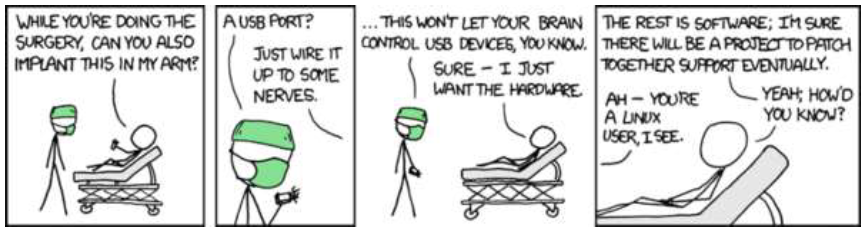
Imagem associada para resolução da questão 

A tirinha acima mostra que 

Alternativas
Ano: 2016 Banca: PUC - SP Órgão: PUC - SP Prova: PUC - SP - 2016 - PUC - SP - Vestibular- Primeiro Semestre |
Q762694 Inglês

The Future of Jobs

http://www3.weforum.org/docs/WEF_Future_of_Jobs.pdf Acessado em 19/09/2016

Today, we are at the beginning of a Fourth Industrial Revolution. Developments in genetics, artificial intelligence, robotics, nanotechnology, 3D printing and biotechnology, to name just a few, are all building on and amplifying one another. This will lay the foundation for a revolution more comprehensive and all-encompassing than anything we have ever seen. Smart systems — homes, factories, farms, grids or cities — will help tackle problems ranging from supply chain management to climate change. The rise of the sharing economy will allow people to monetize everything from their empty house to their car. 

No que se refere à Quarta Revolução Industrial, o texto acima nos informa que
Alternativas
Ano: 2016 Banca: PUC - SP Órgão: PUC - SP Prova: PUC - SP - 2016 - PUC - SP - Vestibular- Primeiro Semestre |
Q762693 Inglês
O comentário ao lado foi postado após um artigo sobre
Alternativas
Ano: 2016 Banca: PUC - SP Órgão: PUC - SP Prova: PUC - SP - 2016 - PUC - SP - Vestibular- Primeiro Semestre |
Q762692 Inglês

The company says it was a monster success 

People Bought Thousands of Hammocks and Crockpots on Amazon Prime Day 

http://time.com/money/4404714/amazon-prime-day-2016-sales-problemscomplaints/?xid=homepage

By Brad Tuttle July 13, 2016 


Maybe Amazon heard all of the complaints about Prime Day from last year and really took them to heart. Some combination of more competitive pricing, a better selection of deals, more awareness among shoppers, and the fact that there are simply way more Amazon Prime members compared with a year ago appears to have made the second edition of Prime Day, held on July 12, a huge success in terms of generating sales.

De acordo com o texto,

Alternativas
Ano: 2016 Banca: PUC - SP Órgão: PUC - SP Prova: PUC - SP - 2016 - PUC - SP - Vestibular- Primeiro Semestre |
Q762691 Inglês

https://qcon-assets-production.s3.amazonaws.com/images/provas/52230/imagem2.jpg


Observando-se a tirinha acima, depreende-se que

Alternativas
Ano: 2016 Banca: PUC - SP Órgão: PUC - SP Prova: PUC - SP - 2016 - PUC - SP - Vestibular- Primeiro Semestre |
Q762690 Inglês

The Heyday of the Silents

GEOFFREY NOWELL-SMITH

By the middle of the 1920s the cinema had reached a peak of splendour which in certain respects it would never again surpass. It is true that there was not synchronized sound, nor Technicolor, except at a very experimental stage. Synchronized sound was to be introduced at the end of the decade, while Technicolor came into use only in the mid 1930s and beyond. Nor, except in isolated cases like Abel Gance's Napoléon (1927), was there anything approaching the wide screen that audiences were to be accustomed to from the 1950s onwards. It is also the case that viewing conditions in many parts of the world, particulary in rural areas, remained maskeshift and primitive.
Source: The Oxford History of World Cinema EDITED BYGEOFFREY NOWELL-SMITH OXFORD UNIVERSITY PRESS 1996 

De acordo com o texto,
Alternativas
Ano: 2016 Banca: PUC - SP Órgão: PUC - SP Prova: PUC - SP - 2016 - PUC - SP - Vestibular- Primeiro Semestre |
Q762689 Inglês

A figura, o texto e o gráfico serão usados nas questão.

Why Finnish babies sleep in cardboard boxes

By Helena Lee, BBC News 4 June 2013 http://www.bbc.com/news/magazine-22751415


For 75 years, Finland's expectant mothers have been given a box by the state. It's like a starter kit of clothes, sheets and toys that can even be used as a bed. And some say it helped Finland achieve one of the world's lowest infant mortality rates. 


Relacionando o gráfico abaixo com a figura e o texto, verifica-se que
Alternativas
Ano: 2016 Banca: PUC - SP Órgão: PUC - SP Prova: PUC - SP - 2016 - PUC - SP - Vestibular- Primeiro Semestre |
Q762688 Inglês

A figura, o texto e o gráfico serão usados nas questão.

Why Finnish babies sleep in cardboard boxes

By Helena Lee, BBC News 4 June 2013 http://www.bbc.com/news/magazine-22751415


For 75 years, Finland's expectant mothers have been given a box by the state. It's like a starter kit of clothes, sheets and toys that can even be used as a bed. And some say it helped Finland achieve one of the world's lowest infant mortality rates. 


Verifique a figura e o texto acima e escolha a alternativa correta.
Alternativas
Ano: 2016 Banca: PUC - SP Órgão: PUC - SP Prova: PUC - SP - 2016 - PUC - SP - Vestibular- Primeiro Semestre |
Q762687 Inglês

A citação de Bernard Shaw permite concluir que, para ele,

Imagem associada para resolução da questão

Alternativas
Ano: 2016 Banca: PUC - RS Órgão: PUC - RS Prova: PUC - RS - 2016 - PUC - RS - Vestibular - Primeiro Semestre - 2º Dia |
Q761516 Inglês
Read the statements below and write
1. for text 1 only 2. for text 2 only 3. for both texts
( ) The text warns against hasty assertions. ( ) The text is conceived in a persuasive style. ( ) The text makes someone’s annoyance explicit. ( ) The text involves the concept of brainwashing. ( ) The text resorts to illustration to enhance the arguments.
The correct top-down sequence to fill in the brackets is
Alternativas
Respostas
2981: C
2982: B
2983: E
2984: B
2985: D
2986: A
2987: B
2988: A
2989: D
2990: C
2991: A
2992: C
2993: B
2994: D
2995: B
2996: C
2997: D
2998: A
2999: D
3000: B