Questões de Vestibular Sobre inglês
Foram encontradas 6.365 questões


I. Research has changed the view of how the Amazon was once populated.
II. The forest was respected by Pre-Columbian Amazonians.
III. Archaeologists found out that Amazonian ancient cultures did not erect any buildings.
The statements are, respectively,
I. Knowledge of human genes may lead to a more customized medical treatment.
II. Technological developments have put a brake on progress in personalized medicine.
III. Trial-and-error approach to healthcare is the basis of a personalized medicine.
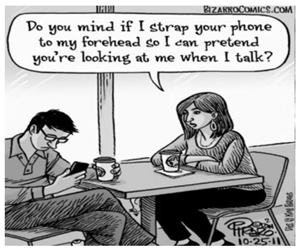
Leia o texto a seguir para responder à questão.
“It’s all we’ve been talking about since November,” says Patrick Franzen, publishing director for SPIE, the international society for optics and photonics. He’s referring to ChatGPT, the artificial intelligence (AI)-powered chatbot unveiled that month. In response to a prompt, ChatGPT can spin out fluent and seemingly well-informed reports, essays — and scientific manuscripts. Worried about the ethics and accuracy of such content, Franzen and managers at other journals are scrambling to protect the scholarly literature from a potential flood of manuscripts written in whole or part by computer programs.
Some publishers have not yet formulated policies. Most of those that have avoid an outright ban on AI-generated text, but ask authors to disclose their use of the automated tools, as SPIE is likely to do. For now, editors and peer reviewers have few alternatives, as they lack enforcement tools. No software so far can consistently detect the synthetic text the majority of the time. [...]
In some cases, the resulting text is indistinguishable from what people would write. For example, researchers who read medical journal abstracts generated by ChatGPT failed to identify one-third of them as written by machine, according to a December 2022 preprint. AI developers are expected to create even more powerful versions, including ones trained specifically on scientific literature — a prospect that has sent a shock wave through the scholarly publishing industry.
So far, scientists report playing around with ChatGPT to explore its capabilities, and a few have listed ChatGPT as a co-author on manuscripts. Publishing experts worry such limited use could morph into a spike of manuscripts containing substantial chunks of AI-written text.
Fonte: BRAINARD, Jeffrey. As scientists explore AI-written text, journals hammer out policies. Science, v. 379, n. 6634, p. 740–741, 22 feb. 2023. Disponível em: https://www.science.org/content/article/scientists-explore-ai-written-text-journals-hammer-policies.
No trecho do último parágrafo do texto “... to explore its capabilities ...”, o termo ITS refere-se a
Leia o texto a seguir para responder à questão.
“It’s all we’ve been talking about since November,” says Patrick Franzen, publishing director for SPIE, the international society for optics and photonics. He’s referring to ChatGPT, the artificial intelligence (AI)-powered chatbot unveiled that month. In response to a prompt, ChatGPT can spin out fluent and seemingly well-informed reports, essays — and scientific manuscripts. Worried about the ethics and accuracy of such content, Franzen and managers at other journals are scrambling to protect the scholarly literature from a potential flood of manuscripts written in whole or part by computer programs.
Some publishers have not yet formulated policies. Most of those that have avoid an outright ban on AI-generated text, but ask authors to disclose their use of the automated tools, as SPIE is likely to do. For now, editors and peer reviewers have few alternatives, as they lack enforcement tools. No software so far can consistently detect the synthetic text the majority of the time. [...]
In some cases, the resulting text is indistinguishable from what people would write. For example, researchers who read medical journal abstracts generated by ChatGPT failed to identify one-third of them as written by machine, according to a December 2022 preprint. AI developers are expected to create even more powerful versions, including ones trained specifically on scientific literature — a prospect that has sent a shock wave through the scholarly publishing industry.
So far, scientists report playing around with ChatGPT to explore its capabilities, and a few have listed ChatGPT as a co-author on manuscripts. Publishing experts worry such limited use could morph into a spike of manuscripts containing substantial chunks of AI-written text.
Fonte: BRAINARD, Jeffrey. As scientists explore AI-written text, journals hammer out policies. Science, v. 379, n. 6634, p. 740–741, 22 feb. 2023. Disponível em: https://www.science.org/content/article/scientists-explore-ai-written-text-journals-hammer-policies.
Leia as asserções destacadas e, em seguida, assinale a alternativa CORRETA.
I. Pesquisadores acostumados a ler artigos de periódicos médicos não conseguem compreender um terço das publicações.
II. Por ora, editores e revisores de publicações científicas têm dificuldades para identificar, de forma consistente, textos gerados por IA, dada a escassez de softwares especializados.
III. Responsáveis por publicações científicas estão relutantes em coibir o uso de geradores de texto por computador, temendo uma potencial enxurrada de críticas por parte da comunidade acadêmica.
IV. A publicação de prospectos gerados por IA, contendo novas versões de alguns artigos científicos específicos, causou uma onda de choque na indústria editorial acadêmica.
Leia o texto a seguir para responder à questão.
“It’s all we’ve been talking about since November,” says Patrick Franzen, publishing director for SPIE, the international society for optics and photonics. He’s referring to ChatGPT, the artificial intelligence (AI)-powered chatbot unveiled that month. In response to a prompt, ChatGPT can spin out fluent and seemingly well-informed reports, essays — and scientific manuscripts. Worried about the ethics and accuracy of such content, Franzen and managers at other journals are scrambling to protect the scholarly literature from a potential flood of manuscripts written in whole or part by computer programs.
Some publishers have not yet formulated policies. Most of those that have avoid an outright ban on AI-generated text, but ask authors to disclose their use of the automated tools, as SPIE is likely to do. For now, editors and peer reviewers have few alternatives, as they lack enforcement tools. No software so far can consistently detect the synthetic text the majority of the time. [...]
In some cases, the resulting text is indistinguishable from what people would write. For example, researchers who read medical journal abstracts generated by ChatGPT failed to identify one-third of them as written by machine, according to a December 2022 preprint. AI developers are expected to create even more powerful versions, including ones trained specifically on scientific literature — a prospect that has sent a shock wave through the scholarly publishing industry.
So far, scientists report playing around with ChatGPT to explore its capabilities, and a few have listed ChatGPT as a co-author on manuscripts. Publishing experts worry such limited use could morph into a spike of manuscripts containing substantial chunks of AI-written text.
Fonte: BRAINARD, Jeffrey. As scientists explore AI-written text, journals hammer out policies. Science, v. 379, n. 6634, p. 740–741, 22 feb. 2023. Disponível em: https://www.science.org/content/article/scientists-explore-ai-written-text-journals-hammer-policies.
Leia o texto a seguir para responder à questão.
“It’s all we’ve been talking about since November,” says Patrick Franzen, publishing director for SPIE, the international society for optics and photonics. He’s referring to ChatGPT, the artificial intelligence (AI)-powered chatbot unveiled that month. In response to a prompt, ChatGPT can spin out fluent and seemingly well-informed reports, essays — and scientific manuscripts. Worried about the ethics and accuracy of such content, Franzen and managers at other journals are scrambling to protect the scholarly literature from a potential flood of manuscripts written in whole or part by computer programs.
Some publishers have not yet formulated policies. Most of those that have avoid an outright ban on AI-generated text, but ask authors to disclose their use of the automated tools, as SPIE is likely to do. For now, editors and peer reviewers have few alternatives, as they lack enforcement tools. No software so far can consistently detect the synthetic text the majority of the time. [...]
In some cases, the resulting text is indistinguishable from what people would write. For example, researchers who read medical journal abstracts generated by ChatGPT failed to identify one-third of them as written by machine, according to a December 2022 preprint. AI developers are expected to create even more powerful versions, including ones trained specifically on scientific literature — a prospect that has sent a shock wave through the scholarly publishing industry.
So far, scientists report playing around with ChatGPT to explore its capabilities, and a few have listed ChatGPT as a co-author on manuscripts. Publishing experts worry such limited use could morph into a spike of manuscripts containing substantial chunks of AI-written text.
Fonte: BRAINARD, Jeffrey. As scientists explore AI-written text, journals hammer out policies. Science, v. 379, n. 6634, p. 740–741, 22 feb. 2023. Disponível em: https://www.science.org/content/article/scientists-explore-ai-written-text-journals-hammer-policies.
Leia o texto a seguir para responder a questão.
The early development of radar was driven primarily by military imperatives, and the targets that were to be detected were mainly aircraft and ships. It was no surprise that echoes were also received from terrain and from rainstorms, but the discovery, during World War II, that birds were often detectable was less expected. As the technology developed, and specially after transmission at the shorter ‘microwave’ wavelengths became commonplace, echoes from insects were also identified. In the late 1940’s and the 1950’s, radar technology was adapted rapidly to the needs of meteorologists, while ornithologists pioneered the use of defence and air-traffic control radars to study bird migration.
Radar observations of insects, however, were relatively sparse until the early 1960’s, when radar meteorologists became rather intensely interested in a type of warm-weather echo that appeared, puzzlingly from their perspective, when there was not a cloud in sight. Perhaps spurred by the meteorologists’ observations, entomologists began their own exploitation of the technology in 1968, when a rather modest radar, built by G.W. Schaefer specifically for insect observation and operated in West Africa just south of the Sahara, proved to be very effective.
Fonte: DRAKE, V.A. and REYNOLDS, D.R. Radar Entomology: Observing Insect Flight and Mi gration. CAB Internacional, 2012.
Leia o texto a seguir para responder a questão.
The early development of radar was driven primarily by military imperatives, and the targets that were to be detected were mainly aircraft and ships. It was no surprise that echoes were also received from terrain and from rainstorms, but the discovery, during World War II, that birds were often detectable was less expected. As the technology developed, and specially after transmission at the shorter ‘microwave’ wavelengths became commonplace, echoes from insects were also identified. In the late 1940’s and the 1950’s, radar technology was adapted rapidly to the needs of meteorologists, while ornithologists pioneered the use of defence and air-traffic control radars to study bird migration.
Radar observations of insects, however, were relatively sparse until the early 1960’s, when radar meteorologists became rather intensely interested in a type of warm-weather echo that appeared, puzzlingly from their perspective, when there was not a cloud in sight. Perhaps spurred by the meteorologists’ observations, entomologists began their own exploitation of the technology in 1968, when a rather modest radar, built by G.W. Schaefer specifically for insect observation and operated in West Africa just south of the Sahara, proved to be very effective.
Fonte: DRAKE, V.A. and REYNOLDS, D.R. Radar Entomology: Observing Insect Flight and Mi gration. CAB Internacional, 2012.
Leia o texto a seguir para responder à questão.
What links Sir Isaac Newton, alien solar systems, and a new multi-million dollar TV show? The answer is “the three-body problem”: a conundrum in astronomy and mathematics that describes why it’s often difficult to predict the long-term trajectory of planets, moons and stars. So, what exactly is the problem? And how did it end up becoming the title of a TV series?
To understand, you first need to know a bit about the background to the TV show and its premise. The story is based on Liu Cixin’s epic sci-fi trilogy, The Remembrance of Earth’s Past, of which The Three-Body Problem is the first book. The original trilogy is characterised by the author’s attention to scientific detail. The adaptation is less so, but still crammed with scientific ideas.
The TV series focuses on the “Oxford Five”, who all studied under the same professor at the University of Oxford. Some have gone on to become scientists themselves (a postdoctoral physics researcher, a founder and chief scientific officer of a nano-tech company, and a theoretical physics academic), one has become a school physics teacher, while the fifth is now a snack-food entrepreneur. Scientific credentials abound.
The crux of the story is that an alien race — called the Trisolarans or San-Ti Ren — is headed to Earth to colonise it. Through intergalactic communication, these travellers attempt to intimidate human scientists into slowing down our rapid technological advancement, making Earth easier to conquer. But why are these aliens so hell-bent on taking over our planet in the first place? This is where the three-body problem comes in.
Bodies, in this context, is a scientific byword for planets, moons, suns or any other massive astronomical object. The extraterrestrials’ home planet is situated in a solar system with three suns, hence their name in the English translation of the book — the Trisolarans. This three-sun system can be highly unstable, making conditions difficult for life, hence the desire to travel across the Universe in order to inhabit our relatively stable Solar System. We only have one Sun, so Earth’s future is relatively predictable — at least for the next few million years.
Fonte: YATES, Kit. What is the three-body problem? The chaotic, cosmic mathematics behind the Netflix TV show. BBC, 2024. Disponível em: https://www.bbc.com/future/article/20240328-the-science-astronomy-and-mathematics-of-netflixs-3-body-problem-tv-show. Adaptado.
“The extraterrestrials’ home planet is situated in a solar system with three suns, hence their name in the English translation of the book – the Trisolarans. This three-sun system can be highly unstable, making conditions difficult for life, hence the desire to travel across the Universe in order to inhabit our relatively stable Solar System.”, retirado do 5º parágrafo, o termo HENCE pode ser substituído, em ambas as ocorrências e sem alteração de sentido, por:
Leia o texto a seguir para responder à questão.
What links Sir Isaac Newton, alien solar systems, and a new multi-million dollar TV show? The answer is “the three-body problem”: a conundrum in astronomy and mathematics that describes why it’s often difficult to predict the long-term trajectory of planets, moons and stars. So, what exactly is the problem? And how did it end up becoming the title of a TV series?
To understand, you first need to know a bit about the background to the TV show and its premise. The story is based on Liu Cixin’s epic sci-fi trilogy, The Remembrance of Earth’s Past, of which The Three-Body Problem is the first book. The original trilogy is characterised by the author’s attention to scientific detail. The adaptation is less so, but still crammed with scientific ideas.
The TV series focuses on the “Oxford Five”, who all studied under the same professor at the University of Oxford. Some have gone on to become scientists themselves (a postdoctoral physics researcher, a founder and chief scientific officer of a nano-tech company, and a theoretical physics academic), one has become a school physics teacher, while the fifth is now a snack-food entrepreneur. Scientific credentials abound.
The crux of the story is that an alien race — called the Trisolarans or San-Ti Ren — is headed to Earth to colonise it. Through intergalactic communication, these travellers attempt to intimidate human scientists into slowing down our rapid technological advancement, making Earth easier to conquer. But why are these aliens so hell-bent on taking over our planet in the first place? This is where the three-body problem comes in.
Bodies, in this context, is a scientific byword for planets, moons, suns or any other massive astronomical object. The extraterrestrials’ home planet is situated in a solar system with three suns, hence their name in the English translation of the book — the Trisolarans. This three-sun system can be highly unstable, making conditions difficult for life, hence the desire to travel across the Universe in order to inhabit our relatively stable Solar System. We only have one Sun, so Earth’s future is relatively predictable — at least for the next few million years.
Fonte: YATES, Kit. What is the three-body problem? The chaotic, cosmic mathematics behind the Netflix TV show. BBC, 2024. Disponível em: https://www.bbc.com/future/article/20240328-the-science-astronomy-and-mathematics-of-netflixs-3-body-problem-tv-show. Adaptado.
Leia o texto a seguir para responder à questão.
What links Sir Isaac Newton, alien solar systems, and a new multi-million dollar TV show? The answer is “the three-body problem”: a conundrum in astronomy and mathematics that describes why it’s often difficult to predict the long-term trajectory of planets, moons and stars. So, what exactly is the problem? And how did it end up becoming the title of a TV series?
To understand, you first need to know a bit about the background to the TV show and its premise. The story is based on Liu Cixin’s epic sci-fi trilogy, The Remembrance of Earth’s Past, of which The Three-Body Problem is the first book. The original trilogy is characterised by the author’s attention to scientific detail. The adaptation is less so, but still crammed with scientific ideas.
The TV series focuses on the “Oxford Five”, who all studied under the same professor at the University of Oxford. Some have gone on to become scientists themselves (a postdoctoral physics researcher, a founder and chief scientific officer of a nano-tech company, and a theoretical physics academic), one has become a school physics teacher, while the fifth is now a snack-food entrepreneur. Scientific credentials abound.
The crux of the story is that an alien race — called the Trisolarans or San-Ti Ren — is headed to Earth to colonise it. Through intergalactic communication, these travellers attempt to intimidate human scientists into slowing down our rapid technological advancement, making Earth easier to conquer. But why are these aliens so hell-bent on taking over our planet in the first place? This is where the three-body problem comes in.
Bodies, in this context, is a scientific byword for planets, moons, suns or any other massive astronomical object. The extraterrestrials’ home planet is situated in a solar system with three suns, hence their name in the English translation of the book — the Trisolarans. This three-sun system can be highly unstable, making conditions difficult for life, hence the desire to travel across the Universe in order to inhabit our relatively stable Solar System. We only have one Sun, so Earth’s future is relatively predictable — at least for the next few million years.
Fonte: YATES, Kit. What is the three-body problem? The chaotic, cosmic mathematics behind the Netflix TV show. BBC, 2024. Disponível em: https://www.bbc.com/future/article/20240328-the-science-astronomy-and-mathematics-of-netflixs-3-body-problem-tv-show. Adaptado.

 Conheça nossos planos