Questões de Vestibular
Sobre pronomes | pronouns em inglês
Foram encontradas 159 questões


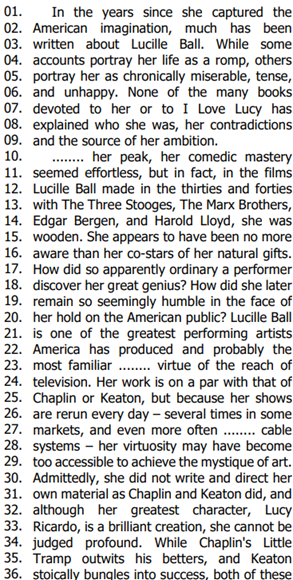
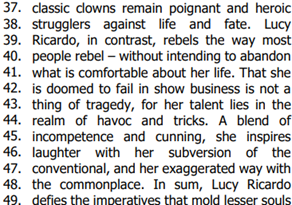
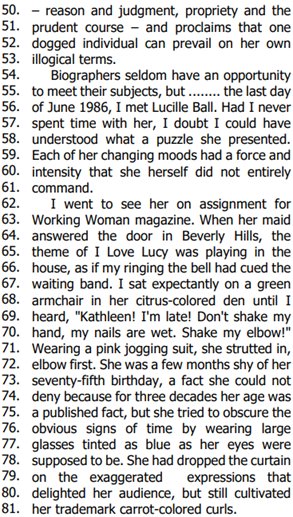
( ) As palavras she (l. 01), she (l. 45), her (l. 57) e herself (l. 60) têm o mesmo referente.
( ) A palavra did (l. 30) substitui o segmento direct her own material (l. 30-31), evitando portanto a repetição desse segmento.
( ) O pronome his (l. 35) refere-se a Chaplin’s Little Tramp (l. 34-35).
( ) O segmento reason and judgment, propriety and the prudent course (l. 50-51) é um aposto que se refere à palavra imperatives (l. 49).
A sequência correta de preenchimento dos parênteses, de cima para baixo, é
Leia o texto.
Harry had the best morning he’d had in a long time. Harry was careful to walk a little way apart from the Dursleys so that Dudley and Piers, [as] they were starting to get bored with the animals by lunchtime, wouldn‘t fall back on Dudley and Piers‘ favorite hobby of hitting Harry. Harry and the Dursleys ate in the zoo restaurant, and when Dudley had a tantrum because his knickerbocker glory didn‘t have enough ice cream on top, Uncle Vernon bought Dudley another knickerbocker glory and Harry was allowed to finish the first. Harry felt, afterward, that he should have known the joy was all too good to last. After lunch Harry and the Durlseys went to the reptile house. The reptile house was cool and dark, with lit windows all along the walls. Behind the glass, all sorts of lizards and snakes were crawling and slithering over bits of wood and stone. Dudley and Piers wanted to see huge, poisonous cobras and thick, man-crushing pythons. Dudley quickly found the largest snake in the place. It could have wrapped its body twice around Uncle Vernon‘s car and crushed the car into a trash can – but at the moment the largest snake in the place didn‘t look in the mood. In fact, the largest snake in the place was fast asleep.
Disponível em: https://www.sjsu.edu/writingcenter/docs/handouts/Pronouns.pdf/. Acesso em 9 set. 2025. Adaptado.
Text for question
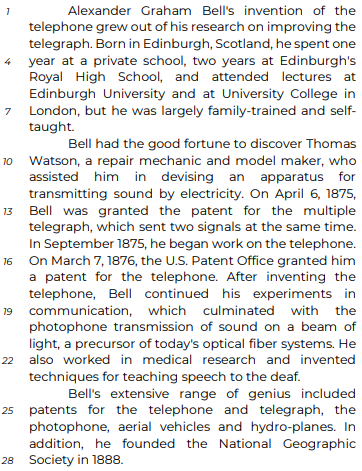
Internet: <https://www.invent.org/inductees/alexander-grahambell> (adapted).
Complete o quadro com os respectivos pronomes.

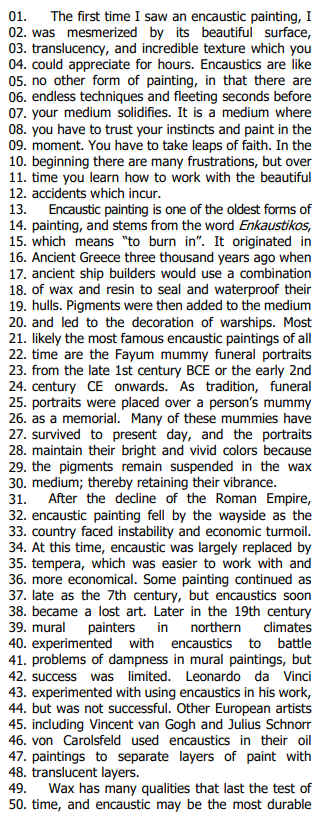
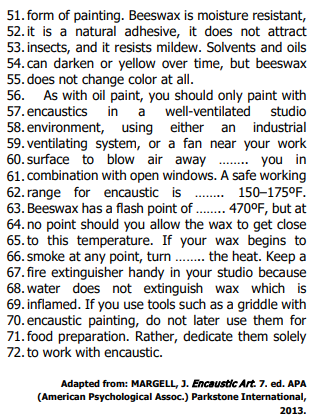
Mark the statements about the use of the word which with T (true) or F (false) according to the text.
( ) The word which (l. 03) could well be omitted with no significant change in meaning.
( ) Replacing which (l. 15) with that would, with no further changes, result in a grammatically accurate sentence.
( ) The removal of the word which from line 35 would require no further change to the sentence.
How should the sequence read from top to bottom?
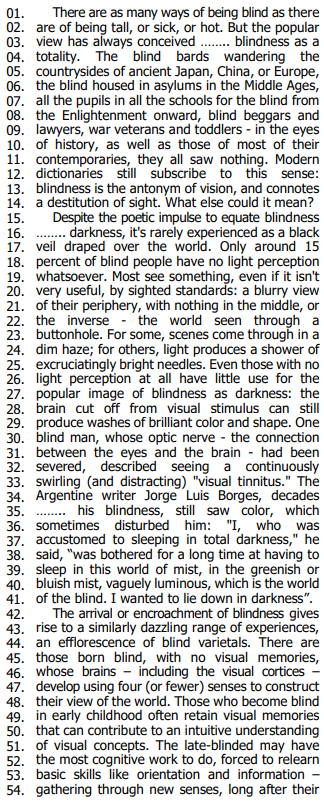
Assinale com V (verdadeiro) ou F (falso) as afirmações abaixo, acerca do texto.
( ) O pronome those (l. 10) refere-se a war veterans (l. 09).
( ) As palavras Most (l. 19), some (l. 23) others (l. 24) those (l. 25) referem-se a blind people.
( ) O pronome whose (l. 30) refere-se a nerve (l. 30).
( ) O pronome which (l. 35) refere-se a blindness (l. 35).
A sequência correta de preenchimento dos parênteses, de cima para baixo, é
I. The person to .......... you spoke yesterday is my neighbour. (whom - which)
II. The car, ............. is parked outside, needs a wash. (which - that)
III. The boy .............. bike was stolen reported it to the police. (which - whose)
IV. The house ............. we bought last year needs some repairs. (that - whom)
V. He is the teacher ......... inspired me to study science. (who - which)
VI. He’s the author of the book about ........ everyone is talking. (who - whom)
Mark the alternative that corresponds to the CORRECT sequence from I to VI, respectively, to complete the sentences.
Adaptado de: O’DONOGHUE, C. The Rachel Incident. New York: Knopf Publishing Group, 2023. p. 10-11.
I - Substituição de like it’s (l. 05) por as if it were.
II - Substituição de he would say (l. 35) por he used to saying.
III- Substituição de it (l. 55) por them.
Quais resultariam gramaticalmente corretas, se aplicadas ao texto?
Instrução: A questão está relacionada ao texto abaixo.
Adapted from: DEHAENE, Stanislas. How we learn: Why brains learn better than any machine… for now. New York: Viking Press, 2020.
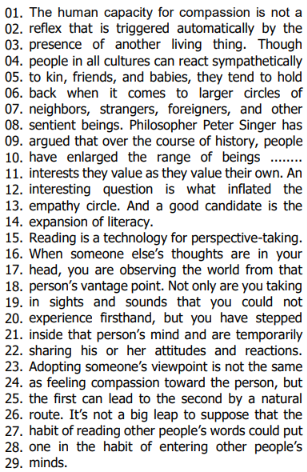
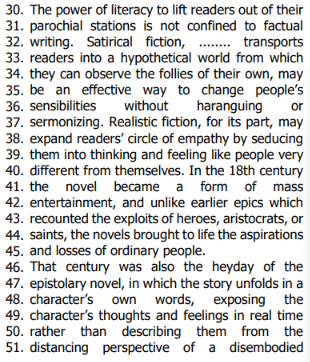
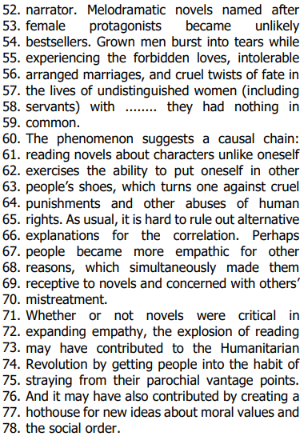
I – The pronoun itself (l. 05) refers to species (l. 04).
II – The pronoun it (l. 07) refers to world (l. 05).
III – The possessive adjective its (l. 69) refers to society (l. 69).
Which ones are correct according to the text?
TEXT II
Avicenna, Arabic Ibn Sīnā, (born 980, near Bukhara, Iran [now in Uzbekistan]—died 1037, Hamadan, Iran), Muslim physician, the most famous and influential of the philosopher-scientists of the medieval Islamic world. He was particularly noted for his contributions in the fields of Aristotelian philosophy and medicine. He composed the Book of the Cure, a vast philosophical and scientific encyclopaedia, and The Canon of Medicine, which is among the most famous books in the history of medicine.
Avicenna did not burst upon an empty Islamic intellectual stage. It is believed that Muslim writer Ibn al-Muqaffaʿ, or possibly his son, had introduced Aristotelian logic to the Islamic world more than two centuries before Avicenna. Al-Kindī, the first Islamic Peripatetic (Aristotelian) philosopher, and Turkish polymath al-Fārābī, from whose book Avicenna would learn Aristotle’s metaphysics, preceded him. Of these luminaries, however, Avicenna remains by far the greatest.
Adapted from https://www.britannica.com/biography/Avicenna
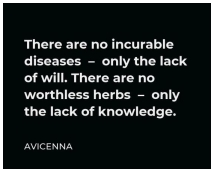
Here is one of his sayings:

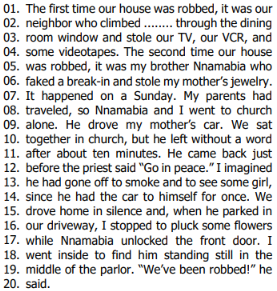
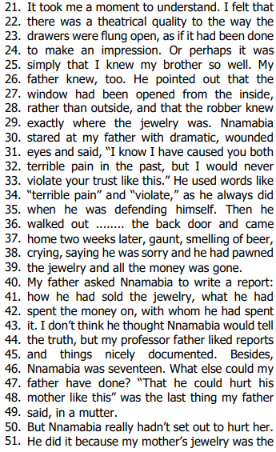
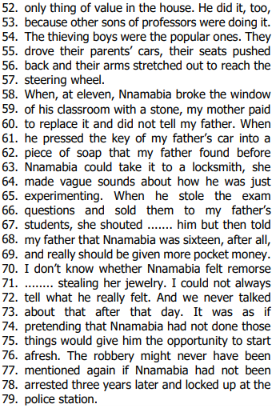
I - A substituição do pronome he (l. 13) por they implicaria a modificação de duas outras palavras na frase que o contém.
II - O uso da voz passiva na oração the window had been opened from the inside (l. 26-27) indica que existe certeza quanto a quem executou a ação descrita.
III- As ocorrências do pronome it, nas linhas 51, 52 e 53, têm como referente o roubo das joias da mãe de Nnamabia.
Quais estão corretas?

 Conheça nossos planos