Questões de Vestibular
Sobre interpretação de texto | reading comprehension em inglês
Foram encontradas 5.175 questões


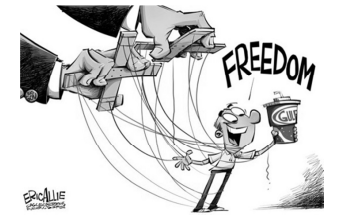
Read the following cartoon.
Internet: <www.baileyaplangandcomp.wordpress.com>.
The cartoon above conveys the idea that, in general, people.
are fooled as to their notion of freedom.
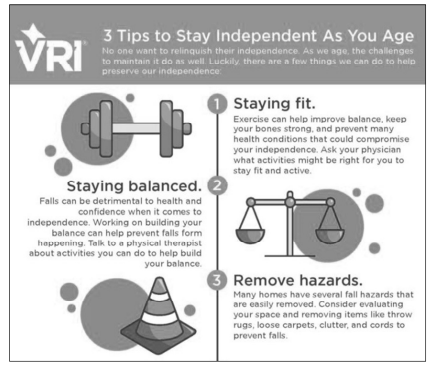
Read the following infographic.
Internet: <www.vricares.com> (adapted)
The text suggests that both professional help and changes at home are important to have better health and keep one’s independence.
Read the following infographic.
Internet: <www.vricares.com> (adapted)
In section 1, it would be correct to use Exercising instead of “Exercise”, which, despite causing a slight difference in meaning, would not change the message conveyed.
Read the following infographic.
Internet: <www.vricares.com> (adapted)
Based on the infographic presented, judge the follow item.
The infographic is meant to help people with serious illnesses to be more independent.
Read the following infographic.
Internet: <www.vricares.com> (adapted)
Section 3 is concerned with hygiene and cleanliness in people’s houses, which is why words such as “rugs”, “carpets” and “clutter” are mentioned.
Judge the follow item concerning the ideas and linguistic features of the previous text.
The last paragraph points out that a geopolitically construed notion of freedom has become a universally accepted one through international law.
If the ideas defended in the text were applied to the global context of relations among countries, it would be correct to conclude that countries, in general, are never completely independent.
Judge the follow item concerning the ideas and linguistic features of the previous text.
For the author, given their universal and absolute character, human rights are one of the few exceptions to the limits imposed by the freedom of others.
The passage “the broader political and intellectual context of the time, full of conceptual innovations” (in the last sentence of the first paragraph) could be correctly rewritten as a context of greater political and intellectual changes happening during an era when all innovations were of an abstract nature, without changing its meaning.
Based on the text presented, judge the follow item.
The last sentence of the text would still be correct and maintain its original meaning if a comma were placed before “who”, and another after “politics”.
Not only does the text oppose the ideas of continuity and innovation in the context of Brazilian independence, but it also indicates that historians do not have a unanimous view on the topic.
Based on the text presented, judge the follow item.
The author claims that the Brazilian independence process stemmed partly from events prior to 1807, which were not mentioned in the text.
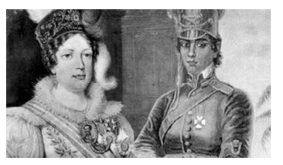
The statement that, in general, women were to be concerned solely with their homes and families is explained by the gender-based division of social tasks and roles in effect at that time in Brazil.
In the title of the letter alluded to in the first paragraph, the word “her” is used four times with the same meaning and could correctly be replaced by his in all four cases, had the letter been written to the Prince.
Considering the ideas and linguistic aspects of the text above, judge the follow item.
It can be correctly inferred from the text that the general public is unaware of many different facts which led to Brazilian independence.
are examples of the “famous figures” alluded to at the beginning of the second paragraph of the text.
Essential reading on, and beyond, Indigenous Peoples Day
Essential reading on, and beyond, Indigenous Peoples Day
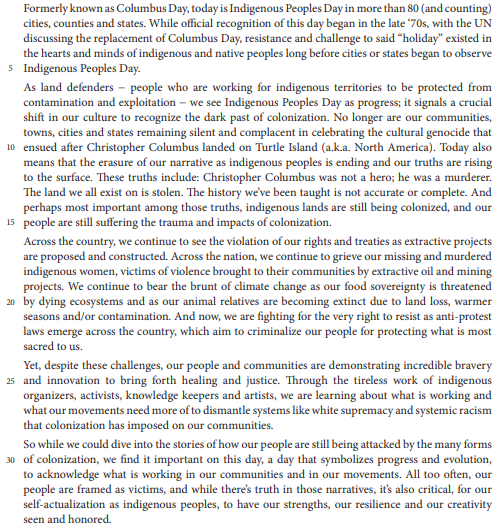
and while there’s truth in those narratives, it’s also critical, (l. 32)
The linker and while in the fragment above expresses contrast.
A similar meaning is conveyed in:
Essential reading on, and beyond, Indigenous Peoples Day
to acknowledge what is working in our communities and in our movements. (l. 31)
The underlined word may be substituted, without significant change in meaning, by the one below:
Essential reading on, and beyond, Indigenous Peoples Day
what is most sacred to us. (l. 22-23)
Regarding the indigenous peoples, the fragment above refers to the following elements:

 Conheça nossos planos