Questões de Vestibular Sobre interpretação de texto | reading comprehension em inglês

Foram encontradas 5.299 questões

Ano: 2022 Banca: FGV Órgão: FEMPAR Prova: FGV - 2022 - FEMPAR - Vestibular - Medicina |
Q4142176 Inglês

Read the text below and answer the question. 


Advancing gender equity in medicine


        […]


        The problem of gender inequity in medical leadership is not the result of too few candidates who are not men with the appropriate experience and training to fulfill leadership roles, nor can it be explained by merely suggesting that different genders do not have the same aspirations as men. Gender inequity is largely underpinned by socially constructed gender norms, roles and relations. For example, gender roles explain why female clinicians with children spend 100.2 minutes more per day on household activities and child care than their male counterparts. This makes it more challenging for female clinicians with children to get ahead. Gender norms explain why more men are given leadership opportunities and have stronger letters of reference than other genders. Furthermore, gender relations explain why men have fewer consequences for uncivil behaviour or for harassment in the workplace compared with other genders. A recent observational study of operating room culture evaluated the prevalence and predictors of exposure to disruptive behaviour in the operating room. Disruptive behaviour was described as a range of unacceptable workplace behaviours, including incivility, bullying and harassment. A further definition provided is “interpersonal behaviour (i.e., directed toward others or occurring in the presence of others) that results in a perceived threat to victims and/or witnesses and violates a reasonable person’s standard of respectful behaviour.” The study found that clinicians who are women report more exposure to disruptive behaviour and are substantially less confident or empowered to take action to address incivility in their hospital and university settings. Gender and sexual harassment may be associated with environments that exhibit gender inequity in pay, opportunity and promotion. Disruptive behaviour and overt harassment likely endure within our medical institutions because the offenders are often considered invaluable to the organization for their stature, leadership, productivity or reputation, and are largely not held unaccountable for their actions, which further amplifies gender inequities.


        Ensuring gender equity in medicine is an issue of justice and rights. Having more physicians who are women and more women in health policy leadership also appears to enhance the provision of high-quality patient care. Large, well-conducted observational studies have shown that patients of female clinicians experience better quality of care for diabetes, and significantly lower rates of mortality, hospital readmissions and emergency department visits than those treated by male clinicians. One study considered that reasons for this may include that women spend more time with their patients, are more patient-centred in their approach and provide more evidence-based care. Two recent opinion pieces discuss research showing that female representation on corporate boards, such as hospital boards, results in more socially thoughtful decisions and less corruption. Without gender equity, we risk extinguishing creative solutions to complex health problems and, most importantly, limiting patient access to the best care. 


From: https://www.ncbi.nlm.nih.gov/pmc/articles/PMC8034331/ CMAJ. 2021 Feb 16; 193(7): E244–E250.

“Nor” in “nor can it be explained” (1st paragraph) signals a(n)
Alternativas
Ano: 2022 Banca: FGV Órgão: FEMPAR Prova: FGV - 2022 - FEMPAR - Vestibular - Medicina |
Q4142175 Inglês

Read the text below and answer the question. 


Advancing gender equity in medicine


        […]


        The problem of gender inequity in medical leadership is not the result of too few candidates who are not men with the appropriate experience and training to fulfill leadership roles, nor can it be explained by merely suggesting that different genders do not have the same aspirations as men. Gender inequity is largely underpinned by socially constructed gender norms, roles and relations. For example, gender roles explain why female clinicians with children spend 100.2 minutes more per day on household activities and child care than their male counterparts. This makes it more challenging for female clinicians with children to get ahead. Gender norms explain why more men are given leadership opportunities and have stronger letters of reference than other genders. Furthermore, gender relations explain why men have fewer consequences for uncivil behaviour or for harassment in the workplace compared with other genders. A recent observational study of operating room culture evaluated the prevalence and predictors of exposure to disruptive behaviour in the operating room. Disruptive behaviour was described as a range of unacceptable workplace behaviours, including incivility, bullying and harassment. A further definition provided is “interpersonal behaviour (i.e., directed toward others or occurring in the presence of others) that results in a perceived threat to victims and/or witnesses and violates a reasonable person’s standard of respectful behaviour.” The study found that clinicians who are women report more exposure to disruptive behaviour and are substantially less confident or empowered to take action to address incivility in their hospital and university settings. Gender and sexual harassment may be associated with environments that exhibit gender inequity in pay, opportunity and promotion. Disruptive behaviour and overt harassment likely endure within our medical institutions because the offenders are often considered invaluable to the organization for their stature, leadership, productivity or reputation, and are largely not held unaccountable for their actions, which further amplifies gender inequities.


        Ensuring gender equity in medicine is an issue of justice and rights. Having more physicians who are women and more women in health policy leadership also appears to enhance the provision of high-quality patient care. Large, well-conducted observational studies have shown that patients of female clinicians experience better quality of care for diabetes, and significantly lower rates of mortality, hospital readmissions and emergency department visits than those treated by male clinicians. One study considered that reasons for this may include that women spend more time with their patients, are more patient-centred in their approach and provide more evidence-based care. Two recent opinion pieces discuss research showing that female representation on corporate boards, such as hospital boards, results in more socially thoughtful decisions and less corruption. Without gender equity, we risk extinguishing creative solutions to complex health problems and, most importantly, limiting patient access to the best care. 


From: https://www.ncbi.nlm.nih.gov/pmc/articles/PMC8034331/ CMAJ. 2021 Feb 16; 193(7): E244–E250.

The last sentence carries a
Alternativas
Ano: 2022 Banca: FGV Órgão: FEMPAR Prova: FGV - 2022 - FEMPAR - Vestibular - Medicina |
Q4142174 Inglês

Read the text below and answer the question. 


Advancing gender equity in medicine


        […]


        The problem of gender inequity in medical leadership is not the result of too few candidates who are not men with the appropriate experience and training to fulfill leadership roles, nor can it be explained by merely suggesting that different genders do not have the same aspirations as men. Gender inequity is largely underpinned by socially constructed gender norms, roles and relations. For example, gender roles explain why female clinicians with children spend 100.2 minutes more per day on household activities and child care than their male counterparts. This makes it more challenging for female clinicians with children to get ahead. Gender norms explain why more men are given leadership opportunities and have stronger letters of reference than other genders. Furthermore, gender relations explain why men have fewer consequences for uncivil behaviour or for harassment in the workplace compared with other genders. A recent observational study of operating room culture evaluated the prevalence and predictors of exposure to disruptive behaviour in the operating room. Disruptive behaviour was described as a range of unacceptable workplace behaviours, including incivility, bullying and harassment. A further definition provided is “interpersonal behaviour (i.e., directed toward others or occurring in the presence of others) that results in a perceived threat to victims and/or witnesses and violates a reasonable person’s standard of respectful behaviour.” The study found that clinicians who are women report more exposure to disruptive behaviour and are substantially less confident or empowered to take action to address incivility in their hospital and university settings. Gender and sexual harassment may be associated with environments that exhibit gender inequity in pay, opportunity and promotion. Disruptive behaviour and overt harassment likely endure within our medical institutions because the offenders are often considered invaluable to the organization for their stature, leadership, productivity or reputation, and are largely not held unaccountable for their actions, which further amplifies gender inequities.


        Ensuring gender equity in medicine is an issue of justice and rights. Having more physicians who are women and more women in health policy leadership also appears to enhance the provision of high-quality patient care. Large, well-conducted observational studies have shown that patients of female clinicians experience better quality of care for diabetes, and significantly lower rates of mortality, hospital readmissions and emergency department visits than those treated by male clinicians. One study considered that reasons for this may include that women spend more time with their patients, are more patient-centred in their approach and provide more evidence-based care. Two recent opinion pieces discuss research showing that female representation on corporate boards, such as hospital boards, results in more socially thoughtful decisions and less corruption. Without gender equity, we risk extinguishing creative solutions to complex health problems and, most importantly, limiting patient access to the best care. 


From: https://www.ncbi.nlm.nih.gov/pmc/articles/PMC8034331/ CMAJ. 2021 Feb 16; 193(7): E244–E250.

According to the text, some offenders may get away with punishment because of their 
Alternativas
Ano: 2022 Banca: FGV Órgão: FEMPAR Prova: FGV - 2022 - FEMPAR - Vestibular - Medicina |
Q4142173 Inglês

Read the text below and answer the question. 


Advancing gender equity in medicine


        […]


        The problem of gender inequity in medical leadership is not the result of too few candidates who are not men with the appropriate experience and training to fulfill leadership roles, nor can it be explained by merely suggesting that different genders do not have the same aspirations as men. Gender inequity is largely underpinned by socially constructed gender norms, roles and relations. For example, gender roles explain why female clinicians with children spend 100.2 minutes more per day on household activities and child care than their male counterparts. This makes it more challenging for female clinicians with children to get ahead. Gender norms explain why more men are given leadership opportunities and have stronger letters of reference than other genders. Furthermore, gender relations explain why men have fewer consequences for uncivil behaviour or for harassment in the workplace compared with other genders. A recent observational study of operating room culture evaluated the prevalence and predictors of exposure to disruptive behaviour in the operating room. Disruptive behaviour was described as a range of unacceptable workplace behaviours, including incivility, bullying and harassment. A further definition provided is “interpersonal behaviour (i.e., directed toward others or occurring in the presence of others) that results in a perceived threat to victims and/or witnesses and violates a reasonable person’s standard of respectful behaviour.” The study found that clinicians who are women report more exposure to disruptive behaviour and are substantially less confident or empowered to take action to address incivility in their hospital and university settings. Gender and sexual harassment may be associated with environments that exhibit gender inequity in pay, opportunity and promotion. Disruptive behaviour and overt harassment likely endure within our medical institutions because the offenders are often considered invaluable to the organization for their stature, leadership, productivity or reputation, and are largely not held unaccountable for their actions, which further amplifies gender inequities.


        Ensuring gender equity in medicine is an issue of justice and rights. Having more physicians who are women and more women in health policy leadership also appears to enhance the provision of high-quality patient care. Large, well-conducted observational studies have shown that patients of female clinicians experience better quality of care for diabetes, and significantly lower rates of mortality, hospital readmissions and emergency department visits than those treated by male clinicians. One study considered that reasons for this may include that women spend more time with their patients, are more patient-centred in their approach and provide more evidence-based care. Two recent opinion pieces discuss research showing that female representation on corporate boards, such as hospital boards, results in more socially thoughtful decisions and less corruption. Without gender equity, we risk extinguishing creative solutions to complex health problems and, most importantly, limiting patient access to the best care. 


From: https://www.ncbi.nlm.nih.gov/pmc/articles/PMC8034331/ CMAJ. 2021 Feb 16; 193(7): E244–E250.

Based on the text, mark the statements below as true (T) or false (F).


( ) Gender inequity in medical leadership is due to few women who want to take leading positions.


( ) Difference between genders has little effect when disciplining transgressive attitudes at work.


( ) Women physicians have been found to improve the quality of health care services.


The statements are, respectively,

Alternativas
Ano: 2022 Banca: VUNESP Órgão: EINSTEIN Prova: VUNESP - 2022 - EINSTEIN - Vestibular Unificado - Prova I |
Q4112851 Inglês

Read the advertisement.

Imagem associada para resolução da questão


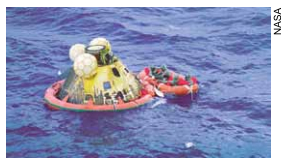
The advertisement uses text and the image of two women astronauts in spacesuits to suggest that both the bath oil “Skin-So-Soft” and the suit
Alternativas
Ano: 2022 Banca: VUNESP Órgão: EINSTEIN Prova: VUNESP - 2022 - EINSTEIN - Vestibular Unificado - Prova I |
Q4112850 Inglês
Read the text to answer question

    In the late 1960s, following the Apollo 11 Moon landings, the three astronauts were waiting to be picked up inside their capsule floating in the Pacific Ocean — and they were hot and uncomfortable. NASA officials decided to make things more pleasant for their three national heroes. The downside? There was a small possibility of unleashing deadly alien microbes on Earth.
    When humanity first made plans to send probes and people into space in the mid-20th Century, the issue of contamination came up. Firstly, there was the fear of “forward” contamination — the possibility that Earth-based life might accidentally hitch a ride into the cosmos. Spacecraft needed to be sterilised and carefully packaged before launch. If microbes silently moved onboard, it would confuse any attempts to detect alien life. And if there were extra-terrestrial organisms out there, we might end up inadvertently killing them with Earth-based bacteria or viruses. These concerns matter just as much today as they did back in the Space Race era.
   A second concern was “back” contamination. This was the idea that astronauts, rockets or probes returning to Earth might bring back life that could prove catastrophic, either by consuming all our oxygen or outcompeting Earth organisms. What if the astronauts brought back something dangerous? At the time, the probability was not considered high, but still, the scenario had to be explored. “Maybe it’s sure to 99% that Apollo 11 will not bring back lunar organisms,” said one influential scientist at the time, “but even that 1% of uncertainty is too large to be complacent about.”
    NASA put several quarantine measures in place — in some cases, a little reluctantly. Concerned officials from the US Public Health Service argued for stricter measures than initially planned, pointing out that they had the power to refuse border entry to contaminated astronauts. NASA then agreed to install a costly quarantine facility on the ship that would pick up the men from their splashdown in the Pacific Ocean. It was also agreed that the lunar explorers would then spend three weeks in isolation before they could hug their families or shake the hand of the president.

(Richard Fisher. www.bbc.com, 18.02.2021. Adapted.)
According to the third and fourth paragraphs, the disputes over the potential risks posed by the return of Apollo 11 from outer space were eventually settled as follows:
Alternativas
Ano: 2022 Banca: VUNESP Órgão: EINSTEIN Prova: VUNESP - 2022 - EINSTEIN - Vestibular Unificado - Prova I |
Q4112849 Inglês
Read the text to answer question

    In the late 1960s, following the Apollo 11 Moon landings, the three astronauts were waiting to be picked up inside their capsule floating in the Pacific Ocean — and they were hot and uncomfortable. NASA officials decided to make things more pleasant for their three national heroes. The downside? There was a small possibility of unleashing deadly alien microbes on Earth.
    When humanity first made plans to send probes and people into space in the mid-20th Century, the issue of contamination came up. Firstly, there was the fear of “forward” contamination — the possibility that Earth-based life might accidentally hitch a ride into the cosmos. Spacecraft needed to be sterilised and carefully packaged before launch. If microbes silently moved onboard, it would confuse any attempts to detect alien life. And if there were extra-terrestrial organisms out there, we might end up inadvertently killing them with Earth-based bacteria or viruses. These concerns matter just as much today as they did back in the Space Race era.
   A second concern was “back” contamination. This was the idea that astronauts, rockets or probes returning to Earth might bring back life that could prove catastrophic, either by consuming all our oxygen or outcompeting Earth organisms. What if the astronauts brought back something dangerous? At the time, the probability was not considered high, but still, the scenario had to be explored. “Maybe it’s sure to 99% that Apollo 11 will not bring back lunar organisms,” said one influential scientist at the time, “but even that 1% of uncertainty is too large to be complacent about.”
    NASA put several quarantine measures in place — in some cases, a little reluctantly. Concerned officials from the US Public Health Service argued for stricter measures than initially planned, pointing out that they had the power to refuse border entry to contaminated astronauts. NASA then agreed to install a costly quarantine facility on the ship that would pick up the men from their splashdown in the Pacific Ocean. It was also agreed that the lunar explorers would then spend three weeks in isolation before they could hug their families or shake the hand of the president.

(Richard Fisher. www.bbc.com, 18.02.2021. Adapted.)
In the second paragraph, “‘forward’ contamination” is explained as contamination which
Alternativas
Ano: 2022 Banca: VUNESP Órgão: EINSTEIN Prova: VUNESP - 2022 - EINSTEIN - Vestibular Unificado - Prova I |
Q4112848 Inglês
Read the text to answer question

    In the late 1960s, following the Apollo 11 Moon landings, the three astronauts were waiting to be picked up inside their capsule floating in the Pacific Ocean — and they were hot and uncomfortable. NASA officials decided to make things more pleasant for their three national heroes. The downside? There was a small possibility of unleashing deadly alien microbes on Earth.
    When humanity first made plans to send probes and people into space in the mid-20th Century, the issue of contamination came up. Firstly, there was the fear of “forward” contamination — the possibility that Earth-based life might accidentally hitch a ride into the cosmos. Spacecraft needed to be sterilised and carefully packaged before launch. If microbes silently moved onboard, it would confuse any attempts to detect alien life. And if there were extra-terrestrial organisms out there, we might end up inadvertently killing them with Earth-based bacteria or viruses. These concerns matter just as much today as they did back in the Space Race era.
   A second concern was “back” contamination. This was the idea that astronauts, rockets or probes returning to Earth might bring back life that could prove catastrophic, either by consuming all our oxygen or outcompeting Earth organisms. What if the astronauts brought back something dangerous? At the time, the probability was not considered high, but still, the scenario had to be explored. “Maybe it’s sure to 99% that Apollo 11 will not bring back lunar organisms,” said one influential scientist at the time, “but even that 1% of uncertainty is too large to be complacent about.”
    NASA put several quarantine measures in place — in some cases, a little reluctantly. Concerned officials from the US Public Health Service argued for stricter measures than initially planned, pointing out that they had the power to refuse border entry to contaminated astronauts. NASA then agreed to install a costly quarantine facility on the ship that would pick up the men from their splashdown in the Pacific Ocean. It was also agreed that the lunar explorers would then spend three weeks in isolation before they could hug their families or shake the hand of the president.

(Richard Fisher. www.bbc.com, 18.02.2021. Adapted.)
The first paragraph mentions
Alternativas
Ano: 2022 Banca: VUNESP Órgão: EINSTEIN Prova: VUNESP - 2022 - EINSTEIN - Vestibular Unificado - Prova I |
Q4112847 Inglês
Read the text to answer question

    In the late 1960s, following the Apollo 11 Moon landings, the three astronauts were waiting to be picked up inside their capsule floating in the Pacific Ocean — and they were hot and uncomfortable. NASA officials decided to make things more pleasant for their three national heroes. The downside? There was a small possibility of unleashing deadly alien microbes on Earth.
    When humanity first made plans to send probes and people into space in the mid-20th Century, the issue of contamination came up. Firstly, there was the fear of “forward” contamination — the possibility that Earth-based life might accidentally hitch a ride into the cosmos. Spacecraft needed to be sterilised and carefully packaged before launch. If microbes silently moved onboard, it would confuse any attempts to detect alien life. And if there were extra-terrestrial organisms out there, we might end up inadvertently killing them with Earth-based bacteria or viruses. These concerns matter just as much today as they did back in the Space Race era.
   A second concern was “back” contamination. This was the idea that astronauts, rockets or probes returning to Earth might bring back life that could prove catastrophic, either by consuming all our oxygen or outcompeting Earth organisms. What if the astronauts brought back something dangerous? At the time, the probability was not considered high, but still, the scenario had to be explored. “Maybe it’s sure to 99% that Apollo 11 will not bring back lunar organisms,” said one influential scientist at the time, “but even that 1% of uncertainty is too large to be complacent about.”
    NASA put several quarantine measures in place — in some cases, a little reluctantly. Concerned officials from the US Public Health Service argued for stricter measures than initially planned, pointing out that they had the power to refuse border entry to contaminated astronauts. NASA then agreed to install a costly quarantine facility on the ship that would pick up the men from their splashdown in the Pacific Ocean. It was also agreed that the lunar explorers would then spend three weeks in isolation before they could hug their families or shake the hand of the president.

(Richard Fisher. www.bbc.com, 18.02.2021. Adapted.)
The text discusses
Alternativas
Ano: 2022 Banca: CECIERJ Órgão: CEDERJ Prova: CECIERJ - 2022 - CEDERJ - Vestibular - Primeiro Semestre |
Q3777442 Inglês

Online Education and Its Effective Practice: A Research Review


By: Anna Sun, Xiufang Chen 


   Online education is here to stay and grow. The review of its history clearly shows that online education has developed rapidly, mostly as a result of Internet connectivity, advanced technology, and a massive market. It has evolved from 19th century correspondence programs to the 21st century’s vibrant and well-designed institutional online courses.


   The fast development of the Internet and the World Wide Web (WWW) has produced numerous benefits to education. Online education provides potential opportunities to open new markets for higher education institutions. Many adult learners may enjoy the flexibility when they have to balance work, study, and family responsibilities. The wide range of various technology advancements used by universities’ online programs may promote the interaction between students and instructors, and among students at large. Finally, the upgraded technology and software may allow instructors, students, and university administrators to collect data, feedback, and evaluation regarding their online experiences.


   We can anticipate that online education will continue to increase its presence and influence higher education through a vigorous process of reshaping, refining, and restructuring. It is unlikely, however, to replace entirely traditional higher education, but merely to be an alternative. But, because of its flexibility and accessibility, online education is gaining in popularity, especially for people who are otherwise unable to obtain education because of physical distance, schedule conflicts, and unaffordable costs.


Available in: https://www.informingscience.org/

Publications/3502. Access 28 set. 2022. Adapted

The authors’ opinion about the future of online education, in the context of higher education (university), expresses their:
Alternativas
Ano: 2022 Banca: CECIERJ Órgão: CEDERJ Prova: CECIERJ - 2022 - CEDERJ - Vestibular - Primeiro Semestre |
Q3777441 Inglês

Online Education and Its Effective Practice: A Research Review


By: Anna Sun, Xiufang Chen 


   Online education is here to stay and grow. The review of its history clearly shows that online education has developed rapidly, mostly as a result of Internet connectivity, advanced technology, and a massive market. It has evolved from 19th century correspondence programs to the 21st century’s vibrant and well-designed institutional online courses.


   The fast development of the Internet and the World Wide Web (WWW) has produced numerous benefits to education. Online education provides potential opportunities to open new markets for higher education institutions. Many adult learners may enjoy the flexibility when they have to balance work, study, and family responsibilities. The wide range of various technology advancements used by universities’ online programs may promote the interaction between students and instructors, and among students at large. Finally, the upgraded technology and software may allow instructors, students, and university administrators to collect data, feedback, and evaluation regarding their online experiences.


   We can anticipate that online education will continue to increase its presence and influence higher education through a vigorous process of reshaping, refining, and restructuring. It is unlikely, however, to replace entirely traditional higher education, but merely to be an alternative. But, because of its flexibility and accessibility, online education is gaining in popularity, especially for people who are otherwise unable to obtain education because of physical distance, schedule conflicts, and unaffordable costs.


Available in: https://www.informingscience.org/

Publications/3502. Access 28 set. 2022. Adapted

Two of the benefits of online education, according to the text, are:
Alternativas
Ano: 2022 Banca: CECIERJ Órgão: CEDERJ Prova: CECIERJ - 2022 - CEDERJ - Vestibular - Primeiro Semestre |
Q3777440 Inglês

Online Education and Its Effective Practice: A Research Review


By: Anna Sun, Xiufang Chen 


   Online education is here to stay and grow. The review of its history clearly shows that online education has developed rapidly, mostly as a result of Internet connectivity, advanced technology, and a massive market. It has evolved from 19th century correspondence programs to the 21st century’s vibrant and well-designed institutional online courses.


   The fast development of the Internet and the World Wide Web (WWW) has produced numerous benefits to education. Online education provides potential opportunities to open new markets for higher education institutions. Many adult learners may enjoy the flexibility when they have to balance work, study, and family responsibilities. The wide range of various technology advancements used by universities’ online programs may promote the interaction between students and instructors, and among students at large. Finally, the upgraded technology and software may allow instructors, students, and university administrators to collect data, feedback, and evaluation regarding their online experiences.


   We can anticipate that online education will continue to increase its presence and influence higher education through a vigorous process of reshaping, refining, and restructuring. It is unlikely, however, to replace entirely traditional higher education, but merely to be an alternative. But, because of its flexibility and accessibility, online education is gaining in popularity, especially for people who are otherwise unable to obtain education because of physical distance, schedule conflicts, and unaffordable costs.


Available in: https://www.informingscience.org/

Publications/3502. Access 28 set. 2022. Adapted

Internet connectivity, advanced technology, and a massive market are mentioned, in the text, as:
Alternativas
Ano: 2022 Banca: CECIERJ Órgão: CEDERJ Prova: CECIERJ - 2022 - CEDERJ - Vestibular - Segundo Semestre |
Q3776467 Inglês
WHAT IS SOCIAL MEDIA ADDICTION?


Whether you use social media to connect with friends and loved ones, watch videos, or simply “kill time,” the popularity of this pastime has increased significantly over the last decade. This is especially the case in children and teenagers, as well as young to middle-aged adults.

So, how does a seemingly harmless hobby turn into an “addiction”?

Like other types of behavioral addictions, using social media can influence your brain in harmful ways. Moreover, you may use social media compulsively and excessively. You can also become so accustomed to scrolling through posts, images, and videos that it interferes with other areas of your life.

Not everyone who uses social media will develop an addiction. Since this activity is becoming more accessible to more people, though, more people may develop an addiction to social media at some point in their lives.


How do you know if you have social media addiction?


A mental health professional can help you determine whether you truly have social media addiction or just really enjoy using it a lot. But there are a few key differences between social media addiction and a habit that you enjoy. These include:


 negative effects to your job or schoolwork due to the overuse of social media.

 increased use during other activities, such as hanging out with friends and family, or while eating.

 increased reliance on social media as a way to cope with problems.

 restlessness and irritability whenever you’re not using social media.

• anger whenever social media usage is reduced.


How can you decrease social media use and prevent its addiction?

Consider the following tips to help you achieve a healthier balance with social media:


 Turn off your personal phone during work, as well as during school, meals, and recreational activities. You can also adjust the setting on each social media app so you can turn off certain notifications.

 Set aside a certain amount of time dedicated to social media per day. Turn on a timer to help keep you accountable.

 Take up a new hobby that’s not technologyrelated. Examples include sports, art, cooking classes, and more. Let yourself be in control of your life — not your social media account.


Available at: https://www.healthline.com/health/socialmedia-addiction#decreasing-use. Access: 30 April 2022.
The use of the verbs in the imperative form (set aside, turn off, take up), in the third section of the article, indicates that the items in the list are:
Alternativas
Ano: 2022 Banca: CECIERJ Órgão: CEDERJ Prova: CECIERJ - 2022 - CEDERJ - Vestibular - Segundo Semestre |
Q3776466 Inglês
WHAT IS SOCIAL MEDIA ADDICTION?


Whether you use social media to connect with friends and loved ones, watch videos, or simply “kill time,” the popularity of this pastime has increased significantly over the last decade. This is especially the case in children and teenagers, as well as young to middle-aged adults.

So, how does a seemingly harmless hobby turn into an “addiction”?

Like other types of behavioral addictions, using social media can influence your brain in harmful ways. Moreover, you may use social media compulsively and excessively. You can also become so accustomed to scrolling through posts, images, and videos that it interferes with other areas of your life.

Not everyone who uses social media will develop an addiction. Since this activity is becoming more accessible to more people, though, more people may develop an addiction to social media at some point in their lives.


How do you know if you have social media addiction?


A mental health professional can help you determine whether you truly have social media addiction or just really enjoy using it a lot. But there are a few key differences between social media addiction and a habit that you enjoy. These include:


 negative effects to your job or schoolwork due to the overuse of social media.

 increased use during other activities, such as hanging out with friends and family, or while eating.

 increased reliance on social media as a way to cope with problems.

 restlessness and irritability whenever you’re not using social media.

• anger whenever social media usage is reduced.


How can you decrease social media use and prevent its addiction?

Consider the following tips to help you achieve a healthier balance with social media:


 Turn off your personal phone during work, as well as during school, meals, and recreational activities. You can also adjust the setting on each social media app so you can turn off certain notifications.

 Set aside a certain amount of time dedicated to social media per day. Turn on a timer to help keep you accountable.

 Take up a new hobby that’s not technologyrelated. Examples include sports, art, cooking classes, and more. Let yourself be in control of your life — not your social media account.


Available at: https://www.healthline.com/health/socialmedia-addiction#decreasing-use. Access: 30 April 2022.
Two of the key differences between social media addiction and a habit that you enjoy are:
Alternativas
Ano: 2022 Banca: CECIERJ Órgão: CEDERJ Prova: CECIERJ - 2022 - CEDERJ - Vestibular - Segundo Semestre |
Q3776465 Inglês
WHAT IS SOCIAL MEDIA ADDICTION?


Whether you use social media to connect with friends and loved ones, watch videos, or simply “kill time,” the popularity of this pastime has increased significantly over the last decade. This is especially the case in children and teenagers, as well as young to middle-aged adults.

So, how does a seemingly harmless hobby turn into an “addiction”?

Like other types of behavioral addictions, using social media can influence your brain in harmful ways. Moreover, you may use social media compulsively and excessively. You can also become so accustomed to scrolling through posts, images, and videos that it interferes with other areas of your life.

Not everyone who uses social media will develop an addiction. Since this activity is becoming more accessible to more people, though, more people may develop an addiction to social media at some point in their lives.


How do you know if you have social media addiction?


A mental health professional can help you determine whether you truly have social media addiction or just really enjoy using it a lot. But there are a few key differences between social media addiction and a habit that you enjoy. These include:


 negative effects to your job or schoolwork due to the overuse of social media.

 increased use during other activities, such as hanging out with friends and family, or while eating.

 increased reliance on social media as a way to cope with problems.

 restlessness and irritability whenever you’re not using social media.

• anger whenever social media usage is reduced.


How can you decrease social media use and prevent its addiction?

Consider the following tips to help you achieve a healthier balance with social media:


 Turn off your personal phone during work, as well as during school, meals, and recreational activities. You can also adjust the setting on each social media app so you can turn off certain notifications.

 Set aside a certain amount of time dedicated to social media per day. Turn on a timer to help keep you accountable.

 Take up a new hobby that’s not technologyrelated. Examples include sports, art, cooking classes, and more. Let yourself be in control of your life — not your social media account.


Available at: https://www.healthline.com/health/socialmedia-addiction#decreasing-use. Access: 30 April 2022.
The aim of the text is to:
Alternativas
Ano: 2022 Banca: NC-UFPR Órgão: UFPR Prova: NC-UFPR - 2022 - UFPR - Prova de Conhecimentos Gerais |
Q3265627 Inglês
Nineties fashion was hard to pin down. A clash of trends screamed for our attention while others were so quietly cool they're still sartorial staples in our collective wardrobes: slip dresses, Doc Martens, chokers, crop tops. While the 1980s were all about volume – padded shoulders, puffed jackets, big hair and an obsession with designer wear – style in the early 1990s was decidedly low maintenance.

(Available in: https://edition.cnn.com/style/article/1990s-fashion-history/index.html.) 
The excerpt presents: 
Alternativas
Ano: 2022 Banca: NC-UFPR Órgão: UFPR Prova: NC-UFPR - 2022 - UFPR - Prova de Conhecimentos Gerais |
Q3265623 Inglês
'I survived two sandstorms and nearly ran out of water in the Sahara Desert,' says man who biked from London to Lagos


     Kunle Adeyanju is a self-confessed daredevil who has climbed Mount Kilimanjaro twice and cycled from Lagos to Accra over three days.

     But it is his latest adventure that is creating a buzz after he successfully completed a motorcycle ride from London to Lagos.

    The journey took 41 days as he traveled 13,000 kilometers (8,080 miles) through 11 countries and 31 cities.

    Adeyanju embarked on the trip partly to raise money for polio, in conjunction with the Rotary Club of Ikoyi Metro, Nigeria, where he is president-elect. He says he chose the cause because of a childhood friend who suffered from the debilitating illness.

    "Polio is a personal thing for me... as a boy, my best friend had polio and when we go swimming or play football, he could do none of those things. Sadly, my friend passed away some years back. If he hadn't had polio, he probably will still be alive today."


(Available in: https://edition.cnn.com/travel/article/kunle-adeyanju-london-to-lagos-lgs-cmd-intl/index.html.)
According to the text, it is correct to say that Kunle Adeyanju:
Alternativas
Ano: 2022 Banca: NC-UFPR Órgão: UFPR Prova: NC-UFPR - 2022 - UFPR - Prova de Conhecimentos Gerais |
Q3265622 Inglês
Kevin Adkins almost kicked the Ice Age skull to the side because he thought it was just debris from a recent flood – then he saw that it had teeth. 


     When Kevin Adkins took his father-in-law, Tony Hager, on his first turkey hunt on May 8, 2022, the two West Virginians spotted an animal skull in a Putnam County creek. Covered in mud from a flood that had hit the region two days earlier, it was initially unidentifiable. So Adkins took it home – and later learned that it belonged to an 11,000-year-old giant sloth.

       While 36-year-old Adkins had hunted turkeys in Putnam County plenty of times before, he had never come across something like this. Trudging through the muddy wilderness, the Red House resident and his father-in-law were primarily interested in nabbing some wild birds when they encountered the relic.

    “We were running and gunning for toms,” Adkins told Outdoor Life. “We’d worked a gobbler for about 30 minutes, then the bird moved off, so we picked up and headed up the creek. I looked down in the middle of the creek as we crossed it and saw a big blob of something I thought was a root ball, so I almost kicked it away.”

     “But I noticed something different about it and looked closer,” Adkins went on. “That’s when I saw some molar teeth, so I picked it up.”

       Determined not to let the potential find of a lifetime distract from his turkey hunt, Adkins propped the skull next to the creek and forged ahead. When he and Hager concluded their hunt later that morning, they retrieved the skull and carried it home.

     “[My wife] thought it was a cow skull because it was so big,” Adkins said. The skull weighed about 30 pounds and sported tufts of hair. It had four molar teeth on either side of its jawbone.

      “But my father-in-law said no, it was something very different,” continued Adkins. “That’s when we started searching the internet, sending photos to family and friends, and then I posted it on social media. That really got things moving along with trying to ID what I’d found.”

(Available in: https://allthatsinteresting.com/tag/news.)
According to the text, it is correct to say that:
Alternativas
Ano: 2022 Banca: NC-UFPR Órgão: UFPR Prova: NC-UFPR - 2022 - UFPR - Prova de Conhecimentos Gerais |
Q3265621 Inglês
Kevin Adkins almost kicked the Ice Age skull to the side because he thought it was just debris from a recent flood – then he saw that it had teeth. 


     When Kevin Adkins took his father-in-law, Tony Hager, on his first turkey hunt on May 8, 2022, the two West Virginians spotted an animal skull in a Putnam County creek. Covered in mud from a flood that had hit the region two days earlier, it was initially unidentifiable. So Adkins took it home – and later learned that it belonged to an 11,000-year-old giant sloth.

       While 36-year-old Adkins had hunted turkeys in Putnam County plenty of times before, he had never come across something like this. Trudging through the muddy wilderness, the Red House resident and his father-in-law were primarily interested in nabbing some wild birds when they encountered the relic.

    “We were running and gunning for toms,” Adkins told Outdoor Life. “We’d worked a gobbler for about 30 minutes, then the bird moved off, so we picked up and headed up the creek. I looked down in the middle of the creek as we crossed it and saw a big blob of something I thought was a root ball, so I almost kicked it away.”

     “But I noticed something different about it and looked closer,” Adkins went on. “That’s when I saw some molar teeth, so I picked it up.”

       Determined not to let the potential find of a lifetime distract from his turkey hunt, Adkins propped the skull next to the creek and forged ahead. When he and Hager concluded their hunt later that morning, they retrieved the skull and carried it home.

     “[My wife] thought it was a cow skull because it was so big,” Adkins said. The skull weighed about 30 pounds and sported tufts of hair. It had four molar teeth on either side of its jawbone.

      “But my father-in-law said no, it was something very different,” continued Adkins. “That’s when we started searching the internet, sending photos to family and friends, and then I posted it on social media. That really got things moving along with trying to ID what I’d found.”

(Available in: https://allthatsinteresting.com/tag/news.)
These are expressions, in the text, that make reference to “turkey”, EXCEPT:
Alternativas
Ano: 2022 Banca: UFGD Órgão: UFGD Prova: UFGD - 2022 - UFGD - Vestibular |
Q3249408 Inglês
5.png (427×336)
Available in: https://www.lingq.com/blog/english-language-memes/. Access in: 20 nov. 2021

Com base na imagem apresentada, é correto afirmar que 
Alternativas
Respostas
481: D
482: B
483: D
484: E
485: C
486: E
487: C
488: A
489: E
490: C
491: B
492: A
493: B
494: D
495: C
496: E
497: A
498: C
499: X
500: B