Questões de Vestibular
Sobre interpretação de texto | reading comprehension em inglês
Foram encontradas 5.175 questões


Daily baths and showers polluting the environment
Richard Alleyne

Available:
<http://www.telegraph.co.uk/science/science-news/7513258/Daily-baths-and-showers-polluting-the-environment.html>. [31/03/2010].
Choose the alternative(s) in which the information about the words from the text is correct.
The expression “due to” (line 2) is the same as
“because of”.
Daily baths and showers polluting the environment
Richard Alleyne
Available:
<http://www.telegraph.co.uk/science/science-news/7513258/Daily-baths-and-showers-polluting-the-environment.html>. [31/03/2010].
According to the text, new research
has found a close relationship between the number of
baths and skin health.
Daily baths and showers polluting the environment
Richard Alleyne
Available:
<http://www.telegraph.co.uk/science/science-news/7513258/Daily-baths-and-showers-polluting-the-environment.html>. [31/03/2010].
According to the text, new research
has confirmed that waste from lavatories pollutes the
environment.
Daily baths and showers polluting the environment
Richard Alleyne
Available:
<http://www.telegraph.co.uk/science/science-news/7513258/Daily-baths-and-showers-polluting-the-environment.html>. [31/03/2010].
According to the text, new research
suggests products used when having a shower are
pollutant.
Daily baths and showers polluting the environment
Richard Alleyne
Available:
<http://www.telegraph.co.uk/science/science-news/7513258/Daily-baths-and-showers-polluting-the-environment.html>. [31/03/2010].
According to the text, new research
has compared the quality of water in American cities now and in the past.
Daily baths and showers polluting the environment
Richard Alleyne
Available:
<http://www.telegraph.co.uk/science/science-news/7513258/Daily-baths-and-showers-polluting-the-environment.html>. [31/03/2010].
has helped shampoo factories to improve their products.
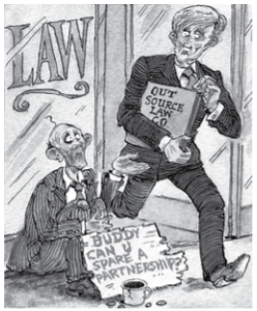
Illustration by David Simond
According to the cartoon,

The Boom Is Nigh
Why the coming recovery will hurt like hell.

Here is what you really need to know: a Sonic Boom is coming. It will be caused by globalization. And while globalization may be driving you crazy, it’s just getting started. Thirty years ago, Shenzhen, China, did not exist; today, it has nearly 9 million residents, roughly the same as New York City. In a single generation, it has grown from a village of tarpaper shacks into an important urban center. It has become the world’s fourth-busiest port, busier than Los Angeles and Long Beach combined. Never before has a great city been built so fast, nor a productive economy established from so little.
The international recession that began in 2008 has made the Sonic Boom quieter, but history shows that when a crisis ends, the larger trends in place before the crisis usually resume. Shenzhen represents the larger trend of growth, change, and transformation at unprecedented velocity. Thanks to vast increases in productivity, worldwide economic growth soon will pick up, creating rising prosperity and higher living standards for most people in most nations. The world will be far more interconnected, leading to better and more affordable products, as well as ever better communication among nations.
But there’s a big catch: just as favorable economic and social trends are likely to resume, many problems that have characterized recent decades are likely to get worse, too. Job instability, economic insecurity, a sense of turmoil, the fear that even when things seem good a hammer is about to fall—these are also part of the larger trend. As world economies become ever more linked by computers, job stress will become a 24/7 affair. Frequent shakeups in industries will cause increasing uncertainty. The horizon has never been brighter, but we may not feel particularly happy about it.
The Boom Is Nigh
Why the coming recovery will hurt like hell.
Here is what you really need to know: a Sonic Boom is coming. It will be caused by globalization. And while globalization may be driving you crazy, it’s just getting started. Thirty years ago, Shenzhen, China, did not exist; today, it has nearly 9 million residents, roughly the same as New York City. In a single generation, it has grown from a village of tarpaper shacks into an important urban center. It has become the world’s fourth-busiest port, busier than Los Angeles and Long Beach combined. Never before has a great city been built so fast, nor a productive economy established from so little.
The international recession that began in 2008 has made the Sonic Boom quieter, but history shows that when a crisis ends, the larger trends in place before the crisis usually resume. Shenzhen represents the larger trend of growth, change, and transformation at unprecedented velocity. Thanks to vast increases in productivity, worldwide economic growth soon will pick up, creating rising prosperity and higher living standards for most people in most nations. The world will be far more interconnected, leading to better and more affordable products, as well as ever better communication among nations.
But there’s a big catch: just as favorable economic and social trends are likely to resume, many problems that have characterized recent decades are likely to get worse, too. Job instability, economic insecurity, a sense of turmoil, the fear that even when things seem good a hammer is about to fall—these are also part of the larger trend. As world economies become ever more linked by computers, job stress will become a 24/7 affair. Frequent shakeups in industries will cause increasing uncertainty. The horizon has never been brighter, but we may not feel particularly happy about it.

Brazil’s presidential biopic
Lula, sanitised
SÃO PAULO

For all that, the film is very watchable. It opens in the poor north-east, where Lula was born into a landscape of bright red soil and cacti, and ends with his rise as a metalworkers’ union leader in the industrial belt of São Paulo in the 1970s. This is a candyfloss version of the story, however. Lula’s reverses are shown: the little finger lost to a lathe, the death of his first wife and child in childbirth. But he is too good to be true: a perfect student, perfect husband and political moderate who abhorred violence.
The book on which the film is based, by contrast, quotes Lula as approving of an incident in which a director of a factory that is on strike is thrown out of a window. In the film he runs from the factory appalled. That is a shame. A more nuanced telling would not detract from Lula’s remarkable life story and achievement.
The film is doing well at the box office. Its producers say it is running more strongly in the north-east than in the populous south-east, which means it mirrors Ms Rousseff’s fortunes in the polls. There are plans to show the film on mobile screens in places with no cinema. It may get an airing on television, though there is no such deal in place yet.
All this helps a process of mythmaking around Lula that is already well under way. Catching some of Lula’s stardust is Ms Rousseff’s best hope for capturing the presidency in October, and there are some signs that this is happening. The gap between her and José Serra, her main rival, halved between March and December last year and now stands at 14 points. Competing against a celluloid legend is not easy.
I. Not only Fábio Barreto but also Oliver Stone have turned living politicians into myths. II. Dilma Rousseff will surely benefit from the release of the movie. III. An incident that took place in a factory is depicted differently from the way it really happened. IV. The film is about to be available for cell phones next year. V. Until now producers have had no idea of how well the film is doing in the movie theaters.
Brazil’s presidential biopic
Lula, sanitised
SÃO PAULO
For all that, the film is very watchable. It opens in the poor north-east, where Lula was born into a landscape of bright red soil and cacti, and ends with his rise as a metalworkers’ union leader in the industrial belt of São Paulo in the 1970s. This is a candyfloss version of the story, however. Lula’s reverses are shown: the little finger lost to a lathe, the death of his first wife and child in childbirth. But he is too good to be true: a perfect student, perfect husband and political moderate who abhorred violence.
The book on which the film is based, by contrast, quotes Lula as approving of an incident in which a director of a factory that is on strike is thrown out of a window. In the film he runs from the factory appalled. That is a shame. A more nuanced telling would not detract from Lula’s remarkable life story and achievement.
The film is doing well at the box office. Its producers say it is running more strongly in the north-east than in the populous south-east, which means it mirrors Ms Rousseff’s fortunes in the polls. There are plans to show the film on mobile screens in places with no cinema. It may get an airing on television, though there is no such deal in place yet.
All this helps a process of mythmaking around Lula that is already well under way. Catching some of Lula’s stardust is Ms Rousseff’s best hope for capturing the presidency in October, and there are some signs that this is happening. The gap between her and José Serra, her main rival, halved between March and December last year and now stands at 14 points. Competing against a celluloid legend is not easy.

Get into a comfortable, relaxed position. / Shut your eyes and turn your attention inwards. / Think about that assertive experience (real or imagined, yours or someone else’s) and really get into it. / Re-live it as though you are there all over again. / See everything there is to see, / the face of the other person or people / and how they’re responding to you. / Hear the sound of your own voice as you speak. / Hear the sound of any other voices. / Feel really good about the situation. / Feel confident and assertive / and enjoy the feeling. / And when you’re deeply involved in those feelings, capture them for a few seconds with your word, image or gesture. / Stay in the experience a while longer but take away the word, image or gesture. / And now come slowly and gently back to the room.
Get into a comfortable, relaxed position. / Shut your eyes and turn your attention inwards. / Think about that assertive experience (real or imagined, yours or someone else’s) and really get into it. / Re-live it as though you are there all over again. / See everything there is to see, / the face of the other person or people / and how they’re responding to you. / Hear the sound of your own voice as you speak. / Hear the sound of any other voices. / Feel really good about the situation. / Feel confident and assertive / and enjoy the feeling. / And when you’re deeply involved in those feelings, capture them for a few seconds with your word, image or gesture. / Stay in the experience a while longer but take away the word, image or gesture. / And now come slowly and gently back to the room.
Text 2
The Living Library

1. From the mid 40's to the 70's, many big cities in Brazil expanded because of internal migrations. During those years, with the intensification of social problems, many nongovernmental organizations were created and many existing Community Centers increased their activities to provide nonformal education for children and adolescents after school hours.
2. The "Living Library" is a two-year project that aims at making the act of reading and writing as an everyday activity for poor children and their teachers. This would mean fewer failures in elementary school and more children learning about their reality and how to change it. These "libraries" are being implanted in Community Centers in charge of children and adolescents living in the poor districts of the peripheral area of the big cities, where huge slums and acute social problems are concentrated. To achieve its objective the Project team provides personal development for the community teachers by preparing them to work with books and reading activities in the context of poverty and deprivation of their institutions. Each library is unique, taking into account the needs and the culture of the community where it is located.
3. Forty-four institutions took part in the selective process. Among those, 10 were chosen to receive the library: two in Brasília and eight in São Paulo. Fourteen community teachers went through a 44 hour training program. The first 10 libraries received 4,000 books directly benefiting 2,500 children and adolescents.
4. The first 10 libraries were implanted and are open to the community. They attend institutions that look after street children from slums in the suburbs, children living in poor houses downtown, children living in shelters, who have no parents or are temporarily separated from them.
From: <http://www.unesco.org/most/southam7.htm>
Select the proposition(s) which contains (contain) CORRECT references to the following words, underlined in text 2:
their (paragraph 1) → non-governmental organizations
Text 2
The Living Library
1. From the mid 40's to the 70's, many big cities in Brazil expanded because of internal migrations. During those years, with the intensification of social problems, many nongovernmental organizations were created and many existing Community Centers increased their activities to provide nonformal education for children and adolescents after school hours.
2. The "Living Library" is a two-year project that aims at making the act of reading and writing as an everyday activity for poor children and their teachers. This would mean fewer failures in elementary school and more children learning about their reality and how to change it. These "libraries" are being implanted in Community Centers in charge of children and adolescents living in the poor districts of the peripheral area of the big cities, where huge slums and acute social problems are concentrated. To achieve its objective the Project team provides personal development for the community teachers by preparing them to work with books and reading activities in the context of poverty and deprivation of their institutions. Each library is unique, taking into account the needs and the culture of the community where it is located.
3. Forty-four institutions took part in the selective process. Among those, 10 were chosen to receive the library: two in Brasília and eight in São Paulo. Fourteen community teachers went through a 44 hour training program. The first 10 libraries received 4,000 books directly benefiting 2,500 children and adolescents.
4. The first 10 libraries were implanted and are open to the community. They attend institutions that look after street children from slums in the suburbs, children living in poor houses downtown, children living in shelters, who have no parents or are temporarily separated from them.
From: <http://www.unesco.org/most/southam7.htm>
Select the CORRECT proposition(s), according to text 2.
Children taking part in the Project have a chance to perform better at school.
Text 2
The Living Library
1. From the mid 40's to the 70's, many big cities in Brazil expanded because of internal migrations. During those years, with the intensification of social problems, many nongovernmental organizations were created and many existing Community Centers increased their activities to provide nonformal education for children and adolescents after school hours.
2. The "Living Library" is a two-year project that aims at making the act of reading and writing as an everyday activity for poor children and their teachers. This would mean fewer failures in elementary school and more children learning about their reality and how to change it. These "libraries" are being implanted in Community Centers in charge of children and adolescents living in the poor districts of the peripheral area of the big cities, where huge slums and acute social problems are concentrated. To achieve its objective the Project team provides personal development for the community teachers by preparing them to work with books and reading activities in the context of poverty and deprivation of their institutions. Each library is unique, taking into account the needs and the culture of the community where it is located.
3. Forty-four institutions took part in the selective process. Among those, 10 were chosen to receive the library: two in Brasília and eight in São Paulo. Fourteen community teachers went through a 44 hour training program. The first 10 libraries received 4,000 books directly benefiting 2,500 children and adolescents.
4. The first 10 libraries were implanted and are open to the community. They attend institutions that look after street children from slums in the suburbs, children living in poor houses downtown, children living in shelters, who have no parents or are temporarily separated from them.
From: <http://www.unesco.org/most/southam7.htm>
Select the CORRECT proposition(s), according to text 2.
Community teachers receive special training in order to work in the Project.
Text 2
The Living Library
1. From the mid 40's to the 70's, many big cities in Brazil expanded because of internal migrations. During those years, with the intensification of social problems, many nongovernmental organizations were created and many existing Community Centers increased their activities to provide nonformal education for children and adolescents after school hours.
2. The "Living Library" is a two-year project that aims at making the act of reading and writing as an everyday activity for poor children and their teachers. This would mean fewer failures in elementary school and more children learning about their reality and how to change it. These "libraries" are being implanted in Community Centers in charge of children and adolescents living in the poor districts of the peripheral area of the big cities, where huge slums and acute social problems are concentrated. To achieve its objective the Project team provides personal development for the community teachers by preparing them to work with books and reading activities in the context of poverty and deprivation of their institutions. Each library is unique, taking into account the needs and the culture of the community where it is located.
3. Forty-four institutions took part in the selective process. Among those, 10 were chosen to receive the library: two in Brasília and eight in São Paulo. Fourteen community teachers went through a 44 hour training program. The first 10 libraries received 4,000 books directly benefiting 2,500 children and adolescents.
4. The first 10 libraries were implanted and are open to the community. They attend institutions that look after street children from slums in the suburbs, children living in poor houses downtown, children living in shelters, who have no parents or are temporarily separated from them.
From: <http://www.unesco.org/most/southam7.htm>
Select the CORRECT proposition(s), according to text 2.
Internal migration is a phenomenon still happening in Brazil.
Text 1
Fighting Poverty and Social Exclusion

Poverty and social exclusion are a major challenge for humanity. According to the Human Development Report 1997, a quarter of the world's population remains in severe poverty, despite the major advances in reducing poverty made during the 20th century. At the same time, social inequality, marginalization and discrimination still exclude many people from full participation in economic, political and cultural life. While poverty and social exclusion represent common problems to policy makers in both poor and rich countries, new initiatives have been developed to combat these problems, initiatives which merit being called "Best Practices".
What are Best Practices? The idea of creating a database for Best Practices is based on the observation that carefully documented case histories can provide excellent guidelines for policy making and planning of new projects. The goal of a database on Best Practices is to present and promote creative, successful and sustainable solutions to social problems arising from poverty and social exclusion in order to build a bridge between experimental solutions, research and policy.
Best Practices are model projects or policies aimed at improving the quality of life of individuals or groups suffering from poverty or social exclusion. They are typically based on the cooperation between national or local authorities, non-governmental organizations (NGOs) and local communities, the private sector, and academic communities. They include a variety of activities in all parts of the world:
• In England: “The Big Issue”, a magazine sold by homeless people so they can earn a living and re-integrate into society.
• In India: 4,000 women established the Shri Mahila SEWA Sahakari Bank to provide credit at reasonable rates to self-employed women workers.
• In Brazil: the “Living Library” was created to make reading and writing an everyday activity for poor children to combat high rates of failure at elementary school.
Calling these activities Best Practices is to suggest that they can and should be replicated, that
ideas can and should be generated from them, and that they can and should contribute to policy
development.
From: <http://www.unesco.org/most/bphome.htm
Considering text 1, select the proposition in which the meanings of the expressions highlighted in the sentences are SIMILAR.
The goal of a database on Best Practices is to present and promote solutions to social
problems in order to / so as to build a bridge between experimental solutions, research and
policy.
Text 1
Fighting Poverty and Social Exclusion
Poverty and social exclusion are a major challenge for humanity. According to the Human Development Report 1997, a quarter of the world's population remains in severe poverty, despite the major advances in reducing poverty made during the 20th century. At the same time, social inequality, marginalization and discrimination still exclude many people from full participation in economic, political and cultural life. While poverty and social exclusion represent common problems to policy makers in both poor and rich countries, new initiatives have been developed to combat these problems, initiatives which merit being called "Best Practices".
What are Best Practices? The idea of creating a database for Best Practices is based on the observation that carefully documented case histories can provide excellent guidelines for policy making and planning of new projects. The goal of a database on Best Practices is to present and promote creative, successful and sustainable solutions to social problems arising from poverty and social exclusion in order to build a bridge between experimental solutions, research and policy.
Best Practices are model projects or policies aimed at improving the quality of life of individuals or groups suffering from poverty or social exclusion. They are typically based on the cooperation between national or local authorities, non-governmental organizations (NGOs) and local communities, the private sector, and academic communities. They include a variety of activities in all parts of the world:
• In England: “The Big Issue”, a magazine sold by homeless people so they can earn a living and re-integrate into society.
• In India: 4,000 women established the Shri Mahila SEWA Sahakari Bank to provide credit at reasonable rates to self-employed women workers.
• In Brazil: the “Living Library” was created to make reading and writing an everyday activity for poor children to combat high rates of failure at elementary school.
Calling these activities Best Practices is to suggest that they can and should be replicated, that
ideas can and should be generated from them, and that they can and should contribute to policy
development.
From: <http://www.unesco.org/most/bphome.htm
Considering text 1, select the proposition in which the meanings of the expressions highlighted in the sentences are SIMILAR.
According to / As stated by the Human Development Report 1997, a quarter of the world's
population remains in severe poverty.
Text 1
Fighting Poverty and Social Exclusion
Poverty and social exclusion are a major challenge for humanity. According to the Human Development Report 1997, a quarter of the world's population remains in severe poverty, despite the major advances in reducing poverty made during the 20th century. At the same time, social inequality, marginalization and discrimination still exclude many people from full participation in economic, political and cultural life. While poverty and social exclusion represent common problems to policy makers in both poor and rich countries, new initiatives have been developed to combat these problems, initiatives which merit being called "Best Practices".
What are Best Practices? The idea of creating a database for Best Practices is based on the observation that carefully documented case histories can provide excellent guidelines for policy making and planning of new projects. The goal of a database on Best Practices is to present and promote creative, successful and sustainable solutions to social problems arising from poverty and social exclusion in order to build a bridge between experimental solutions, research and policy.
Best Practices are model projects or policies aimed at improving the quality of life of individuals or groups suffering from poverty or social exclusion. They are typically based on the cooperation between national or local authorities, non-governmental organizations (NGOs) and local communities, the private sector, and academic communities. They include a variety of activities in all parts of the world:
• In England: “The Big Issue”, a magazine sold by homeless people so they can earn a living and re-integrate into society.
• In India: 4,000 women established the Shri Mahila SEWA Sahakari Bank to provide credit at reasonable rates to self-employed women workers.
• In Brazil: the “Living Library” was created to make reading and writing an everyday activity for poor children to combat high rates of failure at elementary school.
Calling these activities Best Practices is to suggest that they can and should be replicated, that
ideas can and should be generated from them, and that they can and should contribute to policy
development.
From: <http://www.unesco.org/most/bphome.htm
What does text 1 say about “Best Practices”?
Select the CORRECT proposition.
They are projects aimed only at helping people who live in poor countries.

 Conheça nossos planos