Questões de Concurso
Para engenheiro de produção
Foram encontradas 3.419 questões
Resolva questões gratuitamente!
Junte-se a mais de 4 milhões de concurseiros!


O setor de ouvidoria de uma instituição pública realizou uma pesquisa sobre os problemas inerentes aos conflitos nos processos administrativos arquivados no referido setor, listados no quadro abaixo.
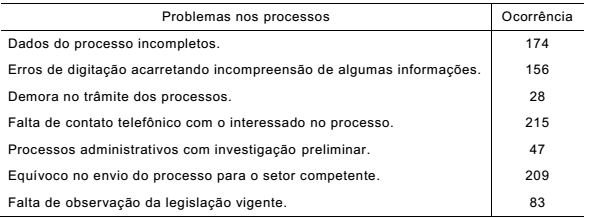
O cálculo da frequência relativa acumulada, baseado na construção do Diagrama de Pareto
é, respectivamente:
Considere as seguintes afirmações relacionadas às ferramentas gerenciais da qualidade:
I O Diagrama em Matriz permite uma compreensão rápida e clara da rede de relacionamentos dos diversos conjuntos de variáveis envolvidas na solução de um problema.
II O Diagrama da Rede de Atividades é empregado para planejar a distribuição mais adequada das atividades ao longo do tempo, tendo em vista a execução de qualquer atividade/tarefa complexa e seus respectivos desdobramentos.
III Usado para organizar em grupos um pequeno número de ideias, opiniões, ou preocupações relativas a determinado tópico, o Diagrama de Afinidades é empregado na fase de execução do projeto.
IV O Diagrama PDPC objetiva identificar medidas/caminhos alternativos em resposta aos problemas que possam surgir durante a implantação e/ou aplicação de um plano ou projeto.
Estão corretas as afirmativas
Considere as duas colunas a seguir, que contemplam, respectivamente, as abordagens da qualidade e seus conceitos.
(1) Baseada na produção
(2) Baseada no valor
(3) Baseada no produto
(4) Transcendental
(a) A qualidade é sinônimo de excelência absoluta e universalmente reconhecível, não necessitando de complemento algum para a qualificação de um produto ao chegar a esse estágio.
(b) A qualidade é considerada uma variável precisa e mensurável.
(c) A qualidade trabalha com dois conceitos relacionados, mas distintos, não sendo bem definidos, além de depender da variabilidade das necessidades de cada cliente.
(d) A qualidade está diretamente ligada à oferta e fundamentada na conformidade com as especificações do projeto.
A associação correta entre as colunas é expressa por
À luz das disposições da Lei nº 8.112/90, pode-se afirma que o citado benefício
De acordo com as normas da referida lei, a comissão revisora deverá concluir os trabalhos no prazo de
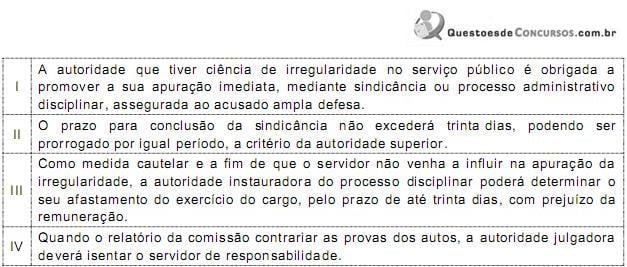
Das afirmativas, estão corretas
I. A Licença por Motivo de Afastamento do Cônjuge terá prazo determinado, sem prejuízo da remuneração.
II. O servidor ocupante de cargo efetivo que esteja em estágio probatório não faz jus à Licença para Tratar de Interesses Particulares.
III. A Licença por Motivo de Afastamento do Cônjuge não será concedida se o cônjuge ou companheiro do servidor for deslocado para o exterior.
IV. A Licença para Tratar de Interesses Particulares poderá ser interrompida, a qualquer tempo, a pedido do servidor ou no interesse do serviço.
Das afirmativas, estão corretas
De acordo com a referida lei, exercício é o
Considere as afirmativas a seguir, referentes a normas de Concurso Público.
I
Não se abrirá novo concurso enquanto houver candidato aprovado em concurso
anterior com prazo de validade não expirado.
II O prazo de validade do concurso e as condições de sua realização serão fixados em Decreto Federal, que será publicado no Diário Oficial da União e em jornal diário de grande circulação.
III O concurso público terá validade de até dois anos, podendo ser prorrogado uma única vez, por igual período.
IV O concurso será de provas, devendo ser realizado, obrigatoriamente, em duas etapas, condicionada à inscrição do candidato ao pagamento do valor fixado em Decreto.
Conforme dispõe expressamente a Lei nº 8.112/90, estão corretas as afirmativas


Acentuam-se graficamente pela mesma regra das palavras em destaque:

O conector presente, nesse período, estabelece uma relação de

Outra pontuação possível, para esse trecho, considerando-se as orientações normativas do português padrão escrito, é apresentada em:

Os elementos linguísticos com função de pronome relativo poderiam, conforme as orientações normativas da escrita padrão da língua portuguesa, ser substituídos, respectivamente, por

Sobre as palavras em destaque, é correto afirmar que pertencem a classes gramaticais distintas, e

 Conheça nossos planos