Foram encontradas 2.796 questões
Resolva questões gratuitamente!
Junte-se a mais de 4 milhões de concurseiros!


Os secretários, indivíduos componentes da equipe, não têm um mundo só deles, incluem mais pessoas em seu rol de atividades, participam de um universo maior em que os resultados da missão relacionada a uma organização se tornam responsabilidade de todos.
Com relação a equipes autogerenciadas ou com autogestão, assinale a alternativa INCORRETA.
Segundo Junior (2009), a mudança do conhecimento na contemporaneidade remete às várias reformulações que ocorreram no cenário social.
São transformações que apresentam a necessidade de uma nova abordagem no trato com o conhecimento na atualidade, EXCETO:
O processo de organização e gerenciamento da rotina de trabalho desenvolve-se, geralmente, a partir do PDCA (Plan, Do, Check, Action), o que possibilita o acompanhamento de 4 fases distintas do gerenciamento: planejamento, execução, controle e ação (MOREIRA 2006 apud PORTELA; SCHUMACHER, 2009).
Numere a COLUNA II de acordo com a COLUNA I, associando as fases de gerenciamento às suas características.
COLUNA I
1. Planejar
2. Executar
3. Controlar
4. Agir
COLUNA II
( ) Permite a verificação constante dos resultados, comparando-os com as metas.
( ) Definem-se as metas para satisfazer mais as pessoas e os métodos para cumprir padrões de sistemas técnico de processos e procedimentos.
( ) Dá-se com disciplina e de acordo com os padrões.
( ) Atuação corretiva no processo para manter e melhorar os resultados.
Assinale a sequência CORRETA.
Text 3
The Assistants, by Camille Perri
Chapter 1
In less than a second I was at his desk, notepad in hand. Behind me a wall of flat-screens flashed the news being broadcast by Titan and its so-called competitors. Robert had the uncanny ability to devote a small portion of his gaze to each screen simultaneously. In all he owned nine satellite television networks, one hundred seventy-five newspapers, one hundred cable channels, forty book imprints, forty television stations, and one movie studio. His total audience reached around 4.7 billion people, which came out to around three-fourths of the population of the entire globe. But the news was his baby. He was never not watching it, analyzing it, shaping it. That’s why he situated his office at Titan News headquarters, where he could keep close watch not only on his wall of flat-screens but also on his journalists. A man as powerful as Robert could have hidden himself anywhere, pulling at the strings of the world from a lounge chair in the Seychelles, unseen by his employees—but he needed to be here at the center of it all, at the hub.
Our office didn’t look like a newsroom that you’d imagine from movies or TV drama series. The floors below ours were more like that—the broadcast, print media, and digital newsrooms, each of which could have easily passed for something out of The Matrix. And there was an entire floor of flashy studios used for our non-stop news coverage and thrill-a-minute opinion shows. But our office on the fortieth floor was far less exciting, just row after row of desks and cubicles. Still, we were the brain of the whole operation, the source from which all orders trickled down. Titan’s chief editors and all of Robert’s most trusted deputies had desks on our floor so Robert could pull them into impromptus with the business leaders and celebrities he met with— and so he could foster relationships between them and the political-party representatives (yes, from both parties) who came to lobby him. I guess what I’m trying to say is, what the fortieth floor lacked in flash it made up for in influence.
(Taken from
http://www.penguinrandomhouse.com/books/317172/the-assistants-by-perri-camille/9780399172540/)
“A secretary or personal assistant is a person whose work consists of supporting management, including executives, using a variety of project management, communication, or organizational skills. These functions may be entirely carried out to assist one other employee or may be for the benefit of more than one. In other situations a secretary is an officer of a society or organization who deals with correspondence, admits new members, and organizes official meetings and events." (Wikipedia)
(Taken from https://en.wikipedia.org/wiki/Secretary Access in 04/02/2017)
The word that best replaces the underlined expression is:
Text 3
The Assistants, by Camille Perri
Chapter 1
In less than a second I was at his desk, notepad in hand. Behind me a wall of flat-screens flashed the news being broadcast by Titan and its so-called competitors. Robert had the uncanny ability to devote a small portion of his gaze to each screen simultaneously. In all he owned nine satellite television networks, one hundred seventy-five newspapers, one hundred cable channels, forty book imprints, forty television stations, and one movie studio. His total audience reached around 4.7 billion people, which came out to around three-fourths of the population of the entire globe. But the news was his baby. He was never not watching it, analyzing it, shaping it. That’s why he situated his office at Titan News headquarters, where he could keep close watch not only on his wall of flat-screens but also on his journalists. A man as powerful as Robert could have hidden himself anywhere, pulling at the strings of the world from a lounge chair in the Seychelles, unseen by his employees—but he needed to be here at the center of it all, at the hub.
Our office didn’t look like a newsroom that you’d imagine from movies or TV drama series. The floors below ours were more like that—the broadcast, print media, and digital newsrooms, each of which could have easily passed for something out of The Matrix. And there was an entire floor of flashy studios used for our non-stop news coverage and thrill-a-minute opinion shows. But our office on the fortieth floor was far less exciting, just row after row of desks and cubicles. Still, we were the brain of the whole operation, the source from which all orders trickled down. Titan’s chief editors and all of Robert’s most trusted deputies had desks on our floor so Robert could pull them into impromptus with the business leaders and celebrities he met with— and so he could foster relationships between them and the political-party representatives (yes, from both parties) who came to lobby him. I guess what I’m trying to say is, what the fortieth floor lacked in flash it made up for in influence.
(Taken from
http://www.penguinrandomhouse.com/books/317172/the-assistants-by-perri-camille/9780399172540/)
Text 3
The Assistants, by Camille Perri
Chapter 1
In less than a second I was at his desk, notepad in hand. Behind me a wall of flat-screens flashed the news being broadcast by Titan and its so-called competitors. Robert had the uncanny ability to devote a small portion of his gaze to each screen simultaneously. In all he owned nine satellite television networks, one hundred seventy-five newspapers, one hundred cable channels, forty book imprints, forty television stations, and one movie studio. His total audience reached around 4.7 billion people, which came out to around three-fourths of the population of the entire globe. But the news was his baby. He was never not watching it, analyzing it, shaping it. That’s why he situated his office at Titan News headquarters, where he could keep close watch not only on his wall of flat-screens but also on his journalists. A man as powerful as Robert could have hidden himself anywhere, pulling at the strings of the world from a lounge chair in the Seychelles, unseen by his employees—but he needed to be here at the center of it all, at the hub.
Our office didn’t look like a newsroom that you’d imagine from movies or TV drama series. The floors below ours were more like that—the broadcast, print media, and digital newsrooms, each of which could have easily passed for something out of The Matrix. And there was an entire floor of flashy studios used for our non-stop news coverage and thrill-a-minute opinion shows. But our office on the fortieth floor was far less exciting, just row after row of desks and cubicles. Still, we were the brain of the whole operation, the source from which all orders trickled down. Titan’s chief editors and all of Robert’s most trusted deputies had desks on our floor so Robert could pull them into impromptus with the business leaders and celebrities he met with— and so he could foster relationships between them and the political-party representatives (yes, from both parties) who came to lobby him. I guess what I’m trying to say is, what the fortieth floor lacked in flash it made up for in influence.
(Taken from
http://www.penguinrandomhouse.com/books/317172/the-assistants-by-perri-camille/9780399172540/)
Text 3
The Assistants, by Camille Perri
Chapter 1
In less than a second I was at his desk, notepad in hand. Behind me a wall of flat-screens flashed the news being broadcast by Titan and its so-called competitors. Robert had the uncanny ability to devote a small portion of his gaze to each screen simultaneously. In all he owned nine satellite television networks, one hundred seventy-five newspapers, one hundred cable channels, forty book imprints, forty television stations, and one movie studio. His total audience reached around 4.7 billion people, which came out to around three-fourths of the population of the entire globe. But the news was his baby. He was never not watching it, analyzing it, shaping it. That’s why he situated his office at Titan News headquarters, where he could keep close watch not only on his wall of flat-screens but also on his journalists. A man as powerful as Robert could have hidden himself anywhere, pulling at the strings of the world from a lounge chair in the Seychelles, unseen by his employees—but he needed to be here at the center of it all, at the hub.
Our office didn’t look like a newsroom that you’d imagine from movies or TV drama series. The floors below ours were more like that—the broadcast, print media, and digital newsrooms, each of which could have easily passed for something out of The Matrix. And there was an entire floor of flashy studios used for our non-stop news coverage and thrill-a-minute opinion shows. But our office on the fortieth floor was far less exciting, just row after row of desks and cubicles. Still, we were the brain of the whole operation, the source from which all orders trickled down. Titan’s chief editors and all of Robert’s most trusted deputies had desks on our floor so Robert could pull them into impromptus with the business leaders and celebrities he met with— and so he could foster relationships between them and the political-party representatives (yes, from both parties) who came to lobby him. I guess what I’m trying to say is, what the fortieth floor lacked in flash it made up for in influence.
(Taken from
http://www.penguinrandomhouse.com/books/317172/the-assistants-by-perri-camille/9780399172540/)
Text 3
The Assistants, by Camille Perri
Chapter 1
In less than a second I was at his desk, notepad in hand. Behind me a wall of flat-screens flashed the news being broadcast by Titan and its so-called competitors. Robert had the uncanny ability to devote a small portion of his gaze to each screen simultaneously. In all he owned nine satellite television networks, one hundred seventy-five newspapers, one hundred cable channels, forty book imprints, forty television stations, and one movie studio. His total audience reached around 4.7 billion people, which came out to around three-fourths of the population of the entire globe. But the news was his baby. He was never not watching it, analyzing it, shaping it. That’s why he situated his office at Titan News headquarters, where he could keep close watch not only on his wall of flat-screens but also on his journalists. A man as powerful as Robert could have hidden himself anywhere, pulling at the strings of the world from a lounge chair in the Seychelles, unseen by his employees—but he needed to be here at the center of it all, at the hub.
Our office didn’t look like a newsroom that you’d imagine from movies or TV drama series. The floors below ours were more like that—the broadcast, print media, and digital newsrooms, each of which could have easily passed for something out of The Matrix. And there was an entire floor of flashy studios used for our non-stop news coverage and thrill-a-minute opinion shows. But our office on the fortieth floor was far less exciting, just row after row of desks and cubicles. Still, we were the brain of the whole operation, the source from which all orders trickled down. Titan’s chief editors and all of Robert’s most trusted deputies had desks on our floor so Robert could pull them into impromptus with the business leaders and celebrities he met with— and so he could foster relationships between them and the political-party representatives (yes, from both parties) who came to lobby him. I guess what I’m trying to say is, what the fortieth floor lacked in flash it made up for in influence.
(Taken from
http://www.penguinrandomhouse.com/books/317172/the-assistants-by-perri-camille/9780399172540/)
Text 3
The Assistants, by Camille Perri
Chapter 1
In less than a second I was at his desk, notepad in hand. Behind me a wall of flat-screens flashed the news being broadcast by Titan and its so-called competitors. Robert had the uncanny ability to devote a small portion of his gaze to each screen simultaneously. In all he owned nine satellite television networks, one hundred seventy-five newspapers, one hundred cable channels, forty book imprints, forty television stations, and one movie studio. His total audience reached around 4.7 billion people, which came out to around three-fourths of the population of the entire globe. But the news was his baby. He was never not watching it, analyzing it, shaping it. That’s why he situated his office at Titan News headquarters, where he could keep close watch not only on his wall of flat-screens but also on his journalists. A man as powerful as Robert could have hidden himself anywhere, pulling at the strings of the world from a lounge chair in the Seychelles, unseen by his employees—but he needed to be here at the center of it all, at the hub.
Our office didn’t look like a newsroom that you’d imagine from movies or TV drama series. The floors below ours were more like that—the broadcast, print media, and digital newsrooms, each of which could have easily passed for something out of The Matrix. And there was an entire floor of flashy studios used for our non-stop news coverage and thrill-a-minute opinion shows. But our office on the fortieth floor was far less exciting, just row after row of desks and cubicles. Still, we were the brain of the whole operation, the source from which all orders trickled down. Titan’s chief editors and all of Robert’s most trusted deputies had desks on our floor so Robert could pull them into impromptus with the business leaders and celebrities he met with— and so he could foster relationships between them and the political-party representatives (yes, from both parties) who came to lobby him. I guess what I’m trying to say is, what the fortieth floor lacked in flash it made up for in influence.
(Taken from
http://www.penguinrandomhouse.com/books/317172/the-assistants-by-perri-camille/9780399172540/)
When writing a correspondence, it is essential to be careful about the tone of the language to communicate the content.
According to ASHLEY (2005:34), "[i]t is important to try to get the right 'tone' in your letter. This means that, generally speaking, you should aim for a neutral tone, avoiding pompous language on the one hand and language which is too informal or colloquial on the other."
The best alternative to illustrate the appropriate tone for
opening a commercial letter to Ron Barron, CEO of an
educational startup, is:
Text 3
The Assistants, by Camille Perri
Chapter 1
In less than a second I was at his desk, notepad in hand. Behind me a wall of flat-screens flashed the news being broadcast by Titan and its so-called competitors. Robert had the uncanny ability to devote a small portion of his gaze to each screen simultaneously. In all he owned nine satellite television networks, one hundred seventy-five newspapers, one hundred cable channels, forty book imprints, forty television stations, and one movie studio. His total audience reached around 4.7 billion people, which came out to around three-fourths of the population of the entire globe. But the news was his baby. He was never not watching it, analyzing it, shaping it. That’s why he situated his office at Titan News headquarters, where he could keep close watch not only on his wall of flat-screens but also on his journalists. A man as powerful as Robert could have hidden himself anywhere, pulling at the strings of the world from a lounge chair in the Seychelles, unseen by his employees—but he needed to be here at the center of it all, at the hub.
Our office didn’t look like a newsroom that you’d imagine from movies or TV drama series. The floors below ours were more like that—the broadcast, print media, and digital newsrooms, each of which could have easily passed for something out of The Matrix. And there was an entire floor of flashy studios used for our non-stop news coverage and thrill-a-minute opinion shows. But our office on the fortieth floor was far less exciting, just row after row of desks and cubicles. Still, we were the brain of the whole operation, the source from which all orders trickled down. Titan’s chief editors and all of Robert’s most trusted deputies had desks on our floor so Robert could pull them into impromptus with the business leaders and celebrities he met with— and so he could foster relationships between them and the political-party representatives (yes, from both parties) who came to lobby him. I guess what I’m trying to say is, what the fortieth floor lacked in flash it made up for in influence.
(Taken from
http://www.penguinrandomhouse.com/books/317172/the-assistants-by-perri-camille/9780399172540/)
Text 3
The Assistants, by Camille Perri
Chapter 1
In less than a second I was at his desk, notepad in hand. Behind me a wall of flat-screens flashed the news being broadcast by Titan and its so-called competitors. Robert had the uncanny ability to devote a small portion of his gaze to each screen simultaneously. In all he owned nine satellite television networks, one hundred seventy-five newspapers, one hundred cable channels, forty book imprints, forty television stations, and one movie studio. His total audience reached around 4.7 billion people, which came out to around three-fourths of the population of the entire globe. But the news was his baby. He was never not watching it, analyzing it, shaping it. That’s why he situated his office at Titan News headquarters, where he could keep close watch not only on his wall of flat-screens but also on his journalists. A man as powerful as Robert could have hidden himself anywhere, pulling at the strings of the world from a lounge chair in the Seychelles, unseen by his employees—but he needed to be here at the center of it all, at the hub.
Our office didn’t look like a newsroom that you’d imagine from movies or TV drama series. The floors below ours were more like that—the broadcast, print media, and digital newsrooms, each of which could have easily passed for something out of The Matrix. And there was an entire floor of flashy studios used for our non-stop news coverage and thrill-a-minute opinion shows. But our office on the fortieth floor was far less exciting, just row after row of desks and cubicles. Still, we were the brain of the whole operation, the source from which all orders trickled down. Titan’s chief editors and all of Robert’s most trusted deputies had desks on our floor so Robert could pull them into impromptus with the business leaders and celebrities he met with— and so he could foster relationships between them and the political-party representatives (yes, from both parties) who came to lobby him. I guess what I’m trying to say is, what the fortieth floor lacked in flash it made up for in influence.
(Taken from
http://www.penguinrandomhouse.com/books/317172/the-assistants-by-perri-camille/9780399172540/)
Text 2
The Case for Executive Assistants
Melba J. Duncan
Among the most striking details of the corporate era depicted in the AMC series Mad Men, along with constant smoking and mid-day drinking, is the army of secretaries who populate Sterling Cooper, the 1960s ad agency featured in the show. The secretary of those days has gone the way of the carbon copy and been replaced by the executive assistant, now typically reserved for senior management. Technologies like e-mail, voice mail, mobile devices, and online calendars have allowed managers at all levels to operate with a greater degree of self-sufficiency. At the same time, companies have faced enormous pressure to cut costs, reduce head count, and flatten organizational structures. As a result, the numbers of assistants at lower corporate levels have dwindled in most corporations. That’s unfortunate, because effective assistants can make enormous contributions to productivity at all levels of the organization.
At very senior levels, the return on investment from a skilled assistant can be substantial. Consider a senior executive whose total compensation package is $1 million annually, who works with an assistant who earns $80,000. For the organization to break even, the assistant must make the executive 8% more productive than he or she would be working solo—for instance, the assistant needs to save the executive roughly five hours in a 60-hour workweek. In reality, good assistants save their bosses much more than that. They ensure that meetings begin on time with prep material delivered in advance. They optimize travel schedules and enable remote decision making, keeping projects on track. And they filter the distractions that can turn a manager into a reactive type who spends all day answering e-mail instead of a leader who proactively sets the organization’s agenda. As Robert Pozen writes in this issue: A top-notch assistant "is crucial to being productive."
That’s true not only for top executives. In their zeal to cut administrative expenses, many companies have gone too far, leaving countless highly paid middle and upper managers to arrange their own travel, file expense reports, and schedule meetings. Some companies may be drawn to the notion of egalitarianism they believe this assistant-less structure represents—when workers see the boss loading paper into the copy machine, the theory goes, a ―we’re all in this together‖ spirit is created. But as a management practice, the structure rarely makes economic sense. Generally speaking, work should be delegated to the lowest-cost employee who can do it well. (I)................. companies have embraced this logic by outsourcing work to vendors or to operations abroad, back at headquarters they ignore it, forcing top talent to misuse their time. As a longtime recruiter for executive assistants, I’ve worked with many organizations suffering from the same problem: There’s too much administrative work and too few assistants to whom it can be assigned.
Granting middle managers access to an assistant—or shared resources—can give a quick boost to productivity even at lean, well-run companies. Firms should also think about the broader developmental benefits of providing assistants for up-and-coming managers. The real payoff may come when the manager arrives in a job a few levels up better prepared and habitually more productive. An experienced assistant can be particularly helpful if the manager is a new hire. The assistant becomes a crucial on-boarding resource, helping the manager read and understand the organizational culture, guiding him or her through its different (and difficult) personalities, and serving as a sounding board during the crucial acclimation. In this way, knowledgeable assistants are more than a productivity asset: They’re reverse mentors, using their experience to teach new executives how people are expected to behave at that level in the organization.
(Extract taken from https://hbr.org/2011/05/the-case-for-executive-assistants,
in 12/01/2017)
Text 2
The Case for Executive Assistants
Melba J. Duncan
Among the most striking details of the corporate era depicted in the AMC series Mad Men, along with constant smoking and mid-day drinking, is the army of secretaries who populate Sterling Cooper, the 1960s ad agency featured in the show. The secretary of those days has gone the way of the carbon copy and been replaced by the executive assistant, now typically reserved for senior management. Technologies like e-mail, voice mail, mobile devices, and online calendars have allowed managers at all levels to operate with a greater degree of self-sufficiency. At the same time, companies have faced enormous pressure to cut costs, reduce head count, and flatten organizational structures. As a result, the numbers of assistants at lower corporate levels have dwindled in most corporations. That’s unfortunate, because effective assistants can make enormous contributions to productivity at all levels of the organization.
At very senior levels, the return on investment from a skilled assistant can be substantial. Consider a senior executive whose total compensation package is $1 million annually, who works with an assistant who earns $80,000. For the organization to break even, the assistant must make the executive 8% more productive than he or she would be working solo—for instance, the assistant needs to save the executive roughly five hours in a 60-hour workweek. In reality, good assistants save their bosses much more than that. They ensure that meetings begin on time with prep material delivered in advance. They optimize travel schedules and enable remote decision making, keeping projects on track. And they filter the distractions that can turn a manager into a reactive type who spends all day answering e-mail instead of a leader who proactively sets the organization’s agenda. As Robert Pozen writes in this issue: A top-notch assistant "is crucial to being productive."
That’s true not only for top executives. In their zeal to cut administrative expenses, many companies have gone too far, leaving countless highly paid middle and upper managers to arrange their own travel, file expense reports, and schedule meetings. Some companies may be drawn to the notion of egalitarianism they believe this assistant-less structure represents—when workers see the boss loading paper into the copy machine, the theory goes, a ―we’re all in this together‖ spirit is created. But as a management practice, the structure rarely makes economic sense. Generally speaking, work should be delegated to the lowest-cost employee who can do it well. (I)................. companies have embraced this logic by outsourcing work to vendors or to operations abroad, back at headquarters they ignore it, forcing top talent to misuse their time. As a longtime recruiter for executive assistants, I’ve worked with many organizations suffering from the same problem: There’s too much administrative work and too few assistants to whom it can be assigned.
Granting middle managers access to an assistant—or shared resources—can give a quick boost to productivity even at lean, well-run companies. Firms should also think about the broader developmental benefits of providing assistants for up-and-coming managers. The real payoff may come when the manager arrives in a job a few levels up better prepared and habitually more productive. An experienced assistant can be particularly helpful if the manager is a new hire. The assistant becomes a crucial on-boarding resource, helping the manager read and understand the organizational culture, guiding him or her through its different (and difficult) personalities, and serving as a sounding board during the crucial acclimation. In this way, knowledgeable assistants are more than a productivity asset: They’re reverse mentors, using their experience to teach new executives how people are expected to behave at that level in the organization.
(Extract taken from https://hbr.org/2011/05/the-case-for-executive-assistants,
in 12/01/2017)
TEXT 1
What is administrative excellence?
Administrative Professionals perform some of the toughest functions in an office. Not only are you required to keep pace with ever-changing technology, you need to work with and through many people to meet deadlines, resolve conflicts, gather information, and coordinate schedules and logistics. Additionally, you are often the first point-of-contact for customers – your competence and professionalism in meeting their demands might be one of the most important factors in how your organization is perceived in the marketplace. To satisfy the needs of so many, your technical skills and your interpersonal skills must be well-balanced to generate efficient and effective results.
Administrative excellence pertains to the quality of work and the caliber of service that you provide in carrying out your responsibilities. Excellence by definition exceeds the routine expectations of managers, coworkers, and other customers, but it is a standard first set by you. It is something that many aspire to and work hard to deliver. I once read that excellence means "you are better today than you were yesterday, but not as good as you will be tomorrow." With that understanding, you can see there is no finish line. Excellence is a commitment to continually do and give your best.
Although we each have personal standards and differing values in terms of excellence, there are a few things that help to streamline administrative efforts in reaching high levels of job performance. Here are what I considered to be the "5Ps" of administrative excellence:
1. Perception – Self-awareness of behaviors and skills that maximize strengths and minimize weaknesses.
Know yourself and what you like and what you dislike about your job. Pay attention to those activities that excite and engage you. Typically, these are things that come naturally or easily for you – your strengths. Find opportunities to do more of what you love to do – you’ll be happier and more satisfied with your work. Take control and find solutions for those parts of your job that are less fulfilling so that your emotions and attitude don’t work against you.
2. Purpose – Understanding the importance of job responsibilities and identifying with the overall objectives of the team, department, and organization.
It’s one thing to know how to do your job, but it’s more important to know why you do what you do. Understanding your role in the bigger picture of organizational success helps to ignite feelings of inclusion and professional pride.
3. Progress – Ability to think progressively for continuous personal and professional improvement.
Challenge yourself to try new things and new ways of doing routine things. Don’t let yourself stagnate or become too comfortable – seize opportunities to showcase your skills or push self-imposed limitations. People rarely gain a professional edge when others can’t see or don’t know what they are capable of achieving.
4. Partnership – Willingness and ability to foster good relationships and teamwork with coworkers, managers, and customers.
Good relationships are the foundation for resourcefulness in your job. Treat others with respect. Do what you say you will do, offer to help others, exhibit a sense of urgency in responding to requests, and extend common courtesy – when others reciprocate, a trusting partnership is formed.
5. Professionalism – High standards of appearance, personal conduct, work product, and expertise.
Don’t leave doubts in the minds of others. Match image with skills and knowledge to help shape the thoughts and experiences of others. Continue to learn and produce accurate, timely work and your reputation and credibility will "speak for itself."
There are many other measurements of excellence. Find things that are unique about you and make your pathway to excellence your own. No one else will do it or achieve it in exactly the same manner. It’s often the small things that make a person stand out in a big way. Several years ago, a manager described his admin’s stellar performance in this way, "I don’t know how else to explain it…everything she does for me comes back just a little bit better than I expected it to." That’s a strong endorsement for administrative excellence – a little effort, a lot of admiration.
©Administrative Excellence – 2010 (Adapted from: https://adminexcellence.wordpress.com/2010/03/16/what-is-administrative-excellence/, in 12/01/2017)
TEXT 1
What is administrative excellence?
Administrative Professionals perform some of the toughest functions in an office. Not only are you required to keep pace with ever-changing technology, you need to work with and through many people to meet deadlines, resolve conflicts, gather information, and coordinate schedules and logistics. Additionally, you are often the first point-of-contact for customers – your competence and professionalism in meeting their demands might be one of the most important factors in how your organization is perceived in the marketplace. To satisfy the needs of so many, your technical skills and your interpersonal skills must be well-balanced to generate efficient and effective results.
Administrative excellence pertains to the quality of work and the caliber of service that you provide in carrying out your responsibilities. Excellence by definition exceeds the routine expectations of managers, coworkers, and other customers, but it is a standard first set by you. It is something that many aspire to and work hard to deliver. I once read that excellence means "you are better today than you were yesterday, but not as good as you will be tomorrow." With that understanding, you can see there is no finish line. Excellence is a commitment to continually do and give your best.
Although we each have personal standards and differing values in terms of excellence, there are a few things that help to streamline administrative efforts in reaching high levels of job performance. Here are what I considered to be the "5Ps" of administrative excellence:
1. Perception – Self-awareness of behaviors and skills that maximize strengths and minimize weaknesses.
Know yourself and what you like and what you dislike about your job. Pay attention to those activities that excite and engage you. Typically, these are things that come naturally or easily for you – your strengths. Find opportunities to do more of what you love to do – you’ll be happier and more satisfied with your work. Take control and find solutions for those parts of your job that are less fulfilling so that your emotions and attitude don’t work against you.
2. Purpose – Understanding the importance of job responsibilities and identifying with the overall objectives of the team, department, and organization.
It’s one thing to know how to do your job, but it’s more important to know why you do what you do. Understanding your role in the bigger picture of organizational success helps to ignite feelings of inclusion and professional pride.
3. Progress – Ability to think progressively for continuous personal and professional improvement.
Challenge yourself to try new things and new ways of doing routine things. Don’t let yourself stagnate or become too comfortable – seize opportunities to showcase your skills or push self-imposed limitations. People rarely gain a professional edge when others can’t see or don’t know what they are capable of achieving.
4. Partnership – Willingness and ability to foster good relationships and teamwork with coworkers, managers, and customers.
Good relationships are the foundation for resourcefulness in your job. Treat others with respect. Do what you say you will do, offer to help others, exhibit a sense of urgency in responding to requests, and extend common courtesy – when others reciprocate, a trusting partnership is formed.
5. Professionalism – High standards of appearance, personal conduct, work product, and expertise.
Don’t leave doubts in the minds of others. Match image with skills and knowledge to help shape the thoughts and experiences of others. Continue to learn and produce accurate, timely work and your reputation and credibility will "speak for itself."
There are many other measurements of excellence. Find things that are unique about you and make your pathway to excellence your own. No one else will do it or achieve it in exactly the same manner. It’s often the small things that make a person stand out in a big way. Several years ago, a manager described his admin’s stellar performance in this way, "I don’t know how else to explain it…everything she does for me comes back just a little bit better than I expected it to." That’s a strong endorsement for administrative excellence – a little effort, a lot of admiration.
©Administrative Excellence – 2010 (Adapted from: https://adminexcellence.wordpress.com/2010/03/16/what-is-administrative-excellence/, in 12/01/2017)
TEXT 1
What is administrative excellence?
Administrative Professionals perform some of the toughest functions in an office. Not only are you required to keep pace with ever-changing technology, you need to work with and through many people to meet deadlines, resolve conflicts, gather information, and coordinate schedules and logistics. Additionally, you are often the first point-of-contact for customers – your competence and professionalism in meeting their demands might be one of the most important factors in how your organization is perceived in the marketplace. To satisfy the needs of so many, your technical skills and your interpersonal skills must be well-balanced to generate efficient and effective results.
Administrative excellence pertains to the quality of work and the caliber of service that you provide in carrying out your responsibilities. Excellence by definition exceeds the routine expectations of managers, coworkers, and other customers, but it is a standard first set by you. It is something that many aspire to and work hard to deliver. I once read that excellence means "you are better today than you were yesterday, but not as good as you will be tomorrow." With that understanding, you can see there is no finish line. Excellence is a commitment to continually do and give your best.
Although we each have personal standards and differing values in terms of excellence, there are a few things that help to streamline administrative efforts in reaching high levels of job performance. Here are what I considered to be the "5Ps" of administrative excellence:
1. Perception – Self-awareness of behaviors and skills that maximize strengths and minimize weaknesses.
Know yourself and what you like and what you dislike about your job. Pay attention to those activities that excite and engage you. Typically, these are things that come naturally or easily for you – your strengths. Find opportunities to do more of what you love to do – you’ll be happier and more satisfied with your work. Take control and find solutions for those parts of your job that are less fulfilling so that your emotions and attitude don’t work against you.
2. Purpose – Understanding the importance of job responsibilities and identifying with the overall objectives of the team, department, and organization.
It’s one thing to know how to do your job, but it’s more important to know why you do what you do. Understanding your role in the bigger picture of organizational success helps to ignite feelings of inclusion and professional pride.
3. Progress – Ability to think progressively for continuous personal and professional improvement.
Challenge yourself to try new things and new ways of doing routine things. Don’t let yourself stagnate or become too comfortable – seize opportunities to showcase your skills or push self-imposed limitations. People rarely gain a professional edge when others can’t see or don’t know what they are capable of achieving.
4. Partnership – Willingness and ability to foster good relationships and teamwork with coworkers, managers, and customers.
Good relationships are the foundation for resourcefulness in your job. Treat others with respect. Do what you say you will do, offer to help others, exhibit a sense of urgency in responding to requests, and extend common courtesy – when others reciprocate, a trusting partnership is formed.
5. Professionalism – High standards of appearance, personal conduct, work product, and expertise.
Don’t leave doubts in the minds of others. Match image with skills and knowledge to help shape the thoughts and experiences of others. Continue to learn and produce accurate, timely work and your reputation and credibility will "speak for itself."
There are many other measurements of excellence. Find things that are unique about you and make your pathway to excellence your own. No one else will do it or achieve it in exactly the same manner. It’s often the small things that make a person stand out in a big way. Several years ago, a manager described his admin’s stellar performance in this way, "I don’t know how else to explain it…everything she does for me comes back just a little bit better than I expected it to." That’s a strong endorsement for administrative excellence – a little effort, a lot of admiration.
©Administrative Excellence – 2010 (Adapted from: https://adminexcellence.wordpress.com/2010/03/16/what-is-administrative-excellence/, in 12/01/2017)
TEXT 1
What is administrative excellence?
Administrative Professionals perform some of the toughest functions in an office. Not only are you required to keep pace with ever-changing technology, you need to work with and through many people to meet deadlines, resolve conflicts, gather information, and coordinate schedules and logistics. Additionally, you are often the first point-of-contact for customers – your competence and professionalism in meeting their demands might be one of the most important factors in how your organization is perceived in the marketplace. To satisfy the needs of so many, your technical skills and your interpersonal skills must be well-balanced to generate efficient and effective results.
Administrative excellence pertains to the quality of work and the caliber of service that you provide in carrying out your responsibilities. Excellence by definition exceeds the routine expectations of managers, coworkers, and other customers, but it is a standard first set by you. It is something that many aspire to and work hard to deliver. I once read that excellence means "you are better today than you were yesterday, but not as good as you will be tomorrow." With that understanding, you can see there is no finish line. Excellence is a commitment to continually do and give your best.
Although we each have personal standards and differing values in terms of excellence, there are a few things that help to streamline administrative efforts in reaching high levels of job performance. Here are what I considered to be the "5Ps" of administrative excellence:
1. Perception – Self-awareness of behaviors and skills that maximize strengths and minimize weaknesses.
Know yourself and what you like and what you dislike about your job. Pay attention to those activities that excite and engage you. Typically, these are things that come naturally or easily for you – your strengths. Find opportunities to do more of what you love to do – you’ll be happier and more satisfied with your work. Take control and find solutions for those parts of your job that are less fulfilling so that your emotions and attitude don’t work against you.
2. Purpose – Understanding the importance of job responsibilities and identifying with the overall objectives of the team, department, and organization.
It’s one thing to know how to do your job, but it’s more important to know why you do what you do. Understanding your role in the bigger picture of organizational success helps to ignite feelings of inclusion and professional pride.
3. Progress – Ability to think progressively for continuous personal and professional improvement.
Challenge yourself to try new things and new ways of doing routine things. Don’t let yourself stagnate or become too comfortable – seize opportunities to showcase your skills or push self-imposed limitations. People rarely gain a professional edge when others can’t see or don’t know what they are capable of achieving.
4. Partnership – Willingness and ability to foster good relationships and teamwork with coworkers, managers, and customers.
Good relationships are the foundation for resourcefulness in your job. Treat others with respect. Do what you say you will do, offer to help others, exhibit a sense of urgency in responding to requests, and extend common courtesy – when others reciprocate, a trusting partnership is formed.
5. Professionalism – High standards of appearance, personal conduct, work product, and expertise.
Don’t leave doubts in the minds of others. Match image with skills and knowledge to help shape the thoughts and experiences of others. Continue to learn and produce accurate, timely work and your reputation and credibility will "speak for itself."
There are many other measurements of excellence. Find things that are unique about you and make your pathway to excellence your own. No one else will do it or achieve it in exactly the same manner. It’s often the small things that make a person stand out in a big way. Several years ago, a manager described his admin’s stellar performance in this way, "I don’t know how else to explain it…everything she does for me comes back just a little bit better than I expected it to." That’s a strong endorsement for administrative excellence – a little effort, a lot of admiration.
©Administrative Excellence – 2010 (Adapted from: https://adminexcellence.wordpress.com/2010/03/16/what-is-administrative-excellence/, in 12/01/2017)
TEXT 1
What is administrative excellence?
Administrative Professionals perform some of the toughest functions in an office. Not only are you required to keep pace with ever-changing technology, you need to work with and through many people to meet deadlines, resolve conflicts, gather information, and coordinate schedules and logistics. Additionally, you are often the first point-of-contact for customers – your competence and professionalism in meeting their demands might be one of the most important factors in how your organization is perceived in the marketplace. To satisfy the needs of so many, your technical skills and your interpersonal skills must be well-balanced to generate efficient and effective results.
Administrative excellence pertains to the quality of work and the caliber of service that you provide in carrying out your responsibilities. Excellence by definition exceeds the routine expectations of managers, coworkers, and other customers, but it is a standard first set by you. It is something that many aspire to and work hard to deliver. I once read that excellence means "you are better today than you were yesterday, but not as good as you will be tomorrow." With that understanding, you can see there is no finish line. Excellence is a commitment to continually do and give your best.
Although we each have personal standards and differing values in terms of excellence, there are a few things that help to streamline administrative efforts in reaching high levels of job performance. Here are what I considered to be the "5Ps" of administrative excellence:
1. Perception – Self-awareness of behaviors and skills that maximize strengths and minimize weaknesses.
Know yourself and what you like and what you dislike about your job. Pay attention to those activities that excite and engage you. Typically, these are things that come naturally or easily for you – your strengths. Find opportunities to do more of what you love to do – you’ll be happier and more satisfied with your work. Take control and find solutions for those parts of your job that are less fulfilling so that your emotions and attitude don’t work against you.
2. Purpose – Understanding the importance of job responsibilities and identifying with the overall objectives of the team, department, and organization.
It’s one thing to know how to do your job, but it’s more important to know why you do what you do. Understanding your role in the bigger picture of organizational success helps to ignite feelings of inclusion and professional pride.
3. Progress – Ability to think progressively for continuous personal and professional improvement.
Challenge yourself to try new things and new ways of doing routine things. Don’t let yourself stagnate or become too comfortable – seize opportunities to showcase your skills or push self-imposed limitations. People rarely gain a professional edge when others can’t see or don’t know what they are capable of achieving.
4. Partnership – Willingness and ability to foster good relationships and teamwork with coworkers, managers, and customers.
Good relationships are the foundation for resourcefulness in your job. Treat others with respect. Do what you say you will do, offer to help others, exhibit a sense of urgency in responding to requests, and extend common courtesy – when others reciprocate, a trusting partnership is formed.
5. Professionalism – High standards of appearance, personal conduct, work product, and expertise.
Don’t leave doubts in the minds of others. Match image with skills and knowledge to help shape the thoughts and experiences of others. Continue to learn and produce accurate, timely work and your reputation and credibility will "speak for itself."
There are many other measurements of excellence. Find things that are unique about you and make your pathway to excellence your own. No one else will do it or achieve it in exactly the same manner. It’s often the small things that make a person stand out in a big way. Several years ago, a manager described his admin’s stellar performance in this way, "I don’t know how else to explain it…everything she does for me comes back just a little bit better than I expected it to." That’s a strong endorsement for administrative excellence – a little effort, a lot of admiration.
©Administrative Excellence – 2010 (Adapted from: https://adminexcellence.wordpress.com/2010/03/16/what-is-administrative-excellence/, in 12/01/2017)
Muitos textos apresentam informações simples escritas de modo rebuscado, dando a impressão de uma pretensa ostentação da linguagem culta. O parágrafo a seguir é um exemplo típico do estilo floreado.
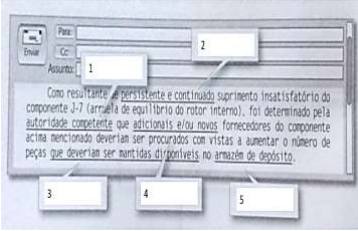
A alternativa que explica a verbosidade impressa no
parágrafo é:

 Conheça nossos planos