Selecionar segmento
Estude com questões de diferentes segmentos
Atenção: Isso limpará todos os campos já preenchidos no filtro!
Foram encontradas 20.975 questões
Resolva questões gratuitamente!
Junte-se a mais de 4 milhões de concurseiros!


Ano: 2011
Banca:
CESGRANRIO
Órgão:
Petrobras
Prova:
CESGRANRIO - 2011 - Petrobras - Engenheiro de Equipamento Júnior - Elétrica |
Q183006
Engenharia Elétrica
Um núcleo toroidal tem uma seção reta S [ m² ], com- primento médio L [ m ], permeabilidade µ [ H/m ] e um enrolamento de N espiras. Nesse núcleo é feito um Gap (entreferro) de comprimento médio d [ m ], com d << L, de modo que a dispersão no Gap possa ser desprezada. Para que o núcleo tenha um fluxo magnético de ? [ Wb ], a expressão da corrente no enrolamento, em ampères, é
Dados: permeabilidade do Gap é µ0 [ H/m ] e a dispersão no enrolamento é desprezível
Dados: permeabilidade do Gap é µ0 [ H/m ] e a dispersão no enrolamento é desprezível
Q181616
Economia
A Macroeconomia estuda o comportamento do sistema econômico por um reduzido número de fatores, como a produção ou produto total de uma economia, o nível de emprego e poupança, o investimento, o consumo, o nível geral dos preços. Seus principais objetivos estão no rápido crescimento do produto e do consumo, no aumento da oferta de empregos, na inflação reduzida e no comércio internacional vantajoso. Contabilidade nacional é a técnica que tem como objetivo principal representar e quantificar a atividade econômica de um país, durante determinado período de tempo. Acerca disso, considere as seguintes definições:
I. Valor Bruto de Produção (VBP): expressão monetária da soma de todos os bens e serviços produzidos em determinado território econômico, num dado período de tempo. Não incorre no chamado erro de "dupla contagem", pois não soma os produtos finais com os insumos usados em sua elaboração.
II. Produto Bruto (PB): produção de bens e serviços finais realizados pela economia, durante um período de tempo.
III. Renda Bruta (RB): somatório das remunerações brutas dos fatores de produção empregados na economia, durante um período de tempo.
IV. Produto Interno Bruto (PIB): expressão monetária dos bens e serviços finais produzidos dentro dos limites territoriais econômicos, dependendo da origem dos fatores de produção.
V. Produto Nacional Bruto (PNB): expressão monetária dos bens e serviços produzidos por fatores de produção nacionais, independentemente do território econômico.
É INCORRETO o que consta APENAS em
I. Valor Bruto de Produção (VBP): expressão monetária da soma de todos os bens e serviços produzidos em determinado território econômico, num dado período de tempo. Não incorre no chamado erro de "dupla contagem", pois não soma os produtos finais com os insumos usados em sua elaboração.
II. Produto Bruto (PB): produção de bens e serviços finais realizados pela economia, durante um período de tempo.
III. Renda Bruta (RB): somatório das remunerações brutas dos fatores de produção empregados na economia, durante um período de tempo.
IV. Produto Interno Bruto (PIB): expressão monetária dos bens e serviços finais produzidos dentro dos limites territoriais econômicos, dependendo da origem dos fatores de produção.
V. Produto Nacional Bruto (PNB): expressão monetária dos bens e serviços produzidos por fatores de produção nacionais, independentemente do território econômico.
É INCORRETO o que consta APENAS em
Q181615
Matemática Financeira
Realizando um financiamento em longo prazo por meio de leasing, considere as seguintes afirmativas para esta operação:
I. O leasing, por não caracterizar uma operação financeira, está isento de IOF.
II. Leasing é um misto de locação e de uma potencial operação de compra e venda.
III. O leasing, por não se caracterizar uma operação de locação, está isento de imposto de renda.
IV. Em muitos contratos de leasing o valor residual está embutido nas prestações mensais.
É correto o que consta APENAS em
I. O leasing, por não caracterizar uma operação financeira, está isento de IOF.
II. Leasing é um misto de locação e de uma potencial operação de compra e venda.
III. O leasing, por não se caracterizar uma operação de locação, está isento de imposto de renda.
IV. Em muitos contratos de leasing o valor residual está embutido nas prestações mensais.
É correto o que consta APENAS em
Q181614
Noções de Informática
MS Project é um software utilizado para
Q181613
Matemática Financeira
Suponha que a Infraero analisa uma proposta comercial de valor igual a R$ 1.200.000,00 que considera um financiamento pelo Sistema Price de Amortização, à taxa de juros de 12% (doze por cento) ao ano, duração de 8 meses e uma entrada de R$ 200.000,00. Com base apenas nos dados fornecidos, o valor da prestação mensal no período deverá ser de
Q181612
Matemática Financeira
Para contrair um empréstimo em longo prazo, há muitas formas de pagamento, dentre as quais considere as seguintes:
I. Na série uniforme com prestações constantes Sistema Francês, também conhecido como tabela Price, com o passar do tempo a amortização diminui e o juro aumenta.
II. Na série com amortização constante, a grande vantagem é que as prestações também são constantes.
III. Na série mista, na qual parte tem amortização pela tabela Price e parte pelo sistema de amortização constante, a grande vantagem é a diminuição do valor das primeiras prestações em relação à série de amortização constante.
IV. A série em que, de tempos em tempos, há pagamentos maiores, chamados balões, é conhecida como série diferida.
É correto o que consta APENAS em
I. Na série uniforme com prestações constantes Sistema Francês, também conhecido como tabela Price, com o passar do tempo a amortização diminui e o juro aumenta.
II. Na série com amortização constante, a grande vantagem é que as prestações também são constantes.
III. Na série mista, na qual parte tem amortização pela tabela Price e parte pelo sistema de amortização constante, a grande vantagem é a diminuição do valor das primeiras prestações em relação à série de amortização constante.
IV. A série em que, de tempos em tempos, há pagamentos maiores, chamados balões, é conhecida como série diferida.
É correto o que consta APENAS em
Q181611
Segurança e Saúde no Trabalho
De acordo com a NR-10, NORMA REGULAMENTADORA N° 10, DO MINISTÉRIO DO TRABALHO E EMPREGO, em todos os serviços executados em instalações elétricas devem ser previstas e adotadas, prioritariamente, medidas de proteção coletiva de forma a garantir a segurança e a saúde dos trabalhadores. Essas medidas compreendem à desenergização elétrica e, na sua impossibilidade o emprego de tensão de segurança.
A sequência preconizada pela NR-10 para a desenergização segura de uma instalação elétrica está melhor representada em:
A sequência preconizada pela NR-10 para a desenergização segura de uma instalação elétrica está melhor representada em:
Q181610
Engenharia Elétrica
Com relação a um sistema de controle supervisor, aplicado na supervisão e controle de um sistema elétrico em tempo real, analise:
I. estimação de estado é uma função vital para um sistema de controle supervisor.
II. o acúmulo de erro de tempo na operação de um sistema elétrico indica violações no controle de frequência e/ou de intercâmbio.
III. a simulação e o cálculo de sistemas elétricos em tempo real é uma função com pouco uso em um controle supervisor.
É correto o que consta APENAS em
I. estimação de estado é uma função vital para um sistema de controle supervisor.
II. o acúmulo de erro de tempo na operação de um sistema elétrico indica violações no controle de frequência e/ou de intercâmbio.
III. a simulação e o cálculo de sistemas elétricos em tempo real é uma função com pouco uso em um controle supervisor.
É correto o que consta APENAS em
Q181609
Engenharia Elétrica
Em relação aos tipos de acionamentos soft-starter, considere as seguintes afirmativas:
I. Em elevatórias de água, bruta ou tratada, as partidas com soft-starter podem ter as rampas de aceleração e desaceleração ajustadas para não existir golpe de aríete nas tubulações, sendo justificadas para aumentar a vida útil dos conjuntos mecânicos e minimizar o rompimento de adutoras, seus custos de manutenção e perda de produção.
II. Durante as rampas de aceleração ou desaceleração de partidas com soft-starter, normalmente os capacitores de correção de fator de potência são desligados para evitar danos nos componentes eletrônicos.
III. Manobras com bancos de capacitores para correção do fator de potência devem ser feitas com contatores equipados com resistências de amortecimento.
IV. Partidas em motores de bombas de recalque, com ventilação forçada ou dependentes de escorva não precisam prever intertravamentos com esses sistemas.
É correto o que consta APENAS em
I. Em elevatórias de água, bruta ou tratada, as partidas com soft-starter podem ter as rampas de aceleração e desaceleração ajustadas para não existir golpe de aríete nas tubulações, sendo justificadas para aumentar a vida útil dos conjuntos mecânicos e minimizar o rompimento de adutoras, seus custos de manutenção e perda de produção.
II. Durante as rampas de aceleração ou desaceleração de partidas com soft-starter, normalmente os capacitores de correção de fator de potência são desligados para evitar danos nos componentes eletrônicos.
III. Manobras com bancos de capacitores para correção do fator de potência devem ser feitas com contatores equipados com resistências de amortecimento.
IV. Partidas em motores de bombas de recalque, com ventilação forçada ou dependentes de escorva não precisam prever intertravamentos com esses sistemas.
É correto o que consta APENAS em
Q181608
Engenharia Elétrica
Quanto aos materiais e componentes de quadros de comando para motores de indução, considere as seguintes afirmativas:
I. Inversores de frequência são dispositivos utilizados para a partida de motores de indução.
II. Capacitores de potência são indicados para a compensação da carga reativa de circuitos com característica indutiva.
III. Quanto maior a potência nominal de um circuito, maior o seu fator de potência.
IV. A potência de curto circuito disponível em um ponto do circuito de alimentação é função exclusivamente da carga a ser alimentada, independentemente da fonte de alimentação.
É correto o que consta APENAS em
I. Inversores de frequência são dispositivos utilizados para a partida de motores de indução.
II. Capacitores de potência são indicados para a compensação da carga reativa de circuitos com característica indutiva.
III. Quanto maior a potência nominal de um circuito, maior o seu fator de potência.
IV. A potência de curto circuito disponível em um ponto do circuito de alimentação é função exclusivamente da carga a ser alimentada, independentemente da fonte de alimentação.
É correto o que consta APENAS em
Q181607
Engenharia Elétrica
O projeto de sistemas elétricos industriais se apoia fundamentalmente na determinação
Q181606
Engenharia Elétrica
As partes que necessariamente integram o projeto de um quadro de comando BT para partidas de motores de indução são:
I. Projeto eletromecânico;
II. Diagrama multifilar e diagrama funcional;
III. Lista de materiais e plaquetas;
IV. Diagrama de ligação das entradas e saídas dos CLP (Controladores Lógicos Programáveis), quando existentes.
É correto o que consta em
I. Projeto eletromecânico;
II. Diagrama multifilar e diagrama funcional;
III. Lista de materiais e plaquetas;
IV. Diagrama de ligação das entradas e saídas dos CLP (Controladores Lógicos Programáveis), quando existentes.
É correto o que consta em
Q181605
Administração Geral
Sobre Planejamento Estratégico, considere os seguintes fatores:
I. A participação do Presidente.
II. Um firme comprometimento da alta direção.
III. Um bom sistema de coleta e análise de dados.
IV. Um sólido conhecimento do Gerenciamento da Rotina.
V. Divulgação das metas estabelecidas por toda a Empresa.
O sucesso de um Planejamento Estratégico implica, necessariamente, os requisitos discriminados em
I. A participação do Presidente.
II. Um firme comprometimento da alta direção.
III. Um bom sistema de coleta e análise de dados.
IV. Um sólido conhecimento do Gerenciamento da Rotina.
V. Divulgação das metas estabelecidas por toda a Empresa.
O sucesso de um Planejamento Estratégico implica, necessariamente, os requisitos discriminados em
Q181604
Segurança e Saúde no Trabalho
A empresa que tiver trabalhador exercendo atividades em instalações elétricas energizadas em alta tensão dentro dos limites estabelecidos como zonas controladas e de risco, para atender à nova redação da NR 10 (Portaria n° 598, de 07/12/2004), deve
Q181603
Direito Administrativo
De acordo com a Lei n° 8.666/1993, com alterações introduzidas pela Lei n°8.883/1994, e Lei n° 9.648/1998, analise: Art. 12 - Nos projetos básicos e projetos executivos de obras e serviços serão considerados principalmente os seguintes requisitos:
I. estudos técnicos, planejamentos e projetos básicos ou executivos;
II. economia na execução, conservação e operação;
III. treinamento e aperfeiçoamento de pessoal;
IV. adoção das normas técnicas, de saúde e de segurança do trabalho adequadas;
V. impacto ambiental;
VI. possibilidade de emprego de mão-de-obra, materiais, tecnologia e matérias-primas existentes no local para execução, conservação e operação.
É INCORRETO o que consta APENAS em
I. estudos técnicos, planejamentos e projetos básicos ou executivos;
II. economia na execução, conservação e operação;
III. treinamento e aperfeiçoamento de pessoal;
IV. adoção das normas técnicas, de saúde e de segurança do trabalho adequadas;
V. impacto ambiental;
VI. possibilidade de emprego de mão-de-obra, materiais, tecnologia e matérias-primas existentes no local para execução, conservação e operação.
É INCORRETO o que consta APENAS em
Q181602
Administração Geral
Considere as seguintes afirmativas sobre “missão” e “visão” empresariais:
I. A “Missão” descreve as funções principais a serem exercidas pelo diretor da empresa.
II. A “Visão” representa o desejo do fundador da empresa com respeito ao futuro.
III. A “Missão” e a “Visão” devem ser estabelecidas ao final de cada ano para o ano seguinte.
IV. A “Missão” reflete a razão da existência da empresa.
V. A “Visão” é uma meta de longo prazo para a empresa.
É correto o que consta APENAS em
I. A “Missão” descreve as funções principais a serem exercidas pelo diretor da empresa.
II. A “Visão” representa o desejo do fundador da empresa com respeito ao futuro.
III. A “Missão” e a “Visão” devem ser estabelecidas ao final de cada ano para o ano seguinte.
IV. A “Missão” reflete a razão da existência da empresa.
V. A “Visão” é uma meta de longo prazo para a empresa.
É correto o que consta APENAS em
Q181601
Administração Geral
Sobre “visão estratégica”, considere as seguintes afirmativas:
I. Trata-se do planejamento de ações para operações táticas sobre objetivos vitais.
II. Significa interação com o ambiente no qual a empresa está inserida, identificando riscos, tendências, oportunidades e mudanças.
III. São os meios postos em prática para se alcançarem os objetivos finais.
IV. Significa analisar as causas para se descobrirem os efeitos.
V. Significa estabelecer metas para os acionistas, clientes, empregados e sociedade.
É correto o que consta APENAS em
I. Trata-se do planejamento de ações para operações táticas sobre objetivos vitais.
II. Significa interação com o ambiente no qual a empresa está inserida, identificando riscos, tendências, oportunidades e mudanças.
III. São os meios postos em prática para se alcançarem os objetivos finais.
IV. Significa analisar as causas para se descobrirem os efeitos.
V. Significa estabelecer metas para os acionistas, clientes, empregados e sociedade.
É correto o que consta APENAS em
Q181600
Engenharia Elétrica
Sobre a inspeção em fábrica de quadros de comando e cubículos, considere as seguintes afirmativas:
I. Os equipamentos para testes poderão ser de propriedade do fabricante dos quadros de comando e cubículos.
II. Os equipamentos para testes somente poderão ser de um laboratório independente e previamente credenciado pelo INMETRO.
III. Os relatórios dos ensaios de rotina deverão ser emitidos pelo fabricante do equipamento, mesmo que os resultados não atendam às prescrições mínimas das normas respectivas.
IV. Os relatórios dos ensaios de rotina não precisam ser emitidos pelo fabricante do equipamento se os resultados atenderem às prescrições mínimas das normas respectivas.
É correto o que consta APENAS em
I. Os equipamentos para testes poderão ser de propriedade do fabricante dos quadros de comando e cubículos.
II. Os equipamentos para testes somente poderão ser de um laboratório independente e previamente credenciado pelo INMETRO.
III. Os relatórios dos ensaios de rotina deverão ser emitidos pelo fabricante do equipamento, mesmo que os resultados não atendam às prescrições mínimas das normas respectivas.
IV. Os relatórios dos ensaios de rotina não precisam ser emitidos pelo fabricante do equipamento se os resultados atenderem às prescrições mínimas das normas respectivas.
É correto o que consta APENAS em
Q181599
Engenharia Elétrica
Geralmente utilizam-se painéis de distribuição distintos para cargas de iluminação e para cargas de motores devido
Q181598
Engenharia Elétrica
Analise o circuito abaixo.
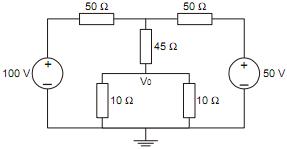
O valor da tensão V0 é igual a
O valor da tensão V0 é igual a

 Conheça nossos planos