Questões de Concurso
Para professor - inglês
Foram encontradas 31.342 questões
Resolva questões gratuitamente!
Junte-se a mais de 4 milhões de concurseiros!


Ano: 2023
Banca:
MSConcursos
Órgão:
Prefeitura de Turvelândia - GO
Provas:
MS CONCURSOS - 2023 - Prefeitura de Turvelândia - GO - Professor de Geografia
|
MS CONCURSOS - 2023 - Prefeitura de Turvelândia - GO - Professor de Educação Infantil |
MS CONCURSOS - 2023 - Prefeitura de Turvelândia - GO - Professor de Língua Portuguesa |
MS CONCURSOS - 2023 - Prefeitura de Turvelândia - GO - Professor de História |
MS CONCURSOS - 2023 - Prefeitura de Turvelândia - GO - Professor de Inglês |
MS CONCURSOS - 2023 - Prefeitura de Turvelândia - GO - Professor de Educação Física |
MS CONCURSOS - 2023 - Prefeitura de Turvelândia - GO - Professor de Séries Inicais |
MS CONCURSOS - 2023 - Prefeitura de Turvelândia - GO - Professor de Ciências |
Q2124579
Português
Quanto aos termos acessórios da oração, assinale (V) verdadeiro ou (F) falso e marque a alternativa correta.
( ) Termos acessórios são os que desempenham na oração uma função secundária, qual seja, a de caracterizar um ser, determinar os substantivos, exprimir alguma circunstância. ( ) São quatro os termos acessórios da oração: adjunto adnominal, adjunto adverbial, aposto e vocativo. ( ) Adjunto adverbial é o termo que caracteriza, ou determina os substantivos. ( ) Adjunto adnominal é o termo que exprime uma circunstância (de tempo, lugar, modo, etc), ou em outras palavras, que modifica o sentido de um verbo, adjetivo, ou advérbio. ( ) Aposto é uma palavra, ou expressão que explica, esclarece, desenvolve, resume outro termo da oração.
( ) Termos acessórios são os que desempenham na oração uma função secundária, qual seja, a de caracterizar um ser, determinar os substantivos, exprimir alguma circunstância. ( ) São quatro os termos acessórios da oração: adjunto adnominal, adjunto adverbial, aposto e vocativo. ( ) Adjunto adverbial é o termo que caracteriza, ou determina os substantivos. ( ) Adjunto adnominal é o termo que exprime uma circunstância (de tempo, lugar, modo, etc), ou em outras palavras, que modifica o sentido de um verbo, adjetivo, ou advérbio. ( ) Aposto é uma palavra, ou expressão que explica, esclarece, desenvolve, resume outro termo da oração.
Ano: 2023
Banca:
MSConcursos
Órgão:
Prefeitura de Turvelândia - GO
Provas:
MS CONCURSOS - 2023 - Prefeitura de Turvelândia - GO - Professor de Geografia
|
MS CONCURSOS - 2023 - Prefeitura de Turvelândia - GO - Professor de Educação Infantil |
MS CONCURSOS - 2023 - Prefeitura de Turvelândia - GO - Professor de Língua Portuguesa |
MS CONCURSOS - 2023 - Prefeitura de Turvelândia - GO - Professor de História |
MS CONCURSOS - 2023 - Prefeitura de Turvelândia - GO - Professor de Inglês |
MS CONCURSOS - 2023 - Prefeitura de Turvelândia - GO - Professor de Educação Física |
MS CONCURSOS - 2023 - Prefeitura de Turvelândia - GO - Professor de Séries Inicais |
MS CONCURSOS - 2023 - Prefeitura de Turvelândia - GO - Professor de Ciências |
Q2124578
Português
Texto associado
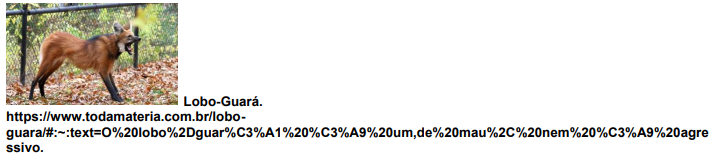
Leia o texto para responder à próxima questão.
O lobo-guará é um mamífero que está ameaçado em extinção. Diferentemente de outras espécies de lobo que
vivem em matilha, o lobo-guará é um animal de hábito solitário, que vive no Cerrado Brasileiro.
Considerado a maior espécie de canídeo das Américas, o lobo-guará não tem nada de mau, nem é agressivo.
Ele é apenas curioso e pode se aproximar das povoações, assustando algumas pessoas.
O lobo-guará vive em regiões abertas, como campos e matas de capoeira. Ocupa o bioma do Cerrado.
Também ocorre em algumas regiões de transição para a Caatinga e Mata Atlântica, sendo encontrado
principalmente nos Estados de Minas Gerais, Rio de Janeiro, São Paulo e Paraná.
O lobo guará é considerado um animal que vive em situação vulnerável para extinção, conforme avaliação do
Ministério do Meio Ambiente e o ICMBio. Essa situação varia de um estado para outro, sendo que no Rio Grande
do Sul é considerado criticamente ameaçado.
A ocupação humana e a destruição do seu habitat natural são algumas das ameaças à sua sobrevivência. O
Cerrado é dos biomas menos protegidos, apesar de possuir grande biodiversidade.
A proximidade do seu habitat com regiões ocupadas gera conflitos de convivência da espécie com o ser
humano. É muito difundida a ideia do lobo ser mau e atacar os animais domésticos e as pessoas, mas ele não
é agressivo.
Em certas regiões é comum que os lobos-guará cacem galinhas, despertando a fúria dos pequenos produtores
rurais. No entanto, os ataques do lobo-guará às galinhas, não afeta tanto como se costuma pensar. Muitas vezes,
são outros animais que atacam e os lobos levam a culpa.
Em se tratando de encontros vocálicos, as palavras do texto (ameaçado, solitário, curioso, caatinga) são
respectivamente:
Ano: 2023
Banca:
MSConcursos
Órgão:
Prefeitura de Turvelândia - GO
Provas:
MS CONCURSOS - 2023 - Prefeitura de Turvelândia - GO - Professor de Geografia
|
MS CONCURSOS - 2023 - Prefeitura de Turvelândia - GO - Professor de Educação Infantil |
MS CONCURSOS - 2023 - Prefeitura de Turvelândia - GO - Professor de Língua Portuguesa |
MS CONCURSOS - 2023 - Prefeitura de Turvelândia - GO - Professor de História |
MS CONCURSOS - 2023 - Prefeitura de Turvelândia - GO - Professor de Inglês |
MS CONCURSOS - 2023 - Prefeitura de Turvelândia - GO - Professor de Educação Física |
MS CONCURSOS - 2023 - Prefeitura de Turvelândia - GO - Professor de Séries Inicais |
MS CONCURSOS - 2023 - Prefeitura de Turvelândia - GO - Professor de Ciências |
Q2124577
Português
Texto associado
Leia o texto para responder à próxima questão.
O lobo-guará é um mamífero que está ameaçado em extinção. Diferentemente de outras espécies de lobo que
vivem em matilha, o lobo-guará é um animal de hábito solitário, que vive no Cerrado Brasileiro.
Considerado a maior espécie de canídeo das Américas, o lobo-guará não tem nada de mau, nem é agressivo.
Ele é apenas curioso e pode se aproximar das povoações, assustando algumas pessoas.
O lobo-guará vive em regiões abertas, como campos e matas de capoeira. Ocupa o bioma do Cerrado.
Também ocorre em algumas regiões de transição para a Caatinga e Mata Atlântica, sendo encontrado
principalmente nos Estados de Minas Gerais, Rio de Janeiro, São Paulo e Paraná.
O lobo guará é considerado um animal que vive em situação vulnerável para extinção, conforme avaliação do
Ministério do Meio Ambiente e o ICMBio. Essa situação varia de um estado para outro, sendo que no Rio Grande
do Sul é considerado criticamente ameaçado.
A ocupação humana e a destruição do seu habitat natural são algumas das ameaças à sua sobrevivência. O
Cerrado é dos biomas menos protegidos, apesar de possuir grande biodiversidade.
A proximidade do seu habitat com regiões ocupadas gera conflitos de convivência da espécie com o ser
humano. É muito difundida a ideia do lobo ser mau e atacar os animais domésticos e as pessoas, mas ele não
é agressivo.
Em certas regiões é comum que os lobos-guará cacem galinhas, despertando a fúria dos pequenos produtores
rurais. No entanto, os ataques do lobo-guará às galinhas, não afeta tanto como se costuma pensar. Muitas vezes,
são outros animais que atacam e os lobos levam a culpa.
Leia o texto e assinale a alternativa incorreta.
Ano: 2023
Banca:
MSConcursos
Órgão:
Prefeitura de Turvelândia - GO
Prova:
MS CONCURSOS - 2023 - Prefeitura de Turvelândia - GO - Professor de Inglês |
Q2124436
Inglês
Para responder essa questão, leia o trecho a seguir:
No, she didn't know. That's why she felt lost and overwhelmed. Dealing with all of this was too much for her and
she was thinking about giving up.
Que adjetivo descreve corretamente como ela se sentia?
Ano: 2023
Banca:
MSConcursos
Órgão:
Prefeitura de Turvelândia - GO
Prova:
MS CONCURSOS - 2023 - Prefeitura de Turvelândia - GO - Professor de Inglês |
Q2124435
Inglês
Na oração temos um exemplo de um enunciado discursivo sem uma tradução literal em inglês, já que, em
inglês, não há o subjuntivo. Veja então a oração:
“Se ela tiver tempo e dinheiro, fará uma viagem para o Egito.”
Qual alternativa traduz corretação essa oração para o inglês?
Ano: 2023
Banca:
MSConcursos
Órgão:
Prefeitura de Turvelândia - GO
Prova:
MS CONCURSOS - 2023 - Prefeitura de Turvelândia - GO - Professor de Inglês |
Q2124434
Inglês
No parágrafo, falta uma preposição. Assinale a alternativa que completa corretamente a lacuna:
November has arrived. I finally have time to rest. ______________ the weekend, I will go surfing with my friends.
Ano: 2023
Banca:
MSConcursos
Órgão:
Prefeitura de Turvelândia - GO
Prova:
MS CONCURSOS - 2023 - Prefeitura de Turvelândia - GO - Professor de Inglês |
Q2124433
Inglês
Ao final de um e-mail em inglês, é comum o uso da expressão “Estou ansioso por ouvir de você em breve”.
Em inglês, essa expressão se traduz da seguinte forma: “I look foward to ____________________ from you
soon.” Que conjugação do verbo “to hear” completa corretamente a lacuna?
Ano: 2023
Banca:
MSConcursos
Órgão:
Prefeitura de Turvelândia - GO
Prova:
MS CONCURSOS - 2023 - Prefeitura de Turvelândia - GO - Professor de Inglês |
Q2124432
Inglês
Para responder essa questão, leia o trecho a seguir:
The vaccine for COVID-19 brought great advances in the fight against the disease and reduced mortality rates.
However, it is up to the State to maintain a constant vaccination schedule, so that the population remains
protected. In addition, it is important to make people aware of the importance of the vaccine and combat
unscientific thinking about vaccination.
A conjunção However traz qual sentido para a oração?
A conjunção However traz qual sentido para a oração?
Ano: 2023
Banca:
MSConcursos
Órgão:
Prefeitura de Turvelândia - GO
Prova:
MS CONCURSOS - 2023 - Prefeitura de Turvelândia - GO - Professor de Inglês |
Q2124431
Inglês
Assinale a alternativa que contém uma oração em inglês que faça o uso de um pronome reflexivo.
Ano: 2023
Banca:
MSConcursos
Órgão:
Prefeitura de Turvelândia - GO
Prova:
MS CONCURSOS - 2023 - Prefeitura de Turvelândia - GO - Professor de Inglês |
Q2124430
Inglês
A oração em língua portuguesa: “Eu não aguento mais isso”, pode ser traduzida para o inglês usando um
phrasal verb. Dessa forma, assinale a alternativa que contém uma tradução correta para essa oração e que use
o phrasal verb adequado.
Ano: 2023
Banca:
VUNESP
Órgão:
Prefeitura de São Bernardo do Campo - SP
Prova:
VUNESP - 2023 - Prefeitura de São Bernardo do Campo - SP - Professor II de Educação Básica – Inglês |
Q2121453
Inglês
Leia o cartum para responder à questão.
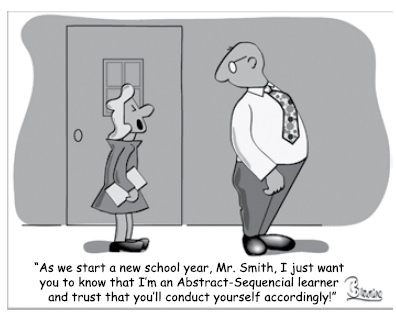
(https://www.lingvolive.com)
In the cartoon,
Ano: 2023
Banca:
VUNESP
Órgão:
Prefeitura de São Bernardo do Campo - SP
Prova:
VUNESP - 2023 - Prefeitura de São Bernardo do Campo - SP - Professor II de Educação Básica – Inglês |
Q2121452
Inglês
Texto associado
Leia o texto para responder a questão.
Learning strategies are defined as “specific actions,
behaviors, steps, or techniques—such as seeking out
conversation partners, or giving one self-encouragement to
tackle a difficult language task—used by students to enhance
their own learning. When the learner consciously chooses
strategies that suit his or her learning style and the L2 task
at hand, these strategies become a useful toolkit for active,
conscious, and purposeful self-regulation of learning. Learning
strategies can be classified into six types; the compensatory
strategies, for example, are those that help the learner make
up for missing knowledge.
A given strategy is neither good nor bad; it is neutral until
the context of its use is thoroughly considered. What makes a
strategy positive and helpful for a given learner? A strategy is
useful if the following conditions are present: (a) the strategy
relates to the L2 task at hand; (b) the strategy fits the particular
student’s learning style preferences to one degree or another;
and (c) the student employs the strategy effectivety and links
it with other relevant strategies. Strategies that fulfill these
conditions “make learning easier, faster, more enjoyable,
more self-directed, more effective, and more transferable
to new situations” (Oxford 1990, p. 8). Learning strategies
can also enable students to become more independent and
lifelong learners.
(Rebecca Oxford. Language Learning Styles and Strategies. Adaptado)
It is an example of a compensatory strategy a good reader
would resort to while reading an unknown text:
Ano: 2023
Banca:
VUNESP
Órgão:
Prefeitura de São Bernardo do Campo - SP
Prova:
VUNESP - 2023 - Prefeitura de São Bernardo do Campo - SP - Professor II de Educação Básica – Inglês |
Q2121451
Inglês
Texto associado
Leia o texto para responder a questão.
Learning strategies are defined as “specific actions,
behaviors, steps, or techniques—such as seeking out
conversation partners, or giving one self-encouragement to
tackle a difficult language task—used by students to enhance
their own learning. When the learner consciously chooses
strategies that suit his or her learning style and the L2 task
at hand, these strategies become a useful toolkit for active,
conscious, and purposeful self-regulation of learning. Learning
strategies can be classified into six types; the compensatory
strategies, for example, are those that help the learner make
up for missing knowledge.
A given strategy is neither good nor bad; it is neutral until
the context of its use is thoroughly considered. What makes a
strategy positive and helpful for a given learner? A strategy is
useful if the following conditions are present: (a) the strategy
relates to the L2 task at hand; (b) the strategy fits the particular
student’s learning style preferences to one degree or another;
and (c) the student employs the strategy effectivety and links
it with other relevant strategies. Strategies that fulfill these
conditions “make learning easier, faster, more enjoyable,
more self-directed, more effective, and more transferable
to new situations” (Oxford 1990, p. 8). Learning strategies
can also enable students to become more independent and
lifelong learners.
(Rebecca Oxford. Language Learning Styles and Strategies. Adaptado)
In a reading class, the text is about “World Cup host
countries in the 21st century”. Aware of the fact that “a
strategy is useful if it relates to the L2 task at hand”,
the teacher coherently offers the following instruction to
develop learners’ ability to scan texts in English:
Ano: 2023
Banca:
VUNESP
Órgão:
Prefeitura de São Bernardo do Campo - SP
Prova:
VUNESP - 2023 - Prefeitura de São Bernardo do Campo - SP - Professor II de Educação Básica – Inglês |
Q2121450
Inglês
Texto associado
Leia o texto para responder a questão.
Learning strategies are defined as “specific actions,
behaviors, steps, or techniques—such as seeking out
conversation partners, or giving one self-encouragement to
tackle a difficult language task—used by students to enhance
their own learning. When the learner consciously chooses
strategies that suit his or her learning style and the L2 task
at hand, these strategies become a useful toolkit for active,
conscious, and purposeful self-regulation of learning. Learning
strategies can be classified into six types; the compensatory
strategies, for example, are those that help the learner make
up for missing knowledge.
A given strategy is neither good nor bad; it is neutral until
the context of its use is thoroughly considered. What makes a
strategy positive and helpful for a given learner? A strategy is
useful if the following conditions are present: (a) the strategy
relates to the L2 task at hand; (b) the strategy fits the particular
student’s learning style preferences to one degree or another;
and (c) the student employs the strategy effectivety and links
it with other relevant strategies. Strategies that fulfill these
conditions “make learning easier, faster, more enjoyable,
more self-directed, more effective, and more transferable
to new situations” (Oxford 1990, p. 8). Learning strategies
can also enable students to become more independent and
lifelong learners.
(Rebecca Oxford. Language Learning Styles and Strategies. Adaptado)
The second paragraph points to the fact that the use of
strategies
Ano: 2023
Banca:
VUNESP
Órgão:
Prefeitura de São Bernardo do Campo - SP
Prova:
VUNESP - 2023 - Prefeitura de São Bernardo do Campo - SP - Professor II de Educação Básica – Inglês |
Q2121449
Inglês
Texto associado
Leia o texto para responder a questão.
Learning strategies are defined as “specific actions,
behaviors, steps, or techniques—such as seeking out
conversation partners, or giving one self-encouragement to
tackle a difficult language task—used by students to enhance
their own learning. When the learner consciously chooses
strategies that suit his or her learning style and the L2 task
at hand, these strategies become a useful toolkit for active,
conscious, and purposeful self-regulation of learning. Learning
strategies can be classified into six types; the compensatory
strategies, for example, are those that help the learner make
up for missing knowledge.
A given strategy is neither good nor bad; it is neutral until
the context of its use is thoroughly considered. What makes a
strategy positive and helpful for a given learner? A strategy is
useful if the following conditions are present: (a) the strategy
relates to the L2 task at hand; (b) the strategy fits the particular
student’s learning style preferences to one degree or another;
and (c) the student employs the strategy effectivety and links
it with other relevant strategies. Strategies that fulfill these
conditions “make learning easier, faster, more enjoyable,
more self-directed, more effective, and more transferable
to new situations” (Oxford 1990, p. 8). Learning strategies
can also enable students to become more independent and
lifelong learners.
(Rebecca Oxford. Language Learning Styles and Strategies. Adaptado)
In the fragment from the first paragraph “Learning
strategies are defined as “specific actions, behaviors,
steps, or techniques—such as seeking out conversation
partners, or giving one self-encouragement to tackle a
difficult language task—used by students to enhance
their own learning. When the learner consciously chooses
strategies that suit his or her learning style and the L2
task at hand”, the underlined verbs mean in the context,
respectively,
Ano: 2023
Banca:
VUNESP
Órgão:
Prefeitura de São Bernardo do Campo - SP
Prova:
VUNESP - 2023 - Prefeitura de São Bernardo do Campo - SP - Professor II de Educação Básica – Inglês |
Q2121448
Inglês
Texto associado
Leia o texto para responder a questão.
Communicating successfully in another language
means shifting frames of reference, shifting norms, shifting
assumptions of what can and cannot be said, what might
be considered ambiguous, what should be explicit and what
ought to remain tacit, and so on. In other words, using another
language effectively involves more than vocabulary and
structures; it involves thinking differently about language and
communication.
The question is, how can we begin to understand another
way of thinking, how can we be sensitized to different
cultural frames, when we are in a classroom in Nebraska,
Nairobi, or New South Wales? One answer, I will argue, is
by reading, writing, and discussing texts. By examining the
particular ways in which language is used to capture and
express experiences, we not only learn a great deal about the
conventions of the language, but can also begin to glimpse
the beliefs and values that underlie the discourse.
The basic message is a simple one: academic language
teaching must foster literacy, not only in terms of basic reading
and writing skills, but also in terms of a broader discourse
competence that involves the ability to interpret and critically
evaluate a wide variety of written and spoken texts. Preparing
students to communicate in multiple cultural contexts, both
at home and abroad, means sensitizing them to discourse
practices in other societies and to the ways those discourse
practices both reflect and create cultural norms. I here argue
that this kind of literacy is essential to real communicative
ability in a language, and is therefore an indispensable goal
in our efforts to prepare future generations for the challenges
associated with the increased internationalization of many
aspects of our society.
(Richard Kern, Literacy and language teaching. Adaptado)
O segundo e terceiro parágrafos destacam, de forma
explícita, a importância de os currículos de língua inglesa
na Educação Básica incluírem questões relativas
Ano: 2023
Banca:
VUNESP
Órgão:
Prefeitura de São Bernardo do Campo - SP
Prova:
VUNESP - 2023 - Prefeitura de São Bernardo do Campo - SP - Professor II de Educação Básica – Inglês |
Q2121447
Inglês
Texto associado
Leia o texto para responder a questão.
Communicating successfully in another language
means shifting frames of reference, shifting norms, shifting
assumptions of what can and cannot be said, what might
be considered ambiguous, what should be explicit and what
ought to remain tacit, and so on. In other words, using another
language effectively involves more than vocabulary and
structures; it involves thinking differently about language and
communication.
The question is, how can we begin to understand another
way of thinking, how can we be sensitized to different
cultural frames, when we are in a classroom in Nebraska,
Nairobi, or New South Wales? One answer, I will argue, is
by reading, writing, and discussing texts. By examining the
particular ways in which language is used to capture and
express experiences, we not only learn a great deal about the
conventions of the language, but can also begin to glimpse
the beliefs and values that underlie the discourse.
The basic message is a simple one: academic language
teaching must foster literacy, not only in terms of basic reading
and writing skills, but also in terms of a broader discourse
competence that involves the ability to interpret and critically
evaluate a wide variety of written and spoken texts. Preparing
students to communicate in multiple cultural contexts, both
at home and abroad, means sensitizing them to discourse
practices in other societies and to the ways those discourse
practices both reflect and create cultural norms. I here argue
that this kind of literacy is essential to real communicative
ability in a language, and is therefore an indispensable goal
in our efforts to prepare future generations for the challenges
associated with the increased internationalization of many
aspects of our society.
(Richard Kern, Literacy and language teaching. Adaptado)
In the excerpt from the second paragraph “we not only
learn a great deal about the conventions of the language,
but can also begin to glimpse the beliefs and values that
underlie the discourse”, the correlative conjunctions “not
only...but also” carry the idea of
Ano: 2023
Banca:
VUNESP
Órgão:
Prefeitura de São Bernardo do Campo - SP
Prova:
VUNESP - 2023 - Prefeitura de São Bernardo do Campo - SP - Professor II de Educação Básica – Inglês |
Q2121446
Inglês
Texto associado
Leia o texto para responder a questão.
Communicating successfully in another language
means shifting frames of reference, shifting norms, shifting
assumptions of what can and cannot be said, what might
be considered ambiguous, what should be explicit and what
ought to remain tacit, and so on. In other words, using another
language effectively involves more than vocabulary and
structures; it involves thinking differently about language and
communication.
The question is, how can we begin to understand another
way of thinking, how can we be sensitized to different
cultural frames, when we are in a classroom in Nebraska,
Nairobi, or New South Wales? One answer, I will argue, is
by reading, writing, and discussing texts. By examining the
particular ways in which language is used to capture and
express experiences, we not only learn a great deal about the
conventions of the language, but can also begin to glimpse
the beliefs and values that underlie the discourse.
The basic message is a simple one: academic language
teaching must foster literacy, not only in terms of basic reading
and writing skills, but also in terms of a broader discourse
competence that involves the ability to interpret and critically
evaluate a wide variety of written and spoken texts. Preparing
students to communicate in multiple cultural contexts, both
at home and abroad, means sensitizing them to discourse
practices in other societies and to the ways those discourse
practices both reflect and create cultural norms. I here argue
that this kind of literacy is essential to real communicative
ability in a language, and is therefore an indispensable goal
in our efforts to prepare future generations for the challenges
associated with the increased internationalization of many
aspects of our society.
(Richard Kern, Literacy and language teaching. Adaptado)
The content in the text leads to a broader notion of
the concept of “literacy” and, as for foreign or second
language teachers, it means that they should
Ano: 2023
Banca:
VUNESP
Órgão:
Prefeitura de São Bernardo do Campo - SP
Prova:
VUNESP - 2023 - Prefeitura de São Bernardo do Campo - SP - Professor II de Educação Básica – Inglês |
Q2121445
Inglês
Texto associado
Leia o texto para responder a questão.
Communicating successfully in another language
means shifting frames of reference, shifting norms, shifting
assumptions of what can and cannot be said, what might
be considered ambiguous, what should be explicit and what
ought to remain tacit, and so on. In other words, using another
language effectively involves more than vocabulary and
structures; it involves thinking differently about language and
communication.
The question is, how can we begin to understand another
way of thinking, how can we be sensitized to different
cultural frames, when we are in a classroom in Nebraska,
Nairobi, or New South Wales? One answer, I will argue, is
by reading, writing, and discussing texts. By examining the
particular ways in which language is used to capture and
express experiences, we not only learn a great deal about the
conventions of the language, but can also begin to glimpse
the beliefs and values that underlie the discourse.
The basic message is a simple one: academic language
teaching must foster literacy, not only in terms of basic reading
and writing skills, but also in terms of a broader discourse
competence that involves the ability to interpret and critically
evaluate a wide variety of written and spoken texts. Preparing
students to communicate in multiple cultural contexts, both
at home and abroad, means sensitizing them to discourse
practices in other societies and to the ways those discourse
practices both reflect and create cultural norms. I here argue
that this kind of literacy is essential to real communicative
ability in a language, and is therefore an indispensable goal
in our efforts to prepare future generations for the challenges
associated with the increased internationalization of many
aspects of our society.
(Richard Kern, Literacy and language teaching. Adaptado)
The first sentence in the text is rich in the use of
modalization. Note the fragment “shifting assumptions of
what can and cannot be said, what might be considered
ambiguous, what should be explicit and what ought to
remain tacit, and so on.”
It is correct to state that, in the context given,
It is correct to state that, in the context given,
Ano: 2023
Banca:
VUNESP
Órgão:
Prefeitura de São Bernardo do Campo - SP
Prova:
VUNESP - 2023 - Prefeitura de São Bernardo do Campo - SP - Professor II de Educação Básica – Inglês |
Q2121444
Inglês
Texto associado
Leia o texto para responder a questão.
The teaching of English as a Lingua Franca
An inexorable trend in the use of global English is that
fewer interactions now involve a native speaker. Proponents
of teaching English as a Lingua Franca (ELF) suggest that the
way English is taught and assessed should reflect the needs
and aspirations of the ever-growing number of non-native
speakers who use English to communicate with other nonnatives. Understanding how non-native speakers use English
among themselves has now become a serious research area.
Different priorities in teaching English pronunciation, for
example, have been defined. Teaching certain pronunciation
features, such as the articulation of ‘th’ as an interdental
fricative, appears to be a waste of time whereas other common
pronunciation problems (such as simplifying consonant
clusters) contribute to problems of understanding. Such an
approach is allowing researchers to identify a ‘Lingua Franca
Core’ (LFC) which provides guiding principles in creating
syllabuses and assessment materials.
Unlike traditional ESL (English as Second Language), ELF
focuses also on pragmatic strategies required in intercultural
communication. The target model of English, within the ELF
framework, is not a native speaker but a fluent bilingual
speaker, who retains a national identity in terms of accent,
and who also has the special skills required to negotiate
understanding with another non-native speaker. Research is
also beginning to show how bad some native speakers are at
using English for international communication. It may be that
elements of an ELF syllabus could usefully be taught within a
mother tongue curriculum.
(David Graddol, English Next. Adaptado)
O aprendiz brasileiro, por influência de sua língua materna, tende a erroneamente acrescentar uma vogal a
palavras em Língua Inglesa que terminam em grupo consonantal. Dessa forma, adiciona uma nova sílaba à palavra, possivelmente dificultando a compreensão. Assinale
a alternativa correta contendo uma palavra que ilustraria
tal fenômeno.

 Conheça nossos planos