Selecionar segmento
Estude com questões de diferentes segmentos
Atenção: Isso limpará todos os campos já preenchidos no filtro!
Foram encontradas 4.928 questões
Resolva questões gratuitamente!
Junte-se a mais de 4 milhões de concurseiros!


Ano: 2025
Banca:
AMEOSC
Órgão:
Prefeitura de São Miguel do Oeste - SC
Prova:
AMEOSC - 2025 - Prefeitura de São Miguel do Oeste - SC - Técnico em Enfermagem - Edital nº 2 |
Q3730979
Enfermagem
A Reanimação Cardiopulmonar (RCP) é uma sequência
sistematizada de manobras e intervenções realizadas em
resposta a uma parada cardiorrespiratória, com o
objetivo de restabelecer a circulação espontânea e a
oxigenação dos tecidos vitais. Sobre a reanimação
cardiopulmonar em adultos, julgue as afirmações abaixo.
I.A frequência de compressões deve ser de 100 a 120 por minuto;
II.As compressões devem ter profundidade de aproximadamente 5 cm.
III.A relação compressão/ventilação deve ser de 30:2 quando há dois reanimadores.
IV.A checagem do pulso deve ser feita a cada 2 minutos durante a RCP.
Está CORRETA o que se afirmar em:
I.A frequência de compressões deve ser de 100 a 120 por minuto;
II.As compressões devem ter profundidade de aproximadamente 5 cm.
III.A relação compressão/ventilação deve ser de 30:2 quando há dois reanimadores.
IV.A checagem do pulso deve ser feita a cada 2 minutos durante a RCP.
Está CORRETA o que se afirmar em:
Ano: 2025
Banca:
AMEOSC
Órgão:
Prefeitura de São Miguel do Oeste - SC
Prova:
AMEOSC - 2025 - Prefeitura de São Miguel do Oeste - SC - Técnico em Enfermagem - Edital nº 2 |
Q3730978
Enfermagem
Os cuidados pós-operatórios têm início imediatamente
após o término do procedimento cirúrgico,
estendendo-se durante o período de permanência na
sala de recuperação anestésica e ao longo da internação
hospitalar, até a alta médica. Uma técnica de
enfermagem deve verificar a temperatura e o pulso de
um paciente pós-operatório. Para obter resultados
confiáveis, é CORRETO afirmar que ela deve:
Ano: 2025
Banca:
AMEOSC
Órgão:
Prefeitura de São Miguel do Oeste - SC
Prova:
AMEOSC - 2025 - Prefeitura de São Miguel do Oeste - SC - Técnico em Enfermagem - Edital nº 2 |
Q3730977
Enfermagem
Autoclave é um aparelho que esteriliza materiais e
artigos médico-hospitalares por meio do calor úmido sob
pressão. Sobre o processo de esterilização por
autoclave, julgue as afirmativas abaixo.
I.Utiliza vapor sob pressão e temperatura geralmente entre 121 °C e 134 °C.
II.O tempo de exposição depende do tipo e da quantidade de material esterilizado.
III.É o método indicado para esterilizar materiais termossensíveis e plásticos.
IV.O material deve ser limpo, seco e embalado antes do processo.
Está CORRETO o que se afirmar em:
I.Utiliza vapor sob pressão e temperatura geralmente entre 121 °C e 134 °C.
II.O tempo de exposição depende do tipo e da quantidade de material esterilizado.
III.É o método indicado para esterilizar materiais termossensíveis e plásticos.
IV.O material deve ser limpo, seco e embalado antes do processo.
Está CORRETO o que se afirmar em:
Ano: 2025
Banca:
AMEOSC
Órgão:
Prefeitura de São Miguel do Oeste - SC
Prova:
AMEOSC - 2025 - Prefeitura de São Miguel do Oeste - SC - Técnico em Enfermagem - Edital nº 2 |
Q3730976
Enfermagem
A amostra de urina tipo I, também conhecida como
Sumário de Urina ou EAS (Elementos Anormais e
Sedimento), é um exame laboratorial básico que analisa
a aparência, composição química e o conteúdo
microscópico da urina para investigar a saúde geral,
identificar infecções do trato urinário, problemas renais e
alterações metabólicas. Em um posto de saúde, o
técnico em enfermagem precisa coletar amostra de urina
tipo I, diante disso, assinale a alternativa que
corresponde a orientação adequada ao paciente.
Ano: 2025
Banca:
AMEOSC
Órgão:
Prefeitura de São Miguel do Oeste - SC
Prova:
AMEOSC - 2025 - Prefeitura de São Miguel do Oeste - SC - Técnico em Agrimensura - Edital nº 2 |
Q3730970
Português
Texto associado
Medicamentos como o Ozempic permitiram que muitas
pessoas perdessem peso que antes não conseguiam
eliminar. Será que uma dieta poderia ter o mesmo efeito
sem a necessidade de receita médica?
Nos últimos anos, a chegada de medicamentos para
perda de peso − como Ozempic e Wegovy − virou de
cabeça para baixo a forma como a medicina lida com a
obesidade.
Essas drogas, conhecidas como agonistas do peptídeo
semelhante ao glucagon tipo 1 (GLP-1), ajudam pessoas
com obesidade a perder peso ao reduzir o apetite,
levando a uma menor ingestão de alimentos. No entanto,
junto com a popularidade desses medicamentos,
surgiram alegações de que seria possível imitar seus
efeitos apenas por meio da alimentação.
Uma tendência nas redes sociais, por exemplo, sugere
que uma mistura de aveia com água e suco de limão −
apelidada de 'oatzempic' − poderia suprimir o apetite e
provocar a perda de peso de forma semelhante aos
remédios.
https://www.bbc.com/portuguese/articles/cn5qvlwkv2wo fragmento
"Medicamentos como o Ozempic permitiram que muitas
pessoas perdessem peso que antes não conseguiam
eliminar."
Analise as afirmativas a seguir quanto à regência verbal
dos verbos empregados no período, marcando (V), para
as verdadeiras, ou (F), para as falsas.
(__)O verbo 'permitir' está como bitransitivo, pois exige um objeto direto (que muitas pessoas perdessem peso) e um objeto indireto (implícito: a alguém).
(__)O verbo 'eliminar' está como intransitivo, não havendo complemento necessário para completar o seu sentido.
(__)O verbo 'perder', no trecho, apresenta a mesma transitividade observada na frase "Depois de ser injustiçado no clube que dirigia, perdeu o amor pelo esporte".
A sequência que preenche corretamente os itens acima, de cima para baixo, é:
(__)O verbo 'permitir' está como bitransitivo, pois exige um objeto direto (que muitas pessoas perdessem peso) e um objeto indireto (implícito: a alguém).
(__)O verbo 'eliminar' está como intransitivo, não havendo complemento necessário para completar o seu sentido.
(__)O verbo 'perder', no trecho, apresenta a mesma transitividade observada na frase "Depois de ser injustiçado no clube que dirigia, perdeu o amor pelo esporte".
A sequência que preenche corretamente os itens acima, de cima para baixo, é:
Ano: 2025
Banca:
AMEOSC
Órgão:
Prefeitura de São Miguel do Oeste - SC
Prova:
AMEOSC - 2025 - Prefeitura de São Miguel do Oeste - SC - Técnico em Agrimensura - Edital nº 2 |
Q3730969
Engenharia de Agrimensura
Os mapas temáticos contêm regiões geográficas
definidas por um ou mais polígonos, como mapas de uso
do solo e a aptidão agrícola de uma região, armazena na
forma de arcos (limites entre regiões), incluindo os nós
(pontos de interseções entre arcos) para montar uma
representação topológica. Com base na comparação
entre formatos para mapas temáticos, assinale a
alterativa CORRETA relacionada ao formato varredura.
Ano: 2025
Banca:
AMEOSC
Órgão:
Prefeitura de São Miguel do Oeste - SC
Prova:
AMEOSC - 2025 - Prefeitura de São Miguel do Oeste - SC - Técnico em Agrimensura - Edital nº 2 |
Q3730968
Engenharia de Agrimensura
Se o desenho vai ser feito à mão, o que é raro hoje em
dia, ele deve ser confeccionado inicialmente em um
papel milimetrado após estabelecer a origem e
orientação do sistema de coordenadas topográficas.
Para feições ou objetos que não puderem ser
representados em escala, devem-se empregar símbolos
ou convenções para representá-los.
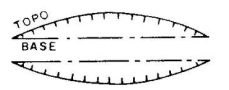
Com base nas convenções topográficas assinale a alternativa CORRETA relacionada a figura acima.
Com base nas convenções topográficas assinale a alternativa CORRETA relacionada a figura acima.
Ano: 2025
Banca:
AMEOSC
Órgão:
Prefeitura de São Miguel do Oeste - SC
Prova:
AMEOSC - 2025 - Prefeitura de São Miguel do Oeste - SC - Técnico em Agrimensura - Edital nº 2 |
Q3730967
Engenharia de Agrimensura
Após a implantação de um sistema topográfico e a instalação de um teodolito ou estação total em um ponto
de apoio cujas coordenadas são conhecidas, é possível,
por meio de métodos de medição adequados, determinar
ângulos e/ou distâncias relativas a pontos temáticos ou
pontos de interesse situados nas proximidades do
instrumento. Assinale a alternativa CORRETA que
corresponde ao método que deve ser empregado
quando se conhecem as coordenadas de dois pontos e
são medidos somente os ângulos horizontais entre os
alinhamentos formados pelos pontos conhecidos e o
temático.
Ano: 2025
Banca:
AMEOSC
Órgão:
Prefeitura de São Miguel do Oeste - SC
Prova:
AMEOSC - 2025 - Prefeitura de São Miguel do Oeste - SC - Técnico em Agrimensura - Edital nº 2 |
Q3730966
Engenharia de Agrimensura
Os instrumentos utilizados para medir ângulos são
denominados goniômetros; quando medem ângulos
horizontais e verticais, são chamados teodolitos; e,
quando realizam medições eletrônicas de ângulos
horizontais, verticais e distâncias, recebem o nome de
estações totais. Com base na medição simples de
ângulos horizontais com teodolito, julgue as afirmativas
abaixo.
I.Nos instrumentos topográficos, como o teodolito o limbo horizontal e vertical apresentam gradações nos dois sentidos para possibilitar leituras diretas ou inversas, facilitando a compensação de erros de observação e garantindo maior precisão nas medições angulares.
II.Não se mede um ângulo diretamente, mas sim duas direções: a direção inicial e a final. O ângulo é resultado da diferença dessas direções.
III.Quando se utiliza a graduação horária, o ângulo medido é denominado ângulo horário; quando se utiliza a graduação anti-horária, o ângulo é chamado de ângulo anti-horário, conforme o sentido de rotação do instrumento durante a medição.
IV.Se o instrumento é zerado na direção inicial, o ângulo observado será igual a direção final.
Está CORRETO o que se afirmar em:
I.Nos instrumentos topográficos, como o teodolito o limbo horizontal e vertical apresentam gradações nos dois sentidos para possibilitar leituras diretas ou inversas, facilitando a compensação de erros de observação e garantindo maior precisão nas medições angulares.
II.Não se mede um ângulo diretamente, mas sim duas direções: a direção inicial e a final. O ângulo é resultado da diferença dessas direções.
III.Quando se utiliza a graduação horária, o ângulo medido é denominado ângulo horário; quando se utiliza a graduação anti-horária, o ângulo é chamado de ângulo anti-horário, conforme o sentido de rotação do instrumento durante a medição.
IV.Se o instrumento é zerado na direção inicial, o ângulo observado será igual a direção final.
Está CORRETO o que se afirmar em:
Ano: 2025
Banca:
AMEOSC
Órgão:
Prefeitura de São Miguel do Oeste - SC
Prova:
AMEOSC - 2025 - Prefeitura de São Miguel do Oeste - SC - Técnico em Agrimensura - Edital nº 2 |
Q3730965
Engenharia de Agrimensura
Teoricamente há um número infinito de escalas; no
entanto, na prática, o número de escalas usadas em
topografia é pouco. Com base nas escalas empregadas
em mapeamento de acordo com a finalidade da planta,
assinale a alternativa CORRETA que corresponde a
escala usada para lote rural, loteamento, planta
cadastral.
Ano: 2025
Banca:
AMEOSC
Órgão:
Prefeitura de São Miguel do Oeste - SC
Prova:
AMEOSC - 2025 - Prefeitura de São Miguel do Oeste - SC - Técnico em Agrimensura - Edital nº 2 |
Q3730964
Agrimensura
Durante o planejamento de um voo fotogramétrico sobre
área rural para mapeamento agrícola, o técnico
responsável precisou definir a altura de voo a ser
adotada, considerando a escala desejada e a resolução
do sensor. Nessa etapa, o fator mais determinante para
a definição correta da altura de voo é:
Ano: 2025
Banca:
AMEOSC
Órgão:
Prefeitura de São Miguel do Oeste - SC
Prova:
AMEOSC - 2025 - Prefeitura de São Miguel do Oeste - SC - Técnico em Agrimensura - Edital nº 2 |
Q3730963
Engenharia de Agrimensura
Para observar distâncias horizontais há dois processos,
a saber: o direto e o indireto. No processo direto o
seguimento a ser medido deve ser percorrido do início ao
fim. Portanto, obstáculos como lagos, rios, construções,
etc., entre os extremos do seguimento a ser medido,
impedem o emprego do processo direto. Em relação as
fontes de erros na medição direta de distâncias
horizontais, marque verdadeiro (V) ou falso (F) nas
afirmativas abaixo:
(__)A dilatação térmica depende do material de composição do instrumento, do comprimento da trena e da diferença entre a temperatura ambiente e a de aferição. Se houve dilatação o valor lido será menor que o valor procurado.
(__)A elasticidade depende do material de composição do instrumento, do comprimento, espessura e largura da trena e da diferença entre a tensão aplicada na medição e na aferição. Com a distensão da trena o valor lido torna-se menor que procurado.
(__)A curvatura ou barriga que se forma ao tencionar a trena. É função do seu peso, do seu comprimento e da tensão aplicada.
(__)A falta de horizontalidade da trena com a trena inclinada o valor lido será sempre maior que o procurado. O menor valor para a distância é a distância horizontal.
Assinale a alternativa que apresenta a sequência CORRETA de cima para baixo:
(__)A dilatação térmica depende do material de composição do instrumento, do comprimento da trena e da diferença entre a temperatura ambiente e a de aferição. Se houve dilatação o valor lido será menor que o valor procurado.
(__)A elasticidade depende do material de composição do instrumento, do comprimento, espessura e largura da trena e da diferença entre a tensão aplicada na medição e na aferição. Com a distensão da trena o valor lido torna-se menor que procurado.
(__)A curvatura ou barriga que se forma ao tencionar a trena. É função do seu peso, do seu comprimento e da tensão aplicada.
(__)A falta de horizontalidade da trena com a trena inclinada o valor lido será sempre maior que o procurado. O menor valor para a distância é a distância horizontal.
Assinale a alternativa que apresenta a sequência CORRETA de cima para baixo:
Ano: 2025
Banca:
AMEOSC
Órgão:
Prefeitura de São Miguel do Oeste - SC
Prova:
AMEOSC - 2025 - Prefeitura de São Miguel do Oeste - SC - Técnico em Agrimensura - Edital nº 2 |
Q3730962
Agrimensura
O parcelamento do solo poderá ser dividido em etapas
de execução discriminadas no projeto completo. Não
será permitido o parcelamento do solo em áreas com
declividade igual ou superior a 30% (trinta por cento) até
o limite de 45% (quarenta e cinco por cento), sem que
haja aprovação de projeto de movimentação de terra
para adequação do solo, do qual é CORRETO afirmar
que resulte uma inclinação inferior a:
Ano: 2025
Banca:
AMEOSC
Órgão:
Prefeitura de São Miguel do Oeste - SC
Prova:
AMEOSC - 2025 - Prefeitura de São Miguel do Oeste - SC - Técnico em Agrimensura - Edital nº 2 |
Q3730961
Agrimensura
O princípio básico desta técnica de posicionamento é
minimizar as fontes de erro através da diferença entre
observações recebidas simultaneamente por receptores
que ocupam duas estações. Em condições de ionosfera
"calma", os erros atmosféricos e de órbita dos satélites
são praticamente eliminados em levantamentos
envolvendo linhas de base com até 10 km,
proporcionando inclusive a solução das ambiguidades. É
CORRETO afirmar que o emprego de receptores de
dupla frequência é uma solução muito utilizada para
reduzir os efeitos da ionosfera em linhas de base com
comprimento superior a:
Ano: 2025
Banca:
AMEOSC
Órgão:
Prefeitura de São Miguel do Oeste - SC
Prova:
AMEOSC - 2025 - Prefeitura de São Miguel do Oeste - SC - Técnico em Agrimensura - Edital nº 2 |
Q3730960
Direito Urbanístico
Os loteamentos, desmembramentos e desdobramentos
só serão admitidos se deles resultarem lotes edificáveis,
de acordo com as normas de zoneamento de uso e
ocupação do solo contidas na Lei do Plano Diretor de
São Miguel do Oeste. É CORRETO afirmar que
considera-se lote urbano a parcela de terreno com área
inferior a:
Ano: 2025
Banca:
AMEOSC
Órgão:
Prefeitura de São Miguel do Oeste - SC
Prova:
AMEOSC - 2025 - Prefeitura de São Miguel do Oeste - SC - Técnico em Agrimensura - Edital nº 2 |
Q3730959
Agrimensura
Os objetos geográficos estão contidos na imagem e para
individualizá-los, é necessário recorrer a técnicas de
fotointerpretação e de classificação automática.
Características importantes de imagens de satélite são:
número de bandas do espectro eletromagnético
imageadas (resolução espectral), a área da superfície
terrestre observada instantaneamente por cada sensor
(resolução espacial) e o intervalo entre duas passagens
do satélite pelo mesmo ponto (resolução temporal). Com
base nas características gerais dos principais satélites
(com os sensores) disponíveis, é CORRETO afirmar que
o LANDSAT tem resolução temporal de:
Ano: 2025
Banca:
AMEOSC
Órgão:
Prefeitura de São Miguel do Oeste - SC
Prova:
AMEOSC - 2025 - Prefeitura de São Miguel do Oeste - SC - Técnico em Agrimensura - Edital nº 2 |
Q3730958
Engenharia de Agrimensura
Azimutes são ângulos horizontais horários com origem
no lado norte do meridiano que passa pelo vértice,
variando de 0 a 360º, empregados para orientar plantas
topográficas em relação ao eixo de rotação da Terra.
Sobre azimutes, é CORRETO afirmar:
Ano: 2025
Banca:
AMEOSC
Órgão:
Prefeitura de São Miguel do Oeste - SC
Prova:
AMEOSC - 2025 - Prefeitura de São Miguel do Oeste - SC - Técnico em Agrimensura - Edital nº 2 |
Q3730957
Engenharia de Agrimensura
Durante a execução de um projeto de mapeamento de
uma área urbana de expansão, a equipe técnica optou
por utilizar imagens obtidas por VANT (Veículo Aéreo
Não Tripulado), a fim de gerar um modelo digital de
terreno (MDT) com precisão centimétrica. Nesse
contexto, é CORRETO afirmar que uma das etapas
fundamentais do processo fotogramétrico consiste em:
Ano: 2025
Banca:
AMEOSC
Órgão:
Prefeitura de São Miguel do Oeste - SC
Prova:
AMEOSC - 2025 - Prefeitura de São Miguel do Oeste - SC - Técnico em Agrimensura - Edital nº 2 |
Q3730956
Física
As variações do campo magnético podem ser de curto
ou longo período, bem como sofrer anomalias devido às
tormentas magnéticas. Elas podem ter origem no interior
ou exterior da Terra. As variações da declinação
obviamente, variações no campo magnético terrestre,
com tempo, levam a variações na declinação magnética.
É CORRETO afirma r que estas variações dependem da
posição geográfica e podem chegar a:
Ano: 2025
Banca:
AMEOSC
Órgão:
Prefeitura de São Miguel do Oeste - SC
Prova:
AMEOSC - 2025 - Prefeitura de São Miguel do Oeste - SC - Técnico Administrativo - Edital nº 2 |
Q3730949
Administração Geral
O renomado autor e professor Henry Mintzberg, em seus
estudos sobre o papel dos gestores nas organizações,
identificou dez papéis gerenciais que podem ser
agrupados em três categorias principais: interpessoais,
informacionais e decisoriais. Esses papéis são
desempenhados de forma interdependente e refletem a
complexidade e a dinamicidade da função gerencial.
Considerando as funções administrativas e os papéis gerenciais, analise as afirmativas a seguir:
I.O planejamento é a função administrativa que define os objetivos da organização e os recursos necessários para alcançá-los.
II.A organização envolve a alocação de recursos, a definição de responsabilidades e a criação de uma estrutura para a realização das tarefas.
III.A direção está relacionada à liderança, à motivação e à comunicação, influenciando as pessoas para que trabalhem em direção aos objetivos organizacionais.
IV.O controle consiste em monitorar o desempenho da organização, comparando os resultados com os planos e tomando medidas corretivas quando necessário.
Com base na análise das afirmativas, assinale a alternativa que apresenta todas as corretas:
Considerando as funções administrativas e os papéis gerenciais, analise as afirmativas a seguir:
I.O planejamento é a função administrativa que define os objetivos da organização e os recursos necessários para alcançá-los.
II.A organização envolve a alocação de recursos, a definição de responsabilidades e a criação de uma estrutura para a realização das tarefas.
III.A direção está relacionada à liderança, à motivação e à comunicação, influenciando as pessoas para que trabalhem em direção aos objetivos organizacionais.
IV.O controle consiste em monitorar o desempenho da organização, comparando os resultados com os planos e tomando medidas corretivas quando necessário.
Com base na análise das afirmativas, assinale a alternativa que apresenta todas as corretas:

 Conheça nossos planos