Foram encontradas 3.889 questões
Resolva questões gratuitamente!
Junte-se a mais de 4 milhões de concurseiros!


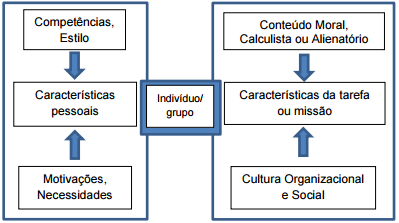
Observe o esquema a seguir:
Fonte: MAXIMIANO, A. C. A. Teoria Geral da Administração: da escola científica
à competitividade na economia globalizada. 2ª ed. São Paulo: Atlas. 2000. Adaptado.
O complexo processo social aqui representado refere-se a elementos presentes em um sistema de
Assinale a alternativa em que a habilidade está corretamente descrita.
 Fonte: MAXIMIANO, A. C. A. Teoria Geral da Administração: da escola científica
à competitividade na economia globalizada. 2ª ed. São Paulo: Atlas. 2000. Adaptado.
Fonte: MAXIMIANO, A. C. A. Teoria Geral da Administração: da escola científica
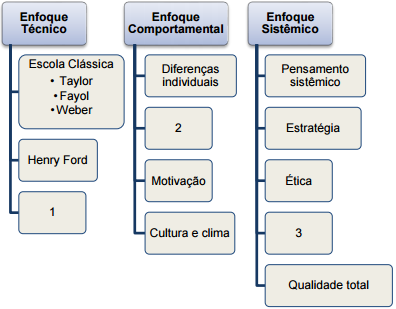
à competitividade na economia globalizada. 2ª ed. São Paulo: Atlas. 2000. Adaptado.Os termos que substituem corretamente os números 1, 2 e 3 no organograma, para que este reflita o pensamento de Maximiano são, respectivamente,
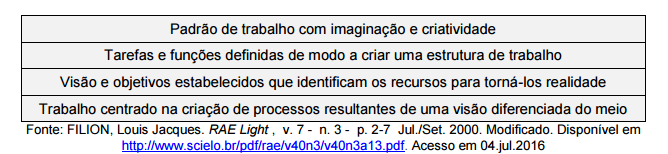 O perfil descrito equivale àquele observado em
 ( ) satisfação íntima. ( ) reconhecimento. ( ) acumulação. ( ) diversidade de estímulos.
Reconheça a opção que indica a sequência correta de associação.
As torcidas organizadas do Brasil aterrorizam boa parte dos torcedores do Brasil. Por causa delas e, principalmente, das cenas de violência que elas protagonizam, milhões de torcedores se mantêm afastados dos estádios e muitos outros nem consideram a possibilidade de levar mulheres, pais e filhos aos estádios. É ruim, mas poderia ser muito pior.
O jornalista argentino Gustavo Grabia é uma das maiores autoridades do continente sobre a violência das torcidas. Profundo conhecedor das barras argentinas, ele mostra que a situação no Brasil pode se deteriorar, se nada ou muito pouco continuar a ser feito.
Na Argentina, as barras, os equivalentes das organizadas, superam as irmãs brasileiras em violência, poder financeiro e poder político. Com o silêncio da polícia, conseguem até enfrentar presidentes de clubes e ameaçar jogadores sem sofrer sanções.
Com isso, arrecadam muito dinheiro. Com esses recursos, conseguem corromper policiais, dirigentes e até políticos. Grande parte das barras prestam serviços aos partidos políticos, de situação ou oposição. Os líderes das barras possuem um acesso aos círculos do poder – são recebidos no palácio presidencial – que é impensável no Brasil.
As diferenças vêm desde a formação. Na Argentina, há uma barra por clube e ela é uma organização informal. Não existem eleições, nem mandatos. O poder se mantém pela força. O líder da barra só deixa o cargo quando é preso, morto ou deposto por um rival, normalmente após uma luta de poder entre os dois grupos.
Apesar disso, o número de mortes no futebol argentino neste ano é menos do que a metade do caso brasileiro, oito contra dezessete.
A partir da leitura do texto, é possível estabelecer a seguinte sinonímia entre as palavras:
Text VIII
“When I first lived in Saudi Arabia, I tended to answer questions in Arabic about my health (the equivalent of ‘ ‘How are you’?) with the equivalent of my familiar routine responses of ‘Okay’ or ‘Fine’. However, I eventually noticed that when I asked a similar question, people generally answered with a phrase that had the literal meaning of ‘Praise to God’. I soon learned to use the new expression, wanting to be pragmatically appropriate in that context. My first type of answer wasn't ‘wrong’ (my vocabulary and pronunciation weren't inaccurate), but it did convey the meaning that I was a social outsider who answered in an unexpected way.”
(YULE, G. Pragmatics. Oxford: Oxford University Press, 1996. pp.5.)
Text VIII
“When I first lived in Saudi Arabia, I tended to answer questions in Arabic about my health (the equivalent of ‘ ‘How are you’?) with the equivalent of my familiar routine responses of ‘Okay’ or ‘Fine’. However, I eventually noticed that when I asked a similar question, people generally answered with a phrase that had the literal meaning of ‘Praise to God’. I soon learned to use the new expression, wanting to be pragmatically appropriate in that context. My first type of answer wasn't ‘wrong’ (my vocabulary and pronunciation weren't inaccurate), but it did convey the meaning that I was a social outsider who answered in an unexpected way.”
(YULE, G. Pragmatics. Oxford: Oxford University Press, 1996. pp.5.)
Text VII
The term ‘assessment literacy’ has been coined in recent years to denote what teachers need to know about assessment. Traditionally, it was regarded as the ability to select, design and evaluate tests and assessment procedures, as well as to score and grade them on the basis of theoretical knowledge. More recent approaches embrace a broader understanding of the concept when taking account of the implications of assessment for teaching. […] Knowing and understanding the key principles of sound assessment and translating those into quality information about students’ achievements and effective instruction are considered essential.
(BERGER, A. Creating Language ‐ Assessment Literacy: A Model for Teacher Education. In: HÜTTNER, J.; MEHLMAUER‐LARCHER, B.; REICH, S. (eds.) Theory and Practice in EFL Teaching Education: Bridging the Gap. Multilingual Matters, 2012. pp.57‐82.)
Match the descriptions that apply to summative, formative or diagnostic assessment. Note that more than one description can apply to one type of assessment.
I. It can help the teacher to identify students' current knowledge of a subject.
II. It provides feedback and information during the instructional process.
III. It takes place when learning has been completed and provides information and feedback that sum up the teaching and learning process.
IV. It is typically given to students at the end of a set point.
Text VII
The term ‘assessment literacy’ has been coined in recent years to denote what teachers need to know about assessment. Traditionally, it was regarded as the ability to select, design and evaluate tests and assessment procedures, as well as to score and grade them on the basis of theoretical knowledge. More recent approaches embrace a broader understanding of the concept when taking account of the implications of assessment for teaching. […] Knowing and understanding the key principles of sound assessment and translating those into quality information about students’ achievements and effective instruction are considered essential.
(BERGER, A. Creating Language ‐ Assessment Literacy: A Model for Teacher Education. In: HÜTTNER, J.; MEHLMAUER‐LARCHER, B.; REICH, S. (eds.) Theory and Practice in EFL Teaching Education: Bridging the Gap. Multilingual Matters, 2012. pp.57‐82.)
Text VII
The term ‘assessment literacy’ has been coined in recent years to denote what teachers need to know about assessment. Traditionally, it was regarded as the ability to select, design and evaluate tests and assessment procedures, as well as to score and grade them on the basis of theoretical knowledge. More recent approaches embrace a broader understanding of the concept when taking account of the implications of assessment for teaching. […] Knowing and understanding the key principles of sound assessment and translating those into quality information about students’ achievements and effective instruction are considered essential.
(BERGER, A. Creating Language ‐ Assessment Literacy: A Model for Teacher Education. In: HÜTTNER, J.; MEHLMAUER‐LARCHER, B.; REICH, S. (eds.) Theory and Practice in EFL Teaching Education: Bridging the Gap. Multilingual Matters, 2012. pp.57‐82.)
Text VI.
Critical Discourse Analysis
We have seen that among many other resources that define the power base of a group or institution, access to or control over public discourse and communication is an important "symbolic" resource, as is the case for knowledge and information (van Dijk 1996). Most people have active control only over everyday talk with family members, friends, or colleagues, and passive control over, e.g. media usage. In many situations, ordinary people are more or less passive targets of text and talk, e.g. of their bosses or teachers, or of the authorities, such as police officers, judges, welfare bureaucrats, or tax inspectors, who may simply tell them what (not) to believe or what to do.
On the other hand, members of more powerful social groups and institutions, and especially their leaders (the elites), have more or less exclusive access to, and control over, one or more types of public discourse. Thus, professors control scholarly discourse, teachers educational discourse, journalists media discourse, lawyers legal discourse, and politicians policy and other public political discourse. Those who have more control over more ‒ and more influential ‒ discourse (and more properties) are by that definition also more powerful.
These notions of discourse access and control are very general, and it is one of the tasks of CDA to spell out these forms of power. Thus, if discourse is defined in terms of complex communicative events, access and control may be defined both for the context and for the structures of text and talk themselves.
(van DIJK, T. A. Critical Discourse Analysis. In: SCHIFFRIN, D.; TANNEN, D.; HAMILTON, H. (eds.). The Handbook of Discourse Analysis, Wiley‐Blackwell, 2003. pp. 352‐371.)
Identify the illocutionary force of the professor's utterance below:
Professor to Undergraduates during a class at the university: “How's that paper doing? It's due on Monday.”
(Adapted from: http://ccat.sas.upenn.edu/~haroldfs/dravling/illocutionary.html. Accessed on October 24, 2014.)
Text VI.
Critical Discourse Analysis
We have seen that among many other resources that define the power base of a group or institution, access to or control over public discourse and communication is an important "symbolic" resource, as is the case for knowledge and information (van Dijk 1996). Most people have active control only over everyday talk with family members, friends, or colleagues, and passive control over, e.g. media usage. In many situations, ordinary people are more or less passive targets of text and talk, e.g. of their bosses or teachers, or of the authorities, such as police officers, judges, welfare bureaucrats, or tax inspectors, who may simply tell them what (not) to believe or what to do.
On the other hand, members of more powerful social groups and institutions, and especially their leaders (the elites), have more or less exclusive access to, and control over, one or more types of public discourse. Thus, professors control scholarly discourse, teachers educational discourse, journalists media discourse, lawyers legal discourse, and politicians policy and other public political discourse. Those who have more control over more ‒ and more influential ‒ discourse (and more properties) are by that definition also more powerful.
These notions of discourse access and control are very general, and it is one of the tasks of CDA to spell out these forms of power. Thus, if discourse is defined in terms of complex communicative events, access and control may be defined both for the context and for the structures of text and talk themselves.
(van DIJK, T. A. Critical Discourse Analysis. In: SCHIFFRIN, D.; TANNEN, D.; HAMILTON, H. (eds.). The Handbook of Discourse Analysis, Wiley‐Blackwell, 2003. pp. 352‐371.)
Text VI.
Critical Discourse Analysis
We have seen that among many other resources that define the power base of a group or institution, access to or control over public discourse and communication is an important "symbolic" resource, as is the case for knowledge and information (van Dijk 1996). Most people have active control only over everyday talk with family members, friends, or colleagues, and passive control over, e.g. media usage. In many situations, ordinary people are more or less passive targets of text and talk, e.g. of their bosses or teachers, or of the authorities, such as police officers, judges, welfare bureaucrats, or tax inspectors, who may simply tell them what (not) to believe or what to do.
On the other hand, members of more powerful social groups and institutions, and especially their leaders (the elites), have more or less exclusive access to, and control over, one or more types of public discourse. Thus, professors control scholarly discourse, teachers educational discourse, journalists media discourse, lawyers legal discourse, and politicians policy and other public political discourse. Those who have more control over more ‒ and more influential ‒ discourse (and more properties) are by that definition also more powerful.
These notions of discourse access and control are very general, and it is one of the tasks of CDA to spell out these forms of power. Thus, if discourse is defined in terms of complex communicative events, access and control may be defined both for the context and for the structures of text and talk themselves.
(van DIJK, T. A. Critical Discourse Analysis. In: SCHIFFRIN, D.; TANNEN, D.; HAMILTON, H. (eds.). The Handbook of Discourse Analysis, Wiley‐Blackwell, 2003. pp. 352‐371.)
Text VI.
Critical Discourse Analysis
We have seen that among many other resources that define the power base of a group or institution, access to or control over public discourse and communication is an important "symbolic" resource, as is the case for knowledge and information (van Dijk 1996). Most people have active control only over everyday talk with family members, friends, or colleagues, and passive control over, e.g. media usage. In many situations, ordinary people are more or less passive targets of text and talk, e.g. of their bosses or teachers, or of the authorities, such as police officers, judges, welfare bureaucrats, or tax inspectors, who may simply tell them what (not) to believe or what to do.
On the other hand, members of more powerful social groups and institutions, and especially their leaders (the elites), have more or less exclusive access to, and control over, one or more types of public discourse. Thus, professors control scholarly discourse, teachers educational discourse, journalists media discourse, lawyers legal discourse, and politicians policy and other public political discourse. Those who have more control over more ‒ and more influential ‒ discourse (and more properties) are by that definition also more powerful.
These notions of discourse access and control are very general, and it is one of the tasks of CDA to spell out these forms of power. Thus, if discourse is defined in terms of complex communicative events, access and control may be defined both for the context and for the structures of text and talk themselves.
(van DIJK, T. A. Critical Discourse Analysis. In: SCHIFFRIN, D.; TANNEN, D.; HAMILTON, H. (eds.). The Handbook of Discourse Analysis, Wiley‐Blackwell, 2003. pp. 352‐371.)
A cohesive text is created in many different ways. Halliday and Hasan (1976) identify five general categories of cohesive devices that create coherence in texts. The sentence below introduces prominently one of those categories. Which is it?
“[…] professors control scholarly discourse, teachers educational discourse, journalists media discourse, and politicians policy and other public political discourse.” (§ 2)
Text VI.
Critical Discourse Analysis
We have seen that among many other resources that define the power base of a group or institution, access to or control over public discourse and communication is an important "symbolic" resource, as is the case for knowledge and information (van Dijk 1996). Most people have active control only over everyday talk with family members, friends, or colleagues, and passive control over, e.g. media usage. In many situations, ordinary people are more or less passive targets of text and talk, e.g. of their bosses or teachers, or of the authorities, such as police officers, judges, welfare bureaucrats, or tax inspectors, who may simply tell them what (not) to believe or what to do.
On the other hand, members of more powerful social groups and institutions, and especially their leaders (the elites), have more or less exclusive access to, and control over, one or more types of public discourse. Thus, professors control scholarly discourse, teachers educational discourse, journalists media discourse, lawyers legal discourse, and politicians policy and other public political discourse. Those who have more control over more ‒ and more influential ‒ discourse (and more properties) are by that definition also more powerful.
These notions of discourse access and control are very general, and it is one of the tasks of CDA to spell out these forms of power. Thus, if discourse is defined in terms of complex communicative events, access and control may be defined both for the context and for the structures of text and talk themselves.
(van DIJK, T. A. Critical Discourse Analysis. In: SCHIFFRIN, D.; TANNEN, D.; HAMILTON, H. (eds.). The Handbook of Discourse Analysis, Wiley‐Blackwell, 2003. pp. 352‐371.)
Text V
[…] Language teachers can ill afford to ignore the sociocultural reality that influences identity formation in the classroom, nor can they afford to separate the linguistic needs of learners from their social needs. In other words, language teachers cannot hope to fully satisfy their pedagogic obligations without at the same time satisfying their social obligations. They will be able to reconcile these seemingly competing forces if they “achieve a deepening awareness both of the sociocultural reality that shapes their lives and of their capacity to transform that reality” (van Manen, 1977, p. 222). Such a deepening awareness has a built‐in quality that transforms the life of the person who adopts it. Studies by Clandinin, Davies, Hogan, and Kennard (1993) attest to this self‐transforming phenomenon:
As we worked together we talked about ways of seeing new possibility in our practices as teachers, as teacher educators, and with children in our classroom. As we saw possibilities in our professional lives we also came to see new possibilities in our personal lives. (p. 209)
(KUMARAVADIVELU, B. Toward a Post‐method Pedagogy. In: Tesol Quarterly, vol.35, No. 4, Winter, 2001, p.544.)

 Conheça nossos planos