Foram encontradas 4.225 questões
Resolva questões gratuitamente!
Junte-se a mais de 4 milhões de concurseiros!


Em relação ao ensino de arte no currículo escolar, legislação e prática, apresentam-se as seguintes proposições:
I. Até aproximadamente fins da década de 1960, existiam pouquíssimos cursos de formação de professores no campo da arte. Assim, professores de quaisquer disciplinas, artistas e pessoas vindas de curso de Belas Artes, Escolas de Artes Dramáticas e Conservatórios poderiam assumir as aulas de Desenho, Desenho Geométrico, Artes Plásticas, Música e Arte Dramática.
II. Em 1971, pela Lei de Diretrizes e Bases da Educação Nacional, a arte é incluída no currículo escolar com o título de Educação Artística, mas é considerada “atividade educativa” e não disciplina, tratando de maneira indefinida o conhecimento.
III. De maneira geral, entre os anos de 1970 e 1980, os antigos professores de Artes Plásticas, Desenho, Música, Artes Industriais, Artes Cênicas e os recém-formados em Educação Artística viam-se responsabilizados por educar alunos (em escola de Ensino Fundamental) em todas as linguagens artísticas, o que configurava a formação do professor polivalente em Arte.
IV. Com a Lei Nº 9.394/96, revogam-se as disposições anteriores e a Arte é considerada obrigatória na educação básica. “O ensino de arte constituirá componente curricular obrigatório nos diversos níveis da Educação Básica de forma a promover o desenvolvimento cultural dos alunos”.
V. Segundo a resolução 246/2016, “O ensino de arte só será obrigatório durante a Educação Infantil e o Ensino Fundamental, ficando o Ensino Médio isento dessa responsabilidade”.
Estão corretas, apenas, as proposições:
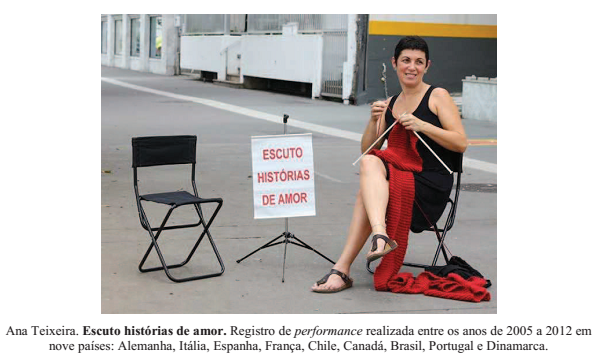
A Estética Relacional, teoria defendida por Nicolás Bourriaud, designa uma tendência artística que privilegia a produção de relações inter-humanas. Essa teoria pressupõe uma participação cada vez mais direta do público, devido à transitividade do objeto de arte. Bourriaud desenvolve quatro grandes categorias que subsidiam a existência de uma arte relacional.
Assinale a alternativa que apresenta a categoria que mais se relaciona com esta performance da artista Ana Teixeira.
De acordo com estudos da área, toda escola tem um currículo formal como suporte para sua tarefa político-pedagógica de educar as pessoas de todas as idades. Este currículo formal materializado na grade de ensino é fruto de uma síntese de leis em vigor e seus desdobramentos que regem a educação formal em nosso país.
São exemplos desses documentos os seguintes:
De acordo com a visão de Libâneo, em seu livro Didática (1991), o ensino somente é bem sucedido quando os objetivos do professor coincidem com os objetivos de estudos do aluno e é praticado tendo em vista o desenvolvimento das suas forças intelectuais.
Nesse sentido, para que o processo de ensino-aprendizagem seja efetivado com qualidade na escola, é preciso que o professor
Para Cristina Machado, em O barro com segunda pele (2011), a argila é muito mais do que material primordial, é uma ponte entre seu mundo interior e o Cosmos, caminho por onde as emoções se transformam em objetos concretos, materializando-se em imagens de grande valor estético e simbólico.
Cristina Machado se destaca pela relação que mantém com o barro e com temas relacionados a discussões presentes na contemporaneidade. Assinale, então, a única alternativa que traz exemplos de três trabalhos dessa artista.
“A cultura das imagens é uma realidade da qual não podemos fugir e, intencionalmente ou não, colaboramos diariamente na (re)produção e consumo das visualidades que alimentam a cultura visual. Não por causalidade, o início do século 21 foi palco para a explosão das redes sociais na internet. Ambientes nos quais as imagens se converteram em veículos de representação, comunicação, socialização e criação de significados, símbolos e imaginários sociais.”
ABREU, Carla Luzia de. Hipervisibilidade e self-disclosuse: novas texturas da experiência social nas redes digitais. Revista Visualidades. v. 13, n. 2 (2015). Disponível em: <http://revistas.ufg.br/VISUAL/issue/view/1721/showToc> acesso: 01 nov. de 2016.
Estabelecendo uma relação entre o texto e o conceito de “virada cultural” sistematizado por
W.J.T. Mitchell (1994), é correto afirmar que:
No texto a seguir, Elliot Eisner descreve a prática do ensino de artes desenvolvidas em Escolas Progressivas.
“Quando se sugeriam atividades criativas em arte, estas vinham quase sempre sob a forma de projetos de arte correlacionados ou integrados. O professor era frequentemente solicitado a usar a arte em conjunção com seu trabalho em estudos sociais etc. [...] A arte integrada se afigurou aos professores como uma hóspede dos assuntos a serem ensinados. Além disso, os projetos de arte poderiam aclarar os conceitos abstratos que os professores estivessem tentando fazer as crianças aprenderem.”
EISNER, Elliot. apud BARBOSA, Ana Mae. John Dewey e o ensino da arte no Brasil. 8ªedição – São Paulo: Cortez, 2015.
A prática de ensino de arte acima descrita é assim entendida:
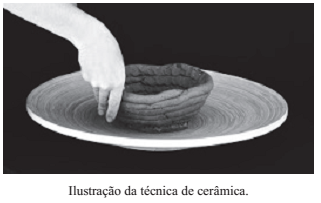
A essa técnica dá-se o nome de
“A proposta inicial foi tecer uma série de debates sobre o Funk, e demais questões que surgiram nesse processo, visando fomentar a futura criação dos documentários. Num primeiro momento houve uma sondagem do que os alunos pensavam sobre o assunto, com o uso de imagens que remetiam ao surgimento do Funk, na cultura norte-americana para disparar tal discussão. Os alunos revelaram um desconhecimento da história do Funk, mas um forte engajamento e interesse nas questões de gênero presentes nas letras das músicas, o que, com isso, tornou-se um foco do projeto nas aulas seguintes.”.
DIAS. Taís Ritter. Documentando o Funk: cultura visual, cinema e gênero no ensino de artes visuais. Anais do XXV CONFAEB. Fortaleza – CE, 2015. Disponível em: <http://confaeb2015.ifce.edu.br/ANAIS/artigos/GT%20Artes%20Visuais/149710.pdf> Acesso: 24 out. de 2016.
Considerando a importância da contextualização e a inserção de temáticas contemporâneas no ensino de artes, a experiência pedagógica apresentada enfatiza que:
“A perspectiva da cultura visual permite, então, incorporar a problemática que esteve fora da esfera da arte na educação. E o faz a partir do questionamento de noções como originalidade, autoria, recepção, representação, intensão do artista, linguagem visual centrada no formal, contexto de produção, de expressão, a criança como artista e, de maneira especial, o relato salvador da educação pela arte. O que introduz a perspectiva da cultura visual, a qual provisoriamente me vinculo – pois não se deve esquecer que não existe uma opção do que é denominado como cultura visual – é a consideração das práticas artísticas como práticas discursivas – culturais – que têm efeitos na maneira de ver e de ver-se.”
HERNÁNDEZ. F. A cultura visual como um convite à deslocalização do olhar e ao reposicionamento do sujeito. p. 43. In: MARTIZ, R.; TOURINHO, I. (org.) Educação da cultura visual: conceitos e contextos. Santa Maria: Ed da UFSM, 2011.
Para HERNÁNDEZ, a cultura visual
“Com efeito, a representação da negritude pode ser vista como uma questão que caracteriza o processo de modernização artística e uma para qual as divisões em arte acadêmica, moderna, popular e contemporânea, tão cristalizadas na história da arte no Brasil, constituem diferenças, mas não no sentido evolutivo, nem hierárquico. O que implica observar a diversidade de interesses e olhares cruzando autores, temas, tempos e lugares.”.
CONDURU, R. Arte afro-brasileira, 2007. p. 51 -52.
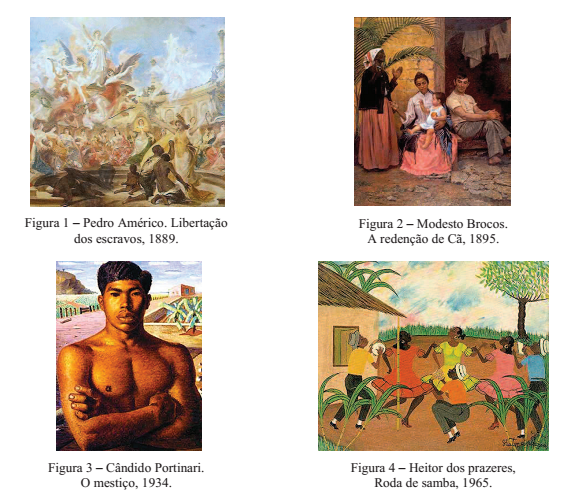
Observe as proposições relativas às FIGURAS 1, 2, 3 e 4.
I. A FIGURA 1, Libertação dos escravos, ressalta o processo de abolição da escravidão como uma benesse dada aos negros, desconsiderando todo o processo de luta e resistência desse grupo social.
II. A FIGURA 4, Roda de Samba, destaca de maneira pejorativa a contribuição dos afrodescendentes para a cultura brasileira. Esse menosprezo racial marca a representação da negritude na arte moderna brasileira.
III. A FIGURA 3, de Cândido Portinari, faz alusão aos malefícios da mistura racial que se deu no Brasil.
IV. A FIGURA 2, A redenção de cã, de Modesto Brocos, pode ser encarada como uma alegoria do desejo de purificação racial difundido à época, um emblema da libertação dos estigmas vinculados à condição social do negro.
V. As FIGURAS 3 e 4 ressaltam a importância da cultura afrodescendente para a formação da identidade nacional.
Diante do exposto, está(ão) correta(s), apenas:
“Vivemos a era “inter”. Estamos vivendo um tempo em que a atenção está voltada para a internet, a interculturalidade, a interdisciplinaridade e a integração das artes e dos meios como modos de produção de significados desafiadores de limites, fronteiras e territórios. Entretanto, os arte-educadores têm dificuldades de entender a arte “inter” produzida hoje.”.
BARBOSA, A. M. Interterritorialidade na Arte/Educação e na Arte. p. 23. In: BARBOSA, A. M.; AMARAL, L. (org.). Interterritorialidade: mídias, contextos e educação. São Paulo: Editora Senac São Paulo, 2008.
Ao estabelecer uma relação entre o termo “inter” e arte, BARBOSA enfatiza a dificuldade que
os "arte-educadores" têm de entender a(s)
“Quem examinar com atenção as artes dos dias atuais será confrontado com uma desconcertante profusão de estilos, formas, plásticas e programas. De início, parece que quanto mais olhamos, menos certeza podemos ter quanto àquilo, afinal, permita que as obras sejam qualificadas como ‘arte’, pelo menos de um ponto de vista tradicional. Por outro lado, não parece mais haver nenhum material particular que desfrute do privilégio de ser imediatamente reconhecível como material da arte. A arte recente tem utilizado não somente tinta, metal e pedra, mas também ar, luz, som, palavras, pessoas, comida e muitas outras coisas.”.
ARCHER, M. Arte contemporânea: uma história concisa. Ed. Martins Fontes. São Paulo, 2012. Prefácio.
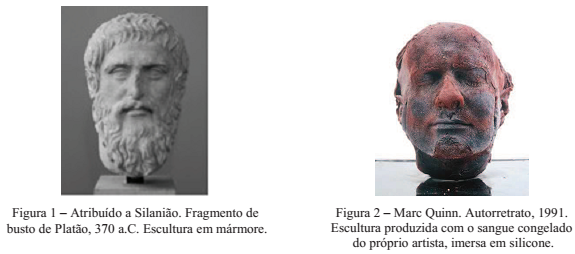
A partir do texto e das imagens acima, é possível perceber alguns caminhos que marcaram
a história das artes visuais e, consequentemente, o modo de produção delas. Essas
transformações e permanências estão indicadas em:

 Conheça nossos planos