Selecionar segmento
Estude com questões de diferentes segmentos
Atenção: Isso limpará todos os campos já preenchidos no filtro!
Foram encontradas 3.128 questões
Resolva questões gratuitamente!
Junte-se a mais de 4 milhões de concurseiros!


Ano: 2014
Banca:
Quadrix
Órgão:
DATAPREV
Prova:
Quadrix - 2014 - DATAPREV - Analista Tecnologia da Informação |
Q509865
Inglês
Texto associado
Read the text below to answer question.
Self-repairing software tackles malware
University of Utah computer scientists have developed software that not only detects and eradicates never-before-seen viruses and other malware, but also automatically repairs damage caused by them. The software then prevents the invader from ever infecting the computer
again.
A3 is a software suite that works with a virtual machine - a virtual computer that emulates the operations of a computer without dedicated hardware. The A3 software is designed to watch over the virtual machine's operating system and applications, says Eric Eide, University of Utah research assistant professor of computer science leading the university's A3 team with U computer science associate professor John Regehr. A3 is designed to protect servers or similar business-grade computers that run on the Linux operating system. It also has been demonstrated to protect military applications.
The new software called A3, or Advanced Adaptive Applications, was co-developed by Massachusetts-based defense contractor, Raytheon BBN. The four-year project was completed in late September.
There are no plans to adapt A3 for home computers or laptops, but Eide says this could be possible in the future.
"A3 technologies could find their way into consumer products someday, which would help consumer devices protect themselves against fast-spreading malware or internal corruption of software components. But we haven't tried those experiments yet," he says.
Unlike a normal virus scanner on consumer PCs that compares a catalog of known viruses to something that has infected the computer, A3 can detect new, unknown viruses or malware automatically by sensing that something is occurring in the computer's operation that is not correct. It then can stop the virus, approximate a repair for the damaged software code, and then learn to never let that bug enter the machine gain.
While the military has an interest in A3 to enhance cybersecurity for its mission-critical systems, A3 also potentially could be used in the consumer space, such as in web services like Amazon. If a virus or attack stops the service, A3 could repair it in minutes without having to take the servers down.
Source: http://www.sciencedaily.com
Self-repairing software tackles malware
University of Utah computer scientists have developed software that not only detects and eradicates never-before-seen viruses and other malware, but also automatically repairs damage caused by them. The software then prevents the invader from ever infecting the computer
again.
A3 is a software suite that works with a virtual machine - a virtual computer that emulates the operations of a computer without dedicated hardware. The A3 software is designed to watch over the virtual machine's operating system and applications, says Eric Eide, University of Utah research assistant professor of computer science leading the university's A3 team with U computer science associate professor John Regehr. A3 is designed to protect servers or similar business-grade computers that run on the Linux operating system. It also has been demonstrated to protect military applications.
The new software called A3, or Advanced Adaptive Applications, was co-developed by Massachusetts-based defense contractor, Raytheon BBN. The four-year project was completed in late September.
There are no plans to adapt A3 for home computers or laptops, but Eide says this could be possible in the future.
"A3 technologies could find their way into consumer products someday, which would help consumer devices protect themselves against fast-spreading malware or internal corruption of software components. But we haven't tried those experiments yet," he says.
Unlike a normal virus scanner on consumer PCs that compares a catalog of known viruses to something that has infected the computer, A3 can detect new, unknown viruses or malware automatically by sensing that something is occurring in the computer's operation that is not correct. It then can stop the virus, approximate a repair for the damaged software code, and then learn to never let that bug enter the machine gain.
While the military has an interest in A3 to enhance cybersecurity for its mission-critical systems, A3 also potentially could be used in the consumer space, such as in web services like Amazon. If a virus or attack stops the service, A3 could repair it in minutes without having to take the servers down.
Source: http://www.sciencedaily.com
The word "it", underlined in the text, refers to:
Ano: 2014
Banca:
Quadrix
Órgão:
DATAPREV
Prova:
Quadrix - 2014 - DATAPREV - Analista Tecnologia da Informação |
Q509864
Português
Texto associado
Para responder à questão, considere a tirinha.
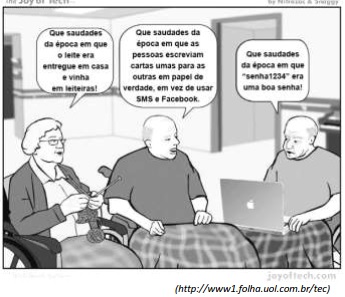
Observe as palavras em destaque:
I. “Que saudades da época em que o leite era entregue em casa e vinha em leiteiras.”
II. “Que saudades da época em que as pessoas escreviam cartas umas para as outras em papel de verdade, em vez de usar SMS e Facebook.”
III. “Que saudades da época em que ‘senha1234’ era uma boa senha.”
Ocorre preposição, em destaque, em:
I. “Que saudades da época em que o leite era entregue em casa e vinha em leiteiras.”
II. “Que saudades da época em que as pessoas escreviam cartas umas para as outras em papel de verdade, em vez de usar SMS e Facebook.”
III. “Que saudades da época em que ‘senha1234’ era uma boa senha.”
Ocorre preposição, em destaque, em:
Ano: 2014
Banca:
Quadrix
Órgão:
DATAPREV
Prova:
Quadrix - 2014 - DATAPREV - Analista Tecnologia da Informação |
Q509863
Português
Texto associado
Para responder à questão, considere a tirinha.
Releia, agora, o texto verbal presente no último balão:
“Que saudades da época em que ‘senha1234’ era uma boa senha.”
O trecho em destaque exerce a mesma função sintática de qual dos termos destacados nas passagens abaixo, todas retiradas do primeiro texto desta prova?
“Que saudades da época em que ‘senha1234’ era uma boa senha.”
O trecho em destaque exerce a mesma função sintática de qual dos termos destacados nas passagens abaixo, todas retiradas do primeiro texto desta prova?
Ano: 2014
Banca:
Quadrix
Órgão:
DATAPREV
Prova:
Quadrix - 2014 - DATAPREV - Analista Tecnologia da Informação |
Q509862
Português
Texto associado
Para responder à questão, considere a tirinha.
Veja:
“Que saudades da época em que as pessoas escreviam cartas umas para as outras em papel de verdade, em vez de usar SMS e Facebook."
Assinale a afirmação correta.
“Que saudades da época em que as pessoas escreviam cartas umas para as outras em papel de verdade, em vez de usar SMS e Facebook."
Assinale a afirmação correta.
Ano: 2014
Banca:
Quadrix
Órgão:
DATAPREV
Prova:
Quadrix - 2014 - DATAPREV - Analista Tecnologia da Informação |
Q509861
Português
Texto associado
Para responder à questão, considere a tirinha.
Leia novamente a fala do primeiro balão e as afirmações feitas a respeito dela.
“Que saudades da época em que o leite era entregue em casa e vinha em leiteiras.”
I. A palavra “leiteiras” é um substantivo concreto, comum, derivado.
II. Ocorre um período simples, isto é, formado por apenas uma oração.
III. A locução verbal “era entregue” apresenta uma forma nominal no infinitivo.
IV. A palavra “época” aparece corretamente acentuada e essa acentuação se dá pela mesma razão de “simbólico”.
Está correto o que se afirma em quantas das análises acima?
“Que saudades da época em que o leite era entregue em casa e vinha em leiteiras.”
I. A palavra “leiteiras” é um substantivo concreto, comum, derivado.
II. Ocorre um período simples, isto é, formado por apenas uma oração.
III. A locução verbal “era entregue” apresenta uma forma nominal no infinitivo.
IV. A palavra “época” aparece corretamente acentuada e essa acentuação se dá pela mesma razão de “simbólico”.
Está correto o que se afirma em quantas das análises acima?
Ano: 2014
Banca:
Quadrix
Órgão:
DATAPREV
Prova:
Quadrix - 2014 - DATAPREV - Analista Tecnologia da Informação |
Q509860
Português
Texto associado
Para responder à questão, considere a tirinha.
Quantos fonemas, quantos dígrafos e quantos hiatos, respectivamente, apresenta a palavra “pessoas”, que aparece no segundo balão do quadrinho?
Ano: 2014
Banca:
Quadrix
Órgão:
DATAPREV
Prova:
Quadrix - 2014 - DATAPREV - Analista Tecnologia da Informação |
Q509859
Português
Texto associado
Para responder à questão, leia o texto abaixo.
Você ainda vai usar uma moeda virtual
Quando a Apple lançou sua nova geração de iPhones, há algumas semanas, muita gente ficou desapontada. A empresa que era líder isolada em inovação dessa vez pareceu estar a reboque. A grande novidade em hardware foi o tamanho dos aparelhos, que cresceram.
Mesmo isso foi "cópia" do que os concorrentes já vinham fazendo. Mas quem olhar com cuidado vai ver que verdadeira novidade estava no software, com o lançamento do Apple Pay, uma entrada de cabeça da empresa no mercado de pagamentos virtuais.
O Apple Pay foi lido como um passo da empresa para se aproximar dos bancos e das empresas de cartão de crédito para resolver um problema que ambos não foram capazes de resolver sozinhos: massificar os celulares como meio de pagamento, transformando-o no novo "cartão de crédito" do futuro.
No entanto, a leitura mais interessante não apareceu em muitos lugares. O Apple Pay é também uma porta de entrada para as chamadas "moedas virtuais", especialmente para o Bitcoin.
Para quem ainda não está familiarizado, o Bitcoin é uma moeda cujo banco central é a própria internet. Ela é gerada por um complexo conjunto de regras definidas por software e está se tornando hoje um ativo cada vez mais importante.
Apesar de a Apple não declarar nada oficialmente sobre a relação entre Bitcoin e ApplePay, uma série de pistas indica que a empresa está de olho nesse campo. Uma dessas é que a companhia eliminou, em junho último, sua proibição para aplicativos que envolvessem unidades monetárias virtuais, que eram banidos até então.
Outra é que o Apple Pay vai ser aberto para o desenvolvimento por terceiros. Em outras palavras, aplicativos que estão experimentando com o uso do Bitcoin (como o Stripe e o PayPal) poderão ser integrados ao sistema Apple Pay.
O elemento mais importante, no entanto, é que, graças ao poder econômico e simbólico da Apple, o lançamento do Apple Pay fará com que a infraestrutura necessária para aceitar pagamentos por meio do celular se espalhe pelo mundo.
Cada vez mais lojas vão aceitar o "smartphone" como meio de pagamento. Uma vez que isso aconteça, Inês é morta. Não importará se você tem no bolso dólares, reais, bitcoins, ou dirhams marroquinos. Qualquer moeda do planeta pode ser usada para qualquer transação.
Nesse momento, o rei do pedaço vira o Bitcoin, moeda "nativa" da internet e que se adapta melhor a ela do que qualquer dinheiro emitido em papel.
[...]
Isso parece ficção científica, mas anote essas palavras: você ainda vai usar uma moeda virtual.
(http://www1.folha.uol.com.br/colunas/ronaldolemos)
Você ainda vai usar uma moeda virtual
Quando a Apple lançou sua nova geração de iPhones, há algumas semanas, muita gente ficou desapontada. A empresa que era líder isolada em inovação dessa vez pareceu estar a reboque. A grande novidade em hardware foi o tamanho dos aparelhos, que cresceram.
Mesmo isso foi "cópia" do que os concorrentes já vinham fazendo. Mas quem olhar com cuidado vai ver que verdadeira novidade estava no software, com o lançamento do Apple Pay, uma entrada de cabeça da empresa no mercado de pagamentos virtuais.
O Apple Pay foi lido como um passo da empresa para se aproximar dos bancos e das empresas de cartão de crédito para resolver um problema que ambos não foram capazes de resolver sozinhos: massificar os celulares como meio de pagamento, transformando-o no novo "cartão de crédito" do futuro.
No entanto, a leitura mais interessante não apareceu em muitos lugares. O Apple Pay é também uma porta de entrada para as chamadas "moedas virtuais", especialmente para o Bitcoin.
Para quem ainda não está familiarizado, o Bitcoin é uma moeda cujo banco central é a própria internet. Ela é gerada por um complexo conjunto de regras definidas por software e está se tornando hoje um ativo cada vez mais importante.
Apesar de a Apple não declarar nada oficialmente sobre a relação entre Bitcoin e ApplePay, uma série de pistas indica que a empresa está de olho nesse campo. Uma dessas é que a companhia eliminou, em junho último, sua proibição para aplicativos que envolvessem unidades monetárias virtuais, que eram banidos até então.
Outra é que o Apple Pay vai ser aberto para o desenvolvimento por terceiros. Em outras palavras, aplicativos que estão experimentando com o uso do Bitcoin (como o Stripe e o PayPal) poderão ser integrados ao sistema Apple Pay.
O elemento mais importante, no entanto, é que, graças ao poder econômico e simbólico da Apple, o lançamento do Apple Pay fará com que a infraestrutura necessária para aceitar pagamentos por meio do celular se espalhe pelo mundo.
Cada vez mais lojas vão aceitar o "smartphone" como meio de pagamento. Uma vez que isso aconteça, Inês é morta. Não importará se você tem no bolso dólares, reais, bitcoins, ou dirhams marroquinos. Qualquer moeda do planeta pode ser usada para qualquer transação.
Nesse momento, o rei do pedaço vira o Bitcoin, moeda "nativa" da internet e que se adapta melhor a ela do que qualquer dinheiro emitido em papel.
[...]
Isso parece ficção científica, mas anote essas palavras: você ainda vai usar uma moeda virtual.
(http://www1.folha.uol.com.br/colunas/ronaldolemos)
Observe a seguinte passagem do texto:
“Isso parece ficção científica, mas anote essas palavras: você ainda vai usar uma moeda virtual.”
Assinale a opção em que aparece uma análise correta sobre o uso da palavra “essas” no trecho.
“Isso parece ficção científica, mas anote essas palavras: você ainda vai usar uma moeda virtual.”
Assinale a opção em que aparece uma análise correta sobre o uso da palavra “essas” no trecho.
Ano: 2014
Banca:
Quadrix
Órgão:
DATAPREV
Prova:
Quadrix - 2014 - DATAPREV - Analista Tecnologia da Informação |
Q509858
Português
Texto associado
Para responder à questão, leia o texto abaixo.
Você ainda vai usar uma moeda virtual
Quando a Apple lançou sua nova geração de iPhones, há algumas semanas, muita gente ficou desapontada. A empresa que era líder isolada em inovação dessa vez pareceu estar a reboque. A grande novidade em hardware foi o tamanho dos aparelhos, que cresceram.
Mesmo isso foi "cópia" do que os concorrentes já vinham fazendo. Mas quem olhar com cuidado vai ver que verdadeira novidade estava no software, com o lançamento do Apple Pay, uma entrada de cabeça da empresa no mercado de pagamentos virtuais.
O Apple Pay foi lido como um passo da empresa para se aproximar dos bancos e das empresas de cartão de crédito para resolver um problema que ambos não foram capazes de resolver sozinhos: massificar os celulares como meio de pagamento, transformando-o no novo "cartão de crédito" do futuro.
No entanto, a leitura mais interessante não apareceu em muitos lugares. O Apple Pay é também uma porta de entrada para as chamadas "moedas virtuais", especialmente para o Bitcoin.
Para quem ainda não está familiarizado, o Bitcoin é uma moeda cujo banco central é a própria internet. Ela é gerada por um complexo conjunto de regras definidas por software e está se tornando hoje um ativo cada vez mais importante.
Apesar de a Apple não declarar nada oficialmente sobre a relação entre Bitcoin e ApplePay, uma série de pistas indica que a empresa está de olho nesse campo. Uma dessas é que a companhia eliminou, em junho último, sua proibição para aplicativos que envolvessem unidades monetárias virtuais, que eram banidos até então.
Outra é que o Apple Pay vai ser aberto para o desenvolvimento por terceiros. Em outras palavras, aplicativos que estão experimentando com o uso do Bitcoin (como o Stripe e o PayPal) poderão ser integrados ao sistema Apple Pay.
O elemento mais importante, no entanto, é que, graças ao poder econômico e simbólico da Apple, o lançamento do Apple Pay fará com que a infraestrutura necessária para aceitar pagamentos por meio do celular se espalhe pelo mundo.
Cada vez mais lojas vão aceitar o "smartphone" como meio de pagamento. Uma vez que isso aconteça, Inês é morta. Não importará se você tem no bolso dólares, reais, bitcoins, ou dirhams marroquinos. Qualquer moeda do planeta pode ser usada para qualquer transação.
Nesse momento, o rei do pedaço vira o Bitcoin, moeda "nativa" da internet e que se adapta melhor a ela do que qualquer dinheiro emitido em papel.
[...]
Isso parece ficção científica, mas anote essas palavras: você ainda vai usar uma moeda virtual.
(http://www1.folha.uol.com.br/colunas/ronaldolemos)
Você ainda vai usar uma moeda virtual
Quando a Apple lançou sua nova geração de iPhones, há algumas semanas, muita gente ficou desapontada. A empresa que era líder isolada em inovação dessa vez pareceu estar a reboque. A grande novidade em hardware foi o tamanho dos aparelhos, que cresceram.
Mesmo isso foi "cópia" do que os concorrentes já vinham fazendo. Mas quem olhar com cuidado vai ver que verdadeira novidade estava no software, com o lançamento do Apple Pay, uma entrada de cabeça da empresa no mercado de pagamentos virtuais.
O Apple Pay foi lido como um passo da empresa para se aproximar dos bancos e das empresas de cartão de crédito para resolver um problema que ambos não foram capazes de resolver sozinhos: massificar os celulares como meio de pagamento, transformando-o no novo "cartão de crédito" do futuro.
No entanto, a leitura mais interessante não apareceu em muitos lugares. O Apple Pay é também uma porta de entrada para as chamadas "moedas virtuais", especialmente para o Bitcoin.
Para quem ainda não está familiarizado, o Bitcoin é uma moeda cujo banco central é a própria internet. Ela é gerada por um complexo conjunto de regras definidas por software e está se tornando hoje um ativo cada vez mais importante.
Apesar de a Apple não declarar nada oficialmente sobre a relação entre Bitcoin e ApplePay, uma série de pistas indica que a empresa está de olho nesse campo. Uma dessas é que a companhia eliminou, em junho último, sua proibição para aplicativos que envolvessem unidades monetárias virtuais, que eram banidos até então.
Outra é que o Apple Pay vai ser aberto para o desenvolvimento por terceiros. Em outras palavras, aplicativos que estão experimentando com o uso do Bitcoin (como o Stripe e o PayPal) poderão ser integrados ao sistema Apple Pay.
O elemento mais importante, no entanto, é que, graças ao poder econômico e simbólico da Apple, o lançamento do Apple Pay fará com que a infraestrutura necessária para aceitar pagamentos por meio do celular se espalhe pelo mundo.
Cada vez mais lojas vão aceitar o "smartphone" como meio de pagamento. Uma vez que isso aconteça, Inês é morta. Não importará se você tem no bolso dólares, reais, bitcoins, ou dirhams marroquinos. Qualquer moeda do planeta pode ser usada para qualquer transação.
Nesse momento, o rei do pedaço vira o Bitcoin, moeda "nativa" da internet e que se adapta melhor a ela do que qualquer dinheiro emitido em papel.
[...]
Isso parece ficção científica, mas anote essas palavras: você ainda vai usar uma moeda virtual.
(http://www1.folha.uol.com.br/colunas/ronaldolemos)
Releia as seguintes passagens do texto.
I. Apesar de a Apple não declarar nada oficialmente sobre a relação entre Bitcoin e ApplePay, uma série de pistas indica que a empresa está de olho nesse campo.
II. Uma dessas é que a companhia eliminou, em junho último, sua proibição para aplicativos que envolvessem unidades monetárias virtuais, que eram banidos até então.
III. O elemento mais importante, no entanto, é que, graças ao poder econômico e simbólico da Apple, o lançamento do Apple Pay fará com que a infraestrutura necessária para aceitar pagamentos por meio do celular se espalhe pelo mundo.
Assinale a alternativa correta.
I. Apesar de a Apple não declarar nada oficialmente sobre a relação entre Bitcoin e ApplePay, uma série de pistas indica que a empresa está de olho nesse campo.
II. Uma dessas é que a companhia eliminou, em junho último, sua proibição para aplicativos que envolvessem unidades monetárias virtuais, que eram banidos até então.
III. O elemento mais importante, no entanto, é que, graças ao poder econômico e simbólico da Apple, o lançamento do Apple Pay fará com que a infraestrutura necessária para aceitar pagamentos por meio do celular se espalhe pelo mundo.
Assinale a alternativa correta.
Ano: 2014
Banca:
Quadrix
Órgão:
DATAPREV
Prova:
Quadrix - 2014 - DATAPREV - Analista Tecnologia da Informação |
Q509857
Português
Texto associado
Para responder à questão, leia o texto abaixo.
Você ainda vai usar uma moeda virtual
Quando a Apple lançou sua nova geração de iPhones, há algumas semanas, muita gente ficou desapontada. A empresa que era líder isolada em inovação dessa vez pareceu estar a reboque. A grande novidade em hardware foi o tamanho dos aparelhos, que cresceram.
Mesmo isso foi "cópia" do que os concorrentes já vinham fazendo. Mas quem olhar com cuidado vai ver que verdadeira novidade estava no software, com o lançamento do Apple Pay, uma entrada de cabeça da empresa no mercado de pagamentos virtuais.
O Apple Pay foi lido como um passo da empresa para se aproximar dos bancos e das empresas de cartão de crédito para resolver um problema que ambos não foram capazes de resolver sozinhos: massificar os celulares como meio de pagamento, transformando-o no novo "cartão de crédito" do futuro.
No entanto, a leitura mais interessante não apareceu em muitos lugares. O Apple Pay é também uma porta de entrada para as chamadas "moedas virtuais", especialmente para o Bitcoin.
Para quem ainda não está familiarizado, o Bitcoin é uma moeda cujo banco central é a própria internet. Ela é gerada por um complexo conjunto de regras definidas por software e está se tornando hoje um ativo cada vez mais importante.
Apesar de a Apple não declarar nada oficialmente sobre a relação entre Bitcoin e ApplePay, uma série de pistas indica que a empresa está de olho nesse campo. Uma dessas é que a companhia eliminou, em junho último, sua proibição para aplicativos que envolvessem unidades monetárias virtuais, que eram banidos até então.
Outra é que o Apple Pay vai ser aberto para o desenvolvimento por terceiros. Em outras palavras, aplicativos que estão experimentando com o uso do Bitcoin (como o Stripe e o PayPal) poderão ser integrados ao sistema Apple Pay.
O elemento mais importante, no entanto, é que, graças ao poder econômico e simbólico da Apple, o lançamento do Apple Pay fará com que a infraestrutura necessária para aceitar pagamentos por meio do celular se espalhe pelo mundo.
Cada vez mais lojas vão aceitar o "smartphone" como meio de pagamento. Uma vez que isso aconteça, Inês é morta. Não importará se você tem no bolso dólares, reais, bitcoins, ou dirhams marroquinos. Qualquer moeda do planeta pode ser usada para qualquer transação.
Nesse momento, o rei do pedaço vira o Bitcoin, moeda "nativa" da internet e que se adapta melhor a ela do que qualquer dinheiro emitido em papel.
[...]
Isso parece ficção científica, mas anote essas palavras: você ainda vai usar uma moeda virtual.
(http://www1.folha.uol.com.br/colunas/ronaldolemos)
Você ainda vai usar uma moeda virtual
Quando a Apple lançou sua nova geração de iPhones, há algumas semanas, muita gente ficou desapontada. A empresa que era líder isolada em inovação dessa vez pareceu estar a reboque. A grande novidade em hardware foi o tamanho dos aparelhos, que cresceram.
Mesmo isso foi "cópia" do que os concorrentes já vinham fazendo. Mas quem olhar com cuidado vai ver que verdadeira novidade estava no software, com o lançamento do Apple Pay, uma entrada de cabeça da empresa no mercado de pagamentos virtuais.
O Apple Pay foi lido como um passo da empresa para se aproximar dos bancos e das empresas de cartão de crédito para resolver um problema que ambos não foram capazes de resolver sozinhos: massificar os celulares como meio de pagamento, transformando-o no novo "cartão de crédito" do futuro.
No entanto, a leitura mais interessante não apareceu em muitos lugares. O Apple Pay é também uma porta de entrada para as chamadas "moedas virtuais", especialmente para o Bitcoin.
Para quem ainda não está familiarizado, o Bitcoin é uma moeda cujo banco central é a própria internet. Ela é gerada por um complexo conjunto de regras definidas por software e está se tornando hoje um ativo cada vez mais importante.
Apesar de a Apple não declarar nada oficialmente sobre a relação entre Bitcoin e ApplePay, uma série de pistas indica que a empresa está de olho nesse campo. Uma dessas é que a companhia eliminou, em junho último, sua proibição para aplicativos que envolvessem unidades monetárias virtuais, que eram banidos até então.
Outra é que o Apple Pay vai ser aberto para o desenvolvimento por terceiros. Em outras palavras, aplicativos que estão experimentando com o uso do Bitcoin (como o Stripe e o PayPal) poderão ser integrados ao sistema Apple Pay.
O elemento mais importante, no entanto, é que, graças ao poder econômico e simbólico da Apple, o lançamento do Apple Pay fará com que a infraestrutura necessária para aceitar pagamentos por meio do celular se espalhe pelo mundo.
Cada vez mais lojas vão aceitar o "smartphone" como meio de pagamento. Uma vez que isso aconteça, Inês é morta. Não importará se você tem no bolso dólares, reais, bitcoins, ou dirhams marroquinos. Qualquer moeda do planeta pode ser usada para qualquer transação.
Nesse momento, o rei do pedaço vira o Bitcoin, moeda "nativa" da internet e que se adapta melhor a ela do que qualquer dinheiro emitido em papel.
[...]
Isso parece ficção científica, mas anote essas palavras: você ainda vai usar uma moeda virtual.
(http://www1.folha.uol.com.br/colunas/ronaldolemos)
Observe o uso de “cujo" no trecho abaixo, retirado do texto:
“Para quem ainda não está familiarizado, o Bitcoin é uma moeda cujo banco central é a própria internet."
“Para quem ainda não está familiarizado, o Bitcoin é uma moeda cujo banco central é a própria internet."
Ano: 2014
Banca:
Quadrix
Órgão:
DATAPREV
Prova:
Quadrix - 2014 - DATAPREV - Analista Tecnologia da Informação |
Q509856
Português
Texto associado
Para responder à questão, leia o texto abaixo.
Você ainda vai usar uma moeda virtual
Quando a Apple lançou sua nova geração de iPhones, há algumas semanas, muita gente ficou desapontada. A empresa que era líder isolada em inovação dessa vez pareceu estar a reboque. A grande novidade em hardware foi o tamanho dos aparelhos, que cresceram.
Mesmo isso foi "cópia" do que os concorrentes já vinham fazendo. Mas quem olhar com cuidado vai ver que verdadeira novidade estava no software, com o lançamento do Apple Pay, uma entrada de cabeça da empresa no mercado de pagamentos virtuais.
O Apple Pay foi lido como um passo da empresa para se aproximar dos bancos e das empresas de cartão de crédito para resolver um problema que ambos não foram capazes de resolver sozinhos: massificar os celulares como meio de pagamento, transformando-o no novo "cartão de crédito" do futuro.
No entanto, a leitura mais interessante não apareceu em muitos lugares. O Apple Pay é também uma porta de entrada para as chamadas "moedas virtuais", especialmente para o Bitcoin.
Para quem ainda não está familiarizado, o Bitcoin é uma moeda cujo banco central é a própria internet. Ela é gerada por um complexo conjunto de regras definidas por software e está se tornando hoje um ativo cada vez mais importante.
Apesar de a Apple não declarar nada oficialmente sobre a relação entre Bitcoin e ApplePay, uma série de pistas indica que a empresa está de olho nesse campo. Uma dessas é que a companhia eliminou, em junho último, sua proibição para aplicativos que envolvessem unidades monetárias virtuais, que eram banidos até então.
Outra é que o Apple Pay vai ser aberto para o desenvolvimento por terceiros. Em outras palavras, aplicativos que estão experimentando com o uso do Bitcoin (como o Stripe e o PayPal) poderão ser integrados ao sistema Apple Pay.
O elemento mais importante, no entanto, é que, graças ao poder econômico e simbólico da Apple, o lançamento do Apple Pay fará com que a infraestrutura necessária para aceitar pagamentos por meio do celular se espalhe pelo mundo.
Cada vez mais lojas vão aceitar o "smartphone" como meio de pagamento. Uma vez que isso aconteça, Inês é morta. Não importará se você tem no bolso dólares, reais, bitcoins, ou dirhams marroquinos. Qualquer moeda do planeta pode ser usada para qualquer transação.
Nesse momento, o rei do pedaço vira o Bitcoin, moeda "nativa" da internet e que se adapta melhor a ela do que qualquer dinheiro emitido em papel.
[...]
Isso parece ficção científica, mas anote essas palavras: você ainda vai usar uma moeda virtual.
(http://www1.folha.uol.com.br/colunas/ronaldolemos)
Você ainda vai usar uma moeda virtual
Quando a Apple lançou sua nova geração de iPhones, há algumas semanas, muita gente ficou desapontada. A empresa que era líder isolada em inovação dessa vez pareceu estar a reboque. A grande novidade em hardware foi o tamanho dos aparelhos, que cresceram.
Mesmo isso foi "cópia" do que os concorrentes já vinham fazendo. Mas quem olhar com cuidado vai ver que verdadeira novidade estava no software, com o lançamento do Apple Pay, uma entrada de cabeça da empresa no mercado de pagamentos virtuais.
O Apple Pay foi lido como um passo da empresa para se aproximar dos bancos e das empresas de cartão de crédito para resolver um problema que ambos não foram capazes de resolver sozinhos: massificar os celulares como meio de pagamento, transformando-o no novo "cartão de crédito" do futuro.
No entanto, a leitura mais interessante não apareceu em muitos lugares. O Apple Pay é também uma porta de entrada para as chamadas "moedas virtuais", especialmente para o Bitcoin.
Para quem ainda não está familiarizado, o Bitcoin é uma moeda cujo banco central é a própria internet. Ela é gerada por um complexo conjunto de regras definidas por software e está se tornando hoje um ativo cada vez mais importante.
Apesar de a Apple não declarar nada oficialmente sobre a relação entre Bitcoin e ApplePay, uma série de pistas indica que a empresa está de olho nesse campo. Uma dessas é que a companhia eliminou, em junho último, sua proibição para aplicativos que envolvessem unidades monetárias virtuais, que eram banidos até então.
Outra é que o Apple Pay vai ser aberto para o desenvolvimento por terceiros. Em outras palavras, aplicativos que estão experimentando com o uso do Bitcoin (como o Stripe e o PayPal) poderão ser integrados ao sistema Apple Pay.
O elemento mais importante, no entanto, é que, graças ao poder econômico e simbólico da Apple, o lançamento do Apple Pay fará com que a infraestrutura necessária para aceitar pagamentos por meio do celular se espalhe pelo mundo.
Cada vez mais lojas vão aceitar o "smartphone" como meio de pagamento. Uma vez que isso aconteça, Inês é morta. Não importará se você tem no bolso dólares, reais, bitcoins, ou dirhams marroquinos. Qualquer moeda do planeta pode ser usada para qualquer transação.
Nesse momento, o rei do pedaço vira o Bitcoin, moeda "nativa" da internet e que se adapta melhor a ela do que qualquer dinheiro emitido em papel.
[...]
Isso parece ficção científica, mas anote essas palavras: você ainda vai usar uma moeda virtual.
(http://www1.folha.uol.com.br/colunas/ronaldolemos)
Pode-se afirmar, sobre o texto e sua organização, que:
Ano: 2014
Banca:
Quadrix
Órgão:
DATAPREV
Prova:
Quadrix - 2014 - DATAPREV - Analista Tecnologia da Informação |
Q509855
Português
Texto associado
Para responder à questão, leia o texto abaixo.
Você ainda vai usar uma moeda virtual
Quando a Apple lançou sua nova geração de iPhones, há algumas semanas, muita gente ficou desapontada. A empresa que era líder isolada em inovação dessa vez pareceu estar a reboque. A grande novidade em hardware foi o tamanho dos aparelhos, que cresceram.
Mesmo isso foi "cópia" do que os concorrentes já vinham fazendo. Mas quem olhar com cuidado vai ver que verdadeira novidade estava no software, com o lançamento do Apple Pay, uma entrada de cabeça da empresa no mercado de pagamentos virtuais.
O Apple Pay foi lido como um passo da empresa para se aproximar dos bancos e das empresas de cartão de crédito para resolver um problema que ambos não foram capazes de resolver sozinhos: massificar os celulares como meio de pagamento, transformando-o no novo "cartão de crédito" do futuro.
No entanto, a leitura mais interessante não apareceu em muitos lugares. O Apple Pay é também uma porta de entrada para as chamadas "moedas virtuais", especialmente para o Bitcoin.
Para quem ainda não está familiarizado, o Bitcoin é uma moeda cujo banco central é a própria internet. Ela é gerada por um complexo conjunto de regras definidas por software e está se tornando hoje um ativo cada vez mais importante.
Apesar de a Apple não declarar nada oficialmente sobre a relação entre Bitcoin e ApplePay, uma série de pistas indica que a empresa está de olho nesse campo. Uma dessas é que a companhia eliminou, em junho último, sua proibição para aplicativos que envolvessem unidades monetárias virtuais, que eram banidos até então.
Outra é que o Apple Pay vai ser aberto para o desenvolvimento por terceiros. Em outras palavras, aplicativos que estão experimentando com o uso do Bitcoin (como o Stripe e o PayPal) poderão ser integrados ao sistema Apple Pay.
O elemento mais importante, no entanto, é que, graças ao poder econômico e simbólico da Apple, o lançamento do Apple Pay fará com que a infraestrutura necessária para aceitar pagamentos por meio do celular se espalhe pelo mundo.
Cada vez mais lojas vão aceitar o "smartphone" como meio de pagamento. Uma vez que isso aconteça, Inês é morta. Não importará se você tem no bolso dólares, reais, bitcoins, ou dirhams marroquinos. Qualquer moeda do planeta pode ser usada para qualquer transação.
Nesse momento, o rei do pedaço vira o Bitcoin, moeda "nativa" da internet e que se adapta melhor a ela do que qualquer dinheiro emitido em papel.
[...]
Isso parece ficção científica, mas anote essas palavras: você ainda vai usar uma moeda virtual.
(http://www1.folha.uol.com.br/colunas/ronaldolemos)
Você ainda vai usar uma moeda virtual
Quando a Apple lançou sua nova geração de iPhones, há algumas semanas, muita gente ficou desapontada. A empresa que era líder isolada em inovação dessa vez pareceu estar a reboque. A grande novidade em hardware foi o tamanho dos aparelhos, que cresceram.
Mesmo isso foi "cópia" do que os concorrentes já vinham fazendo. Mas quem olhar com cuidado vai ver que verdadeira novidade estava no software, com o lançamento do Apple Pay, uma entrada de cabeça da empresa no mercado de pagamentos virtuais.
O Apple Pay foi lido como um passo da empresa para se aproximar dos bancos e das empresas de cartão de crédito para resolver um problema que ambos não foram capazes de resolver sozinhos: massificar os celulares como meio de pagamento, transformando-o no novo "cartão de crédito" do futuro.
No entanto, a leitura mais interessante não apareceu em muitos lugares. O Apple Pay é também uma porta de entrada para as chamadas "moedas virtuais", especialmente para o Bitcoin.
Para quem ainda não está familiarizado, o Bitcoin é uma moeda cujo banco central é a própria internet. Ela é gerada por um complexo conjunto de regras definidas por software e está se tornando hoje um ativo cada vez mais importante.
Apesar de a Apple não declarar nada oficialmente sobre a relação entre Bitcoin e ApplePay, uma série de pistas indica que a empresa está de olho nesse campo. Uma dessas é que a companhia eliminou, em junho último, sua proibição para aplicativos que envolvessem unidades monetárias virtuais, que eram banidos até então.
Outra é que o Apple Pay vai ser aberto para o desenvolvimento por terceiros. Em outras palavras, aplicativos que estão experimentando com o uso do Bitcoin (como o Stripe e o PayPal) poderão ser integrados ao sistema Apple Pay.
O elemento mais importante, no entanto, é que, graças ao poder econômico e simbólico da Apple, o lançamento do Apple Pay fará com que a infraestrutura necessária para aceitar pagamentos por meio do celular se espalhe pelo mundo.
Cada vez mais lojas vão aceitar o "smartphone" como meio de pagamento. Uma vez que isso aconteça, Inês é morta. Não importará se você tem no bolso dólares, reais, bitcoins, ou dirhams marroquinos. Qualquer moeda do planeta pode ser usada para qualquer transação.
Nesse momento, o rei do pedaço vira o Bitcoin, moeda "nativa" da internet e que se adapta melhor a ela do que qualquer dinheiro emitido em papel.
[...]
Isso parece ficção científica, mas anote essas palavras: você ainda vai usar uma moeda virtual.
(http://www1.folha.uol.com.br/colunas/ronaldolemos)
No primeiro parágrafo do texto, a expressão “estar a reboque”:
Q1233293
Legislação Federal
Da observação do Organograma da Empresa de Tecnologia e Informações da Previdência Social – DATAPREV, verificase que a Coordenação Geral da Auditoria Interna, embora seja vinculada ao Conselho de Administração, aparece como órgão de apoio à Presidência. Das atribuições relacionadas no Manual de Atribuições à Coordenação Geral da Auditoria Interna, qual melhor justifica a sua ligação como órgão de apoio à Presidência?
Q1233272
Administração Pública
O Processo de Transparência Passiva da Lei de Informação N/PO/009/00 tem por objetivo sistematizar o recebimento, processamento, gerenciamento e envio da resposta aos pedidos de acesso à informação. Assinale a alternativa que contraria o disposto na referida norma no tocante ao recebimento do pedido.
Q1233224
Engenharia de Produção
Considerando a terminologia contábil e a administração de custos em entidades industriais, aponte a afirmação incorreta.
Q1233152
Legislação Federal
A informação é vital para uma empresa bem organizada. Graças a ela, há a disseminação do conhecimento e a indução da ação, o que explica o termo informação: informa / ação. O Manual de Atribuições da Empresa de Tecnologia e Informações da Previdência Social - DATAPREV descreve, detalhadamente, os objetivos e as principais atribuições de cada área da estrutura organizacional da Empresa. O manual foi elaborado para atingir diversas finalidades, todas ligadas à estrutura da empresa.
Aponte a alternativa que foge ao escopo do referido manual.
Aponte a alternativa que foge ao escopo do referido manual.
Q1233151
Português
Observe:
Período I:
O projeto está parado há dois anos no Congresso e tem como um dos principais pontos de impasse o artigo que trata da neutralidade de rede.
Veja, agora, a mudança de tempo verbal:
Período II:
O projeto estava parado havia dois anos no Congresso e tinha como um dos principais pontos de impasse o artigo que tratava da neutralidade de rede.
Sobre as duas maneiras de organizar o período, registradas acima, analise as afirmações.
I. No período I, a forma verbal “ha” deveria aparecer no plural.
II. No período II, a forma verbal “havia" deveria aparecer no plural.
III. Em ambos os períodos, houve desrespeito às normas de concordância verbal em mais de uma passagem.
Está correto o que se afirma em:
Período I:
O projeto está parado há dois anos no Congresso e tem como um dos principais pontos de impasse o artigo que trata da neutralidade de rede.
Veja, agora, a mudança de tempo verbal:
Período II:
O projeto estava parado havia dois anos no Congresso e tinha como um dos principais pontos de impasse o artigo que tratava da neutralidade de rede.
Sobre as duas maneiras de organizar o período, registradas acima, analise as afirmações.
I. No período I, a forma verbal “ha” deveria aparecer no plural.
II. No período II, a forma verbal “havia" deveria aparecer no plural.
III. Em ambos os períodos, houve desrespeito às normas de concordância verbal em mais de uma passagem.
Está correto o que se afirma em:
Q1233141
Português
Sobre a palavra “usuários”, em destaque no texto, é correto afirmar que:
Q1233124
Modelagem de Processos de Negócio (BPM)
Negociação é o processo de buscar aceitação de ideias, propósitos ou de interesses visando o melhor resultado possível, de tal modo que as partes envolvidas terminem a negociação conscientes de que foram ouvidas, tiveram oportunidade de apresentar toda a sua argumentação e que o produto final seja maior que a soma das contribuições individuais (JUNQUEIRA, Luiz Augusto Costa curta. Negociação: Tecnologia e Comportamento. Rio de Janeiro: COP Editora Ltda., 1988).
O negociador pode utilizar-se de diversos estilos para conseguir atingir seus objetivos. Quando o negociador dá ênfase em informações, dados, detalhes, perfeição, preocupação com o micro, segurança e garantia, ele demonstra estar utilizando o estilo:
O negociador pode utilizar-se de diversos estilos para conseguir atingir seus objetivos. Quando o negociador dá ênfase em informações, dados, detalhes, perfeição, preocupação com o micro, segurança e garantia, ele demonstra estar utilizando o estilo:
Q1232965
Gestão de Pessoas
"É vedada a acumulação da Gratificação Variável por Resultado (GVR) com a Gratificação Complementar por Resultado (GCR)”. Esta vedação está claramente explicitada em um dos itens da norma correspondente.
Aponte em qual alternativa ele se acha inserido.
Aponte em qual alternativa ele se acha inserido.
Q1232903
Legislação Federal
Nos termos de seu Estatuto, são órgãos de administração e fiscalização da Empresa de Tecnologia e Informações da Previdência Social - DATAPREV:
O Conselho de Administração, com seis membros
efetivos. A Diretoria-Executiva, composta do Presidente e de quatro Diretores, constituindo-se, para fins
deliberativos, em Diretoria Colegiada. O Conselho Fiscal, com três membros efetivos.
Qual alternativa apresenta integrante que não faz parte do Conselho de Administração?

 Conheça nossos planos