Questões de Concurso
Para prefeitura de seara - sc
Foram encontradas 3.363 questões
Resolva questões gratuitamente!
Junte-se a mais de 4 milhões de concurseiros!


Ano: 2025
Banca:
AMAUC
Órgão:
Prefeitura de Seara - SC
Prova:
AMAUC - 2025 - Prefeitura de Seara - SC - Professor de Artes |
Q3610264
Educação Artística
No campo do ensino de arte, autores como Ana Mae
Barbosa defendem metodologias triangularizadas (fazer,
apreciar, contextualizar). A crítica recorrente que se
coloca a esse modelo é:
Ano: 2025
Banca:
AMAUC
Órgão:
Prefeitura de Seara - SC
Prova:
AMAUC - 2025 - Prefeitura de Seara - SC - Professor de Artes |
Q3610263
Artes Plásticas
A recepção do cubismo por artistas latino-americanos
nas décadas de 1920 e 1930 ocorreu em diálogo com
projetos de identidade nacional. Qual interpretação
sintetiza esse processo?
Ano: 2025
Banca:
AMAUC
Órgão:
Prefeitura de Seara - SC
Prova:
AMAUC - 2025 - Prefeitura de Seara - SC - Professor de Artes |
Q3610262
Educação Artística
A Base Nacional Comum Curricular (BNCC),
homologada em 2017, estabelece parâmetros
normativos para a Educação Básica no Brasil, garantindo
o direito à aprendizagem e ao desenvolvimento integral
dos estudantes. No componente curricular de Artes, a
BNCC reconhece a área como campo de conhecimento
fundamental para a formação estética, cultural e cidadã.
Acerca desse assunto, julgue as frases abaixo:
I.A abordagem proposta organiza-se a partir da concepção de Arte como linguagem, entendida como forma específica de produção de sentido, o que implica considerar as múltiplas dimensões do fazer artístico — criação, apreciação e reflexão crítica — em diálogo constante com os contextos culturais.
II.Em termos metodológicos, a BNCC enfatiza a experimentação processual e a reflexão crítica sobre as práticas artísticas. O estudante é estimulado não apenas a executar técnicas, mas a compreender os contextos históricos, sociais e simbólicos da produção artística, assumindo posição ativa de criador, fruidor e analista. Essa orientação reflete uma continuidade do ensino transmissivo e conteudista, distanciando-se de correntes pedagógicas que priorizam a construção de significados e a mediação cultural.
III.O documento define que o ensino de Artes deve contemplar cinco linguagens artísticas: artes visuais, dança, música, teatro e artes integradas, valorizando tanto a especificidade de cada linguagem quanto as possibilidades de inter-relação. A perspectiva interdisciplinar e intercultural é central, uma vez que o ensino deve contemplar a diversidade cultural brasileira e mundial, respeitando matrizes afro-brasileiras, indígenas e populares, além de dialogar com produções contemporâneas.
Está(ão) CORRETA(S) a(s) seguinte(s) proposição(ões).
I.A abordagem proposta organiza-se a partir da concepção de Arte como linguagem, entendida como forma específica de produção de sentido, o que implica considerar as múltiplas dimensões do fazer artístico — criação, apreciação e reflexão crítica — em diálogo constante com os contextos culturais.
II.Em termos metodológicos, a BNCC enfatiza a experimentação processual e a reflexão crítica sobre as práticas artísticas. O estudante é estimulado não apenas a executar técnicas, mas a compreender os contextos históricos, sociais e simbólicos da produção artística, assumindo posição ativa de criador, fruidor e analista. Essa orientação reflete uma continuidade do ensino transmissivo e conteudista, distanciando-se de correntes pedagógicas que priorizam a construção de significados e a mediação cultural.
III.O documento define que o ensino de Artes deve contemplar cinco linguagens artísticas: artes visuais, dança, música, teatro e artes integradas, valorizando tanto a especificidade de cada linguagem quanto as possibilidades de inter-relação. A perspectiva interdisciplinar e intercultural é central, uma vez que o ensino deve contemplar a diversidade cultural brasileira e mundial, respeitando matrizes afro-brasileiras, indígenas e populares, além de dialogar com produções contemporâneas.
Está(ão) CORRETA(S) a(s) seguinte(s) proposição(ões).
Ano: 2025
Banca:
AMAUC
Órgão:
Prefeitura de Seara - SC
Prova:
AMAUC - 2025 - Prefeitura de Seara - SC - Professor de Artes |
Q3610261
Educação Artística
Na contemporaneidade, a noção de produção artística
desloca-se do produto final para a valorização dos
processos criativos. Em determinadas práticas, como
nas artes digitais, nas instalações interativas ou em
performances abertas à participação do público, o que se
destaca é o caráter cíclico e contínuo, em que a criação
se dá em fluxo de experimentações, ajustes, respostas e
reelaborações. Esse conceito refere-se ao (à):
Ano: 2025
Banca:
AMAUC
Órgão:
Prefeitura de Seara - SC
Prova:
AMAUC - 2025 - Prefeitura de Seara - SC - Professor de Artes |
Q3610260
Artes Visuais
Durante uma aula de Artes, a professora propôs que os
alunos analisassem grafites espalhados pelo bairro,
observando como essas manifestações dialogam com
questões sociais, políticas e culturais da comunidade. Ao
discutir os significados possíveis dessas manifestações,
ela destacou que tais não devem ser vistas apenas como
expressão individual ou decoração, mas como práticas
que carregam sentidos coletivos, construindo identidades
e narrativas sobre a realidade vivida. O conceito que
define essa abordagem é o de:
Ano: 2025
Banca:
AMAUC
Órgão:
Prefeitura de Seara - SC
Prova:
AMAUC - 2025 - Prefeitura de Seara - SC - Professor de Artes |
Q3610259
Educação Artística
O ensino de Artes no cotidiano escolar contemporâneo é
campo fundamental para a formação integral dos
estudantes. Acerca desse assunto, julgue as frases
abaixo:
I.Projetos interdisciplinares, uso de recursos digitais e contato com manifestações culturais locais e globais tornam o ensino de Artes um espaço privilegiado para discutir identidade, diversidade e cidadania.
II.No cotidiano escolar, atividades artísticas funcionam como mediadoras da convivência, estimulando a cooperação, a valorização da diferença e a capacidade de problematizar o mundo a partir de múltiplos olhares.
III.O ensino de Artes contribui para formar sujeitos críticos, sensíveis e criativos, capazes de atuar em uma sociedade em constante transformação. Ele não se reduz à prática estética, mas incorpora dimensões pedagógicas, culturais e éticas, favorecendo a construção de um cotidiano escolar mais humanizado, participativo e conectado às realidades dos estudantes.
Está(ão) CORRETA(S) a(s) seguinte(s) proposição(ões):
I.Projetos interdisciplinares, uso de recursos digitais e contato com manifestações culturais locais e globais tornam o ensino de Artes um espaço privilegiado para discutir identidade, diversidade e cidadania.
II.No cotidiano escolar, atividades artísticas funcionam como mediadoras da convivência, estimulando a cooperação, a valorização da diferença e a capacidade de problematizar o mundo a partir de múltiplos olhares.
III.O ensino de Artes contribui para formar sujeitos críticos, sensíveis e criativos, capazes de atuar em uma sociedade em constante transformação. Ele não se reduz à prática estética, mas incorpora dimensões pedagógicas, culturais e éticas, favorecendo a construção de um cotidiano escolar mais humanizado, participativo e conectado às realidades dos estudantes.
Está(ão) CORRETA(S) a(s) seguinte(s) proposição(ões):
Ano: 2025
Banca:
AMAUC
Órgão:
Prefeitura de Seara - SC
Prova:
AMAUC - 2025 - Prefeitura de Seara - SC - Professor de Artes |
Q3610258
Educação Artística
A metodologia de ensino e aprendizagem nesse campo
está voltada para o desenvolvimento integral do
estudante, articulando fazer artístico, apreciação estética
e reflexão crítica. Julgue as sentenças abaixo como
VERDADEIRAS (V) ou FALSAS (F).
(__)A perspectiva contemporânea compreende a arte como linguagem, comunicação e produção cultural, devendo, portanto, ser desenvolvida prioritariamente como disciplina voltada a atividades práticas ou recreativas.
(__)Metodologias ativas têm se mostrado eficazes na área, pois colocam o estudante no centro do processo educativo. O professor atua como mediador e orientador, incentivando a experimentação, a autonomia criativa e a construção de sentidos.
(__)Uma metodologia consistente em Artes envolve princípios interdisciplinares, valorizando a relação entre história da arte, contextos socioculturais e experiências individuais. Assim, o estudante não apenas produz trabalhos artísticos, mas também interpreta obras, reconhece tradições culturais diversas e compreende a arte como fenômeno histórico e social.
A sequência CORRETA é:
(__)A perspectiva contemporânea compreende a arte como linguagem, comunicação e produção cultural, devendo, portanto, ser desenvolvida prioritariamente como disciplina voltada a atividades práticas ou recreativas.
(__)Metodologias ativas têm se mostrado eficazes na área, pois colocam o estudante no centro do processo educativo. O professor atua como mediador e orientador, incentivando a experimentação, a autonomia criativa e a construção de sentidos.
(__)Uma metodologia consistente em Artes envolve princípios interdisciplinares, valorizando a relação entre história da arte, contextos socioculturais e experiências individuais. Assim, o estudante não apenas produz trabalhos artísticos, mas também interpreta obras, reconhece tradições culturais diversas e compreende a arte como fenômeno histórico e social.
A sequência CORRETA é:
Ano: 2025
Banca:
AMAUC
Órgão:
Prefeitura de Seara - SC
Prova:
AMAUC - 2025 - Prefeitura de Seara - SC - Professor de Artes |
Q3610257
Artes Visuais
A análise da linguagem artística no século XXI, à luz da
semiótica cultural, evidencia a chamada
"multimodalidade". Qual alternativa está alinhada a essa
perspectiva?
Ano: 2025
Banca:
AMAUC
Órgão:
Prefeitura de Seara - SC
Prova:
AMAUC - 2025 - Prefeitura de Seara - SC - Professor de Artes |
Q3610256
Educação Artística
A aprendizagem artística envolve um processo formativo
que ultrapassa a mera aquisição de técnicas ou o
domínio de linguagens específicas, como pintura,
música, dança ou teatro. Sobre esse assunto, julgue as
sentenças abaixo como VERDADEIRAS (V) ou FALSAS
(F):
(__)A aprendizagem artística trata-se de um percurso que articula experiência sensível, reflexão crítica e produção criativa, permitindo ao estudante desenvolver modos próprios de interpretar o mundo e de expressar sua subjetividade. Nesse sentido, a arte não é apenas conteúdo, mas também método: aprende-se a ver, a escutar, a sentir e a elaborar símbolos que traduzem percepções e vivências.
(__)Um aspecto central é o caráter interdisciplinar da aprendizagem artística. Ao dialogar com História, Filosofia, Antropologia ou Ciências Sociais, a Arte possibilita compreender contextos culturais e tradições estéticas, além de estimular a consciência sobre a diversidade de expressões. Essa dimensão amplia o repertório cultural e fomenta a empatia, uma vez que coloca o indivíduo em contato com diferentes visões de mundo.
(__)A aprendizagem artística está voltada ao espaço escolar e acadêmico. Ela se concretiza prioritariamente por meio de métodos pedagógicos formais, organizados em currículos e planejamentos institucionais, sendo dependente da mediação docente e das avaliações escolares para garantir a aquisição de competências estéticas e criativas.
A sequência CORRETA é:
(__)A aprendizagem artística trata-se de um percurso que articula experiência sensível, reflexão crítica e produção criativa, permitindo ao estudante desenvolver modos próprios de interpretar o mundo e de expressar sua subjetividade. Nesse sentido, a arte não é apenas conteúdo, mas também método: aprende-se a ver, a escutar, a sentir e a elaborar símbolos que traduzem percepções e vivências.
(__)Um aspecto central é o caráter interdisciplinar da aprendizagem artística. Ao dialogar com História, Filosofia, Antropologia ou Ciências Sociais, a Arte possibilita compreender contextos culturais e tradições estéticas, além de estimular a consciência sobre a diversidade de expressões. Essa dimensão amplia o repertório cultural e fomenta a empatia, uma vez que coloca o indivíduo em contato com diferentes visões de mundo.
(__)A aprendizagem artística está voltada ao espaço escolar e acadêmico. Ela se concretiza prioritariamente por meio de métodos pedagógicos formais, organizados em currículos e planejamentos institucionais, sendo dependente da mediação docente e das avaliações escolares para garantir a aquisição de competências estéticas e criativas.
A sequência CORRETA é:
Ano: 2025
Banca:
AMAUC
Órgão:
Prefeitura de Seara - SC
Prova:
AMAUC - 2025 - Prefeitura de Seara - SC - Professor de Artes |
Q3610255
Artes Visuais
Na contemporaneidade, práticas artísticas digitais
frequentemente reconfiguram a noção de autoria e
originalidade. Entre tais práticas, destaca-se aquela que
consiste em combinar e sobrepor diferentes materiais
sonoros, visuais ou textuais, retirados de múltiplas
fontes, para criar uma nova obra híbrida, geralmente
circulando em ambientes digitais e redes de
compartilhamento. Essa prática é um exemplo de:
Ano: 2025
Banca:
AMAUC
Órgão:
Prefeitura de Seara - SC
Prova:
AMAUC - 2025 - Prefeitura de Seara - SC - Professor de Inglês |
Q3610246
Inglês
Which sentence avoids a comma splice and uses the
linker appropriately to join two independent clauses?
Ano: 2025
Banca:
AMAUC
Órgão:
Prefeitura de Seara - SC
Prova:
AMAUC - 2025 - Prefeitura de Seara - SC - Professor de Inglês |
Q3610245
Inglês
Which pair exemplifies back-formation (rather than
affixation, compounding, clipping, or conversion)?
Ano: 2025
Banca:
AMAUC
Órgão:
Prefeitura de Seara - SC
Prova:
AMAUC - 2025 - Prefeitura de Seara - SC - Professor de Inglês |
Q3610244
Inglês
Choose the only sentence that is free of spelling errors
(ignore punctuation and capitalization).
Ano: 2025
Banca:
AMAUC
Órgão:
Prefeitura de Seara - SC
Prova:
AMAUC - 2025 - Prefeitura de Seara - SC - Professor de Inglês |
Q3610243
Inglês
Texto associado
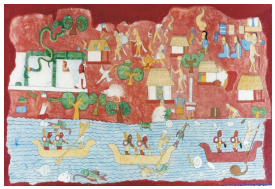
Postclassic Period
The end of the Terminal Classic Period has been viewed
as the death knell for the Maya civilization, and the
Postclassic Period has traditionally been described as a
militaristic, decadent, and degenerate phase in Maya
history. But more enlightened views would see that the
militarism was part and parcel with other features that
suggest a tendency towards secularism and the resultant
downplaying of the ceremonial rituals that dominated the
Classic Period. Moreover, much of our interpretations of
the Postclassic were projected from ethnohistoric
accounts of the Spanish intrusions in the region. Very
little attention has been directed towards understanding
the Postclassic through archaeology, although recent
research on the period, particularly at Santa Rita in
northern Belize, suggests continuity from the Classic
Period.The focus of cultural developments moved from
the Central Maya Lowlands north, to the Yucatan, where
the Spanish first contacted the Maya culture.
Once the Spanish established their base in northern
Yucatan by 1546, they began to impose their views and
customs upon the Maya. This was a time of great
disruption. The Maya people suffered from introduction of
European diseases suppression of native traditions
conscription of labor.
Tragically, the vast majority of Maya documents were
destroyed by Spanish religious zealots. The Auto de Fe
of Fray DeLanda is among the most famed. Credited with
providing scraps of information on the Mayan language,
in truth he is responsible for burning the majority of the
known text at the time. The created a huge void of information about the language and practices of this
advanced civilization. The Maya of the Yucatan struggled
to maintain their life ways under Spanish rule. The Maya
forest garden and milpa strategy, unfamiliar to and
unappreciated by the Spanish, was not accepted.
After the conquest of the northern Yucatan, the southern
Maya Itza kingdom still dominated the southern lowlands,
where Tikal once ruled. Hostile to their neighbors and
ensconced in the Maya forest, they were able to maintain
their independence for nearly two centuries after the
Spanish arrived.
Postclassic Mural
It was not until 1696 that the Spanish conquered the last
of the independent Maya city-states, the Itza of Tayasal,
the descendants of the ancient Maya realm. The Central
Maya Lowlands, which today include most of Belize and
the Peten of Guatemala, are still home to Maya who can
trace their ancestry back into prehistory as attested by
the patronyms of local villagers: Teck, Bacab, Mai,
Cocom, and Panti to name a few.
https://www.marc.ucsb.edu/research/maya/ancient-maya-civilization/po
stclassic-period
As used in the opening evaluation of the Terminal
Classic, the phrase "the death knell for the Maya
civilization" serves a rhetorical purpose; which
interpretation best captures its figurative force in this
context?
Ano: 2025
Banca:
AMAUC
Órgão:
Prefeitura de Seara - SC
Prova:
AMAUC - 2025 - Prefeitura de Seara - SC - Professor de Inglês |
Q3610242
Inglês
Texto associado
Postclassic Period
The end of the Terminal Classic Period has been viewed
as the death knell for the Maya civilization, and the
Postclassic Period has traditionally been described as a
militaristic, decadent, and degenerate phase in Maya
history. But more enlightened views would see that the
militarism was part and parcel with other features that
suggest a tendency towards secularism and the resultant
downplaying of the ceremonial rituals that dominated the
Classic Period. Moreover, much of our interpretations of
the Postclassic were projected from ethnohistoric
accounts of the Spanish intrusions in the region. Very
little attention has been directed towards understanding
the Postclassic through archaeology, although recent
research on the period, particularly at Santa Rita in
northern Belize, suggests continuity from the Classic
Period.The focus of cultural developments moved from
the Central Maya Lowlands north, to the Yucatan, where
the Spanish first contacted the Maya culture.
Once the Spanish established their base in northern
Yucatan by 1546, they began to impose their views and
customs upon the Maya. This was a time of great
disruption. The Maya people suffered from introduction of
European diseases suppression of native traditions
conscription of labor.
Tragically, the vast majority of Maya documents were
destroyed by Spanish religious zealots. The Auto de Fe
of Fray DeLanda is among the most famed. Credited with
providing scraps of information on the Mayan language,
in truth he is responsible for burning the majority of the
known text at the time. The created a huge void of information about the language and practices of this
advanced civilization. The Maya of the Yucatan struggled
to maintain their life ways under Spanish rule. The Maya
forest garden and milpa strategy, unfamiliar to and
unappreciated by the Spanish, was not accepted.
After the conquest of the northern Yucatan, the southern
Maya Itza kingdom still dominated the southern lowlands,
where Tikal once ruled. Hostile to their neighbors and
ensconced in the Maya forest, they were able to maintain
their independence for nearly two centuries after the
Spanish arrived.
Postclassic Mural
It was not until 1696 that the Spanish conquered the last
of the independent Maya city-states, the Itza of Tayasal,
the descendants of the ancient Maya realm. The Central
Maya Lowlands, which today include most of Belize and
the Peten of Guatemala, are still home to Maya who can
trace their ancestry back into prehistory as attested by
the patronyms of local villagers: Teck, Bacab, Mai,
Cocom, and Panti to name a few.
https://www.marc.ucsb.edu/research/maya/ancient-maya-civilization/po
stclassic-period
Analyzing the non-finite structure in "Hostile to their
neighbors and ensconced in the Maya forest," what is the
syntactic role of "ensconced in the Maya forest" with
respect to the subject?
Ano: 2025
Banca:
AMAUC
Órgão:
Prefeitura de Seara - SC
Prova:
AMAUC - 2025 - Prefeitura de Seara - SC - Professor de Inglês |
Q3610241
Inglês
Texto associado
Postclassic Period
The end of the Terminal Classic Period has been viewed
as the death knell for the Maya civilization, and the
Postclassic Period has traditionally been described as a
militaristic, decadent, and degenerate phase in Maya
history. But more enlightened views would see that the
militarism was part and parcel with other features that
suggest a tendency towards secularism and the resultant
downplaying of the ceremonial rituals that dominated the
Classic Period. Moreover, much of our interpretations of
the Postclassic were projected from ethnohistoric
accounts of the Spanish intrusions in the region. Very
little attention has been directed towards understanding
the Postclassic through archaeology, although recent
research on the period, particularly at Santa Rita in
northern Belize, suggests continuity from the Classic
Period.The focus of cultural developments moved from
the Central Maya Lowlands north, to the Yucatan, where
the Spanish first contacted the Maya culture.
Once the Spanish established their base in northern
Yucatan by 1546, they began to impose their views and
customs upon the Maya. This was a time of great
disruption. The Maya people suffered from introduction of
European diseases suppression of native traditions
conscription of labor.
Tragically, the vast majority of Maya documents were
destroyed by Spanish religious zealots. The Auto de Fe
of Fray DeLanda is among the most famed. Credited with
providing scraps of information on the Mayan language,
in truth he is responsible for burning the majority of the
known text at the time. The created a huge void of information about the language and practices of this
advanced civilization. The Maya of the Yucatan struggled
to maintain their life ways under Spanish rule. The Maya
forest garden and milpa strategy, unfamiliar to and
unappreciated by the Spanish, was not accepted.
After the conquest of the northern Yucatan, the southern
Maya Itza kingdom still dominated the southern lowlands,
where Tikal once ruled. Hostile to their neighbors and
ensconced in the Maya forest, they were able to maintain
their independence for nearly two centuries after the
Spanish arrived.
Postclassic Mural
It was not until 1696 that the Spanish conquered the last
of the independent Maya city-states, the Itza of Tayasal,
the descendants of the ancient Maya realm. The Central
Maya Lowlands, which today include most of Belize and
the Peten of Guatemala, are still home to Maya who can
trace their ancestry back into prehistory as attested by
the patronyms of local villagers: Teck, Bacab, Mai,
Cocom, and Panti to name a few.
https://www.marc.ucsb.edu/research/maya/ancient-maya-civilization/po
stclassic-period
Drawing on the passage's contrasting evaluations of the
period, which pair of nouns taken (or inferable) from the
text functions as antonyms in context?
Ano: 2025
Banca:
AMAUC
Órgão:
Prefeitura de Seara - SC
Prova:
AMAUC - 2025 - Prefeitura de Seara - SC - Professor de Inglês |
Q3610240
Inglês
Texto associado
Postclassic Period
The end of the Terminal Classic Period has been viewed
as the death knell for the Maya civilization, and the
Postclassic Period has traditionally been described as a
militaristic, decadent, and degenerate phase in Maya
history. But more enlightened views would see that the
militarism was part and parcel with other features that
suggest a tendency towards secularism and the resultant
downplaying of the ceremonial rituals that dominated the
Classic Period. Moreover, much of our interpretations of
the Postclassic were projected from ethnohistoric
accounts of the Spanish intrusions in the region. Very
little attention has been directed towards understanding
the Postclassic through archaeology, although recent
research on the period, particularly at Santa Rita in
northern Belize, suggests continuity from the Classic
Period.The focus of cultural developments moved from
the Central Maya Lowlands north, to the Yucatan, where
the Spanish first contacted the Maya culture.
Once the Spanish established their base in northern
Yucatan by 1546, they began to impose their views and
customs upon the Maya. This was a time of great
disruption. The Maya people suffered from introduction of
European diseases suppression of native traditions
conscription of labor.
Tragically, the vast majority of Maya documents were
destroyed by Spanish religious zealots. The Auto de Fe
of Fray DeLanda is among the most famed. Credited with
providing scraps of information on the Mayan language,
in truth he is responsible for burning the majority of the
known text at the time. The created a huge void of information about the language and practices of this
advanced civilization. The Maya of the Yucatan struggled
to maintain their life ways under Spanish rule. The Maya
forest garden and milpa strategy, unfamiliar to and
unappreciated by the Spanish, was not accepted.
After the conquest of the northern Yucatan, the southern
Maya Itza kingdom still dominated the southern lowlands,
where Tikal once ruled. Hostile to their neighbors and
ensconced in the Maya forest, they were able to maintain
their independence for nearly two centuries after the
Spanish arrived.
Postclassic Mural
It was not until 1696 that the Spanish conquered the last
of the independent Maya city-states, the Itza of Tayasal,
the descendants of the ancient Maya realm. The Central
Maya Lowlands, which today include most of Belize and
the Peten of Guatemala, are still home to Maya who can
trace their ancestry back into prehistory as attested by
the patronyms of local villagers: Teck, Bacab, Mai,
Cocom, and Panti to name a few.
https://www.marc.ucsb.edu/research/maya/ancient-maya-civilization/po
stclassic-period
The author critiques earlier wording and perspectives;
choose the revision that best corrects quantifier−noun
agreement while preserving the original meaning of the
sentence.
Ano: 2025
Banca:
AMAUC
Órgão:
Prefeitura de Seara - SC
Prova:
AMAUC - 2025 - Prefeitura de Seara - SC - Professor de Inglês |
Q3610239
Inglês
Texto associado
Postclassic Period
The end of the Terminal Classic Period has been viewed
as the death knell for the Maya civilization, and the
Postclassic Period has traditionally been described as a
militaristic, decadent, and degenerate phase in Maya
history. But more enlightened views would see that the
militarism was part and parcel with other features that
suggest a tendency towards secularism and the resultant
downplaying of the ceremonial rituals that dominated the
Classic Period. Moreover, much of our interpretations of
the Postclassic were projected from ethnohistoric
accounts of the Spanish intrusions in the region. Very
little attention has been directed towards understanding
the Postclassic through archaeology, although recent
research on the period, particularly at Santa Rita in
northern Belize, suggests continuity from the Classic
Period.The focus of cultural developments moved from
the Central Maya Lowlands north, to the Yucatan, where
the Spanish first contacted the Maya culture.
Once the Spanish established their base in northern
Yucatan by 1546, they began to impose their views and
customs upon the Maya. This was a time of great
disruption. The Maya people suffered from introduction of
European diseases suppression of native traditions
conscription of labor.
Tragically, the vast majority of Maya documents were
destroyed by Spanish religious zealots. The Auto de Fe
of Fray DeLanda is among the most famed. Credited with
providing scraps of information on the Mayan language,
in truth he is responsible for burning the majority of the
known text at the time. The created a huge void of information about the language and practices of this
advanced civilization. The Maya of the Yucatan struggled
to maintain their life ways under Spanish rule. The Maya
forest garden and milpa strategy, unfamiliar to and
unappreciated by the Spanish, was not accepted.
After the conquest of the northern Yucatan, the southern
Maya Itza kingdom still dominated the southern lowlands,
where Tikal once ruled. Hostile to their neighbors and
ensconced in the Maya forest, they were able to maintain
their independence for nearly two centuries after the
Spanish arrived.
Postclassic Mural
It was not until 1696 that the Spanish conquered the last
of the independent Maya city-states, the Itza of Tayasal,
the descendants of the ancient Maya realm. The Central
Maya Lowlands, which today include most of Belize and
the Peten of Guatemala, are still home to Maya who can
trace their ancestry back into prehistory as attested by
the patronyms of local villagers: Teck, Bacab, Mai,
Cocom, and Panti to name a few.
https://www.marc.ucsb.edu/research/maya/ancient-maya-civilization/po
stclassic-period
Converting a statement from the text into formal reported
speech, which option correctly reports: "The Spanish first
contacted the Maya culture in the Yucatan"?
Ano: 2025
Banca:
AMAUC
Órgão:
Prefeitura de Seara - SC
Prova:
AMAUC - 2025 - Prefeitura de Seara - SC - Professor de Inglês |
Q3610238
Inglês
Texto associado
Postclassic Period
The end of the Terminal Classic Period has been viewed
as the death knell for the Maya civilization, and the
Postclassic Period has traditionally been described as a
militaristic, decadent, and degenerate phase in Maya
history. But more enlightened views would see that the
militarism was part and parcel with other features that
suggest a tendency towards secularism and the resultant
downplaying of the ceremonial rituals that dominated the
Classic Period. Moreover, much of our interpretations of
the Postclassic were projected from ethnohistoric
accounts of the Spanish intrusions in the region. Very
little attention has been directed towards understanding
the Postclassic through archaeology, although recent
research on the period, particularly at Santa Rita in
northern Belize, suggests continuity from the Classic
Period.The focus of cultural developments moved from
the Central Maya Lowlands north, to the Yucatan, where
the Spanish first contacted the Maya culture.
Once the Spanish established their base in northern
Yucatan by 1546, they began to impose their views and
customs upon the Maya. This was a time of great
disruption. The Maya people suffered from introduction of
European diseases suppression of native traditions
conscription of labor.
Tragically, the vast majority of Maya documents were
destroyed by Spanish religious zealots. The Auto de Fe
of Fray DeLanda is among the most famed. Credited with
providing scraps of information on the Mayan language,
in truth he is responsible for burning the majority of the
known text at the time. The created a huge void of information about the language and practices of this
advanced civilization. The Maya of the Yucatan struggled
to maintain their life ways under Spanish rule. The Maya
forest garden and milpa strategy, unfamiliar to and
unappreciated by the Spanish, was not accepted.
After the conquest of the northern Yucatan, the southern
Maya Itza kingdom still dominated the southern lowlands,
where Tikal once ruled. Hostile to their neighbors and
ensconced in the Maya forest, they were able to maintain
their independence for nearly two centuries after the
Spanish arrived.
Postclassic Mural
It was not until 1696 that the Spanish conquered the last
of the independent Maya city-states, the Itza of Tayasal,
the descendants of the ancient Maya realm. The Central
Maya Lowlands, which today include most of Belize and
the Peten of Guatemala, are still home to Maya who can
trace their ancestry back into prehistory as attested by
the patronyms of local villagers: Teck, Bacab, Mai,
Cocom, and Panti to name a few.
https://www.marc.ucsb.edu/research/maya/ancient-maya-civilization/po
stclassic-period
Interpreting temporal prepositions in context, what does
"by" convey in the clause "Once the Spanish established
their base in northern Yucatan by 1546"?
Ano: 2025
Banca:
AMAUC
Órgão:
Prefeitura de Seara - SC
Prova:
AMAUC - 2025 - Prefeitura de Seara - SC - Professor de Inglês |
Q3610237
Inglês
Texto associado
Postclassic Period
The end of the Terminal Classic Period has been viewed
as the death knell for the Maya civilization, and the
Postclassic Period has traditionally been described as a
militaristic, decadent, and degenerate phase in Maya
history. But more enlightened views would see that the
militarism was part and parcel with other features that
suggest a tendency towards secularism and the resultant
downplaying of the ceremonial rituals that dominated the
Classic Period. Moreover, much of our interpretations of
the Postclassic were projected from ethnohistoric
accounts of the Spanish intrusions in the region. Very
little attention has been directed towards understanding
the Postclassic through archaeology, although recent
research on the period, particularly at Santa Rita in
northern Belize, suggests continuity from the Classic
Period.The focus of cultural developments moved from
the Central Maya Lowlands north, to the Yucatan, where
the Spanish first contacted the Maya culture.
Once the Spanish established their base in northern
Yucatan by 1546, they began to impose their views and
customs upon the Maya. This was a time of great
disruption. The Maya people suffered from introduction of
European diseases suppression of native traditions
conscription of labor.
Tragically, the vast majority of Maya documents were
destroyed by Spanish religious zealots. The Auto de Fe
of Fray DeLanda is among the most famed. Credited with
providing scraps of information on the Mayan language,
in truth he is responsible for burning the majority of the
known text at the time. The created a huge void of information about the language and practices of this
advanced civilization. The Maya of the Yucatan struggled
to maintain their life ways under Spanish rule. The Maya
forest garden and milpa strategy, unfamiliar to and
unappreciated by the Spanish, was not accepted.
After the conquest of the northern Yucatan, the southern
Maya Itza kingdom still dominated the southern lowlands,
where Tikal once ruled. Hostile to their neighbors and
ensconced in the Maya forest, they were able to maintain
their independence for nearly two centuries after the
Spanish arrived.
Postclassic Mural
It was not until 1696 that the Spanish conquered the last
of the independent Maya city-states, the Itza of Tayasal,
the descendants of the ancient Maya realm. The Central
Maya Lowlands, which today include most of Belize and
the Peten of Guatemala, are still home to Maya who can
trace their ancestry back into prehistory as attested by
the patronyms of local villagers: Teck, Bacab, Mai,
Cocom, and Panti to name a few.
https://www.marc.ucsb.edu/research/maya/ancient-maya-civilization/po
stclassic-period
Considering the passage's account of cultural
reorientation after the Classic decline, which geographic
shift characterizes developments in the Postclassic as
described by the author?

 Conheça nossos planos