Selecionar segmento
Estude com questões de diferentes segmentos
Atenção: Isso limpará todos os campos já preenchidos no filtro!
Foram encontradas 3.316 questões
Resolva questões gratuitamente!
Junte-se a mais de 4 milhões de concurseiros!


Ano: 2019
Banca:
NUCEPE
Órgão:
Prefeitura de Teresina - PI
Prova:
NUCEPE - 2019 - Prefeitura de Teresina - PI - Professor de 2º Ciclo (6º ao 9º ano) - Geografia |
Q1729036
História e Geografia de Estados e Municípios
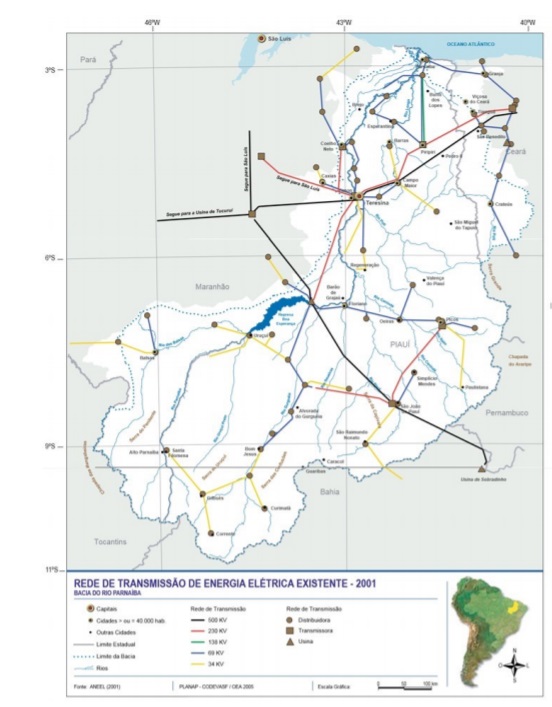
Considerando-se a densidade das técnicas no território e o que se apresenta no mapa sobre a rede de
energia elétrica existente no Piauí, no período especificado, constata-se que
Ano: 2019
Banca:
NUCEPE
Órgão:
Prefeitura de Teresina - PI
Prova:
NUCEPE - 2019 - Prefeitura de Teresina - PI - Professor de 2º Ciclo (6º ao 9º ano) - Geografia |
Q1729035
Geografia
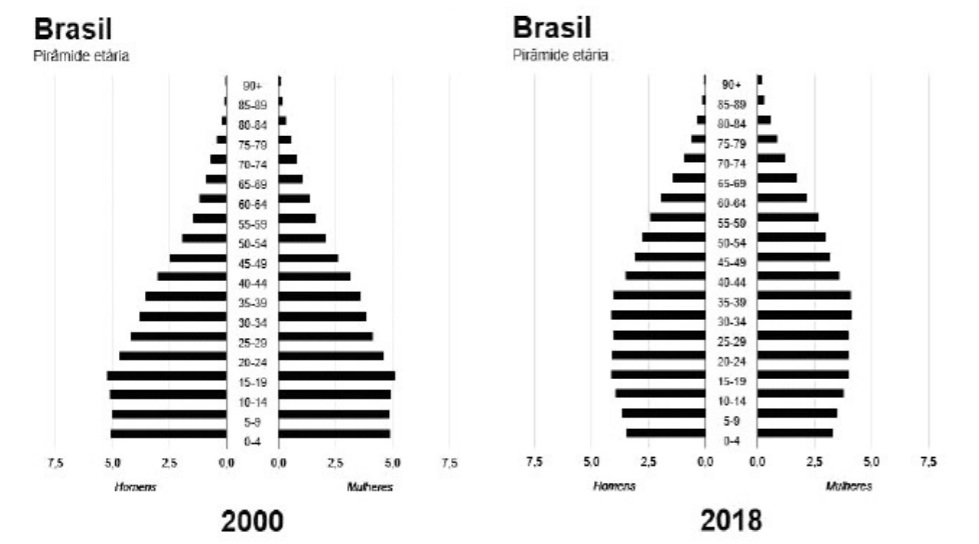
As transformações verificadas na estrutura etária do Brasil, no período observado nos gráficos, indicam a necessidade de políticas voltadas prioritariamente para
Ano: 2019
Banca:
NUCEPE
Órgão:
Prefeitura de Teresina - PI
Prova:
NUCEPE - 2019 - Prefeitura de Teresina - PI - Professor de 2º Ciclo (6º ao 9º ano) - Geografia |
Q1729034
Geografia
A energia elétrica é uma das formas de energia mais utilizadas no cotidiano das pessoas e na produção
econômica da sociedade. É derivada das diferenças de potencial elétrico em um condutor, de tal modo que
possibilite a geração de uma corrente orientada de elétrons em um circuito. Caracteriza-se, principalmente,
pela flexibilidade de transformação em outras formas de energia e pela facilidade de transporte em relação a
outras fontes. Para que possa ser útil, ela precisa ser gerada por outras fontes energéticas e convertida em
eletricidade para fins de transporte da origem da fonte geradora até o local de consumo, quando novamente
se converte em outro tipo de energia, de acordo com o uso que se faz necessário.
Fonte: BRASIL, Instituto Brasileiro de Geografia e Estatistica. Redes e fluxos do território: Logística de energia. Rio de Janeiro: IBGE, 2015.
Quanto às fontes de energia exploradas no Brasil, é válido afirmar que
Quanto às fontes de energia exploradas no Brasil, é válido afirmar que
Ano: 2019
Banca:
NUCEPE
Órgão:
Prefeitura de Teresina - PI
Prova:
NUCEPE - 2019 - Prefeitura de Teresina - PI - Professor de 2º Ciclo (6º ao 9º ano) - Geografia |
Q1729033
Geografia
O domínio das caatingas brasileiras é um dos três espaços semiáridos da América do Sul. Fato que o
caracteriza como um dos domínios de natureza de excepcionalidade marcante no contexto climático e
hidrológico de um continente dotado de grandes e contínuas extensões de terras úmidas.
AB’SABER, A. N. Os domínios de natureza no Brasil: potencialidades paisagísticas. São Paulo: Ateliê Editora, 2003.
A Caatinga, domínio natural referenciado pelo autor, caracteriza-se
AB’SABER, A. N. Os domínios de natureza no Brasil: potencialidades paisagísticas. São Paulo: Ateliê Editora, 2003.
A Caatinga, domínio natural referenciado pelo autor, caracteriza-se
Ano: 2019
Banca:
NUCEPE
Órgão:
Prefeitura de Teresina - PI
Prova:
NUCEPE - 2019 - Prefeitura de Teresina - PI - Professor de 2º Ciclo (6º ao 9º ano) - Geografia |
Q1729032
Geografia
Do ponto de vista geomorfológico, a recente evolução do Brasil Central contribuiu para uma revisão da
gênese das condições geomorfológicas e hídricas de uma região que está no meio do processo motor de
modernização e desenvolvimento no interior do Brasil. Uma revisão nas bases físicas que sustentaram a
revitalização econômico-social da região pode ser útil ao conhecimento científico e, até mesmo, ao esforço de
preservação dos fluxos vivos da natureza regional.
AB’SABER, A. N. Domínios da natureza do Brasil: potencialidades paisagísticas. São Paulo: Ateliê Editora, 2003.
A estrutura física do Planalto Brasileiro, apontada no texto acima, caracteriza-se
AB’SABER, A. N. Domínios da natureza do Brasil: potencialidades paisagísticas. São Paulo: Ateliê Editora, 2003.
A estrutura física do Planalto Brasileiro, apontada no texto acima, caracteriza-se
Ano: 2019
Banca:
NUCEPE
Órgão:
Prefeitura de Teresina - PI
Prova:
NUCEPE - 2019 - Prefeitura de Teresina - PI - Professor de 2º Ciclo (6º ao 9º ano) - Geografia |
Q1729031
Geografia
Observe o mapa:
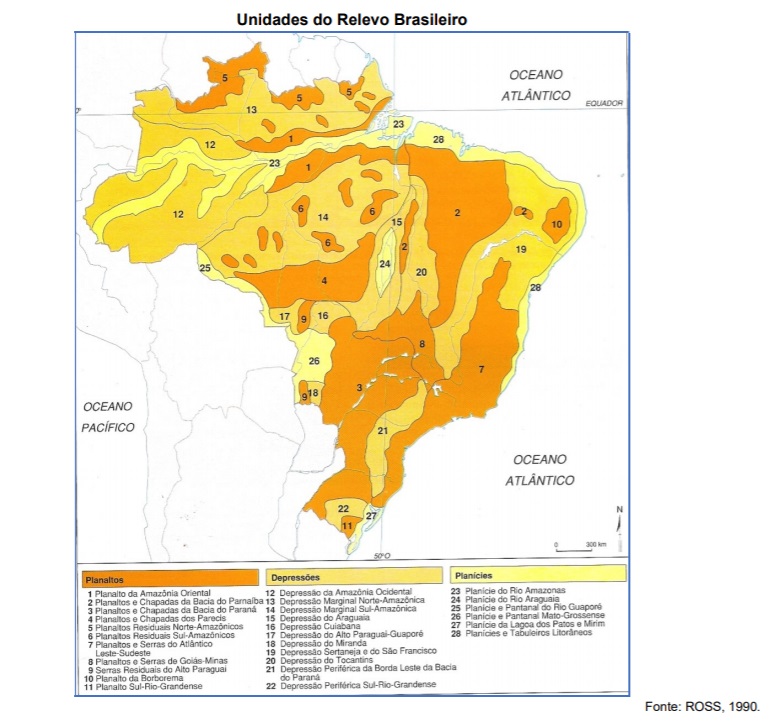
A unidade de relevo 26 do mapa (Planícies e Pantanal Mato-Grossense) é formada a partir de
Ano: 2019
Banca:
NUCEPE
Órgão:
Prefeitura de Teresina - PI
Prova:
NUCEPE - 2019 - Prefeitura de Teresina - PI - Professor de 2º Ciclo (6º ao 9º ano) - Geografia |
Q1729030
Geografia
Observe a representação abaixo: Perfil leste-oeste da região Nordeste
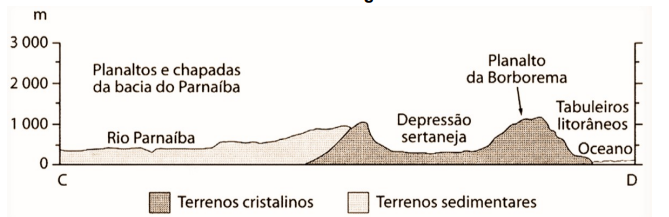
Fonte: ROSS, J.L.S. Geografia do Brasil. São Paulo: EDUSP, 2003.
Os depósitos sedimentares da bacia do Parnaíba, ilustrados na figura acima,
Fonte: ROSS, J.L.S. Geografia do Brasil. São Paulo: EDUSP, 2003.
Os depósitos sedimentares da bacia do Parnaíba, ilustrados na figura acima,
Ano: 2019
Banca:
NUCEPE
Órgão:
Prefeitura de Teresina - PI
Prova:
NUCEPE - 2019 - Prefeitura de Teresina - PI - Professor de 2º Ciclo (6º ao 9º ano) - Geografia |
Q1729029
Geografia
O que se expressa na imagem evidencia uma preocupação demográfica que se assegura em base 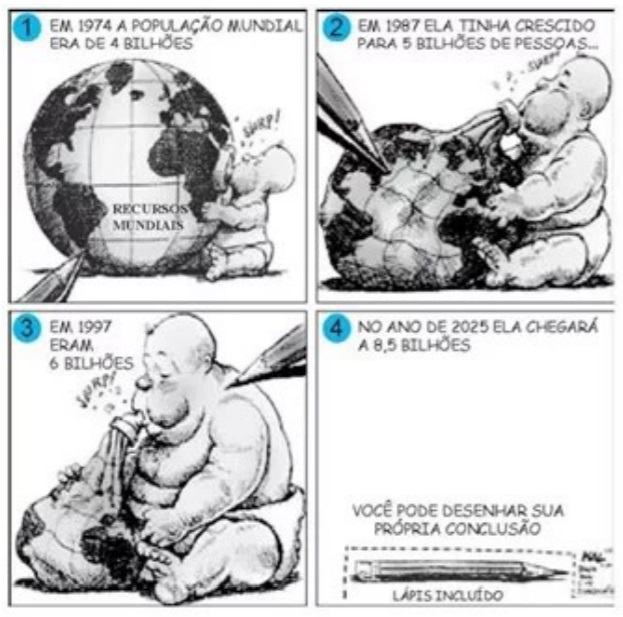
Ano: 2019
Banca:
NUCEPE
Órgão:
Prefeitura de Teresina - PI
Prova:
NUCEPE - 2019 - Prefeitura de Teresina - PI - Professor de 2º Ciclo (6º ao 9º ano) - Geografia |
Q1729028
Atualidades
Iracema Voou (Chico Buarque de Holanda) Iracema voou Para a América Leva roupa de lã E anda lépida Vê um filme de quando em vez Não domina o idioma inglês Lava chão numa casa de chá Tem saído ao luar Com um mímico Ambiciona estudar Canto lírico Não dá mole pra polícia Se puder, vai ficando por lá Tem saudade do Ceará Mas não muita Uns dias, afoita Me liga a cobrar É Iracema da América
A letra da música remete a um importante processo contemporâneo: a migração de pessoas da América Latina em direção aos EUA, num processo no qual se verifica que
A letra da música remete a um importante processo contemporâneo: a migração de pessoas da América Latina em direção aos EUA, num processo no qual se verifica que
Ano: 2019
Banca:
NUCEPE
Órgão:
Prefeitura de Teresina - PI
Prova:
NUCEPE - 2019 - Prefeitura de Teresina - PI - Professor de 2º Ciclo (6º ao 9º ano) - Geografia |
Q1729027
História e Geografia de Estados e Municípios
Uma série de transformações espaciais foi empreendida ao sítio teresinense, desde o seu traçado inicial. A
expansão da malha urbana de Teresina resultou em impactos ambientais diversos, o que é inerente à relação
homem-natureza. Entre as alterações ambientais, são marcantes aquelas relativas aos aspectos climáticos.
O calor ou as temperaturas constantemente elevadas, por exemplo, é um dado comum da realidade
teresinense, que se acentua com a formação de ilhas de calor. Observe a figura:
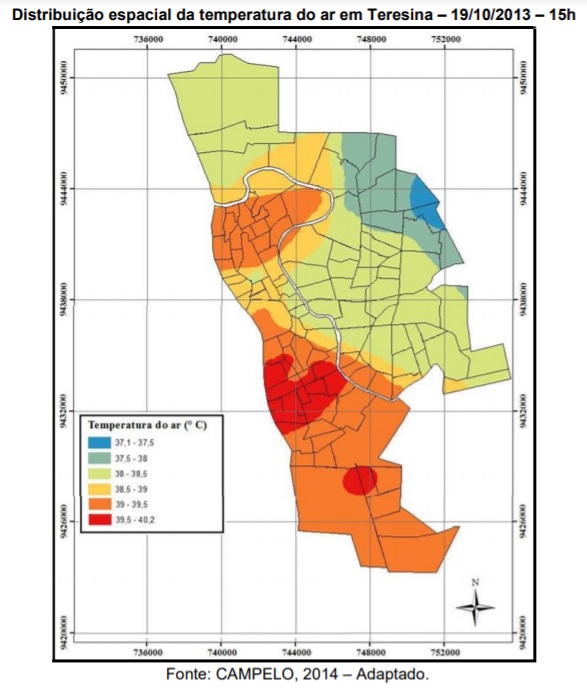
A exemplo do que acontece na cidade de Teresina, a formação de ilhas de calor nos centros urbanos é ocasionada
A exemplo do que acontece na cidade de Teresina, a formação de ilhas de calor nos centros urbanos é ocasionada
Ano: 2019
Banca:
NUCEPE
Órgão:
Prefeitura de Teresina - PI
Prova:
NUCEPE - 2019 - Prefeitura de Teresina - PI - Professor de 2º Ciclo (6º ao 9º ano) - Geografia |
Q1729026
História e Geografia de Estados e Municípios
Aguapés cobrem Rio Poti, em Teresina, e ambientalista alerta sobre os impactos ambientais
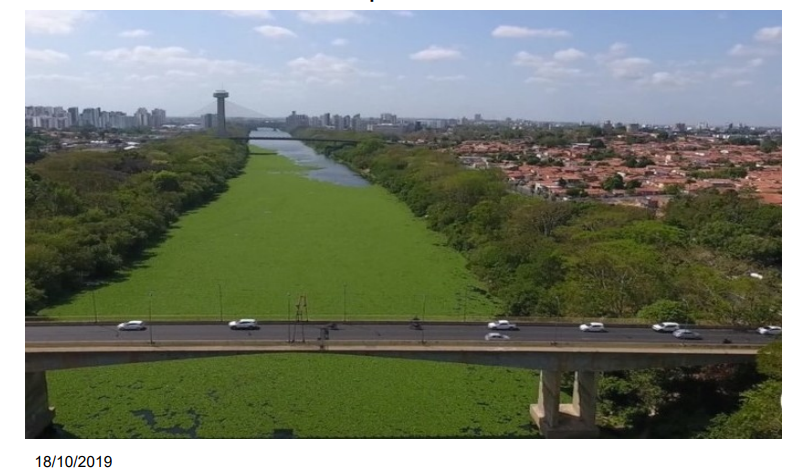
Os aguapés, plantas aquáticas flutuantes, estão cobrindo parte do rio Poti em Teresina e o professor ambientalista Ribamar Rocha alertou sobre os impactos socioambientais provocados pela presença deles. "Quando está em pouca quantidade ela é altamente benéfica ao ambiente, porque ela se alimenta dos resíduos que estão suspensos na água, como esgotos sem tratamentos que foram lançados no rio", explicou Ribamar Rocha. O professor alerta que quando a superfície da água é coberta pelos aguapés, a vegetação passa a prejudicar o rio. "Dificulta a vida dos peixes e a vida dos pescadores. Causando impactos socioambientais", informou Ribamar Rocha.
Fonte: https://g1.globo.com/pi/piaui/noticia, acesso em 07/11/19 – Adaptado.
A formação da larga camada de aguapés no leito do rio Poti no trecho que percorre a zona urbana de Teresina, conforme ilustram o texto e a imagem, é provocada
Ano: 2019
Banca:
NUCEPE
Órgão:
Prefeitura de Teresina - PI
Prova:
NUCEPE - 2019 - Prefeitura de Teresina - PI - Professor de 2º Ciclo (6º ao 9º ano) - Geografia |
Q1729025
Geografia
Ao longo da etapa chamada pós-industrial ou pós-moderna, iniciada com o declínio do modelo
socioeconômico industrial tradicional, a partir dos anos de 1970, algumas áreas urbanas vem
passando por importantes processos de transformação, caracterizados normalmente pela ocupação dos
centros das cidades por uma parte da classe média, de elevada remuneração, que desloca os
habitantes da classe baixa, de menor remuneração, que viviam no centro urbano. O deslocamento vem
acompanhado de investimentos e melhorias tanto nas moradias (que são renovadas ou reabilitadas) quanto
em toda área afetada, tais como comércio, equipamentos e serviços. Isto implica, portanto, mudanças no
mercado de solo e habitacional, de modo que desempenham um papel decisivo os agentes do solo:
os proprietários, os promotores, os governos – locais, estaduais – e as instituições financeiras, assim
como também os moradores – em regime de propriedade ou de aluguel. Em conjunto, o fenômeno
proporciona uma maior estima das áreas renovadas e, inclusive, uma recuperação do valor simbólico dos
centros urbanos.
Fonte: BATALLER, 2012. (Adaptado)
Denomina-se esse processo de reestruturação das áreas urbanas a que se refere o texto como
Fonte: BATALLER, 2012. (Adaptado)
Denomina-se esse processo de reestruturação das áreas urbanas a que se refere o texto como
Ano: 2019
Banca:
NUCEPE
Órgão:
Prefeitura de Teresina - PI
Prova:
NUCEPE - 2019 - Prefeitura de Teresina - PI - Professor de 2º Ciclo (6º ao 9º ano) - Geografia |
Q1729024
Geografia
Uma das características do mundo atual é a exigência de fluidez para a circulação de ideias, mensagens,
produtos ou dinheiro, interessando aos atores hegemônicos. A fluidez contemporânea é baseada nas redes
técnicas, que são um dos suportes da competitividade. Daí a busca voraz de ainda mais fluidez, levando à
procura de novas técnicas ainda mais eficazes. A fluidez é, ao mesmo tempo, uma causa, uma condição e
um resultado.
SANTOS, M. A natureza do espaço: tempo e técnica, razão e emoção. São Paulo: Edusp, 2008.
A fluidez é uma realidade do meio geográfico do terceiro milênio e se traduz, entre outras realidades, na interdependência dos mercados financeiros, concretizada
SANTOS, M. A natureza do espaço: tempo e técnica, razão e emoção. São Paulo: Edusp, 2008.
A fluidez é uma realidade do meio geográfico do terceiro milênio e se traduz, entre outras realidades, na interdependência dos mercados financeiros, concretizada
Ano: 2019
Banca:
NUCEPE
Órgão:
Prefeitura de Teresina - PI
Prova:
NUCEPE - 2019 - Prefeitura de Teresina - PI - Professor de 2º Ciclo (6º ao 9º ano) - Geografia |
Q1729023
Geografia
Globalitarismos e totalitarismos
Como as técnicas hegemônicas atuais são, todas elas, filhas da ciência, e como sua utilização se dá a serviço do mercado, esse amálgama produz um ideário da técnica e do mercado que é santificado pela ciência, considerada, ela própria, infalível. Essa, aliás, é uma das fontes do poder do pensamento único. Tudo o que é feito pela mão dos vetores fundamentais da globalização parte de ideias científicas, indispensáveis à produção, aliás acelerada, de novas realidades, de tal modo que as ações assim criadas se impõem como soluções únicas. Nas condições atuais, a ideologia é reforçada de uma forma que seria impossível ainda há um quarto de século, já que, primeiro as ideias e, sobretudo, as ideologias se transformam em situações, enquanto as situações se tornam entre si mesmas “ideias”, “ideias do que fazer”, “ideologia”, e impregnam, de volta, a ciência cada vez mais redutora e reduzida, mais distante da busca da “verdade”. Desse conjunto de variáveis decorrem, também, outras condições da vida contemporânea, fundadas na matematização da existência, carregando consigo uma crescente sedução pelos números, um uso mágico das estatísticas.
Fonte: SANTOS, M. Por uma outra globalização. 13 ed. Rio de Janeiro/São Paulo: Record, 2006.
A partir das ideias do texto, compreende-se que o processo de globalização é
Como as técnicas hegemônicas atuais são, todas elas, filhas da ciência, e como sua utilização se dá a serviço do mercado, esse amálgama produz um ideário da técnica e do mercado que é santificado pela ciência, considerada, ela própria, infalível. Essa, aliás, é uma das fontes do poder do pensamento único. Tudo o que é feito pela mão dos vetores fundamentais da globalização parte de ideias científicas, indispensáveis à produção, aliás acelerada, de novas realidades, de tal modo que as ações assim criadas se impõem como soluções únicas. Nas condições atuais, a ideologia é reforçada de uma forma que seria impossível ainda há um quarto de século, já que, primeiro as ideias e, sobretudo, as ideologias se transformam em situações, enquanto as situações se tornam entre si mesmas “ideias”, “ideias do que fazer”, “ideologia”, e impregnam, de volta, a ciência cada vez mais redutora e reduzida, mais distante da busca da “verdade”. Desse conjunto de variáveis decorrem, também, outras condições da vida contemporânea, fundadas na matematização da existência, carregando consigo uma crescente sedução pelos números, um uso mágico das estatísticas.
Fonte: SANTOS, M. Por uma outra globalização. 13 ed. Rio de Janeiro/São Paulo: Record, 2006.
A partir das ideias do texto, compreende-se que o processo de globalização é
Ano: 2019
Banca:
NUCEPE
Órgão:
Prefeitura de Teresina - PI
Prova:
NUCEPE - 2019 - Prefeitura de Teresina - PI - Professor de 2º Ciclo (6º ao 9º ano) - Geografia |
Q1729022
Geografia
[...] nas regiões subdesenvolvidas o responsável político está sempre convocando o povo ao combate.
Combate contra o colonialismo, combate contra a miséria e o subdesenvolvimento, combate contra as
condições esterilizantes. O vocábulo que utiliza em seus apelos é um vocábulo de chefe de Estado-Maior:
“Mobilização das massas”, “frente de agricultura”, “frente de analfabetismo”, “derrotas sofridas”, “vitórias
alcançadas”. A jovem nação independente evolui perante os primeiros anos numa atmosfera de campo de
batalha. É que o dirigente político de um país subdesenvolvido avalia com assombro o caminho imenso que
seu país deve percorrer. Recruta o povo e lhe diz: “Cinjamos os lombos e trabalhemos”. O país, tenazmente
dominado por uma espécie de loucura criadora, lança-se num esforço gigantesco e desproporcionado. O
programa consiste não somente em sair do atraso, mas em alcançar as outras nações com os meios disponíveis. Prevalece a crença de que os povos europeus atingiram um alto grau de desenvolvimento em
consequência de seus esforços. Provemos então ao mundo e a nós mesmos que somos capazes de iguais
realizações. Esse modo de colocar o problema da evolução dos países subdesenvolvidos não nos parece
justo nem razoável.
(FANON, F. Os condenados da Terra. Rio de Janeiro: Civilização Brasileira, 1968.)
A partir das ideias do texto, compreende-se que as desigualdades internacionais verificadas no mundo contemporâneo
A partir das ideias do texto, compreende-se que as desigualdades internacionais verificadas no mundo contemporâneo
Ano: 2019
Banca:
NUCEPE
Órgão:
Prefeitura de Teresina - PI
Prova:
NUCEPE - 2019 - Prefeitura de Teresina - PI - Professor de 2º Ciclo (6º ao 9º ano) - Geografia |
Q1729021
Geografia
Quando a demanda de quantidade e qualidade tornou-se imprescindível; quando os mercados ficaram
mundialmente diversificados e, portanto, difíceis de ser controlados; e quando o ritmo da transformação
tecnológica tornou obsoletos os equipamentos de produção com objetivo único, o sistema de produção em
massa ficou mais rígido e dispendioso para as características da nova economia. O sistema flexível surgiu
como uma possível resposta para superar essa rigidez.
CASTELLS, M. A Sociedade em Rede. São Paulo: Paz e Terra, 1999.
O modelo industrial mais flexível, pautado na cooperação, na mão de obra multifuncional, no controle de qualidade e redução de riscos, é conhecido como
CASTELLS, M. A Sociedade em Rede. São Paulo: Paz e Terra, 1999.
O modelo industrial mais flexível, pautado na cooperação, na mão de obra multifuncional, no controle de qualidade e redução de riscos, é conhecido como
Ano: 2019
Banca:
NUCEPE
Órgão:
Prefeitura de Teresina - PI
Prova:
NUCEPE - 2019 - Prefeitura de Teresina - PI - Professor de 2º Ciclo (6º ao 9º ano) - Geografia |
Q1729020
Geografia
Um dos aspectos que caracterizam o processo de globalização é a formação de blocos econômicos regionais,
criados e mantidos com base em realidades e anseios dos países membros. Um tipo de integração inicial dáse no caso do bloco econômico caracterizado pela gradativa liberação do fluxo de mercadorias entre países
membros, o que deve ocorrer por meio da ausência de barreiras tarifárias. Esse tipo de bloco econômico
ficou conhecido como
Ano: 2019
Banca:
NUCEPE
Órgão:
Prefeitura de Teresina - PI
Prova:
NUCEPE - 2019 - Prefeitura de Teresina - PI - Professor de 2º Ciclo (6º ao 9º ano) - Geografia |
Q1729019
Geografia
O consumo de energia é um dos principais indicadores do desenvolvimento econômico e do nível de
qualidade de vida de qualquer sociedade. Ele reflete tanto o ritmo de atividade dos setores industrial,
comercial e de serviços, quanto a capacidade da população para adquirir bens e serviços tecnologicamente
mais avançados, como automóveis (que demandam combustíveis), eletrodomésticos e eletroeletrônicos (que
exigem acesso à rede elétrica e pressionam o consumo de energia elétrica).
Fonte: BRASIL, Agência Nacional de Energia Elétrica. Atlas de energia elétrica do Brasil. 3ed. Brasília: Aneel, 2008.
Observe o gráfico a seguir:
Participação das diversas regiões do mundo no consumo de energia em 1973 e 2006
Sobre as características dos países e regiões do mundo a partir dos dados do gráfico, é procedente afirmar que
Fonte: BRASIL, Agência Nacional de Energia Elétrica. Atlas de energia elétrica do Brasil. 3ed. Brasília: Aneel, 2008.
Observe o gráfico a seguir:
Participação das diversas regiões do mundo no consumo de energia em 1973 e 2006
Sobre as características dos países e regiões do mundo a partir dos dados do gráfico, é procedente afirmar que
Ano: 2019
Banca:
NUCEPE
Órgão:
Prefeitura de Teresina - PI
Prova:
NUCEPE - 2019 - Prefeitura de Teresina - PI - Professor de 2º Ciclo (6º ao 9º ano) - Geografia |
Q1729018
Geografia
Os novos subespaços não são igualmente capazes de rentabilizar uma produção. Cada combinação tem sua
própria lógica e autoriza formas de ação específicas a agentes econômicos e sociais específicos. Os lugares
se especializam, em função de suas virtualidades naturais, de sua realidade técnica, de suas vantagens de
ordem social. Isso responde à exigência de maior segurança e rentabilidade para capitais obrigados a uma
competitividade sempre crescente. Isso conduz a uma marcante heterogeneidade entre as unidades
territoriais, com uma divisão do trabalho mais profunda e, também, uma vida de relações mais intensa.
Fonte: SANTOS, M. A natureza do espaço: tempo e técnica, razão e emoção. São Paulo: Edusp, 2008.
O fragmento acima se trata das disputas entre subespaços, no âmbito da lógica capitalista, que se evidencia com a internacionalização das economias e a dinâmica das empresas multinacionais. Esse processo é conhecido como
Fonte: SANTOS, M. A natureza do espaço: tempo e técnica, razão e emoção. São Paulo: Edusp, 2008.
O fragmento acima se trata das disputas entre subespaços, no âmbito da lógica capitalista, que se evidencia com a internacionalização das economias e a dinâmica das empresas multinacionais. Esse processo é conhecido como
Ano: 2019
Banca:
NUCEPE
Órgão:
Prefeitura de Teresina - PI
Prova:
NUCEPE - 2019 - Prefeitura de Teresina - PI - Professor de 2º Ciclo (6º ao 9º ano) - Geografia |
Q1729017
História
O “enigma russo” resulta muito das ambivalências com que se percebe a Rússia: é europeia mas asiática,
eslava mas oriental, cristã mas ortodoxa, historicamente expansionista mas decisiva para travar a França de
Napoleão e a Alemanha de Hitler, provocou a Guerra Fria mas soube manter uma certa coexistência
pacífica... E da mesma maneira que em tempos se confundia a URSS com a antiga Rússia, também hoje há
a tendência para confundir a Federação Russa com a defunta União Soviética – no entanto, nem a URSS era
o Império Russo nem a Federação Russa é a URSS. Por outro lado, a perspectiva geopolítica é crucial para
entender as percepções, opções políticas/estratégicas e interações da Rússia dada a relevância da sua
geografia, da sua localização, das suas fronteiras, dos recursos existentes no seu território e do seu poder
relativo no espaço pós‑soviético e no mundo.
Fonte: TOMÉ, 2018 – Adaptado.
O comportamento da política internacional russa, liderada por Vladimir Putin, reside no interesse
Fonte: TOMÉ, 2018 – Adaptado.
O comportamento da política internacional russa, liderada por Vladimir Putin, reside no interesse

 Conheça nossos planos