Questões de Concurso
Para prefeitura de são joão del rei - mg
Foram encontradas 864 questões
Resolva questões gratuitamente!
Junte-se a mais de 4 milhões de concurseiros!


Ano: 2018
Banca:
FUNDEP (Gestão de Concursos)
Órgão:
Prefeitura de São João del Rei - MG
Prova:
FUNDEP (Gestão de Concursos) - 2018 - Prefeitura de São João del Rei - MG - Professor de Educação Básica - Língua Inglesa |
Q1109953
Inglês
Texto associado
INSTRUCTION: Now read carefully the text below;
then mark the alternatives that answer the questions or
complete the sentences in the question.
Amy watched six taxis avoid her and go deliberately
towards other people. Then she began to realise she
was suffering from advanced paranoia and that she had
better cut her losses and take the tube home. She was
already so late and angry, that the lurching crowded
journey couldn’t make her much worse. And there was
the danger that if she stood much longer on the side of
the street being ignored by rush hour taxi drivers she
might lose her small remaining ration of sanity. And she
needed to hold on to what she had for tonight.
Tonight Ed’s sister and her husband were coming to
dinner. Tonight, for the first time, she would meet the
Big Mama figure in Ed’s American family, the one they
all bowed to, the one Ed had practically written to for
permission to marry Amy. At the time Amy had thought
it funny; she had even suggested that her dental reports
and Photostats of her GCE certificates be sent to New
York. But three years later, after a period of watching Ed
write his monthly letter to his big sister Bella, she found
it less funny. She was never shown those letters and in
pique she had opened one before posting it. It was an
infantile report on how their life had been progressing
since last month: childish details about the floor covering
they had bought for the kitchen, aspirations that Ed’s
salary would be reviewed and upped. Praise for a new
dress that Amy had bought, minutiae about a picnic they
had had with another couple. It had made Amy uneasy,
because it had made Ed seem retarded. It was the kind
of letter that a mother might expect from a small son
who had gone off to summer camp, not something that a
sister in far away America should need or want.
Ed had been euphoric about the visit. It had been
planned for over three months. Bella and her husband
Blair were coming to London for three days as part of
a European tour. They would arrive in the morning;
they did not want to be met, they preferred to recover
from their jet lag alone in the privacy of a good
hotel with a comfortable bedroom and bathroom.
Fully refreshed, at seven p.m. they would come and see
their beloved Ed and welcome their new sister Amy to the
family. Next day there would be a tour to Windsor and an
evening at the theatre, with a dinner for the four of them.
And on the Saturday morning, Amy might kindly take her
new sister Bella shopping, and point out the best places,
introduce her to the heads of departments in the better
stores. They would have a super girly lunch, and then
Bella and Blair should fly out of their lives to Paris.
Normally, on any ordinary Thursday, Amy came home
from Harley Street, where she worked as a doctor’s
receptionist, took off her shoes, put on her slippers,
unpacked her shopping, organized a meal, lit the fire and
then Ed would arrive home. Their evenings had begun to
have a regular pattern. Ed came home tense and tired.
Little by little, in front of the fire, he would unwind; little
by little he relaxed his grip on the file of papers he had
brought back from the office. He would have a sherry, his
face would lose its lines; and then he would agree really
that there was no point in trying to do too much work in
the evening.
And afterwards, he would carve away happily at the table
he was making, or watch television, or do the crossword
with Amy; and she realized happily that she was
essential to him, because only her kind of understanding
could make him uncoil and regard his life as a happy,
unworrying thing.
That was all before the threatened visit of Bella.
In: BINCHY, Maeve. Victoria Line, Central Line. Hodder and
Stoughton: Coronet Books, 1982, p.11-12.
Reading the text, it becomes clear that Amy
Ano: 2018
Banca:
FUNDEP (Gestão de Concursos)
Órgão:
Prefeitura de São João del Rei - MG
Prova:
FUNDEP (Gestão de Concursos) - 2018 - Prefeitura de São João del Rei - MG - Professor de Educação Básica - Língua Inglesa |
Q1109952
Inglês
Texto associado
INSTRUCTION: Now read carefully the text below;
then mark the alternatives that answer the questions or
complete the sentences in the question.
Amy watched six taxis avoid her and go deliberately
towards other people. Then she began to realise she
was suffering from advanced paranoia and that she had
better cut her losses and take the tube home. She was
already so late and angry, that the lurching crowded
journey couldn’t make her much worse. And there was
the danger that if she stood much longer on the side of
the street being ignored by rush hour taxi drivers she
might lose her small remaining ration of sanity. And she
needed to hold on to what she had for tonight.
Tonight Ed’s sister and her husband were coming to
dinner. Tonight, for the first time, she would meet the
Big Mama figure in Ed’s American family, the one they
all bowed to, the one Ed had practically written to for
permission to marry Amy. At the time Amy had thought
it funny; she had even suggested that her dental reports
and Photostats of her GCE certificates be sent to New
York. But three years later, after a period of watching Ed
write his monthly letter to his big sister Bella, she found
it less funny. She was never shown those letters and in
pique she had opened one before posting it. It was an
infantile report on how their life had been progressing
since last month: childish details about the floor covering
they had bought for the kitchen, aspirations that Ed’s
salary would be reviewed and upped. Praise for a new
dress that Amy had bought, minutiae about a picnic they
had had with another couple. It had made Amy uneasy,
because it had made Ed seem retarded. It was the kind
of letter that a mother might expect from a small son
who had gone off to summer camp, not something that a
sister in far away America should need or want.
Ed had been euphoric about the visit. It had been
planned for over three months. Bella and her husband
Blair were coming to London for three days as part of
a European tour. They would arrive in the morning;
they did not want to be met, they preferred to recover
from their jet lag alone in the privacy of a good
hotel with a comfortable bedroom and bathroom.
Fully refreshed, at seven p.m. they would come and see
their beloved Ed and welcome their new sister Amy to the
family. Next day there would be a tour to Windsor and an
evening at the theatre, with a dinner for the four of them.
And on the Saturday morning, Amy might kindly take her
new sister Bella shopping, and point out the best places,
introduce her to the heads of departments in the better
stores. They would have a super girly lunch, and then
Bella and Blair should fly out of their lives to Paris.
Normally, on any ordinary Thursday, Amy came home
from Harley Street, where she worked as a doctor’s
receptionist, took off her shoes, put on her slippers,
unpacked her shopping, organized a meal, lit the fire and
then Ed would arrive home. Their evenings had begun to
have a regular pattern. Ed came home tense and tired.
Little by little, in front of the fire, he would unwind; little
by little he relaxed his grip on the file of papers he had
brought back from the office. He would have a sherry, his
face would lose its lines; and then he would agree really
that there was no point in trying to do too much work in
the evening.
And afterwards, he would carve away happily at the table
he was making, or watch television, or do the crossword
with Amy; and she realized happily that she was
essential to him, because only her kind of understanding
could make him uncoil and regard his life as a happy,
unworrying thing.
That was all before the threatened visit of Bella.
In: BINCHY, Maeve. Victoria Line, Central Line. Hodder and
Stoughton: Coronet Books, 1982, p.11-12.
The text shows that Amy’s feelings were a mixture of
Ano: 2018
Banca:
FUNDEP (Gestão de Concursos)
Órgão:
Prefeitura de São João del Rei - MG
Prova:
FUNDEP (Gestão de Concursos) - 2018 - Prefeitura de São João del Rei - MG - Professor de Educação Básica - Língua Inglesa |
Q1109951
Inglês
Texto associado
INSTRUCTION: Now read carefully the text below;
then mark the alternatives that answer the questions or
complete the sentences in the question.
Amy watched six taxis avoid her and go deliberately
towards other people. Then she began to realise she
was suffering from advanced paranoia and that she had
better cut her losses and take the tube home. She was
already so late and angry, that the lurching crowded
journey couldn’t make her much worse. And there was
the danger that if she stood much longer on the side of
the street being ignored by rush hour taxi drivers she
might lose her small remaining ration of sanity. And she
needed to hold on to what she had for tonight.
Tonight Ed’s sister and her husband were coming to
dinner. Tonight, for the first time, she would meet the
Big Mama figure in Ed’s American family, the one they
all bowed to, the one Ed had practically written to for
permission to marry Amy. At the time Amy had thought
it funny; she had even suggested that her dental reports
and Photostats of her GCE certificates be sent to New
York. But three years later, after a period of watching Ed
write his monthly letter to his big sister Bella, she found
it less funny. She was never shown those letters and in
pique she had opened one before posting it. It was an
infantile report on how their life had been progressing
since last month: childish details about the floor covering
they had bought for the kitchen, aspirations that Ed’s
salary would be reviewed and upped. Praise for a new
dress that Amy had bought, minutiae about a picnic they
had had with another couple. It had made Amy uneasy,
because it had made Ed seem retarded. It was the kind
of letter that a mother might expect from a small son
who had gone off to summer camp, not something that a
sister in far away America should need or want.
Ed had been euphoric about the visit. It had been
planned for over three months. Bella and her husband
Blair were coming to London for three days as part of
a European tour. They would arrive in the morning;
they did not want to be met, they preferred to recover
from their jet lag alone in the privacy of a good
hotel with a comfortable bedroom and bathroom.
Fully refreshed, at seven p.m. they would come and see
their beloved Ed and welcome their new sister Amy to the
family. Next day there would be a tour to Windsor and an
evening at the theatre, with a dinner for the four of them.
And on the Saturday morning, Amy might kindly take her
new sister Bella shopping, and point out the best places,
introduce her to the heads of departments in the better
stores. They would have a super girly lunch, and then
Bella and Blair should fly out of their lives to Paris.
Normally, on any ordinary Thursday, Amy came home
from Harley Street, where she worked as a doctor’s
receptionist, took off her shoes, put on her slippers,
unpacked her shopping, organized a meal, lit the fire and
then Ed would arrive home. Their evenings had begun to
have a regular pattern. Ed came home tense and tired.
Little by little, in front of the fire, he would unwind; little
by little he relaxed his grip on the file of papers he had
brought back from the office. He would have a sherry, his
face would lose its lines; and then he would agree really
that there was no point in trying to do too much work in
the evening.
And afterwards, he would carve away happily at the table
he was making, or watch television, or do the crossword
with Amy; and she realized happily that she was
essential to him, because only her kind of understanding
could make him uncoil and regard his life as a happy,
unworrying thing.
That was all before the threatened visit of Bella.
In: BINCHY, Maeve. Victoria Line, Central Line. Hodder and
Stoughton: Coronet Books, 1982, p.11-12.
In the sentence “She was already so late and angry, that
the lurching crowded journey couldn’t make her much
worse”, she is referring to
Ano: 2018
Banca:
FUNDEP (Gestão de Concursos)
Órgão:
Prefeitura de São João del Rei - MG
Prova:
FUNDEP (Gestão de Concursos) - 2018 - Prefeitura de São João del Rei - MG - Professor de Educação Básica - Língua Inglesa |
Q1109950
Inglês
Texto associado
INSTRUCTION: Read the following text carefully and
then mark the alternatives that complete the sentences
in the question.
3 Tips for Teaching Reading in a Foreign Language
June 15, 2015 Giwan Persaud
Reading is a great skill to have. It’s something we can do
anytime, anywhere. Today I want to share with you some
tips about teaching reading skills in foreign languages to
young learners. Ready? Let’s go.
1. Traffic Light Reading.
This is one of my all-time favourite exercises for teaching
reading. The idea is that you pick an appropriately
levelled text (this can be adapted to any level!), take the
text in question, or a segment of it, and reread it three
times. The first time you read with a green pen or pencil
in hand and underline every single thing you understand.
This is great because it includes numbers, places, and
names meaning that every student is guaranteed some
green on their page. What a confidence booster!
Then students re-read the text. This time with an orange
pen at the ready. The orange is for those words that
look familiar or could be guessed, but that students
aren’t 100% sure about. There should be less of these.
Encourage students to also have the green pen ready
as they may notice ‘green’ words they didn’t see the first
time around. And finally, as you may well have guessed,
the red pen comes in and underlines every completely
unknown word. Providing that the text is of the right level,
there should be a nice shade of green filling the page
with the odd orange and red spec.
I find this activity constantly boosts students confidence
as they see a black and white page in a foreign language
come to life in colour. So many students are amazing and
really pleased with themselves about how much they can
actually understand when they take the time to focus on
a text. One of my all-time favourites.
Available at: <http://www.duolir.com/blog/2015/6/13/3-tips-forteaching-reading-in-a-foreign-language> (Adapted).
The author of the article calls this reading strategy the
traffic light strategy
Ano: 2018
Banca:
FUNDEP (Gestão de Concursos)
Órgão:
Prefeitura de São João del Rei - MG
Prova:
FUNDEP (Gestão de Concursos) - 2018 - Prefeitura de São João del Rei - MG - Professor de Educação Básica - Língua Inglesa |
Q1109949
Inglês
Texto associado
INSTRUCTION: Read the following text carefully and
then mark the alternatives that complete the sentences
in the question.
3 Tips for Teaching Reading in a Foreign Language
June 15, 2015 Giwan Persaud
Reading is a great skill to have. It’s something we can do
anytime, anywhere. Today I want to share with you some
tips about teaching reading skills in foreign languages to
young learners. Ready? Let’s go.
1. Traffic Light Reading.
This is one of my all-time favourite exercises for teaching
reading. The idea is that you pick an appropriately
levelled text (this can be adapted to any level!), take the
text in question, or a segment of it, and reread it three
times. The first time you read with a green pen or pencil
in hand and underline every single thing you understand.
This is great because it includes numbers, places, and
names meaning that every student is guaranteed some
green on their page. What a confidence booster!
Then students re-read the text. This time with an orange
pen at the ready. The orange is for those words that
look familiar or could be guessed, but that students
aren’t 100% sure about. There should be less of these.
Encourage students to also have the green pen ready
as they may notice ‘green’ words they didn’t see the first
time around. And finally, as you may well have guessed,
the red pen comes in and underlines every completely
unknown word. Providing that the text is of the right level,
there should be a nice shade of green filling the page
with the odd orange and red spec.
I find this activity constantly boosts students confidence
as they see a black and white page in a foreign language
come to life in colour. So many students are amazing and
really pleased with themselves about how much they can
actually understand when they take the time to focus on
a text. One of my all-time favourites.
Available at: <http://www.duolir.com/blog/2015/6/13/3-tips-forteaching-reading-in-a-foreign-language> (Adapted).
According to the text, students should mark the words
they think they understand with
Ano: 2018
Banca:
FUNDEP (Gestão de Concursos)
Órgão:
Prefeitura de São João del Rei - MG
Prova:
FUNDEP (Gestão de Concursos) - 2018 - Prefeitura de São João del Rei - MG - Professor de Educação Básica - Língua Inglesa |
Q1109948
Inglês
Texto associado
INSTRUCTION: Read the following text carefully and
then mark the alternatives that complete the sentences
in the question.
3 Tips for Teaching Reading in a Foreign Language
June 15, 2015 Giwan Persaud
Reading is a great skill to have. It’s something we can do
anytime, anywhere. Today I want to share with you some
tips about teaching reading skills in foreign languages to
young learners. Ready? Let’s go.
1. Traffic Light Reading.
This is one of my all-time favourite exercises for teaching
reading. The idea is that you pick an appropriately
levelled text (this can be adapted to any level!), take the
text in question, or a segment of it, and reread it three
times. The first time you read with a green pen or pencil
in hand and underline every single thing you understand.
This is great because it includes numbers, places, and
names meaning that every student is guaranteed some
green on their page. What a confidence booster!
Then students re-read the text. This time with an orange
pen at the ready. The orange is for those words that
look familiar or could be guessed, but that students
aren’t 100% sure about. There should be less of these.
Encourage students to also have the green pen ready
as they may notice ‘green’ words they didn’t see the first
time around. And finally, as you may well have guessed,
the red pen comes in and underlines every completely
unknown word. Providing that the text is of the right level,
there should be a nice shade of green filling the page
with the odd orange and red spec.
I find this activity constantly boosts students confidence
as they see a black and white page in a foreign language
come to life in colour. So many students are amazing and
really pleased with themselves about how much they can
actually understand when they take the time to focus on
a text. One of my all-time favourites.
Available at: <http://www.duolir.com/blog/2015/6/13/3-tips-forteaching-reading-in-a-foreign-language> (Adapted).
The article prescribes that the activity text
Ano: 2018
Banca:
FUNDEP (Gestão de Concursos)
Órgão:
Prefeitura de São João del Rei - MG
Prova:
FUNDEP (Gestão de Concursos) - 2018 - Prefeitura de São João del Rei - MG - Professor de Educação Básica - História |
Q1109947
Conhecimentos Gerais
Analise o trecho a seguir. “[Osama] Bin Laden detestava os modos ocidentalizados,
perdulários, corruptos e ‘pouco islâmicos’ da família
real (saudita). Tinha como objetivo alijá-la do poder e
implantar no país a semente do que sempre sonhou – um
governo que seguisse a lei islâmica. Da aliança entre Bin
Laden e [Ayman] al-Zawahiri cresceu a preocupação com
a ‘apostasia’ e os ‘infieis’. Crendo que tinham derrotado
a União Soviética, passaram a visar os Estados Unidos
como o grande inimigo a ser combatido – ‘a força maior
dos cruzados’.”
Texto adaptado de PARADA, Maurício. Formação do mundo contemporâneo. O século estilhaçado. Petrópolis/RJ: Editora Vozes; Rio de Janeiro/RJ: Editora PUC Rio, 2014. P 237-8.
Osama bin Laden e Ayman al-Zawahiri, , os “novos califas”, que atuaram como líderes da Al-Qaeda, se apresentaram de forma ambígua frente à luta contra a modernidade ocidental ao
Texto adaptado de PARADA, Maurício. Formação do mundo contemporâneo. O século estilhaçado. Petrópolis/RJ: Editora Vozes; Rio de Janeiro/RJ: Editora PUC Rio, 2014. P 237-8.
Osama bin Laden e Ayman al-Zawahiri, , os “novos califas”, que atuaram como líderes da Al-Qaeda, se apresentaram de forma ambígua frente à luta contra a modernidade ocidental ao
Ano: 2018
Banca:
FUNDEP (Gestão de Concursos)
Órgão:
Prefeitura de São João del Rei - MG
Prova:
FUNDEP (Gestão de Concursos) - 2018 - Prefeitura de São João del Rei - MG - Professor de Educação Básica - História |
Q1109946
História
Analise o seguinte trecho.
“[...] A Frente Liberal implodiu o PDS e deu origem, ainda
em 1985, ao Partido da Frente Liberal (PFL), de traço
conservador e irrefreável vocação adesista. [...]”
SCHWARCZ, Lilia M.; STARLING Heloisa M. Brasil: uma biografia. São Paulo: Companhia das Letras, 2015. P 486.
Sobre a Frente Liberal, é correto afirmar que
SCHWARCZ, Lilia M.; STARLING Heloisa M. Brasil: uma biografia. São Paulo: Companhia das Letras, 2015. P 486.
Sobre a Frente Liberal, é correto afirmar que
Ano: 2018
Banca:
FUNDEP (Gestão de Concursos)
Órgão:
Prefeitura de São João del Rei - MG
Prova:
FUNDEP (Gestão de Concursos) - 2018 - Prefeitura de São João del Rei - MG - Professor de Educação Básica - História |
Q1109945
História
Analise o trecho a seguir.
“Em 7 de setembro de 1961, Dia da Independência, João
Goulart chegou ao Congresso Nacional para assumir a
Presidência da República. [...] Em abril de 1962, Jango
viajou para Washington [...] [onde] a desconfiança [...]
persistia. A política externa independente iniciada por
Jânio Quadros e mantida pelo novo chanceler, San Tiago
Dantas, tinha componentes inaceitáveis para os norteamericanos no auge da conjuntura da Guerra Fria [...].”
SCHWARCZ, Lilia M.; STARLING Heloisa M. Brasil: Uma biografia. São Paulo: Companhia das Letras, 2015. p 437-8.
Em relação à dificuldade dos EUA em aceitarem a política externa do Brasil, está o fato de
Em relação à dificuldade dos EUA em aceitarem a política externa do Brasil, está o fato de
Ano: 2018
Banca:
FUNDEP (Gestão de Concursos)
Órgão:
Prefeitura de São João del Rei - MG
Prova:
FUNDEP (Gestão de Concursos) - 2018 - Prefeitura de São João del Rei - MG - Professor de Educação Básica - História |
Q1109944
História
Analise a citação a seguir.
“[...] Após o segundo round de guerra mundial, a revolução
mundial e sua consequência, a descolonização global,
aparentemente não havia mais futuro no velho programa
de alcançar prosperidade enquanto produtores primários
para o mercado mundial dos países imperialistas [...].”
HOBSBAWM, Eric J. Era dos extremos. O breve século XX,
1914-1991. São Paulo: Companhia das Letras, 1995. p 342.
Eric Hobsbawm, em sua análise, indicou dois tipos de países surgidos com a descolonização: os mais ambiciosos e os menos bem-sucedidos. Os mais ambiciosos conseguiram maior independência nacional no mercado mundial, entre outras razões, porque
Eric Hobsbawm, em sua análise, indicou dois tipos de países surgidos com a descolonização: os mais ambiciosos e os menos bem-sucedidos. Os mais ambiciosos conseguiram maior independência nacional no mercado mundial, entre outras razões, porque
Ano: 2018
Banca:
FUNDEP (Gestão de Concursos)
Órgão:
Prefeitura de São João del Rei - MG
Prova:
FUNDEP (Gestão de Concursos) - 2018 - Prefeitura de São João del Rei - MG - Professor de Educação Básica - História |
Q1109943
História
Analise o seguinte trecho.
“[...] Estima-se que, em 1928, a participação da indústria
no produto fosse aproximadamente 16%, enquanto
em 1947, primeiro ano para o qual existem estatísticas
oficiais, era de 25,2%. Já a participação da agricultura
reduziu-se de 30% para 20,7%. [...] A preços de 1939,
a penetração das importações reduziu-se de 45%
para 20% da oferta global (importações mais produção
doméstica). Houve, portanto, significativa mudança
estrutural com a indústria ganhando espaço às expensas
do setor agrícola.”
ABREU, Marcelo de Paiva. O processo econômico. In SCHWARCZ, Lilia Moritz. História do Brasil Nação, 1808- 2010, vol. 4 Olhando para dentro, 1930-1964 (Coord. Ângela de Castro Gomes). p 191.
Ao concluir que no período referido houve significativa mudança estrutural, o autor entende que o Brasil
ABREU, Marcelo de Paiva. O processo econômico. In SCHWARCZ, Lilia Moritz. História do Brasil Nação, 1808- 2010, vol. 4 Olhando para dentro, 1930-1964 (Coord. Ângela de Castro Gomes). p 191.
Ao concluir que no período referido houve significativa mudança estrutural, o autor entende que o Brasil
Ano: 2018
Banca:
FUNDEP (Gestão de Concursos)
Órgão:
Prefeitura de São João del Rei - MG
Prova:
FUNDEP (Gestão de Concursos) - 2018 - Prefeitura de São João del Rei - MG - Professor de Educação Básica - História |
Q1109942
História
Analise o trecho a seguir.
“[...] entre 1873 e 1890, temos forte tendência na
economia europeia para um cenário de depressão no
comércio internacional com grande declínio nos preços,
nos juros e nos lucros. [...] O setor mais atingido pelo
declínio dos lucros foi a agricultura. [...] No caso da
indústria [...] o crescimento do consumo ficou abaixo da
capacidade de produção industrial proporcionado pela
incorporação de novas tecnologias. [...]”
PARADA, Maurício. Formação do mundo contemporâneo. O século estilhaçado. Petrópolis/RJ: Vozes; Rio de Janeiro/RJ: Editora PUC Rio, 2014. p 19-20 (Fragmento adaptado).
Entre as alternativas surgidas no final do século XIX para tentar superar os efeitos da crise referida, é correto afirmar que
PARADA, Maurício. Formação do mundo contemporâneo. O século estilhaçado. Petrópolis/RJ: Vozes; Rio de Janeiro/RJ: Editora PUC Rio, 2014. p 19-20 (Fragmento adaptado).
Entre as alternativas surgidas no final do século XIX para tentar superar os efeitos da crise referida, é correto afirmar que
Ano: 2018
Banca:
FUNDEP (Gestão de Concursos)
Órgão:
Prefeitura de São João del Rei - MG
Prova:
FUNDEP (Gestão de Concursos) - 2018 - Prefeitura de São João del Rei - MG - Professor de Educação Básica - História |
Q1109941
História
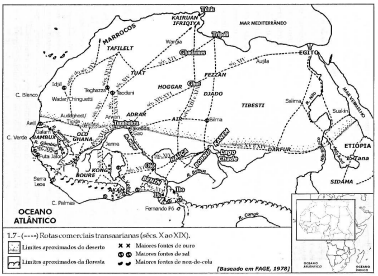
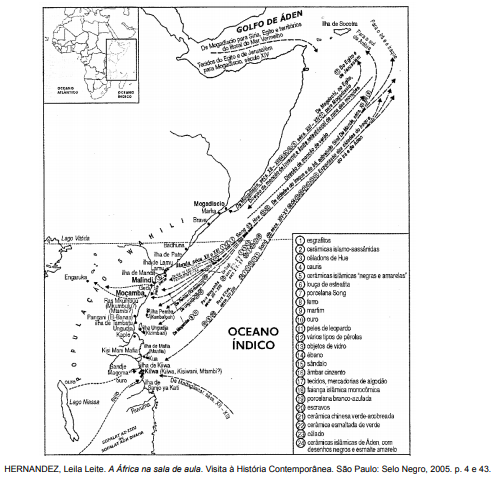
O estudo de mapas, sobre o continente africano, como
esses, apresentados por Leila Leite Hernandez, tem
revelado
Ano: 2018
Banca:
FUNDEP (Gestão de Concursos)
Órgão:
Prefeitura de São João del Rei - MG
Prova:
FUNDEP (Gestão de Concursos) - 2018 - Prefeitura de São João del Rei - MG - Professor de Educação Básica - História |
Q1109940
História
Dados econômicos têm demonstrado que, entre o final
do século XVII e o início do XVIII, houve uma elevação do
fluxo comercial, de forma geral, na América portuguesa,
muitas vezes acompanhado de um verdadeiro processo
inflacionário. O ouro foi um fator explicativo também
para maior importação de africanos escravizados pelo
porto do Rio de Janeiro quando comparados com outros
portos, até mesmo o de Salvador.
A demanda por mão de obra foi um dos fatores desse
aumento, mas é possível também indicar, como causa
do crescimento do tráfico, a
Ano: 2018
Banca:
FUNDEP (Gestão de Concursos)
Órgão:
Prefeitura de São João del Rei - MG
Prova:
FUNDEP (Gestão de Concursos) - 2018 - Prefeitura de São João del Rei - MG - Professor de Educação Básica - História |
Q1109939
Pedagogia
Júnia Sales Pereira (2014, in: MAGALHÃES et al., 2014,
p. 188), ao defender “a obrigatoriedade de abordagem
de temáticas silenciadas nos currículos escolares –
como a história africana, afro-brasileira e indígena e a
educação étnico-racial”, o faz considerando que, entre
outras razões
Ano: 2018
Banca:
FUNDEP (Gestão de Concursos)
Órgão:
Prefeitura de São João del Rei - MG
Prova:
FUNDEP (Gestão de Concursos) - 2018 - Prefeitura de São João del Rei - MG - Professor de Educação Básica - História |
Q1109938
Pedagogia
Analise a citação a seguir.
“É necessário [...] problematizar as ideias e afirmações
de identidades gerais como a mestiçagem no Brasil [...].
Reconhecer, afirmar e respeitar o direito às diferenças é,
pois, questionar o discurso da mestiçagem como
identidade nacional, usado para esconder a história de
índios e negros na História do Brasil.”
SILVA, Edson. O ensino de História Indígena: possibilidades, exigências e desafios com base na Lei 11.645/2008, Revista História hoje, v. 1, n.. 2, p. 219. Disponível em: <https://rhhj anpuh.org/RHHJ/article/view/48/38>. Acesso em: 1 jul. 2018.
De acordo com Edson Silva, o caminho para se garantir o reconhecimento das identidades específicas no Brasil, pensando especificamente nas diversas populações indígenas, a Lei Nº 11.645/2008 é uma boa resposta institucional porque,
SILVA, Edson. O ensino de História Indígena: possibilidades, exigências e desafios com base na Lei 11.645/2008, Revista História hoje, v. 1, n.. 2, p. 219. Disponível em: <https://rhhj anpuh.org/RHHJ/article/view/48/38>. Acesso em: 1 jul. 2018.
De acordo com Edson Silva, o caminho para se garantir o reconhecimento das identidades específicas no Brasil, pensando especificamente nas diversas populações indígenas, a Lei Nº 11.645/2008 é uma boa resposta institucional porque,
Ano: 2018
Banca:
FUNDEP (Gestão de Concursos)
Órgão:
Prefeitura de São João del Rei - MG
Prova:
FUNDEP (Gestão de Concursos) - 2018 - Prefeitura de São João del Rei - MG - Professor de Educação Básica - História |
Q1109937
Pedagogia
Analise o seguinte trecho.
“[...] longe de pretender neutralidade, é clara a intenção
de que no processo de elaboração do conhecimento
histórico haja estímulo à conquista de valores culturais,
políticos, éticos voltados para a transformação social. As
marcas que a escola imprime no aluno jovem e adulto
são, definitivamente, complexas e acentuadas.”
NICODEMOS, Alessandra. Ensino de História na EJA: o legado da educação popular e os desafios docentes na formação do aluno jovem e adulto trabalhador. Disponível em:<http://www.snh2013.anpuh.org/resources/ anais/27/1371350734_ARQUIVO_ANPUH2013- ALESSANDRANICODEMOSOLIVEIRASILVA-TC1- ALTERADO_1_.pdf . P 14> . Acesso em: 13 jun. 2018.
Para Alessandra Nicodemos, considerando o trecho destacado, o professor de História na Educação de Jovens e Adultos (EJA) deve ser autor de sua aula e, nesse trabalho, deve se orientar
NICODEMOS, Alessandra. Ensino de História na EJA: o legado da educação popular e os desafios docentes na formação do aluno jovem e adulto trabalhador. Disponível em:<http://www.snh2013.anpuh.org/resources/ anais/27/1371350734_ARQUIVO_ANPUH2013- ALESSANDRANICODEMOSOLIVEIRASILVA-TC1- ALTERADO_1_.pdf . P 14> . Acesso em: 13 jun. 2018.
Para Alessandra Nicodemos, considerando o trecho destacado, o professor de História na Educação de Jovens e Adultos (EJA) deve ser autor de sua aula e, nesse trabalho, deve se orientar
Ano: 2018
Banca:
FUNDEP (Gestão de Concursos)
Órgão:
Prefeitura de São João del Rei - MG
Prova:
FUNDEP (Gestão de Concursos) - 2018 - Prefeitura de São João del Rei - MG - Professor de Educação Básica - História |
Q1109936
Pedagogia
Analise a citação a seguir.
“A primeira questão posta sobre os jogos digitais e a
temática histórica aos professores diz respeito ao valor
científico dos conteúdos históricos veiculados nesses
suportes. Como os jogos digitais online privilegiam o
desafio, a competição e a colaboração, há uma estrutura
histórica básica presente no jogo, mas que permite ao
jogador desenvolver diversas outras sub-histórias com
base na matriz programada do jogo. [...]”
ARRUDA, Eucídio Pimenta. Aprender História com jogos digitais em rede: possibilidades e desafios para os professores. In MAGALHÃES, Marcelo e outros (orgs.) Ensino de História, usos do passado, memória e mídia. Rio de Janeiro: FGV Editora, 2014. p. 248-249.
Considerando o trecho anterior, que aborda o uso de jogos digitais em aulas de História, é correto afirmar que
ARRUDA, Eucídio Pimenta. Aprender História com jogos digitais em rede: possibilidades e desafios para os professores. In MAGALHÃES, Marcelo e outros (orgs.) Ensino de História, usos do passado, memória e mídia. Rio de Janeiro: FGV Editora, 2014. p. 248-249.
Considerando o trecho anterior, que aborda o uso de jogos digitais em aulas de História, é correto afirmar que
Ano: 2018
Banca:
FUNDEP (Gestão de Concursos)
Órgão:
Prefeitura de São João del Rei - MG
Prova:
FUNDEP (Gestão de Concursos) - 2018 - Prefeitura de São João del Rei - MG - Professor de Educação Básica - História |
Q1109935
Pedagogia
Analise o trecho a seguir. “Professores que ambicionam criar estratégias de
investigação histórica no ensino fundamental e médio
deparam com dificuldades estruturais, a começar pela
indisponibilidade da documentação necessária. [...]
Uma interessante alternativa para contornar essas
contingências é a criação de arquivos simulados ou
arquivos didáticos, como propõe [Ivo] Mattozzi [...].”
CAIMI, Flávia Eloisa. Gerações Homo Zappiens na escola e os novos suportes de informação e a aprendizagem histórica. In MAGALHÃES, Marcelo e outros (Org.) Ensino de história: usos do passado, memória e mídia. Rio de Janeiro, Editora FGV, 2014. p 180.
De acordo com Flávia Eloisa Caimi, para o professor que pretende trabalhar com seus alunos a partir de arquivos, mesmo que simulados, conforme estudos desenvolvidos por Ivo Mattozzi, entre outras estratégias, é necessário
CAIMI, Flávia Eloisa. Gerações Homo Zappiens na escola e os novos suportes de informação e a aprendizagem histórica. In MAGALHÃES, Marcelo e outros (Org.) Ensino de história: usos do passado, memória e mídia. Rio de Janeiro, Editora FGV, 2014. p 180.
De acordo com Flávia Eloisa Caimi, para o professor que pretende trabalhar com seus alunos a partir de arquivos, mesmo que simulados, conforme estudos desenvolvidos por Ivo Mattozzi, entre outras estratégias, é necessário
Ano: 2018
Banca:
FUNDEP (Gestão de Concursos)
Órgão:
Prefeitura de São João del Rei - MG
Prova:
FUNDEP (Gestão de Concursos) - 2018 - Prefeitura de São João del Rei - MG - Professor de Educação Básica - História |
Q1109934
Pedagogia
Analise a citação a seguir.
“[...] as predileções pessoais [...] de manifestações ou
produtos culturais, construídas na cotidianidade, bem
como as construídas durante [a] formação acadêmica,
levam os professores a ampliar um repertório com base
no qual selecionam aqueles que julgam mais adequados
para o uso didático na aula de história. [...] tal síntese
parece se aproximar do que Maurice Tardif denomina de
saber docente, constituído ao longo da trajetória pessoal
do professor e que evidencia que não apenas a formação
universitária informa o professor em seu dia a dia.”
ROCHA, Helenice. A presença do passado na aula de História. In MAGALHÃES, Marcelo e outros (Org.) Ensino de História: usos do passado, memória e mídia. Rio de Janeiro: FGV editora, 2014. p 46.
O saber docente do professor de História, na perspectiva apresentada pelo texto, pode ser exemplificado em uma aula em que ele
ROCHA, Helenice. A presença do passado na aula de História. In MAGALHÃES, Marcelo e outros (Org.) Ensino de História: usos do passado, memória e mídia. Rio de Janeiro: FGV editora, 2014. p 46.
O saber docente do professor de História, na perspectiva apresentada pelo texto, pode ser exemplificado em uma aula em que ele

 Conheça nossos planos