Questões de Concurso
Foram encontradas 1.254 questões
Resolva questões gratuitamente!
Junte-se a mais de 4 milhões de concurseiros!


Is gas and oil drilling mostly computerized?
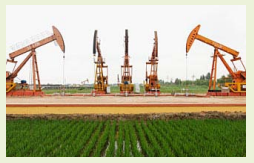
How much do you know about gas and oil drilling?
From locating new reserves to analyzing crude as it's refined, the oil and gas industry utilizes computer technology at every step of the way. Indeed, as proven reserves have dried up and new sources of oil and gas have become harder to find and exploit, computers have taken an increasingly important role in the industry.
That said, humans continue to be an essential part of the process. Though data may be collected and analyzed by a computer, it is a human, ultimately, that interprets the results and makes a decision to drill or move on. Though computers control the speed, force, and depth of a drill, it is a human that monitors and modifies the variables. And, of course, it is a human that makes the dangerous connections between drill pipes as the well pushes deeper.
Indeed, though computers have made drilling for oil and gas a safer and more efficient process, it remains a handson industry.
(adaptedfrom http://science.howstuffworks.com/environmental/energy/gas-oildrilling-computerized.htm)
Is gas and oil drilling mostly computerized?
How much do you know about gas and oil drilling?
From locating new reserves to analyzing crude as it's refined, the oil and gas industry utilizes computer technology at every step of the way. Indeed, as proven reserves have dried up and new sources of oil and gas have become harder to find and exploit, computers have taken an increasingly important role in the industry.
That said, humans continue to be an essential part of the process. Though data may be collected and analyzed by a computer, it is a human, ultimately, that interprets the results and makes a decision to drill or move on. Though computers control the speed, force, and depth of a drill, it is a human that monitors and modifies the variables. And, of course, it is a human that makes the dangerous connections between drill pipes as the well pushes deeper.
Indeed, though computers have made drilling for oil and gas a safer and more efficient process, it remains a handson industry.
(adaptedfrom http://science.howstuffworks.com/environmental/energy/gas-oildrilling-computerized.htm)
Is gas and oil drilling mostly computerized?
How much do you know about gas and oil drilling?
From locating new reserves to analyzing crude as it's refined, the oil and gas industry utilizes computer technology at every step of the way. Indeed, as proven reserves have dried up and new sources of oil and gas have become harder to find and exploit, computers have taken an increasingly important role in the industry.
That said, humans continue to be an essential part of the process. Though data may be collected and analyzed by a computer, it is a human, ultimately, that interprets the results and makes a decision to drill or move on. Though computers control the speed, force, and depth of a drill, it is a human that monitors and modifies the variables. And, of course, it is a human that makes the dangerous connections between drill pipes as the well pushes deeper.
Indeed, though computers have made drilling for oil and gas a safer and more efficient process, it remains a handson industry.
(adaptedfrom http://science.howstuffworks.com/environmental/energy/gas-oildrilling-computerized.htm)
Is gas and oil drilling mostly computerized?
How much do you know about gas and oil drilling?
From locating new reserves to analyzing crude as it's refined, the oil and gas industry utilizes computer technology at every step of the way. Indeed, as proven reserves have dried up and new sources of oil and gas have become harder to find and exploit, computers have taken an increasingly important role in the industry.
That said, humans continue to be an essential part of the process. Though data may be collected and analyzed by a computer, it is a human, ultimately, that interprets the results and makes a decision to drill or move on. Though computers control the speed, force, and depth of a drill, it is a human that monitors and modifies the variables. And, of course, it is a human that makes the dangerous connections between drill pipes as the well pushes deeper.
Indeed, though computers have made drilling for oil and gas a safer and more efficient process, it remains a handson industry.
(adaptedfrom http://science.howstuffworks.com/environmental/energy/gas-oildrilling-computerized.htm)
Is gas and oil drilling mostly computerized?
How much do you know about gas and oil drilling?
From locating new reserves to analyzing crude as it's refined, the oil and gas industry utilizes computer technology at every step of the way. Indeed, as proven reserves have dried up and new sources of oil and gas have become harder to find and exploit, computers have taken an increasingly important role in the industry.
That said, humans continue to be an essential part of the process. Though data may be collected and analyzed by a computer, it is a human, ultimately, that interprets the results and makes a decision to drill or move on. Though computers control the speed, force, and depth of a drill, it is a human that monitors and modifies the variables. And, of course, it is a human that makes the dangerous connections between drill pipes as the well pushes deeper.
Indeed, though computers have made drilling for oil and gas a safer and more efficient process, it remains a handson industry.
(adaptedfrom http://science.howstuffworks.com/environmental/energy/gas-oildrilling-computerized.htm)
Em um transistor de junção bipolar (TJB) sob a configuração seguidor de emissor, o sinal de entrada é aplicado na base, a saída é medida pelo coletor e o emissor é aterrado para o sinal.
Uma importante característica dos dispositivos lógicos CMOS é que eles não dissipam potência estática.
Transistores de efeito de campo de junção (JFET) que estejam operando na região ôhmica apresentam resistência constante.
Um conversor A/D pode ser implementado por meio de redes de resistências ponderadas ou redes R-2R. Uma vez que a quantidade de resistências na rede R-2R é muito menor que na rede de resistências ponderadas, a primeira consome menos área do chip em comparação com a segunda.
Um multiplexador digital proporciona uma maneira de selecionar uma das entradas para ser ligada a uma única saída. Sobre a implementação de tais dispositivos, considere as seguintes afirmativas:
1. Um multiplexador com 16 entradas necessita de 16 bits de seleção.
2. Um multiplexador pode ser implementado em dois estágios: o primeiro consiste em portas inversoras e portas AND entre os bits de seleção e o segundo em uma porta OR entre as saídas do primeiro estágio.
3. Um multiplexador pode ser implementado utilizando-se um conjunto de flip-flops conectados entre si através de portas AND, utilizando como sincronismo os bits de seleção.
4. Um multiplexador digital pode ser utilizado para gerar uma função lógica arbitrária das variáveis selecionadoras.
Assinale a alternativa correta.
 Conheça nossos planos