Questões de Concurso
Comentadas para vestibular
Foram encontradas 1.856 questões
Resolva questões gratuitamente!
Junte-se a mais de 4 milhões de concurseiros!


Q3928843
Biologia
Em relação às etapas da fotossíntese, assinale a opção correta.
Q3928842
Biologia
No que diz respeito aos diferentes biomas do Brasil, assinale a
opção correta.
Q3928841
Biologia
Sabendo que a célula é constituída de diferentes organelas, que
têm papéis distintos no metabolismo celular, assinale a opção em
que é corretamente apresentado o nome de uma organela seguido
da função por ela desempenhada na célula.
Q3928840
Medicina
Assim como a deficiência de biotinidase, a toxoplasmose também
pode ser identificada na triagem do teste do pezinho.
A toxoplasmose é uma doença infecciosa causada por
Q3928835
Biologia
Na natureza, os organismos interagem de muitas maneiras, que
podem ser benéficas para ambos ou para apenas um dos
organismos. Os líquens, por exemplo, resultam de um tipo de
associação entre algas e fungos, em que ambos os organismos se
beneficiam, além de um não sobreviver sem o outro. Esse tipo de
relação interespecífica é denominado
Q3928834
Medicina
A respeito da produção de hormônios no corpo humano, assinale
a opção correta.
Q3928833
Química
Texto associado
Texto para a questão.
Determinada cidade enfrenta o desafio de reduzir sua
dependência de combustíveis fósseis e minimizar os impactos
ambientais causados pelo descarte inadequado de resíduos. Para
isso, iniciou três projetos principais:
1 Produção de etanol a partir da cana-de-açúcar
• Etapas envolvidas: colheita da cana, extração do caldo,
fermentação dos açúcares pela ação de leveduras, destilação
para separação do etanol.
• Objetivo: substituir parte da gasolina utilizada nos transportes.
2 Reciclagem de alumínio proveniente de latas descartadas
• Etapas envolvidas: coleta seletiva, limpeza, fusão do metal
em altas temperaturas, moldagem em novas peças.
• Objetivo: reduzir o consumo de matéria-prima.
3 Tratamento de água para abastecimento da população
• Etapas envolvidas: decantação, filtração, cloração e fluoretação.
• Objetivo: garantir água potável e segura para consumo
humano.
Os métodos de separação de misturas citados no texto
apresentado incluem
Q3928832
Engenharia Ambiental e Sanitária
Texto associado
Texto para a questão.
Determinada cidade enfrenta o desafio de reduzir sua
dependência de combustíveis fósseis e minimizar os impactos
ambientais causados pelo descarte inadequado de resíduos. Para
isso, iniciou três projetos principais:
1 Produção de etanol a partir da cana-de-açúcar
• Etapas envolvidas: colheita da cana, extração do caldo,
fermentação dos açúcares pela ação de leveduras, destilação
para separação do etanol.
• Objetivo: substituir parte da gasolina utilizada nos transportes.
2 Reciclagem de alumínio proveniente de latas descartadas
• Etapas envolvidas: coleta seletiva, limpeza, fusão do metal
em altas temperaturas, moldagem em novas peças.
• Objetivo: reduzir o consumo de matéria-prima.
3 Tratamento de água para abastecimento da população
• Etapas envolvidas: decantação, filtração, cloração e fluoretação.
• Objetivo: garantir água potável e segura para consumo
humano.
A reciclagem do alumínio, uma das estratégias adotadas pela cidade
de que trata o texto apresentado anteriormente, é considerada uma
forma de preservação dos recursos naturais porque
Q3928830
Química
Texto associado
Texto para a questão.
Alguns bombons possuem um recheio líquido, uma
espécie de “li r” u “xar pe” e eu interior. Muitos podem se
perguntar: como isso é possível? Seria esse líquido inserido
dentro do bombom sólido oco? Se sim, como se faria para tapar o
orifício de introdução e evitar que o líquido vaze?
Na verdade, o processo não é bem esse. O recheio é feito
com uma mistura de sacarose e outros ingredientes, formando uma
pasta ou um creme relativamente firme. Antes de se recobrir o
recheio sólido com chocolate, a enzima invertase é adicionada à
mistura. Essa enzima catalisa a hidrólise da sacarose em duas
moléculas menores: glicose e frutose. Após o bombom ser fechado
com a casca de chocolate, a invertase começa a agir lentamente.
Em alguns dias ou semanas, a sacarose se converte em glicose e
frutose, que são mais solúveis em água. Isso transforma o recheio
sólido em um xarope líquido dentro da casca.
Ainda considerando-se as informações do texto anterior, é correto
afirmar que a hidrólise da sacarose, produzindo glicose e frutose,
é uma reação
Q3928828
Química
Texto associado
Texto para a questão.
Alguns bombons possuem um recheio líquido, uma
espécie de “li r” u “xar pe” e eu interior. Muitos podem se
perguntar: como isso é possível? Seria esse líquido inserido
dentro do bombom sólido oco? Se sim, como se faria para tapar o
orifício de introdução e evitar que o líquido vaze?
Na verdade, o processo não é bem esse. O recheio é feito
com uma mistura de sacarose e outros ingredientes, formando uma
pasta ou um creme relativamente firme. Antes de se recobrir o
recheio sólido com chocolate, a enzima invertase é adicionada à
mistura. Essa enzima catalisa a hidrólise da sacarose em duas
moléculas menores: glicose e frutose. Após o bombom ser fechado
com a casca de chocolate, a invertase começa a agir lentamente.
Em alguns dias ou semanas, a sacarose se converte em glicose e
frutose, que são mais solúveis em água. Isso transforma o recheio
sólido em um xarope líquido dentro da casca.
Caso a reação de hidrólise da sacarose, mencionada no texto
apresentado, não fosse catalisada e o sistema já estivesse em
equilíbrio químico, então a adição de mais sacarose à mistura do
recheio
Q3928825
Química
Texto associado

Texto para a questão.
O Codex Ebers, um papiro médico produzido no antigo
Egito, descreve o uso de alho para limpar feridas e tratar doenças.
Hoje, sabe-se que o dissulfeto de dialila
(CH2═CH─CH2─S─S─CH2─CH═CH2; M = 146 g/mol), o
composto volátil responsável pelo odor do alho, é um poderoso
agente antibactericida, mais potente contra febre tifoide,
inclusive, que a própria penicilina.
Em escala industrial, o dissulfeto de dialila é produzido a
partir de dissulfeto de sódio (Na2S2; M = 110 g/mol) e cloreto de
alila (C3H5Cl; M = 76,5 g/mol), a temperaturas entre 40 °C e
60 °C, em uma atmosfera de gás inerte, conforme a reação
mostrada a seguir.
Conforme afirmado no texto apresentado anteriormente, o
composto Na2S2 é denominado dissulfeto de sódio. É correto
afirmar que esse composto
Q3928824
Química
Texto associado
Texto para a questão.
O Codex Ebers, um papiro médico produzido no antigo
Egito, descreve o uso de alho para limpar feridas e tratar doenças.
Hoje, sabe-se que o dissulfeto de dialila
(CH2═CH─CH2─S─S─CH2─CH═CH2; M = 146 g/mol), o
composto volátil responsável pelo odor do alho, é um poderoso
agente antibactericida, mais potente contra febre tifoide,
inclusive, que a própria penicilina.
Em escala industrial, o dissulfeto de dialila é produzido a
partir de dissulfeto de sódio (Na2S2; M = 110 g/mol) e cloreto de
alila (C3H5Cl; M = 76,5 g/mol), a temperaturas entre 40 °C e
60 °C, em uma atmosfera de gás inerte, conforme a reação
mostrada a seguir.
Considerando-se que a reação entre dissulfeto de sódio e cloreto
de alila, mencionada no texto precedente, tenha um rendimento
de 88%, é correto afirmar que 1 kg de dissulfeto de sódio
produzirá uma quantidade de dissulfeto de dialila
Q3928807
Física
Um corpo, inicialmente em repouso, está no topo de um
plano inclinado, de altura h. O ângulo entre o plano e a direção
horizontal é dado por θ, e a aceleração da gravidade é
representada por g, conforme ilustrado na figura a seguir.
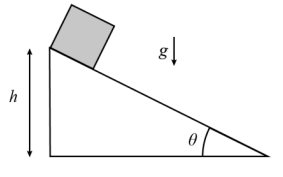
Sabe-se que há atrito entre o corpo e a superfície do plano inclinado e que o coeficiente de atrito estático é o dobro do coeficiente de atrito cinético e tem valor adimensional igual a 1. Sabe-se, também, que o valor de θ é o menor valor possível para que o corpo não permaneça em repouso. Sobre o corpo atua a força peso.
A partir dessas informações, assinale a opção que corresponde ao tempo que o corpo demorará para descer do topo até a base do plano inclinado.
Q3928806
Inglês
Texto associado
Text for question.
The elevation of scientific discourse to a major component
in the project of modernity and the Eurocentrism inherent in the
Western scientific enterprise have aided both the development of
racial hierarchies and the creation of the long-enduring myth of
science as an impartial, pure and value-free endeavour, superior
to other peoples’ modes of thinking. It is also to be argued that it
is one thing to ‘discover’, identify, categorise and classify plants,
beetles as well as peoples, but quite another to transform such
categories and classifications into hierarchies that suggest
stratification in terms of social and moral inferiority. The process
of categorisation would then not in itself be normative, but rather
evaluative attributions would be based upon moral and social
preferences, subjective value judgements and the striving for
political power.
The conundrum of the conceptual status and the
socio-political consequences of the Enlightenment has not been
resolved satisfactorily. Yet there now exists agreement on some
parameters. The consensus is that scientific racism, racial
medicine and colonial rule were for a time closely linked,
variously reinforced and justified each other. Claims to racial
superiority and Western scientific and medical hegemony are
seen to have emerged alongside each other in the wake of the
Enlightenment, culminating eventually not only in scientifically
based racism in the nineteenth century and racial medicine in the
twentieth century, but also in the perceived enhancement and
legitimisation of colonial expansion by reference to medical and
scientific progress. The interrelatedness of race, science and
medicine, and its extension to the colonial realm during the
nineteenth century, in particular, therefore constitutes one major
focus for work and research.
Waltraud Ernst. Historical and contemporary perspectives on race, science and medicine.
In: Waltraud Ernst and Bernard Harris (eds.) Race, Science and Medicine, 1700–1960.
London: Routledge, 1999.
In Waltraud Ernst’s text, the word “conundrum”, used in the
beginning of the second paragraph, could be correctly replaced,
without changing the overall meaning of the sentence, with
Q3928805
Inglês
Texto associado
Text for question.
The elevation of scientific discourse to a major component
in the project of modernity and the Eurocentrism inherent in the
Western scientific enterprise have aided both the development of
racial hierarchies and the creation of the long-enduring myth of
science as an impartial, pure and value-free endeavour, superior
to other peoples’ modes of thinking. It is also to be argued that it
is one thing to ‘discover’, identify, categorise and classify plants,
beetles as well as peoples, but quite another to transform such
categories and classifications into hierarchies that suggest
stratification in terms of social and moral inferiority. The process
of categorisation would then not in itself be normative, but rather
evaluative attributions would be based upon moral and social
preferences, subjective value judgements and the striving for
political power.
The conundrum of the conceptual status and the
socio-political consequences of the Enlightenment has not been
resolved satisfactorily. Yet there now exists agreement on some
parameters. The consensus is that scientific racism, racial
medicine and colonial rule were for a time closely linked,
variously reinforced and justified each other. Claims to racial
superiority and Western scientific and medical hegemony are
seen to have emerged alongside each other in the wake of the
Enlightenment, culminating eventually not only in scientifically
based racism in the nineteenth century and racial medicine in the
twentieth century, but also in the perceived enhancement and
legitimisation of colonial expansion by reference to medical and
scientific progress. The interrelatedness of race, science and
medicine, and its extension to the colonial realm during the
nineteenth century, in particular, therefore constitutes one major
focus for work and research.
Waltraud Ernst. Historical and contemporary perspectives on race, science and medicine.
In: Waltraud Ernst and Bernard Harris (eds.) Race, Science and Medicine, 1700–1960.
London: Routledge, 1999.
Waltraud Ernst’s text leads to the conclusion that, for him,
Q3928804
Inglês
Texto associado
Text for question.
The elevation of scientific discourse to a major component
in the project of modernity and the Eurocentrism inherent in the
Western scientific enterprise have aided both the development of
racial hierarchies and the creation of the long-enduring myth of
science as an impartial, pure and value-free endeavour, superior
to other peoples’ modes of thinking. It is also to be argued that it
is one thing to ‘discover’, identify, categorise and classify plants,
beetles as well as peoples, but quite another to transform such
categories and classifications into hierarchies that suggest
stratification in terms of social and moral inferiority. The process
of categorisation would then not in itself be normative, but rather
evaluative attributions would be based upon moral and social
preferences, subjective value judgements and the striving for
political power.
The conundrum of the conceptual status and the
socio-political consequences of the Enlightenment has not been
resolved satisfactorily. Yet there now exists agreement on some
parameters. The consensus is that scientific racism, racial
medicine and colonial rule were for a time closely linked,
variously reinforced and justified each other. Claims to racial
superiority and Western scientific and medical hegemony are
seen to have emerged alongside each other in the wake of the
Enlightenment, culminating eventually not only in scientifically
based racism in the nineteenth century and racial medicine in the
twentieth century, but also in the perceived enhancement and
legitimisation of colonial expansion by reference to medical and
scientific progress. The interrelatedness of race, science and
medicine, and its extension to the colonial realm during the
nineteenth century, in particular, therefore constitutes one major
focus for work and research.
Waltraud Ernst. Historical and contemporary perspectives on race, science and medicine.
In: Waltraud Ernst and Bernard Harris (eds.) Race, Science and Medicine, 1700–1960.
London: Routledge, 1999.
It can be inferred from Waltraud Ernst’s text that scientifically
based racism and colonial expansion
Q3928803
Inglês
Texto associado
Text for question.
Space medicine is an emerging field that blends
emergency care, physiology, psychology and toxicology to help
astronauts manage the health challenges of space flight. Its key
focus is understanding how the body responds in the absence of
gravity. In space, astronauts live in microgravity, a state of near
weightlessness caused by continuous free fall while orbiting the
planet.
Although gravity is still present, its effects are greatly
diminished. Fluids move upward, muscles weaken and bones lose
mass. These changes can disrupt normal body function in ways
that are still being studied.
“Microgravity is not an environment we evolved for,”
says Dr. Lisa McNamee, who works with space medicine. “It acts
like a stress test on the body, and that tells us things about human
physiology that we’d never discover in a lab,” she adds.
Other risks include radiation, pressure changes, disrupted
sleep cycles, lunar dust and g-forces. These forces, caused by
changes in acceleration, can place added strain on the body.
Niamh Shaw. Medicine’s final frontier: How space is changing what we know about health.
Internet: <www.irishtimes.com> (adapted).
With the sentence “Fluids move upward, muscles weaken and
bones lose mass” (second sentence of the second paragraph),
Niamh Shaw mentions bodily changes that
Q3928802
Inglês
Texto associado
Text for question.
Space medicine is an emerging field that blends
emergency care, physiology, psychology and toxicology to help
astronauts manage the health challenges of space flight. Its key
focus is understanding how the body responds in the absence of
gravity. In space, astronauts live in microgravity, a state of near
weightlessness caused by continuous free fall while orbiting the
planet.
Although gravity is still present, its effects are greatly
diminished. Fluids move upward, muscles weaken and bones lose
mass. These changes can disrupt normal body function in ways
that are still being studied.
“Microgravity is not an environment we evolved for,”
says Dr. Lisa McNamee, who works with space medicine. “It acts
like a stress test on the body, and that tells us things about human
physiology that we’d never discover in a lab,” she adds.
Other risks include radiation, pressure changes, disrupted
sleep cycles, lunar dust and g-forces. These forces, caused by
changes in acceleration, can place added strain on the body.
Niamh Shaw. Medicine’s final frontier: How space is changing what we know about health.
Internet: <www.irishtimes.com> (adapted).
Niamh Shaw’s main purpose with her text is to
Q3928800
Estatuto da Pessoa com Deficiência - Lei nº 13.146 de 2015
Tecnologia assistiva (ou ajuda técnica), conforme definida
na Lei Brasileira de Inclusão, são produtos, equipamentos,
dispositivos, recursos, metodologias, estratégias, práticas e
serviços que objetivem promover a funcionalidade, relacionada à
atividade e à participação da pessoa com deficiência ou com
mobilidade reduzida, visando à autonomia, independência,
qualidade de vida e inclusão social.
Brasil. Ministério dos Direitos Humanos e da Cidadania. Manual de acessibilidade em eventos presenciais. 1.ª ed. Secretaria Nacional dos Direitos da Pessoa com Deficiência, 2025. Internet: <gov.br>.
Considerando as informações apresentadas, assinale a opção correta acerca do uso de tecnologia assistiva em eventos e produções artísticas.
Q3928799
Literatura
Com relação ao gênero literário dramático e sua produção
artística como espetáculo, assinale a opção correta.

 Conheça nossos planos