Questões de Concurso
Comentadas para prefeitura de jacaraú - pb
Foram encontradas 232 questões
Resolva questões gratuitamente!
Junte-se a mais de 4 milhões de concurseiros!


Em divisão territorial datada de 2003, o município de Jacaraú é constituído dos distritos de:
I. Jacaraú
II. Timbó
III. Retiro
Está(ão) CORRETA(S):
MONTE CASTELO (RENATO RUSSO)
Ainda que eu falasse a língua dos homens
E falasse a língua dos anjos
Sem amor eu nada seria
É só o amor, é só o amor
Que conhece o que é verdade
O amor é bom, não quer o mal
Não sente inveja ou se envaidece
O amor é o fogo que arde sem se ver
É ferida que dói e não se sente
É um contentamento descontente
É dor que desatina sem doer
Ainda que eu falasse a língua dos homens
E falasse a língua dos anjos
Sem amor eu nada seria
É um não querer mais que bem querer
É solitário andar por entre a gente
É um não contentar-se de contente
É cuidar que se ganha em se perder
É um estar-se preso por vontade
É servir a quem vence, o vencedor
É um ter com quem nos mata a lealdade
Tão contrário a si é o mesmo amor
Estou acordado e todos dormem
Todos dormem, todos dormem
Agora vejo em parte
Mas então veremos face a face
É só o amor, é só o amor
Que conhece o que é verdade
Ainda que eu falasse a língua dos homens
E falasse a língua dos anjos Sem amor eu nada seria
Disponível em: https://www.culturagenial.com/poema
Ser Nordestino (Bráulio Bessa)
Sou o gibão do vaqueiro, sou cuscuz, sou rapadura Sou vida difícil e dura Sou nordeste brasileiro Sou cantador violeiro, sou alegria ao chover Sou doutor sem saber ler, sou rico sem ser granfino Quanto mais sou nordestino, mais tenho orgulho de ser Da minha cabeça chata, do meu sotaque arrastado Do nosso solo rachado, dessa gente maltratada Quase sempre injustiçada, acostumada a sofrer Mas, mesmo com padecer sou feliz desde menino Quanto mais sou nordestino mais orgulho tenho de ser [...] (In: culturagenial.com.cordel.nordestino/poemas/).
I- a sala de aula não adote unicamente as linguagens formais e literárias, mas, sim, ofereça uma gama de linguagens que estão fora dos muros escolares. II- o discurso professoral deverá renunciar à sua natureza dogmática, representada pela indiscutível verdade e que está escrita no livro-texto. III- a escola dê respostas às exigências de nossa sociedade atual, moderna e democrática, sendo capaz de realizar uma revolução interna e uma mudança radical que a converta em uma escola para todos.
Dentre as proposições acima, é CORRETO o que se afirma em:
A professora mandou o Joãozinho colocar uma caixa vazia na lixeira, mas ele a botou em cima. Ela reclamou: - Por que não colocou a caixa dentro da lixeira, Joãozinho? - Porque não cabeu, professora. - Não coube, ela retrucou. - Agora você vai escrever 100 vezes nesta folha “não coube”, sentenciou a professora. Passou algum tempo, Joãozinho estava parado olhando para o caderno. - Escreveu cem vezes as palavras que lhe mandei? - Escrevi só 99, professora. Respondeu. - Por quê? Quis saber ela. -Porque não cabeu tudo, professora! (In: estacaoda palavra.blogspot.com/2011/07/piadas-gramaticais).
Analise as proposições abaixo:
I- O texto promove uma reflexão acerca da função reguladora da gramática, sem considerar o léxico que expressa, magistralmente, a função da língua que confere às pessoas identidade. II- A piada revela o modelo de exercício, tradicionalmente utilizado nas salas de aula, como forma de avaliação punitiva, destituída de qualquer valor interacional. III- O texto mostra uma prática de avaliação relevante, exercitando, por meio da repetição, aspectos importantes do processo de apreensão da escrita.
A alternativa que responde CORRETAMENTE é apenas:
Da leitura da charge a seguir,
 -In: google.com/search?=charges+sobre linguaportuguesa.
 é CORRETO afirmar que
I- as imagens aliadas ao texto verbal sinalizam o receio da mãe, em relação à violência na escola. II- a construção discursiva do texto multimodal explicita uma crítica em relação ao valor e às condições em que se encontra a escola atualmente. III- a violência na escola afeta apenas o aluno, sendo o professor preservado, em razão de sua imagem como profissional da educação.
A alternativa que responde CORRETAMENTE é apenas:
Nessa perspectiva, é CORRETO afirmar:
( ) o produtor precisa reconhecer a estrutura formal e composicional das práticas comunicativas configuradas em textos, considerando elementos que os compõem como conteúdo, estilo, função e suporte de veiculação. ( ) a escrita é um trabalho no qual o sujeito tem algo a dizer e o faz sempre em relação a um interlocutor/leitor, com um certo propósito, preservando os princípios sociointeracionistas da linguagem. ( ) um texto impecável é aquele cuja escrita revela perfeição no domínio das regras gramaticais.
A sequência CORRETA de preenchimento dos parênteses é:
Dessa forma, é CORRETO afirmar que a leitura
I- contribui para o fortalecimento do regime de colaboração entre as três esferas de governo e como balizadora da qualidade da educação. II- se contrapõe aos conceitos definidos pela LDB, em relação ao desenvolvimento da questão curricular no Brasil. III- propõe a superação da fragmentação das políticas educacionais, garantindo o direito dos alunos a aprender e, contribuindo para um ensino de língua relevante e eficiente para a conquista do desenvolvimento pleno da cidadania.
Feita a análise das proposições acima, é CORRETO o que se afirma apenas em:
Nesse sentido, analise as proposições abaixo e assinale (V) para verdadeiro e (F) para falso.
( ) As escolas precisam passar por profundas transformações em suas práticas e culturas, principalmente nas metodologias do ensino de língua, explorando as implicações sociais das produções científico-tecnológicas. ( ) Na complexa tarefa de aprimoramento da qualidade do trabalho escolar, os professores assumem papel primordial, contribuindo com seus saberes, seus valores e suas experiências. ( ) No âmbito do processo educativo, é necessário, apenas, que o professor tenha domínio efetivo dos conteúdos, para contribuir no processo formativo dos alunos.
A sequência CORRETA de preenchimento dos parênteses é:
TEXT II
Another Brick In The Wall (Pink Floyd)
We don't need no education
We don't need no thought control
No dark sarcasm in the classroom
Teachers, leave them kids alone
Hey! Teacher! Leave them kids alone!
All in all, it's just another brick in the wall
All in all, you're just another brick in the wall
(Adapted from: https://www.letras.mus.br/pink-floyd/64541/. Accessed on October 31 , 2019).
TEXT II
Another Brick In The Wall (Pink Floyd)
We don't need no education
We don't need no thought control
No dark sarcasm in the classroom
Teachers, leave them kids alone
Hey! Teacher! Leave them kids alone!
All in all, it's just another brick in the wall
All in all, you're just another brick in the wall
(Adapted from: https://www.letras.mus.br/pink-floyd/64541/. Accessed on October 31 , 2019).
TEXT I-
ENEM and the Language Policy forEnglish in the Brazilian Context
Andrea Barros Carvalho de Oliveira
1.INTRODUCTION
In the present article, I report the results of a doctoral research that focused on the language policy for English in Brazil, considering specifically the role of Exame Nacional do Ensino Médio (hereinafter ENEM) in this policy. Thus, taking into account the sociopolitical aspects of the teaching processes, learning, and use of English as a foreign language, we sought to identify the possible impact of ENEM on the status of English language as a school subject.
ENEM was initially conceived as a final exam to evaluate students at the end of basic education. However, it has been modified over the last few years to work as an entrance examination for public and private universities. In addition, the use of this exam in several governmental programs aimed at higher education access was preponderant to make it a high stakes exam in the educational scenario.
According to the literature on language examination exams, especially those considered to be high stakes, are seen as an intrinsically political activity (ALDERSON; BANERJEE, 2001). These exams can be used as educational policy tools as well as to promote a specific language related to local language policy objectives.
The theoretical conception of Language Policy (hereinafter LP) adopted in this investigation refers to Shohamy (2006). This author postulates that, although there is an official LP established in legislation and official documents, it is also necessary to consider the existence of a “real” LP, or “de facto” LP, which is put into practice through mechanisms, resources such as traffic signs, rules and laws related to official bodies, language exams, among others. Besides mechanisms, the beliefs or representations about the language that are shared in the community ought to be considered as well. The importance of mechanisms is that they reveal the true aims of LPas established by the government for a specific language, which are not always explicit in Brazilian law.
The research, the results of which are presented in this article, covered the three components of Shohamy’s theoretical model, namely: legislation, mechanisms (in this case, an exam, ENEM), and representations or beliefs about language. To obtain a sample of representations about English language, interviews were conducted with the students from an ENEM preparatory course for university entrance, with two teachers of English and two coordinators from public schools.
In the present article, I begin with a review of the expanded conception of LPelaborated by Shohamy, as it is the theoretical basis of this research. Second, I analyze some documents and laws regarding English teaching in Brazil. In addition to these documents, the English questions of ENEM (2016) were taken in consideration. Finally, I present an overview of the representations about English language that emerged from the interviews which constituted the empirical data of my doctoral thesis.
ALDERSON, J. C; BANERJEE, J. Language Testing and Assessment. Language Testing, [S.l.], n. 34, 2001, p. 213-236.
SHOHAMY, E. Language Policy: Hidden Agendas and New Approaches. London; New York: Routledge, 2006. (Adapted from: OLIVEIRA, A.B.C. ENEM and the Language Policy for English in the Brazilian Context. In.: Revista Brasileira de Linguística Aplicada. vol.19 no.2 th Belo Horizonte Apr./June 2019 Available at: http://www.scielo.br/scielo.php?script=sci_arttext&pid=S1984-63982019000200361 Accessed on October 20 , 2019)
TEXT I-
ENEM and the Language Policy forEnglish in the Brazilian Context
Andrea Barros Carvalho de Oliveira
1.INTRODUCTION
In the present article, I report the results of a doctoral research that focused on the language policy for English in Brazil, considering specifically the role of Exame Nacional do Ensino Médio (hereinafter ENEM) in this policy. Thus, taking into account the sociopolitical aspects of the teaching processes, learning, and use of English as a foreign language, we sought to identify the possible impact of ENEM on the status of English language as a school subject.
ENEM was initially conceived as a final exam to evaluate students at the end of basic education. However, it has been modified over the last few years to work as an entrance examination for public and private universities. In addition, the use of this exam in several governmental programs aimed at higher education access was preponderant to make it a high stakes exam in the educational scenario.
According to the literature on language examination exams, especially those considered to be high stakes, are seen as an intrinsically political activity (ALDERSON; BANERJEE, 2001). These exams can be used as educational policy tools as well as to promote a specific language related to local language policy objectives.
The theoretical conception of Language Policy (hereinafter LP) adopted in this investigation refers to Shohamy (2006). This author postulates that, although there is an official LP established in legislation and official documents, it is also necessary to consider the existence of a “real” LP, or “de facto” LP, which is put into practice through mechanisms, resources such as traffic signs, rules and laws related to official bodies, language exams, among others. Besides mechanisms, the beliefs or representations about the language that are shared in the community ought to be considered as well. The importance of mechanisms is that they reveal the true aims of LPas established by the government for a specific language, which are not always explicit in Brazilian law.
The research, the results of which are presented in this article, covered the three components of Shohamy’s theoretical model, namely: legislation, mechanisms (in this case, an exam, ENEM), and representations or beliefs about language. To obtain a sample of representations about English language, interviews were conducted with the students from an ENEM preparatory course for university entrance, with two teachers of English and two coordinators from public schools.
In the present article, I begin with a review of the expanded conception of LPelaborated by Shohamy, as it is the theoretical basis of this research. Second, I analyze some documents and laws regarding English teaching in Brazil. In addition to these documents, the English questions of ENEM (2016) were taken in consideration. Finally, I present an overview of the representations about English language that emerged from the interviews which constituted the empirical data of my doctoral thesis.
ALDERSON, J. C; BANERJEE, J. Language Testing and Assessment. Language Testing, [S.l.], n. 34, 2001, p. 213-236.
SHOHAMY, E. Language Policy: Hidden Agendas and New Approaches. London; New York: Routledge, 2006. (Adapted from: OLIVEIRA, A.B.C. ENEM and the Language Policy for English in the Brazilian Context. In.: Revista Brasileira de Linguística Aplicada. vol.19 no.2 th Belo Horizonte Apr./June 2019 Available at: http://www.scielo.br/scielo.php?script=sci_arttext&pid=S1984-63982019000200361 Accessed on October 20 , 2019)
TEXT I-
ENEM and the Language Policy forEnglish in the Brazilian Context
Andrea Barros Carvalho de Oliveira
1.INTRODUCTION
In the present article, I report the results of a doctoral research that focused on the language policy for English in Brazil, considering specifically the role of Exame Nacional do Ensino Médio (hereinafter ENEM) in this policy. Thus, taking into account the sociopolitical aspects of the teaching processes, learning, and use of English as a foreign language, we sought to identify the possible impact of ENEM on the status of English language as a school subject.
ENEM was initially conceived as a final exam to evaluate students at the end of basic education. However, it has been modified over the last few years to work as an entrance examination for public and private universities. In addition, the use of this exam in several governmental programs aimed at higher education access was preponderant to make it a high stakes exam in the educational scenario.
According to the literature on language examination exams, especially those considered to be high stakes, are seen as an intrinsically political activity (ALDERSON; BANERJEE, 2001). These exams can be used as educational policy tools as well as to promote a specific language related to local language policy objectives.
The theoretical conception of Language Policy (hereinafter LP) adopted in this investigation refers to Shohamy (2006). This author postulates that, although there is an official LP established in legislation and official documents, it is also necessary to consider the existence of a “real” LP, or “de facto” LP, which is put into practice through mechanisms, resources such as traffic signs, rules and laws related to official bodies, language exams, among others. Besides mechanisms, the beliefs or representations about the language that are shared in the community ought to be considered as well. The importance of mechanisms is that they reveal the true aims of LPas established by the government for a specific language, which are not always explicit in Brazilian law.
The research, the results of which are presented in this article, covered the three components of Shohamy’s theoretical model, namely: legislation, mechanisms (in this case, an exam, ENEM), and representations or beliefs about language. To obtain a sample of representations about English language, interviews were conducted with the students from an ENEM preparatory course for university entrance, with two teachers of English and two coordinators from public schools.
In the present article, I begin with a review of the expanded conception of LPelaborated by Shohamy, as it is the theoretical basis of this research. Second, I analyze some documents and laws regarding English teaching in Brazil. In addition to these documents, the English questions of ENEM (2016) were taken in consideration. Finally, I present an overview of the representations about English language that emerged from the interviews which constituted the empirical data of my doctoral thesis.
ALDERSON, J. C; BANERJEE, J. Language Testing and Assessment. Language Testing, [S.l.], n. 34, 2001, p. 213-236.
SHOHAMY, E. Language Policy: Hidden Agendas and New Approaches. London; New York: Routledge, 2006. (Adapted from: OLIVEIRA, A.B.C. ENEM and the Language Policy for English in the Brazilian Context. In.: Revista Brasileira de Linguística Aplicada. vol.19 no.2 th Belo Horizonte Apr./June 2019 Available at: http://www.scielo.br/scielo.php?script=sci_arttext&pid=S1984-63982019000200361 Accessed on October 20 , 2019)
TEXT I-
ENEM and the Language Policy forEnglish in the Brazilian Context
Andrea Barros Carvalho de Oliveira
1.INTRODUCTION
In the present article, I report the results of a doctoral research that focused on the language policy for English in Brazil, considering specifically the role of Exame Nacional do Ensino Médio (hereinafter ENEM) in this policy. Thus, taking into account the sociopolitical aspects of the teaching processes, learning, and use of English as a foreign language, we sought to identify the possible impact of ENEM on the status of English language as a school subject.
ENEM was initially conceived as a final exam to evaluate students at the end of basic education. However, it has been modified over the last few years to work as an entrance examination for public and private universities. In addition, the use of this exam in several governmental programs aimed at higher education access was preponderant to make it a high stakes exam in the educational scenario.
According to the literature on language examination exams, especially those considered to be high stakes, are seen as an intrinsically political activity (ALDERSON; BANERJEE, 2001). These exams can be used as educational policy tools as well as to promote a specific language related to local language policy objectives.
The theoretical conception of Language Policy (hereinafter LP) adopted in this investigation refers to Shohamy (2006). This author postulates that, although there is an official LP established in legislation and official documents, it is also necessary to consider the existence of a “real” LP, or “de facto” LP, which is put into practice through mechanisms, resources such as traffic signs, rules and laws related to official bodies, language exams, among others. Besides mechanisms, the beliefs or representations about the language that are shared in the community ought to be considered as well. The importance of mechanisms is that they reveal the true aims of LPas established by the government for a specific language, which are not always explicit in Brazilian law.
The research, the results of which are presented in this article, covered the three components of Shohamy’s theoretical model, namely: legislation, mechanisms (in this case, an exam, ENEM), and representations or beliefs about language. To obtain a sample of representations about English language, interviews were conducted with the students from an ENEM preparatory course for university entrance, with two teachers of English and two coordinators from public schools.
In the present article, I begin with a review of the expanded conception of LPelaborated by Shohamy, as it is the theoretical basis of this research. Second, I analyze some documents and laws regarding English teaching in Brazil. In addition to these documents, the English questions of ENEM (2016) were taken in consideration. Finally, I present an overview of the representations about English language that emerged from the interviews which constituted the empirical data of my doctoral thesis.
ALDERSON, J. C; BANERJEE, J. Language Testing and Assessment. Language Testing, [S.l.], n. 34, 2001, p. 213-236.
SHOHAMY, E. Language Policy: Hidden Agendas and New Approaches. London; New York: Routledge, 2006. (Adapted from: OLIVEIRA, A.B.C. ENEM and the Language Policy for English in the Brazilian Context. In.: Revista Brasileira de Linguística Aplicada. vol.19 no.2 th Belo Horizonte Apr./June 2019 Available at: http://www.scielo.br/scielo.php?script=sci_arttext&pid=S1984-63982019000200361 Accessed on October 20 , 2019)
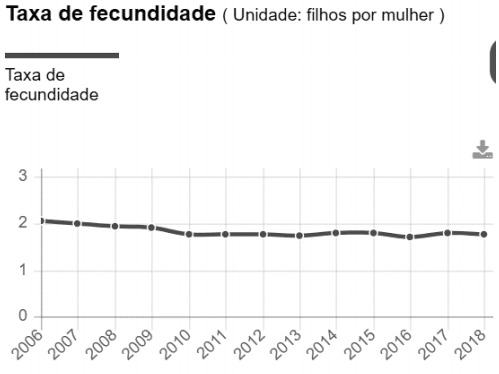 Fonte: IBGE. Acesso: https://cidades.ibge.gov.br/brasil/panorama
 Feita a análise do quadro, indique a alternativa que apresenta a CORRETA avaliação.
( ) Investimentos em pesquisas fizeram com que o Governo Federal anunciasse, em 2007, a descoberta do Pré-sal, que é uma camada constituída por rochas que se depositaram no assoalho submarino antes da formação da espessa camada de sal, e sua extensão vai do norte de Santa Catarina ao sul do Espírito Santo. ( ) A Petrobrás é uma empresa totalmente estatal que usa o slogan “O petróleo é nosso!” para afirmar a soberania nacional na produção de petróleo e gás. ( ) A Organização dos Países Exportadores de Petróleo-OPEP nasceu para defender os interesses dos países exportadores em suas relações com as corporações estrangeiras e com os países consumidores. Em 2008, o Brasil foi convidado para se associar a OPEP, tornando- se membro da organização. ( ) O objetivo da criação da Petrobrás foi regular o funcionamento de todo o setor petrolífero, incluindo as concessões e explorações. No início do século XXI, o governo brasileiro de viés neoliberal flexibilizou o monopólio da empresa, permitindo a participação de empesas internacionais em todos os campos de atuação.
A sequência CORRETA de preenchimento dos parêntese é:
 Conheça nossos planos