Selecionar segmento
Estude com questões de diferentes segmentos
Atenção: Isso limpará todos os campos já preenchidos no filtro!
Foram encontradas 9.816 questões
Resolva questões gratuitamente!
Junte-se a mais de 4 milhões de concurseiros!


Ano: 2014
Banca:
FUMARC
Órgão:
AL-MG
Prova:
FUMARC - 2014 - AL-MG - Analista de Sistemas - Desenvolvimento |
Q383689
Banco de Dados
Texto associado
Considere o diagrama para o esquema de banco de dados relacional a seguir:

Escolha a sentença SQL que MELHOR responda à consulta “Excluir os parlamentares que estão vin- culados ao partido de nome ‘Partido Um’”:
Ano: 2014
Banca:
FUMARC
Órgão:
AL-MG
Prova:
FUMARC - 2014 - AL-MG - Analista de Sistemas - Desenvolvimento |
Q383688
Banco de Dados
Texto associado
Considere o diagrama para o esquema de banco de dados relacional a seguir:
Em relação ao esquema de banco de dados relacional, analise as seguintes afirmativas.
I. A chave primária da relação MEMBRO é “parlamentar”.
II. O atributo “comissao” da relação MEMBRO é uma chave estrangeira.
III. O atributo “partido” da relação PARLAMENTAR é uma chave estrangeira.
Está CORRETO apenas do que afirma em:
I. A chave primária da relação MEMBRO é “parlamentar”.
II. O atributo “comissao” da relação MEMBRO é uma chave estrangeira.
III. O atributo “partido” da relação PARLAMENTAR é uma chave estrangeira.
Está CORRETO apenas do que afirma em:
Ano: 2014
Banca:
FUMARC
Órgão:
AL-MG
Prova:
FUMARC - 2014 - AL-MG - Analista de Sistemas - Desenvolvimento |
Q383687
Programação
Analise as seguintes afirmativas sobre o uso de AJAX e JSON:
I. Aplicações Web com AJAX permitem a realização de requisições assíncronas ao servidor, enquanto um usuário continua interagindo com a aplicação no lado cliente.
II. JSON (JavaScript Object Notation) é um modo simples de representar objetos JavaScript como XML.
III. A propriedade “onreadystatechange” e o método “open” estão disponíveis no objeto XMLHttpRequest usado em aplicações AJAX.
Estão CORRETAS as afirmativas:
I. Aplicações Web com AJAX permitem a realização de requisições assíncronas ao servidor, enquanto um usuário continua interagindo com a aplicação no lado cliente.
II. JSON (JavaScript Object Notation) é um modo simples de representar objetos JavaScript como XML.
III. A propriedade “onreadystatechange” e o método “open” estão disponíveis no objeto XMLHttpRequest usado em aplicações AJAX.
Estão CORRETAS as afirmativas:
Ano: 2014
Banca:
FUMARC
Órgão:
AL-MG
Prova:
FUMARC - 2014 - AL-MG - Analista de Sistemas - Desenvolvimento |
Q383683
Algoritmos e Estrutura de Dados
Analise as seguintes afirmativas sobre a análise de complexidade das operações possíveis em estruturas de dados do tipo Pilha:
I. A operação de inserção de um elemento na pilha precisa reorganizar a estrutura de dados, podendo gastar um tempo de execução de O(n).
II. A operação de retirada de um elemento da pilha é uma operação de tempo constante O(1).
III. Na operação de consultar toda a pilha, todos os elementos são percorridos, gastando-se um tempo de execução de O(n).
Estão CORRETAS as afirmativas:
I. A operação de inserção de um elemento na pilha precisa reorganizar a estrutura de dados, podendo gastar um tempo de execução de O(n).
II. A operação de retirada de um elemento da pilha é uma operação de tempo constante O(1).
III. Na operação de consultar toda a pilha, todos os elementos são percorridos, gastando-se um tempo de execução de O(n).
Estão CORRETAS as afirmativas:
Ano: 2014
Banca:
FUMARC
Órgão:
AL-MG
Prova:
FUMARC - 2014 - AL-MG - Analista de Sistemas - Desenvolvimento |
Q383682
Algoritmos e Estrutura de Dados
Considere a figura a seguir representando uma estrutura de dados:
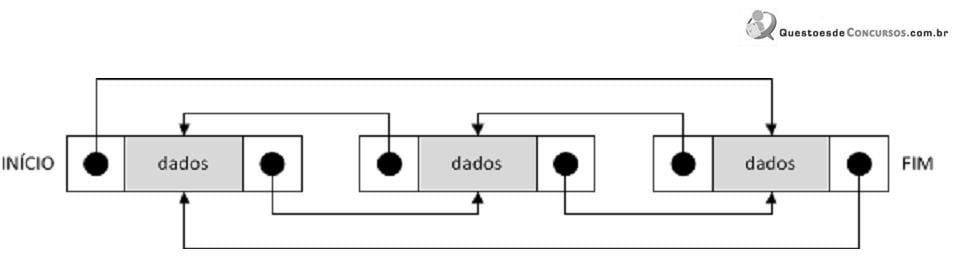
São características da estrutura de dados representada, EXCETO:
São características da estrutura de dados representada, EXCETO:
Ano: 2014
Banca:
FUMARC
Órgão:
AL-MG
Prova:
FUMARC - 2014 - AL-MG - Analista de Sistemas - Desenvolvimento |
Q383681
Algoritmos e Estrutura de Dados
Em relação aos comandos em pseudocódigo correspondentes às estruturas de decisão e repetição dos algoritmos, correlacione as colunas a seguir:
Comando (pseudocódigo) Estrutura de decisão/repetição
I. Se...então ( ) Estrutura de repetição com teste no final
II. Escolha...Caso ( ) Estrutura de seleção simples
III. Repita...Até ( ) Estrutura de repetição com variável de controle
IV. Para...Até...Faça ( ) Estrutura de seleção de múltipla escolha
A sequência CORRETA, de cima para baixo, é:
Comando (pseudocódigo) Estrutura de decisão/repetição
I. Se...então ( ) Estrutura de repetição com teste no final
II. Escolha...Caso ( ) Estrutura de seleção simples
III. Repita...Até ( ) Estrutura de repetição com variável de controle
IV. Para...Até...Faça ( ) Estrutura de seleção de múltipla escolha
A sequência CORRETA, de cima para baixo, é:
Ano: 2014
Banca:
FUMARC
Órgão:
AL-MG
Provas:
FUMARC - 2014 - AL-MG - Analista de Sistemas - Desenvolvimento
|
FUMARC - 2014 - AL-MG - Enfermeiro |
FUMARC - 2014 - AL-MG - Consultor Legislativo |
FUMARC - 2014 - AL-MG - Analista de Sistemas - Administração de Rede |
FUMARC - 2014 - AL-MG - Consultor Administrativo |
Q383677
Legislação Estadual
No que se refere às proposições do processo legislativo estadual, é CORRETO afirmar:
Ano: 2014
Banca:
FUMARC
Órgão:
AL-MG
Provas:
FUMARC - 2014 - AL-MG - Analista de Sistemas - Desenvolvimento
|
FUMARC - 2014 - AL-MG - Enfermeiro |
FUMARC - 2014 - AL-MG - Consultor Legislativo |
FUMARC - 2014 - AL-MG - Analista de Sistemas - Administração de Rede |
FUMARC - 2014 - AL-MG - Consultor Administrativo |
Q383676
Legislação Estadual
São matérias de iniciativa privativa da Mesa da Assembleia, EXCETO:
Ano: 2014
Banca:
FUMARC
Órgão:
AL-MG
Provas:
FUMARC - 2014 - AL-MG - Analista de Sistemas - Desenvolvimento
|
FUMARC - 2014 - AL-MG - Enfermeiro |
FUMARC - 2014 - AL-MG - Consultor Legislativo |
FUMARC - 2014 - AL-MG - Analista de Sistemas - Administração de Rede |
FUMARC - 2014 - AL-MG - Consultor Administrativo |
Q383674
Legislação Estadual
A respeito do Poder Legislativo do Estado de Minas Gerais, é correto afirmar, EXCETO:
Ano: 2014
Banca:
FUMARC
Órgão:
AL-MG
Provas:
FUMARC - 2014 - AL-MG - Analista de Sistemas - Desenvolvimento
|
FUMARC - 2014 - AL-MG - Enfermeiro |
FUMARC - 2014 - AL-MG - Consultor Legislativo |
FUMARC - 2014 - AL-MG - Analista de Sistemas - Administração de Rede |
FUMARC - 2014 - AL-MG - Consultor Administrativo |
Q383673
Direito Constitucional
Tendo em vista o disposto na Constituição Brasileira, é correto afirmar, EXCETO:
Ano: 2014
Banca:
FUMARC
Órgão:
AL-MG
Provas:
FUMARC - 2014 - AL-MG - Analista de Sistemas - Desenvolvimento
|
FUMARC - 2014 - AL-MG - Enfermeiro |
FUMARC - 2014 - AL-MG - Consultor Legislativo |
FUMARC - 2014 - AL-MG - Analista de Sistemas - Administração de Rede |
Q383672
Direito Constitucional
Considerando os elementos característicos da sociedade e do Estado, indicados por Dalmo de Abreu Dallari, estão corretas as afirmativas, EXCETO:
Ano: 2014
Banca:
FUMARC
Órgão:
AL-MG
Provas:
FUMARC - 2014 - AL-MG - Analista de Sistemas - Desenvolvimento
|
FUMARC - 2014 - AL-MG - Analista de Sistemas - Administração de Rede |
Q383671
Inglês
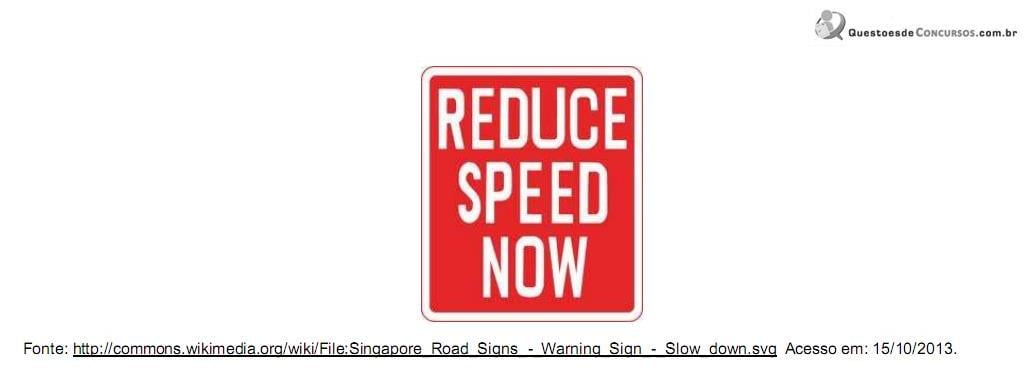
The road sign above means that you _____ reduce speed.
Ano: 2014
Banca:
FUMARC
Órgão:
AL-MG
Provas:
FUMARC - 2014 - AL-MG - Analista de Sistemas - Desenvolvimento
|
FUMARC - 2014 - AL-MG - Analista de Sistemas - Administração de Rede |
Q383670
Inglês
Texto associado
TEXT 2
Food Engineering
MAKE A DIFFERENCE BE A FOOD ENGINEER
Food engineering is the application of engineering principles to the storage, processing and distribution of food materials and _____ bio-products. It requires a sound engineering education, as well as fundamental training in chemistry and food science.
Food Engineers can make valuable contributions in various capacities of food chain such as design of processing, handling, packaging and storage equipment and systems; scale-up of prototype food processes, machinery, and equipment; product/process research and development; regulation and protection of the public health; and engineering and technical Sales.
Fonte: http://baen.tamu.edu/foodengineering/FEngr/FEngr.html Acesso em: 15/10/2013.
Food Engineering
MAKE A DIFFERENCE BE A FOOD ENGINEER
Food engineering is the application of engineering principles to the storage, processing and distribution of food materials and _____ bio-products. It requires a sound engineering education, as well as fundamental training in chemistry and food science.
Food Engineers can make valuable contributions in various capacities of food chain such as design of processing, handling, packaging and storage equipment and systems; scale-up of prototype food processes, machinery, and equipment; product/process research and development; regulation and protection of the public health; and engineering and technical Sales.
Fonte: http://baen.tamu.edu/foodengineering/FEngr/FEngr.html Acesso em: 15/10/2013.
The passive voice of the sentence “It requires a sound engineering education,” is
Ano: 2014
Banca:
FUMARC
Órgão:
AL-MG
Prova:
FUMARC - 2014 - AL-MG - Analista de Sistemas - Desenvolvimento |
Q383669
Inglês
Texto associado
TEXT 2
Food Engineering
MAKE A DIFFERENCE BE A FOOD ENGINEER
Food engineering is the application of engineering principles to the storage, processing and distribution of food materials and _____ bio-products. It requires a sound engineering education, as well as fundamental training in chemistry and food science.
Food Engineers can make valuable contributions in various capacities of food chain such as design of processing, handling, packaging and storage equipment and systems; scale-up of prototype food processes, machinery, and equipment; product/process research and development; regulation and protection of the public health; and engineering and technical Sales.
Fonte: http://baen.tamu.edu/foodengineering/FEngr/FEngr.html Acesso em: 15/10/2013.
Food Engineering
MAKE A DIFFERENCE BE A FOOD ENGINEER
Food engineering is the application of engineering principles to the storage, processing and distribution of food materials and _____ bio-products. It requires a sound engineering education, as well as fundamental training in chemistry and food science.
Food Engineers can make valuable contributions in various capacities of food chain such as design of processing, handling, packaging and storage equipment and systems; scale-up of prototype food processes, machinery, and equipment; product/process research and development; regulation and protection of the public health; and engineering and technical Sales.
Fonte: http://baen.tamu.edu/foodengineering/FEngr/FEngr.html Acesso em: 15/10/2013.
The expression such as in “in various capacities of food chain such as” indicates that some important elements
Ano: 2014
Banca:
FUMARC
Órgão:
AL-MG
Provas:
FUMARC - 2014 - AL-MG - Analista de Sistemas - Desenvolvimento
|
FUMARC - 2014 - AL-MG - Analista de Sistemas - Administração de Rede |
Q383668
Inglês
Texto associado
TEXT 2
Food Engineering
MAKE A DIFFERENCE BE A FOOD ENGINEER
Food engineering is the application of engineering principles to the storage, processing and distribution of food materials and _____ bio-products. It requires a sound engineering education, as well as fundamental training in chemistry and food science.
Food Engineers can make valuable contributions in various capacities of food chain such as design of processing, handling, packaging and storage equipment and systems; scale-up of prototype food processes, machinery, and equipment; product/process research and development; regulation and protection of the public health; and engineering and technical Sales.
Fonte: http://baen.tamu.edu/foodengineering/FEngr/FEngr.html Acesso em: 15/10/2013.
Food Engineering
MAKE A DIFFERENCE BE A FOOD ENGINEER
Food engineering is the application of engineering principles to the storage, processing and distribution of food materials and _____ bio-products. It requires a sound engineering education, as well as fundamental training in chemistry and food science.
Food Engineers can make valuable contributions in various capacities of food chain such as design of processing, handling, packaging and storage equipment and systems; scale-up of prototype food processes, machinery, and equipment; product/process research and development; regulation and protection of the public health; and engineering and technical Sales.
Fonte: http://baen.tamu.edu/foodengineering/FEngr/FEngr.html Acesso em: 15/10/2013.
The correct word to fill in the space provided in “food materials and ____ bio-products.” from text 2 is
Ano: 2014
Banca:
FUMARC
Órgão:
AL-MG
Provas:
FUMARC - 2014 - AL-MG - Analista de Sistemas - Desenvolvimento
|
FUMARC - 2014 - AL-MG - Analista de Sistemas - Administração de Rede |
Q383667
Inglês
Texto associado
TEXT 1
When was the first computer unvented?
The word "computer" was first recorded as being used in 1613 and was originally used to describe a human who performed calculations or computations. The definition of a computer remained the same until the end of the 19th century when people began to realize machines never get tired and can perform calculations much faster and more accurately than any team of human computers ever could.
In 1822, Charles Babbage began developing the Difference Engine, which was considered to be the first automatic computing engine. It was capable of computing several sets of numbers and making hard copies of the results. Unfortunately, because of funding he was never able to complete a full-scale functional version of this machine. In June of 1991, the London Science Museum completed the Difference Engine Nº 2 for the bicentenni- al year of Babbage's birth and later completed the printing mechanism in 2000.
Fonte: http://www.computerhope.com/issues/ch000984.htm Acesso em: 15/10/2013
When was the first computer unvented?
The word "computer" was first recorded as being used in 1613 and was originally used to describe a human who performed calculations or computations. The definition of a computer remained the same until the end of the 19th century when people began to realize machines never get tired and can perform calculations much faster and more accurately than any team of human computers ever could.
In 1822, Charles Babbage began developing the Difference Engine, which was considered to be the first automatic computing engine. It was capable of computing several sets of numbers and making hard copies of the results. Unfortunately, because of funding he was never able to complete a full-scale functional version of this machine. In June of 1991, the London Science Museum completed the Difference Engine Nº 2 for the bicentenni- al year of Babbage's birth and later completed the printing mechanism in 2000.
Fonte: http://www.computerhope.com/issues/ch000984.htm Acesso em: 15/10/2013
The word it in “It was capable of computing several sets of numbers” refers to
Ano: 2014
Banca:
FUMARC
Órgão:
AL-MG
Prova:
FUMARC - 2014 - AL-MG - Analista de Sistemas - Desenvolvimento |
Q383666
Inglês
Texto associado
TEXT 1
When was the first computer unvented?
The word "computer" was first recorded as being used in 1613 and was originally used to describe a human who performed calculations or computations. The definition of a computer remained the same until the end of the 19th century when people began to realize machines never get tired and can perform calculations much faster and more accurately than any team of human computers ever could.
In 1822, Charles Babbage began developing the Difference Engine, which was considered to be the first automatic computing engine. It was capable of computing several sets of numbers and making hard copies of the results. Unfortunately, because of funding he was never able to complete a full-scale functional version of this machine. In June of 1991, the London Science Museum completed the Difference Engine Nº 2 for the bicentenni- al year of Babbage's birth and later completed the printing mechanism in 2000.
Fonte: http://www.computerhope.com/issues/ch000984.htm Acesso em: 15/10/2013
When was the first computer unvented?
The word "computer" was first recorded as being used in 1613 and was originally used to describe a human who performed calculations or computations. The definition of a computer remained the same until the end of the 19th century when people began to realize machines never get tired and can perform calculations much faster and more accurately than any team of human computers ever could.
In 1822, Charles Babbage began developing the Difference Engine, which was considered to be the first automatic computing engine. It was capable of computing several sets of numbers and making hard copies of the results. Unfortunately, because of funding he was never able to complete a full-scale functional version of this machine. In June of 1991, the London Science Museum completed the Difference Engine Nº 2 for the bicentenni- al year of Babbage's birth and later completed the printing mechanism in 2000.
Fonte: http://www.computerhope.com/issues/ch000984.htm Acesso em: 15/10/2013
Write True (T) or False (N).
( ) The meaning of a computer changed a lot from 1613 to the 19th century.
( ) Only after the 19th century it was understood people calculate less quickly than machines.
( ) An updated version of the first automatic computer can be found at the London Science Museum.
( ) The meaning of a computer changed a lot from 1613 to the 19th century.
( ) Only after the 19th century it was understood people calculate less quickly than machines.
( ) An updated version of the first automatic computer can be found at the London Science Museum.
Ano: 2014
Banca:
FUMARC
Órgão:
AL-MG
Provas:
FUMARC - 2014 - AL-MG - Analista de Sistemas - Desenvolvimento
|
FUMARC - 2014 - AL-MG - Analista de Sistemas - Administração de Rede |
Q383665
Inglês
Texto associado
TEXT 1
When was the first computer unvented?
The word "computer" was first recorded as being used in 1613 and was originally used to describe a human who performed calculations or computations. The definition of a computer remained the same until the end of the 19th century when people began to realize machines never get tired and can perform calculations much faster and more accurately than any team of human computers ever could.
In 1822, Charles Babbage began developing the Difference Engine, which was considered to be the first automatic computing engine. It was capable of computing several sets of numbers and making hard copies of the results. Unfortunately, because of funding he was never able to complete a full-scale functional version of this machine. In June of 1991, the London Science Museum completed the Difference Engine Nº 2 for the bicentenni- al year of Babbage's birth and later completed the printing mechanism in 2000.
Fonte: http://www.computerhope.com/issues/ch000984.htm Acesso em: 15/10/2013
When was the first computer unvented?
The word "computer" was first recorded as being used in 1613 and was originally used to describe a human who performed calculations or computations. The definition of a computer remained the same until the end of the 19th century when people began to realize machines never get tired and can perform calculations much faster and more accurately than any team of human computers ever could.
In 1822, Charles Babbage began developing the Difference Engine, which was considered to be the first automatic computing engine. It was capable of computing several sets of numbers and making hard copies of the results. Unfortunately, because of funding he was never able to complete a full-scale functional version of this machine. In June of 1991, the London Science Museum completed the Difference Engine Nº 2 for the bicentenni- al year of Babbage's birth and later completed the printing mechanism in 2000.
Fonte: http://www.computerhope.com/issues/ch000984.htm Acesso em: 15/10/2013
The word “computer” was first used in the ___ century.
Ano: 2014
Banca:
FUMARC
Órgão:
AL-MG
Provas:
FUMARC - 2014 - AL-MG - Analista de Sistemas - Desenvolvimento
|
FUMARC - 2014 - AL-MG - Analista de Sistemas - Administração de Rede |
Q383664
Inglês
Texto associado
TEXT 1
When was the first computer unvented?
The word "computer" was first recorded as being used in 1613 and was originally used to describe a human who performed calculations or computations. The definition of a computer remained the same until the end of the 19th century when people began to realize machines never get tired and can perform calculations much faster and more accurately than any team of human computers ever could.
In 1822, Charles Babbage began developing the Difference Engine, which was considered to be the first automatic computing engine. It was capable of computing several sets of numbers and making hard copies of the results. Unfortunately, because of funding he was never able to complete a full-scale functional version of this machine. In June of 1991, the London Science Museum completed the Difference Engine Nº 2 for the bicentenni- al year of Babbage's birth and later completed the printing mechanism in 2000.
Fonte: http://www.computerhope.com/issues/ch000984.htm Acesso em: 15/10/2013
When was the first computer unvented?
The word "computer" was first recorded as being used in 1613 and was originally used to describe a human who performed calculations or computations. The definition of a computer remained the same until the end of the 19th century when people began to realize machines never get tired and can perform calculations much faster and more accurately than any team of human computers ever could.
In 1822, Charles Babbage began developing the Difference Engine, which was considered to be the first automatic computing engine. It was capable of computing several sets of numbers and making hard copies of the results. Unfortunately, because of funding he was never able to complete a full-scale functional version of this machine. In June of 1991, the London Science Museum completed the Difference Engine Nº 2 for the bicentenni- al year of Babbage's birth and later completed the printing mechanism in 2000.
Fonte: http://www.computerhope.com/issues/ch000984.htm Acesso em: 15/10/2013
The main function of text 1 is to
Ano: 2014
Banca:
FUMARC
Órgão:
AL-MG
Provas:
FUMARC - 2014 - AL-MG - Analista de Sistemas - Desenvolvimento
|
FUMARC - 2014 - AL-MG - Enfermeiro |
FUMARC - 2014 - AL-MG - Consultor Legislativo |
Q383654
Português
Assinale a alternativa em que a colocação pronominal esteja INCORRETA.

 Conheça nossos planos