Foram encontradas 449 questões
Resolva questões gratuitamente!
Junte-se a mais de 4 milhões de concurseiros!


Abaixo, encontra-se o fragmento de um Plano de Ensino que deverá ser vertido para o inglês e encaminhado para uma universidade americana nos Estados Unidos.
CURSO DE GRADUAÇÃO EM NUTRIÇÃO |
DISCIPLINA: Prática Orientada VI |
NATUREZA DA DISCIPLINA: Obrigatória |
|
OBJETIVO GERAL DA DISCIPLINA: Proporcionar ao aluno a compreensão básica da importância do trabalho de atenção à saúde (...). |
As versões apropriadas para “Curso de Graduação em Nutrição” e para “Prática Orientada VI” são, respectivamente:
Em Vocabulando (p. 416), Isa Mara Lando analisa dois diferentes usos e contextos de emprego do verbo “realize”:
1. Realizar, concretizar, cumprir, empreender; implementar; pôr em prática, levar a cabo, fazer acontecer, tornar realidade.
2. Perceber, atinar, dar-se conta, captar, compreender, concluir, conscientizar-se, descobrir, entender, ver, ter um clique, cair a ficha.
Em cada alternativa abaixo, relacione o contexto dos verbos sublinhados aos campos semânticos 1 ou 2 e então marque a alternativa correspondente:
(_) In some cases, a woman with sexually transmitted disease may not learn of her infection until, for example, she tries to become pregnant and realizes she is infertile.
(_) Scientists have realized that they need to make a more serious effort to engage with how their work is presented to the public.
(_) How can we, as researchers, be optimistic about climate change if the level of dangerous anthropogenic impact is actually higher than we realized?
(_) Advances in technology are helping investigators realize their goal of unlocking the secrets of the brains.
Analise o título e o resumo do artigo científico abaixo para responder às questões 29 e 30
Effect of Ileal Release of palm oil and glutamine on intestinal peptides PYY and GLP-1 in patients with type 2 diabetes and obesity
Abstract: The incretin based therapy constitutes one of the alternatives for the treatment of type 2 diabetes and for weight reduction. For this purpose, functional foods such as palm oil and glutamine provide dietary strategies for the stimulation of intestinal peptides.
The aim of this study was to evaluate whether the capsules of palm oil and glutamine (both of ileal release) result in increased secretion of GLP-1 and PYY.
Quanto ao título do artigo, a tradução mais adequada é:
Analise o título e o resumo do artigo científico abaixo para responder às questões 29 e 30
Effect of Ileal Release of palm oil and glutamine on intestinal peptides PYY and GLP-1 in patients with type 2 diabetes and obesity
Abstract: The incretin based therapy constitutes one of the alternatives for the treatment of type 2 diabetes and for weight reduction. For this purpose, functional foods such as palm oil and glutamine provide dietary strategies for the stimulation of intestinal peptides.
The aim of this study was to evaluate whether the capsules of palm oil and glutamine (both of ileal release) result in increased secretion of GLP-1 and PYY.
Selecione a tradução mais adequada do resumo acima:
Na obra “Relevância em Tradução”, p. 38, lemos:
“Uma das características básicas dos seres humanos é a necessidade de relacionar informações novas com o que já sabem: somente então tais informações passam a fazer sentido. Essa tendência funciona não só na comunicação, mas, supõe-se, é uma característica dominante da cognição humana em geral.
Na Teoria da Relevância (TR), essa necessidade de relacionar novas informações com as já conhecidas é denominada busca por relevância. Para que uma informação seja experimentada como relevante, deve ligar-se, de um modo específico, a outras informações que o indivíduo já tem. Quando tais ligações ocorrem, as pessoas experimentam-nas como efeitos cognitivos. E essas ligações são sempre o resultado de processos inferenciais”. ALVES e GONÇALVES, Orgs. Relevância em Tradução, p. 38
O autor, mais à frente, apresenta as implicações dessas ideias para o empreendimento de tradução da Bíblia. Em vários casos, o ambiente cognitivo do público da língua alvo apresenta muito pouca semelhança com aquele do público original, de forma que lacunas no conhecimento prévio podem significar grandes problemas de compreensão para o leitor moderno.
Nesse sentido, considerando uma tradução que tenha como propósito possibilitar a compreensão mais eficaz do texto bíblico, qual das seguintes alternativas NÃO se apresenta como possível opção para ajustar o ambiente cognitivo dos leitores?
Na mesma obra citada na questão anterior, Azenha Jr. expõe as implicações dos aspectos culturais à prática da tradução. Ele cita o que Schmitt chama de “incongruências conceituais condicionadas por problemas de interculturalidade”, que se referem aos “casos em que as denominações não são equivalentes, pois os conceitos por ela designados não coincidem, já que são culturalmente condicionados” (p. 78)
Dentre as seguintes categorias de condicionantes, selecione a alternativa que traz exemplos dessas incongruências condicionadas por diferenças culturais.
Em “Tradução técnica e condicionantes culturais: primeiros passos para um estudo integrado” (p.10), Azenha Jr. discorre:
“Ao percorrer o caminho da prática para a teoria [...], pude constatar o predomínio de uma visão largamente difundida [...] segundo a qual os textos técnicos, diferentemente dos textos sagrados e de literatura, constituiriam um universo à parte, sujeito aos ditames do mercado e marcado pela estabilidade de sentido dos termos técnicos. Em outras palavras, admitia-se para a tradução técnica algo que, de resto, era veementemente condenado para a tradução como um todo: a noção de sentidos estáveis e, como consequência, uma noção de tradução centrada eminentemente numa operação de transcodificação, processada à margem de um enquadramento cultural.”
O autor, com base em sua experiência enquanto tradutor, segue contestando essa visão de estabilidade dos textos técnicos. Abaixo estão diversos argumentos que contrariam essa noção de sentidos estáveis, com a EXCEÇÃO de:
Please, read the following text in order to answer questions 21 to 25.
Are scientists leaving the net?
The scientists who helped create the Internet may be leaving it for less crowded cyberspaces. Having been on the Internet longer than the rest of us, scientists use it differently.
Premier researchers use the Internet to test projects like real-time, 3D models of colliding galaxies or rampaging tornadoes. For tasks like that, the Internet is no longer fast enough or reliable enough. And some scientists are frustrated. For them, the information superhighway is full of bumper-to-bumper traffic.
Visionary engineers at the National Science Foundation, fortunately, have long foreseen such congestion. As an alternative, they created the very high-speed Backbone Network Service (VBNS). It links a handful of government and university labs at speed of 155,000,000 bits per second, or 10,000 times faster than a standard modem. By the year 2000, a new generation of equipment and another round of research could give scientists data pipes 12 times faster than that. Among other tricks, these new high bandwidth networks will allow scientists to manipulate huge computer files so unwieldy they are now shipped by four-wheeled means. “Never underestimate the bandwidth of a pick-up truck full of data”, jokes Daniel Sandin of the University of Illinois.
Sandin and his team in Chicago will use the VBNS to immerse goggled humans at different locations into the same type of jaw-dropping virtual reality simulation generated by a supercomputer. “You could not do that on the Internet,” says Thomas Defanti, Sandin’s colleague. “The Internet is so congested that for any kind of highbandwidth use, it is essentially rendered useless.”
“Simply adding lanes is not going to work,” adds Beth Gaston of the National Science Foundation. “Our role is to spur the technology forward” – Mark Uheling.
(Popular Science, September 1996, p.60)
The main purpose of the text is to:
Please, read the following text in order to answer questions 21 to 25.
Are scientists leaving the net?
The scientists who helped create the Internet may be leaving it for less crowded cyberspaces. Having been on the Internet longer than the rest of us, scientists use it differently.
Premier researchers use the Internet to test projects like real-time, 3D models of colliding galaxies or rampaging tornadoes. For tasks like that, the Internet is no longer fast enough or reliable enough. And some scientists are frustrated. For them, the information superhighway is full of bumper-to-bumper traffic.
Visionary engineers at the National Science Foundation, fortunately, have long foreseen such congestion. As an alternative, they created the very high-speed Backbone Network Service (VBNS). It links a handful of government and university labs at speed of 155,000,000 bits per second, or 10,000 times faster than a standard modem. By the year 2000, a new generation of equipment and another round of research could give scientists data pipes 12 times faster than that. Among other tricks, these new high bandwidth networks will allow scientists to manipulate huge computer files so unwieldy they are now shipped by four-wheeled means. “Never underestimate the bandwidth of a pick-up truck full of data”, jokes Daniel Sandin of the University of Illinois.
Sandin and his team in Chicago will use the VBNS to immerse goggled humans at different locations into the same type of jaw-dropping virtual reality simulation generated by a supercomputer. “You could not do that on the Internet,” says Thomas Defanti, Sandin’s colleague. “The Internet is so congested that for any kind of highbandwidth use, it is essentially rendered useless.”
“Simply adding lanes is not going to work,” adds Beth Gaston of the National Science Foundation. “Our role is to spur the technology forward” – Mark Uheling.
(Popular Science, September 1996, p.60)
One of the scientists tried to make a funny comment by saying:
Please, read the following text in order to answer questions 21 to 25.
Are scientists leaving the net?
The scientists who helped create the Internet may be leaving it for less crowded cyberspaces. Having been on the Internet longer than the rest of us, scientists use it differently.
Premier researchers use the Internet to test projects like real-time, 3D models of colliding galaxies or rampaging tornadoes. For tasks like that, the Internet is no longer fast enough or reliable enough. And some scientists are frustrated. For them, the information superhighway is full of bumper-to-bumper traffic.
Visionary engineers at the National Science Foundation, fortunately, have long foreseen such congestion. As an alternative, they created the very high-speed Backbone Network Service (VBNS). It links a handful of government and university labs at speed of 155,000,000 bits per second, or 10,000 times faster than a standard modem. By the year 2000, a new generation of equipment and another round of research could give scientists data pipes 12 times faster than that. Among other tricks, these new high bandwidth networks will allow scientists to manipulate huge computer files so unwieldy they are now shipped by four-wheeled means. “Never underestimate the bandwidth of a pick-up truck full of data”, jokes Daniel Sandin of the University of Illinois.
Sandin and his team in Chicago will use the VBNS to immerse goggled humans at different locations into the same type of jaw-dropping virtual reality simulation generated by a supercomputer. “You could not do that on the Internet,” says Thomas Defanti, Sandin’s colleague. “The Internet is so congested that for any kind of highbandwidth use, it is essentially rendered useless.”
“Simply adding lanes is not going to work,” adds Beth Gaston of the National Science Foundation. “Our role is to spur the technology forward” – Mark Uheling.
(Popular Science, September 1996, p.60)
The pronoun THEY in “...they are now shipped by four-wheeled means” (paragraph 3) refers to:
Please, read the following text in order to answer questions 21 to 25.
Are scientists leaving the net?
The scientists who helped create the Internet may be leaving it for less crowded cyberspaces. Having been on the Internet longer than the rest of us, scientists use it differently.
Premier researchers use the Internet to test projects like real-time, 3D models of colliding galaxies or rampaging tornadoes. For tasks like that, the Internet is no longer fast enough or reliable enough. And some scientists are frustrated. For them, the information superhighway is full of bumper-to-bumper traffic.
Visionary engineers at the National Science Foundation, fortunately, have long foreseen such congestion. As an alternative, they created the very high-speed Backbone Network Service (VBNS). It links a handful of government and university labs at speed of 155,000,000 bits per second, or 10,000 times faster than a standard modem. By the year 2000, a new generation of equipment and another round of research could give scientists data pipes 12 times faster than that. Among other tricks, these new high bandwidth networks will allow scientists to manipulate huge computer files so unwieldy they are now shipped by four-wheeled means. “Never underestimate the bandwidth of a pick-up truck full of data”, jokes Daniel Sandin of the University of Illinois.
Sandin and his team in Chicago will use the VBNS to immerse goggled humans at different locations into the same type of jaw-dropping virtual reality simulation generated by a supercomputer. “You could not do that on the Internet,” says Thomas Defanti, Sandin’s colleague. “The Internet is so congested that for any kind of highbandwidth use, it is essentially rendered useless.”
“Simply adding lanes is not going to work,” adds Beth Gaston of the National Science Foundation. “Our role is to spur the technology forward” – Mark Uheling.
(Popular Science, September 1996, p.60)
The word LIKE in “Premier researchers use the NET to test projects like real-time, 3D models of colliding galaxies or rampaging tornadoes (paragraph 2) introduces elements of:
Please, read the following text in order to answer questions 21 to 25.
Are scientists leaving the net?
The scientists who helped create the Internet may be leaving it for less crowded cyberspaces. Having been on the Internet longer than the rest of us, scientists use it differently.
Premier researchers use the Internet to test projects like real-time, 3D models of colliding galaxies or rampaging tornadoes. For tasks like that, the Internet is no longer fast enough or reliable enough. And some scientists are frustrated. For them, the information superhighway is full of bumper-to-bumper traffic.
Visionary engineers at the National Science Foundation, fortunately, have long foreseen such congestion. As an alternative, they created the very high-speed Backbone Network Service (VBNS). It links a handful of government and university labs at speed of 155,000,000 bits per second, or 10,000 times faster than a standard modem. By the year 2000, a new generation of equipment and another round of research could give scientists data pipes 12 times faster than that. Among other tricks, these new high bandwidth networks will allow scientists to manipulate huge computer files so unwieldy they are now shipped by four-wheeled means. “Never underestimate the bandwidth of a pick-up truck full of data”, jokes Daniel Sandin of the University of Illinois.
Sandin and his team in Chicago will use the VBNS to immerse goggled humans at different locations into the same type of jaw-dropping virtual reality simulation generated by a supercomputer. “You could not do that on the Internet,” says Thomas Defanti, Sandin’s colleague. “The Internet is so congested that for any kind of highbandwidth use, it is essentially rendered useless.”
“Simply adding lanes is not going to work,” adds Beth Gaston of the National Science Foundation. “Our role is to spur the technology forward” – Mark Uheling.
(Popular Science, September 1996, p.60)
The areas in which scientists mostly use the Internet are:
A estrutura de uma molécula ou íon é descrita em função dos seus ângulos de ligação e comprimentos de ligação. Considere o dióxido de nitrogênio e seus respectivos íons NO2+ e NO2- .
Dado: N (Z = 7); O (Z = 8)
A ordem CRESCENTE dos ângulos de ligação O-N-O nessas espécies é:
A seguir estão representados 3 alcalóides com suas respectivas ações farmacológicas. Esses alcaloides apresentam fórmulas estruturais semelhantes.
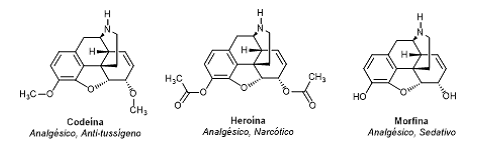
Os grupos funcionais presentes na codeína, heroína e morfina que diferenciam suas estruturas são
respectivamente:
Um frasco de ácido clorídrico concentrado contém 37% de HCl em massa e apresenta uma densidade de 1,20 g mL-1 . Foi transferido 5,00 mL de HCl desse frasco para um balão volumétrico de um litro e avolumado com água deionizada.
Qual o volume necessário dessa solução de HCl diluída para neutralizar 500 mL de NaOH 0,02 mol L-1 ?
O ácido oxálico (H2C2O4 . 2H2O) é um ácido diprótico muito usado para fins analíticos, industriais e aplicações veterinárias. Uma amostra de 0,2520 g de um ácido oxálico foi pesada e titulada completamente com 25,00 mL de uma solução de NaOH de concentração 0,1200 mol L-1 .
Dado: H2C2O4 . 2H2O = 126 g mol-1
A porcentagem de pureza desse ácido é:

 Conheça nossos planos