Questões de Concurso
Para grupo talent
Foram encontradas 883 questões
Resolva questões gratuitamente!
Junte-se a mais de 4 milhões de concurseiros!


Ano: 2026
Banca:
Grupo TALENT
Órgão:
IPREMO
Provas:
Grupo TALENT - 2026 - IPREMO - Agente Administrativo
|
Grupo TALENT - 2026 - IPREMO - Agente de Serviços Público |
Q4320081
Português
Considere a frase do texto: "a persistência é uma
semente que germina quando regada".
Assinale a alternativa em que a palavra "persistência" pode ser substituída, sem alteração do sentido original, por:
Assinale a alternativa em que a palavra "persistência" pode ser substituída, sem alteração do sentido original, por:
Ano: 2026
Banca:
Grupo TALENT
Órgão:
IPREMO
Provas:
Grupo TALENT - 2026 - IPREMO - Agente Administrativo
|
Grupo TALENT - 2026 - IPREMO - Agente de Serviços Público |
Q4320080
Português
No trecho "A terra nos deu de comer quando lhe
demos carinho", a expressão "deu de comer"
apresenta sentido:
Ano: 2026
Banca:
Grupo TALENT
Órgão:
IPREMO
Provas:
Grupo TALENT - 2026 - IPREMO - Agente Administrativo
|
Grupo TALENT - 2026 - IPREMO - Agente de Serviços Público |
Q4320079
Português
Texto associado
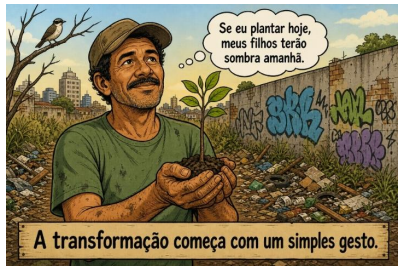
Analise a charge e responda a questão
Fonte: Charge criada especialmente para esta prova.
A partir da charge e do texto "A Horta da Vila",
é correto afirmar que:
Ano: 2026
Banca:
Grupo TALENT
Órgão:
IPREMO
Provas:
Grupo TALENT - 2026 - IPREMO - Agente Administrativo
|
Grupo TALENT - 2026 - IPREMO - Agente de Serviços Público |
Q4320078
Português
Texto associado
Analise a charge e responda a questão
Fonte: Charge criada especialmente para esta prova.
Analise as afirmativas sobre a charge:
I. O balão de pensamento "Se eu plantar hoje, meus filhos terão sombra amanhã" expressa uma visão de longo prazo e de responsabilidade intergeracional.
II. A presença do lixo acumulado ao fundo contrasta com a ação do homem, evidenciando a degradação que se pretende superar.
III. A faixa "A transformação começa com um simples gesto" reforça a ideia de que mudanças significativas dependem de grandes investimentos financeiros.
IV.O pássaro no galho seco pode ser interpretado como símbolo da natureza que aguarda regeneração.
Assinale a alternativa que apresenta apenas afirmativas corretas.
I. O balão de pensamento "Se eu plantar hoje, meus filhos terão sombra amanhã" expressa uma visão de longo prazo e de responsabilidade intergeracional.
II. A presença do lixo acumulado ao fundo contrasta com a ação do homem, evidenciando a degradação que se pretende superar.
III. A faixa "A transformação começa com um simples gesto" reforça a ideia de que mudanças significativas dependem de grandes investimentos financeiros.
IV.O pássaro no galho seco pode ser interpretado como símbolo da natureza que aguarda regeneração.
Assinale a alternativa que apresenta apenas afirmativas corretas.
Ano: 2026
Banca:
Grupo TALENT
Órgão:
IPREMO
Provas:
Grupo TALENT - 2026 - IPREMO - Agente Administrativo
|
Grupo TALENT - 2026 - IPREMO - Agente de Serviços Público |
Q4320077
Português
Texto associado
Analise a charge e responda a questão
Fonte: Charge criada especialmente para esta prova.
Com base na charge apresentada, assinale a
alternativa correta.
Ano: 2026
Banca:
Grupo TALENT
Órgão:
IPREMO
Provas:
Grupo TALENT - 2026 - IPREMO - Agente Administrativo
|
Grupo TALENT - 2026 - IPREMO - Agente de Serviços Público |
Q4320076
Português
Texto associado
Leia o texto e responda a questão
A HORTA DA VILA
Na Vila dos Pinheiros, um bairro pequeno onde
todos se conheciam, havia um terreno baldio que
se tornara motivo de vergonha para a
comunidade. O mato alto escondia lixo, ratos e
insetos, e as crianças que brincavam por perto
corriam riscos. Dona Clementina, uma senhora
de setenta anos que morava na casa ao lado,
cansou de esperar a prefeitura tomar atitudes.
— Vamos transformar esse abandono em uma
horta comunitária! — disse ela aos vizinhos,
numa manhã de sábado.
A ideia encontrou ceticismo. Alguns moradores
argumentavam que o terreno não era deles e que
o esforço seria inútil, pois logo o local voltaria a
ficar abandonado. Mas Dona Clementina, com a
persistência que a caracterizava, não se deu por
vencida. Solicitou autorização à prefeitura, que
cedeu o espaço por meio de um termo de uso. A
partir de então, o trabalho começou.
Jovens e idosos se uniram. Retiraram o entulho,
capinaram o mato e prepararam a terra. Cada
morador contribuiu com algo: sementes,
ferramentas, tempo. Em poucas semanas, o
terreno que antes causava vergonha estava
repleto de canteiros de couve, alface, tomate e
cheiro-verde. As crianças, que antes corriam
riscos no local, agora aprendiam a plantar e a
colher.
A horta não apenas modificou a paisagem.
Transformou as pessoas. A comunidade passou a
se reunir aos sábados para o mutirão de
manutenção. Conversas se iniciavam enquanto se
arrancavam ervas daninhas. Amizades se
fortaleciam enquanto se regavam as plantas. E os
alimentos colhidos eram distribuídos entre todos,
especialmente para as famílias que mais
precisavam.
— A terra nos deu de comer quando lhe demos
carinho — disse Dona Clementina, sorrindo,
numa das reuniões.
O projeto, que começou com a iniciativa de uma
única pessoa, tornou-se exemplo para outros
bairros. Três anos depois, a Vila dos Pinheiros já
contava com quatro hortas comunitárias. O
terreno baldio que causava vergonha havia se
transformado em motivo de orgulho. E Dona
Clementina, que sempre dizia que "a persistência
é uma semente que germina quando regada", via
nos sorrisos de seus vizinhos a colheita mais
valiosa de todas.
Fonte: Texto elaborado para o Concurso Público
01/2026 – IPREMO/Morro Agudo-SP
Sobre o uso dos sinais de pontuação no texto, é
incorreto afirmar que:
Ano: 2026
Banca:
Grupo TALENT
Órgão:
IPREMO
Provas:
Grupo TALENT - 2026 - IPREMO - Agente Administrativo
|
Grupo TALENT - 2026 - IPREMO - Agente de Serviços Público |
Q4320075
Português
Texto associado
Leia o texto e responda a questão
A HORTA DA VILA
Na Vila dos Pinheiros, um bairro pequeno onde
todos se conheciam, havia um terreno baldio que
se tornara motivo de vergonha para a
comunidade. O mato alto escondia lixo, ratos e
insetos, e as crianças que brincavam por perto
corriam riscos. Dona Clementina, uma senhora
de setenta anos que morava na casa ao lado,
cansou de esperar a prefeitura tomar atitudes.
— Vamos transformar esse abandono em uma
horta comunitária! — disse ela aos vizinhos,
numa manhã de sábado.
A ideia encontrou ceticismo. Alguns moradores
argumentavam que o terreno não era deles e que
o esforço seria inútil, pois logo o local voltaria a
ficar abandonado. Mas Dona Clementina, com a
persistência que a caracterizava, não se deu por
vencida. Solicitou autorização à prefeitura, que
cedeu o espaço por meio de um termo de uso. A
partir de então, o trabalho começou.
Jovens e idosos se uniram. Retiraram o entulho,
capinaram o mato e prepararam a terra. Cada
morador contribuiu com algo: sementes,
ferramentas, tempo. Em poucas semanas, o
terreno que antes causava vergonha estava
repleto de canteiros de couve, alface, tomate e
cheiro-verde. As crianças, que antes corriam
riscos no local, agora aprendiam a plantar e a
colher.
A horta não apenas modificou a paisagem.
Transformou as pessoas. A comunidade passou a
se reunir aos sábados para o mutirão de
manutenção. Conversas se iniciavam enquanto se
arrancavam ervas daninhas. Amizades se
fortaleciam enquanto se regavam as plantas. E os
alimentos colhidos eram distribuídos entre todos,
especialmente para as famílias que mais
precisavam.
— A terra nos deu de comer quando lhe demos
carinho — disse Dona Clementina, sorrindo,
numa das reuniões.
O projeto, que começou com a iniciativa de uma
única pessoa, tornou-se exemplo para outros
bairros. Três anos depois, a Vila dos Pinheiros já
contava com quatro hortas comunitárias. O
terreno baldio que causava vergonha havia se
transformado em motivo de orgulho. E Dona
Clementina, que sempre dizia que "a persistência
é uma semente que germina quando regada", via
nos sorrisos de seus vizinhos a colheita mais
valiosa de todas.
Fonte: Texto elaborado para o Concurso Público
01/2026 – IPREMO/Morro Agudo-SP
Considere a oração: "Mas Dona Clementina,
com a persistência que a caracterizava, não se
deu por vencida." Assinale a alternativa que
apresenta a correta análise sintática.
Ano: 2026
Banca:
Grupo TALENT
Órgão:
IPREMO
Provas:
Grupo TALENT - 2026 - IPREMO - Agente Administrativo
|
Grupo TALENT - 2026 - IPREMO - Agente de Serviços Público |
Q4320074
Português
Texto associado
Leia o texto e responda a questão
A HORTA DA VILA
Na Vila dos Pinheiros, um bairro pequeno onde
todos se conheciam, havia um terreno baldio que
se tornara motivo de vergonha para a
comunidade. O mato alto escondia lixo, ratos e
insetos, e as crianças que brincavam por perto
corriam riscos. Dona Clementina, uma senhora
de setenta anos que morava na casa ao lado,
cansou de esperar a prefeitura tomar atitudes.
— Vamos transformar esse abandono em uma
horta comunitária! — disse ela aos vizinhos,
numa manhã de sábado.
A ideia encontrou ceticismo. Alguns moradores
argumentavam que o terreno não era deles e que
o esforço seria inútil, pois logo o local voltaria a
ficar abandonado. Mas Dona Clementina, com a
persistência que a caracterizava, não se deu por
vencida. Solicitou autorização à prefeitura, que
cedeu o espaço por meio de um termo de uso. A
partir de então, o trabalho começou.
Jovens e idosos se uniram. Retiraram o entulho,
capinaram o mato e prepararam a terra. Cada
morador contribuiu com algo: sementes,
ferramentas, tempo. Em poucas semanas, o
terreno que antes causava vergonha estava
repleto de canteiros de couve, alface, tomate e
cheiro-verde. As crianças, que antes corriam
riscos no local, agora aprendiam a plantar e a
colher.
A horta não apenas modificou a paisagem.
Transformou as pessoas. A comunidade passou a
se reunir aos sábados para o mutirão de
manutenção. Conversas se iniciavam enquanto se
arrancavam ervas daninhas. Amizades se
fortaleciam enquanto se regavam as plantas. E os
alimentos colhidos eram distribuídos entre todos,
especialmente para as famílias que mais
precisavam.
— A terra nos deu de comer quando lhe demos
carinho — disse Dona Clementina, sorrindo,
numa das reuniões.
O projeto, que começou com a iniciativa de uma
única pessoa, tornou-se exemplo para outros
bairros. Três anos depois, a Vila dos Pinheiros já
contava com quatro hortas comunitárias. O
terreno baldio que causava vergonha havia se
transformado em motivo de orgulho. E Dona
Clementina, que sempre dizia que "a persistência
é uma semente que germina quando regada", via
nos sorrisos de seus vizinhos a colheita mais
valiosa de todas.
Fonte: Texto elaborado para o Concurso Público
01/2026 – IPREMO/Morro Agudo-SP
Analise as afirmativas a seguir sobre a
concordância verbal no texto "A Horta da Vila":
I. Em "Jovens e idosos se uniram", o verbo "uniram" está no plural porque o sujeito é composto e anteposto.
II. Em "Conversas se iniciavam enquanto se arrancavam ervas daninhas", o "se" em "Conversas se iniciavam" é partícula apassivadora, sendo "Conversas" o sujeito paciente.
III. Em "A comunidade passou a se reunir aos sábados", o "se" em "se reunir" é pronome apassivador, sendo "A comunidade" o sujeito paciente.
IV. Em "os alimentos colhidos eram distribuídos entre todos", o sujeito da oração é "todos", o que justifica o verbo "eram" no plural.
Assinale a alternativa correta.
I. Em "Jovens e idosos se uniram", o verbo "uniram" está no plural porque o sujeito é composto e anteposto.
II. Em "Conversas se iniciavam enquanto se arrancavam ervas daninhas", o "se" em "Conversas se iniciavam" é partícula apassivadora, sendo "Conversas" o sujeito paciente.
III. Em "A comunidade passou a se reunir aos sábados", o "se" em "se reunir" é pronome apassivador, sendo "A comunidade" o sujeito paciente.
IV. Em "os alimentos colhidos eram distribuídos entre todos", o sujeito da oração é "todos", o que justifica o verbo "eram" no plural.
Assinale a alternativa correta.
Ano: 2026
Banca:
Grupo TALENT
Órgão:
IPREMO
Provas:
Grupo TALENT - 2026 - IPREMO - Agente Administrativo
|
Grupo TALENT - 2026 - IPREMO - Agente de Serviços Público |
Q4320073
Português
Texto associado
Leia o texto e responda a questão
A HORTA DA VILA
Na Vila dos Pinheiros, um bairro pequeno onde
todos se conheciam, havia um terreno baldio que
se tornara motivo de vergonha para a
comunidade. O mato alto escondia lixo, ratos e
insetos, e as crianças que brincavam por perto
corriam riscos. Dona Clementina, uma senhora
de setenta anos que morava na casa ao lado,
cansou de esperar a prefeitura tomar atitudes.
— Vamos transformar esse abandono em uma
horta comunitária! — disse ela aos vizinhos,
numa manhã de sábado.
A ideia encontrou ceticismo. Alguns moradores
argumentavam que o terreno não era deles e que
o esforço seria inútil, pois logo o local voltaria a
ficar abandonado. Mas Dona Clementina, com a
persistência que a caracterizava, não se deu por
vencida. Solicitou autorização à prefeitura, que
cedeu o espaço por meio de um termo de uso. A
partir de então, o trabalho começou.
Jovens e idosos se uniram. Retiraram o entulho,
capinaram o mato e prepararam a terra. Cada
morador contribuiu com algo: sementes,
ferramentas, tempo. Em poucas semanas, o
terreno que antes causava vergonha estava
repleto de canteiros de couve, alface, tomate e
cheiro-verde. As crianças, que antes corriam
riscos no local, agora aprendiam a plantar e a
colher.
A horta não apenas modificou a paisagem.
Transformou as pessoas. A comunidade passou a
se reunir aos sábados para o mutirão de
manutenção. Conversas se iniciavam enquanto se
arrancavam ervas daninhas. Amizades se
fortaleciam enquanto se regavam as plantas. E os
alimentos colhidos eram distribuídos entre todos,
especialmente para as famílias que mais
precisavam.
— A terra nos deu de comer quando lhe demos
carinho — disse Dona Clementina, sorrindo,
numa das reuniões.
O projeto, que começou com a iniciativa de uma
única pessoa, tornou-se exemplo para outros
bairros. Três anos depois, a Vila dos Pinheiros já
contava com quatro hortas comunitárias. O
terreno baldio que causava vergonha havia se
transformado em motivo de orgulho. E Dona
Clementina, que sempre dizia que "a persistência
é uma semente que germina quando regada", via
nos sorrisos de seus vizinhos a colheita mais
valiosa de todas.
Fonte: Texto elaborado para o Concurso Público
01/2026 – IPREMO/Morro Agudo-SP
Assinale a alternativa em que a palavra
destacada do texto é corretamente classificada
quanto à classe gramatical.
Ano: 2026
Banca:
Grupo TALENT
Órgão:
IPREMO
Provas:
Grupo TALENT - 2026 - IPREMO - Agente Administrativo
|
Grupo TALENT - 2026 - IPREMO - Agente de Serviços Público |
Q4320072
Português
Texto associado
Leia o texto e responda a questão
A HORTA DA VILA
Na Vila dos Pinheiros, um bairro pequeno onde
todos se conheciam, havia um terreno baldio que
se tornara motivo de vergonha para a
comunidade. O mato alto escondia lixo, ratos e
insetos, e as crianças que brincavam por perto
corriam riscos. Dona Clementina, uma senhora
de setenta anos que morava na casa ao lado,
cansou de esperar a prefeitura tomar atitudes.
— Vamos transformar esse abandono em uma
horta comunitária! — disse ela aos vizinhos,
numa manhã de sábado.
A ideia encontrou ceticismo. Alguns moradores
argumentavam que o terreno não era deles e que
o esforço seria inútil, pois logo o local voltaria a
ficar abandonado. Mas Dona Clementina, com a
persistência que a caracterizava, não se deu por
vencida. Solicitou autorização à prefeitura, que
cedeu o espaço por meio de um termo de uso. A
partir de então, o trabalho começou.
Jovens e idosos se uniram. Retiraram o entulho,
capinaram o mato e prepararam a terra. Cada
morador contribuiu com algo: sementes,
ferramentas, tempo. Em poucas semanas, o
terreno que antes causava vergonha estava
repleto de canteiros de couve, alface, tomate e
cheiro-verde. As crianças, que antes corriam
riscos no local, agora aprendiam a plantar e a
colher.
A horta não apenas modificou a paisagem.
Transformou as pessoas. A comunidade passou a
se reunir aos sábados para o mutirão de
manutenção. Conversas se iniciavam enquanto se
arrancavam ervas daninhas. Amizades se
fortaleciam enquanto se regavam as plantas. E os
alimentos colhidos eram distribuídos entre todos,
especialmente para as famílias que mais
precisavam.
— A terra nos deu de comer quando lhe demos
carinho — disse Dona Clementina, sorrindo,
numa das reuniões.
O projeto, que começou com a iniciativa de uma
única pessoa, tornou-se exemplo para outros
bairros. Três anos depois, a Vila dos Pinheiros já
contava com quatro hortas comunitárias. O
terreno baldio que causava vergonha havia se
transformado em motivo de orgulho. E Dona
Clementina, que sempre dizia que "a persistência
é uma semente que germina quando regada", via
nos sorrisos de seus vizinhos a colheita mais
valiosa de todas.
Fonte: Texto elaborado para o Concurso Público
01/2026 – IPREMO/Morro Agudo-SP
No trecho "A ideia encontrou ceticismo. Alguns
moradores argumentavam que o terreno não era
deles e que o esforço seria inútil", os verbos
"encontrou", "argumentavam", "era" e "seria"
estão, respectivamente, nos seguintes tempo e
modo:
Ano: 2026
Banca:
Grupo TALENT
Órgão:
IPREMO
Provas:
Grupo TALENT - 2026 - IPREMO - Agente Administrativo
|
Grupo TALENT - 2026 - IPREMO - Agente de Serviços Público |
Q4320071
Português
Texto associado
Leia o texto e responda a questão
A HORTA DA VILA
Na Vila dos Pinheiros, um bairro pequeno onde
todos se conheciam, havia um terreno baldio que
se tornara motivo de vergonha para a
comunidade. O mato alto escondia lixo, ratos e
insetos, e as crianças que brincavam por perto
corriam riscos. Dona Clementina, uma senhora
de setenta anos que morava na casa ao lado,
cansou de esperar a prefeitura tomar atitudes.
— Vamos transformar esse abandono em uma
horta comunitária! — disse ela aos vizinhos,
numa manhã de sábado.
A ideia encontrou ceticismo. Alguns moradores
argumentavam que o terreno não era deles e que
o esforço seria inútil, pois logo o local voltaria a
ficar abandonado. Mas Dona Clementina, com a
persistência que a caracterizava, não se deu por
vencida. Solicitou autorização à prefeitura, que
cedeu o espaço por meio de um termo de uso. A
partir de então, o trabalho começou.
Jovens e idosos se uniram. Retiraram o entulho,
capinaram o mato e prepararam a terra. Cada
morador contribuiu com algo: sementes,
ferramentas, tempo. Em poucas semanas, o
terreno que antes causava vergonha estava
repleto de canteiros de couve, alface, tomate e
cheiro-verde. As crianças, que antes corriam
riscos no local, agora aprendiam a plantar e a
colher.
A horta não apenas modificou a paisagem.
Transformou as pessoas. A comunidade passou a
se reunir aos sábados para o mutirão de
manutenção. Conversas se iniciavam enquanto se
arrancavam ervas daninhas. Amizades se
fortaleciam enquanto se regavam as plantas. E os
alimentos colhidos eram distribuídos entre todos,
especialmente para as famílias que mais
precisavam.
— A terra nos deu de comer quando lhe demos
carinho — disse Dona Clementina, sorrindo,
numa das reuniões.
O projeto, que começou com a iniciativa de uma
única pessoa, tornou-se exemplo para outros
bairros. Três anos depois, a Vila dos Pinheiros já
contava com quatro hortas comunitárias. O
terreno baldio que causava vergonha havia se
transformado em motivo de orgulho. E Dona
Clementina, que sempre dizia que "a persistência
é uma semente que germina quando regada", via
nos sorrisos de seus vizinhos a colheita mais
valiosa de todas.
Fonte: Texto elaborado para o Concurso Público
01/2026 – IPREMO/Morro Agudo-SP
Julgue os itens a seguir, que analisam a classe
gramatical de palavras destacadas no trecho:
"Mas Dona Clementina, com a persistência que a caracterizava, não se deu por vencida."
I. "Mas" é uma conjunção coordenativa adversativa.
II. "que" é um pronome relativo, pois retoma o antecedente "persistência".
III. "se", em "não se deu por vencida", é um pronome apassivador.
IV. "a", em "a caracterizava", é um pronome pessoal oblíquo que funciona como objeto direto.
Assinale a alternativa correta.
"Mas Dona Clementina, com a persistência que a caracterizava, não se deu por vencida."
I. "Mas" é uma conjunção coordenativa adversativa.
II. "que" é um pronome relativo, pois retoma o antecedente "persistência".
III. "se", em "não se deu por vencida", é um pronome apassivador.
IV. "a", em "a caracterizava", é um pronome pessoal oblíquo que funciona como objeto direto.
Assinale a alternativa correta.
Ano: 2026
Banca:
Grupo TALENT
Órgão:
IPREMO
Provas:
Grupo TALENT - 2026 - IPREMO - Agente Administrativo
|
Grupo TALENT - 2026 - IPREMO - Agente de Serviços Público |
Q4320070
Português
Texto associado
Leia o texto e responda a questão
A HORTA DA VILA
Na Vila dos Pinheiros, um bairro pequeno onde
todos se conheciam, havia um terreno baldio que
se tornara motivo de vergonha para a
comunidade. O mato alto escondia lixo, ratos e
insetos, e as crianças que brincavam por perto
corriam riscos. Dona Clementina, uma senhora
de setenta anos que morava na casa ao lado,
cansou de esperar a prefeitura tomar atitudes.
— Vamos transformar esse abandono em uma
horta comunitária! — disse ela aos vizinhos,
numa manhã de sábado.
A ideia encontrou ceticismo. Alguns moradores
argumentavam que o terreno não era deles e que
o esforço seria inútil, pois logo o local voltaria a
ficar abandonado. Mas Dona Clementina, com a
persistência que a caracterizava, não se deu por
vencida. Solicitou autorização à prefeitura, que
cedeu o espaço por meio de um termo de uso. A
partir de então, o trabalho começou.
Jovens e idosos se uniram. Retiraram o entulho,
capinaram o mato e prepararam a terra. Cada
morador contribuiu com algo: sementes,
ferramentas, tempo. Em poucas semanas, o
terreno que antes causava vergonha estava
repleto de canteiros de couve, alface, tomate e
cheiro-verde. As crianças, que antes corriam
riscos no local, agora aprendiam a plantar e a
colher.
A horta não apenas modificou a paisagem.
Transformou as pessoas. A comunidade passou a
se reunir aos sábados para o mutirão de
manutenção. Conversas se iniciavam enquanto se
arrancavam ervas daninhas. Amizades se
fortaleciam enquanto se regavam as plantas. E os
alimentos colhidos eram distribuídos entre todos,
especialmente para as famílias que mais
precisavam.
— A terra nos deu de comer quando lhe demos
carinho — disse Dona Clementina, sorrindo,
numa das reuniões.
O projeto, que começou com a iniciativa de uma
única pessoa, tornou-se exemplo para outros
bairros. Três anos depois, a Vila dos Pinheiros já
contava com quatro hortas comunitárias. O
terreno baldio que causava vergonha havia se
transformado em motivo de orgulho. E Dona
Clementina, que sempre dizia que "a persistência
é uma semente que germina quando regada", via
nos sorrisos de seus vizinhos a colheita mais
valiosa de todas.
Fonte: Texto elaborado para o Concurso Público
01/2026 – IPREMO/Morro Agudo-SP
Considere as palavras extraídas do texto:
"única", "comunitária", "cansou" e
"Clementina". Assinale a alternativa que
apresenta a correta classificação e justificativa de
acentuação gráfica.
Ano: 2026
Banca:
Grupo TALENT
Órgão:
IPREMO
Provas:
Grupo TALENT - 2026 - IPREMO - Agente Administrativo
|
Grupo TALENT - 2026 - IPREMO - Agente de Serviços Público |
Q4320069
Português
Texto associado
Leia o texto e responda a questão
A HORTA DA VILA
Na Vila dos Pinheiros, um bairro pequeno onde
todos se conheciam, havia um terreno baldio que
se tornara motivo de vergonha para a
comunidade. O mato alto escondia lixo, ratos e
insetos, e as crianças que brincavam por perto
corriam riscos. Dona Clementina, uma senhora
de setenta anos que morava na casa ao lado,
cansou de esperar a prefeitura tomar atitudes.
— Vamos transformar esse abandono em uma
horta comunitária! — disse ela aos vizinhos,
numa manhã de sábado.
A ideia encontrou ceticismo. Alguns moradores
argumentavam que o terreno não era deles e que
o esforço seria inútil, pois logo o local voltaria a
ficar abandonado. Mas Dona Clementina, com a
persistência que a caracterizava, não se deu por
vencida. Solicitou autorização à prefeitura, que
cedeu o espaço por meio de um termo de uso. A
partir de então, o trabalho começou.
Jovens e idosos se uniram. Retiraram o entulho,
capinaram o mato e prepararam a terra. Cada
morador contribuiu com algo: sementes,
ferramentas, tempo. Em poucas semanas, o
terreno que antes causava vergonha estava
repleto de canteiros de couve, alface, tomate e
cheiro-verde. As crianças, que antes corriam
riscos no local, agora aprendiam a plantar e a
colher.
A horta não apenas modificou a paisagem.
Transformou as pessoas. A comunidade passou a
se reunir aos sábados para o mutirão de
manutenção. Conversas se iniciavam enquanto se
arrancavam ervas daninhas. Amizades se
fortaleciam enquanto se regavam as plantas. E os
alimentos colhidos eram distribuídos entre todos,
especialmente para as famílias que mais
precisavam.
— A terra nos deu de comer quando lhe demos
carinho — disse Dona Clementina, sorrindo,
numa das reuniões.
O projeto, que começou com a iniciativa de uma
única pessoa, tornou-se exemplo para outros
bairros. Três anos depois, a Vila dos Pinheiros já
contava com quatro hortas comunitárias. O
terreno baldio que causava vergonha havia se
transformado em motivo de orgulho. E Dona
Clementina, que sempre dizia que "a persistência
é uma semente que germina quando regada", via
nos sorrisos de seus vizinhos a colheita mais
valiosa de todas.
Fonte: Texto elaborado para o Concurso Público
01/2026 – IPREMO/Morro Agudo-SP
Assinale a alternativa incorreta quanto à
ortografia das palavras e expressões presentes no
texto.
Ano: 2026
Banca:
Grupo TALENT
Órgão:
IPREMO
Provas:
Grupo TALENT - 2026 - IPREMO - Agente Administrativo
|
Grupo TALENT - 2026 - IPREMO - Agente de Serviços Público |
Q4320068
Português
Texto associado
Leia o texto e responda a questão
A HORTA DA VILA
Na Vila dos Pinheiros, um bairro pequeno onde
todos se conheciam, havia um terreno baldio que
se tornara motivo de vergonha para a
comunidade. O mato alto escondia lixo, ratos e
insetos, e as crianças que brincavam por perto
corriam riscos. Dona Clementina, uma senhora
de setenta anos que morava na casa ao lado,
cansou de esperar a prefeitura tomar atitudes.
— Vamos transformar esse abandono em uma
horta comunitária! — disse ela aos vizinhos,
numa manhã de sábado.
A ideia encontrou ceticismo. Alguns moradores
argumentavam que o terreno não era deles e que
o esforço seria inútil, pois logo o local voltaria a
ficar abandonado. Mas Dona Clementina, com a
persistência que a caracterizava, não se deu por
vencida. Solicitou autorização à prefeitura, que
cedeu o espaço por meio de um termo de uso. A
partir de então, o trabalho começou.
Jovens e idosos se uniram. Retiraram o entulho,
capinaram o mato e prepararam a terra. Cada
morador contribuiu com algo: sementes,
ferramentas, tempo. Em poucas semanas, o
terreno que antes causava vergonha estava
repleto de canteiros de couve, alface, tomate e
cheiro-verde. As crianças, que antes corriam
riscos no local, agora aprendiam a plantar e a
colher.
A horta não apenas modificou a paisagem.
Transformou as pessoas. A comunidade passou a
se reunir aos sábados para o mutirão de
manutenção. Conversas se iniciavam enquanto se
arrancavam ervas daninhas. Amizades se
fortaleciam enquanto se regavam as plantas. E os
alimentos colhidos eram distribuídos entre todos,
especialmente para as famílias que mais
precisavam.
— A terra nos deu de comer quando lhe demos
carinho — disse Dona Clementina, sorrindo,
numa das reuniões.
O projeto, que começou com a iniciativa de uma
única pessoa, tornou-se exemplo para outros
bairros. Três anos depois, a Vila dos Pinheiros já
contava com quatro hortas comunitárias. O
terreno baldio que causava vergonha havia se
transformado em motivo de orgulho. E Dona
Clementina, que sempre dizia que "a persistência
é uma semente que germina quando regada", via
nos sorrisos de seus vizinhos a colheita mais
valiosa de todas.
Fonte: Texto elaborado para o Concurso Público
01/2026 – IPREMO/Morro Agudo-SP
É correto afirmar que Dona Clementina, como
personagem do texto, se caracteriza por:
Ano: 2026
Banca:
Grupo TALENT
Órgão:
IPREMO
Provas:
Grupo TALENT - 2026 - IPREMO - Agente Administrativo
|
Grupo TALENT - 2026 - IPREMO - Agente de Serviços Público |
Q4320067
Português
Texto associado
Leia o texto e responda a questão
A HORTA DA VILA
Na Vila dos Pinheiros, um bairro pequeno onde
todos se conheciam, havia um terreno baldio que
se tornara motivo de vergonha para a
comunidade. O mato alto escondia lixo, ratos e
insetos, e as crianças que brincavam por perto
corriam riscos. Dona Clementina, uma senhora
de setenta anos que morava na casa ao lado,
cansou de esperar a prefeitura tomar atitudes.
— Vamos transformar esse abandono em uma
horta comunitária! — disse ela aos vizinhos,
numa manhã de sábado.
A ideia encontrou ceticismo. Alguns moradores
argumentavam que o terreno não era deles e que
o esforço seria inútil, pois logo o local voltaria a
ficar abandonado. Mas Dona Clementina, com a
persistência que a caracterizava, não se deu por
vencida. Solicitou autorização à prefeitura, que
cedeu o espaço por meio de um termo de uso. A
partir de então, o trabalho começou.
Jovens e idosos se uniram. Retiraram o entulho,
capinaram o mato e prepararam a terra. Cada
morador contribuiu com algo: sementes,
ferramentas, tempo. Em poucas semanas, o
terreno que antes causava vergonha estava
repleto de canteiros de couve, alface, tomate e
cheiro-verde. As crianças, que antes corriam
riscos no local, agora aprendiam a plantar e a
colher.
A horta não apenas modificou a paisagem.
Transformou as pessoas. A comunidade passou a
se reunir aos sábados para o mutirão de
manutenção. Conversas se iniciavam enquanto se
arrancavam ervas daninhas. Amizades se
fortaleciam enquanto se regavam as plantas. E os
alimentos colhidos eram distribuídos entre todos,
especialmente para as famílias que mais
precisavam.
— A terra nos deu de comer quando lhe demos
carinho — disse Dona Clementina, sorrindo,
numa das reuniões.
O projeto, que começou com a iniciativa de uma
única pessoa, tornou-se exemplo para outros
bairros. Três anos depois, a Vila dos Pinheiros já
contava com quatro hortas comunitárias. O
terreno baldio que causava vergonha havia se
transformado em motivo de orgulho. E Dona
Clementina, que sempre dizia que "a persistência
é uma semente que germina quando regada", via
nos sorrisos de seus vizinhos a colheita mais
valiosa de todas.
Fonte: Texto elaborado para o Concurso Público
01/2026 – IPREMO/Morro Agudo-SP
A partir do texto apresentado, assinale a
alternativa que apresenta o tema central.
Ano: 2026
Banca:
Grupo TALENT
Órgão:
Prefeitura de São Valentim do Sul - RS
Prova:
Grupo TALENT - 2026 - Prefeitura de São Valentim do Sul - RS - Operário |
Q4319671
Administração de Recursos Materiais
Durante o descarregamento de materiais de construção adquiridos pela Prefeitura, um operário descobre que havia dez sacos de argamassa além do que a quantidade registrada na ordem de entrega.
Um colega sugeriu que os materiais excedentes foram levados para sua residência, alegando que o fornecedor provavelmente não percebeu o erro. Outro servidor enviou novamente a contagem, manter o material sob guarda e comunicar a divergência ao responsável pela coleta.
A partir do caso apresentado, é correto afirmar que o operário deve:
Um colega sugeriu que os materiais excedentes foram levados para sua residência, alegando que o fornecedor provavelmente não percebeu o erro. Outro servidor enviou novamente a contagem, manter o material sob guarda e comunicar a divergência ao responsável pela coleta.
A partir do caso apresentado, é correto afirmar que o operário deve:
Ano: 2026
Banca:
Grupo TALENT
Órgão:
Prefeitura de São Valentim do Sul - RS
Prova:
Grupo TALENT - 2026 - Prefeitura de São Valentim do Sul - RS - Operário |
Q4319670
Meio Ambiente
Em uma praça municipal, uma vegetação crescia ao redor de bancos, árvores jovens e canteiros. A equipe recebeu a orientação de fazer a capina sem danificar as plantas ornamentais nem espalhar resíduos pela calçada.
Durante o planejamento, foram apresentadas as seguintes condutas:
1. identificar previamente as plantas que devem ser preservadas;
2. iniciar a capina próximo aos troncos utilizando movimentos fortes e sem delimitar a área;
3. organizar os resíduos vegetais em local que não impeça a circulação de pedestres;
4. verificar as condições das ferramentas antes do uso;
5. aplique produto químico não identificado para acelerar o serviço. Com base na situação apresentada, assine uma alternativa que indique a resposta correta de julgamento das condutas.
Com base na situação apresentada, assine uma alternativa que indique a resposta correta de julgamento das condutas.
Durante o planejamento, foram apresentadas as seguintes condutas:
1. identificar previamente as plantas que devem ser preservadas;
2. iniciar a capina próximo aos troncos utilizando movimentos fortes e sem delimitar a área;
3. organizar os resíduos vegetais em local que não impeça a circulação de pedestres;
4. verificar as condições das ferramentas antes do uso;
5. aplique produto químico não identificado para acelerar o serviço. Com base na situação apresentada, assine uma alternativa que indique a resposta correta de julgamento das condutas.
Com base na situação apresentada, assine uma alternativa que indique a resposta correta de julgamento das condutas.
Ano: 2026
Banca:
Grupo TALENT
Órgão:
Prefeitura de São Valentim do Sul - RS
Prova:
Grupo TALENT - 2026 - Prefeitura de São Valentim do Sul - RS - Operário |
Q4319669
Engenharia Ambiental e Sanitária
Durante a limpeza de um prédio municipal, foram deixadas folhas de papel sem contaminação; garrafas plásticas vazias; restos de alimentos; cacos de vidro; embalagens de produto de limpeza ainda com resíduos químicos.
Um servidor sugeriu colocar todos os materiais em sacos comuns, pois seriam recolhidos pelo mesmo veículo. Outro servidor argumentou que os resíduos deveriam ser separados conforme sua natureza e condicionado de modo a evitar vazamentos, cortes e contaminação.
É incorreto afirmar que:
Um servidor sugeriu colocar todos os materiais em sacos comuns, pois seriam recolhidos pelo mesmo veículo. Outro servidor argumentou que os resíduos deveriam ser separados conforme sua natureza e condicionado de modo a evitar vazamentos, cortes e contaminação.
É incorreto afirmar que:
Ano: 2026
Banca:
Grupo TALENT
Órgão:
Prefeitura de São Valentim do Sul - RS
Prova:
Grupo TALENT - 2026 - Prefeitura de São Valentim do Sul - RS - Operário |
Q4319668
Edificações
Após o término de um pequeno reparo em uma calçada, cinco operários fizeram propostas para organizar o local de trabalho:
I. Carlos pretendia instalar ferramentas, limpar e armazená-las em locais destinados a cada tipo de material.
II. Pedro sugeriu deixar enxadas e pás encostadas verticalmente em uma parede do corredor, para facilitar o uso no dia seguinte.
III. João recomendo separar os materiais ainda aproveitáveis dos resíduos gerados durante o serviço.
IV. Marcos sugeriu guardar sacos de cimento abertos diretamente sobre o piso, próximos a uma área úmida à umidade.
V. Antônio recomendo retirar pregos, pedaços de madeira e restos de concreto das áreas de circulação.
Analise as afirmativas e assinale a alternativa que apresenta apenas as propostas adequadas.
I. Carlos pretendia instalar ferramentas, limpar e armazená-las em locais destinados a cada tipo de material.
II. Pedro sugeriu deixar enxadas e pás encostadas verticalmente em uma parede do corredor, para facilitar o uso no dia seguinte.
III. João recomendo separar os materiais ainda aproveitáveis dos resíduos gerados durante o serviço.
IV. Marcos sugeriu guardar sacos de cimento abertos diretamente sobre o piso, próximos a uma área úmida à umidade.
V. Antônio recomendo retirar pregos, pedaços de madeira e restos de concreto das áreas de circulação.
Analise as afirmativas e assinale a alternativa que apresenta apenas as propostas adequadas.
Ano: 2026
Banca:
Grupo TALENT
Órgão:
Prefeitura de São Valentim do Sul - RS
Prova:
Grupo TALENT - 2026 - Prefeitura de São Valentim do Sul - RS - Operário |
Q4319667
Segurança e Saúde no Trabalho
Uma equipe municipal recebeu a tarefa de limpar uma praça. Antes do início do trabalho, foram identificados os seguintes serviços:
• recolhimento de peças e materiais cortantes; • capina de áreas próximas ao passeio;
• varrição de poeira e seca;
• transporte de resíduos até o veículo da Prefeitura.
Ao receber os equipamentos de proteção, um operário provou-se de que suas luvas estavam rasgadas e que seus óculos de proteção estavam com a lente trincada. Como a equipe começou a concluir rapidamente o serviço, o encarregado informou que eleia apenas a variação e o transporte dos sacos, deixando uma tampa para outro servidor.
Com base no caso descrito, assine a alternativa correta.
• recolhimento de peças e materiais cortantes; • capina de áreas próximas ao passeio;
• varrição de poeira e seca;
• transporte de resíduos até o veículo da Prefeitura.
Ao receber os equipamentos de proteção, um operário provou-se de que suas luvas estavam rasgadas e que seus óculos de proteção estavam com a lente trincada. Como a equipe começou a concluir rapidamente o serviço, o encarregado informou que eleia apenas a variação e o transporte dos sacos, deixando uma tampa para outro servidor.
Com base no caso descrito, assine a alternativa correta.

 Conheça nossos planos