Foram encontradas 19.889 questões

Resolva questões gratuitamente!

Junte-se a mais de 4 milhões de concurseiros!

Q1102342 Inglês
Read the text to answer 26, 27, 28, 29 and 30.

Sadiq Khan vs. Donald Trump

    The most important political event of recent weeks was not the emergence of Donald J. Trump as the presumptive presidential nominee of the Republican Party but the election of Sadiq Khan, the Muslim son of a London bus driver, as mayor of London.
  Trump has not won any kind of political office yet, but Khan, the Labour Party candidate, crushed Zac Goldsmith, a Conservative, to take charge of one of the world’s great cities, a vibrant metropolis where every tongue is heard. In his victory, a triumph over the slurs that tried to tie him to Islamist extremism, Khan stood up for openness against isolationism, integration against confrontation, opportunity for all against racism and misogyny. He was the anti-Trump. Before the election, Khan said “I’m a Londoner, I’m a European, I’m British, I’m English, I’m of Islamic faith, of Asian origin, of Pakistani heritage, a dad, a husband”.
    The world of the 21st century is going to be shaped by such elided, many-faceted identities and by the booming cities that celebrate diversity, not by some bullying, brash, bigoted, “America first” white dude who wants to build walls. It is worth noting that under the ban on Muslim noncitizens entering the country that Trump proposes, Khan would not be allowed to visit the United States. To use one of Trump’s favorite phrases, this would be a “complete and total disaster”.
    Khan’s election is important because it gives the lie to the facile trope that Europe is being taken over by jihadi Islamists. It underscores the fact that terrorist acts hide a million quiet success stories among European Muslim communities. One of seven children of a Pakistani immigrant family, Khan grew up in public housing and went on to become a human rights lawyer and government minister. He won more than 1.3 million votes in the London election, a personal mandate unsurpassed by any politician in British history. His election is important because the most effective voices against Islamist terrorism come from Muslims, and Khan has been prepared to speak out. After the Paris attacks last year, he said in a speech that Muslims had a “special role” to play in countering the terrorism, “not because we are more responsible than others, as some have wrongly claimed, but because we can be more effective at tackling extremism than anyone else”.
    Trump as a politician is a product of American fear and anger above all. In the past several weeks, a U.C. Berkeley student has been escorted off a Southwest Airlines flight because he was heard speaking Arabic, and an olive-skinned, curly haired Italian Ivy League economist was taken off an American Airlines flight because he was spotted scribbling mathematical calculations that his seatmate found suspicious. When Trump declares, “America First will be the major and overriding theme of my administration,” the rest of the world hears an angry nation flexing its muscles.
    Khan has argued that greater integration is essential and “too many British Muslims grow up without really knowing anyone from a different background”.
    Put together an egotist, a bully, immense power and you have a dangerous brew that could put civilization at risk. Those small fingers would have access to the nuclear codes if Trump was elected. In this context, Sadiq Khan’s victory is reassuring because he represents currents in the world — toward global identity and integration — that will prove stronger over time than the tribalism and nativism of Trump.
(Roger Cohen May 9, 2016 – The New York Times. Adapted.)
Considering text content, mark the correct answer.
Alternativas
Q1102341 Inglês
Read the text to answer 26, 27, 28, 29 and 30.

Sadiq Khan vs. Donald Trump

    The most important political event of recent weeks was not the emergence of Donald J. Trump as the presumptive presidential nominee of the Republican Party but the election of Sadiq Khan, the Muslim son of a London bus driver, as mayor of London.
  Trump has not won any kind of political office yet, but Khan, the Labour Party candidate, crushed Zac Goldsmith, a Conservative, to take charge of one of the world’s great cities, a vibrant metropolis where every tongue is heard. In his victory, a triumph over the slurs that tried to tie him to Islamist extremism, Khan stood up for openness against isolationism, integration against confrontation, opportunity for all against racism and misogyny. He was the anti-Trump. Before the election, Khan said “I’m a Londoner, I’m a European, I’m British, I’m English, I’m of Islamic faith, of Asian origin, of Pakistani heritage, a dad, a husband”.
    The world of the 21st century is going to be shaped by such elided, many-faceted identities and by the booming cities that celebrate diversity, not by some bullying, brash, bigoted, “America first” white dude who wants to build walls. It is worth noting that under the ban on Muslim noncitizens entering the country that Trump proposes, Khan would not be allowed to visit the United States. To use one of Trump’s favorite phrases, this would be a “complete and total disaster”.
    Khan’s election is important because it gives the lie to the facile trope that Europe is being taken over by jihadi Islamists. It underscores the fact that terrorist acts hide a million quiet success stories among European Muslim communities. One of seven children of a Pakistani immigrant family, Khan grew up in public housing and went on to become a human rights lawyer and government minister. He won more than 1.3 million votes in the London election, a personal mandate unsurpassed by any politician in British history. His election is important because the most effective voices against Islamist terrorism come from Muslims, and Khan has been prepared to speak out. After the Paris attacks last year, he said in a speech that Muslims had a “special role” to play in countering the terrorism, “not because we are more responsible than others, as some have wrongly claimed, but because we can be more effective at tackling extremism than anyone else”.
    Trump as a politician is a product of American fear and anger above all. In the past several weeks, a U.C. Berkeley student has been escorted off a Southwest Airlines flight because he was heard speaking Arabic, and an olive-skinned, curly haired Italian Ivy League economist was taken off an American Airlines flight because he was spotted scribbling mathematical calculations that his seatmate found suspicious. When Trump declares, “America First will be the major and overriding theme of my administration,” the rest of the world hears an angry nation flexing its muscles.
    Khan has argued that greater integration is essential and “too many British Muslims grow up without really knowing anyone from a different background”.
    Put together an egotist, a bully, immense power and you have a dangerous brew that could put civilization at risk. Those small fingers would have access to the nuclear codes if Trump was elected. In this context, Sadiq Khan’s victory is reassuring because he represents currents in the world — toward global identity and integration — that will prove stronger over time than the tribalism and nativism of Trump.
(Roger Cohen May 9, 2016 – The New York Times. Adapted.)
According to the text
Alternativas
Q1102340 Inglês
Read the text to answer 26, 27, 28, 29 and 30.

Sadiq Khan vs. Donald Trump

    The most important political event of recent weeks was not the emergence of Donald J. Trump as the presumptive presidential nominee of the Republican Party but the election of Sadiq Khan, the Muslim son of a London bus driver, as mayor of London.
  Trump has not won any kind of political office yet, but Khan, the Labour Party candidate, crushed Zac Goldsmith, a Conservative, to take charge of one of the world’s great cities, a vibrant metropolis where every tongue is heard. In his victory, a triumph over the slurs that tried to tie him to Islamist extremism, Khan stood up for openness against isolationism, integration against confrontation, opportunity for all against racism and misogyny. He was the anti-Trump. Before the election, Khan said “I’m a Londoner, I’m a European, I’m British, I’m English, I’m of Islamic faith, of Asian origin, of Pakistani heritage, a dad, a husband”.
    The world of the 21st century is going to be shaped by such elided, many-faceted identities and by the booming cities that celebrate diversity, not by some bullying, brash, bigoted, “America first” white dude who wants to build walls. It is worth noting that under the ban on Muslim noncitizens entering the country that Trump proposes, Khan would not be allowed to visit the United States. To use one of Trump’s favorite phrases, this would be a “complete and total disaster”.
    Khan’s election is important because it gives the lie to the facile trope that Europe is being taken over by jihadi Islamists. It underscores the fact that terrorist acts hide a million quiet success stories among European Muslim communities. One of seven children of a Pakistani immigrant family, Khan grew up in public housing and went on to become a human rights lawyer and government minister. He won more than 1.3 million votes in the London election, a personal mandate unsurpassed by any politician in British history. His election is important because the most effective voices against Islamist terrorism come from Muslims, and Khan has been prepared to speak out. After the Paris attacks last year, he said in a speech that Muslims had a “special role” to play in countering the terrorism, “not because we are more responsible than others, as some have wrongly claimed, but because we can be more effective at tackling extremism than anyone else”.
    Trump as a politician is a product of American fear and anger above all. In the past several weeks, a U.C. Berkeley student has been escorted off a Southwest Airlines flight because he was heard speaking Arabic, and an olive-skinned, curly haired Italian Ivy League economist was taken off an American Airlines flight because he was spotted scribbling mathematical calculations that his seatmate found suspicious. When Trump declares, “America First will be the major and overriding theme of my administration,” the rest of the world hears an angry nation flexing its muscles.
    Khan has argued that greater integration is essential and “too many British Muslims grow up without really knowing anyone from a different background”.
    Put together an egotist, a bully, immense power and you have a dangerous brew that could put civilization at risk. Those small fingers would have access to the nuclear codes if Trump was elected. In this context, Sadiq Khan’s victory is reassuring because he represents currents in the world — toward global identity and integration — that will prove stronger over time than the tribalism and nativism of Trump.
(Roger Cohen May 9, 2016 – The New York Times. Adapted.)
In “It underscores the fact that ... communities.” (L 16-17) UNDERSCORES does NOT mean
Alternativas
Q1102339 Inglês
Read the text to answer 26, 27, 28, 29 and 30.

Sadiq Khan vs. Donald Trump

    The most important political event of recent weeks was not the emergence of Donald J. Trump as the presumptive presidential nominee of the Republican Party but the election of Sadiq Khan, the Muslim son of a London bus driver, as mayor of London.
  Trump has not won any kind of political office yet, but Khan, the Labour Party candidate, crushed Zac Goldsmith, a Conservative, to take charge of one of the world’s great cities, a vibrant metropolis where every tongue is heard. In his victory, a triumph over the slurs that tried to tie him to Islamist extremism, Khan stood up for openness against isolationism, integration against confrontation, opportunity for all against racism and misogyny. He was the anti-Trump. Before the election, Khan said “I’m a Londoner, I’m a European, I’m British, I’m English, I’m of Islamic faith, of Asian origin, of Pakistani heritage, a dad, a husband”.
    The world of the 21st century is going to be shaped by such elided, many-faceted identities and by the booming cities that celebrate diversity, not by some bullying, brash, bigoted, “America first” white dude who wants to build walls. It is worth noting that under the ban on Muslim noncitizens entering the country that Trump proposes, Khan would not be allowed to visit the United States. To use one of Trump’s favorite phrases, this would be a “complete and total disaster”.
    Khan’s election is important because it gives the lie to the facile trope that Europe is being taken over by jihadi Islamists. It underscores the fact that terrorist acts hide a million quiet success stories among European Muslim communities. One of seven children of a Pakistani immigrant family, Khan grew up in public housing and went on to become a human rights lawyer and government minister. He won more than 1.3 million votes in the London election, a personal mandate unsurpassed by any politician in British history. His election is important because the most effective voices against Islamist terrorism come from Muslims, and Khan has been prepared to speak out. After the Paris attacks last year, he said in a speech that Muslims had a “special role” to play in countering the terrorism, “not because we are more responsible than others, as some have wrongly claimed, but because we can be more effective at tackling extremism than anyone else”.
    Trump as a politician is a product of American fear and anger above all. In the past several weeks, a U.C. Berkeley student has been escorted off a Southwest Airlines flight because he was heard speaking Arabic, and an olive-skinned, curly haired Italian Ivy League economist was taken off an American Airlines flight because he was spotted scribbling mathematical calculations that his seatmate found suspicious. When Trump declares, “America First will be the major and overriding theme of my administration,” the rest of the world hears an angry nation flexing its muscles.
    Khan has argued that greater integration is essential and “too many British Muslims grow up without really knowing anyone from a different background”.
    Put together an egotist, a bully, immense power and you have a dangerous brew that could put civilization at risk. Those small fingers would have access to the nuclear codes if Trump was elected. In this context, Sadiq Khan’s victory is reassuring because he represents currents in the world — toward global identity and integration — that will prove stronger over time than the tribalism and nativism of Trump.
(Roger Cohen May 9, 2016 – The New York Times. Adapted.)
Khan would not be allowed to visit the US because
Alternativas
Q1102338 Inglês
Read the text to answer 26, 27, 28, 29 and 30.

Sadiq Khan vs. Donald Trump

    The most important political event of recent weeks was not the emergence of Donald J. Trump as the presumptive presidential nominee of the Republican Party but the election of Sadiq Khan, the Muslim son of a London bus driver, as mayor of London.
  Trump has not won any kind of political office yet, but Khan, the Labour Party candidate, crushed Zac Goldsmith, a Conservative, to take charge of one of the world’s great cities, a vibrant metropolis where every tongue is heard. In his victory, a triumph over the slurs that tried to tie him to Islamist extremism, Khan stood up for openness against isolationism, integration against confrontation, opportunity for all against racism and misogyny. He was the anti-Trump. Before the election, Khan said “I’m a Londoner, I’m a European, I’m British, I’m English, I’m of Islamic faith, of Asian origin, of Pakistani heritage, a dad, a husband”.
    The world of the 21st century is going to be shaped by such elided, many-faceted identities and by the booming cities that celebrate diversity, not by some bullying, brash, bigoted, “America first” white dude who wants to build walls. It is worth noting that under the ban on Muslim noncitizens entering the country that Trump proposes, Khan would not be allowed to visit the United States. To use one of Trump’s favorite phrases, this would be a “complete and total disaster”.
    Khan’s election is important because it gives the lie to the facile trope that Europe is being taken over by jihadi Islamists. It underscores the fact that terrorist acts hide a million quiet success stories among European Muslim communities. One of seven children of a Pakistani immigrant family, Khan grew up in public housing and went on to become a human rights lawyer and government minister. He won more than 1.3 million votes in the London election, a personal mandate unsurpassed by any politician in British history. His election is important because the most effective voices against Islamist terrorism come from Muslims, and Khan has been prepared to speak out. After the Paris attacks last year, he said in a speech that Muslims had a “special role” to play in countering the terrorism, “not because we are more responsible than others, as some have wrongly claimed, but because we can be more effective at tackling extremism than anyone else”.
    Trump as a politician is a product of American fear and anger above all. In the past several weeks, a U.C. Berkeley student has been escorted off a Southwest Airlines flight because he was heard speaking Arabic, and an olive-skinned, curly haired Italian Ivy League economist was taken off an American Airlines flight because he was spotted scribbling mathematical calculations that his seatmate found suspicious. When Trump declares, “America First will be the major and overriding theme of my administration,” the rest of the world hears an angry nation flexing its muscles.
    Khan has argued that greater integration is essential and “too many British Muslims grow up without really knowing anyone from a different background”.
    Put together an egotist, a bully, immense power and you have a dangerous brew that could put civilization at risk. Those small fingers would have access to the nuclear codes if Trump was elected. In this context, Sadiq Khan’s victory is reassuring because he represents currents in the world — toward global identity and integration — that will prove stronger over time than the tribalism and nativism of Trump.
(Roger Cohen May 9, 2016 – The New York Times. Adapted.)
It is true about the text that
Alternativas
Q1102331 Pedagogia
A escola, segundo a Lei de Diretrizes e Bases, tem como função social formar o cidadão e, desse modo, garantir as finalidades registradas no Artigo 22: “A educação básica tem por finalidade desenvolver o educando, assegurar-lhe a formação comum indispensável para o exercício da cidadania e fornecer-lhes meios para progredir no trabalho e em estudos posteriores”. Considerando o exposto e as funções da escola, analise as afirmativas a seguir. I. Socializar o saber sistematizado. II. Aliar o saber científico ao saber prévio dos alunos. III. Adotar uma gestão participativa no seu interior. Estão corretas as afirmativas
Alternativas
Q1102330 Pedagogia
A educação como direito social está garantida no Artigo 205 da Constituição Federal: “A educação, direito de todos e dever do Estado e da família, será promovida e incentivada com a colaboração da sociedade, visando ao pleno desenvolvimento da pessoa, seu preparo para o exercício da cidadania e sua qualificação para o trabalho”. A escola enquanto instituição formadora tem como função, EXCETO:
Alternativas
Q1102327 Matemática

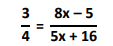
O valor de x para que a igualdade a seguir seja uma proporção é:

Imagem associada para resolução da questão

Alternativas
Q1102326 Matemática

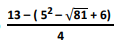
Simplificando a expressão Imagem associada para resolução da questão obtém-se um número:

Alternativas
Q1102325 Matemática
Diogo gastou uma semana para consumir todos os bombons de uma caixa que ganhou em seu aniversário, sendo que no primeiro dia consumiu um terço dos bombons e a partir do segundo até o sétimo dia consumiu 4 bombons por dia. A soma dos algarismos do número de bombons que havia na caixa antes de ser aberta é:
Alternativas
Q1102324 Matemática
Marcela nasceu no último ano do século 20 cujo número é divisível por 3 e 4 e Paulo nasceu no primeiro ano do século 21 cujo número é divisível por 5 e 6. Assim, a diferença de idade entre Marcela e Paulo é de:
Alternativas
Q1102323 Matemática
Sejam os polinômios p(x) = ax3 + bx2 + 3x – 3 e q(x) = 2x3 + 3x2 + cx + d. Se p(1) = 3 e p(2) = 31; q(–1) = 6; q(0) = 1, então p(x) – q(x) é igual a:
Alternativas
Q1102322 Matemática
Uma das raízes da equação x2 + 3x + c = 0 é também raiz da equação 4x – 12 = 0. Assim, o valor de “c” é um número:
Alternativas
Q1102321 Matemática
Antônio deseja realizar 5 tarefas no período de uma semana, cada uma delas em um dia diferente das demais. Se duas dessas tarefas devem ser realizadas no sábado ou no domingo e as demais nos outros dias da semana, de quantas maneiras ele poderá realizar as 5 tarefas na semana em questão?
Alternativas
Q1102320 Matemática
A figura a seguir representa um azulejo quadrado cujo lado mede 20 cm, no seu interior um quadrado branco cujo lado mede 10 cm e um quadrado preto de lado 6 cm. A porcentagem da superfície do azulejo ocupada pela região branca corresponde a: Imagem associada para resolução da questão
Alternativas
Q1102319 Matemática
Um professor elaborou uma prova no valor de 100 pontos constituída por 12 questões sendo algumas de múltipla escolha valendo 8 pontos cada e as demais dissertativas valendo 9 pontos cada. O total de pontos obtidos por um aluno que acertar todas as questões de múltipla escolha e apenas uma dissertativa nessa prova será igual a:
Alternativas
Q1102318 Matemática

Seja y = ax2 + bx + c uma função do segundo grau cujo gráfico está representado a seguir.

Imagem associada para resolução da questão

Sobre os coeficientes dessa função tem-se que:

Alternativas
Q1102317 Matemática
Um paralelepípedo cujo volume é 750 cm3 tem dimensões: x, 2x e 3x. A área total desse paralelepípedo mede:
Alternativas
Q1102316 Matemática
O preço de um produto sofreu um aumento de 20%; porém, ao comprar esse produto após o aumento, uma pessoa conseguiu um desconto de R$ 9,00 no preço do mesmo pagando por ele R$ 51,00. Sendo assim, o valor do desconto em relação ao novo preço do produto foi de:
Alternativas
Q1102315 Matemática

Renzo tem três cães: um labrador, um pinscher e um pastor alemão. A frequência de banhos desses cachorros é a seguinte:

o labrador toma banho de 18 em 18 dias; o pinscher toma banho de 8 em 8 dias; e o pastor alemão toma banho de 30 em 30 dias.

Se hoje Renzo deu banho nos três cachorros, daqui a quantos dias os cachorros tomarão banhos no mesmo dia novamente?

Alternativas
Respostas
8201: A
8202: A
8203: D
8204: C
8205: B
8206: A
8207: A
8208: B
8209: D
8210: D
8211: D
8212: B
8213: D
8214: D
8215: A
8216: B
8217: B
8218: B
8219: C
8220: D