Questões de Concurso
Comentadas para instituto fênix
Foram encontradas 7.342 questões
Resolva questões gratuitamente!
Junte-se a mais de 4 milhões de concurseiros!


Ano: 2025
Banca:
Instituto Fênix
Órgão:
Prefeitura de Nova Itaberaba - SC
Prova:
Instituto Fênix - 2025 - Prefeitura de Nova Itaberaba - SC - Agnte Administrativo |
Q3803672
Legislação Municipal
Conforme a Lei Orgânica Municipal, acerca das sessões e
convocações da Câmara Municipal, assinale a alternativa
INCORRETA.
Ano: 2025
Banca:
Instituto Fênix
Órgão:
Prefeitura de Nova Itaberaba - SC
Prova:
Instituto Fênix - 2025 - Prefeitura de Nova Itaberaba - SC - Agnte Administrativo |
Q3803671
Direito Constitucional
Conforme a Lei Orgânica Municipal, acerca da associação
sindical, do direito de greve e da participação dos servidores
públicos municipais, assinale a alternativa correta.
Ano: 2025
Banca:
Instituto Fênix
Órgão:
Prefeitura de Nova Itaberaba - SC
Prova:
Instituto Fênix - 2025 - Prefeitura de Nova Itaberaba - SC - Agnte Administrativo |
Q3803670
Legislação Municipal
Nos termos da Lei Orgânica Municipal, o Município, na sua
circunscrição territorial e dentro de sua competência
constitucional, assegurará a todos, dentro dos princípios da
ordem econômica, fundada na valorização do trabalho humano
e na livre iniciativa, existência digna, observados os seguintes
princípios, EXCETO:
Ano: 2025
Banca:
Instituto Fênix
Órgão:
Prefeitura de Nova Itaberaba - SC
Provas:
Instituto Fênix - 2025 - Prefeitura de Nova Itaberaba - SC - Agnte Administrativo
|
Instituto Fênix - 2025 - Prefeitura de Nova Itaberaba - SC - Técnico Eletricista |
Instituto Fênix - 2025 - Prefeitura de Nova Itaberaba - SC - Agente de Portaria Escolar |
Instituto Fênix - 2025 - Prefeitura de Nova Itaberaba - SC - Mecânico |
Instituto Fênix - 2025 - Prefeitura de Nova Itaberaba - SC - Agente Comunitário de Saúde |
Q3803667
Matemática
A tabela a seguir apresenta vinte e cinco células, sendo que vinte delas trazem números, e cinco delas trazem números desconhecidos.
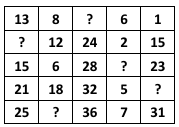
Se a média aritmética dos números da primeira coluna é igual a 20, a média aritmética dos números da segunda coluna é 10, a média aritmética dos números da terceira coluna é 24, a média aritmética dos números da quarta coluna é 8, e a média aritmética dos números da quinta coluna é 16, qual alternativa traz a maior soma possível entre três dos números desconhecidos da tabela acima?
Ano: 2025
Banca:
Instituto Fênix
Órgão:
Prefeitura de Nova Itaberaba - SC
Provas:
Instituto Fênix - 2025 - Prefeitura de Nova Itaberaba - SC - Agnte Administrativo
|
Instituto Fênix - 2025 - Prefeitura de Nova Itaberaba - SC - Técnico Eletricista |
Instituto Fênix - 2025 - Prefeitura de Nova Itaberaba - SC - Agente de Portaria Escolar |
Instituto Fênix - 2025 - Prefeitura de Nova Itaberaba - SC - Mecânico |
Instituto Fênix - 2025 - Prefeitura de Nova Itaberaba - SC - Agente Comunitário de Saúde |
Q3803665
Matemática Financeira
Uma aplicação financeira segue um sistema de juros
simples. Considerando que essa aplicação segue determinada
taxa mensal, um capital de R$ 14.500,00 se torna R$ 16.588,00
ao longo de um ano. Caso a aplicação seguisse sistema de juros
compostos, os juros obtidos em três meses com o mesmo
capital seria aproximadamente R$ 15.028,29. A partir dessas
informações, assinale a alternativa que apresenta a taxa que é
utilizada nessa aplicação financeira.
Ano: 2025
Banca:
Instituto Fênix
Órgão:
Prefeitura de Nova Itaberaba - SC
Provas:
Instituto Fênix - 2025 - Prefeitura de Nova Itaberaba - SC - Agnte Administrativo
|
Instituto Fênix - 2025 - Prefeitura de Nova Itaberaba - SC - Técnico Eletricista |
Instituto Fênix - 2025 - Prefeitura de Nova Itaberaba - SC - Agente de Portaria Escolar |
Instituto Fênix - 2025 - Prefeitura de Nova Itaberaba - SC - Mecânico |
Instituto Fênix - 2025 - Prefeitura de Nova Itaberaba - SC - Agente Comunitário de Saúde |
Q3803664
Português
Texto associado
Respeitar limites não é fraqueza, é amor próprio
Um passo depois do outro, um dia após o outro e os anos
vão sendo somados. Passamos a maior parte do nosso tempo
achando que somos capazes de tudo, ao ponto de desconhecer
possíveis limites. Lá adiante a vida começa a dar sinais e, então,
passamos a observar que nem tudo pode ser abraçado.
Respeitar-se é reconhecer que cada pessoa possui um
compasso único.
O tempo interior não acompanha calendários externos, e
a pressa não produz maturidade. Crescer exige pausas, exige
escuta, exige cuidado. Há ciclos que pedem recolhimento,
outros que pedem coragem, e nenhum deles pode ser forçado.
Quando aceitamos o próprio tempo, deixamos de nos
comparar e começamos a caminhar com mais leveza. A intuição
também merece respeito.
Ela é essa voz suave que fala antes que a mente organize
o pensamento. Muitas vezes ignorada, é justamente ela que
indica caminhos mais alinhados com a verdade interior. Confiar
nesse sussurro é um ato de sabedoria, pois a alma reconhece o
que lhe faz bem antes que os olhos percebam. A trajetória, com
suas curvas, erros e acertos, é sagrada.
Cada passo dado, mesmo os que não deram certo, fez
parte da tessitura que nos trouxe até aqui. Respeitar a própria
história é não apagar capítulos difíceis, mas compreendê-los
como mestres silenciosos. Os valores são a raiz que sustenta o
crescimento. Quando nossa vida acontece para além dos
limites, isto é, achamos que podemos esquecidos, nos
tornamos reféns de expectativas externas; quando honrados,
somos capazes de agir com integridade mesmo diante das
provações.
Eles moldam escolhas, direcionam afetos e iluminam
caminhos. E os limites, tão necessários, são fronteiras de
proteção. Dizem onde termina o que dói e começa o que cura.
Respeitar limites não é fraqueza, é amor próprio. É reconhecer
que a alma também se cansa, que o corpo precisa de descanso,
que a mente pede silêncio.
Ao acolher tempo, intuição, trajetória, valores e limites,
encontramos o ponto de equilíbrio que permite viver com mais
verdade. E então, o coração descobre que se respeitar não é
egoísmo; é condição para seguir inteiro.
Autor: Jaime Bettega - Pioneiro (adaptado).
No contexto do texto, a palavra “tessitura” é utilizada de
forma conotativa para expressar determinado sentido.
Considerando o sentido assumido no trecho, assinale a
alternativa que melhor traduz o significado de “tessitura”.
Ano: 2025
Banca:
Instituto Fênix
Órgão:
Prefeitura de Nova Itaberaba - SC
Provas:
Instituto Fênix - 2025 - Prefeitura de Nova Itaberaba - SC - Agnte Administrativo
|
Instituto Fênix - 2025 - Prefeitura de Nova Itaberaba - SC - Técnico Eletricista |
Instituto Fênix - 2025 - Prefeitura de Nova Itaberaba - SC - Agente de Portaria Escolar |
Instituto Fênix - 2025 - Prefeitura de Nova Itaberaba - SC - Mecânico |
Instituto Fênix - 2025 - Prefeitura de Nova Itaberaba - SC - Agente Comunitário de Saúde |
Q3803663
Português
Texto associado
Respeitar limites não é fraqueza, é amor próprio
Um passo depois do outro, um dia após o outro e os anos
vão sendo somados. Passamos a maior parte do nosso tempo
achando que somos capazes de tudo, ao ponto de desconhecer
possíveis limites. Lá adiante a vida começa a dar sinais e, então,
passamos a observar que nem tudo pode ser abraçado.
Respeitar-se é reconhecer que cada pessoa possui um
compasso único.
O tempo interior não acompanha calendários externos, e
a pressa não produz maturidade. Crescer exige pausas, exige
escuta, exige cuidado. Há ciclos que pedem recolhimento,
outros que pedem coragem, e nenhum deles pode ser forçado.
Quando aceitamos o próprio tempo, deixamos de nos
comparar e começamos a caminhar com mais leveza. A intuição
também merece respeito.
Ela é essa voz suave que fala antes que a mente organize
o pensamento. Muitas vezes ignorada, é justamente ela que
indica caminhos mais alinhados com a verdade interior. Confiar
nesse sussurro é um ato de sabedoria, pois a alma reconhece o
que lhe faz bem antes que os olhos percebam. A trajetória, com
suas curvas, erros e acertos, é sagrada.
Cada passo dado, mesmo os que não deram certo, fez
parte da tessitura que nos trouxe até aqui. Respeitar a própria
história é não apagar capítulos difíceis, mas compreendê-los
como mestres silenciosos. Os valores são a raiz que sustenta o
crescimento. Quando nossa vida acontece para além dos
limites, isto é, achamos que podemos esquecidos, nos
tornamos reféns de expectativas externas; quando honrados,
somos capazes de agir com integridade mesmo diante das
provações.
Eles moldam escolhas, direcionam afetos e iluminam
caminhos. E os limites, tão necessários, são fronteiras de
proteção. Dizem onde termina o que dói e começa o que cura.
Respeitar limites não é fraqueza, é amor próprio. É reconhecer
que a alma também se cansa, que o corpo precisa de descanso,
que a mente pede silêncio.
Ao acolher tempo, intuição, trajetória, valores e limites,
encontramos o ponto de equilíbrio que permite viver com mais
verdade. E então, o coração descobre que se respeitar não é
egoísmo; é condição para seguir inteiro.
Autor: Jaime Bettega - Pioneiro (adaptado).
Na oração “Eles moldam escolhas”, o verbo apresenta
concordância com um termo expresso que exerce a função de
núcleo do sujeito, indicando claramente quem pratica a ação
verbal. Considerando a estrutura sintática do enunciado,
assinale a alternativa correta quanto à classificação do sujeito.
Ano: 2025
Banca:
Instituto Fênix
Órgão:
Prefeitura de Nova Itaberaba - SC
Provas:
Instituto Fênix - 2025 - Prefeitura de Nova Itaberaba - SC - Agnte Administrativo
|
Instituto Fênix - 2025 - Prefeitura de Nova Itaberaba - SC - Técnico Eletricista |
Instituto Fênix - 2025 - Prefeitura de Nova Itaberaba - SC - Agente de Portaria Escolar |
Instituto Fênix - 2025 - Prefeitura de Nova Itaberaba - SC - Mecânico |
Instituto Fênix - 2025 - Prefeitura de Nova Itaberaba - SC - Agente Comunitário de Saúde |
Q3803662
Português
Texto associado
Respeitar limites não é fraqueza, é amor próprio
Um passo depois do outro, um dia após o outro e os anos
vão sendo somados. Passamos a maior parte do nosso tempo
achando que somos capazes de tudo, ao ponto de desconhecer
possíveis limites. Lá adiante a vida começa a dar sinais e, então,
passamos a observar que nem tudo pode ser abraçado.
Respeitar-se é reconhecer que cada pessoa possui um
compasso único.
O tempo interior não acompanha calendários externos, e
a pressa não produz maturidade. Crescer exige pausas, exige
escuta, exige cuidado. Há ciclos que pedem recolhimento,
outros que pedem coragem, e nenhum deles pode ser forçado.
Quando aceitamos o próprio tempo, deixamos de nos
comparar e começamos a caminhar com mais leveza. A intuição
também merece respeito.
Ela é essa voz suave que fala antes que a mente organize
o pensamento. Muitas vezes ignorada, é justamente ela que
indica caminhos mais alinhados com a verdade interior. Confiar
nesse sussurro é um ato de sabedoria, pois a alma reconhece o
que lhe faz bem antes que os olhos percebam. A trajetória, com
suas curvas, erros e acertos, é sagrada.
Cada passo dado, mesmo os que não deram certo, fez
parte da tessitura que nos trouxe até aqui. Respeitar a própria
história é não apagar capítulos difíceis, mas compreendê-los
como mestres silenciosos. Os valores são a raiz que sustenta o
crescimento. Quando nossa vida acontece para além dos
limites, isto é, achamos que podemos esquecidos, nos
tornamos reféns de expectativas externas; quando honrados,
somos capazes de agir com integridade mesmo diante das
provações.
Eles moldam escolhas, direcionam afetos e iluminam
caminhos. E os limites, tão necessários, são fronteiras de
proteção. Dizem onde termina o que dói e começa o que cura.
Respeitar limites não é fraqueza, é amor próprio. É reconhecer
que a alma também se cansa, que o corpo precisa de descanso,
que a mente pede silêncio.
Ao acolher tempo, intuição, trajetória, valores e limites,
encontramos o ponto de equilíbrio que permite viver com mais
verdade. E então, o coração descobre que se respeitar não é
egoísmo; é condição para seguir inteiro.
Autor: Jaime Bettega - Pioneiro (adaptado).
No trecho “Há ciclos que pedem recolhimento”, observa-se
a relação estabelecida entre dois termos da oração, em que
uma palavra retoma um antecedente e introduz uma
informação explicativa sobre ele. Considerando o
funcionamento sintático e semântico desse elemento no
contexto apresentado, assinale a alternativa que indica
corretamente a classe gramatical do termo “que”.
Ano: 2025
Banca:
Instituto Fênix
Órgão:
Prefeitura de Nova Itaberaba - SC
Provas:
Instituto Fênix - 2025 - Prefeitura de Nova Itaberaba - SC - Agnte Administrativo
|
Instituto Fênix - 2025 - Prefeitura de Nova Itaberaba - SC - Técnico Eletricista |
Instituto Fênix - 2025 - Prefeitura de Nova Itaberaba - SC - Agente de Portaria Escolar |
Instituto Fênix - 2025 - Prefeitura de Nova Itaberaba - SC - Mecânico |
Instituto Fênix - 2025 - Prefeitura de Nova Itaberaba - SC - Agente Comunitário de Saúde |
Q3803661
Português
Texto associado
Respeitar limites não é fraqueza, é amor próprio
Um passo depois do outro, um dia após o outro e os anos
vão sendo somados. Passamos a maior parte do nosso tempo
achando que somos capazes de tudo, ao ponto de desconhecer
possíveis limites. Lá adiante a vida começa a dar sinais e, então,
passamos a observar que nem tudo pode ser abraçado.
Respeitar-se é reconhecer que cada pessoa possui um
compasso único.
O tempo interior não acompanha calendários externos, e
a pressa não produz maturidade. Crescer exige pausas, exige
escuta, exige cuidado. Há ciclos que pedem recolhimento,
outros que pedem coragem, e nenhum deles pode ser forçado.
Quando aceitamos o próprio tempo, deixamos de nos
comparar e começamos a caminhar com mais leveza. A intuição
também merece respeito.
Ela é essa voz suave que fala antes que a mente organize
o pensamento. Muitas vezes ignorada, é justamente ela que
indica caminhos mais alinhados com a verdade interior. Confiar
nesse sussurro é um ato de sabedoria, pois a alma reconhece o
que lhe faz bem antes que os olhos percebam. A trajetória, com
suas curvas, erros e acertos, é sagrada.
Cada passo dado, mesmo os que não deram certo, fez
parte da tessitura que nos trouxe até aqui. Respeitar a própria
história é não apagar capítulos difíceis, mas compreendê-los
como mestres silenciosos. Os valores são a raiz que sustenta o
crescimento. Quando nossa vida acontece para além dos
limites, isto é, achamos que podemos esquecidos, nos
tornamos reféns de expectativas externas; quando honrados,
somos capazes de agir com integridade mesmo diante das
provações.
Eles moldam escolhas, direcionam afetos e iluminam
caminhos. E os limites, tão necessários, são fronteiras de
proteção. Dizem onde termina o que dói e começa o que cura.
Respeitar limites não é fraqueza, é amor próprio. É reconhecer
que a alma também se cansa, que o corpo precisa de descanso,
que a mente pede silêncio.
Ao acolher tempo, intuição, trajetória, valores e limites,
encontramos o ponto de equilíbrio que permite viver com mais
verdade. E então, o coração descobre que se respeitar não é
egoísmo; é condição para seguir inteiro.
Autor: Jaime Bettega - Pioneiro (adaptado).
No texto, o autor articula diferentes conceitos — como
tempo, intuição, trajetória e valores — para sustentar uma
visão específica sobre o cuidado consigo mesmo. À luz dessa
construção argumentativa, assinale a alternativa correta.
Ano: 2025
Banca:
Instituto Fênix
Órgão:
Prefeitura de Nova Itaberaba - SC
Provas:
Instituto Fênix - 2025 - Prefeitura de Nova Itaberaba - SC - Agnte Administrativo
|
Instituto Fênix - 2025 - Prefeitura de Nova Itaberaba - SC - Técnico Eletricista |
Instituto Fênix - 2025 - Prefeitura de Nova Itaberaba - SC - Agente de Portaria Escolar |
Instituto Fênix - 2025 - Prefeitura de Nova Itaberaba - SC - Mecânico |
Instituto Fênix - 2025 - Prefeitura de Nova Itaberaba - SC - Agente Comunitário de Saúde |
Q3803660
Português
Texto associado
Respeitar limites não é fraqueza, é amor próprio
Um passo depois do outro, um dia após o outro e os anos
vão sendo somados. Passamos a maior parte do nosso tempo
achando que somos capazes de tudo, ao ponto de desconhecer
possíveis limites. Lá adiante a vida começa a dar sinais e, então,
passamos a observar que nem tudo pode ser abraçado.
Respeitar-se é reconhecer que cada pessoa possui um
compasso único.
O tempo interior não acompanha calendários externos, e
a pressa não produz maturidade. Crescer exige pausas, exige
escuta, exige cuidado. Há ciclos que pedem recolhimento,
outros que pedem coragem, e nenhum deles pode ser forçado.
Quando aceitamos o próprio tempo, deixamos de nos
comparar e começamos a caminhar com mais leveza. A intuição
também merece respeito.
Ela é essa voz suave que fala antes que a mente organize
o pensamento. Muitas vezes ignorada, é justamente ela que
indica caminhos mais alinhados com a verdade interior. Confiar
nesse sussurro é um ato de sabedoria, pois a alma reconhece o
que lhe faz bem antes que os olhos percebam. A trajetória, com
suas curvas, erros e acertos, é sagrada.
Cada passo dado, mesmo os que não deram certo, fez
parte da tessitura que nos trouxe até aqui. Respeitar a própria
história é não apagar capítulos difíceis, mas compreendê-los
como mestres silenciosos. Os valores são a raiz que sustenta o
crescimento. Quando nossa vida acontece para além dos
limites, isto é, achamos que podemos esquecidos, nos
tornamos reféns de expectativas externas; quando honrados,
somos capazes de agir com integridade mesmo diante das
provações.
Eles moldam escolhas, direcionam afetos e iluminam
caminhos. E os limites, tão necessários, são fronteiras de
proteção. Dizem onde termina o que dói e começa o que cura.
Respeitar limites não é fraqueza, é amor próprio. É reconhecer
que a alma também se cansa, que o corpo precisa de descanso,
que a mente pede silêncio.
Ao acolher tempo, intuição, trajetória, valores e limites,
encontramos o ponto de equilíbrio que permite viver com mais
verdade. E então, o coração descobre que se respeitar não é
egoísmo; é condição para seguir inteiro.
Autor: Jaime Bettega - Pioneiro (adaptado).
Ao desenvolver uma reflexão sobre tempo, limites e
amadurecimento pessoal, o texto constrói uma crítica sutil a
determinadas posturas comuns na vida contemporânea.
Considerando essa abordagem, assinale a alternativa correta
quanto à ideia central defendida pelo autor.
Ano: 2025
Banca:
Instituto Fênix
Órgão:
Prefeitura de São Domingos - SC
Prova:
Instituto Fênix - 2025 - Prefeitura de São Domingos - SC - Eletricista |
Q3778952
Eletricidade
Em relação aos instrumentos de medição utilizados em
sistemas elétricos, analise as assertivas:
I. O varímetro é utilizado para medir potência reativa, geralmente expressa em VAr.
II. O frequencímetro mede a frequência da rede elétrica, indicada em hertz (Hz).
III. O voltímetro mede a potência ativa, sendo utilizado para avaliação de carga em watts.
Sobre as assertivas, está correto o que se afirma em:
I. O varímetro é utilizado para medir potência reativa, geralmente expressa em VAr.
II. O frequencímetro mede a frequência da rede elétrica, indicada em hertz (Hz).
III. O voltímetro mede a potência ativa, sendo utilizado para avaliação de carga em watts.
Sobre as assertivas, está correto o que se afirma em:
Ano: 2025
Banca:
Instituto Fênix
Órgão:
Prefeitura de São Domingos - SC
Prova:
Instituto Fênix - 2025 - Prefeitura de São Domingos - SC - Eletricista |
Q3778951
Eletricidade
Em relação à classificação e às características comparativas
entre instrumentos digitais e analógicos utilizados em
medições elétricas, é correto afirmar que:
Ano: 2025
Banca:
Instituto Fênix
Órgão:
Prefeitura de São Domingos - SC
Prova:
Instituto Fênix - 2025 - Prefeitura de São Domingos - SC - Eletricista |
Q3778949
Eletricidade
Em uma instalação elétrica é comum a utilização de
instrumentos específicos para avaliar grandezas fundamentais
do circuito. Considerando a medição adequada de cada
parâmetro, é correto afirmar que:
Ano: 2025
Banca:
Instituto Fênix
Órgão:
Prefeitura de São Domingos - SC
Prova:
Instituto Fênix - 2025 - Prefeitura de São Domingos - SC - Eletricista |
Q3778948
Eletricidade
O fator de potência é parâmetro essencial para o
desempenho de instalações industriais e prediais,
influenciando perdas elétricas e eficiência operacional.
Considerando esse tema, analise as assertivas abaixo:
I. Capacitores são instalados para compensar a potência reativa indutiva presente em muitas cargas.
II. A melhoria do fator de potência contribui para reduzir perdas e aliviar transformadores e alimentadores.
III. O fator de potência não apresenta relevância prática em ambientes industriais com cargas indutivas.
Está correto o que se afirma em:
I. Capacitores são instalados para compensar a potência reativa indutiva presente em muitas cargas.
II. A melhoria do fator de potência contribui para reduzir perdas e aliviar transformadores e alimentadores.
III. O fator de potência não apresenta relevância prática em ambientes industriais com cargas indutivas.
Está correto o que se afirma em:
Ano: 2025
Banca:
Instituto Fênix
Órgão:
Prefeitura de São Domingos - SC
Prova:
Instituto Fênix - 2025 - Prefeitura de São Domingos - SC - Eletricista |
Q3778947
Eletricidade
Em relação ao funcionamento dos transformadores
elétricos utilizados em sistemas de distribuição e consumo, é
correto afirmar que:
Ano: 2025
Banca:
Instituto Fênix
Órgão:
Prefeitura de São Domingos - SC
Prova:
Instituto Fênix - 2025 - Prefeitura de São Domingos - SC - Eletricista |
Q3778946
Eletrotécnica
Os motores elétricos empregados em instalações
industriais apresentam características distintas conforme o tipo
e o princípio de funcionamento. Considerando conceitos
fundamentais sobre motores de indução e motores de corrente
contínua, analise as assertivas a seguir:
I. Motores de indução trifásicos apresentam maior robustez e eficiência em comparação aos monofásicos.
II. Motores de corrente contínua permitem controle preciso de velocidade por meio da variação da tensão de armadura.
III. Motores de indução exigem comutadores e escovas para operar.
Sobre as assertivas, está correto o que se afirma em:
I. Motores de indução trifásicos apresentam maior robustez e eficiência em comparação aos monofásicos.
II. Motores de corrente contínua permitem controle preciso de velocidade por meio da variação da tensão de armadura.
III. Motores de indução exigem comutadores e escovas para operar.
Sobre as assertivas, está correto o que se afirma em:
Ano: 2025
Banca:
Instituto Fênix
Órgão:
Prefeitura de São Domingos - SC
Prova:
Instituto Fênix - 2025 - Prefeitura de São Domingos - SC - Eletricista |
Q3778945
Eletricidade
O sistema de ___________ tem como finalidade conduzir
correntes de fuga para a terra, enquanto o ___________
protege o usuário contra tensões perigosas em partes
metálicas expostas.
Qual alternativa preenche, CORRETA e respectivamente, as lacunas?
Qual alternativa preenche, CORRETA e respectivamente, as lacunas?
Ano: 2025
Banca:
Instituto Fênix
Órgão:
Prefeitura de São Domingos - SC
Prova:
Instituto Fênix - 2025 - Prefeitura de São Domingos - SC - Eletricista |
Q3778944
Eletricidade
Assinale a alternativa INCORRETA sobre força eletromotriz
(f.e.m.):
Ano: 2025
Banca:
Instituto Fênix
Órgão:
Prefeitura de São Domingos - SC
Prova:
Instituto Fênix - 2025 - Prefeitura de São Domingos - SC - Eletricista |
Q3778943
Eletricidade
Em um circuito monofásico residencial de 127 V, a corrente
elétrica será corretamente calculada por meio:
Ano: 2025
Banca:
Instituto Fênix
Órgão:
Prefeitura de São Domingos - SC
Prova:
Instituto Fênix - 2025 - Prefeitura de São Domingos - SC - Eletricista |
Q3778942
Direito Administrativo
O Regime Jurídico dos Servidores de São Domingos define
de forma expressa as hipóteses que configuram vacância do
cargo público, abrangendo situações funcionais,
administrativas e pessoais. Considerando essas disposições,
assinale a alternativa correta.

 Conheça nossos planos