Questões de Concurso
Para inep
Foram encontradas 3.879 questões
Resolva questões gratuitamente!
Junte-se a mais de 4 milhões de concurseiros!


Q4145009
Matemática
Uma professora de Matemática propôs aos estudantes o estudo do Teorema do Resto Chinês. Os estudantes então pesquisaram
e encontraram a seguinte informação:
“Se alguém conhece os restos da divisão euclidiana de um inteiro n por vários inteiros, então pode determinar o resto da divisão de n pelo produto desses inteiros, sob a condição de que sejam primos entre si, dois a dois. Por exemplo, se soubermos que o resto de n dividido por 3 é 2, o resto de n dividido por 5 é 3 e o resto de n dividido por 7 é 2, então, sem saber o valor de n, podemos determinar que o resto de n dividido por 105 (o produto de 3, 5 e 7) é 23”.
Na aula, os estudantes mencionaram que não haviam entendido como o número 23 foi obtido. A professora, então, respondeu à dúvida. Enunciou o Teorema e, em seguida, apresentou o procedimento convencional para determinar o valor de n que, resumidamente, consiste em:
1. calcular o produto m = 3 · 5 · 7 = 105;
2. obter M1 = 105/3 = 35, M2 = 105/5 = 21 e M3 = 105/7 = 15;
3. calcular os inversos de M1 (mod 3), M2 (mod 5) e M3 (mod 7), respectivamente denotados por N1, N2 e N3;
4. calcular o resto da divisão de 2 · M1 ⋅ N1 + 3 ⋅ M2 ⋅ N2 + 2 ⋅ M3 · N3 por 105.
Para o item 3, ela apresentou o seguinte detalhamento: “Para calcular o inverso de um número inteiro M (mod L), em que L é um inteiro positivo com mdc(M, L) = 1:
I. Calcule o resto da divisão de M por L, chame-o de R.
II. Encontre, entre todos os possíveis restos não nulos de uma divisão por L, o único que, multiplicado por R, resulte num número da forma k ⋅ L + 1, para algum inteiro k.
O número encontrado no item II é o inverso de M (mod L)”.
Os estudantes calcularam os inversos, obtiveram N1 = 2, N2 = 1, N3 = 1 e conferiram as outras contas.
Com base no procedimento apresentado pela professora, os estudantes analisaram a informação que encontraram, de que o resto da divisão de n por 105 é 23, e concluíram que está
“Se alguém conhece os restos da divisão euclidiana de um inteiro n por vários inteiros, então pode determinar o resto da divisão de n pelo produto desses inteiros, sob a condição de que sejam primos entre si, dois a dois. Por exemplo, se soubermos que o resto de n dividido por 3 é 2, o resto de n dividido por 5 é 3 e o resto de n dividido por 7 é 2, então, sem saber o valor de n, podemos determinar que o resto de n dividido por 105 (o produto de 3, 5 e 7) é 23”.
Na aula, os estudantes mencionaram que não haviam entendido como o número 23 foi obtido. A professora, então, respondeu à dúvida. Enunciou o Teorema e, em seguida, apresentou o procedimento convencional para determinar o valor de n que, resumidamente, consiste em:
1. calcular o produto m = 3 · 5 · 7 = 105;
2. obter M1 = 105/3 = 35, M2 = 105/5 = 21 e M3 = 105/7 = 15;
3. calcular os inversos de M1 (mod 3), M2 (mod 5) e M3 (mod 7), respectivamente denotados por N1, N2 e N3;
4. calcular o resto da divisão de 2 · M1 ⋅ N1 + 3 ⋅ M2 ⋅ N2 + 2 ⋅ M3 · N3 por 105.
Para o item 3, ela apresentou o seguinte detalhamento: “Para calcular o inverso de um número inteiro M (mod L), em que L é um inteiro positivo com mdc(M, L) = 1:
I. Calcule o resto da divisão de M por L, chame-o de R.
II. Encontre, entre todos os possíveis restos não nulos de uma divisão por L, o único que, multiplicado por R, resulte num número da forma k ⋅ L + 1, para algum inteiro k.
O número encontrado no item II é o inverso de M (mod L)”.
Os estudantes calcularam os inversos, obtiveram N1 = 2, N2 = 1, N3 = 1 e conferiram as outras contas.
Com base no procedimento apresentado pela professora, os estudantes analisaram a informação que encontraram, de que o resto da divisão de n por 105 é 23, e concluíram que está
Q4145008
Pedagogia
Os estudantes com deficiência visual têm no tato seu principal meio de percepção e compreensão do mundo. O uso de recursos
concretos com texturas variadas, formas bem definidas e dimensões adequadas torna-se essencial para que esses estudantes
possam desenvolver habilidades matemáticas e cognitivas. Assim, o professor precisa planejar estratégias que valorizem a
experiência sensorial e promovam a aprendizagem significativa, possibilitando que o ensino da Matemática seja realmente
acessível a todos.
GENZ, F. K.; SILVA, L. D.; SILVA, D. F. O ensino de matemática e a deficiência visual: uma proposta para o ensino dos números complexos. Caminhos da Educação Matemática em Revista, n. 2, 2021 (adaptado).
Considerando os princípios do Desenho Universal para a Aprendizagem (DUA) e os fundamentos da Educação Matemática Inclusiva, qual alternativa representa estratégias de um plano de aula coerente com essas abordagens?
GENZ, F. K.; SILVA, L. D.; SILVA, D. F. O ensino de matemática e a deficiência visual: uma proposta para o ensino dos números complexos. Caminhos da Educação Matemática em Revista, n. 2, 2021 (adaptado).
Considerando os princípios do Desenho Universal para a Aprendizagem (DUA) e os fundamentos da Educação Matemática Inclusiva, qual alternativa representa estratégias de um plano de aula coerente com essas abordagens?
Q4145007
Matemática
Em uma aula de Matemática, o professor divide os estudantes em quatro grupos para fazer uma roda de conversa sobre
sequências.
Ele apresenta a sequência an = 1/n, na qual n pertence ao conjunto dos números inteiros positivos. Logo após, pergunta aos grupos qual é o comportamento dessa sequência à medida que o valor de n aumenta.
Cada grupo discute e compartilha sua resposta:
Grupo 1: a sequência diverge porque os sinais de an se alternam.
Grupo 2: a sequência tende para o infinito, pois seus termos ficam cada vez maiores.
Grupo 3: a sequência converge para zero, pois seus termos ficam cada vez menores e se aproximam cada vez mais de zero.
Grupo 4: a sequência tem como limite 1, pois a1 = 1 e esse resultado determina os demais valores da sequência.
Qual grupo apresenta a conjectura correta sobre o comportamento dessa sequência?
Ele apresenta a sequência an = 1/n, na qual n pertence ao conjunto dos números inteiros positivos. Logo após, pergunta aos grupos qual é o comportamento dessa sequência à medida que o valor de n aumenta.
Cada grupo discute e compartilha sua resposta:
Grupo 1: a sequência diverge porque os sinais de an se alternam.
Grupo 2: a sequência tende para o infinito, pois seus termos ficam cada vez maiores.
Grupo 3: a sequência converge para zero, pois seus termos ficam cada vez menores e se aproximam cada vez mais de zero.
Grupo 4: a sequência tem como limite 1, pois a1 = 1 e esse resultado determina os demais valores da sequência.
Qual grupo apresenta a conjectura correta sobre o comportamento dessa sequência?
Q4145006
Matemática
Texto associado
Texto para questão
A Arquitetura e a Matemática mantêm uma relação indissociável, essencial em todas as etapas do processo de criação e construção
de espaços. A Matemática contribui com cálculos, proporções, equações e conceitos da geometria espacial, fundamentais para o
dimensionamento de estruturas como pilares, vigas, lajes, além do desenvolvimento de plantas, maquetes e projetos luminotécnicos.
Esses elementos garantem não somente a funcionalidade das edificações, mas também sua harmonia estética, segurança e
eficiência, mostrando que a Matemática não apenas colabora com a Arquitetura, ela é parte vital de sua essência. Um exemplo
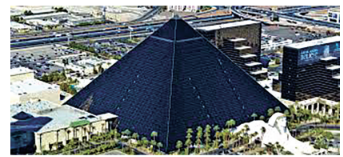
contemporâneo dessa integração entre forma e cálculo é o Hotel Luxor, em Las Vegas.
Hotel Luxor, Las Vegas, Estados Unidos
Disponível em: www.eunagringa.com.br. Acesso em: 25 maio 2025.
Os professores de Matemática e Arte propuseram aos estudantes do Ensino Médio a construção de uma maquete proporcional
do Hotel Luxor, cuja estrutura tem o formato de uma pirâmide regular de base quadrada. A pirâmide real tem aproximadamente
110 m de altura e 220 m de aresta da base. A maquete deveria ser construída em escala 1 : 500, utilizando materiais como
papelão, madeira leve e cola quente.
Com base nas informações fornecidas, os estudantes devem calcular as dimensões proporcionais e o volume da pirâmide em
escala.
Qual alternativa representa corretamente essas medidas da maquete?
Qual alternativa representa corretamente essas medidas da maquete?
Q4145004
Pedagogia
De acordo com Skovsmose (2007), a Educação Matemática Crítica (EMC) tem como foco o meio social e político, buscando
uma prática democrática no processo de ensino e aprendizagem, por meio do qual o estudante é convidado a refletir sobre a
Matemática vivenciada em seu contexto, em uma perspectiva crítica. Uma possibilidade de tema para um projeto pedagógico
em EMC seria a matemática das casas de apostas.
Para entender a matemática das casas de apostas, primeiro é preciso entender o que são as odds, que traduzido para o português significam “chances”. Uma odd de 2,75 indica que o retorno será 2,75 vezes o valor apostado. Ou seja: uma aposta de 4 reais que é vencedora com essa odd dá um retorno de 11 reais (4 vezes 2,75 é igual a 11).
Vamos considerar um exemplo: um jogo entre Vasco e Palmeiras. As odds de uma casa de apostas para esse jogo podem ser:
• 4,41 para vitória do Vasco;
• 3,74 para empate;
• 1,79 para vitória do Palmeiras.
As probabilidades implícitas (inversos das odds) para esse jogo são: 22,68% de vitória do Vasco; 26,74% de empate e 55,86% de vitória do Palmeiras.
Uma professora resolveu problematizar a questão das casas de apostas no Brasil. Solicitou aos estudantes que simulassem uma aposta de uma pessoa que distribuiu seu dinheiro de forma diretamente proporcional às três probabilidades implícitas do jogo Vasco e Palmeiras citado no texto.
Ela observou que, se os eventos são mutuamente exclusivos e a soma das probabilidades é 100%, então a aposta proporcional é neutra, isto é, se R$ 100 são apostados, o retorno é exatamente R$ 100. Ilustrou isso com um exemplo: a probabilidade de se tirar um múltiplo de 3 num dado não viciado é 1/3 e a probabilidade de não se tirar um múltiplo de 3 é 2/3 . As odds são portanto 3 e 1,5, respectivamente. Uma aposta proporcional de R$ 100 é aproximadamente igual a apostar R$ 33,33 num múltiplo de 3 e R$ 66,67 em não sair um múltiplo de 3. Então, se não sair um múltiplo de 3, o retorno é (1,5) × (66,67) que, não fosse a aproximação, seria exatamente R$ 100. Analogamente, se sair um múltiplo de 3, o retorno é exatamente o que se apostou ao todo. Assim, as casas de apostas modificam as odds para que as apostas proporcionais, caso permitidas, não sejam neutras, mas perdedoras.
GALLAS, D. Bets: por que você quase sempre vai perder dinheiro com apostas esportivas, segundo a matemática. Disponível em: www.bbc.com. Acesso em: 16 maio 2025 (adaptado).
CHIARELLO, A. P. R.; BERNARDI, L. S. Educação financeira crítica: novos desafios na formação continuada de professores. Boletim GEPEM, n. 66, 2014 (adaptado).
Em relação às ideias de Skovsmose (2007) e à aposta proporcional no exemplo do jogo entre Vasco e Palmeiras, a proposta da professora trata-se de um convite
Para entender a matemática das casas de apostas, primeiro é preciso entender o que são as odds, que traduzido para o português significam “chances”. Uma odd de 2,75 indica que o retorno será 2,75 vezes o valor apostado. Ou seja: uma aposta de 4 reais que é vencedora com essa odd dá um retorno de 11 reais (4 vezes 2,75 é igual a 11).
Vamos considerar um exemplo: um jogo entre Vasco e Palmeiras. As odds de uma casa de apostas para esse jogo podem ser:
• 4,41 para vitória do Vasco;
• 3,74 para empate;
• 1,79 para vitória do Palmeiras.
As probabilidades implícitas (inversos das odds) para esse jogo são: 22,68% de vitória do Vasco; 26,74% de empate e 55,86% de vitória do Palmeiras.
Uma professora resolveu problematizar a questão das casas de apostas no Brasil. Solicitou aos estudantes que simulassem uma aposta de uma pessoa que distribuiu seu dinheiro de forma diretamente proporcional às três probabilidades implícitas do jogo Vasco e Palmeiras citado no texto.
Ela observou que, se os eventos são mutuamente exclusivos e a soma das probabilidades é 100%, então a aposta proporcional é neutra, isto é, se R$ 100 são apostados, o retorno é exatamente R$ 100. Ilustrou isso com um exemplo: a probabilidade de se tirar um múltiplo de 3 num dado não viciado é 1/3 e a probabilidade de não se tirar um múltiplo de 3 é 2/3 . As odds são portanto 3 e 1,5, respectivamente. Uma aposta proporcional de R$ 100 é aproximadamente igual a apostar R$ 33,33 num múltiplo de 3 e R$ 66,67 em não sair um múltiplo de 3. Então, se não sair um múltiplo de 3, o retorno é (1,5) × (66,67) que, não fosse a aproximação, seria exatamente R$ 100. Analogamente, se sair um múltiplo de 3, o retorno é exatamente o que se apostou ao todo. Assim, as casas de apostas modificam as odds para que as apostas proporcionais, caso permitidas, não sejam neutras, mas perdedoras.
GALLAS, D. Bets: por que você quase sempre vai perder dinheiro com apostas esportivas, segundo a matemática. Disponível em: www.bbc.com. Acesso em: 16 maio 2025 (adaptado).
CHIARELLO, A. P. R.; BERNARDI, L. S. Educação financeira crítica: novos desafios na formação continuada de professores. Boletim GEPEM, n. 66, 2014 (adaptado).
Em relação às ideias de Skovsmose (2007) e à aposta proporcional no exemplo do jogo entre Vasco e Palmeiras, a proposta da professora trata-se de um convite
Q4145003
Matemática
Texto associado
Texto para questão
Considerando as dificuldades dos estudantes no processo de aprendizagem da resolução de equações do segundo grau, uma
professora de Matemática resolveu utilizar-se da História da Matemática. Para isso, ela apresentou o trecho, a seguir, de um
livro que indicava como Al-Khwarizmi resolvia esse tipo de equação.
Um quadrado mais dez raízes do mesmo é igual a trinta e nove. Qual é o quadrado?
A solução é a seguinte:
• Tome metade do número de raízes, obtendo cinco.
• Isto é multiplicado por si mesmo. O produto será vinte e cinco.
• Adicione isto a trinta e nove. A soma é sessenta e quatro.
• Tome então a raiz quadrada disso, que é igual a oito.
• Subtraia disto a metade do número de raízes que é cinco. A diferença é três.
• Esta é a raiz do quadrado procurado e o próprio quadrado é nove.
BEKKEN, O. Equações de Ahmes até Abel. Rio de Janeiro: Universidade Santa Úrsula, 1994.
Após conhecer a forma como Al-Khwarizmi resolvia as equações do segundo grau, um estudante disse:
“Professora! Eu fui acompanhando aqui e percebi que é muito diferente. A parte que fica dentro da raiz não é igual à fórmula que a senhora ensinou. Mas mesmo assim deu o mesmo resultado”.
Al-Khwarizmi queria encontrar os valores desconhecidos para uma equação, que na notação atual é representada por x2 + bx = c. Assim, o valor de x é determinado de acordo com o processo descrito pela seguinte expressão:
“Professora! Eu fui acompanhando aqui e percebi que é muito diferente. A parte que fica dentro da raiz não é igual à fórmula que a senhora ensinou. Mas mesmo assim deu o mesmo resultado”.
Al-Khwarizmi queria encontrar os valores desconhecidos para uma equação, que na notação atual é representada por x2 + bx = c. Assim, o valor de x é determinado de acordo com o processo descrito pela seguinte expressão:
Q4145002
Matemática
Texto associado
Texto para questão
Considerando as dificuldades dos estudantes no processo de aprendizagem da resolução de equações do segundo grau, uma
professora de Matemática resolveu utilizar-se da História da Matemática. Para isso, ela apresentou o trecho, a seguir, de um
livro que indicava como Al-Khwarizmi resolvia esse tipo de equação.
Um quadrado mais dez raízes do mesmo é igual a trinta e nove. Qual é o quadrado?
A solução é a seguinte:
• Tome metade do número de raízes, obtendo cinco.
• Isto é multiplicado por si mesmo. O produto será vinte e cinco.
• Adicione isto a trinta e nove. A soma é sessenta e quatro.
• Tome então a raiz quadrada disso, que é igual a oito.
• Subtraia disto a metade do número de raízes que é cinco. A diferença é três.
• Esta é a raiz do quadrado procurado e o próprio quadrado é nove.
BEKKEN, O. Equações de Ahmes até Abel. Rio de Janeiro: Universidade Santa Úrsula, 1994.
Esses procedimentos algébricos eram justificados por Al-Khwarizmi pela técnica que ficou conhecida como “completar quadrados”.
Um estudante ilustrou esse procedimento com um desenho. Qual é a figura que representa a solução descrita?
Q4145001
Matemática
Estudos relacionados à Análise de Erros apontam um caminho pedagógico que vai além de aplicar medidas paliativas.
A identificação e categorização dos erros cometidos pelos estudantes possibilitam adequar o planejamento de ensino para
corrigir os erros conceituais e procedimentais. Para que essa identificação ocorra, os docentes precisam assumir uma postura
investigativa e consciente sobre as soluções dos estudantes. Mesmo sendo constantemente delineado como pertencentes ao
estudante, muitas dessas variáveis identificadas como prováveis geradoras dos erros estavam associadas ao modelo de ensino
ou à postura pedagógica adotada pelo professor. No ensino de probabilidade, por exemplo, frequentemente professores
apresentam um “macete” que associa a palavra “ou”, encontrada no enunciado, à ideia de que a solução envolve uma simples
“adição de probabilidades”, gerando um dispositivo fácil e prático. No entanto, os estudantes deveriam ser alertados que esta
relação somente será satisfeita se os eventos forem mutuamente exclusivos.
VAZ, R. F. N. Por que errar ainda é tão errado? Algumas reflexões sobre o papel do erro no ensino e na avaliação de matemática. Revemop, v. 4, 2022 (adaptado).
Considerando uma moeda e um dado não viciados, qual alternativa é utilizada por um professor como um contraexemplo para apresentar aos estudantes que a probabilidade da união de dois eventos não é sempre igual à soma das probabilidades desses eventos?
VAZ, R. F. N. Por que errar ainda é tão errado? Algumas reflexões sobre o papel do erro no ensino e na avaliação de matemática. Revemop, v. 4, 2022 (adaptado).
Considerando uma moeda e um dado não viciados, qual alternativa é utilizada por um professor como um contraexemplo para apresentar aos estudantes que a probabilidade da união de dois eventos não é sempre igual à soma das probabilidades desses eventos?
Q4145000
Matemática
Uma professora elaborou um plano de aula com o objetivo de identificar a representação algébrica de uma função trigonométrica
a partir de sua representação gráfica com o uso do GeoGebra. Ela construiu o gráfico de uma função, conforme a figura, definida
como uma combinação das funções seno e cosseno, apresentou algumas possibilidades para sua representação algébrica e
perguntou aos estudantes qual era a correta.
Gráfico representado pela professora no GeoGebra
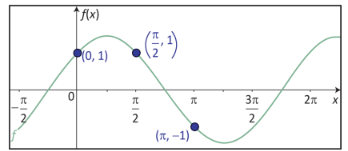
Qual deve ser a resposta dos estudantes?
Gráfico representado pela professora no GeoGebra
Qual deve ser a resposta dos estudantes?
Q4144999
Matemática
Texto associado
Texto para questão
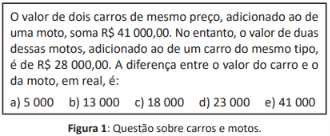
Na pesquisa de Cury e Bisognin, foi apresentada a seguinte
questão aos estudantes:
As autoras classificaram as resoluções dadas em quatro
categorias, indicadas pelas letras A, B, C e D.
Categoria A: identificou que o problema poderia ser modelado
por um sistema de duas equações lineares com duas incógnitas,
corretamente expressas, resolveu o sistema e apresentou a
resposta correta.
Categoria B: identificou que o problema poderia ser modelado
por um sistema de duas equações lineares com duas incógnitas,
corretamente expressas, resolveu o sistema, mas errou alguns
detalhes e não apresentou a resposta correta.
Categoria C: identificou que o problema poderia ser modelado
por um sistema de duas equações lineares com duas incógnitas,
corretamente expressas, mas não resolveu o sistema.
Categoria D: não modelou o problema.
CURY, H. N.; BISOGNIN, E. Análise de soluções de um problema
representado por um sistema de equações.
Boletim de Educação Matemática (BOLEMA), n. 33, 2009 (adaptado).
Em seu plano de aula, uma professora de Matemática definiu
como objetivo a ser alcançado pelos seus estudantes: “modelar
e resolver um sistema de equações de duas incógnitas”.
Após discutir a resolução de um sistema de equações, a docente
apresentou o problema da pesquisa de Cury e Bisognin e, no
momento da avaliação, ela utilizou as quatro categorias para
verificar se o objetivo de aprendizagem traçado foi alcançado.
Um estudante não soube modelar a questão dos carros e
motos, Figura 3(a), e a professora pediu para a turma que
criasse enunciados para o modelo equivocado. Com base em
um dos enunciados criados, Figura 3(b), a turma representou
geometricamente a solução, Figura 3(c).
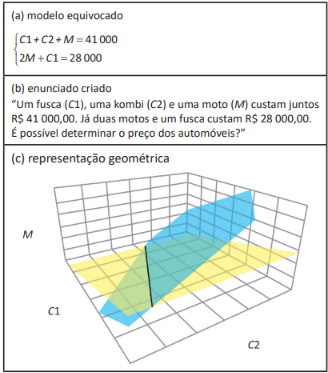
Figura 3: Investigação da turma.
CURY, H. N.; BISOGNIN, E. Análise de soluções de um problema representado por um sistema de equações. Boletim de Educação Matemática (BOLEMA), n. 33, 2009 (adaptado).
Diante da representação, qual justificativa adequada a professora e os estudantes podem dar ao responder se é possível determinar os preços únicos para cada um dos veículos?
Figura 3: Investigação da turma.
CURY, H. N.; BISOGNIN, E. Análise de soluções de um problema representado por um sistema de equações. Boletim de Educação Matemática (BOLEMA), n. 33, 2009 (adaptado).
Diante da representação, qual justificativa adequada a professora e os estudantes podem dar ao responder se é possível determinar os preços únicos para cada um dos veículos?
Q4144998
Pedagogia
Texto associado
Texto para questão
Na pesquisa de Cury e Bisognin, foi apresentada a seguinte
questão aos estudantes:
As autoras classificaram as resoluções dadas em quatro
categorias, indicadas pelas letras A, B, C e D.
Categoria A: identificou que o problema poderia ser modelado
por um sistema de duas equações lineares com duas incógnitas,
corretamente expressas, resolveu o sistema e apresentou a
resposta correta.
Categoria B: identificou que o problema poderia ser modelado
por um sistema de duas equações lineares com duas incógnitas,
corretamente expressas, resolveu o sistema, mas errou alguns
detalhes e não apresentou a resposta correta.
Categoria C: identificou que o problema poderia ser modelado
por um sistema de duas equações lineares com duas incógnitas,
corretamente expressas, mas não resolveu o sistema.
Categoria D: não modelou o problema.
CURY, H. N.; BISOGNIN, E. Análise de soluções de um problema
representado por um sistema de equações.
Boletim de Educação Matemática (BOLEMA), n. 33, 2009 (adaptado).
Em seu plano de aula, uma professora de Matemática definiu
como objetivo a ser alcançado pelos seus estudantes: “modelar
e resolver um sistema de equações de duas incógnitas”.
Após discutir a resolução de um sistema de equações, a docente
apresentou o problema da pesquisa de Cury e Bisognin e, no
momento da avaliação, ela utilizou as quatro categorias para
verificar se o objetivo de aprendizagem traçado foi alcançado.
Um dos estudantes respondeu da seguinte forma:
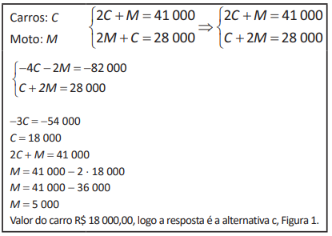
Figura 2: Resolução do estudante.
Ao avaliar de maneira adequada a resolução do estudante, a professora concluiu que a resposta se enquadra na
Figura 2: Resolução do estudante.
Ao avaliar de maneira adequada a resolução do estudante, a professora concluiu que a resposta se enquadra na
Q4144995
Matemática
Como estratégia para explorar a ideia intuitiva de limites introduzida por Karl Weierstrass, pode-se utilizar o limite de sequências
e o método de Eudoxo-Arquimedes, também conhecido como o método da exaustão, o qual consiste na aproximação da área
desejada por meio da divisão da região em polígonos de áreas suficientemente pequenas.
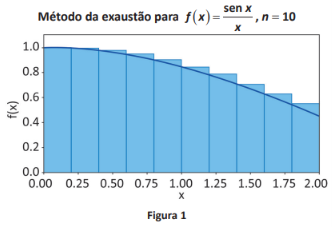
Como ilustração, uma professora apresentou aos estudantes de licenciatura em Matemática as figuras das iterações no cálculo da área sob o gráfico da função f(x) = sen x/x sen no intervalo [0 , 2].
Ela observou que a área da região desejada pode ser aproximada por uma soma de áreas de retângulos de mesma base e que a aproximação fica melhor à medida que essas bases ficam menores.
Nas figuras, as bases dos retângulos medem 2/n:
Área aproximada sob a curva no intervalo [0, 2]: 1,6585
Área aproximada sob a curva no intervalo [0, 2]: 1,6163
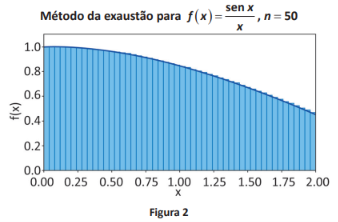
Ao variar os valores de n, observa-se que a área desejada é obtida por meio do limite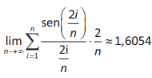 , em que
  refere-se à área do retângulo com base 2
n
e altura
refere-se à área do retângulo com base 2
n
e altura  .
.
Qual alternativa expressa corretamente uma formalização para o cálculo da área desejada?
Como ilustração, uma professora apresentou aos estudantes de licenciatura em Matemática as figuras das iterações no cálculo da área sob o gráfico da função f(x) = sen x/x sen no intervalo [0 , 2].
Ela observou que a área da região desejada pode ser aproximada por uma soma de áreas de retângulos de mesma base e que a aproximação fica melhor à medida que essas bases ficam menores.
Nas figuras, as bases dos retângulos medem 2/n:
Área aproximada sob a curva no intervalo [0, 2]: 1,6585
Área aproximada sob a curva no intervalo [0, 2]: 1,6163
Ao variar os valores de n, observa-se que a área desejada é obtida por meio do limite
, em que refere-se à área do retângulo com base 2
n
e altura . Qual alternativa expressa corretamente uma formalização para o cálculo da área desejada?
Q4144994
Matemática
A modelagem do problema de geração de lixo visa estimar
quantidades futuras de descarte em uma dada região. Nesse
contexto, consideram-se dados históricos da quantidade de
lixo gerada e o crescimento populacional, que seguem modelos
específicos para esse fim.
Em um curso de formação docente, um professor de Matemática decide utilizar um modelo construído para esse problema em sua aula. Utilizando um software computacional, esboça os dados para o ano atual (t = 0) e a previsão obtida para t anos seguintes.
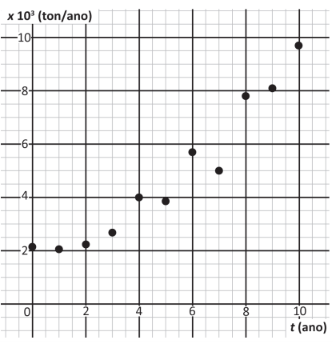
Com base nessas informações, qual é o ajuste de curva que modela o problema?
Em um curso de formação docente, um professor de Matemática decide utilizar um modelo construído para esse problema em sua aula. Utilizando um software computacional, esboça os dados para o ano atual (t = 0) e a previsão obtida para t anos seguintes.
Com base nessas informações, qual é o ajuste de curva que modela o problema?
Q4144991
Pedagogia
Texto associado
Texto para questão
Diante do assoreamento do riacho que passava ao lado de uma escola, a professora de Matemática e o professor de Biologia
desenvolveram um projeto interdisciplinar para acompanhar os efeitos desse fenômeno na flora da região.
Uma das atividades propostas pela professora de Matemática foi analisar o crescimento das árvores das margens do rio.
Para isso, propôs à turma da 1ª série do Ensino Médio que medisse as alturas das árvores.
Os estudantes adotaram o seguinte procedimento: mediram a sombra da árvore e, no mesmo momento, mediram o tamanho da
sombra de um estudante. Na sala, realizaram a medida da altura desse estudante e, aplicando-se a regra de três, determinaram
a altura da árvore.
Realizando essas medições ao longo do ano, os estudantes criaram tabelas com as alturas das árvores, mês a mês. Com essas
informações, concluíram que o crescimento das árvores estava abaixo do padrão esperado para aquela espécie. Posteriormente,
utilizando também as informações coletadas na aula de Biologia, confirmaram que a escassez de água estava impactando a
flora da região.
A professora de Matemática propôs aos estudantes que realizassem um segundo procedimento para medir as alturas das árvores,
que fosse essencialmente distinto, do ponto de vista matemático, daquele que eles já haviam desenvolvido.
A atividade proposta pelos dois docentes é um projeto interdisciplinar, porque organiza e produz conhecimento integrando as
diferentes dimensões dos fenômenos estudados. A interdisciplinaridade no ensino de Matemática
Q4144990
Matemática
Texto associado
Texto para questão
Diante do assoreamento do riacho que passava ao lado de uma escola, a professora de Matemática e o professor de Biologia
desenvolveram um projeto interdisciplinar para acompanhar os efeitos desse fenômeno na flora da região.
Uma das atividades propostas pela professora de Matemática foi analisar o crescimento das árvores das margens do rio.
Para isso, propôs à turma da 1ª série do Ensino Médio que medisse as alturas das árvores.
Os estudantes adotaram o seguinte procedimento: mediram a sombra da árvore e, no mesmo momento, mediram o tamanho da
sombra de um estudante. Na sala, realizaram a medida da altura desse estudante e, aplicando-se a regra de três, determinaram
a altura da árvore.
Realizando essas medições ao longo do ano, os estudantes criaram tabelas com as alturas das árvores, mês a mês. Com essas
informações, concluíram que o crescimento das árvores estava abaixo do padrão esperado para aquela espécie. Posteriormente,
utilizando também as informações coletadas na aula de Biologia, confirmaram que a escassez de água estava impactando a
flora da região.
A professora de Matemática propôs aos estudantes que realizassem um segundo procedimento para medir as alturas das árvores,
que fosse essencialmente distinto, do ponto de vista matemático, daquele que eles já haviam desenvolvido.
Assinale a alternativa que indica um procedimento que atende a essa solicitação da professora.
Q4144988
Pedagogia
Texto associado
Texto para questão
A inteligência artificial (IA) tem desempenhado um papel cada
vez mais importante na segurança de dados. Ela pode ser
usada para proteger os dados no armazenamento, no acesso e
durante a transmissão, com sistemas avançados de autenticação
e criptografia. A função básica da criptografia é a cifragem de
uma mensagem (texto claro) em outra mensagem (texto cifrado)
de difícil compreensão, caso seja interceptada por entidades
não autorizadas.
Em uma aula de Matemática no 7º ano do Ensino Fundamental,
uma professora solicitou aos estudantes a classificação dos
números 126, 845, 1 020, 371 e 999 de acordo com sua
divisibilidade por 2, 3, 5 e 9, justificando cada caso com base
nos critérios de divisibilidade estudados. Para tornar a aula
mais dinâmica, a professora sugeriu que os estudantes, em
duplas, utilizassem uma ferramenta de IA para ajudar na
verificação dos critérios de divisibilidade. Ao final da atividade,
a professora observou que diversas duplas entregaram
respostas com justificativas idênticas, vindas claramente
da IA. No entanto, algumas delas estavam incompletas ou
conceitualmente equivocadas, como: “126 é divisível por
3 porque termina em número múltiplo de 3”; e “999 é divisível
por 9 porque é um número grande e termina em 9”.
Qual intervenção pedagógica utiliza o erro como estratégia para promover a compreensão dos critérios de divisibilidade e o uso crítico da IA?
Qual intervenção pedagógica utiliza o erro como estratégia para promover a compreensão dos critérios de divisibilidade e o uso crítico da IA?
Q4144987
Pedagogia
Texto associado
Texto para questão
A inteligência artificial (IA) tem desempenhado um papel cada
vez mais importante na segurança de dados. Ela pode ser
usada para proteger os dados no armazenamento, no acesso e
durante a transmissão, com sistemas avançados de autenticação
e criptografia. A função básica da criptografia é a cifragem de
uma mensagem (texto claro) em outra mensagem (texto cifrado)
de difícil compreensão, caso seja interceptada por entidades
não autorizadas.
Durante uma aula de Matemática na 1ª série do Ensino Médio,
a professora propôs uma atividade interativa com apoio de um
chatbot de IA, no qual os estudantes poderiam consultar respostas
para questões de probabilidade. Um grupo de estudantes digitou
a seguinte pergunta para a IA: “Qual é a probabilidade de tirar cara
duas vezes ao lançar uma moeda duas vezes?”. A IA respondeu:
“A probabilidade é 1/2, porque existe chance igual de cara e coroa
em cada lançamento”. Ao ler a resposta, a professora percebeu o
erro e decidiu utilizá-lo com objetivo de estimular o protagonismo
dos estudantes em sua aprendizagem.
Considerando que os estudantes não perceberam o erro identificado pela professora, assinale a intervenção pedagógica adequada para o uso do erro da IA como estratégia de ensino que favoreça a aprendizagem dos estudantes.
Considerando que os estudantes não perceberam o erro identificado pela professora, assinale a intervenção pedagógica adequada para o uso do erro da IA como estratégia de ensino que favoreça a aprendizagem dos estudantes.
Q4144986
Matemática
Com o intuito de trabalhar aplicações de funções no meio social dos estudantes e as relações entre as variáveis dependente
e independente, um professor associou o montante de uma aplicação a juros simples de 0,93% ao mês, com capital inicial de
R$ 500,00, à função dada por f(t) = 500(1+0,0093t), t em mês. Em seguida, o professor propôs que os estudantes estimassem
o tempo em que o valor do capital inicial deveria permanecer aplicado para se obter o dobro do valor.
Para responder ao professor, os estudantes analisaram a função dada e concluíram que a taxa de variação da função f(t) é
Para responder ao professor, os estudantes analisaram a função dada e concluíram que a taxa de variação da função f(t) é
Q4144985
Pedagogia
Algumas civilizações antigas representavam frações como somas de frações unitárias. No sistema de numeração egípcio, por
exemplo, que utilizava símbolos hieróglifos, como na figura,
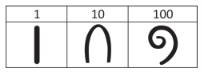
a representação das frações unitárias era feita acrescentando-se um hieróglifo de boca sobre uma determinada quantidade.

IFRAH, G. História universal dos algarismos: a inteligência dos homens contada pelos números e pelo cálculo. Rio de Janeiro: Nova Fronteira, 1997.
Ao preparar uma aula de Matemática, um professor do Ensino Fundamental decide utilizar o contexto histórico apresentado. Qual fundamento teórico-metodológico do ensino de frações está sendo abordado pelo professor nessa proposta?
a representação das frações unitárias era feita acrescentando-se um hieróglifo de boca sobre uma determinada quantidade.
IFRAH, G. História universal dos algarismos: a inteligência dos homens contada pelos números e pelo cálculo. Rio de Janeiro: Nova Fronteira, 1997.
Ao preparar uma aula de Matemática, um professor do Ensino Fundamental decide utilizar o contexto histórico apresentado. Qual fundamento teórico-metodológico do ensino de frações está sendo abordado pelo professor nessa proposta?
Q4144984
Matemática
Texto associado
Texto para questão
Biembengut defende que a Modelagem Matemática em aula deve ser organizada em três fases: interação, matematização e
significação-modelo, respectivamente, com o propósito de desenvolver o pensamento matemático em contextos reais.
Com base nesse fundamento teórico-metodológico do ensino, uma professora propôs a seguinte situação-problema aos
estudantes: após o rompimento da barragem em Brumadinho (MG), em 2019, resíduos contendo metais pesados, como o chumbo,
dispersaram-se por toda a bacia do Rio Paraopeba. Com o objetivo de avaliar os impactos ambientais dessa contaminação,
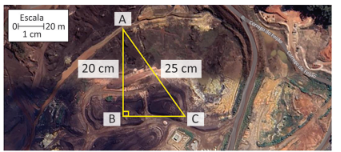
cientistas recorreram a imagens de satélite para mapear as áreas atingidas. Em uma dessas regiões, representada na figura
pelo triângulo retângulo ABC, em escala 1 : 20, cuja hipotenusa e um dos catetos têm suas medidas, respectivamente, 25 cm
e 20 cm, estimou-se uma concentração superficial média de chumbo de 120 mg/m2.
BIEMBENGUT, M. S. 30 anos de Modelagem Matemática na educação brasileira: das propostas primeiras às propostas atuais.
Alexandria, n. 2, 1 jul. 2009 (adaptado).
Disponível em: google.com. Acesso em: 21 maio 2025 (adaptado).
De acordo com os dados laboratoriais, com o tempo e o uso de agentes descontaminantes, a concentração de chumbo no solo
decaía de forma proporcional à quantidade ainda presente, comportamento típico de processos de decaimento exponencial,
dado pelo modelo C(t) = C0 ⋅ e−kt, em que:
• C(t) representa a quantidade total de chumbo (mg) no tempo t (ano);
• C0 é a concentração inicial total de chumbo (mg);
• k = 0,1 é a taxa de decaimento.
Qual função C(t) expressa corretamente a concentração de chumbo ao longo do tempo?
• C(t) representa a quantidade total de chumbo (mg) no tempo t (ano);
• C0 é a concentração inicial total de chumbo (mg);
• k = 0,1 é a taxa de decaimento.
Qual função C(t) expressa corretamente a concentração de chumbo ao longo do tempo?

 Conheça nossos planos