Questões de Concurso
Para nucepe
Foram encontradas 8.837 questões
Resolva questões gratuitamente!
Junte-se a mais de 4 milhões de concurseiros!


Q3657295
Matemática
Em uma papelaria, uma borracha, duas canetas e três lápis custam 17 reais. Já o custo de três
borrachas, duas canetas e um lápis é de 15 reais.
Nessas condições, o valor de uma borracha, uma caneta e um lápis juntos é de
Nessas condições, o valor de uma borracha, uma caneta e um lápis juntos é de
Q3657294
Matemática
O uso de matrizes é muito comum na computação gráfica para gerar figuras tridimensionais. Considere a
matriz

A soma dos valores de x para os quais o determinante da matriz A é igual a zero (det A = 0) é um número
A soma dos valores de x para os quais o determinante da matriz A é igual a zero (det A = 0) é um número
Q3657293
Matemática
As funções quadráticas e trigonométricas modelam vários fenômenos físicos, a exemplo de movimentos
de corpos. Considere as funções reais f(x)=x2 – 4x + 4 e g(x)=2+senx .
O maior valor de f(g(x)) é igual a
O maior valor de f(g(x)) é igual a
Q3657292
Matemática
Considere a fração expressa por A = 0,00001×(0,002)
2×100000 / 0,001×(0,2)
3. Neste caso, o valor obtido para A3 é de
Q3657291
Matemática
Na cidade de Flor do Sertão, vivem Bento e Baltazar. Sabe-se que há 20 anos, a soma dos quadrados
das idades de Bento e Baltazar era 157 e que Baltazar é 5 anos mais velho que Bento.
A soma das idades de Bento e Baltazar em anos, atualmente, é de
A soma das idades de Bento e Baltazar em anos, atualmente, é de
Q3657290
Matemática
Sejam m e n as raízes da equação x 2 - 6x -12=0.
O valor de 1/m + 1/n é igual a
Q3657289
Matemática
Quadriláteros são figuras geométricas formadas por quatro lados e quatro ângulos. Os quadriláteros
podem ser classificados em convexos ou côncavos. Destacam-se entre os quadriláteros os paralelogramos e os trapézios.
Avalie as seguintes afirmações:
I. Os ângulos opostos de um losango são complementares.
II. As diagonais de um retângulo são congruentes e se cruzam em seus respectivos pontos médios.
III. As diagonais de um quadrado são congruentes, perpendiculares, mas não se cruzam em seus respectivos pontos médios.
IV. As diagonais de um trapézio isósceles são congruentes.
Assinale a alternativa que apresenta APENAS as afirmações corretas.
Avalie as seguintes afirmações:
I. Os ângulos opostos de um losango são complementares.
II. As diagonais de um retângulo são congruentes e se cruzam em seus respectivos pontos médios.
III. As diagonais de um quadrado são congruentes, perpendiculares, mas não se cruzam em seus respectivos pontos médios.
IV. As diagonais de um trapézio isósceles são congruentes.
Assinale a alternativa que apresenta APENAS as afirmações corretas.
Q3657288
Matemática
Em um triângulo ABC, a altura AH e a bissetriz AS formam um ângulo de 13º. Admita que a medida do
ângulo ABC seja igual a 67°.
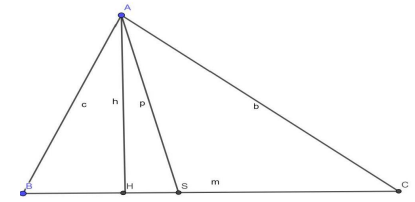
A medida do complemento do ângulo ABC é de:
A medida do complemento do ângulo ABC é de:
Q3657287
Matemática
Em um laboratório de solos, verificou-se que uma amostra de um determinado mineral continha 835
partículas.
O número correspondente à metade da quantidade de partículas dessa amostra é igual a
O número correspondente à metade da quantidade de partículas dessa amostra é igual a
Q3657286
Matemática
Uma maneira eficaz de realizar operações matemáticas com dízimas periódicas é por meio da fração
m
geratriz. Considere
m/n uma fração irredutível, geratriz da dízima 1,2333 … .
Avalie as seguintes afirmações:
I. m2 + n 2 = 2169 II. m2 – n 2 = 469 III. mn = 1010 IV. n – m = – 7
Assinale a alternativa que apresenta APENAS as afirmações corretas.
Avalie as seguintes afirmações:
I. m2 + n 2 = 2169 II. m2 – n 2 = 469 III. mn = 1010 IV. n – m = – 7
Assinale a alternativa que apresenta APENAS as afirmações corretas.
Q3657285
Matemática
Uma escada de 10m de comprimento está apoiada em uma parede plana e forma com o solo um ângulo
de 30°.
Qual a altura da extremidade superior dessa escada em relação ao solo?
Qual a altura da extremidade superior dessa escada em relação ao solo?
Q3656494
Direito Administrativo
Os poderes administrativos possuem caráter instrumental, existindo como instrumento necessário ao
alcance do interesse público. Não há poder pelo simples poder. Todas as vezes que o administrador
extrapola esse caráter instrumental e exerce o poder pelo simples poder ocorre abuso de poder.
Disponível em: https://www.jusbrasil.com.br/artigos/resumao-poderes-administrativos/1117867741. Acesso em 30/09/2024
Com relação aos poderes administrativos, analise se verdadeiras (V) ou falsas (F) as seguintes afirmações:
I. Poder Vinculado diz respeito ao poder em que a própria lei prevê a prática do ato, e confere ao agente uma margem de escolha
II. Poder Discricionário é aquele que a lei prevê a prática do ato estabelecendo critérios objetivos de atuação.
III. O poder normativo é o poder que a administração tem para edição de normas gerais e abstratas dentro dos limites da lei.
IV. O poder hierárquico é sempre interno, desta forma, não há hierarquia entre pessoas jurídicas diferentes.
V. O poder de polícia confere a administração o poder de restrição ao exercício de liberdades individuais e ao uso da propriedade privada sempre na busca do interesse público (supremacia do interesse público).
Marque a sequência CORRETA.
Disponível em: https://www.jusbrasil.com.br/artigos/resumao-poderes-administrativos/1117867741. Acesso em 30/09/2024
Com relação aos poderes administrativos, analise se verdadeiras (V) ou falsas (F) as seguintes afirmações:
I. Poder Vinculado diz respeito ao poder em que a própria lei prevê a prática do ato, e confere ao agente uma margem de escolha
II. Poder Discricionário é aquele que a lei prevê a prática do ato estabelecendo critérios objetivos de atuação.
III. O poder normativo é o poder que a administração tem para edição de normas gerais e abstratas dentro dos limites da lei.
IV. O poder hierárquico é sempre interno, desta forma, não há hierarquia entre pessoas jurídicas diferentes.
V. O poder de polícia confere a administração o poder de restrição ao exercício de liberdades individuais e ao uso da propriedade privada sempre na busca do interesse público (supremacia do interesse público).
Marque a sequência CORRETA.
Q3656493
Administração de Recursos Materiais
No setor público os gestores responsáveis pelos estoques possuem alguns desafios, tais como:
estocagem de material desnecessário e excesso de compras, entre outros.
Fenili, Renato Ribeiro Gestão de Materiais -- Brasília: ENAP, 2015. https://repositorio.enap.gov.br/bitstream/1/2268/1/Enap%20Did%C3%A1ticos%20-%20Gest%C3%A3o%20de%20Materiais.pdf. Acesso em 30/09/2024
Com relação ao estoque, assinale a alternativa INCORRETA
Fenili, Renato Ribeiro Gestão de Materiais -- Brasília: ENAP, 2015. https://repositorio.enap.gov.br/bitstream/1/2268/1/Enap%20Did%C3%A1ticos%20-%20Gest%C3%A3o%20de%20Materiais.pdf. Acesso em 30/09/2024
Com relação ao estoque, assinale a alternativa INCORRETA
Q3656492
Administração Pública
Di Pietro (2014, p.694.) define o controle da Administração Pública como o poder de fiscalização e
correção que sobre ela exercem os órgãos dos Poderes Judiciário, Legislativo e Executivo, com o
objetivo de garantir a conformidade de sua atuação com os princípios que lhe são impostos pelo
ordenamento jurídico.
Disponível em: https://repositorio.enap.gov.br/bitstream/1/5474/1/2-lugar%20%281%29.pdf Acesso em 30/09/2024.
Sobre os tipos de controle definidos por Di Pietro (2014) assinale a alternativa INCORRETA.
Disponível em: https://repositorio.enap.gov.br/bitstream/1/5474/1/2-lugar%20%281%29.pdf Acesso em 30/09/2024.
Sobre os tipos de controle definidos por Di Pietro (2014) assinale a alternativa INCORRETA.
Q3656491
Administração Pública
Segundo a Lei 10.024/2019, o pregão eletrônico, as afirmações abaixo são verdadeiras (V) ou falsas (F)?
I. A utilização da modalidade de pregão, na forma eletrônica, é obrigatória para os órgãos da administração pública federal indireta, pelas autarquias, pelas fundações e pelos fundos especiais.
II. O pregão, na forma eletrônica, não se aplica a contratações de obras e nem de bens e serviços especiais, incluídos os serviços de engenharia.
III. A realização do pregão, na forma eletrônica, será realizado quando a disputa pelo fornecimento de bens ou pela contratação de serviços comuns ocorrer à distância e em sessão pública, por meio do Sistema de Compras do Governo Federal.
IV. O prazo fixado para a apresentação das propostas e dos documentos de habilitação não será inferior a dez dias úteis, contado da data de publicação do aviso do edital.
V. O modo de disputa para envio de lances no pregão eletrônico será o fechado conforme critério de julgamento adotado no edital.
Disponível em: https://www.planalto.gov.br/ccivil_03/_ato2019-2022/2019/decreto/d10024.htm. Acesso em 28/09/2024
Assinale a sequência CORRETA.
I. A utilização da modalidade de pregão, na forma eletrônica, é obrigatória para os órgãos da administração pública federal indireta, pelas autarquias, pelas fundações e pelos fundos especiais.
II. O pregão, na forma eletrônica, não se aplica a contratações de obras e nem de bens e serviços especiais, incluídos os serviços de engenharia.
III. A realização do pregão, na forma eletrônica, será realizado quando a disputa pelo fornecimento de bens ou pela contratação de serviços comuns ocorrer à distância e em sessão pública, por meio do Sistema de Compras do Governo Federal.
IV. O prazo fixado para a apresentação das propostas e dos documentos de habilitação não será inferior a dez dias úteis, contado da data de publicação do aviso do edital.
V. O modo de disputa para envio de lances no pregão eletrônico será o fechado conforme critério de julgamento adotado no edital.
Disponível em: https://www.planalto.gov.br/ccivil_03/_ato2019-2022/2019/decreto/d10024.htm. Acesso em 28/09/2024
Assinale a sequência CORRETA.
Q3656490
Direito Administrativo
A nova Lei de Licitações e Contratos Administrativos (Lei nº 14.133/2021), sancionada em 2021, é uma
norma criada para regulamentar os contratos públicos e processos licitatórios. Diminuir as burocracias
das contratações públicas, torná-las mais ágeis, eficientes e menos custosas. São alguns dos objetivos
dessa Lei que busca promover a competitividade e, com isso, fomentar a economia brasileira.
Disponível em: https://imap.org.br/nova-lei-de-licitacoes-2023-7-pontos-que-merecem-aatencao/#:~:text=A%20nova%20Lei%20de%20Licita%C3%A7%C3%B5es,contratos%20p%C3%BAblicos%20e%20processos%2 0licitat%C3%B3rios.&text=custosas%20s%C3%A3o%20alguns%20dos%20objetivos,isso%2C%20fomentar%20a%20economia %20brasileira. Acesso em 29/09/2024.
Em relação à Lei nº 14.133/2021, marque a alternativa CORRETA.
Disponível em: https://imap.org.br/nova-lei-de-licitacoes-2023-7-pontos-que-merecem-aatencao/#:~:text=A%20nova%20Lei%20de%20Licita%C3%A7%C3%B5es,contratos%20p%C3%BAblicos%20e%20processos%2 0licitat%C3%B3rios.&text=custosas%20s%C3%A3o%20alguns%20dos%20objetivos,isso%2C%20fomentar%20a%20economia %20brasileira. Acesso em 29/09/2024.
Em relação à Lei nº 14.133/2021, marque a alternativa CORRETA.
Q3656489
Direito Administrativo
Agentes públicos têm designação amplíssima, eis que envolve todos os sujeitos que genérica e
indistintamente servem ao poder público, “como instrumentos expressivos de sua vontade ou ação, ainda
quando o façam apenas ocasional ou episodicamente”.
Fonte: BANDEIRA DE MELLO, Celso Antô io. Curso de direito administrativo, p. 254. https://enciclopediajuridica.pucsp.br/verbete/3/edicao1/agentes-publicos:- classificacao#:~:text=Falarei%20dos%20a)%20agentes%20pol%C3%ADticos,em%20colabora%C3%A7%C3%A3o%20com%20o%20Estado. Acesso em 29/09/2024
Sobre agentes públicos em espécies ou categorias.
I. Agentes políticos são os componentes de primeiro escalão do Governo, investidos em cargos, funções, mandatos ou comissões, por nomeação, eleição, designação ou delegação para o exercício de atribuições constitucionais.
II. Agentes administrativos sã aqueles que praticam atos e executa atividades em situações excepcionais, como, por exemplo, as de emergência, em colaboração com o Poder Público e como se fossem agentes e direito.
III. Agentes honoríficos não são servidores públicos, mas momentaneamente exercem função pública. Quando a desempenham sujeitam-se à hierarquia e à disciplina do órgão a que servem.
IV. Agentes putativos são os que desempenham uma atividade pública na presunção de que há legitimidade, embora não tenha havido a investidura dentro do procedimento legalmente exigido.
V. Agentes necessários são os representantes que se vinculam ao Estado, autarquias e fundações de direito público, mediante relação profissional, sujeitando-se à hierarquia funcional e ao regime jurídico de determinado ente estatal
Assinale a alternativa CORRETA.
Fonte: BANDEIRA DE MELLO, Celso Antô io. Curso de direito administrativo, p. 254. https://enciclopediajuridica.pucsp.br/verbete/3/edicao1/agentes-publicos:- classificacao#:~:text=Falarei%20dos%20a)%20agentes%20pol%C3%ADticos,em%20colabora%C3%A7%C3%A3o%20com%20o%20Estado. Acesso em 29/09/2024
Sobre agentes públicos em espécies ou categorias.
I. Agentes políticos são os componentes de primeiro escalão do Governo, investidos em cargos, funções, mandatos ou comissões, por nomeação, eleição, designação ou delegação para o exercício de atribuições constitucionais.
II. Agentes administrativos sã aqueles que praticam atos e executa atividades em situações excepcionais, como, por exemplo, as de emergência, em colaboração com o Poder Público e como se fossem agentes e direito.
III. Agentes honoríficos não são servidores públicos, mas momentaneamente exercem função pública. Quando a desempenham sujeitam-se à hierarquia e à disciplina do órgão a que servem.
IV. Agentes putativos são os que desempenham uma atividade pública na presunção de que há legitimidade, embora não tenha havido a investidura dentro do procedimento legalmente exigido.
V. Agentes necessários são os representantes que se vinculam ao Estado, autarquias e fundações de direito público, mediante relação profissional, sujeitando-se à hierarquia funcional e ao regime jurídico de determinado ente estatal
Assinale a alternativa CORRETA.
Q3656488
Administração Geral
Diferentemente das empresas privadas, as empresas públicas possuem administradores com uma
autonomia um pouco limitada pelas legislações, políticas e pela própria burocracia existente no poder
público. Mesmo projetos que envolvem mudanças e aprimoramentos devem ser justificados, o que em
algumas situações pode ser uma tentativa frustrada em meio à manutenção da imagem de estabilidade
destas instituições. O planejamento estratégico para estas organizações passa a ser essencial, embora
não possuam fins lucrativos, os recursos geralmente são limitados e precisam ser utilizados de maneira
racional, pois são determinantes para o tamanho das despesas.
Disponível em: https://www.gov.br/transportes/pt-br/assuntos/portal-da-estrategia/artigos-gestao-estrategica/a-importancia-doplanejamento-estrategico-na-area-publica. Acesso em 29/09/2024
O planejamento estratégico exige que cada ação seja prevista de maneira cuidadosa e, para isso, existem alguns tipos de planejamento.
I. O planejamento intermediário ou tático é realizado em um nível abaixo do planejamento operacional e tem foco na eficácia, orienta-se para o médio prazo, aloca recurso , e é feito para cada área funcional.
II. O planejamento operacional é geralmente executado pelos administradores de nível médio. Possui foco no curto prazo e na eficiência – na execução das ações que tornarão concreto o planejamento tático: é o momento em que se define o que fazer, como fazer, quem fará, e com que meios.
III. O planejamento estratégico é realizado pela alta administração e tem foco no longo prazo e na efetividade, abrange toda a organização, define rumos, objetivos, estratégias, etc.
Com base nos tipos de Planejamento Estratégico marque a alternativa CORRETA.
Disponível em: https://www.gov.br/transportes/pt-br/assuntos/portal-da-estrategia/artigos-gestao-estrategica/a-importancia-doplanejamento-estrategico-na-area-publica. Acesso em 29/09/2024
O planejamento estratégico exige que cada ação seja prevista de maneira cuidadosa e, para isso, existem alguns tipos de planejamento.
I. O planejamento intermediário ou tático é realizado em um nível abaixo do planejamento operacional e tem foco na eficácia, orienta-se para o médio prazo, aloca recurso , e é feito para cada área funcional.
II. O planejamento operacional é geralmente executado pelos administradores de nível médio. Possui foco no curto prazo e na eficiência – na execução das ações que tornarão concreto o planejamento tático: é o momento em que se define o que fazer, como fazer, quem fará, e com que meios.
III. O planejamento estratégico é realizado pela alta administração e tem foco no longo prazo e na efetividade, abrange toda a organização, define rumos, objetivos, estratégias, etc.
Com base nos tipos de Planejamento Estratégico marque a alternativa CORRETA.
Q3656487
Administração Pública
De acordo com Tony (2021), o planejamento estratégico realizado no âmbito governamental é um
conjunto de referenciais teóricos, processos administrativos, aplicação de ferramentas e técnicas
organizacionais que objetivam definir uma visão de futuro de médio e longo prazo, bem como as
principais instituições e processos que asseguram coerência e efetividade entre meios e fins para o seu
alcance.
Toni, Jackson de. Reflexões sobre o lanejamento Estratégico no Setor Público – Brasília: Enap, 2021. 154 (Cadernos Enap, 84) Disponível em: https://repositorio.enap.gov.br/bitstream/1/6334/1/Jackson%20de% 0Toni.pdf. Acesso em 28/09/2024
Sobre o Planejamento Estratégico , analise e assinale a alternativa CORRETA.
Toni, Jackson de. Reflexões sobre o lanejamento Estratégico no Setor Público – Brasília: Enap, 2021. 154 (Cadernos Enap, 84) Disponível em: https://repositorio.enap.gov.br/bitstream/1/6334/1/Jackson%20de% 0Toni.pdf. Acesso em 28/09/2024
Sobre o Planejamento Estratégico , analise e assinale a alternativa CORRETA.
Q3656486
Direito Administrativo
Os atos administrativos são toda manifestação unilateral de vontade da Administração Pública que, agindo nessa qualidade, tenha por fim imediato adquirir, resguardar, transferir, modificar, extinguir e
declarar direitos ou impor obrigações aos administrados ou a si própria. Atos administrativos são aqueles
produzidos por qualquer Poder, no exercício da função administrativa.
Disponível em: https://www.jusbrasil.com.br/artigos/atos-administrativos/136543799. Acesso em 28/09/2024
De acordo com LEI Nº 9.784, art.50, CAPÍTULO XII, DA MOTIVAÇÃO, os atos administrativos deverão ser motivados, com indicação dos fatos e dos fundamentos jurídicos. Em quais situações?
Disponível em: https://www.jusbrasil.com.br/artigos/atos-administrativos/136543799. Acesso em 28/09/2024
De acordo com LEI Nº 9.784, art.50, CAPÍTULO XII, DA MOTIVAÇÃO, os atos administrativos deverão ser motivados, com indicação dos fatos e dos fundamentos jurídicos. Em quais situações?

 Conheça nossos planos