Questões de Concurso
Para selecon
Foram encontradas 34.859 questões
Resolva questões gratuitamente!
Junte-se a mais de 4 milhões de concurseiros!


Q3470841
Matemática
Os vértices do triângulo ABC são respectivamente centros
de circunferências que se tangenciam mutuamente, duas a duas.
Sendo AB=3 cm, AC=4 cm e BC=5 cm. A medida do raio da maior
circunferência é:
Q3470840
Matemática
Os ângulos α e β são opostos pelo vértice. O primeiro é expresso em graus por 2x - 1/2 e o segundo por 2x - 1/2. A soma α + β é:
Q3470839
Matemática
O conjunto S dos números reais para os quais a função
quadrática  definida por f(x) = (x - 2) (x - 3) é
estritamente negativa, é dado por:
definida por f(x) = (x - 2) (x - 3) é
estritamente negativa, é dado por:
definida por f(x) = (x - 2) (x - 3) é
estritamente negativa, é dado por:
Q3470838
Matemática
Hernandes tem em suas mãos um copo com formato de
prisma regular hexagonal, cuja altura é de 12 cm e cujos lados da
base medem 4 cm. O copo está completamente cheio de suco de
laranja. Após tomar um gole, a altura da superfície do suco dentro
do copo diminuiu em 2 cm. Supondo que não houve desperdício
de suco ao tomar o gole, o volume de suco de laranja ingerido por
Hernandes foi de:
Q3470837
Matemática
O valor que se obtém ao subtrair  de
de  é:
é:
de é:
Q3470836
Matemática
As condições para que o número k torne o sistema 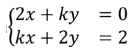 possível e determinado são:
possível e determinado são:
Q3470835
Matemática
Considere um triângulo ABC, retângulo em A, onde AB = a e BC = 3a. A medida AC = x em função de a é:
Q3470834
Raciocínio Lógico
Em uma turma de Técnico em Mecânica com 40 alunos,
22 alunos estão participando de projetos de pesquisa sobre
desenvolvimento de novos materiais, e 16 alunos estão envolvidos
em projetos de otimização de processos industriais. Além disso,
2 alunos estão participando de ambos os projetos.O número de
alunos que não participam de nenhum projeto é:
Q3470833
Matemática Financeira
Maria Clara fabrica brigadeiros em sua casa e os vende na
escola. Após o primeiro mês de vendas, ela separou R$ 100,00
do seu lucro e os investiu em um banco que rende 1% ao mês.
Após o segundo mês de vendas, Maria separou outros R$ 110,00
do seu lucro e os aplicou juntamente com os R$ 100,00 do mês
anterior e seus rendimentos, no mesmo banco, durante 2 meses
a juros compostos. O montante total desses investimentos ao final
desses dois meses é aproximadamente de:
Q3470832
Português
A charge retrata uma cena de incêndio florestal e, ao lado,
os animais observam o ocorrido. Cada animal tem pensamentos
relacionados ao impacto da destruição. Sobre a mensagem
principal da charge, analise as afirmativas abaixo e assinale a
opção que melhor representa a mensagem apresentada:
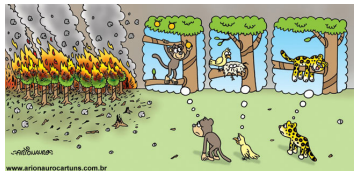
Charge Queimadas Floresta
Postado por Arionauro Cartuns às sexta-feira, setembro 27, 2019. Visto em 17/11/2024. Disponível em http://www.arionaurocartuns.com.br/2019/09/chargequeimadas-floresta.html
Charge Queimadas Floresta
Postado por Arionauro Cartuns às sexta-feira, setembro 27, 2019. Visto em 17/11/2024. Disponível em http://www.arionaurocartuns.com.br/2019/09/chargequeimadas-floresta.html
Q3470831
Português
Texto associado
Como os animais estão se adaptando ao aumento das
queimadas e incêndios florestais
Lagartos correndo mais rápido do que as chamas e pássaros
botando ovos cor de cinza… Mas a vida selvagem pode ter
uma capacidade limitada de evoluir nessa nova era ardente
conhecida como Pirocene.
Como os incêndios florestais estão cada vez mais queimando
com mais frequência e intensidade, em áreas geográficas maiores
e em estações mais longas – como está ocorrendo no Brasil
neste inverno de 2024 –, os cientistas estimam que agora eles
contribuem para o risco de extinção de pelo menos 1660 espécies
de animais em todo o mundo.
Essa é mais uma consequência do chamado “piroceno”, um termo
cunhado pelo historiador ambiental Stephen Pyne, professor
emérito da Universidade Estadual do Arizona, nos Estados
Unidos, para enquadrar nossa época atual como um momento
moldado pela excepcional capacidade humana de manipular o
fogo. “Desenvolvemos pequenas entranhas e grandes cabeças
cozinhando alimentos; subimos na cadeia alimentar cozinhando
paisagens; e agora nos tornamos uma força geológica cozinhando
o planeta”, diz a descrição do livro de Pyne de 2021, “The
Pyrocene: How We Created an Age of Fire, and What Happens
Next” (“Como criamos uma era de fogo e o que acontecerá em
seguida”, em tradução livre).
Será que os animais podem se adaptar à vida no piroceno? Em
última análise, isso dependerá de dois fatores, acredita Gavin
Jones, ecologista do Serviço Florestal norte-americano que
estuda a evolução dos animais provocada pelo fogo. Primeiro, se
alguns indivíduos de uma espécie são melhores do que outros
para sobreviver ao fogo e suas consequências. Em segundo lugar
– e mais importante, segundo ele – se essas habilidades são
causadas por diferenças genéticas que os sobreviventes do fogo
podem transmitir aos seus descendentes. Aqui estão algumas das
adaptações ao fogo que os cientistas descobriram até agora em
alguns animais.
Trecho de Tim Vernimmen
Publicado em 28 de agosto de 2024, 09:03 BRT. Visto em 17/11/2014. Disponível
em https://www.nationalgeographicbrasil.com/meio-ambiente/2024/08/como-osanimais-estao-se-adaptando-ao-aumento-das-queimadas-e-incendios-florestais
Na frase "Essa é mais uma consequência do chamado
“piroceno”, um termo cunhado pelo historiador ambiental Stephen
Pyne, professor emérito da Universidade Estadual do Arizona,
nos Estados Unidos, para enquadrar nossa época atual como
um momento moldado pela excepcional capacidade humana
de manipular o fogo.", o prefixo piro- é utilizado na formação da
palavra piroceno. Sobre o significado e a origem desse prefixo,
analise as afirmativas abaixo e assinale a alternativa correta:
Q3470830
Português
Texto associado
Monitoramento mostra que 99% dos incêndios são por ação
humana
Pesquisadora alerta para situação crítica em três biomas
Apenas uma parte ínfima dos incêndios florestais que se
proliferam pelo país é iniciada por causas naturais. A constatação
é da doutora em geociências Renata Libonati, coordenadora
do Laboratório de Aplicações de Satélites Ambientais (Lasa) da
Universidade Federal do Rio de Janeiro.
“De todos os incêndios que acontecem no Brasil, cerca de 1% é
originado por raio. Todos os outros 99% são de ação humana”,
afirma.
A pesquisadora é responsável pelo sistema Alarmes, um
monitoramento diário por meio de imagens de satélite e emissão
de alertas sobre presença de fogo na vegetação. Ao relacionar
os dados com a proibição vigente de colocar fogo em vegetação,
ela afirma que “todos esses incêndios, mesmo que não tenham
sido intencionais, são de alguma forma criminosos”, disse em
entrevista à Agência Brasil.
Com base em dados que ficam disponíveis a cada 24h, a
professora constata que “a situação é muito crítica” nos três
biomas analisados – Amazônia, Cerrado e Pantanal - sendo a pior
já registrada na Amazônia. Em relação ao Cerrado e o Pantanal,
ela ressalta que a presença das chamas está “muito próxima do
máximo histórico”.
Renata Libonati associa o fogo que consome a vegetação
em diversas regiões brasileiras a atividades econômicas. “A
ocorrência dos incêndios no Brasil está intimamente relacionada
ao uso da terra”. Com o olhar de quem acompanha cada vez
mais eventos climáticos extremos, a pesquisadora percebe um
ultimato: “Nosso estilo de vida atual é incompatível com o bemestar da nossa sociedade no futuro”.
Adaptado de Bruno de Freitas Moura - Repórter da Agência Brasil
Publicado em 20/09/2024 - 07:45, Rio de Janeiro. Visto em 17/11/2024. Disponível
em https://agenciabrasil.ebc.com.br/geral/noticia/2024-09/monitoramento-mostraque-99-dos-incendios-sao-por-acao-humana
Na frase "Ao relacionar os dados com a proibição vigente de
colocar fogo em vegetação, ela afirma que 'todos esses incêndios,
mesmo que não tenham sido intencionais, são de alguma forma
criminosos', disse em entrevista à Agência Brasil." (parágrafo 3,
linha 2), a crase está presente na expressão à Agência Brasil.
Sobre o uso da crase nesse trecho, assinale a alternativa correta:
Q3470829
Português
Texto associado
Amazonas registra 21,6 mil queimadas em 2024 e tem o pior
índice em 26 anos, aponta Inpe
Estado está em estado de emergência ambiental por conta das
queimadas. Problema também gerou uma onda de fumaça que
atinge todas as 62 cidades amazonenses, incluindo Manaus.
Em nota, o Governo do Amazonas disse que, devido à realidade
da seca severa que acomete a Amazônia Legal como um todo,
os focos de calor tendem a aumentar, considerando a falta de
umidade do ar que favorece o alastramento do fogo em áreas
de floresta. Segundo o Inpe, de 1º de janeiro até 23 de setembro
deste ano, o Amazonas contabiliza o total 21.612 focos de calor
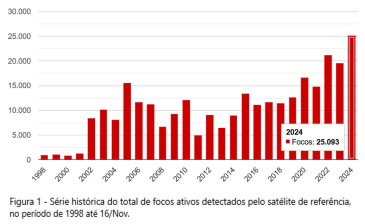
- o pior ano desde 1998. Até 16 de novembro de 2024, quando
este texto foi adapatado, o número de focos de queimadas era de
25.093 (figura 1).
Em 2024, o pior mês até o momento, foi agosto. Foram 10.328
queimadas, quase o dobro do registrado no mesmo período do
ano passado. Julho também teve o pior mês dos últimos 26 anos,
com 4,2 mil focos de calor. Em setembro, os dados parciais do
Inpe apontam que só nos 24 primeiros dias do mês, o estado tem
6.128 incêndios florestais. Só entre os meses de julho, agosto e
setembro, são mais de 21 mil queimadas no Amazonas.
Em Manaus, o Rio Negro está a menos de dois metros da
seca histórica de 2023. A cidade também está em situação de
emergência por conta da descida do rio, que é um afluente do Rio
Amazonas. A praia da Ponta Negra, principal balneário da cidade
já foi fechada para banho, devido ao baixo nível do rio. No Porto
da Capital, a seca também tem mudado a paisagem do local. A
cidade pode, inclusive, sofrer com a escassez de peixes.
Apesar do problema, pesquisadores do Serviço Geológico do
Brasil (SGB) acreditam que o rio não deve atingir a cota da seca
de 2023, que foi de 12,70 metros. A previsão para este ano é de
que o nível das águas fique em torno de 14 a 15 metros, o que já
é considerado muito baixo.
Texto adapatado de Matheus Castro, g1 AM
24/09/2024 18h49 Atualizado há um mês. Visualizado em 17/11/2024. Disponível em
https://g1.globo.com/am/amazonas/noticia/2024/09/24/amazonas-registra-216-mil
queimadas-em-2024-e-tem-o-pior-indice-em-26-anos-aponta-inpe.ghtml
Visto em 17/11/2024. Disponível em https://terrabrasilis.dpi.inpe.br/queimadas/situacao-atual/estatisticas/estatisticas_estados/
Na frase “Estado está em estado de emergência ambiental
por conta das queimadas.”(parágrafo 1, linha 1), as palavras
Estado e estado têm significados distintos. Analise as afirmações
abaixo e marque a alternativa correta:
Q3470828
Português
Texto associado
Amazonas registra 21,6 mil queimadas em 2024 e tem o pior
índice em 26 anos, aponta Inpe
Estado está em estado de emergência ambiental por conta das
queimadas. Problema também gerou uma onda de fumaça que
atinge todas as 62 cidades amazonenses, incluindo Manaus.
Em nota, o Governo do Amazonas disse que, devido à realidade
da seca severa que acomete a Amazônia Legal como um todo,
os focos de calor tendem a aumentar, considerando a falta de
umidade do ar que favorece o alastramento do fogo em áreas
de floresta. Segundo o Inpe, de 1º de janeiro até 23 de setembro
deste ano, o Amazonas contabiliza o total 21.612 focos de calor
- o pior ano desde 1998. Até 16 de novembro de 2024, quando
este texto foi adapatado, o número de focos de queimadas era de
25.093 (figura 1).
Em 2024, o pior mês até o momento, foi agosto. Foram 10.328
queimadas, quase o dobro do registrado no mesmo período do
ano passado. Julho também teve o pior mês dos últimos 26 anos,
com 4,2 mil focos de calor. Em setembro, os dados parciais do
Inpe apontam que só nos 24 primeiros dias do mês, o estado tem
6.128 incêndios florestais. Só entre os meses de julho, agosto e
setembro, são mais de 21 mil queimadas no Amazonas.
Em Manaus, o Rio Negro está a menos de dois metros da
seca histórica de 2023. A cidade também está em situação de
emergência por conta da descida do rio, que é um afluente do Rio
Amazonas. A praia da Ponta Negra, principal balneário da cidade
já foi fechada para banho, devido ao baixo nível do rio. No Porto
da Capital, a seca também tem mudado a paisagem do local. A
cidade pode, inclusive, sofrer com a escassez de peixes.
Apesar do problema, pesquisadores do Serviço Geológico do
Brasil (SGB) acreditam que o rio não deve atingir a cota da seca
de 2023, que foi de 12,70 metros. A previsão para este ano é de
que o nível das águas fique em torno de 14 a 15 metros, o que já
é considerado muito baixo.
Texto adapatado de Matheus Castro, g1 AM
24/09/2024 18h49 Atualizado há um mês. Visualizado em 17/11/2024. Disponível em
https://g1.globo.com/am/amazonas/noticia/2024/09/24/amazonas-registra-216-mil
queimadas-em-2024-e-tem-o-pior-indice-em-26-anos-aponta-inpe.ghtml
Visto em 17/11/2024. Disponível em https://terrabrasilis.dpi.inpe.br/queimadas/situacao-atual/estatisticas/estatisticas_estados/
Com base no texto, analise as alternativas abaixo e assinale
a correta:
Q3466153
Radiologia
Um paciente de 30 anos é admitido com alterações de
personalidade e convulsões recentes. A RM do crânio revela
múltiplos nódulos cerebrais com realce periférico após a
administração de contraste, além de edema adjacente. Tem-se
como diagnóstico mais provável:
Q3466152
Radiologia
Uma paciente de 40 anos apresenta-se com cefaleia intensa
e visão turva. A ressonância do crânio revela um tumor pituitário
com realce heterogêneo após a administração de contraste,
invadindo o seio cavernoso. Nessa situação, o diagnóstico mais
provável é:
Q3466150
Radiologia
Um paciente de 60 anos com história de câncer de próstata
apresenta-se para um exame de ressonância magnética da pelve
devido à suspeita de recorrência tumoral. As imagens revelam
uma lesão nodular com realce heterogêneo na próstata, além de
invasão da cápsula prostática e extensão para o reto adjacente. O
diagnóstico mais provável para esse caso é:
Q3466149
Radiologia
Um paciente de 45 anos chega ao pronto-socorro com dor
abdominal aguda e vômitos. A tomografia computadorizada de
abdome revela dilatação do intestino delgado proximal, com níveis
hidroaéreos múltiplos. Não há evidências de obstrução mecânica.
Dessa forma, o diagnóstico mais provável é:
Q3466148
Radiologia
Um paciente de 65 anos, com antecedentes de tabagismo,
apresenta-se ao pronto-socorro com dor torácica súbita e dispneia.
A radiografia de tórax é inconclusiva, mas a angiotomografia
computadorizada revela uma falha de enchimento em uma artéria
pulmonar segmentar. O diagnóstico mais provável é:
Q3466147
Radiologia
O diagnóstico mais provável em um paciente com dor aguda
no flanco e hematúria após trauma abdominal é:

 Conheça nossos planos