Selecionar segmento
Estude com questões de diferentes segmentos
Atenção: Isso limpará todos os campos já preenchidos no filtro!
Foram encontradas 25.763 questões
Resolva questões gratuitamente!
Junte-se a mais de 4 milhões de concurseiros!


Ano: 2024
Banca:
SELECON
Órgão:
Prefeitura de São Gonçalo - RJ
Prova:
SELECON - 2024 - Prefeitura de São Gonçalo - RJ - Professor Docente I - Ciências |
Q3412128
Biologia
“Desde a inauguração, em junho de 2022, a Área de Soltura
de Animais Silvestres (Asas) tornou-se referência em todo o
Estado do Rio de Janeiro no resgate e reabilitação de animais
silvestres. [...] Em meados de abril, a área de soltura recebeu um
filhote de onça-parda (Puma concolor), resgatado em Cambuci,
ao Norte do Estado.
Fonte: Prefeitura de São Gonçalo. ASAS de São Gonçalo atendeu cerca de 400 animais, publicado em 23/12/2023.
De acordo com a classificação dos seres vivos, concolor refere-se a:
Fonte: Prefeitura de São Gonçalo. ASAS de São Gonçalo atendeu cerca de 400 animais, publicado em 23/12/2023.
De acordo com a classificação dos seres vivos, concolor refere-se a:
Ano: 2024
Banca:
SELECON
Órgão:
Prefeitura de São Gonçalo - RJ
Prova:
SELECON - 2024 - Prefeitura de São Gonçalo - RJ - Professor Docente I - Ciências |
Q3412127
Biologia
O professor Anderson pediu que seus alunos desenhassem
um representante do reino Protista, que poderia ser um/uma:
Ano: 2024
Banca:
SELECON
Órgão:
Prefeitura de São Gonçalo - RJ
Prova:
SELECON - 2024 - Prefeitura de São Gonçalo - RJ - Professor Docente I - Português |
Q3412125
Português
“Todos sentiam muita sede quando chegaram à sede da
emresa”. As duas palavras destacadas constituem um par de:
Ano: 2024
Banca:
SELECON
Órgão:
Prefeitura de São Gonçalo - RJ
Prova:
SELECON - 2024 - Prefeitura de São Gonçalo - RJ - Professor Docente I - Português |
Q3412124
Pedagogia
De acordo com as pesquisas mais recentes no campo
da metodologia do ensino de língua portuguesa, assume-se
que os docentes e os sistemas de ensino devem trabalhar em
uma perspectiva enunciativo-discursiva da linguagem. Em
conformidade com a Base Nacional Comum Curricular, à luz dessa
perspectiva, destacam-se as seguintes práticas de linguagem:
Ano: 2024
Banca:
SELECON
Órgão:
Prefeitura de São Gonçalo - RJ
Prova:
SELECON - 2024 - Prefeitura de São Gonçalo - RJ - Professor Docente I - Português |
Q3412123
Português
A única alternativa em que o uso do acento grave, indicativo
de crase, está correto é:
Ano: 2024
Banca:
SELECON
Órgão:
Prefeitura de São Gonçalo - RJ
Prova:
SELECON - 2024 - Prefeitura de São Gonçalo - RJ - Professor Docente I - Português |
Q3412122
Português
Texto associado
Leia o texto a seguir:
Texto II
Escritora japonesa admite que ChatGPT escreveu parte de seu livro premiado; entenda
Rie Kudan, que venceu o Prêmio Akutagawa nesta quartafeira, 17, disse que falava frequentemente com a ferramenta e confiava a ela seus pensamentos mais íntimos
TÓQUIO, JAPÃO | AFP - A autora japonesa Rie Kudan, vencedora de um dos prêmios de literatura mais prestigiados de seu país, admitiu que cerca de 5% de seu romance foi escrito com ChatGPT, uma ferramenta de inteligência artificial que, segundo ela, lhe permitiu libertar o seu potencial criativo.
O surgimento em 2022 do ChatGPT, um robô de inteligência artificial (IA) capaz de escrever uma redação em questão de segundos, levanta preocupação sobre seu possível impacto em diversos setores, inclusive nos livros.
O último romance da autora, Tokyo-to Dojo-to (Torre da Compaixão de Tóquio, em tradução livre) recebeu o Prêmio Akutagawa na última quarta-feira, 17. O júri declarou que a obra era “tão perfeita que era difícil encontrar defeitos nela”.
Mas, durante a cerimônia, Kudan, de 33 anos, admitiu que usou “todo o potencial da IA para escrever este livro” e explicou que “cerca de 5%” eram frases “geradas por IA”.
A inteligência artificial é um tema recorrente no livro de Kudan, cuja história se passa em uma Tóquio futurista em torno de uma torre de prisão, concebida por uma arquiteta incomodada com a sociedade.
Kudan explicou que falava frequentemente com a ferramenta e confiava a ela seus pensamentos mais íntimos. As respostas do ChatGPT inspiraram alguns diálogos em seu romance.
A autora indicou que deseja ter “bons relacionamentos” com a IA e “liberar [sua] criatividade” com a ferramenta.
Fonte: https://www.estadao.com.br/cultura/literatura/escritorajaponesa -admite -chatgpt-escreveu-parte-seu-livro-premiado-entendanprec/?utm_source=facebook%3Anewsfeed&utm_medium=social-organic&utm_ campaign=redes-sociais%3A012024%3Ae&utm_content=%3A%3A%3A&utm_term =&fbclid=IwAR3y17tKndIewIesykTWeDKrMJjCI15ymltkiMs3LBk-jUNTyzQaxZiOojE. Acesso em: 03 fev. 2024.
“Kudan explicou que falava frequentemente com a ferramenta
e confiava a ela seus pensamentos mais íntimos” (6.º parágrafo).
O trecho destacado poderia ser reescrito, à luz da norma-padrão,
da seguinte forma:
Ano: 2024
Banca:
SELECON
Órgão:
Prefeitura de São Gonçalo - RJ
Prova:
SELECON - 2024 - Prefeitura de São Gonçalo - RJ - Professor Docente I - Português |
Q3412121
Português
Texto associado
Leia o texto a seguir:
Texto II
Escritora japonesa admite que ChatGPT escreveu parte de seu livro premiado; entenda
Rie Kudan, que venceu o Prêmio Akutagawa nesta quartafeira, 17, disse que falava frequentemente com a ferramenta e confiava a ela seus pensamentos mais íntimos
TÓQUIO, JAPÃO | AFP - A autora japonesa Rie Kudan, vencedora de um dos prêmios de literatura mais prestigiados de seu país, admitiu que cerca de 5% de seu romance foi escrito com ChatGPT, uma ferramenta de inteligência artificial que, segundo ela, lhe permitiu libertar o seu potencial criativo.
O surgimento em 2022 do ChatGPT, um robô de inteligência artificial (IA) capaz de escrever uma redação em questão de segundos, levanta preocupação sobre seu possível impacto em diversos setores, inclusive nos livros.
O último romance da autora, Tokyo-to Dojo-to (Torre da Compaixão de Tóquio, em tradução livre) recebeu o Prêmio Akutagawa na última quarta-feira, 17. O júri declarou que a obra era “tão perfeita que era difícil encontrar defeitos nela”.
Mas, durante a cerimônia, Kudan, de 33 anos, admitiu que usou “todo o potencial da IA para escrever este livro” e explicou que “cerca de 5%” eram frases “geradas por IA”.
A inteligência artificial é um tema recorrente no livro de Kudan, cuja história se passa em uma Tóquio futurista em torno de uma torre de prisão, concebida por uma arquiteta incomodada com a sociedade.
Kudan explicou que falava frequentemente com a ferramenta e confiava a ela seus pensamentos mais íntimos. As respostas do ChatGPT inspiraram alguns diálogos em seu romance.
A autora indicou que deseja ter “bons relacionamentos” com a IA e “liberar [sua] criatividade” com a ferramenta.
Fonte: https://www.estadao.com.br/cultura/literatura/escritorajaponesa -admite -chatgpt-escreveu-parte-seu-livro-premiado-entendanprec/?utm_source=facebook%3Anewsfeed&utm_medium=social-organic&utm_ campaign=redes-sociais%3A012024%3Ae&utm_content=%3A%3A%3A&utm_term =&fbclid=IwAR3y17tKndIewIesykTWeDKrMJjCI15ymltkiMs3LBk-jUNTyzQaxZiOojE. Acesso em: 03 fev. 2024.
“A inteligência artificial é um tema recorrente no livro de
Kudan, cuja história se passa em uma Tóquio futurista em torno
de uma torre de prisão, concebida por uma arquiteta incomodada
com a sociedade” (5.º parágrafo). O elemento destacado, no
texto, funciona como pronome relativo com função sintática de:
Ano: 2024
Banca:
SELECON
Órgão:
Prefeitura de São Gonçalo - RJ
Prova:
SELECON - 2024 - Prefeitura de São Gonçalo - RJ - Professor Docente I - Português |
Q3412120
Português
Texto associado
Leia o texto a seguir:
Texto II
Escritora japonesa admite que ChatGPT escreveu parte de seu livro premiado; entenda
Rie Kudan, que venceu o Prêmio Akutagawa nesta quartafeira, 17, disse que falava frequentemente com a ferramenta e confiava a ela seus pensamentos mais íntimos
TÓQUIO, JAPÃO | AFP - A autora japonesa Rie Kudan, vencedora de um dos prêmios de literatura mais prestigiados de seu país, admitiu que cerca de 5% de seu romance foi escrito com ChatGPT, uma ferramenta de inteligência artificial que, segundo ela, lhe permitiu libertar o seu potencial criativo.
O surgimento em 2022 do ChatGPT, um robô de inteligência artificial (IA) capaz de escrever uma redação em questão de segundos, levanta preocupação sobre seu possível impacto em diversos setores, inclusive nos livros.
O último romance da autora, Tokyo-to Dojo-to (Torre da Compaixão de Tóquio, em tradução livre) recebeu o Prêmio Akutagawa na última quarta-feira, 17. O júri declarou que a obra era “tão perfeita que era difícil encontrar defeitos nela”.
Mas, durante a cerimônia, Kudan, de 33 anos, admitiu que usou “todo o potencial da IA para escrever este livro” e explicou que “cerca de 5%” eram frases “geradas por IA”.
A inteligência artificial é um tema recorrente no livro de Kudan, cuja história se passa em uma Tóquio futurista em torno de uma torre de prisão, concebida por uma arquiteta incomodada com a sociedade.
Kudan explicou que falava frequentemente com a ferramenta e confiava a ela seus pensamentos mais íntimos. As respostas do ChatGPT inspiraram alguns diálogos em seu romance.
A autora indicou que deseja ter “bons relacionamentos” com a IA e “liberar [sua] criatividade” com a ferramenta.
Fonte: https://www.estadao.com.br/cultura/literatura/escritorajaponesa -admite -chatgpt-escreveu-parte-seu-livro-premiado-entendanprec/?utm_source=facebook%3Anewsfeed&utm_medium=social-organic&utm_ campaign=redes-sociais%3A012024%3Ae&utm_content=%3A%3A%3A&utm_term =&fbclid=IwAR3y17tKndIewIesykTWeDKrMJjCI15ymltkiMs3LBk-jUNTyzQaxZiOojE. Acesso em: 03 fev. 2024.
No trecho “Mas, durante a cerimônia, Kudan, de 33 anos,
admitiu que usou ‘todo o potencial da IA para escrever este livro’’”
(4.º parágrafo), há:
Ano: 2024
Banca:
SELECON
Órgão:
Prefeitura de São Gonçalo - RJ
Prova:
SELECON - 2024 - Prefeitura de São Gonçalo - RJ - Professor Docente I - Português |
Q3412119
Português
Texto associado
Leia o texto a seguir:
Texto II
Escritora japonesa admite que ChatGPT escreveu parte de seu livro premiado; entenda
Rie Kudan, que venceu o Prêmio Akutagawa nesta quartafeira, 17, disse que falava frequentemente com a ferramenta e confiava a ela seus pensamentos mais íntimos
TÓQUIO, JAPÃO | AFP - A autora japonesa Rie Kudan, vencedora de um dos prêmios de literatura mais prestigiados de seu país, admitiu que cerca de 5% de seu romance foi escrito com ChatGPT, uma ferramenta de inteligência artificial que, segundo ela, lhe permitiu libertar o seu potencial criativo.
O surgimento em 2022 do ChatGPT, um robô de inteligência artificial (IA) capaz de escrever uma redação em questão de segundos, levanta preocupação sobre seu possível impacto em diversos setores, inclusive nos livros.
O último romance da autora, Tokyo-to Dojo-to (Torre da Compaixão de Tóquio, em tradução livre) recebeu o Prêmio Akutagawa na última quarta-feira, 17. O júri declarou que a obra era “tão perfeita que era difícil encontrar defeitos nela”.
Mas, durante a cerimônia, Kudan, de 33 anos, admitiu que usou “todo o potencial da IA para escrever este livro” e explicou que “cerca de 5%” eram frases “geradas por IA”.
A inteligência artificial é um tema recorrente no livro de Kudan, cuja história se passa em uma Tóquio futurista em torno de uma torre de prisão, concebida por uma arquiteta incomodada com a sociedade.
Kudan explicou que falava frequentemente com a ferramenta e confiava a ela seus pensamentos mais íntimos. As respostas do ChatGPT inspiraram alguns diálogos em seu romance.
A autora indicou que deseja ter “bons relacionamentos” com a IA e “liberar [sua] criatividade” com a ferramenta.
Fonte: https://www.estadao.com.br/cultura/literatura/escritorajaponesa -admite -chatgpt-escreveu-parte-seu-livro-premiado-entendanprec/?utm_source=facebook%3Anewsfeed&utm_medium=social-organic&utm_ campaign=redes-sociais%3A012024%3Ae&utm_content=%3A%3A%3A&utm_term =&fbclid=IwAR3y17tKndIewIesykTWeDKrMJjCI15ymltkiMs3LBk-jUNTyzQaxZiOojE. Acesso em: 03 fev. 2024.
No trecho “O júri declarou que a obra era ‘tão perfeita que
era difícil encontrar defeitos nela’” (3.º parágrafo), em termos
morfossintáticos, os elementos destacados são:
Ano: 2024
Banca:
SELECON
Órgão:
Prefeitura de São Gonçalo - RJ
Prova:
SELECON - 2024 - Prefeitura de São Gonçalo - RJ - Professor Docente I - Português |
Q3412118
Português
Texto associado
Leia o texto a seguir:
Texto II
Escritora japonesa admite que ChatGPT escreveu parte de seu livro premiado; entenda
Rie Kudan, que venceu o Prêmio Akutagawa nesta quartafeira, 17, disse que falava frequentemente com a ferramenta e confiava a ela seus pensamentos mais íntimos
TÓQUIO, JAPÃO | AFP - A autora japonesa Rie Kudan, vencedora de um dos prêmios de literatura mais prestigiados de seu país, admitiu que cerca de 5% de seu romance foi escrito com ChatGPT, uma ferramenta de inteligência artificial que, segundo ela, lhe permitiu libertar o seu potencial criativo.
O surgimento em 2022 do ChatGPT, um robô de inteligência artificial (IA) capaz de escrever uma redação em questão de segundos, levanta preocupação sobre seu possível impacto em diversos setores, inclusive nos livros.
O último romance da autora, Tokyo-to Dojo-to (Torre da Compaixão de Tóquio, em tradução livre) recebeu o Prêmio Akutagawa na última quarta-feira, 17. O júri declarou que a obra era “tão perfeita que era difícil encontrar defeitos nela”.
Mas, durante a cerimônia, Kudan, de 33 anos, admitiu que usou “todo o potencial da IA para escrever este livro” e explicou que “cerca de 5%” eram frases “geradas por IA”.
A inteligência artificial é um tema recorrente no livro de Kudan, cuja história se passa em uma Tóquio futurista em torno de uma torre de prisão, concebida por uma arquiteta incomodada com a sociedade.
Kudan explicou que falava frequentemente com a ferramenta e confiava a ela seus pensamentos mais íntimos. As respostas do ChatGPT inspiraram alguns diálogos em seu romance.
A autora indicou que deseja ter “bons relacionamentos” com a IA e “liberar [sua] criatividade” com a ferramenta.
Fonte: https://www.estadao.com.br/cultura/literatura/escritorajaponesa -admite -chatgpt-escreveu-parte-seu-livro-premiado-entendanprec/?utm_source=facebook%3Anewsfeed&utm_medium=social-organic&utm_ campaign=redes-sociais%3A012024%3Ae&utm_content=%3A%3A%3A&utm_term =&fbclid=IwAR3y17tKndIewIesykTWeDKrMJjCI15ymltkiMs3LBk-jUNTyzQaxZiOojE. Acesso em: 03 fev. 2024.
“O surgimento em 2022 do ChatGPT, um robô de inteligência
artificial (IA) capaz de escrever uma redação em questão de
segundos, levanta preocupação sobre seu possível impacto em
diversos setores, inclusive nos livros” (2.º parágrafo). Nesse
trecho, em termos de coesão textual, o elemento destacado faz
referência:
Ano: 2024
Banca:
SELECON
Órgão:
Prefeitura de São Gonçalo - RJ
Prova:
SELECON - 2024 - Prefeitura de São Gonçalo - RJ - Professor Docente I - Português |
Q3412117
Português
Texto associado
Leia o texto a seguir:
Texto II
Escritora japonesa admite que ChatGPT escreveu parte de seu livro premiado; entenda
Rie Kudan, que venceu o Prêmio Akutagawa nesta quartafeira, 17, disse que falava frequentemente com a ferramenta e confiava a ela seus pensamentos mais íntimos
TÓQUIO, JAPÃO | AFP - A autora japonesa Rie Kudan, vencedora de um dos prêmios de literatura mais prestigiados de seu país, admitiu que cerca de 5% de seu romance foi escrito com ChatGPT, uma ferramenta de inteligência artificial que, segundo ela, lhe permitiu libertar o seu potencial criativo.
O surgimento em 2022 do ChatGPT, um robô de inteligência artificial (IA) capaz de escrever uma redação em questão de segundos, levanta preocupação sobre seu possível impacto em diversos setores, inclusive nos livros.
O último romance da autora, Tokyo-to Dojo-to (Torre da Compaixão de Tóquio, em tradução livre) recebeu o Prêmio Akutagawa na última quarta-feira, 17. O júri declarou que a obra era “tão perfeita que era difícil encontrar defeitos nela”.
Mas, durante a cerimônia, Kudan, de 33 anos, admitiu que usou “todo o potencial da IA para escrever este livro” e explicou que “cerca de 5%” eram frases “geradas por IA”.
A inteligência artificial é um tema recorrente no livro de Kudan, cuja história se passa em uma Tóquio futurista em torno de uma torre de prisão, concebida por uma arquiteta incomodada com a sociedade.
Kudan explicou que falava frequentemente com a ferramenta e confiava a ela seus pensamentos mais íntimos. As respostas do ChatGPT inspiraram alguns diálogos em seu romance.
A autora indicou que deseja ter “bons relacionamentos” com a IA e “liberar [sua] criatividade” com a ferramenta.
Fonte: https://www.estadao.com.br/cultura/literatura/escritorajaponesa -admite -chatgpt-escreveu-parte-seu-livro-premiado-entendanprec/?utm_source=facebook%3Anewsfeed&utm_medium=social-organic&utm_ campaign=redes-sociais%3A012024%3Ae&utm_content=%3A%3A%3A&utm_term =&fbclid=IwAR3y17tKndIewIesykTWeDKrMJjCI15ymltkiMs3LBk-jUNTyzQaxZiOojE. Acesso em: 03 fev. 2024.
“A autora japonesa Rie Kudan, vencedora de um dos prêmios
de literatura mais prestigiados de seu país, admitiu que cerca de
5% de seu romance foi escrito com ChatGPT, uma ferramenta de
inteligência artificial que, segundo ela, lhe permitiu libertar o seu
potencial criativo”. Nesse primeiro parágrafo do texto, o termo em
destaque é classificado sintaticamente como:
Ano: 2024
Banca:
SELECON
Órgão:
Prefeitura de São Gonçalo - RJ
Prova:
SELECON - 2024 - Prefeitura de São Gonçalo - RJ - Professor Docente I - Português |
Q3412116
Português
Texto associado
Leia o texto a seguir:
Texto II
Escritora japonesa admite que ChatGPT escreveu parte de seu livro premiado; entenda
Rie Kudan, que venceu o Prêmio Akutagawa nesta quartafeira, 17, disse que falava frequentemente com a ferramenta e confiava a ela seus pensamentos mais íntimos
TÓQUIO, JAPÃO | AFP - A autora japonesa Rie Kudan, vencedora de um dos prêmios de literatura mais prestigiados de seu país, admitiu que cerca de 5% de seu romance foi escrito com ChatGPT, uma ferramenta de inteligência artificial que, segundo ela, lhe permitiu libertar o seu potencial criativo.
O surgimento em 2022 do ChatGPT, um robô de inteligência artificial (IA) capaz de escrever uma redação em questão de segundos, levanta preocupação sobre seu possível impacto em diversos setores, inclusive nos livros.
O último romance da autora, Tokyo-to Dojo-to (Torre da Compaixão de Tóquio, em tradução livre) recebeu o Prêmio Akutagawa na última quarta-feira, 17. O júri declarou que a obra era “tão perfeita que era difícil encontrar defeitos nela”.
Mas, durante a cerimônia, Kudan, de 33 anos, admitiu que usou “todo o potencial da IA para escrever este livro” e explicou que “cerca de 5%” eram frases “geradas por IA”.
A inteligência artificial é um tema recorrente no livro de Kudan, cuja história se passa em uma Tóquio futurista em torno de uma torre de prisão, concebida por uma arquiteta incomodada com a sociedade.
Kudan explicou que falava frequentemente com a ferramenta e confiava a ela seus pensamentos mais íntimos. As respostas do ChatGPT inspiraram alguns diálogos em seu romance.
A autora indicou que deseja ter “bons relacionamentos” com a IA e “liberar [sua] criatividade” com a ferramenta.
Fonte: https://www.estadao.com.br/cultura/literatura/escritorajaponesa -admite -chatgpt-escreveu-parte-seu-livro-premiado-entendanprec/?utm_source=facebook%3Anewsfeed&utm_medium=social-organic&utm_ campaign=redes-sociais%3A012024%3Ae&utm_content=%3A%3A%3A&utm_term =&fbclid=IwAR3y17tKndIewIesykTWeDKrMJjCI15ymltkiMs3LBk-jUNTyzQaxZiOojE. Acesso em: 03 fev. 2024.
O objetivo principal do texto II é:
Ano: 2024
Banca:
SELECON
Órgão:
Prefeitura de São Gonçalo - RJ
Prova:
SELECON - 2024 - Prefeitura de São Gonçalo - RJ - Professor Docente I - Português |
Q3412115
Português
Texto associado
Leia o texto a seguir:
Texto I
Leia abaixo um trecho de Caramuru, um importante poema épico
de autoria de Santa Rita Durão:
CANTO I
I
De um varão em mil casos agitado,
Que as praias discorrendo do Ocidente,
Descobriu o Recôncavo afamado
Da capital brasílica potente:
Do Filho do Trovão denominado,
Que o peito domar soube à fera gente;
O valor cantarei na adversa sorte,
Pois só conheço herói quem nela é forte.
II
Santo Esplendor, que do grão-Padre manas
Ao seio intacto de uma Virgem bela;
Se da enchente de luzes Soberanas
Tudo dispensas pela Mãe Donzela;
Rompendo as sombras de ilusões humanas,
Tu do grão caso! a pura luz revela
Faze que em ti comece, e em ti conclua
Esta grande Obra, que por fim foi tua.
III
E vós, Príncipe excelso, do Céu dado
Para base imortal do Luso Trono;
Vós, que do Áureo Brasil no Principado
Da Real sucessão sois alto abono:
Enquanto o Império tendes descansado
Sobre o seio da paz com doce sono,
Não queirais de dignar-vos no meu metro
De pôr os olhos, e admiti-lo ao cetro.
Fonte: https://objdigital.bn.br/Acervo_Digital/Livros_eletronicos/caramuru.pdf.
Acesso em: 03 fev. 2024.
No verso “Faze que em ti comece, e em ti conclua”, presente
na segunda estrofe do Texto I, o verbo destacado está conjugado
na:
Ano: 2024
Banca:
SELECON
Órgão:
Prefeitura de São Gonçalo - RJ
Prova:
SELECON - 2024 - Prefeitura de São Gonçalo - RJ - Professor Docente I - Português |
Q3412114
Português
Texto associado
Leia o texto a seguir:
Texto I
Leia abaixo um trecho de Caramuru, um importante poema épico
de autoria de Santa Rita Durão:
CANTO I
I
De um varão em mil casos agitado,
Que as praias discorrendo do Ocidente,
Descobriu o Recôncavo afamado
Da capital brasílica potente:
Do Filho do Trovão denominado,
Que o peito domar soube à fera gente;
O valor cantarei na adversa sorte,
Pois só conheço herói quem nela é forte.
II
Santo Esplendor, que do grão-Padre manas
Ao seio intacto de uma Virgem bela;
Se da enchente de luzes Soberanas
Tudo dispensas pela Mãe Donzela;
Rompendo as sombras de ilusões humanas,
Tu do grão caso! a pura luz revela
Faze que em ti comece, e em ti conclua
Esta grande Obra, que por fim foi tua.
III
E vós, Príncipe excelso, do Céu dado
Para base imortal do Luso Trono;
Vós, que do Áureo Brasil no Principado
Da Real sucessão sois alto abono:
Enquanto o Império tendes descansado
Sobre o seio da paz com doce sono,
Não queirais de dignar-vos no meu metro
De pôr os olhos, e admiti-lo ao cetro.
Fonte: https://objdigital.bn.br/Acervo_Digital/Livros_eletronicos/caramuru.pdf.
Acesso em: 03 fev. 2024.
Com relação às funções da linguagem, a obra Caramuru é
marcada essencialmente pelas funções:
Ano: 2024
Banca:
SELECON
Órgão:
Prefeitura de São Gonçalo - RJ
Prova:
SELECON - 2024 - Prefeitura de São Gonçalo - RJ - Professor Docente I - Português |
Q3412113
Literatura
Texto associado
Leia o texto a seguir:
Texto I
Leia abaixo um trecho de Caramuru, um importante poema épico
de autoria de Santa Rita Durão:
CANTO I
I
De um varão em mil casos agitado,
Que as praias discorrendo do Ocidente,
Descobriu o Recôncavo afamado
Da capital brasílica potente:
Do Filho do Trovão denominado,
Que o peito domar soube à fera gente;
O valor cantarei na adversa sorte,
Pois só conheço herói quem nela é forte.
II
Santo Esplendor, que do grão-Padre manas
Ao seio intacto de uma Virgem bela;
Se da enchente de luzes Soberanas
Tudo dispensas pela Mãe Donzela;
Rompendo as sombras de ilusões humanas,
Tu do grão caso! a pura luz revela
Faze que em ti comece, e em ti conclua
Esta grande Obra, que por fim foi tua.
III
E vós, Príncipe excelso, do Céu dado
Para base imortal do Luso Trono;
Vós, que do Áureo Brasil no Principado
Da Real sucessão sois alto abono:
Enquanto o Império tendes descansado
Sobre o seio da paz com doce sono,
Não queirais de dignar-vos no meu metro
De pôr os olhos, e admiti-lo ao cetro.
Fonte: https://objdigital.bn.br/Acervo_Digital/Livros_eletronicos/caramuru.pdf.
Acesso em: 03 fev. 2024.
As características narrativas do poema Caramuru permitem
classificá-lo, do ponto de vista literário, como um tipo de:
Ano: 2024
Banca:
SELECON
Órgão:
Prefeitura de São Gonçalo - RJ
Prova:
SELECON - 2024 - Prefeitura de São Gonçalo - RJ - Professor Docente I - Português |
Q3412112
Português
Texto associado
Leia o texto a seguir:
Texto I
Leia abaixo um trecho de Caramuru, um importante poema épico
de autoria de Santa Rita Durão:
CANTO I
I
De um varão em mil casos agitado,
Que as praias discorrendo do Ocidente,
Descobriu o Recôncavo afamado
Da capital brasílica potente:
Do Filho do Trovão denominado,
Que o peito domar soube à fera gente;
O valor cantarei na adversa sorte,
Pois só conheço herói quem nela é forte.
II
Santo Esplendor, que do grão-Padre manas
Ao seio intacto de uma Virgem bela;
Se da enchente de luzes Soberanas
Tudo dispensas pela Mãe Donzela;
Rompendo as sombras de ilusões humanas,
Tu do grão caso! a pura luz revela
Faze que em ti comece, e em ti conclua
Esta grande Obra, que por fim foi tua.
III
E vós, Príncipe excelso, do Céu dado
Para base imortal do Luso Trono;
Vós, que do Áureo Brasil no Principado
Da Real sucessão sois alto abono:
Enquanto o Império tendes descansado
Sobre o seio da paz com doce sono,
Não queirais de dignar-vos no meu metro
De pôr os olhos, e admiti-lo ao cetro.
Fonte: https://objdigital.bn.br/Acervo_Digital/Livros_eletronicos/caramuru.pdf.
Acesso em: 03 fev. 2024.
Na primeira estrofe do Texto I, Santa Rita Durão retrata uma
imagem heroica. Essa imagem está construída com base no/a:
Ano: 2024
Banca:
SELECON
Órgão:
Prefeitura de São Gonçalo - RJ
Prova:
SELECON - 2024 - Prefeitura de São Gonçalo - RJ - Professor Docente I - Português |
Q3412111
Literatura
Texto associado
Leia o texto a seguir:
Texto I
Leia abaixo um trecho de Caramuru, um importante poema épico
de autoria de Santa Rita Durão:
CANTO I
I
De um varão em mil casos agitado,
Que as praias discorrendo do Ocidente,
Descobriu o Recôncavo afamado
Da capital brasílica potente:
Do Filho do Trovão denominado,
Que o peito domar soube à fera gente;
O valor cantarei na adversa sorte,
Pois só conheço herói quem nela é forte.
II
Santo Esplendor, que do grão-Padre manas
Ao seio intacto de uma Virgem bela;
Se da enchente de luzes Soberanas
Tudo dispensas pela Mãe Donzela;
Rompendo as sombras de ilusões humanas,
Tu do grão caso! a pura luz revela
Faze que em ti comece, e em ti conclua
Esta grande Obra, que por fim foi tua.
III
E vós, Príncipe excelso, do Céu dado
Para base imortal do Luso Trono;
Vós, que do Áureo Brasil no Principado
Da Real sucessão sois alto abono:
Enquanto o Império tendes descansado
Sobre o seio da paz com doce sono,
Não queirais de dignar-vos no meu metro
De pôr os olhos, e admiti-lo ao cetro.
Fonte: https://objdigital.bn.br/Acervo_Digital/Livros_eletronicos/caramuru.pdf.
Acesso em: 03 fev. 2024.
O poema épico Caramuru conta a história de Diogo Álvares
Correia, um náufrago português em sua chegada à Bahia. Na
estética literária brasileira, essa obra é tradicionalmente associada
Ano: 2024
Banca:
SELECON
Órgão:
Prefeitura de São Gonçalo - RJ
Prova:
SELECON - 2024 - Prefeitura de São Gonçalo - RJ - Professor Docente I - História |
Q3412065
História
O Neoliberalismo não existe e não se apresenta em estado
puro, mas sim em configurações híbridas, que se adaptam a todo
instante aos interesses do capital, em detrimento da soberania
dos Estados Nacionais.
“A confusão com o Estado mínimo e a crença otimista em sua superação por meio de políticas sociais ou pelas contradições do capitalismo devem ser abandonadas. Caso contrário, sob as condições políticas atuais, corremos o risco de aprofundar o neoliberalismo enquanto acreditamos contrariá-lo.”
ANDRADE, Daniel Pereira. O que é o neoliberalismo? A renovação do debate nas ciências sociais. Sociedade e Estado, v. 34. 2019. p. 236.
Para uma melhor compreensão acerca das características e impactos provocados pelo avanço do Neoliberalismo, deve-se apreender os seguintes aspectos:
“A confusão com o Estado mínimo e a crença otimista em sua superação por meio de políticas sociais ou pelas contradições do capitalismo devem ser abandonadas. Caso contrário, sob as condições políticas atuais, corremos o risco de aprofundar o neoliberalismo enquanto acreditamos contrariá-lo.”
ANDRADE, Daniel Pereira. O que é o neoliberalismo? A renovação do debate nas ciências sociais. Sociedade e Estado, v. 34. 2019. p. 236.
Para uma melhor compreensão acerca das características e impactos provocados pelo avanço do Neoliberalismo, deve-se apreender os seguintes aspectos:
Ano: 2024
Banca:
SELECON
Órgão:
Prefeitura de São Gonçalo - RJ
Prova:
SELECON - 2024 - Prefeitura de São Gonçalo - RJ - Professor Docente I - História |
Q3412064
Atualidades
A Guerra Civil Síria, que já passou de uma década, teve impactos nas tão difíceis relações diplomáticas entre as principais potências mundiais.
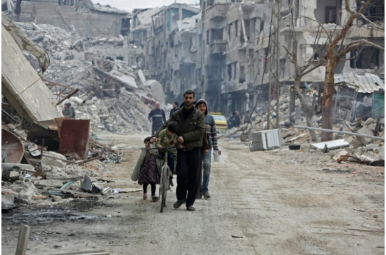
Civis em meio às ruinas de Harasta, na Síria - AFP/Arquivos.
A prolongada Guerra Civil Síria, que levou destruição, miséria, fome e doenças para sua população, também afetou as populações dos vários países vizinhos. Esse conflito teve início em 2011 e já fez mais de 400 mil vítimas, entre mortos e desaparecidos, levando mais de 5 milhões de sírios a emigrarem.
Sobre os acontecimentos que marcaram esse conflito, podemos assinalar o/os:
Ano: 2024
Banca:
SELECON
Órgão:
Prefeitura de São Gonçalo - RJ
Prova:
SELECON - 2024 - Prefeitura de São Gonçalo - RJ - Professor Docente I - História |
Q3412063
História
A música “Saudosa Maloca” foi composta e gravada por
Adoniram Barbosa em 1951, mas foi com o grupo “Demônios da
Garoa”, que a regravou em 1955 que, definitivamente, a música
atingiu um grande sucesso.
“Se o sinhô não está lembrado
Dá licença de contá
Que aqui onde agora está
Esse adifício arto
Era uma casa velha
Um palacete assobradado
Foi aqui seu moço
Que eu, Mato Grosso e o Joca
Construímos nossa maloca
Mas um dia, eu nem quero me alembrá
Veio os homis c'oas ferramenta
Que o dono mandô derrubá
(...)”
Adoniram Barbosa
A letra, com o palavreado do homem comum, é uma marca das composições de Adoniram, criando personagens que, em meio ao grande crescimento industrial de São Paulo no período, permaneciam marginalizados. Muitos deles eram migrantes de outras regiões do país, que não acompanhavam o crescimento das cidades do Sudeste.
A partir da abordagem musical e com base na análise da sociedade brasileira na década de 1950, pode-se afirmar que:
“Se o sinhô não está lembrado
Dá licença de contá
Que aqui onde agora está
Esse adifício arto
Era uma casa velha
Um palacete assobradado
Foi aqui seu moço
Que eu, Mato Grosso e o Joca
Construímos nossa maloca
Mas um dia, eu nem quero me alembrá
Veio os homis c'oas ferramenta
Que o dono mandô derrubá
(...)”
Adoniram Barbosa
A letra, com o palavreado do homem comum, é uma marca das composições de Adoniram, criando personagens que, em meio ao grande crescimento industrial de São Paulo no período, permaneciam marginalizados. Muitos deles eram migrantes de outras regiões do país, que não acompanhavam o crescimento das cidades do Sudeste.
A partir da abordagem musical e com base na análise da sociedade brasileira na década de 1950, pode-se afirmar que:

 Conheça nossos planos