Questões de Concurso
Para msconcursos
Foram encontradas 15.864 questões
Resolva questões gratuitamente!
Junte-se a mais de 4 milhões de concurseiros!


Ano: 2024
Banca:
MSConcursos
Órgão:
Prefeitura de Formigueiro - RS
Prova:
MS CONCURSOS - 2024 - Prefeitura de Formigueiro - RS - Professor em Educação Especial |
Q3389201
Medicina
Na avaliação funcional da visão, considera-se a acuidade visual, o campo visual e o uso eficiente do
potencial da visão. Sobre essa questão, assinale a alternativa correta.
Ano: 2024
Banca:
MSConcursos
Órgão:
Prefeitura de Formigueiro - RS
Prova:
MS CONCURSOS - 2024 - Prefeitura de Formigueiro - RS - Professor em Educação Especial |
Q3389200
Pedagogia
O pesquisador e filósofo Jean Piaget estudou os estágios do desenvolvimento infantil. A teoria afirma que
as crianças passam por quatro estágios diferentes ao se desenvolverem. Considerando o estudo deste teórico,
leia as preposições e assinale a alternativa correta.
I- Estágio Pré-operatório (0-2 anos).
II- Estágio Sensório Motor (2-7 anos).
III- Operacional concreto (7-11 anos).
IV- Operacional Formal (11 ou mais).
I- Estágio Pré-operatório (0-2 anos).
II- Estágio Sensório Motor (2-7 anos).
III- Operacional concreto (7-11 anos).
IV- Operacional Formal (11 ou mais).
Ano: 2024
Banca:
MSConcursos
Órgão:
Prefeitura de Formigueiro - RS
Prova:
MS CONCURSOS - 2024 - Prefeitura de Formigueiro - RS - Professor em Educação Especial |
Q3389199
Libras
Sobre o Bilinguismo, é correto afirmar:
Ano: 2024
Banca:
MSConcursos
Órgão:
Prefeitura de Formigueiro - RS
Prova:
MS CONCURSOS - 2024 - Prefeitura de Formigueiro - RS - Professor em Educação Especial |
Q3389198
Libras
No Atendimento Educacional Especializado voltado aos alunos com surdez, destacam-se três momentos
didático-pedagógicos importantes. Sobre este atendimento é correto afirmar, exceto:
Ano: 2024
Banca:
MSConcursos
Órgão:
Prefeitura de Formigueiro - RS
Prova:
MS CONCURSOS - 2024 - Prefeitura de Formigueiro - RS - Professor em Educação Especial |
Q3389197
Libras
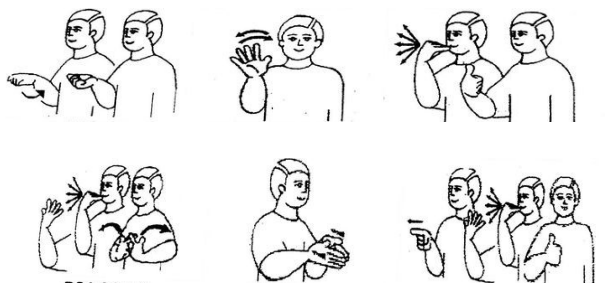
Observe as figuras e assinale a alternativa correta sobre as palavras na Língua Brasileira de Sinais.
Ano: 2024
Banca:
MSConcursos
Órgão:
Prefeitura de Formigueiro - RS
Prova:
MS CONCURSOS - 2024 - Prefeitura de Formigueiro - RS - Professor em Educação Especial |
Q3389196
Libras
Observe as letras do alfabeto manual de libras e assinale a alternativa correspondente à palavra correta.

Ano: 2024
Banca:
MSConcursos
Órgão:
Prefeitura de Formigueiro - RS
Prova:
MS CONCURSOS - 2024 - Prefeitura de Formigueiro - RS - Professor em Educação Especial |
Q3389195
Estatuto da Pessoa com Deficiência - Lei nº 13.146 de 2015
De acordo com art. 27, da Lei Brasileira de Inclusão da Pessoa com Deficiência, (Estatuto da Pessoa com
Deficiência): A educação constitui direito da pessoa com deficiência, assegurados sistema educacional
inclusivo em todos os níveis e aprendizado ao longo de toda a vida, de forma a alcançar o máximo
desenvolvimento possível de seus talentos e habilidades físicas, sensoriais, intelectuais e sociais, segundo
suas características, interesses e necessidades de aprendizagem. Sobre o Direito à educação disposto nesta
lei, assinale a alternativa correta.
Ano: 2024
Banca:
MSConcursos
Órgão:
Prefeitura de Formigueiro - RS
Prova:
MS CONCURSOS - 2024 - Prefeitura de Formigueiro - RS - Professor em Educação Especial |
Q3389194
Pedagogia
São públicos da Educação Especial: alunos com deficiência, transtornos globais do desenvolvimento e altas
habilidades/ superdotação. A respeito das Altas Habilidades/Superdotação é correto afirmar:
Ano: 2024
Banca:
MSConcursos
Órgão:
Prefeitura de Formigueiro - RS
Prova:
MS CONCURSOS - 2024 - Prefeitura de Formigueiro - RS - Professor em Educação Especial |
Q3389193
Pedagogia
São exemplos de recursos didáticos para o atendimento aos alunos com deficiência visual, exceto:
Ano: 2024
Banca:
MSConcursos
Órgão:
Prefeitura de Formigueiro - RS
Prova:
MS CONCURSOS - 2024 - Prefeitura de Formigueiro - RS - Professor em Educação Especial |
Q3389192
Pedagogia
Assinale a alternativa correta sobre a Política Nacional de Educação Especial na Perspectiva da Educação
Inclusiva.
Ano: 2024
Banca:
MSConcursos
Órgão:
Prefeitura de Formigueiro - RS
Prova:
MS CONCURSOS - 2024 - Prefeitura de Formigueiro - RS - Professor em Educação Especial |
Q3389191
Fonoaudiologia
A surdez é uma privação sensorial que interfere diretamente na comunicação, alterando a qualidade da
relação que o indivíduo estabelece com o meio, ela pode ter sérias implicações para o desenvolvimento de uma
criança, conforme o grau da perda auditiva que as mesmas apresentem. Sobre o grau de surdez e sua relação
com o desenvolvimento infantil, assinale a alternativa correta.
Ano: 2024
Banca:
MSConcursos
Órgão:
Prefeitura de Formigueiro - RS
Prova:
MS CONCURSOS - 2024 - Prefeitura de Formigueiro - RS - Professor de Inglês |
Q3389175
Inglês
Texto associado
“Dragons are found in the myths of many cultures and appear in many forms. The name comes from the Greek
word drakon, meaning “snake”. Generally, dragons are portrayed as large, scarly, winged serpernts or reptiles
with sharp claws.
In European myths , dragons are usually carnivorous reptiles with fiery breath. They are generally considered
evil and dangerous. European ( or Western) dragons are said to live in caves or swamps or on mountaintops,
where they often guard treasures. Two of the most famous dragons in European literature are the dragon that
St. George killed and the dragon that killed Beowulf. There are also many stories about medieval knights fighting
dragons.
There are several types of European dragons. The guivre has no legs or wings. It is a large serpent with a wedgeshaped head. The lindworm has one pair of legs but no wings. The Amphiptere is basically a flying snake with
wings but no legs. The wyvern – a particular bloodthirsty type of dragon – has two legs and two wings and a
barbed tail. Heraldic dragons have four legs and two wings. Many noble European families chose this dragon as
their symbol.
The Asian (or Eastern) dragon was also a reptile but often displayed characteristics of other animals, such as
camels, deer, lions, eagles, and bulls. Asian dragons have serpentine bodies, do not usually breath fire, and
generally have no wings. Many have a “lion’s mane” around their neck and a bear aroud their chin. They have
twoo antlers coming from their head and two long whiskers coming from their faces. Asian dragons have 117
scales, 81 infused with yang, the principle of good, and 36 infused with yin, the principle of evil. Their favorite
food is roasted swallows. Asian dragons symbolize power and unlike European dragons, are generally pictured
as good, kind, and intelligent.
There are three families of Asian dragons: three-toed, four-toed, and five-toed. Three-toed dragons are native to
Japan. Four-toed dragons are from Indonesia or Korea. Some Chinese dragons also have four toes, but the
“Imperial dragons” of China have five. Asian dragons come in five colors: blue, White, black, red, and yellow.
Red and black dragons are powerful, but the yellow dragon is the strongest of all. Asian dragons are often
pictured with a pearl in their months, under their chins, or in their claws. The dragon is thought to draw its
strength from this pearl.
Many cultures outside of Europe and Asia also have legends of dragons. In fact, it is hard to find a culture that
does not have a dragon myth. The Piasa (“storm bird”) was a dragon known to the Illini, a Native American group
that lived by the Mississippi River. It had the head of a bear, large teeth, the antlers of an elk, the scaly body of a
fish, and a bear’s leg ending in eagle’s claws. The tail was fifty feet (15 meters) long and was tipped with a
spearhead. It lived in a cave in the cliffs overlooking the river. For many years, the Piasa only hunted buffalos.
Then, it captured an Illini warrior and after that, it developed a taste for humans and began attacking villages.
The Illini chief Ouatoga used himself as a “bait” to lure the beast from its cave. When the dragon stormed out to
attack him, his warriors killed it with a shower of arrows. In Ethiopia, there are stories about a four-winged
dragon, the Ethiopian Dream Snake. These creatures ate poisonous plants to make their bite and scratches
poisonous. They were big enough to kill elephants. Once four of them wove together a raft and sailed to Arabia, Where they thought the hunting would be better. Then there is the Trukh of Madagascar, the Anka of Arabia, the
Vekher (“wind demon”) of Russia, the Demaj of Persia, and the Kululkan of the Aztecs.
The fact that so many cultures have dragons stories in common has led people to wonder if dragons really
existed up the time of the Middle Ages, When they were hunted into extinction. Some people have even wondered
if dragons were the last surviving dinosaurs. Scientists, however, have dismissed this theory as highly unlikely
since there is no fossil evidence to indicate that any dinosaurs lived past the end of the Mesozoic era, 65 million
years ago.”
Text extracted from The Complete Guide to TOELF Test iBT Edition from Bruce Rogers, 2001. Page 168.
Alguns dragões têm características de todos esses animais, com exceção :
Ano: 2024
Banca:
MSConcursos
Órgão:
Prefeitura de Formigueiro - RS
Prova:
MS CONCURSOS - 2024 - Prefeitura de Formigueiro - RS - Professor de Inglês |
Q3389174
Inglês
Texto associado
“Dragons are found in the myths of many cultures and appear in many forms. The name comes from the Greek
word drakon, meaning “snake”. Generally, dragons are portrayed as large, scarly, winged serpernts or reptiles
with sharp claws.
In European myths , dragons are usually carnivorous reptiles with fiery breath. They are generally considered
evil and dangerous. European ( or Western) dragons are said to live in caves or swamps or on mountaintops,
where they often guard treasures. Two of the most famous dragons in European literature are the dragon that
St. George killed and the dragon that killed Beowulf. There are also many stories about medieval knights fighting
dragons.
There are several types of European dragons. The guivre has no legs or wings. It is a large serpent with a wedgeshaped head. The lindworm has one pair of legs but no wings. The Amphiptere is basically a flying snake with
wings but no legs. The wyvern – a particular bloodthirsty type of dragon – has two legs and two wings and a
barbed tail. Heraldic dragons have four legs and two wings. Many noble European families chose this dragon as
their symbol.
The Asian (or Eastern) dragon was also a reptile but often displayed characteristics of other animals, such as
camels, deer, lions, eagles, and bulls. Asian dragons have serpentine bodies, do not usually breath fire, and
generally have no wings. Many have a “lion’s mane” around their neck and a bear aroud their chin. They have
twoo antlers coming from their head and two long whiskers coming from their faces. Asian dragons have 117
scales, 81 infused with yang, the principle of good, and 36 infused with yin, the principle of evil. Their favorite
food is roasted swallows. Asian dragons symbolize power and unlike European dragons, are generally pictured
as good, kind, and intelligent.
There are three families of Asian dragons: three-toed, four-toed, and five-toed. Three-toed dragons are native to
Japan. Four-toed dragons are from Indonesia or Korea. Some Chinese dragons also have four toes, but the
“Imperial dragons” of China have five. Asian dragons come in five colors: blue, White, black, red, and yellow.
Red and black dragons are powerful, but the yellow dragon is the strongest of all. Asian dragons are often
pictured with a pearl in their months, under their chins, or in their claws. The dragon is thought to draw its
strength from this pearl.
Many cultures outside of Europe and Asia also have legends of dragons. In fact, it is hard to find a culture that
does not have a dragon myth. The Piasa (“storm bird”) was a dragon known to the Illini, a Native American group
that lived by the Mississippi River. It had the head of a bear, large teeth, the antlers of an elk, the scaly body of a
fish, and a bear’s leg ending in eagle’s claws. The tail was fifty feet (15 meters) long and was tipped with a
spearhead. It lived in a cave in the cliffs overlooking the river. For many years, the Piasa only hunted buffalos.
Then, it captured an Illini warrior and after that, it developed a taste for humans and began attacking villages.
The Illini chief Ouatoga used himself as a “bait” to lure the beast from its cave. When the dragon stormed out to
attack him, his warriors killed it with a shower of arrows. In Ethiopia, there are stories about a four-winged
dragon, the Ethiopian Dream Snake. These creatures ate poisonous plants to make their bite and scratches
poisonous. They were big enough to kill elephants. Once four of them wove together a raft and sailed to Arabia, Where they thought the hunting would be better. Then there is the Trukh of Madagascar, the Anka of Arabia, the
Vekher (“wind demon”) of Russia, the Demaj of Persia, and the Kululkan of the Aztecs.
The fact that so many cultures have dragons stories in common has led people to wonder if dragons really
existed up the time of the Middle Ages, When they were hunted into extinction. Some people have even wondered
if dragons were the last surviving dinosaurs. Scientists, however, have dismissed this theory as highly unlikely
since there is no fossil evidence to indicate that any dinosaurs lived past the end of the Mesozoic era, 65 million
years ago.”
Text extracted from The Complete Guide to TOELF Test iBT Edition from Bruce Rogers, 2001. Page 168.
Qual alternativa está correta em relação as frases abaixo?
1. Os dragões europeus e indonésios têm 4 dedos nas patas.
2. Alguns dragões europeus têm uma juba de leão em seus pescoços.
3. Todo dragão cospe fogo.
4. Dragões são descritos como repteis, porém também apresentam características de outros animais.
1. Os dragões europeus e indonésios têm 4 dedos nas patas.
2. Alguns dragões europeus têm uma juba de leão em seus pescoços.
3. Todo dragão cospe fogo.
4. Dragões são descritos como repteis, porém também apresentam características de outros animais.
Ano: 2024
Banca:
MSConcursos
Órgão:
Prefeitura de Formigueiro - RS
Prova:
MS CONCURSOS - 2024 - Prefeitura de Formigueiro - RS - Professor de Inglês |
Q3389173
Inglês
Texto associado
“Dragons are found in the myths of many cultures and appear in many forms. The name comes from the Greek
word drakon, meaning “snake”. Generally, dragons are portrayed as large, scarly, winged serpernts or reptiles
with sharp claws.
In European myths , dragons are usually carnivorous reptiles with fiery breath. They are generally considered
evil and dangerous. European ( or Western) dragons are said to live in caves or swamps or on mountaintops,
where they often guard treasures. Two of the most famous dragons in European literature are the dragon that
St. George killed and the dragon that killed Beowulf. There are also many stories about medieval knights fighting
dragons.
There are several types of European dragons. The guivre has no legs or wings. It is a large serpent with a wedgeshaped head. The lindworm has one pair of legs but no wings. The Amphiptere is basically a flying snake with
wings but no legs. The wyvern – a particular bloodthirsty type of dragon – has two legs and two wings and a
barbed tail. Heraldic dragons have four legs and two wings. Many noble European families chose this dragon as
their symbol.
The Asian (or Eastern) dragon was also a reptile but often displayed characteristics of other animals, such as
camels, deer, lions, eagles, and bulls. Asian dragons have serpentine bodies, do not usually breath fire, and
generally have no wings. Many have a “lion’s mane” around their neck and a bear aroud their chin. They have
twoo antlers coming from their head and two long whiskers coming from their faces. Asian dragons have 117
scales, 81 infused with yang, the principle of good, and 36 infused with yin, the principle of evil. Their favorite
food is roasted swallows. Asian dragons symbolize power and unlike European dragons, are generally pictured
as good, kind, and intelligent.
There are three families of Asian dragons: three-toed, four-toed, and five-toed. Three-toed dragons are native to
Japan. Four-toed dragons are from Indonesia or Korea. Some Chinese dragons also have four toes, but the
“Imperial dragons” of China have five. Asian dragons come in five colors: blue, White, black, red, and yellow.
Red and black dragons are powerful, but the yellow dragon is the strongest of all. Asian dragons are often
pictured with a pearl in their months, under their chins, or in their claws. The dragon is thought to draw its
strength from this pearl.
Many cultures outside of Europe and Asia also have legends of dragons. In fact, it is hard to find a culture that
does not have a dragon myth. The Piasa (“storm bird”) was a dragon known to the Illini, a Native American group
that lived by the Mississippi River. It had the head of a bear, large teeth, the antlers of an elk, the scaly body of a
fish, and a bear’s leg ending in eagle’s claws. The tail was fifty feet (15 meters) long and was tipped with a
spearhead. It lived in a cave in the cliffs overlooking the river. For many years, the Piasa only hunted buffalos.
Then, it captured an Illini warrior and after that, it developed a taste for humans and began attacking villages.
The Illini chief Ouatoga used himself as a “bait” to lure the beast from its cave. When the dragon stormed out to
attack him, his warriors killed it with a shower of arrows. In Ethiopia, there are stories about a four-winged
dragon, the Ethiopian Dream Snake. These creatures ate poisonous plants to make their bite and scratches
poisonous. They were big enough to kill elephants. Once four of them wove together a raft and sailed to Arabia, Where they thought the hunting would be better. Then there is the Trukh of Madagascar, the Anka of Arabia, the
Vekher (“wind demon”) of Russia, the Demaj of Persia, and the Kululkan of the Aztecs.
The fact that so many cultures have dragons stories in common has led people to wonder if dragons really
existed up the time of the Middle Ages, When they were hunted into extinction. Some people have even wondered
if dragons were the last surviving dinosaurs. Scientists, however, have dismissed this theory as highly unlikely
since there is no fossil evidence to indicate that any dinosaurs lived past the end of the Mesozoic era, 65 million
years ago.”
Text extracted from The Complete Guide to TOELF Test iBT Edition from Bruce Rogers, 2001. Page 168.
Quantos dragões europeus são mencionados no texto?
Ano: 2024
Banca:
MSConcursos
Órgão:
Prefeitura de Formigueiro - RS
Prova:
MS CONCURSOS - 2024 - Prefeitura de Formigueiro - RS - Professor de Inglês |
Q3389172
Inglês
Com relação ao uso de singular e plural das frases abaixo, podemos dizer que:
1. Electronics is on sale at the department store next to my office this week.
2. Petrobras have finally released a note about the new offshore Project.
3. A hundred thousand dollars was used to rebuild the auditorium destroyed by a tornado in 2021.
4. Gymnastics is becoming my school’s favorite sport. Everyone wants to be in the team.
1. Electronics is on sale at the department store next to my office this week.
2. Petrobras have finally released a note about the new offshore Project.
3. A hundred thousand dollars was used to rebuild the auditorium destroyed by a tornado in 2021.
4. Gymnastics is becoming my school’s favorite sport. Everyone wants to be in the team.
Ano: 2024
Banca:
MSConcursos
Órgão:
Prefeitura de Formigueiro - RS
Prova:
MS CONCURSOS - 2024 - Prefeitura de Formigueiro - RS - Professor de Inglês |
Q3389171
Inglês
Qual sequência de preposição completa corretamente as seguintes frases:
Before the plane takes ........, the flight attendant tells you to buckle ..........
Don’t go to your room yet, young lady! You’ve got to put ........... these groceries first!
During my last vacation I could finally caught up ........ my reading!
Fortunately, we could put ........ the fire quickly! The damage was little.
Before the plane takes ........, the flight attendant tells you to buckle ..........
Don’t go to your room yet, young lady! You’ve got to put ........... these groceries first!
During my last vacation I could finally caught up ........ my reading!
Fortunately, we could put ........ the fire quickly! The damage was little.
Ano: 2024
Banca:
MSConcursos
Órgão:
Prefeitura de Formigueiro - RS
Prova:
MS CONCURSOS - 2024 - Prefeitura de Formigueiro - RS - Professor de Inglês |
Q3389170
Inglês
Em uma das frases, a palavra FEW está sendo usada, erroneamente, qual é?
Ano: 2024
Banca:
MSConcursos
Órgão:
Prefeitura de Formigueiro - RS
Prova:
MS CONCURSOS - 2024 - Prefeitura de Formigueiro - RS - Professor de Inglês |
Q3389169
Inglês
A expressão “Every now and then”, pode ser substituída por:
1. Now and again.
2. Now and never.
3. Every so often.
4. Eventually.
1. Now and again.
2. Now and never.
3. Every so often.
4. Eventually.
Ano: 2024
Banca:
MSConcursos
Órgão:
Prefeitura de Formigueiro - RS
Prova:
MS CONCURSOS - 2024 - Prefeitura de Formigueiro - RS - Professor de Inglês |
Q3389168
Inglês
That american engineer to .............you talked at the conference was actually the most famous person
lecturing this year.
Ano: 2024
Banca:
MSConcursos
Órgão:
Prefeitura de Formigueiro - RS
Prova:
MS CONCURSOS - 2024 - Prefeitura de Formigueiro - RS - Professor de Inglês |
Q3389167
Inglês
Analise as seguintes frases:
Melissa wasn’t used to driving during rush hour.
Angela didn’t get used to drive during rush hour.
Jessica didn’t use to drive during rush hour.
Sophia never got used to drive during rush hour.
Podemos afirmar que:
Melissa wasn’t used to driving during rush hour.
Angela didn’t get used to drive during rush hour.
Jessica didn’t use to drive during rush hour.
Sophia never got used to drive during rush hour.
Podemos afirmar que:
 Conheça nossos planos