Questões de Concurso Público CIJUN - SP 2023 para Analista de TI Pleno (ERP - Sistemas Internos)
Foram encontradas 50 questões


Ano: 2023
Banca:
VUNESP
Órgão:
CIJUN - SP
Provas:
VUNESP - 2023 - CIJUN - SP - Analista de Dados Pleno (Estatística)
|
VUNESP - 2023 - CIJUN - SP - Analista de TI Pleno (ERP - Sistemas Internos) |
Q4196026
Inglês
Texto associado
Leia o texto para responder à questão.
Information Security (InfoSec) defined
Information security, often abbreviated InfoSec, is a set
of security procedures and tools that broadly protect sensitive
enterprise information from misuse, unauthorized access,
disruption, or destruction. InfoSec encompasses physical and
environmental security, access control, and cybersecurity. It
often includes technologies like cloud access security brokers
(CASB), deception tools, endpoint detection and response
(EDR), and security testing for DevOps (DevSecOps), among
others.
Key elements of information security
InfoSec comprises a range of security tools, solutions,
and processes that keep enterprise information secure across
devices and locations, helping to protect against cyberattacks
or other disruptive events.
• Application security - Policies, procedures, tools, and best
practices enacted to protect applications and their data.w
• Cloud security - Policies, procedures, tools, and best
practices enacted to protect all aspects of the cloud,
including systems, data, applications, and infrastructure.
• Cryptography - An algorithm-based method of securing
communication meant to ensure only intended recipients
of a specific message can view and decipher it.
• Disaster recovery - A method to reestablish functional
technological systems in the wake of an event like a
natural disaster, cyberattack, or another disruptive event.
• Incident response - An organization’s plan for responding
to, remediating, and managing the aftermath of a
cyberattack, data breach, or another disruptive event.
• Infrastructure security - Security that encompasses
an organization’s entire technological infrastructure,
including both hardware and software systems.
• Vulnerability management - The process an organization
takes to identify, assess, and remediate vulnerabilities in
its endpoints, software, and systems.
(www.microsoft.com/en-ww/security/business/security-101/
what-is-information-security-infosec#:~:text=Information%20security%2C%20often%20abbreviated%20(InfoSec,access%2C%20
disruption%2C%20or%20destruction. Adaptado.)
According to the definition of Information Security provided
in the first part of the text, the aim of InfoSec is to
Ano: 2023
Banca:
VUNESP
Órgão:
CIJUN - SP
Provas:
VUNESP - 2023 - CIJUN - SP - Analista de Dados Pleno (Estatística)
|
VUNESP - 2023 - CIJUN - SP - Analista de TI Pleno (ERP - Sistemas Internos) |
Q4196027
Inglês
Texto associado
Leia o texto para responder à questão.
Information Security (InfoSec) defined
Information security, often abbreviated InfoSec, is a set
of security procedures and tools that broadly protect sensitive
enterprise information from misuse, unauthorized access,
disruption, or destruction. InfoSec encompasses physical and
environmental security, access control, and cybersecurity. It
often includes technologies like cloud access security brokers
(CASB), deception tools, endpoint detection and response
(EDR), and security testing for DevOps (DevSecOps), among
others.
Key elements of information security
InfoSec comprises a range of security tools, solutions,
and processes that keep enterprise information secure across
devices and locations, helping to protect against cyberattacks
or other disruptive events.
• Application security - Policies, procedures, tools, and best
practices enacted to protect applications and their data.w
• Cloud security - Policies, procedures, tools, and best
practices enacted to protect all aspects of the cloud,
including systems, data, applications, and infrastructure.
• Cryptography - An algorithm-based method of securing
communication meant to ensure only intended recipients
of a specific message can view and decipher it.
• Disaster recovery - A method to reestablish functional
technological systems in the wake of an event like a
natural disaster, cyberattack, or another disruptive event.
• Incident response - An organization’s plan for responding
to, remediating, and managing the aftermath of a
cyberattack, data breach, or another disruptive event.
• Infrastructure security - Security that encompasses
an organization’s entire technological infrastructure,
including both hardware and software systems.
• Vulnerability management - The process an organization
takes to identify, assess, and remediate vulnerabilities in
its endpoints, software, and systems.
(www.microsoft.com/en-ww/security/business/security-101/
what-is-information-security-infosec#:~:text=Information%20security%2C%20often%20abbreviated%20(InfoSec,access%2C%20
disruption%2C%20or%20destruction. Adaptado.)
No trecho da primeira parte do texto “It often includes
technologies like cloud access security brokers (CASB),
deception tools, endpoint detection and response (EDR),
and security testing for DevOps (DevSecOps), among
others”, o termo destacado em negrito indica
Ano: 2023
Banca:
VUNESP
Órgão:
CIJUN - SP
Provas:
VUNESP - 2023 - CIJUN - SP - Analista de Dados Pleno (Estatística)
|
VUNESP - 2023 - CIJUN - SP - Analista de TI Pleno (ERP - Sistemas Internos) |
Q4196028
Inglês
Texto associado
Leia o texto para responder à questão.
Information Security (InfoSec) defined
Information security, often abbreviated InfoSec, is a set
of security procedures and tools that broadly protect sensitive
enterprise information from misuse, unauthorized access,
disruption, or destruction. InfoSec encompasses physical and
environmental security, access control, and cybersecurity. It
often includes technologies like cloud access security brokers
(CASB), deception tools, endpoint detection and response
(EDR), and security testing for DevOps (DevSecOps), among
others.
Key elements of information security
InfoSec comprises a range of security tools, solutions,
and processes that keep enterprise information secure across
devices and locations, helping to protect against cyberattacks
or other disruptive events.
• Application security - Policies, procedures, tools, and best
practices enacted to protect applications and their data.w
• Cloud security - Policies, procedures, tools, and best
practices enacted to protect all aspects of the cloud,
including systems, data, applications, and infrastructure.
• Cryptography - An algorithm-based method of securing
communication meant to ensure only intended recipients
of a specific message can view and decipher it.
• Disaster recovery - A method to reestablish functional
technological systems in the wake of an event like a
natural disaster, cyberattack, or another disruptive event.
• Incident response - An organization’s plan for responding
to, remediating, and managing the aftermath of a
cyberattack, data breach, or another disruptive event.
• Infrastructure security - Security that encompasses
an organization’s entire technological infrastructure,
including both hardware and software systems.
• Vulnerability management - The process an organization
takes to identify, assess, and remediate vulnerabilities in
its endpoints, software, and systems.
(www.microsoft.com/en-ww/security/business/security-101/
what-is-information-security-infosec#:~:text=Information%20security%2C%20often%20abbreviated%20(InfoSec,access%2C%20
disruption%2C%20or%20destruction. Adaptado.)
In the excerpt from the first part of the text “It often includes
technologies”, the word in bold refers to
Ano: 2023
Banca:
VUNESP
Órgão:
CIJUN - SP
Provas:
VUNESP - 2023 - CIJUN - SP - Analista de Dados Pleno (Estatística)
|
VUNESP - 2023 - CIJUN - SP - Analista de TI Pleno (ERP - Sistemas Internos) |
Q4196029
Inglês
Texto associado
Leia o texto para responder à questão.
Information Security (InfoSec) defined
Information security, often abbreviated InfoSec, is a set
of security procedures and tools that broadly protect sensitive
enterprise information from misuse, unauthorized access,
disruption, or destruction. InfoSec encompasses physical and
environmental security, access control, and cybersecurity. It
often includes technologies like cloud access security brokers
(CASB), deception tools, endpoint detection and response
(EDR), and security testing for DevOps (DevSecOps), among
others.
Key elements of information security
InfoSec comprises a range of security tools, solutions,
and processes that keep enterprise information secure across
devices and locations, helping to protect against cyberattacks
or other disruptive events.
• Application security - Policies, procedures, tools, and best
practices enacted to protect applications and their data.w
• Cloud security - Policies, procedures, tools, and best
practices enacted to protect all aspects of the cloud,
including systems, data, applications, and infrastructure.
• Cryptography - An algorithm-based method of securing
communication meant to ensure only intended recipients
of a specific message can view and decipher it.
• Disaster recovery - A method to reestablish functional
technological systems in the wake of an event like a
natural disaster, cyberattack, or another disruptive event.
• Incident response - An organization’s plan for responding
to, remediating, and managing the aftermath of a
cyberattack, data breach, or another disruptive event.
• Infrastructure security - Security that encompasses
an organization’s entire technological infrastructure,
including both hardware and software systems.
• Vulnerability management - The process an organization
takes to identify, assess, and remediate vulnerabilities in
its endpoints, software, and systems.
(www.microsoft.com/en-ww/security/business/security-101/
what-is-information-security-infosec#:~:text=Information%20security%2C%20often%20abbreviated%20(InfoSec,access%2C%20
disruption%2C%20or%20destruction. Adaptado.)
Leia a parte do texto Key elements of information security
para responder à questão.
No texto, os elementos chave de Segurança da Informação que mencionam explicitamente o uso de políticas são
No texto, os elementos chave de Segurança da Informação que mencionam explicitamente o uso de políticas são
Ano: 2023
Banca:
VUNESP
Órgão:
CIJUN - SP
Provas:
VUNESP - 2023 - CIJUN - SP - Analista de Dados Pleno (Estatística)
|
VUNESP - 2023 - CIJUN - SP - Analista de TI Pleno (ERP - Sistemas Internos) |
Q4196030
Inglês
Texto associado
Leia o texto para responder à questão.
Information Security (InfoSec) defined
Information security, often abbreviated InfoSec, is a set
of security procedures and tools that broadly protect sensitive
enterprise information from misuse, unauthorized access,
disruption, or destruction. InfoSec encompasses physical and
environmental security, access control, and cybersecurity. It
often includes technologies like cloud access security brokers
(CASB), deception tools, endpoint detection and response
(EDR), and security testing for DevOps (DevSecOps), among
others.
Key elements of information security
InfoSec comprises a range of security tools, solutions,
and processes that keep enterprise information secure across
devices and locations, helping to protect against cyberattacks
or other disruptive events.
• Application security - Policies, procedures, tools, and best
practices enacted to protect applications and their data.w
• Cloud security - Policies, procedures, tools, and best
practices enacted to protect all aspects of the cloud,
including systems, data, applications, and infrastructure.
• Cryptography - An algorithm-based method of securing
communication meant to ensure only intended recipients
of a specific message can view and decipher it.
• Disaster recovery - A method to reestablish functional
technological systems in the wake of an event like a
natural disaster, cyberattack, or another disruptive event.
• Incident response - An organization’s plan for responding
to, remediating, and managing the aftermath of a
cyberattack, data breach, or another disruptive event.
• Infrastructure security - Security that encompasses
an organization’s entire technological infrastructure,
including both hardware and software systems.
• Vulnerability management - The process an organization
takes to identify, assess, and remediate vulnerabilities in
its endpoints, software, and systems.
(www.microsoft.com/en-ww/security/business/security-101/
what-is-information-security-infosec#:~:text=Information%20security%2C%20often%20abbreviated%20(InfoSec,access%2C%20
disruption%2C%20or%20destruction. Adaptado.)
Leia a parte do texto Key elements of information security para responder à questão.
Os termos que evidenciam a diferença entre os objetivos de “Disaster recovery” e de “Incident response” são, respectivamente,
Os termos que evidenciam a diferença entre os objetivos de “Disaster recovery” e de “Incident response” são, respectivamente,
Ano: 2023
Banca:
VUNESP
Órgão:
CIJUN - SP
Prova:
VUNESP - 2023 - CIJUN - SP - Analista de TI Pleno (ERP - Sistemas Internos) |
Q4196116
Arquitetura de Software
Algumas empresas desenvolvem soluções de software
próprias, ao invés de adquirir pacotes comerciais prontos,
com a intenção de cumprir os objetivos de um sistema
ERP. Uma possível consequência diretamente relacionada
a essa decisão é
Ano: 2023
Banca:
VUNESP
Órgão:
CIJUN - SP
Prova:
VUNESP - 2023 - CIJUN - SP - Analista de TI Pleno (ERP - Sistemas Internos) |
Q4196117
Sistemas de Informação
A sigla PCP designa um tipo de módulo de sistema ERP,
ou então um sistema independente, com a finalidade de
atender a gestão
Ano: 2023
Banca:
VUNESP
Órgão:
CIJUN - SP
Prova:
VUNESP - 2023 - CIJUN - SP - Analista de TI Pleno (ERP - Sistemas Internos) |
Q4196118
Gerência de Projetos
Uma ferramenta comumente usada em gestão de projetos
é o Diagrama de Gantt. De modo geral, essa ferramenta
tem como propósito
Ano: 2023
Banca:
VUNESP
Órgão:
CIJUN - SP
Prova:
VUNESP - 2023 - CIJUN - SP - Analista de TI Pleno (ERP - Sistemas Internos) |
Q4196119
Gerência de Projetos
A respeito do conceito denominado “caminho crítico” de
um projeto, é correto afirmar que
Ano: 2023
Banca:
VUNESP
Órgão:
CIJUN - SP
Prova:
VUNESP - 2023 - CIJUN - SP - Analista de TI Pleno (ERP - Sistemas Internos) |
Q4196120
Sistemas de Informação
Assinale a alternativa que descreve um fator de insucesso
na implantação de sistemas ERP.
Ano: 2023
Banca:
VUNESP
Órgão:
CIJUN - SP
Prova:
VUNESP - 2023 - CIJUN - SP - Analista de TI Pleno (ERP - Sistemas Internos) |
Q4196121
Banco de Dados
Considere que em uma tabela de um banco de dados
relacional exista um atributo denominado Nível. Deseja-se
especificar o domínio desse atributo, o que é feito pelo
estabelecimento
Ano: 2023
Banca:
VUNESP
Órgão:
CIJUN - SP
Prova:
VUNESP - 2023 - CIJUN - SP - Analista de TI Pleno (ERP - Sistemas Internos) |
Q4196122
Banco de Dados
Em um banco de dados relacional, um atributo do tipo
derivado contido em uma tabela representa um atributo
Ano: 2023
Banca:
VUNESP
Órgão:
CIJUN - SP
Prova:
VUNESP - 2023 - CIJUN - SP - Analista de TI Pleno (ERP - Sistemas Internos) |
Q4196123
Banco de Dados
Em um banco de dados relacional, a atribuição do valor
nulo a um determinado atributo
Ano: 2023
Banca:
VUNESP
Órgão:
CIJUN - SP
Prova:
VUNESP - 2023 - CIJUN - SP - Analista de TI Pleno (ERP - Sistemas Internos) |
Q4196124
Banco de Dados
Considere a tabela Produto (ID, Tipo, Nome) criada pelo
sistema gerenciador de banco de dados MS SQL Server
2022. O comando do T-SQL para obter o número de Tipos
distintos contidos na tabela Produto é:
Ano: 2023
Banca:
VUNESP
Órgão:
CIJUN - SP
Prova:
VUNESP - 2023 - CIJUN - SP - Analista de TI Pleno (ERP - Sistemas Internos) |
Q4196125
Banco de Dados
Considerando o sistema gerenciador de banco de dados
MS SQL Server 2022, quando um operador necessita
combinar duas expressões com tipos de dados distintos,
o tipo de dados com precedência mais baixa será convertido para o tipo de dados de maior precedência. Dessa
forma, é correto afirmar que o tipo de dados
Ano: 2023
Banca:
VUNESP
Órgão:
CIJUN - SP
Prova:
VUNESP - 2023 - CIJUN - SP - Analista de TI Pleno (ERP - Sistemas Internos) |
Q4196126
Banco de Dados
Considere que tenha sido criado um papel denominado
Geral, no sistema gerenciador de banco de dados MS
SQL Server 2022. O comando para incluir um membro
denominado Geraldo nesse papel é
Ano: 2023
Banca:
VUNESP
Órgão:
CIJUN - SP
Prova:
VUNESP - 2023 - CIJUN - SP - Analista de TI Pleno (ERP - Sistemas Internos) |
Q4196127
Noções de Informática
No Editor do Power Query do Excel, tomando o Microsoft
Office 2021 desktop em português para Windows como
referência, a opção “Inverter Linhas” da aba “Transformar”
tem a finalidade de
Ano: 2023
Banca:
VUNESP
Órgão:
CIJUN - SP
Prova:
VUNESP - 2023 - CIJUN - SP - Analista de TI Pleno (ERP - Sistemas Internos) |
Q4196128
Programação
Em VBA para Microsoft Excel, a linha de código que provoca a exclusão da linha onde fica a célula selecionada é:
Ano: 2023
Banca:
VUNESP
Órgão:
CIJUN - SP
Prova:
VUNESP - 2023 - CIJUN - SP - Analista de TI Pleno (ERP - Sistemas Internos) |
Q4196129
Programação
Considere o seguinte código de uma macro em VBA para
Excel.
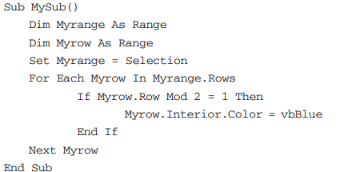
O efeito da execução dessa rotina consiste em
O efeito da execução dessa rotina consiste em
Ano: 2023
Banca:
VUNESP
Órgão:
CIJUN - SP
Prova:
VUNESP - 2023 - CIJUN - SP - Analista de TI Pleno (ERP - Sistemas Internos) |
Q4196130
Arquitetura de Software
Assinale a alternativa que corresponde a uma linguagem
de consulta para APIs que permite que clientes (clients)
interajam com um único endpoint para obter os dados
exatos que precisam, sem a necessidade de encadear
múltiplas requisições.

 Conheça nossos planos