Questões de Concurso Público Prefeitura de Cuiabá - MT 2023 para Professor - Licenciatura em Letras/Inglês
Foram encontradas 20 questões


Leia o texto a seguir:
Nasa exibirá pouso com primeira amostra de asteroide coletada no espaço; veja quando
OSIRIS-REx é a terceira missão do Programa Novas Fronteiras da Nasa, gerenciado pelo Marshall Space Flight Center da Nasa em Huntsville, Alabama, para a Diretoria de Missões Científicas da agência em Washington
São Paulo - A primeira amostra de asteroide coletada no espaço pela Agência Aeroespacial dos Estados Unidos (Nasa) chegará à Terra no domingo, 24. O pouso, segundo a Nasa, será acompanhado de perto pela agência, com cobertura ao vivo.
"O pouso da cápsula da espaçonave OSIRIS-REx (Origens, Interpretação Espectral, Identificação de Recursos e Segurança - Regolith Explorer) com amostras do asteroide chamado Bennu começará às 10h EDT (11 horas, pelo horário de Brasília) e irá ao ar pela TV Nasa, no aplicativo da Nasa e no site da agência".
Em seguida, será realizada uma coletiva de imprensa, quando a cápsula de amostra chegar a uma sala no campo de treinamento militar.
"Para entregar com sucesso uma amostra do asteroide Bennu próximo da Terra, os operadores de espaçonaves precisam garantir que a OSIRIS-REx viaje na velocidade e direção corretas para liberar a cápsula de amostra na atmosfera, pousando-a no campo de testes e treinamento do Departamento de Defesa dos EUA em Utah", disse a Nasa.
Segundo a agência, a liderança da missão discutirá os resultados das manobras de trajetória final da espaçonave e as expectativas para a entrada, descida e pouso da cápsula, além dos planos para operações de recuperação no deserto ocidental de Utah.
O OSIRIS-REx é a terceira missão do Programa Novas Fronteiras da Nasa, gerenciado pelo Marshall Space Flight Center da Nasa em Huntsville, Alabama, para a Diretoria de Missões Científicas da agência em Washington.
"Quando chegar, a espaçonave OSIRIS-REx liberará a cápsula com a amostra do asteroide para um pouso seguro no deserto de Utah. O material primitivo de Bennu – rochas e poeira recolhidas da superfície do asteroide em 2020 – oferecerá a gerações de cientistas uma janela para a época em que o Sol e os planetas se formavam há cerca de 4,5 mil milhões de anos", acrescenta a Nasa.
Fonte: https://odia.ig.com.br/mundo-e-ciencia/2023/09/6711886-nasa-exibira-pouso-com-primeira-amostra-de-asteroide-coletada-no-espaco-veja-quando.html. Acesso em 21/09/2023
Leia o texto a seguir:
Nasa exibirá pouso com primeira amostra de asteroide coletada no espaço; veja quando
OSIRIS-REx é a terceira missão do Programa Novas Fronteiras da Nasa, gerenciado pelo Marshall Space Flight Center da Nasa em Huntsville, Alabama, para a Diretoria de Missões Científicas da agência em Washington
São Paulo - A primeira amostra de asteroide coletada no espaço pela Agência Aeroespacial dos Estados Unidos (Nasa) chegará à Terra no domingo, 24. O pouso, segundo a Nasa, será acompanhado de perto pela agência, com cobertura ao vivo.
"O pouso da cápsula da espaçonave OSIRIS-REx (Origens, Interpretação Espectral, Identificação de Recursos e Segurança - Regolith Explorer) com amostras do asteroide chamado Bennu começará às 10h EDT (11 horas, pelo horário de Brasília) e irá ao ar pela TV Nasa, no aplicativo da Nasa e no site da agência".
Em seguida, será realizada uma coletiva de imprensa, quando a cápsula de amostra chegar a uma sala no campo de treinamento militar.
"Para entregar com sucesso uma amostra do asteroide Bennu próximo da Terra, os operadores de espaçonaves precisam garantir que a OSIRIS-REx viaje na velocidade e direção corretas para liberar a cápsula de amostra na atmosfera, pousando-a no campo de testes e treinamento do Departamento de Defesa dos EUA em Utah", disse a Nasa.
Segundo a agência, a liderança da missão discutirá os resultados das manobras de trajetória final da espaçonave e as expectativas para a entrada, descida e pouso da cápsula, além dos planos para operações de recuperação no deserto ocidental de Utah.
O OSIRIS-REx é a terceira missão do Programa Novas Fronteiras da Nasa, gerenciado pelo Marshall Space Flight Center da Nasa em Huntsville, Alabama, para a Diretoria de Missões Científicas da agência em Washington.
"Quando chegar, a espaçonave OSIRIS-REx liberará a cápsula com a amostra do asteroide para um pouso seguro no deserto de Utah. O material primitivo de Bennu – rochas e poeira recolhidas da superfície do asteroide em 2020 – oferecerá a gerações de cientistas uma janela para a época em que o Sol e os planetas se formavam há cerca de 4,5 mil milhões de anos", acrescenta a Nasa.
Fonte: https://odia.ig.com.br/mundo-e-ciencia/2023/09/6711886-nasa-exibira-pouso-com-primeira-amostra-de-asteroide-coletada-no-espaco-veja-quando.html. Acesso em 21/09/2023
Leia o texto a seguir:
Nasa exibirá pouso com primeira amostra de asteroide coletada no espaço; veja quando
OSIRIS-REx é a terceira missão do Programa Novas Fronteiras da Nasa, gerenciado pelo Marshall Space Flight Center da Nasa em Huntsville, Alabama, para a Diretoria de Missões Científicas da agência em Washington
São Paulo - A primeira amostra de asteroide coletada no espaço pela Agência Aeroespacial dos Estados Unidos (Nasa) chegará à Terra no domingo, 24. O pouso, segundo a Nasa, será acompanhado de perto pela agência, com cobertura ao vivo.
"O pouso da cápsula da espaçonave OSIRIS-REx (Origens, Interpretação Espectral, Identificação de Recursos e Segurança - Regolith Explorer) com amostras do asteroide chamado Bennu começará às 10h EDT (11 horas, pelo horário de Brasília) e irá ao ar pela TV Nasa, no aplicativo da Nasa e no site da agência".
Em seguida, será realizada uma coletiva de imprensa, quando a cápsula de amostra chegar a uma sala no campo de treinamento militar.
"Para entregar com sucesso uma amostra do asteroide Bennu próximo da Terra, os operadores de espaçonaves precisam garantir que a OSIRIS-REx viaje na velocidade e direção corretas para liberar a cápsula de amostra na atmosfera, pousando-a no campo de testes e treinamento do Departamento de Defesa dos EUA em Utah", disse a Nasa.
Segundo a agência, a liderança da missão discutirá os resultados das manobras de trajetória final da espaçonave e as expectativas para a entrada, descida e pouso da cápsula, além dos planos para operações de recuperação no deserto ocidental de Utah.
O OSIRIS-REx é a terceira missão do Programa Novas Fronteiras da Nasa, gerenciado pelo Marshall Space Flight Center da Nasa em Huntsville, Alabama, para a Diretoria de Missões Científicas da agência em Washington.
"Quando chegar, a espaçonave OSIRIS-REx liberará a cápsula com a amostra do asteroide para um pouso seguro no deserto de Utah. O material primitivo de Bennu – rochas e poeira recolhidas da superfície do asteroide em 2020 – oferecerá a gerações de cientistas uma janela para a época em que o Sol e os planetas se formavam há cerca de 4,5 mil milhões de anos", acrescenta a Nasa.
Fonte: https://odia.ig.com.br/mundo-e-ciencia/2023/09/6711886-nasa-exibira-pouso-com-primeira-amostra-de-asteroide-coletada-no-espaco-veja-quando.html. Acesso em 21/09/2023
Leia o texto a seguir:
Nasa exibirá pouso com primeira amostra de asteroide coletada no espaço; veja quando
OSIRIS-REx é a terceira missão do Programa Novas Fronteiras da Nasa, gerenciado pelo Marshall Space Flight Center da Nasa em Huntsville, Alabama, para a Diretoria de Missões Científicas da agência em Washington
São Paulo - A primeira amostra de asteroide coletada no espaço pela Agência Aeroespacial dos Estados Unidos (Nasa) chegará à Terra no domingo, 24. O pouso, segundo a Nasa, será acompanhado de perto pela agência, com cobertura ao vivo.
"O pouso da cápsula da espaçonave OSIRIS-REx (Origens, Interpretação Espectral, Identificação de Recursos e Segurança - Regolith Explorer) com amostras do asteroide chamado Bennu começará às 10h EDT (11 horas, pelo horário de Brasília) e irá ao ar pela TV Nasa, no aplicativo da Nasa e no site da agência".
Em seguida, será realizada uma coletiva de imprensa, quando a cápsula de amostra chegar a uma sala no campo de treinamento militar.
"Para entregar com sucesso uma amostra do asteroide Bennu próximo da Terra, os operadores de espaçonaves precisam garantir que a OSIRIS-REx viaje na velocidade e direção corretas para liberar a cápsula de amostra na atmosfera, pousando-a no campo de testes e treinamento do Departamento de Defesa dos EUA em Utah", disse a Nasa.
Segundo a agência, a liderança da missão discutirá os resultados das manobras de trajetória final da espaçonave e as expectativas para a entrada, descida e pouso da cápsula, além dos planos para operações de recuperação no deserto ocidental de Utah.
O OSIRIS-REx é a terceira missão do Programa Novas Fronteiras da Nasa, gerenciado pelo Marshall Space Flight Center da Nasa em Huntsville, Alabama, para a Diretoria de Missões Científicas da agência em Washington.
"Quando chegar, a espaçonave OSIRIS-REx liberará a cápsula com a amostra do asteroide para um pouso seguro no deserto de Utah. O material primitivo de Bennu – rochas e poeira recolhidas da superfície do asteroide em 2020 – oferecerá a gerações de cientistas uma janela para a época em que o Sol e os planetas se formavam há cerca de 4,5 mil milhões de anos", acrescenta a Nasa.
Fonte: https://odia.ig.com.br/mundo-e-ciencia/2023/09/6711886-nasa-exibira-pouso-com-primeira-amostra-de-asteroide-coletada-no-espaco-veja-quando.html. Acesso em 21/09/2023
Leia o texto a seguir:
Nasa exibirá pouso com primeira amostra de asteroide coletada no espaço; veja quando
OSIRIS-REx é a terceira missão do Programa Novas Fronteiras da Nasa, gerenciado pelo Marshall Space Flight Center da Nasa em Huntsville, Alabama, para a Diretoria de Missões Científicas da agência em Washington
São Paulo - A primeira amostra de asteroide coletada no espaço pela Agência Aeroespacial dos Estados Unidos (Nasa) chegará à Terra no domingo, 24. O pouso, segundo a Nasa, será acompanhado de perto pela agência, com cobertura ao vivo.
"O pouso da cápsula da espaçonave OSIRIS-REx (Origens, Interpretação Espectral, Identificação de Recursos e Segurança - Regolith Explorer) com amostras do asteroide chamado Bennu começará às 10h EDT (11 horas, pelo horário de Brasília) e irá ao ar pela TV Nasa, no aplicativo da Nasa e no site da agência".
Em seguida, será realizada uma coletiva de imprensa, quando a cápsula de amostra chegar a uma sala no campo de treinamento militar.
"Para entregar com sucesso uma amostra do asteroide Bennu próximo da Terra, os operadores de espaçonaves precisam garantir que a OSIRIS-REx viaje na velocidade e direção corretas para liberar a cápsula de amostra na atmosfera, pousando-a no campo de testes e treinamento do Departamento de Defesa dos EUA em Utah", disse a Nasa.
Segundo a agência, a liderança da missão discutirá os resultados das manobras de trajetória final da espaçonave e as expectativas para a entrada, descida e pouso da cápsula, além dos planos para operações de recuperação no deserto ocidental de Utah.
O OSIRIS-REx é a terceira missão do Programa Novas Fronteiras da Nasa, gerenciado pelo Marshall Space Flight Center da Nasa em Huntsville, Alabama, para a Diretoria de Missões Científicas da agência em Washington.
"Quando chegar, a espaçonave OSIRIS-REx liberará a cápsula com a amostra do asteroide para um pouso seguro no deserto de Utah. O material primitivo de Bennu – rochas e poeira recolhidas da superfície do asteroide em 2020 – oferecerá a gerações de cientistas uma janela para a época em que o Sol e os planetas se formavam há cerca de 4,5 mil milhões de anos", acrescenta a Nasa.
Fonte: https://odia.ig.com.br/mundo-e-ciencia/2023/09/6711886-nasa-exibira-pouso-com-primeira-amostra-de-asteroide-coletada-no-espaco-veja-quando.html. Acesso em 21/09/2023
Robson gosta de falar bastante nas reuniões de família. Um dia, em uma festa, afirmou: “Fazer a barba pela manhã é condição suficiente para não alimentar meus pássaros”. Priscila, sua sobrinha, não entendeu e pediu para Robson reformular sua afirmação.
Uma proposição logicamente equivalente à afirmação de Robson, que poderia ser usada, é:
 está sendo utilizado no lugar de
algum conectivo lógico e as interrogações substituem algum
valor lógico V (verdadeiro) ou F (falso).
está sendo utilizado no lugar de
algum conectivo lógico e as interrogações substituem algum
valor lógico V (verdadeiro) ou F (falso). 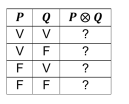 Com a tabela preenchida corretamente, sabe-se que a
probabilidade de se escolher ao acaso uma das interrogações
e ela estar no lugar de um valor lógico F é igual a 0,75. Dessa
forma, o conectivo que está oculto pelo símbolo pode ser
uma:
Com a tabela preenchida corretamente, sabe-se que a
probabilidade de se escolher ao acaso uma das interrogações
e ela estar no lugar de um valor lógico F é igual a 0,75. Dessa
forma, o conectivo que está oculto pelo símbolo pode ser
uma: TEXT:
What's the best way to learn receptive skills?
Miranda Hamilton
July 26, 2021
We often think of speaking and writing as the most challenging of the four language skills but what about the receptive skills? With reading, learners have time to think, but listening in another language presents a very different set of challenges for the learner. How often have we heard learners complain ‘it’s too fast, teacher!’? So how can you help?
Some guides are designed to help teachers understand the subskills of listening, with activities, tips and strategies to help you develop your learners’ listening skills as they prepare for their exams.
Here are just a few of the ideas from the guides for you to try with your learners. They will work at all levels.
How many words?
This micro listening is a great activity to try towards the end of your listening lesson, when learners have already heard the recording, so they know the speakers’ voices and the topic.
• Select a short phrase, of around 10 words, from the listening you have just completed. Set up the audio so you are ready to press ‘Play’.
• Tell the learners to listen and count the number of words they hear. You will need to play the audio several times. Pairs discuss. Take a range of answers from the class, but don’t tell them the answer just yet.
• Write the phrase on the board and count the number of words with the class. Who was the closest?
• Now ask them to listen and read the phrase at the same time. This time they have to decide which words they hear most clearly, in other words, you want them to notice the stressed words. Ask why they think they heard these words most clearly. Explain that stressed words carry the key information.
This micro listening activity helps raise learners’ awareness of sounds, helping them notice the stressed words and preparing them to listen for key information.
Support every learner
In mixed-ability classes, put a few simple strategies in place so the whole class can listen to the same recording, and take part in the same activity. This means that no learner feels lost or left behind.
• Make the gap-fill or sentence-completion task more achievable and supply the first letter of the missing word. Alternatively supply the first and the final letter and indicate how many letters the missing word has.
• Provide an additional layer of support for weaker learners by giving them the audio script. They can read the script as they listen and use it to help them find the correct answers.
Prepare to listen, prepare to understand
Don’t be in too much of a hurry to hand out the listening task and press ‘Play’. Time spent in class before listening means learners are better prepared to understand.
• Before you listen, have a class discussion around the topic of the listening. This gives learners the opportunity not only to practice their speaking, but also to practice listening to one another. A good discussion will make them think about the main ideas they might hear when they listen. • Useful vocabulary always comes out of a class discussion, creating a very natural way to pre-teach vocabulary before they listen. Useful language linked to a discussion is easier to learn because learners have a context, which makes it easier to remember than pre-teaching vocabulary from a wordlist.
• Take your time to discuss the task and check understanding. Encourage the class to reflect on their discussion and predict the answers. Remember to write their predictions on the board. Did they guess correctly? It doesn’t matter if they did or not, what matters is that they are prepared and ready to listen to see if they were right.
Feeling prepared to listen means learners feel confident and ready to understand, both in the classroom and in their exam.
Adapted from: https://www.cambridgeenglish.org/blog/whats-the-best-way-tolearn-receptive-skills
TEXT:
What's the best way to learn receptive skills?
Miranda Hamilton
July 26, 2021
We often think of speaking and writing as the most challenging of the four language skills but what about the receptive skills? With reading, learners have time to think, but listening in another language presents a very different set of challenges for the learner. How often have we heard learners complain ‘it’s too fast, teacher!’? So how can you help?
Some guides are designed to help teachers understand the subskills of listening, with activities, tips and strategies to help you develop your learners’ listening skills as they prepare for their exams.
Here are just a few of the ideas from the guides for you to try with your learners. They will work at all levels.
How many words?
This micro listening is a great activity to try towards the end of your listening lesson, when learners have already heard the recording, so they know the speakers’ voices and the topic.
• Select a short phrase, of around 10 words, from the listening you have just completed. Set up the audio so you are ready to press ‘Play’.
• Tell the learners to listen and count the number of words they hear. You will need to play the audio several times. Pairs discuss. Take a range of answers from the class, but don’t tell them the answer just yet.
• Write the phrase on the board and count the number of words with the class. Who was the closest?
• Now ask them to listen and read the phrase at the same time. This time they have to decide which words they hear most clearly, in other words, you want them to notice the stressed words. Ask why they think they heard these words most clearly. Explain that stressed words carry the key information.
This micro listening activity helps raise learners’ awareness of sounds, helping them notice the stressed words and preparing them to listen for key information.
Support every learner
In mixed-ability classes, put a few simple strategies in place so the whole class can listen to the same recording, and take part in the same activity. This means that no learner feels lost or left behind.
• Make the gap-fill or sentence-completion task more achievable and supply the first letter of the missing word. Alternatively supply the first and the final letter and indicate how many letters the missing word has.
• Provide an additional layer of support for weaker learners by giving them the audio script. They can read the script as they listen and use it to help them find the correct answers.
Prepare to listen, prepare to understand
Don’t be in too much of a hurry to hand out the listening task and press ‘Play’. Time spent in class before listening means learners are better prepared to understand.
• Before you listen, have a class discussion around the topic of the listening. This gives learners the opportunity not only to practice their speaking, but also to practice listening to one another. A good discussion will make them think about the main ideas they might hear when they listen. • Useful vocabulary always comes out of a class discussion, creating a very natural way to pre-teach vocabulary before they listen. Useful language linked to a discussion is easier to learn because learners have a context, which makes it easier to remember than pre-teaching vocabulary from a wordlist.
• Take your time to discuss the task and check understanding. Encourage the class to reflect on their discussion and predict the answers. Remember to write their predictions on the board. Did they guess correctly? It doesn’t matter if they did or not, what matters is that they are prepared and ready to listen to see if they were right.
Feeling prepared to listen means learners feel confident and ready to understand, both in the classroom and in their exam.
Adapted from: https://www.cambridgeenglish.org/blog/whats-the-best-way-tolearn-receptive-skills
TEXT:
What's the best way to learn receptive skills?
Miranda Hamilton
July 26, 2021
We often think of speaking and writing as the most challenging of the four language skills but what about the receptive skills? With reading, learners have time to think, but listening in another language presents a very different set of challenges for the learner. How often have we heard learners complain ‘it’s too fast, teacher!’? So how can you help?
Some guides are designed to help teachers understand the subskills of listening, with activities, tips and strategies to help you develop your learners’ listening skills as they prepare for their exams.
Here are just a few of the ideas from the guides for you to try with your learners. They will work at all levels.
How many words?
This micro listening is a great activity to try towards the end of your listening lesson, when learners have already heard the recording, so they know the speakers’ voices and the topic.
• Select a short phrase, of around 10 words, from the listening you have just completed. Set up the audio so you are ready to press ‘Play’.
• Tell the learners to listen and count the number of words they hear. You will need to play the audio several times. Pairs discuss. Take a range of answers from the class, but don’t tell them the answer just yet.
• Write the phrase on the board and count the number of words with the class. Who was the closest?
• Now ask them to listen and read the phrase at the same time. This time they have to decide which words they hear most clearly, in other words, you want them to notice the stressed words. Ask why they think they heard these words most clearly. Explain that stressed words carry the key information.
This micro listening activity helps raise learners’ awareness of sounds, helping them notice the stressed words and preparing them to listen for key information.
Support every learner
In mixed-ability classes, put a few simple strategies in place so the whole class can listen to the same recording, and take part in the same activity. This means that no learner feels lost or left behind.
• Make the gap-fill or sentence-completion task more achievable and supply the first letter of the missing word. Alternatively supply the first and the final letter and indicate how many letters the missing word has.
• Provide an additional layer of support for weaker learners by giving them the audio script. They can read the script as they listen and use it to help them find the correct answers.
Prepare to listen, prepare to understand
Don’t be in too much of a hurry to hand out the listening task and press ‘Play’. Time spent in class before listening means learners are better prepared to understand.
• Before you listen, have a class discussion around the topic of the listening. This gives learners the opportunity not only to practice their speaking, but also to practice listening to one another. A good discussion will make them think about the main ideas they might hear when they listen. • Useful vocabulary always comes out of a class discussion, creating a very natural way to pre-teach vocabulary before they listen. Useful language linked to a discussion is easier to learn because learners have a context, which makes it easier to remember than pre-teaching vocabulary from a wordlist.
• Take your time to discuss the task and check understanding. Encourage the class to reflect on their discussion and predict the answers. Remember to write their predictions on the board. Did they guess correctly? It doesn’t matter if they did or not, what matters is that they are prepared and ready to listen to see if they were right.
Feeling prepared to listen means learners feel confident and ready to understand, both in the classroom and in their exam.
Adapted from: https://www.cambridgeenglish.org/blog/whats-the-best-way-tolearn-receptive-skills
TEXT:
What's the best way to learn receptive skills?
Miranda Hamilton
July 26, 2021
We often think of speaking and writing as the most challenging of the four language skills but what about the receptive skills? With reading, learners have time to think, but listening in another language presents a very different set of challenges for the learner. How often have we heard learners complain ‘it’s too fast, teacher!’? So how can you help?
Some guides are designed to help teachers understand the subskills of listening, with activities, tips and strategies to help you develop your learners’ listening skills as they prepare for their exams.
Here are just a few of the ideas from the guides for you to try with your learners. They will work at all levels.
How many words?
This micro listening is a great activity to try towards the end of your listening lesson, when learners have already heard the recording, so they know the speakers’ voices and the topic.
• Select a short phrase, of around 10 words, from the listening you have just completed. Set up the audio so you are ready to press ‘Play’.
• Tell the learners to listen and count the number of words they hear. You will need to play the audio several times. Pairs discuss. Take a range of answers from the class, but don’t tell them the answer just yet.
• Write the phrase on the board and count the number of words with the class. Who was the closest?
• Now ask them to listen and read the phrase at the same time. This time they have to decide which words they hear most clearly, in other words, you want them to notice the stressed words. Ask why they think they heard these words most clearly. Explain that stressed words carry the key information.
This micro listening activity helps raise learners’ awareness of sounds, helping them notice the stressed words and preparing them to listen for key information.
Support every learner
In mixed-ability classes, put a few simple strategies in place so the whole class can listen to the same recording, and take part in the same activity. This means that no learner feels lost or left behind.
• Make the gap-fill or sentence-completion task more achievable and supply the first letter of the missing word. Alternatively supply the first and the final letter and indicate how many letters the missing word has.
• Provide an additional layer of support for weaker learners by giving them the audio script. They can read the script as they listen and use it to help them find the correct answers.
Prepare to listen, prepare to understand
Don’t be in too much of a hurry to hand out the listening task and press ‘Play’. Time spent in class before listening means learners are better prepared to understand.
• Before you listen, have a class discussion around the topic of the listening. This gives learners the opportunity not only to practice their speaking, but also to practice listening to one another. A good discussion will make them think about the main ideas they might hear when they listen. • Useful vocabulary always comes out of a class discussion, creating a very natural way to pre-teach vocabulary before they listen. Useful language linked to a discussion is easier to learn because learners have a context, which makes it easier to remember than pre-teaching vocabulary from a wordlist.
• Take your time to discuss the task and check understanding. Encourage the class to reflect on their discussion and predict the answers. Remember to write their predictions on the board. Did they guess correctly? It doesn’t matter if they did or not, what matters is that they are prepared and ready to listen to see if they were right.
Feeling prepared to listen means learners feel confident and ready to understand, both in the classroom and in their exam.
Adapted from: https://www.cambridgeenglish.org/blog/whats-the-best-way-tolearn-receptive-skills
TEXT:
What's the best way to learn receptive skills?
Miranda Hamilton
July 26, 2021
We often think of speaking and writing as the most challenging of the four language skills but what about the receptive skills? With reading, learners have time to think, but listening in another language presents a very different set of challenges for the learner. How often have we heard learners complain ‘it’s too fast, teacher!’? So how can you help?
Some guides are designed to help teachers understand the subskills of listening, with activities, tips and strategies to help you develop your learners’ listening skills as they prepare for their exams.
Here are just a few of the ideas from the guides for you to try with your learners. They will work at all levels.
How many words?
This micro listening is a great activity to try towards the end of your listening lesson, when learners have already heard the recording, so they know the speakers’ voices and the topic.
• Select a short phrase, of around 10 words, from the listening you have just completed. Set up the audio so you are ready to press ‘Play’.
• Tell the learners to listen and count the number of words they hear. You will need to play the audio several times. Pairs discuss. Take a range of answers from the class, but don’t tell them the answer just yet.
• Write the phrase on the board and count the number of words with the class. Who was the closest?
• Now ask them to listen and read the phrase at the same time. This time they have to decide which words they hear most clearly, in other words, you want them to notice the stressed words. Ask why they think they heard these words most clearly. Explain that stressed words carry the key information.
This micro listening activity helps raise learners’ awareness of sounds, helping them notice the stressed words and preparing them to listen for key information.
Support every learner
In mixed-ability classes, put a few simple strategies in place so the whole class can listen to the same recording, and take part in the same activity. This means that no learner feels lost or left behind.
• Make the gap-fill or sentence-completion task more achievable and supply the first letter of the missing word. Alternatively supply the first and the final letter and indicate how many letters the missing word has.
• Provide an additional layer of support for weaker learners by giving them the audio script. They can read the script as they listen and use it to help them find the correct answers.
Prepare to listen, prepare to understand
Don’t be in too much of a hurry to hand out the listening task and press ‘Play’. Time spent in class before listening means learners are better prepared to understand.
• Before you listen, have a class discussion around the topic of the listening. This gives learners the opportunity not only to practice their speaking, but also to practice listening to one another. A good discussion will make them think about the main ideas they might hear when they listen. • Useful vocabulary always comes out of a class discussion, creating a very natural way to pre-teach vocabulary before they listen. Useful language linked to a discussion is easier to learn because learners have a context, which makes it easier to remember than pre-teaching vocabulary from a wordlist.
• Take your time to discuss the task and check understanding. Encourage the class to reflect on their discussion and predict the answers. Remember to write their predictions on the board. Did they guess correctly? It doesn’t matter if they did or not, what matters is that they are prepared and ready to listen to see if they were right.
Feeling prepared to listen means learners feel confident and ready to understand, both in the classroom and in their exam.
Adapted from: https://www.cambridgeenglish.org/blog/whats-the-best-way-tolearn-receptive-skills
TEXT:
What's the best way to learn receptive skills?
Miranda Hamilton
July 26, 2021
We often think of speaking and writing as the most challenging of the four language skills but what about the receptive skills? With reading, learners have time to think, but listening in another language presents a very different set of challenges for the learner. How often have we heard learners complain ‘it’s too fast, teacher!’? So how can you help?
Some guides are designed to help teachers understand the subskills of listening, with activities, tips and strategies to help you develop your learners’ listening skills as they prepare for their exams.
Here are just a few of the ideas from the guides for you to try with your learners. They will work at all levels.
How many words?
This micro listening is a great activity to try towards the end of your listening lesson, when learners have already heard the recording, so they know the speakers’ voices and the topic.
• Select a short phrase, of around 10 words, from the listening you have just completed. Set up the audio so you are ready to press ‘Play’.
• Tell the learners to listen and count the number of words they hear. You will need to play the audio several times. Pairs discuss. Take a range of answers from the class, but don’t tell them the answer just yet.
• Write the phrase on the board and count the number of words with the class. Who was the closest?
• Now ask them to listen and read the phrase at the same time. This time they have to decide which words they hear most clearly, in other words, you want them to notice the stressed words. Ask why they think they heard these words most clearly. Explain that stressed words carry the key information.
This micro listening activity helps raise learners’ awareness of sounds, helping them notice the stressed words and preparing them to listen for key information.
Support every learner
In mixed-ability classes, put a few simple strategies in place so the whole class can listen to the same recording, and take part in the same activity. This means that no learner feels lost or left behind.
• Make the gap-fill or sentence-completion task more achievable and supply the first letter of the missing word. Alternatively supply the first and the final letter and indicate how many letters the missing word has.
• Provide an additional layer of support for weaker learners by giving them the audio script. They can read the script as they listen and use it to help them find the correct answers.
Prepare to listen, prepare to understand
Don’t be in too much of a hurry to hand out the listening task and press ‘Play’. Time spent in class before listening means learners are better prepared to understand.
• Before you listen, have a class discussion around the topic of the listening. This gives learners the opportunity not only to practice their speaking, but also to practice listening to one another. A good discussion will make them think about the main ideas they might hear when they listen. • Useful vocabulary always comes out of a class discussion, creating a very natural way to pre-teach vocabulary before they listen. Useful language linked to a discussion is easier to learn because learners have a context, which makes it easier to remember than pre-teaching vocabulary from a wordlist.
• Take your time to discuss the task and check understanding. Encourage the class to reflect on their discussion and predict the answers. Remember to write their predictions on the board. Did they guess correctly? It doesn’t matter if they did or not, what matters is that they are prepared and ready to listen to see if they were right.
Feeling prepared to listen means learners feel confident and ready to understand, both in the classroom and in their exam.
Adapted from: https://www.cambridgeenglish.org/blog/whats-the-best-way-tolearn-receptive-skills
TEXT:
What's the best way to learn receptive skills?
Miranda Hamilton
July 26, 2021
We often think of speaking and writing as the most challenging of the four language skills but what about the receptive skills? With reading, learners have time to think, but listening in another language presents a very different set of challenges for the learner. How often have we heard learners complain ‘it’s too fast, teacher!’? So how can you help?
Some guides are designed to help teachers understand the subskills of listening, with activities, tips and strategies to help you develop your learners’ listening skills as they prepare for their exams.
Here are just a few of the ideas from the guides for you to try with your learners. They will work at all levels.
How many words?
This micro listening is a great activity to try towards the end of your listening lesson, when learners have already heard the recording, so they know the speakers’ voices and the topic.
• Select a short phrase, of around 10 words, from the listening you have just completed. Set up the audio so you are ready to press ‘Play’.
• Tell the learners to listen and count the number of words they hear. You will need to play the audio several times. Pairs discuss. Take a range of answers from the class, but don’t tell them the answer just yet.
• Write the phrase on the board and count the number of words with the class. Who was the closest?
• Now ask them to listen and read the phrase at the same time. This time they have to decide which words they hear most clearly, in other words, you want them to notice the stressed words. Ask why they think they heard these words most clearly. Explain that stressed words carry the key information.
This micro listening activity helps raise learners’ awareness of sounds, helping them notice the stressed words and preparing them to listen for key information.
Support every learner
In mixed-ability classes, put a few simple strategies in place so the whole class can listen to the same recording, and take part in the same activity. This means that no learner feels lost or left behind.
• Make the gap-fill or sentence-completion task more achievable and supply the first letter of the missing word. Alternatively supply the first and the final letter and indicate how many letters the missing word has.
• Provide an additional layer of support for weaker learners by giving them the audio script. They can read the script as they listen and use it to help them find the correct answers.
Prepare to listen, prepare to understand
Don’t be in too much of a hurry to hand out the listening task and press ‘Play’. Time spent in class before listening means learners are better prepared to understand.
• Before you listen, have a class discussion around the topic of the listening. This gives learners the opportunity not only to practice their speaking, but also to practice listening to one another. A good discussion will make them think about the main ideas they might hear when they listen. • Useful vocabulary always comes out of a class discussion, creating a very natural way to pre-teach vocabulary before they listen. Useful language linked to a discussion is easier to learn because learners have a context, which makes it easier to remember than pre-teaching vocabulary from a wordlist.
• Take your time to discuss the task and check understanding. Encourage the class to reflect on their discussion and predict the answers. Remember to write their predictions on the board. Did they guess correctly? It doesn’t matter if they did or not, what matters is that they are prepared and ready to listen to see if they were right.
Feeling prepared to listen means learners feel confident and ready to understand, both in the classroom and in their exam.
Adapted from: https://www.cambridgeenglish.org/blog/whats-the-best-way-tolearn-receptive-skills
TEXT:
What's the best way to learn receptive skills?
Miranda Hamilton
July 26, 2021
We often think of speaking and writing as the most challenging of the four language skills but what about the receptive skills? With reading, learners have time to think, but listening in another language presents a very different set of challenges for the learner. How often have we heard learners complain ‘it’s too fast, teacher!’? So how can you help?
Some guides are designed to help teachers understand the subskills of listening, with activities, tips and strategies to help you develop your learners’ listening skills as they prepare for their exams.
Here are just a few of the ideas from the guides for you to try with your learners. They will work at all levels.
How many words?
This micro listening is a great activity to try towards the end of your listening lesson, when learners have already heard the recording, so they know the speakers’ voices and the topic.
• Select a short phrase, of around 10 words, from the listening you have just completed. Set up the audio so you are ready to press ‘Play’.
• Tell the learners to listen and count the number of words they hear. You will need to play the audio several times. Pairs discuss. Take a range of answers from the class, but don’t tell them the answer just yet.
• Write the phrase on the board and count the number of words with the class. Who was the closest?
• Now ask them to listen and read the phrase at the same time. This time they have to decide which words they hear most clearly, in other words, you want them to notice the stressed words. Ask why they think they heard these words most clearly. Explain that stressed words carry the key information.
This micro listening activity helps raise learners’ awareness of sounds, helping them notice the stressed words and preparing them to listen for key information.
Support every learner
In mixed-ability classes, put a few simple strategies in place so the whole class can listen to the same recording, and take part in the same activity. This means that no learner feels lost or left behind.
• Make the gap-fill or sentence-completion task more achievable and supply the first letter of the missing word. Alternatively supply the first and the final letter and indicate how many letters the missing word has.
• Provide an additional layer of support for weaker learners by giving them the audio script. They can read the script as they listen and use it to help them find the correct answers.
Prepare to listen, prepare to understand
Don’t be in too much of a hurry to hand out the listening task and press ‘Play’. Time spent in class before listening means learners are better prepared to understand.
• Before you listen, have a class discussion around the topic of the listening. This gives learners the opportunity not only to practice their speaking, but also to practice listening to one another. A good discussion will make them think about the main ideas they might hear when they listen. • Useful vocabulary always comes out of a class discussion, creating a very natural way to pre-teach vocabulary before they listen. Useful language linked to a discussion is easier to learn because learners have a context, which makes it easier to remember than pre-teaching vocabulary from a wordlist.
• Take your time to discuss the task and check understanding. Encourage the class to reflect on their discussion and predict the answers. Remember to write their predictions on the board. Did they guess correctly? It doesn’t matter if they did or not, what matters is that they are prepared and ready to listen to see if they were right.
Feeling prepared to listen means learners feel confident and ready to understand, both in the classroom and in their exam.
Adapted from: https://www.cambridgeenglish.org/blog/whats-the-best-way-tolearn-receptive-skills

 Conheça nossos planos