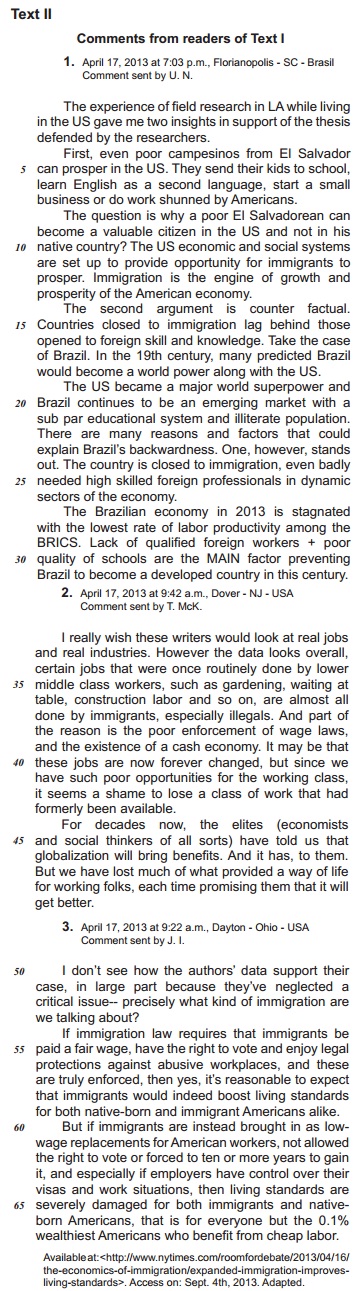
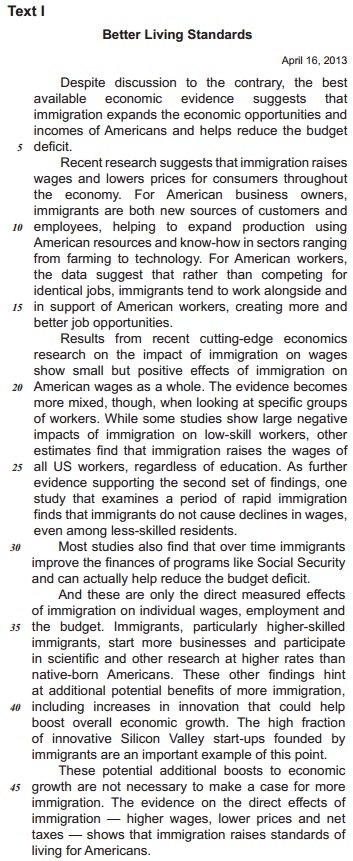
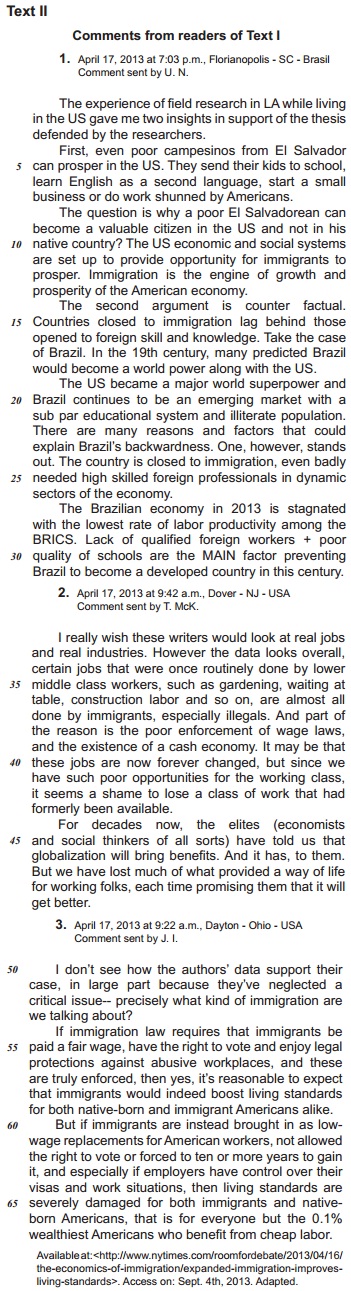
Questões de Concurso Sobre vocabulário | vocabulary em inglês

Foram encontradas 3.116 questões

Q2908082 Inglês
Stanford physicists make new form of matter
The laser-cooled quantum gas opens exciting new realms of unconventional superconductivity
By Max McClure Stanford University News

Within the exotic world of macroscopic quantum effects, where fluids flow uphill, wires conduct without electrical resistance and magnets levitate, there is an even stranger family of “unconventional” phenomena: strongly interacting fermions, a class of particles that are often very difficult to understand on the quantum level. These materials often defy explanation by current theoretical physics, but hold enormous promise for the development of futuristic technologies as room-temperature superconductors, ultrasensitive microscopes and quantum computation. Last week the scientific world was appalled when a Stanford team made the announcement in Physical Review Letters that they had created the world’s first dipolar quantum fermionic gas– “an entirely new form of quantum matter,” as Stanford applied physics Professor and lead author Benjamin Lev puts it. Lev affirmed that this development represents a major step toward understanding the behavior of these systems of particles. Until now, research efforts had focused on cooling bosons – fundamentally different from fermions, and much easier to work with. But now the Stanford team extended these techniques to gases made of the most magnetic atom: a fermionic isotope of dysprosium with magnetic energies 440 times larger than previously cooled gases. He explained that when the thermal energy of some substances drops below a certain critical point, it used to be impossible to consider its component particles separately since the material becomes strongly correlated and its quantum effects become difficult to understand and study. Nevertheless, making the material out of a gas of atoms allows it to become visible. These quantum gases, the coldest objects known to man, are where researchers can observe zero-viscosity fluids – superfluids – that are mathematical cousins of superconductors. Thus far, the result of the Lev lab’s high-tech efforts is a tiny ball of ultracold quantum dipolar fluid. But the researchers have reason to believe that the humble substance will exhibit the seemingly contradictory characteristics of both crystals and superfluids. This combination could lead to quantum liquid crystals. Or it could yield a supersolid – a hypothetical state of matter that would, in theory at least, be a solid with superfluid characteristics. The researchers have already begun developing a microscope to make use of the dipolar quantum fluid’s unique characteristics. It is the “cryogenic atom chip microscope”, a magnetic probe that should measure magnetic fields with unprecedented sensitivity and resolution. “This kind of probe may even allow for a more stable form of quantum computation that uses exotic quantum matter to process information, known as a topologically protected quantum computer”, said Lev. “So this new approach is really incredibly exciting.” 

Available at: <http://news.stanford.edu/news/2012/june/lev-new- -matter-060512.html>. Retrieved on: 5 June 2012. Adapted.

In the text, the word in bold-face type is similar to the one in italics in

Alternativas
Q1317826 Inglês

Read the following text and answer question based on the text

A Potential Solution: Farm Vertically


The concept of indoor farming is not new, since hothouse production of tomatoes, a wide variety of herbs, and other produce has been in vogue for some time. What is new is the urgent need to scale up this technology to accommodate another 3 billion people. An entirely new approach to indoor farming must be invented, employing cutting edge technologies. The Vertical Farm must be efficient (cheap to construct and safe to operate). Vertical farms, many stories high, will be situated in the heart of the world’s urban centers. If successfully implemented, they offer the promise of urban renewal, sustainable production of a safe and varied food supply (year-round crop production), and the eventual repair of ecosystems that have been sacrificed for horizontal farming.

It took humans 10,000 years to learn how to grow most of the crops we now take for granted. Along the way, we despoiled most of the land we worked, often turning verdant, natural ecozones into semi-arid deserts. Within that same time frame, we evolved into an urban species, in which 60% of the human population now lives vertically in cities. This means that, for the majority, we humans are protected against the elements, yet we subject our food-bearing plants to the rigors of the great outdoors and can do no more than hope for a good weather year. However, more often than not now, due to a rapidly changing climate regime, that is not what follows. Massive floods, protracted droughts, class 4-5 hurricanes, and severe monsoons take their toll each year, destroying millions of tons of valuable crops. Don’t our harvestable plants deserve the same level of comfort and protection that we now enjoy? The time is at hand for us to learn how to safely grow our food inside environmentally controlled multistory buildings within urban centers. If we do not, then in just another 50 years, the next 3 billion people will surely go hungry, and the world will become a much more unpleasant place in which to live.

(taken from http://www.verticalfarm.com/more)

The best synonym for the expression “more often than not now” (paragraph 2) in the text is:
Alternativas
Q1265756 Inglês

Texto para a questão.

(Adapted from: Financial Times

http://www.ft.com/intl/cms/s/0/76d064c6-5992-11e1-

8d36-00144feabdc0.html#axzzlmlF7WITI)

The expression wreak havoc (line 33) means
Alternativas
Q1265755 Inglês

Texto para a questão.

(Adapted from: Financial Times

http://www.ft.com/intl/cms/s/0/76d064c6-5992-11e1-

8d36-00144feabdc0.html#axzzlmlF7WITI)

The following definitions all apply to rebuke (line 28), EXCEPT
Alternativas
Q1265754 Inglês

Texto para a questão.

(Adapted from: Financial Times

http://www.ft.com/intl/cms/s/0/76d064c6-5992-11e1-

8d36-00144feabdc0.html#axzzlmlF7WITI)

The word default cah have other meanings in different contexts, as shown below, EXCEPT
Alternativas
Q1203577 Inglês
Which sentence above has the same meaning of “Everything she said was quite true”.
Alternativas
Q1203576 Inglês
Words have their opposite in different languages, give the opposite of the words beginning and many, and pick up an alternative below.
Alternativas
Q1203575 Inglês
Complete the sentence “When I was a child, my parents never imagined that I ___________ mother of five kids”.
Alternativas
Q1203571 Inglês

Complete the sentences below, then choose an alternative:


“________ the years and ________ the world, the scientists have been doing ___________ researches about many diseases, __________ in many cases they haven´t had enough money to do it”.


Alternativas
Q1203570 Inglês
Complete the sentence They didn´t go out on friday night __________the snow!, using the meaning for por causa da(o) and choose a alternative:
Alternativas
Q1203563 Inglês

Complete the question below:


“For the pick-nick we´ll need ___________CDs, _________ cheese to make sandwiches and ________ lemonade.”

Alternativas
Q1203561 Inglês

Complete the question below:


Use in a sentence have got is the same as using: 

Alternativas
Ano: 2012 Banca: FADESP Órgão: Prefeitura de Novo Progresso - PA
Q1200999 Inglês
Factors and Problems of Teaching English as a Second Language in Rural Areas in Nepal
By Bishnu Mani Thapaliya
Jana Adarsha Multiple Campus, Birendranagar, Chitwan
With the long and varied experience of teaching English to young students in rural areas of Nepal, the columnist would like to share some of the difficulties and their probable remedies in teaching and learning English as second language. The main aim of the essay is to dispel the illusion of English language learning. This essay clearly announces the fact that English can be learnt comfortably even by the people who were born and bred up in adverse conditions.
Most of the students accomplish their schooling in their mother tongue i.e. Nepali. Though they have attained heaps of marks in core subjects, they remain very poor at English still. The students have an unknown fear and fever over English all these years. Now, let us examine some of the various factors which leave English as a souring grape for rural students even today.
To begin with, the first and the foremost factor is the socio-cultural and financial background of the family. As most of the parents are illiterate, they cannot directly take part in the daily routine of their children though they aspire for their children’s bright future. Hence, the students’ performance lacks parental supervision and guidance which is very necessary at this juncture of their education. The illiterate parents cannot realize what their children pursuing neither they do afford time to consult the teacher about the progression in studies of their children. Every minute during the day time is valuable for them as they have to struggle in earning their livelihood. The boy or girl is also sent for work on wages at the specified time of the year which affects their education very dearly.
An interesting observation identifies that the performance in English of the students whose parents are employees and belong to higher middle class is better than that of the students whose parents are illiterate and belong to lower middle class. The probable reason perhaps is that the parents in the first case can spare time to consult the teacher about the ongoing of their children once a while and can guide them if necessary. Thus there has emerged an undesirable difference between the two classes.
Consequently, it is established in rural areas as a proven fact to say that English is tough to study and understand despite the fact that English is the easiest language in the world to learn.
But it was also proved every now and then that the students from the second group also showed greater interest and expertise in English. The credit goes to the student and their teacher who was successful in inculcating curiosity among the students in spite of their financial irregularities and improper brought up. So, mere poverty cannot create a gulf between students and their English language efficiency.
The second major problem is the inefficiency of the teachers. These students generally pursue their studies in Government public schools in which the medium of instruction is Nepali, their mother tongue. The methodology of ELT in these schools is bilingual or translation method. The teachers simply translate everything into their mother tongue and explain them on the name of bilingual or translation method. Though this method offers them sound knowledge in the content, it prevents them in acquiring communication abilities in English. The teacher here plays more as a translator than a genuine English teacher. Hence, virtually, there is no much difference between a Nepali teacher and an English teacher. The English teachers at these schools are untrained and moreover they are unaware of the current trends and techniques of ELT. Most of them are ignorant of useful organizations and websites on the Internet which offer them really good down-to-earth discussions of ideas and techniques.
The reason for these unskilled English teachers may be as a result of the Government’s poor planning on ELT and empowering the teachers.
The case with many of the private English medium schools in rural areas is no better than this. The situation is even worse with them. The teachers who teach English are those who pursued their schooling in Nepali medium and failed in Intermediate and so. The columnist doesn’t consider this is the case with every organization, but with most of them. Definitely, these poor teachers make English as a nightmare to students and they instigate students to habituate by-heart method which deprives students the communication abilities in English. Thus English appeared or is rather made as a dreadful demon for long years in Nepal.
Another probable reason is the model of the English examination papers. It has not been designed in a manner that it helps students to have an authority over English language; rather it makes the students take it for granted. The examinations are content based on memorization where the students are supposed to reproduce what they have recited. Thus students are forced to adopt by-heart method. Their memory works help them more than their creativity and intelligence.
The other factor which affects English language learning is the educational system itself. There are primarily four skills involved in English language learning i.e. Listening, Speaking, Reading and Writing (LSRW). The students of Nepal have been tutored and trained well enough in reading and writing for long ages. But Listening and Speaking skills which play a greater role in communication have been neglected and ignored. Thus our educational system lacks an important dimension. It enables the students to concentrate on reading and writing only. The final examination does also test them mainly on how good their memory is. The examinations are not language-oriented. Even parents are craving for hollow marks than real knowledge.
Consequently, examination-oriented teaching has been adopted in schools. Students are guided and specially trained to concentrate only on the areas where they can score better. Hence, they neglect the other two basic skills.
Listening is the one basic skill which makes speaking possible. Nobody can speak a language without listening to it. Even an infant starts speaking in a particular language after listening to it for many months. It is why an infant who is deaf by birth remains dumb too. Since s/he is not able to listen to, s/he cannot speak in it.
Thus, our young students are deprived of speaking abilities because they have not been properly guided in listening skills. This may be the proper reason why they have not been able to speak English in a proper manner. They have become adept only at writing and reading of English. There should be a comprehensive course for listening and speaking skills. The classrooms should be equipped with audiovideo materials. Student Talking Time (STT) should be maximiz
This is high time that the concerned authorities and teachers adopted an innovative culture of teaching English. Let us hope that our kids’ English will be cashed in the days to come.
(http://neltachoutari.wordpress.com/2010/06/01/factors-and-problems-of-teachingenglish-as-a-second-language-in-rural-areas-in-nepal/) 
In the utterance “The English teachers at these schools are untrained and moreover they are unaware of the current trends and techniques of ELT” (8th paragraph), the underlined word 
Alternativas
Q1171750 Inglês

Read the following text and choose the answer which best fits the ideas in the text: 


“Executive secretaries are responsible for maintaining their manager’s schedules and organizing calendars. They schedule departmental meetings and arrange for conference rooms to be used. Depending on the executive, secretaries may also be tasked with setting some of their manager’s personal appointments as well.”

(by Heather Eastridge from http:// www.ehow.com/facts_5256675_executive-secretary-duties-res) 

From the group of words lettered a-e, choose the alternative that contains the group of words that is most nearly the same in meaning as the underlined words in the above text and will at the same time correctly fill the gap in the sentence.
Alternativas
Q836963 Inglês

 Para responder a questão, considere o texto a seguir:                          


Environmental law in Brazil


      BRAZIL’S gridlocked Congress often ends up passing contentious laws only after the combatants collapse in exhaustion. So it is with the revision of the Forest Code, a set of rules that, ...A... the name, apply to all privately owned rural land, not just plots in wooded areas. The code, originally approved in 1965, requires owners to keep native vegetation on parts of their land − 80% in the Amazon, less elsewhere − and in erosion-prone and biodiverse areas such as riverbanks and mangrove swamps. But it was long ignored.

      Since harsher penalties and enforcement were introduced in the late 1990s the ruralistas, as Brazil’s powerful farming lobby is known, have been trying to revise the code. On April 25th, after 13 years of arguments, rewrites and stalling, the final text landed on the desk of the president, Dilma Rousseff. It was far from the version she wanted. Two government defeats in the ruralista-packed lower house meant it contained few of her own previous revisions or those of the more green-friendly Senate.

      The president faced a difficult choice: to scrap the text and start again − which would probably be taken as a declaration of war by the ruralistas − or to make the best of a bad job. She chose the latter. On May 25th ministers went to Congress to say that the president would veto 12 of the new code’s 84 articles and make 32 smaller cuts. The resulting holes would be backfilled in a separate executive decree. Only on May 28th were the details published.

       Under Ms Rousseff’s veto, the amnesty sought by ruralistas will apply only to smallholders, who will still have to replant 20% of their plots. Everyone else will have five years to right past wrongs and add their properties to a new Rural Environmental Register. Holdouts will be denied bank loans and face prosecution.

      Rubens Ricupero, one of ten former environment ministers consulted by the president before the veto, praises her attempt to strike a balance. Treating small landowners more leniently was both practical, he thinks − they account for 90% of rural properties by number but just 24% by area − and socially just: few could afford much replanting.

(Adapted from http://www.economist.com/node/21556245?zid=305&ah=417bd5664dc76da5d98af4f7a640fd8a) 

To pass a law, as used in the text, means
Alternativas
Q508223 Inglês
                                                     Generation Y
                                                                                     By Sally Kane, About.com Guide

Born in the mid-1980's and later, Generation Y legal professionals are in their 20s and are just entering the workforce. With numbers estimated as high as 70 million, Generation Y (also -1- as the Millennials) is the fastest growing segment of today's workforce. As law firms compete for available talent, employers cannot ignore the needs, desires and attitudes of this vast generation. Below are a few common traits that define Generation Y.

Tech-Savvy: Generation Y grew up with technology and rely on it to perform their jobs better. Armed with BlackBerrys, laptops, cellphones and other gadgets, Generation Y is plugged-in 24 hours a day, 7 days a week. This generation prefers to communicate through e-mail and text messaging rather than face-to-face contact and -2- webinars and online technology to traditional lecture-based presentations.

Family-Centric: The fast-track has lost much of its appeal for Generation Y who is willing to trade high pay for fewer billable hours, flexible schedules and a better work/life balance. While older generations may view this attitude as narcissistic or lacking commitment, discipline and drive, Generation Y legal professionals have a different vision of workplace expectations and prioritize family over work.

Achievement-Oriented: Nurtured and pampered -3- parents who did not want to make the mistakes of the previous generation, Generation Y is confident, ambitious and achievement-oriented. They have high expectations of their employers, seek out new challenges and are not afraid to question authority. Generation Y wants meaningful work and a solid learning curve

Team-Oriented: As children, Generation Y participated in team sports, play groups and other group activities. They value teamwork and seek the input and affirmation of others. Part of a no-person-left-behind generation, Generation Y is loyal, committed and wants to be included and involved.

Attention-Craving: Generation Y craves attention in the forms of feedback and guidance. They appreciate being kept in the loop and seek frequent praise and reassurance. Generation Y may benefit greatly from mentors who can help guide and develop their young careers.

Font: http://legalcareers.about.com/od/practicetips/a/Ge...

No primeiro parágrafo, o termo available pode ser traduzido como:
Alternativas
Q470887 Inglês
Based on the text above it can be said that

“fray" (L.19) is synonymous with fighting.
Alternativas
Q470884 Inglês
Based on the text above it can be said that

“surreptitious” (5.16) is synonymous with concealed.
Alternativas
Respostas
2621: D
2622: C
2623: E
2624: A
2625: A
2626: A
2627: B
2628: D
2629: C
2630: B
2631: A
2632: C
2633: A
2634: B
2635: A
2636: C
2637: D
2638: A
2639: C
2640: C