Questões de Concurso Sobre inglês
Foram encontradas 26.001 questões


Text 3
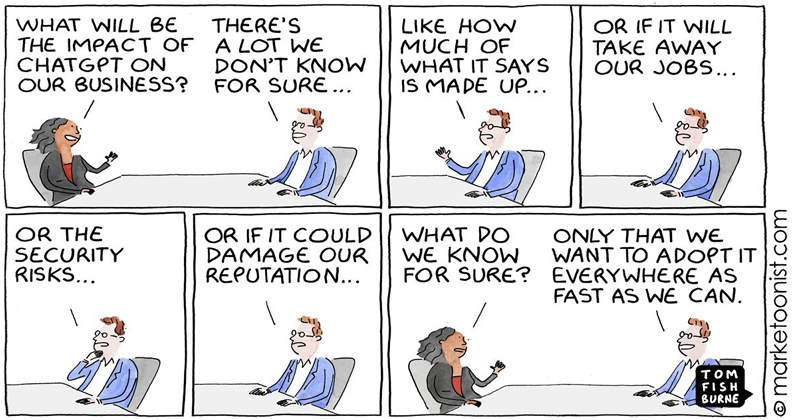
Taken from: <https://marketoonist.com/2023/06/impact-of-chatgpt.html> Access: 08 Dec., 2023.
TEXT 2
Workplace Burnout Survey
Burnout without borders
Deloitte’s marketplace survey on burnout
Professionals today are undoubtedly feeling the pressure of an ‘always on’ work culture, causing stress and sometimes leading to burnout.
Deloitte’s external marketplace survey of 1,000 full-time US professionals explores the drivers and impact of employee burnout, while also providing insight into the benefits and programs employees feel can help prevent or alleviate burnout versus those their companies are currently offering.
The findings indicate that 77 percent of respondents say they have experienced employee burnout at their current job, with more than half citing more than one occurrence. The survey also uncovered that employers may be missing the mark when it comes to developing well-being programs that their employees find valuable to address stress in the workplace.
Additionally, the survey found that:
- Employee burnout has no boundaries: 91 percent of respondents say having an unmanageable amount of stress or frustration negatively impacts the quality of their work. 83 percent of respondents say burnout from work can negatively impact their personal relationships.
- Passion may not prevent workplace stress: 87 percent of professionals surveyed say they have passion for their current job but 64 percent say they are frequently stressed, dispelling the myth that passionate employees are immune to stress or burnout.
- Many companies may not be doing enough to minimize burnout: Nearly 70 percent of professionals feel their employers are not doing enough to prevent or alleviate burnout within their organization. 21 percent of respondents say their company does not offer any programs or initiatives to prevent or alleviate burnout.
- Companies should consider workplace culture, not just well-being programs: One in four professionals say they never or rarely take all of their vacation days. The top driver of burnout cited in the survey is lack of support or recognition from leadership, indicating the important role that leaders play in setting the tone.
- Burnout affects millennial retention: 84 percent of millennials say they have experienced burnout at their current job, compared to 77 percent of all respondents. Nearly half of millennials say they have left a job specifically because they felt burned out, compared to 42 percent of all respondents.
from: <https://www2.deloitte.com/us/en/pages/about-deloitte/articles/burnout-survey.html> Access: 08 Dec., 2023. Adapted
TEXT 2
Workplace Burnout Survey
Burnout without borders
Deloitte’s marketplace survey on burnout
Professionals today are undoubtedly feeling the pressure of an ‘always on’ work culture, causing stress and sometimes leading to burnout.
Deloitte’s external marketplace survey of 1,000 full-time US professionals explores the drivers and impact of employee burnout, while also providing insight into the benefits and programs employees feel can help prevent or alleviate burnout versus those their companies are currently offering.
The findings indicate that 77 percent of respondents say they have experienced employee burnout at their current job, with more than half citing more than one occurrence. The survey also uncovered that employers may be missing the mark when it comes to developing well-being programs that their employees find valuable to address stress in the workplace.
Additionally, the survey found that:
- Employee burnout has no boundaries: 91 percent of respondents say having an unmanageable amount of stress or frustration negatively impacts the quality of their work. 83 percent of respondents say burnout from work can negatively impact their personal relationships.
- Passion may not prevent workplace stress: 87 percent of professionals surveyed say they have passion for their current job but 64 percent say they are frequently stressed, dispelling the myth that passionate employees are immune to stress or burnout.
- Many companies may not be doing enough to minimize burnout: Nearly 70 percent of professionals feel their employers are not doing enough to prevent or alleviate burnout within their organization. 21 percent of respondents say their company does not offer any programs or initiatives to prevent or alleviate burnout.
- Companies should consider workplace culture, not just well-being programs: One in four professionals say they never or rarely take all of their vacation days. The top driver of burnout cited in the survey is lack of support or recognition from leadership, indicating the important role that leaders play in setting the tone.
- Burnout affects millennial retention: 84 percent of millennials say they have experienced burnout at their current job, compared to 77 percent of all respondents. Nearly half of millennials say they have left a job specifically because they felt burned out, compared to 42 percent of all respondents.
from: <https://www2.deloitte.com/us/en/pages/about-deloitte/articles/burnout-survey.html> Access: 08 Dec., 2023. Adapted
TEXT 2
Workplace Burnout Survey
Burnout without borders
Deloitte’s marketplace survey on burnout
Professionals today are undoubtedly feeling the pressure of an ‘always on’ work culture, causing stress and sometimes leading to burnout.
Deloitte’s external marketplace survey of 1,000 full-time US professionals explores the drivers and impact of employee burnout, while also providing insight into the benefits and programs employees feel can help prevent or alleviate burnout versus those their companies are currently offering.
The findings indicate that 77 percent of respondents say they have experienced employee burnout at their current job, with more than half citing more than one occurrence. The survey also uncovered that employers may be missing the mark when it comes to developing well-being programs that their employees find valuable to address stress in the workplace.
Additionally, the survey found that:
- Employee burnout has no boundaries: 91 percent of respondents say having an unmanageable amount of stress or frustration negatively impacts the quality of their work. 83 percent of respondents say burnout from work can negatively impact their personal relationships.
- Passion may not prevent workplace stress: 87 percent of professionals surveyed say they have passion for their current job but 64 percent say they are frequently stressed, dispelling the myth that passionate employees are immune to stress or burnout.
- Many companies may not be doing enough to minimize burnout: Nearly 70 percent of professionals feel their employers are not doing enough to prevent or alleviate burnout within their organization. 21 percent of respondents say their company does not offer any programs or initiatives to prevent or alleviate burnout.
- Companies should consider workplace culture, not just well-being programs: One in four professionals say they never or rarely take all of their vacation days. The top driver of burnout cited in the survey is lack of support or recognition from leadership, indicating the important role that leaders play in setting the tone.
- Burnout affects millennial retention: 84 percent of millennials say they have experienced burnout at their current job, compared to 77 percent of all respondents. Nearly half of millennials say they have left a job specifically because they felt burned out, compared to 42 percent of all respondents.
from: <https://www2.deloitte.com/us/en/pages/about-deloitte/articles/burnout-survey.html> Access: 08 Dec., 2023. Adapted
TEXT 2
Workplace Burnout Survey
Burnout without borders
Deloitte’s marketplace survey on burnout
Professionals today are undoubtedly feeling the pressure of an ‘always on’ work culture, causing stress and sometimes leading to burnout.
Deloitte’s external marketplace survey of 1,000 full-time US professionals explores the drivers and impact of employee burnout, while also providing insight into the benefits and programs employees feel can help prevent or alleviate burnout versus those their companies are currently offering.
The findings indicate that 77 percent of respondents say they have experienced employee burnout at their current job, with more than half citing more than one occurrence. The survey also uncovered that employers may be missing the mark when it comes to developing well-being programs that their employees find valuable to address stress in the workplace.
Additionally, the survey found that:
- Employee burnout has no boundaries: 91 percent of respondents say having an unmanageable amount of stress or frustration negatively impacts the quality of their work. 83 percent of respondents say burnout from work can negatively impact their personal relationships.
- Passion may not prevent workplace stress: 87 percent of professionals surveyed say they have passion for their current job but 64 percent say they are frequently stressed, dispelling the myth that passionate employees are immune to stress or burnout.
- Many companies may not be doing enough to minimize burnout: Nearly 70 percent of professionals feel their employers are not doing enough to prevent or alleviate burnout within their organization. 21 percent of respondents say their company does not offer any programs or initiatives to prevent or alleviate burnout.
- Companies should consider workplace culture, not just well-being programs: One in four professionals say they never or rarely take all of their vacation days. The top driver of burnout cited in the survey is lack of support or recognition from leadership, indicating the important role that leaders play in setting the tone.
- Burnout affects millennial retention: 84 percent of millennials say they have experienced burnout at their current job, compared to 77 percent of all respondents. Nearly half of millennials say they have left a job specifically because they felt burned out, compared to 42 percent of all respondents.
from: <https://www2.deloitte.com/us/en/pages/about-deloitte/articles/burnout-survey.html> Access: 08 Dec., 2023. Adapted
TEXT 2
Workplace Burnout Survey
Burnout without borders
Deloitte’s marketplace survey on burnout
Professionals today are undoubtedly feeling the pressure of an ‘always on’ work culture, causing stress and sometimes leading to burnout.
Deloitte’s external marketplace survey of 1,000 full-time US professionals explores the drivers and impact of employee burnout, while also providing insight into the benefits and programs employees feel can help prevent or alleviate burnout versus those their companies are currently offering.
The findings indicate that 77 percent of respondents say they have experienced employee burnout at their current job, with more than half citing more than one occurrence. The survey also uncovered that employers may be missing the mark when it comes to developing well-being programs that their employees find valuable to address stress in the workplace.
Additionally, the survey found that:
- Employee burnout has no boundaries: 91 percent of respondents say having an unmanageable amount of stress or frustration negatively impacts the quality of their work. 83 percent of respondents say burnout from work can negatively impact their personal relationships.
- Passion may not prevent workplace stress: 87 percent of professionals surveyed say they have passion for their current job but 64 percent say they are frequently stressed, dispelling the myth that passionate employees are immune to stress or burnout.
- Many companies may not be doing enough to minimize burnout: Nearly 70 percent of professionals feel their employers are not doing enough to prevent or alleviate burnout within their organization. 21 percent of respondents say their company does not offer any programs or initiatives to prevent or alleviate burnout.
- Companies should consider workplace culture, not just well-being programs: One in four professionals say they never or rarely take all of their vacation days. The top driver of burnout cited in the survey is lack of support or recognition from leadership, indicating the important role that leaders play in setting the tone.
- Burnout affects millennial retention: 84 percent of millennials say they have experienced burnout at their current job, compared to 77 percent of all respondents. Nearly half of millennials say they have left a job specifically because they felt burned out, compared to 42 percent of all respondents.
from: <https://www2.deloitte.com/us/en/pages/about-deloitte/articles/burnout-survey.html> Access: 08 Dec., 2023. Adapted
TEXT 2
Workplace Burnout Survey
Burnout without borders
Deloitte’s marketplace survey on burnout
Professionals today are undoubtedly feeling the pressure of an ‘always on’ work culture, causing stress and sometimes leading to burnout.
Deloitte’s external marketplace survey of 1,000 full-time US professionals explores the drivers and impact of employee burnout, while also providing insight into the benefits and programs employees feel can help prevent or alleviate burnout versus those their companies are currently offering.
The findings indicate that 77 percent of respondents say they have experienced employee burnout at their current job, with more than half citing more than one occurrence. The survey also uncovered that employers may be missing the mark when it comes to developing well-being programs that their employees find valuable to address stress in the workplace.
Additionally, the survey found that:
- Employee burnout has no boundaries: 91 percent of respondents say having an unmanageable amount of stress or frustration negatively impacts the quality of their work. 83 percent of respondents say burnout from work can negatively impact their personal relationships.
- Passion may not prevent workplace stress: 87 percent of professionals surveyed say they have passion for their current job but 64 percent say they are frequently stressed, dispelling the myth that passionate employees are immune to stress or burnout.
- Many companies may not be doing enough to minimize burnout: Nearly 70 percent of professionals feel their employers are not doing enough to prevent or alleviate burnout within their organization. 21 percent of respondents say their company does not offer any programs or initiatives to prevent or alleviate burnout.
- Companies should consider workplace culture, not just well-being programs: One in four professionals say they never or rarely take all of their vacation days. The top driver of burnout cited in the survey is lack of support or recognition from leadership, indicating the important role that leaders play in setting the tone.
- Burnout affects millennial retention: 84 percent of millennials say they have experienced burnout at their current job, compared to 77 percent of all respondents. Nearly half of millennials say they have left a job specifically because they felt burned out, compared to 42 percent of all respondents.
from: <https://www2.deloitte.com/us/en/pages/about-deloitte/articles/burnout-survey.html> Access: 08 Dec., 2023. Adapted
TEXT 2
Workplace Burnout Survey
Burnout without borders
Deloitte’s marketplace survey on burnout
Professionals today are undoubtedly feeling the pressure of an ‘always on’ work culture, causing stress and sometimes leading to burnout.
Deloitte’s external marketplace survey of 1,000 full-time US professionals explores the drivers and impact of employee burnout, while also providing insight into the benefits and programs employees feel can help prevent or alleviate burnout versus those their companies are currently offering.
The findings indicate that 77 percent of respondents say they have experienced employee burnout at their current job, with more than half citing more than one occurrence. The survey also uncovered that employers may be missing the mark when it comes to developing well-being programs that their employees find valuable to address stress in the workplace.
Additionally, the survey found that:
- Employee burnout has no boundaries: 91 percent of respondents say having an unmanageable amount of stress or frustration negatively impacts the quality of their work. 83 percent of respondents say burnout from work can negatively impact their personal relationships.
- Passion may not prevent workplace stress: 87 percent of professionals surveyed say they have passion for their current job but 64 percent say they are frequently stressed, dispelling the myth that passionate employees are immune to stress or burnout.
- Many companies may not be doing enough to minimize burnout: Nearly 70 percent of professionals feel their employers are not doing enough to prevent or alleviate burnout within their organization. 21 percent of respondents say their company does not offer any programs or initiatives to prevent or alleviate burnout.
- Companies should consider workplace culture, not just well-being programs: One in four professionals say they never or rarely take all of their vacation days. The top driver of burnout cited in the survey is lack of support or recognition from leadership, indicating the important role that leaders play in setting the tone.
- Burnout affects millennial retention: 84 percent of millennials say they have experienced burnout at their current job, compared to 77 percent of all respondents. Nearly half of millennials say they have left a job specifically because they felt burned out, compared to 42 percent of all respondents.
from: <https://www2.deloitte.com/us/en/pages/about-deloitte/articles/burnout-survey.html> Access: 08 Dec., 2023. Adapted
TEXT 1
What do AI chatbots really mean for students and cheating?
October 31, 2023 By
Carrie Spector
The launch of ChatGPT and other artificial intelligence (AI) chatbots has triggered an alarm for many educators, who worry about students using the technology to cheat by passing its writing off as their own. But two Stanford researchers say that concern is misdirected, based on their ongoing research into cheating among U.S. high school students before and after the release of ChatGPT.
Here, Lee and Pope discuss the state of cheating in U.S. schools, what research shows about why students cheat, and their recommendations for educators working to address the problem.
What do we know about how much students cheat?
Pope: We know that cheating rates have been high for a long time. At Challenge Success we’ve been running surveys and focus groups at schools for over 15 years, asking students about different aspects of their lives — the amount of sleep they get, homework pressure, extracurricular activities, family expectations, things like that — and also several questions about different forms of cheating.
For years, long before ChatGPT hit the scene, some 60 to 70 percent of students have reported engaging in at least one “cheating” behavior during the previous month. That percentage has stayed about the same or even decreased slightly in our 2023 surveys, when we added questions specific to new AI technologies, like ChatGPT, and how students are using it for school assignments.
So AI isn’t changing how often students cheat — just the tools that they’re using?
Lee: The most prudent thing to say right now is that the data suggest, perhaps to the surprise of many people, that AI is not increasing the frequency of cheating. This may change as students become increasingly familiar with the technology, and we’ll continue to study it and see if and how this changes. But I think it’s important to point out that, in Challenge Success’ most recent survey, students were also asked if and how they felt an AI chatbot like ChatGPT should be allowed for school-related tasks. Many said they thought it should be acceptable for “starter” purposes, like explaining a new concept or generating ideas for a paper. But the vast majority said that using a chatbot to write an entire paper should never be allowed. So this idea that students who’ve never cheated before are going to suddenly run amok and have AI write all of their papers appears unfounded. What would you suggest to school leaders who are concerned about students using AI chatbots?
Pope: Even before ChatGPT, we could never be sure whether kids were getting help from a parent or tutor or another source on their assignments, and this was not considered cheating. Kids in our focus groups are wondering why they can't use ChatGPT as another resource to help them write their papers — not to write the whole thing word for word, but to get the kind of help a parent or tutor would offer. We need to help students and educators find ways to discuss the ethics of using this technology and when it is and isn't useful for student learning.
Lee: There’s a lot of fear about students using this technology. Schools have considered putting significant amounts of money in AI-detection software, which studies show can be highly unreliable. Some districts have tried blocking AI chatbots from school wifi and devices, then repealed those bans because they were ineffective. AI is not going away. Along with addressing the deeper reasons why students cheat, we need to teach students how to understand and think critically about this technology. For starters, at Stanford we’ve begun developing free resources to help teachers bring these topics into the classroom as it relates to different subject areas. We know that 3 teachers don’t have time to introduce a whole new class, but we have been working with teachers to make sure these are activities and lessons that can fit with what they’re already covering in the time they have available.
I think of AI literacy as being akin to driver’s education: We’ve got a powerful tool that can be a great asset, but it can also be dangerous. We want students to learn how to use it responsibly.
Available from: < https://ed.stanford.edu/news/what-do-ai-chatbots-really-mean-students-and-cheating>. Access: 08 Dec., 2023. Adapted.
TEXT 1
What do AI chatbots really mean for students and cheating?
October 31, 2023 By
Carrie Spector
The launch of ChatGPT and other artificial intelligence (AI) chatbots has triggered an alarm for many educators, who worry about students using the technology to cheat by passing its writing off as their own. But two Stanford researchers say that concern is misdirected, based on their ongoing research into cheating among U.S. high school students before and after the release of ChatGPT.
Here, Lee and Pope discuss the state of cheating in U.S. schools, what research shows about why students cheat, and their recommendations for educators working to address the problem.
What do we know about how much students cheat?
Pope: We know that cheating rates have been high for a long time. At Challenge Success we’ve been running surveys and focus groups at schools for over 15 years, asking students about different aspects of their lives — the amount of sleep they get, homework pressure, extracurricular activities, family expectations, things like that — and also several questions about different forms of cheating.
For years, long before ChatGPT hit the scene, some 60 to 70 percent of students have reported engaging in at least one “cheating” behavior during the previous month. That percentage has stayed about the same or even decreased slightly in our 2023 surveys, when we added questions specific to new AI technologies, like ChatGPT, and how students are using it for school assignments.
So AI isn’t changing how often students cheat — just the tools that they’re using?
Lee: The most prudent thing to say right now is that the data suggest, perhaps to the surprise of many people, that AI is not increasing the frequency of cheating. This may change as students become increasingly familiar with the technology, and we’ll continue to study it and see if and how this changes. But I think it’s important to point out that, in Challenge Success’ most recent survey, students were also asked if and how they felt an AI chatbot like ChatGPT should be allowed for school-related tasks. Many said they thought it should be acceptable for “starter” purposes, like explaining a new concept or generating ideas for a paper. But the vast majority said that using a chatbot to write an entire paper should never be allowed. So this idea that students who’ve never cheated before are going to suddenly run amok and have AI write all of their papers appears unfounded. What would you suggest to school leaders who are concerned about students using AI chatbots?
Pope: Even before ChatGPT, we could never be sure whether kids were getting help from a parent or tutor or another source on their assignments, and this was not considered cheating. Kids in our focus groups are wondering why they can't use ChatGPT as another resource to help them write their papers — not to write the whole thing word for word, but to get the kind of help a parent or tutor would offer. We need to help students and educators find ways to discuss the ethics of using this technology and when it is and isn't useful for student learning.
Lee: There’s a lot of fear about students using this technology. Schools have considered putting significant amounts of money in AI-detection software, which studies show can be highly unreliable. Some districts have tried blocking AI chatbots from school wifi and devices, then repealed those bans because they were ineffective. AI is not going away. Along with addressing the deeper reasons why students cheat, we need to teach students how to understand and think critically about this technology. For starters, at Stanford we’ve begun developing free resources to help teachers bring these topics into the classroom as it relates to different subject areas. We know that 3 teachers don’t have time to introduce a whole new class, but we have been working with teachers to make sure these are activities and lessons that can fit with what they’re already covering in the time they have available.
I think of AI literacy as being akin to driver’s education: We’ve got a powerful tool that can be a great asset, but it can also be dangerous. We want students to learn how to use it responsibly.
Available from: < https://ed.stanford.edu/news/what-do-ai-chatbots-really-mean-students-and-cheating>. Access: 08 Dec., 2023. Adapted.
TEXT 1
What do AI chatbots really mean for students and cheating?
October 31, 2023 By
Carrie Spector
The launch of ChatGPT and other artificial intelligence (AI) chatbots has triggered an alarm for many educators, who worry about students using the technology to cheat by passing its writing off as their own. But two Stanford researchers say that concern is misdirected, based on their ongoing research into cheating among U.S. high school students before and after the release of ChatGPT.
Here, Lee and Pope discuss the state of cheating in U.S. schools, what research shows about why students cheat, and their recommendations for educators working to address the problem.
What do we know about how much students cheat?
Pope: We know that cheating rates have been high for a long time. At Challenge Success we’ve been running surveys and focus groups at schools for over 15 years, asking students about different aspects of their lives — the amount of sleep they get, homework pressure, extracurricular activities, family expectations, things like that — and also several questions about different forms of cheating.
For years, long before ChatGPT hit the scene, some 60 to 70 percent of students have reported engaging in at least one “cheating” behavior during the previous month. That percentage has stayed about the same or even decreased slightly in our 2023 surveys, when we added questions specific to new AI technologies, like ChatGPT, and how students are using it for school assignments.
So AI isn’t changing how often students cheat — just the tools that they’re using?
Lee: The most prudent thing to say right now is that the data suggest, perhaps to the surprise of many people, that AI is not increasing the frequency of cheating. This may change as students become increasingly familiar with the technology, and we’ll continue to study it and see if and how this changes. But I think it’s important to point out that, in Challenge Success’ most recent survey, students were also asked if and how they felt an AI chatbot like ChatGPT should be allowed for school-related tasks. Many said they thought it should be acceptable for “starter” purposes, like explaining a new concept or generating ideas for a paper. But the vast majority said that using a chatbot to write an entire paper should never be allowed. So this idea that students who’ve never cheated before are going to suddenly run amok and have AI write all of their papers appears unfounded. What would you suggest to school leaders who are concerned about students using AI chatbots?
Pope: Even before ChatGPT, we could never be sure whether kids were getting help from a parent or tutor or another source on their assignments, and this was not considered cheating. Kids in our focus groups are wondering why they can't use ChatGPT as another resource to help them write their papers — not to write the whole thing word for word, but to get the kind of help a parent or tutor would offer. We need to help students and educators find ways to discuss the ethics of using this technology and when it is and isn't useful for student learning.
Lee: There’s a lot of fear about students using this technology. Schools have considered putting significant amounts of money in AI-detection software, which studies show can be highly unreliable. Some districts have tried blocking AI chatbots from school wifi and devices, then repealed those bans because they were ineffective. AI is not going away. Along with addressing the deeper reasons why students cheat, we need to teach students how to understand and think critically about this technology. For starters, at Stanford we’ve begun developing free resources to help teachers bring these topics into the classroom as it relates to different subject areas. We know that 3 teachers don’t have time to introduce a whole new class, but we have been working with teachers to make sure these are activities and lessons that can fit with what they’re already covering in the time they have available.
I think of AI literacy as being akin to driver’s education: We’ve got a powerful tool that can be a great asset, but it can also be dangerous. We want students to learn how to use it responsibly.
Available from: < https://ed.stanford.edu/news/what-do-ai-chatbots-really-mean-students-and-cheating>. Access: 08 Dec., 2023. Adapted.
TEXT 1
What do AI chatbots really mean for students and cheating?
October 31, 2023 By
Carrie Spector
The launch of ChatGPT and other artificial intelligence (AI) chatbots has triggered an alarm for many educators, who worry about students using the technology to cheat by passing its writing off as their own. But two Stanford researchers say that concern is misdirected, based on their ongoing research into cheating among U.S. high school students before and after the release of ChatGPT.
Here, Lee and Pope discuss the state of cheating in U.S. schools, what research shows about why students cheat, and their recommendations for educators working to address the problem.
What do we know about how much students cheat?
Pope: We know that cheating rates have been high for a long time. At Challenge Success we’ve been running surveys and focus groups at schools for over 15 years, asking students about different aspects of their lives — the amount of sleep they get, homework pressure, extracurricular activities, family expectations, things like that — and also several questions about different forms of cheating.
For years, long before ChatGPT hit the scene, some 60 to 70 percent of students have reported engaging in at least one “cheating” behavior during the previous month. That percentage has stayed about the same or even decreased slightly in our 2023 surveys, when we added questions specific to new AI technologies, like ChatGPT, and how students are using it for school assignments.
So AI isn’t changing how often students cheat — just the tools that they’re using?
Lee: The most prudent thing to say right now is that the data suggest, perhaps to the surprise of many people, that AI is not increasing the frequency of cheating. This may change as students become increasingly familiar with the technology, and we’ll continue to study it and see if and how this changes. But I think it’s important to point out that, in Challenge Success’ most recent survey, students were also asked if and how they felt an AI chatbot like ChatGPT should be allowed for school-related tasks. Many said they thought it should be acceptable for “starter” purposes, like explaining a new concept or generating ideas for a paper. But the vast majority said that using a chatbot to write an entire paper should never be allowed. So this idea that students who’ve never cheated before are going to suddenly run amok and have AI write all of their papers appears unfounded. What would you suggest to school leaders who are concerned about students using AI chatbots?
Pope: Even before ChatGPT, we could never be sure whether kids were getting help from a parent or tutor or another source on their assignments, and this was not considered cheating. Kids in our focus groups are wondering why they can't use ChatGPT as another resource to help them write their papers — not to write the whole thing word for word, but to get the kind of help a parent or tutor would offer. We need to help students and educators find ways to discuss the ethics of using this technology and when it is and isn't useful for student learning.
Lee: There’s a lot of fear about students using this technology. Schools have considered putting significant amounts of money in AI-detection software, which studies show can be highly unreliable. Some districts have tried blocking AI chatbots from school wifi and devices, then repealed those bans because they were ineffective. AI is not going away. Along with addressing the deeper reasons why students cheat, we need to teach students how to understand and think critically about this technology. For starters, at Stanford we’ve begun developing free resources to help teachers bring these topics into the classroom as it relates to different subject areas. We know that 3 teachers don’t have time to introduce a whole new class, but we have been working with teachers to make sure these are activities and lessons that can fit with what they’re already covering in the time they have available.
I think of AI literacy as being akin to driver’s education: We’ve got a powerful tool that can be a great asset, but it can also be dangerous. We want students to learn how to use it responsibly.
Available from: < https://ed.stanford.edu/news/what-do-ai-chatbots-really-mean-students-and-cheating>. Access: 08 Dec., 2023. Adapted.
TEXT 1
What do AI chatbots really mean for students and cheating?
October 31, 2023 By
Carrie Spector
The launch of ChatGPT and other artificial intelligence (AI) chatbots has triggered an alarm for many educators, who worry about students using the technology to cheat by passing its writing off as their own. But two Stanford researchers say that concern is misdirected, based on their ongoing research into cheating among U.S. high school students before and after the release of ChatGPT.
Here, Lee and Pope discuss the state of cheating in U.S. schools, what research shows about why students cheat, and their recommendations for educators working to address the problem.
What do we know about how much students cheat?
Pope: We know that cheating rates have been high for a long time. At Challenge Success we’ve been running surveys and focus groups at schools for over 15 years, asking students about different aspects of their lives — the amount of sleep they get, homework pressure, extracurricular activities, family expectations, things like that — and also several questions about different forms of cheating.
For years, long before ChatGPT hit the scene, some 60 to 70 percent of students have reported engaging in at least one “cheating” behavior during the previous month. That percentage has stayed about the same or even decreased slightly in our 2023 surveys, when we added questions specific to new AI technologies, like ChatGPT, and how students are using it for school assignments.
So AI isn’t changing how often students cheat — just the tools that they’re using?
Lee: The most prudent thing to say right now is that the data suggest, perhaps to the surprise of many people, that AI is not increasing the frequency of cheating. This may change as students become increasingly familiar with the technology, and we’ll continue to study it and see if and how this changes. But I think it’s important to point out that, in Challenge Success’ most recent survey, students were also asked if and how they felt an AI chatbot like ChatGPT should be allowed for school-related tasks. Many said they thought it should be acceptable for “starter” purposes, like explaining a new concept or generating ideas for a paper. But the vast majority said that using a chatbot to write an entire paper should never be allowed. So this idea that students who’ve never cheated before are going to suddenly run amok and have AI write all of their papers appears unfounded. What would you suggest to school leaders who are concerned about students using AI chatbots?
Pope: Even before ChatGPT, we could never be sure whether kids were getting help from a parent or tutor or another source on their assignments, and this was not considered cheating. Kids in our focus groups are wondering why they can't use ChatGPT as another resource to help them write their papers — not to write the whole thing word for word, but to get the kind of help a parent or tutor would offer. We need to help students and educators find ways to discuss the ethics of using this technology and when it is and isn't useful for student learning.
Lee: There’s a lot of fear about students using this technology. Schools have considered putting significant amounts of money in AI-detection software, which studies show can be highly unreliable. Some districts have tried blocking AI chatbots from school wifi and devices, then repealed those bans because they were ineffective. AI is not going away. Along with addressing the deeper reasons why students cheat, we need to teach students how to understand and think critically about this technology. For starters, at Stanford we’ve begun developing free resources to help teachers bring these topics into the classroom as it relates to different subject areas. We know that 3 teachers don’t have time to introduce a whole new class, but we have been working with teachers to make sure these are activities and lessons that can fit with what they’re already covering in the time they have available.
I think of AI literacy as being akin to driver’s education: We’ve got a powerful tool that can be a great asset, but it can also be dangerous. We want students to learn how to use it responsibly.
Available from: < https://ed.stanford.edu/news/what-do-ai-chatbots-really-mean-students-and-cheating>. Access: 08 Dec., 2023. Adapted.
TEXT 1
What do AI chatbots really mean for students and cheating?
October 31, 2023 By
Carrie Spector
The launch of ChatGPT and other artificial intelligence (AI) chatbots has triggered an alarm for many educators, who worry about students using the technology to cheat by passing its writing off as their own. But two Stanford researchers say that concern is misdirected, based on their ongoing research into cheating among U.S. high school students before and after the release of ChatGPT.
Here, Lee and Pope discuss the state of cheating in U.S. schools, what research shows about why students cheat, and their recommendations for educators working to address the problem.
What do we know about how much students cheat?
Pope: We know that cheating rates have been high for a long time. At Challenge Success we’ve been running surveys and focus groups at schools for over 15 years, asking students about different aspects of their lives — the amount of sleep they get, homework pressure, extracurricular activities, family expectations, things like that — and also several questions about different forms of cheating.
For years, long before ChatGPT hit the scene, some 60 to 70 percent of students have reported engaging in at least one “cheating” behavior during the previous month. That percentage has stayed about the same or even decreased slightly in our 2023 surveys, when we added questions specific to new AI technologies, like ChatGPT, and how students are using it for school assignments.
So AI isn’t changing how often students cheat — just the tools that they’re using?
Lee: The most prudent thing to say right now is that the data suggest, perhaps to the surprise of many people, that AI is not increasing the frequency of cheating. This may change as students become increasingly familiar with the technology, and we’ll continue to study it and see if and how this changes. But I think it’s important to point out that, in Challenge Success’ most recent survey, students were also asked if and how they felt an AI chatbot like ChatGPT should be allowed for school-related tasks. Many said they thought it should be acceptable for “starter” purposes, like explaining a new concept or generating ideas for a paper. But the vast majority said that using a chatbot to write an entire paper should never be allowed. So this idea that students who’ve never cheated before are going to suddenly run amok and have AI write all of their papers appears unfounded. What would you suggest to school leaders who are concerned about students using AI chatbots?
Pope: Even before ChatGPT, we could never be sure whether kids were getting help from a parent or tutor or another source on their assignments, and this was not considered cheating. Kids in our focus groups are wondering why they can't use ChatGPT as another resource to help them write their papers — not to write the whole thing word for word, but to get the kind of help a parent or tutor would offer. We need to help students and educators find ways to discuss the ethics of using this technology and when it is and isn't useful for student learning.
Lee: There’s a lot of fear about students using this technology. Schools have considered putting significant amounts of money in AI-detection software, which studies show can be highly unreliable. Some districts have tried blocking AI chatbots from school wifi and devices, then repealed those bans because they were ineffective. AI is not going away. Along with addressing the deeper reasons why students cheat, we need to teach students how to understand and think critically about this technology. For starters, at Stanford we’ve begun developing free resources to help teachers bring these topics into the classroom as it relates to different subject areas. We know that 3 teachers don’t have time to introduce a whole new class, but we have been working with teachers to make sure these are activities and lessons that can fit with what they’re already covering in the time they have available.
I think of AI literacy as being akin to driver’s education: We’ve got a powerful tool that can be a great asset, but it can also be dangerous. We want students to learn how to use it responsibly.
Available from: < https://ed.stanford.edu/news/what-do-ai-chatbots-really-mean-students-and-cheating>. Access: 08 Dec., 2023. Adapted.
TEXT 1
What do AI chatbots really mean for students and cheating?
October 31, 2023 By
Carrie Spector
The launch of ChatGPT and other artificial intelligence (AI) chatbots has triggered an alarm for many educators, who worry about students using the technology to cheat by passing its writing off as their own. But two Stanford researchers say that concern is misdirected, based on their ongoing research into cheating among U.S. high school students before and after the release of ChatGPT.
Here, Lee and Pope discuss the state of cheating in U.S. schools, what research shows about why students cheat, and their recommendations for educators working to address the problem.
What do we know about how much students cheat?
Pope: We know that cheating rates have been high for a long time. At Challenge Success we’ve been running surveys and focus groups at schools for over 15 years, asking students about different aspects of their lives — the amount of sleep they get, homework pressure, extracurricular activities, family expectations, things like that — and also several questions about different forms of cheating.
For years, long before ChatGPT hit the scene, some 60 to 70 percent of students have reported engaging in at least one “cheating” behavior during the previous month. That percentage has stayed about the same or even decreased slightly in our 2023 surveys, when we added questions specific to new AI technologies, like ChatGPT, and how students are using it for school assignments.
So AI isn’t changing how often students cheat — just the tools that they’re using?
Lee: The most prudent thing to say right now is that the data suggest, perhaps to the surprise of many people, that AI is not increasing the frequency of cheating. This may change as students become increasingly familiar with the technology, and we’ll continue to study it and see if and how this changes. But I think it’s important to point out that, in Challenge Success’ most recent survey, students were also asked if and how they felt an AI chatbot like ChatGPT should be allowed for school-related tasks. Many said they thought it should be acceptable for “starter” purposes, like explaining a new concept or generating ideas for a paper. But the vast majority said that using a chatbot to write an entire paper should never be allowed. So this idea that students who’ve never cheated before are going to suddenly run amok and have AI write all of their papers appears unfounded. What would you suggest to school leaders who are concerned about students using AI chatbots?
Pope: Even before ChatGPT, we could never be sure whether kids were getting help from a parent or tutor or another source on their assignments, and this was not considered cheating. Kids in our focus groups are wondering why they can't use ChatGPT as another resource to help them write their papers — not to write the whole thing word for word, but to get the kind of help a parent or tutor would offer. We need to help students and educators find ways to discuss the ethics of using this technology and when it is and isn't useful for student learning.
Lee: There’s a lot of fear about students using this technology. Schools have considered putting significant amounts of money in AI-detection software, which studies show can be highly unreliable. Some districts have tried blocking AI chatbots from school wifi and devices, then repealed those bans because they were ineffective. AI is not going away. Along with addressing the deeper reasons why students cheat, we need to teach students how to understand and think critically about this technology. For starters, at Stanford we’ve begun developing free resources to help teachers bring these topics into the classroom as it relates to different subject areas. We know that 3 teachers don’t have time to introduce a whole new class, but we have been working with teachers to make sure these are activities and lessons that can fit with what they’re already covering in the time they have available.
I think of AI literacy as being akin to driver’s education: We’ve got a powerful tool that can be a great asset, but it can also be dangerous. We want students to learn how to use it responsibly.
Available from: < https://ed.stanford.edu/news/what-do-ai-chatbots-really-mean-students-and-cheating>. Access: 08 Dec., 2023. Adapted.
TEXT 1
What do AI chatbots really mean for students and cheating?
October 31, 2023 By
Carrie Spector
The launch of ChatGPT and other artificial intelligence (AI) chatbots has triggered an alarm for many educators, who worry about students using the technology to cheat by passing its writing off as their own. But two Stanford researchers say that concern is misdirected, based on their ongoing research into cheating among U.S. high school students before and after the release of ChatGPT.
Here, Lee and Pope discuss the state of cheating in U.S. schools, what research shows about why students cheat, and their recommendations for educators working to address the problem.
What do we know about how much students cheat?
Pope: We know that cheating rates have been high for a long time. At Challenge Success we’ve been running surveys and focus groups at schools for over 15 years, asking students about different aspects of their lives — the amount of sleep they get, homework pressure, extracurricular activities, family expectations, things like that — and also several questions about different forms of cheating.
For years, long before ChatGPT hit the scene, some 60 to 70 percent of students have reported engaging in at least one “cheating” behavior during the previous month. That percentage has stayed about the same or even decreased slightly in our 2023 surveys, when we added questions specific to new AI technologies, like ChatGPT, and how students are using it for school assignments.
So AI isn’t changing how often students cheat — just the tools that they’re using?
Lee: The most prudent thing to say right now is that the data suggest, perhaps to the surprise of many people, that AI is not increasing the frequency of cheating. This may change as students become increasingly familiar with the technology, and we’ll continue to study it and see if and how this changes. But I think it’s important to point out that, in Challenge Success’ most recent survey, students were also asked if and how they felt an AI chatbot like ChatGPT should be allowed for school-related tasks. Many said they thought it should be acceptable for “starter” purposes, like explaining a new concept or generating ideas for a paper. But the vast majority said that using a chatbot to write an entire paper should never be allowed. So this idea that students who’ve never cheated before are going to suddenly run amok and have AI write all of their papers appears unfounded. What would you suggest to school leaders who are concerned about students using AI chatbots?
Pope: Even before ChatGPT, we could never be sure whether kids were getting help from a parent or tutor or another source on their assignments, and this was not considered cheating. Kids in our focus groups are wondering why they can't use ChatGPT as another resource to help them write their papers — not to write the whole thing word for word, but to get the kind of help a parent or tutor would offer. We need to help students and educators find ways to discuss the ethics of using this technology and when it is and isn't useful for student learning.
Lee: There’s a lot of fear about students using this technology. Schools have considered putting significant amounts of money in AI-detection software, which studies show can be highly unreliable. Some districts have tried blocking AI chatbots from school wifi and devices, then repealed those bans because they were ineffective. AI is not going away. Along with addressing the deeper reasons why students cheat, we need to teach students how to understand and think critically about this technology. For starters, at Stanford we’ve begun developing free resources to help teachers bring these topics into the classroom as it relates to different subject areas. We know that 3 teachers don’t have time to introduce a whole new class, but we have been working with teachers to make sure these are activities and lessons that can fit with what they’re already covering in the time they have available.
I think of AI literacy as being akin to driver’s education: We’ve got a powerful tool that can be a great asset, but it can also be dangerous. We want students to learn how to use it responsibly.
Available from: < https://ed.stanford.edu/news/what-do-ai-chatbots-really-mean-students-and-cheating>. Access: 08 Dec., 2023. Adapted.
TEXT 1
What do AI chatbots really mean for students and cheating?
October 31, 2023 By
Carrie Spector
The launch of ChatGPT and other artificial intelligence (AI) chatbots has triggered an alarm for many educators, who worry about students using the technology to cheat by passing its writing off as their own. But two Stanford researchers say that concern is misdirected, based on their ongoing research into cheating among U.S. high school students before and after the release of ChatGPT.
Here, Lee and Pope discuss the state of cheating in U.S. schools, what research shows about why students cheat, and their recommendations for educators working to address the problem.
What do we know about how much students cheat?
Pope: We know that cheating rates have been high for a long time. At Challenge Success we’ve been running surveys and focus groups at schools for over 15 years, asking students about different aspects of their lives — the amount of sleep they get, homework pressure, extracurricular activities, family expectations, things like that — and also several questions about different forms of cheating.
For years, long before ChatGPT hit the scene, some 60 to 70 percent of students have reported engaging in at least one “cheating” behavior during the previous month. That percentage has stayed about the same or even decreased slightly in our 2023 surveys, when we added questions specific to new AI technologies, like ChatGPT, and how students are using it for school assignments.
So AI isn’t changing how often students cheat — just the tools that they’re using?
Lee: The most prudent thing to say right now is that the data suggest, perhaps to the surprise of many people, that AI is not increasing the frequency of cheating. This may change as students become increasingly familiar with the technology, and we’ll continue to study it and see if and how this changes. But I think it’s important to point out that, in Challenge Success’ most recent survey, students were also asked if and how they felt an AI chatbot like ChatGPT should be allowed for school-related tasks. Many said they thought it should be acceptable for “starter” purposes, like explaining a new concept or generating ideas for a paper. But the vast majority said that using a chatbot to write an entire paper should never be allowed. So this idea that students who’ve never cheated before are going to suddenly run amok and have AI write all of their papers appears unfounded. What would you suggest to school leaders who are concerned about students using AI chatbots?
Pope: Even before ChatGPT, we could never be sure whether kids were getting help from a parent or tutor or another source on their assignments, and this was not considered cheating. Kids in our focus groups are wondering why they can't use ChatGPT as another resource to help them write their papers — not to write the whole thing word for word, but to get the kind of help a parent or tutor would offer. We need to help students and educators find ways to discuss the ethics of using this technology and when it is and isn't useful for student learning.
Lee: There’s a lot of fear about students using this technology. Schools have considered putting significant amounts of money in AI-detection software, which studies show can be highly unreliable. Some districts have tried blocking AI chatbots from school wifi and devices, then repealed those bans because they were ineffective. AI is not going away. Along with addressing the deeper reasons why students cheat, we need to teach students how to understand and think critically about this technology. For starters, at Stanford we’ve begun developing free resources to help teachers bring these topics into the classroom as it relates to different subject areas. We know that 3 teachers don’t have time to introduce a whole new class, but we have been working with teachers to make sure these are activities and lessons that can fit with what they’re already covering in the time they have available.
I think of AI literacy as being akin to driver’s education: We’ve got a powerful tool that can be a great asset, but it can also be dangerous. We want students to learn how to use it responsibly.
Available from: < https://ed.stanford.edu/news/what-do-ai-chatbots-really-mean-students-and-cheating>. Access: 08 Dec., 2023. Adapted.
TEXT 1
What do AI chatbots really mean for students and cheating?
October 31, 2023 By
Carrie Spector
The launch of ChatGPT and other artificial intelligence (AI) chatbots has triggered an alarm for many educators, who worry about students using the technology to cheat by passing its writing off as their own. But two Stanford researchers say that concern is misdirected, based on their ongoing research into cheating among U.S. high school students before and after the release of ChatGPT.
Here, Lee and Pope discuss the state of cheating in U.S. schools, what research shows about why students cheat, and their recommendations for educators working to address the problem.
What do we know about how much students cheat?
Pope: We know that cheating rates have been high for a long time. At Challenge Success we’ve been running surveys and focus groups at schools for over 15 years, asking students about different aspects of their lives — the amount of sleep they get, homework pressure, extracurricular activities, family expectations, things like that — and also several questions about different forms of cheating.
For years, long before ChatGPT hit the scene, some 60 to 70 percent of students have reported engaging in at least one “cheating” behavior during the previous month. That percentage has stayed about the same or even decreased slightly in our 2023 surveys, when we added questions specific to new AI technologies, like ChatGPT, and how students are using it for school assignments.
So AI isn’t changing how often students cheat — just the tools that they’re using?
Lee: The most prudent thing to say right now is that the data suggest, perhaps to the surprise of many people, that AI is not increasing the frequency of cheating. This may change as students become increasingly familiar with the technology, and we’ll continue to study it and see if and how this changes. But I think it’s important to point out that, in Challenge Success’ most recent survey, students were also asked if and how they felt an AI chatbot like ChatGPT should be allowed for school-related tasks. Many said they thought it should be acceptable for “starter” purposes, like explaining a new concept or generating ideas for a paper. But the vast majority said that using a chatbot to write an entire paper should never be allowed. So this idea that students who’ve never cheated before are going to suddenly run amok and have AI write all of their papers appears unfounded. What would you suggest to school leaders who are concerned about students using AI chatbots?
Pope: Even before ChatGPT, we could never be sure whether kids were getting help from a parent or tutor or another source on their assignments, and this was not considered cheating. Kids in our focus groups are wondering why they can't use ChatGPT as another resource to help them write their papers — not to write the whole thing word for word, but to get the kind of help a parent or tutor would offer. We need to help students and educators find ways to discuss the ethics of using this technology and when it is and isn't useful for student learning.
Lee: There’s a lot of fear about students using this technology. Schools have considered putting significant amounts of money in AI-detection software, which studies show can be highly unreliable. Some districts have tried blocking AI chatbots from school wifi and devices, then repealed those bans because they were ineffective. AI is not going away. Along with addressing the deeper reasons why students cheat, we need to teach students how to understand and think critically about this technology. For starters, at Stanford we’ve begun developing free resources to help teachers bring these topics into the classroom as it relates to different subject areas. We know that 3 teachers don’t have time to introduce a whole new class, but we have been working with teachers to make sure these are activities and lessons that can fit with what they’re already covering in the time they have available.
I think of AI literacy as being akin to driver’s education: We’ve got a powerful tool that can be a great asset, but it can also be dangerous. We want students to learn how to use it responsibly.
Available from: < https://ed.stanford.edu/news/what-do-ai-chatbots-really-mean-students-and-cheating>. Access: 08 Dec., 2023. Adapted.
Convert the following sentence into indirect speech:
Direct Speech: "She said, 'I will finish the report by tomorrow evening.'"

 Conheça nossos planos