Questões de Concurso Sobre inglês
Foram encontradas 25.994 questões


Ano: 2026
Banca:
AMEOSC
Órgão:
Prefeitura de Bandeirante - SC
Prova:
AMEOSC - 2026 - Prefeitura de Bandeirante - SC - Professor de Inglês - Edital nº 8 |
Q4248849
Inglês
Texto associado
'It's Happening': Daniel Johns Drops More Teases
After Making Shock Appearance at Silverchair
Tribute Show
Daniel Johns has been sharing cryptic messages in
recent months, and fans are only asking more questions
The iconic Australian musician has been sharing cryptic
messages in recent months, and fans are only asking
more questions on the back of his latest social media
post.
In clips shared to the Silverchair frontman's Instagram,
captioned "It's happening", it was revealed that Johns
made a surprise appearance at the soundcheck of local
band The Lizards' show earlier this year at Little Bosa in
Port Elliot, South Adelaide. The band were playing
Silverchair's debut album Frogstomp in full to celebrate
the record's 30th anniversary.
Per the video, Johns "just rocks up at soundcheck,
played with The Lizards for a bit, did a jam, and it was
just really odd", before returning later in the night for the
gig. He is believed to have shown up quietly as the show
started as "Dan didn't want to freak anyone out" and
watched from the kitchen: "Then Dan just disappeared.
Just vanished. It was so trippy, but it happened. I filmed a
bit on my phone because I knew no one would believe
me. It was crazy."
It comes after Johns posted a black-and-white Polaroid
on his Instagram in June, paired with short clips of
himself tearing through a frantic guitar piece. The
captions read: "5 Minute Warning," "Stand 'em up against
the wall," and "This concludes the intermission — see
you in 1995. #FutureNever."
The posts continue a run of unusual updates in recent
weeks, with Johns dropping hints about "time travelling"
and slipping in references to 1994.
For Johns, 1994 is more than just a throwback. It was the
year Silverchair broke through with their debut EP
Tomorrow, whose title track topped the ARIA Charts.
Back in April, on his 46th birthday, Johns reemerged on
Instagram for the first time since October 2023, writing: "I
have to go back in time to finalise something."
Silverchair celebrated the Frogstomp anniversary with a
special event in Sydney in March, though Johns was not
in attendance.
In 2023, his Silverchair bandmates Ben Gillies and Chris
Joannou teamed up to release the memoir Love & Pain,
which covered the rise of Silverchair as a burgeoning trio
from Newcastle to one of the world's biggest acts.
At the time, Johns pushed for the removal of a two-part
Australian Story documentary from ABC iView ahead of
the book's release, claiming he had not cleared the rights
to Silverchair songs being used in the programme.
"I was and remain incredibly supportive of them telling
their story," Johns wrote on Instagram.
"I was asked at the end of filming to be interviewed about
their contribution to the band and although I wished them
all the best, I respectfully declined for one reason.
"I haven't been involved in the book nor am I aware of the
contents. I've asked on many occasions to read the book
but haven't been sent a copy, consequently I was
uncomfortable being interviewed to help promote it."
Johns' last offering of new music came in 2022 with his
second studio album, FutureNever, which also hit #1 in
Australia and picked up ARIA, APRA and AIR Award
nominations.
https://au.rollingstone.com/music/music-news/daniel-johns-silverchair-fr
ogstomp-lizards-81005/
Read the excerpt below.
"Daniel Johns has been sharing cryptic messages in recent months, and fans are only asking more questions on the back of his latest social media post."
Considering the excerpt and the development of the article in which it appears, Johns's recent social media activity has mainly:
"Daniel Johns has been sharing cryptic messages in recent months, and fans are only asking more questions on the back of his latest social media post."
Considering the excerpt and the development of the article in which it appears, Johns's recent social media activity has mainly:
Ano: 2026
Banca:
AMEOSC
Órgão:
Prefeitura de Bandeirante - SC
Prova:
AMEOSC - 2026 - Prefeitura de Bandeirante - SC - Professor de Inglês - Edital nº 8 |
Q4248846
Inglês
Texto associado
'It's Happening': Daniel Johns Drops More Teases
After Making Shock Appearance at Silverchair
Tribute Show
Daniel Johns has been sharing cryptic messages in
recent months, and fans are only asking more questions
The iconic Australian musician has been sharing cryptic
messages in recent months, and fans are only asking
more questions on the back of his latest social media
post.
In clips shared to the Silverchair frontman's Instagram,
captioned "It's happening", it was revealed that Johns
made a surprise appearance at the soundcheck of local
band The Lizards' show earlier this year at Little Bosa in
Port Elliot, South Adelaide. The band were playing
Silverchair's debut album Frogstomp in full to celebrate
the record's 30th anniversary.
Per the video, Johns "just rocks up at soundcheck,
played with The Lizards for a bit, did a jam, and it was
just really odd", before returning later in the night for the
gig. He is believed to have shown up quietly as the show
started as "Dan didn't want to freak anyone out" and
watched from the kitchen: "Then Dan just disappeared.
Just vanished. It was so trippy, but it happened. I filmed a
bit on my phone because I knew no one would believe
me. It was crazy."
It comes after Johns posted a black-and-white Polaroid
on his Instagram in June, paired with short clips of
himself tearing through a frantic guitar piece. The
captions read: "5 Minute Warning," "Stand 'em up against
the wall," and "This concludes the intermission — see
you in 1995. #FutureNever."
The posts continue a run of unusual updates in recent
weeks, with Johns dropping hints about "time travelling"
and slipping in references to 1994.
For Johns, 1994 is more than just a throwback. It was the
year Silverchair broke through with their debut EP
Tomorrow, whose title track topped the ARIA Charts.
Back in April, on his 46th birthday, Johns reemerged on
Instagram for the first time since October 2023, writing: "I
have to go back in time to finalise something."
Silverchair celebrated the Frogstomp anniversary with a
special event in Sydney in March, though Johns was not
in attendance.
In 2023, his Silverchair bandmates Ben Gillies and Chris
Joannou teamed up to release the memoir Love & Pain,
which covered the rise of Silverchair as a burgeoning trio
from Newcastle to one of the world's biggest acts.
At the time, Johns pushed for the removal of a two-part
Australian Story documentary from ABC iView ahead of
the book's release, claiming he had not cleared the rights
to Silverchair songs being used in the programme.
"I was and remain incredibly supportive of them telling
their story," Johns wrote on Instagram.
"I was asked at the end of filming to be interviewed about
their contribution to the band and although I wished them
all the best, I respectfully declined for one reason.
"I haven't been involved in the book nor am I aware of the
contents. I've asked on many occasions to read the book
but haven't been sent a copy, consequently I was
uncomfortable being interviewed to help promote it."
Johns' last offering of new music came in 2022 with his
second studio album, FutureNever, which also hit #1 in
Australia and picked up ARIA, APRA and AIR Award
nominations.
https://au.rollingstone.com/music/music-news/daniel-johns-silverchair-fr
ogstomp-lizards-81005/
Read the sentence below.
"I filmed a bit on my phone because I knew no one would believe me."
The conjunction "because" introduces an idea of:
Ano: 2026
Banca:
AMEOSC
Órgão:
Prefeitura de Bandeirante - SC
Prova:
AMEOSC - 2026 - Prefeitura de Bandeirante - SC - Professor de Inglês - Edital nº 8 |
Q4248845
Inglês
Texto associado
'It's Happening': Daniel Johns Drops More Teases
After Making Shock Appearance at Silverchair
Tribute Show
Daniel Johns has been sharing cryptic messages in
recent months, and fans are only asking more questions
The iconic Australian musician has been sharing cryptic
messages in recent months, and fans are only asking
more questions on the back of his latest social media
post.
In clips shared to the Silverchair frontman's Instagram,
captioned "It's happening", it was revealed that Johns
made a surprise appearance at the soundcheck of local
band The Lizards' show earlier this year at Little Bosa in
Port Elliot, South Adelaide. The band were playing
Silverchair's debut album Frogstomp in full to celebrate
the record's 30th anniversary.
Per the video, Johns "just rocks up at soundcheck,
played with The Lizards for a bit, did a jam, and it was
just really odd", before returning later in the night for the
gig. He is believed to have shown up quietly as the show
started as "Dan didn't want to freak anyone out" and
watched from the kitchen: "Then Dan just disappeared.
Just vanished. It was so trippy, but it happened. I filmed a
bit on my phone because I knew no one would believe
me. It was crazy."
It comes after Johns posted a black-and-white Polaroid
on his Instagram in June, paired with short clips of
himself tearing through a frantic guitar piece. The
captions read: "5 Minute Warning," "Stand 'em up against
the wall," and "This concludes the intermission — see
you in 1995. #FutureNever."
The posts continue a run of unusual updates in recent
weeks, with Johns dropping hints about "time travelling"
and slipping in references to 1994.
For Johns, 1994 is more than just a throwback. It was the
year Silverchair broke through with their debut EP
Tomorrow, whose title track topped the ARIA Charts.
Back in April, on his 46th birthday, Johns reemerged on
Instagram for the first time since October 2023, writing: "I
have to go back in time to finalise something."
Silverchair celebrated the Frogstomp anniversary with a
special event in Sydney in March, though Johns was not
in attendance.
In 2023, his Silverchair bandmates Ben Gillies and Chris
Joannou teamed up to release the memoir Love & Pain,
which covered the rise of Silverchair as a burgeoning trio
from Newcastle to one of the world's biggest acts.
At the time, Johns pushed for the removal of a two-part
Australian Story documentary from ABC iView ahead of
the book's release, claiming he had not cleared the rights
to Silverchair songs being used in the programme.
"I was and remain incredibly supportive of them telling
their story," Johns wrote on Instagram.
"I was asked at the end of filming to be interviewed about
their contribution to the band and although I wished them
all the best, I respectfully declined for one reason.
"I haven't been involved in the book nor am I aware of the
contents. I've asked on many occasions to read the book
but haven't been sent a copy, consequently I was
uncomfortable being interviewed to help promote it."
Johns' last offering of new music came in 2022 with his
second studio album, FutureNever, which also hit #1 in
Australia and picked up ARIA, APRA and AIR Award
nominations.
https://au.rollingstone.com/music/music-news/daniel-johns-silverchair-fr
ogstomp-lizards-81005/
Read the statements about the article.
I.Johns's appearance at The Lizards' soundcheck had not been publicly announced in advance.
II.The Lizards were performing Frogstomp in connection with the album's anniversary.
III.Johns watched the entire concert from a prominent place near the stage.
Which statements are correct?
I.Johns's appearance at The Lizards' soundcheck had not been publicly announced in advance.
II.The Lizards were performing Frogstomp in connection with the album's anniversary.
III.Johns watched the entire concert from a prominent place near the stage.
Which statements are correct?
Ano: 2026
Banca:
AMEOSC
Órgão:
Prefeitura de Bandeirante - SC
Prova:
AMEOSC - 2026 - Prefeitura de Bandeirante - SC - Professor de Inglês - Edital nº 8 |
Q4248844
Inglês
Texto associado
'It's Happening': Daniel Johns Drops More Teases
After Making Shock Appearance at Silverchair
Tribute Show
Daniel Johns has been sharing cryptic messages in
recent months, and fans are only asking more questions
The iconic Australian musician has been sharing cryptic
messages in recent months, and fans are only asking
more questions on the back of his latest social media
post.
In clips shared to the Silverchair frontman's Instagram,
captioned "It's happening", it was revealed that Johns
made a surprise appearance at the soundcheck of local
band The Lizards' show earlier this year at Little Bosa in
Port Elliot, South Adelaide. The band were playing
Silverchair's debut album Frogstomp in full to celebrate
the record's 30th anniversary.
Per the video, Johns "just rocks up at soundcheck,
played with The Lizards for a bit, did a jam, and it was
just really odd", before returning later in the night for the
gig. He is believed to have shown up quietly as the show
started as "Dan didn't want to freak anyone out" and
watched from the kitchen: "Then Dan just disappeared.
Just vanished. It was so trippy, but it happened. I filmed a
bit on my phone because I knew no one would believe
me. It was crazy."
It comes after Johns posted a black-and-white Polaroid
on his Instagram in June, paired with short clips of
himself tearing through a frantic guitar piece. The
captions read: "5 Minute Warning," "Stand 'em up against
the wall," and "This concludes the intermission — see
you in 1995. #FutureNever."
The posts continue a run of unusual updates in recent
weeks, with Johns dropping hints about "time travelling"
and slipping in references to 1994.
For Johns, 1994 is more than just a throwback. It was the
year Silverchair broke through with their debut EP
Tomorrow, whose title track topped the ARIA Charts.
Back in April, on his 46th birthday, Johns reemerged on
Instagram for the first time since October 2023, writing: "I
have to go back in time to finalise something."
Silverchair celebrated the Frogstomp anniversary with a
special event in Sydney in March, though Johns was not
in attendance.
In 2023, his Silverchair bandmates Ben Gillies and Chris
Joannou teamed up to release the memoir Love & Pain,
which covered the rise of Silverchair as a burgeoning trio
from Newcastle to one of the world's biggest acts.
At the time, Johns pushed for the removal of a two-part
Australian Story documentary from ABC iView ahead of
the book's release, claiming he had not cleared the rights
to Silverchair songs being used in the programme.
"I was and remain incredibly supportive of them telling
their story," Johns wrote on Instagram.
"I was asked at the end of filming to be interviewed about
their contribution to the band and although I wished them
all the best, I respectfully declined for one reason.
"I haven't been involved in the book nor am I aware of the
contents. I've asked on many occasions to read the book
but haven't been sent a copy, consequently I was
uncomfortable being interviewed to help promote it."
Johns' last offering of new music came in 2022 with his
second studio album, FutureNever, which also hit #1 in
Australia and picked up ARIA, APRA and AIR Award
nominations.
https://au.rollingstone.com/music/music-news/daniel-johns-silverchair-fr
ogstomp-lizards-81005/
Read the excerpt below.
"It was the year Silverchair broke through with their debut EP 'Tomorrow', whose title track topped the ARIA Charts."
The relative pronoun "whose" establishes a relationship between:
"It was the year Silverchair broke through with their debut EP 'Tomorrow', whose title track topped the ARIA Charts."
The relative pronoun "whose" establishes a relationship between:
Ano: 2026
Banca:
AMEOSC
Órgão:
Prefeitura de Bandeirante - SC
Prova:
AMEOSC - 2026 - Prefeitura de Bandeirante - SC - Professor de Inglês - Edital nº 8 |
Q4248843
Inglês
Texto associado
'It's Happening': Daniel Johns Drops More Teases
After Making Shock Appearance at Silverchair
Tribute Show
Daniel Johns has been sharing cryptic messages in
recent months, and fans are only asking more questions
The iconic Australian musician has been sharing cryptic
messages in recent months, and fans are only asking
more questions on the back of his latest social media
post.
In clips shared to the Silverchair frontman's Instagram,
captioned "It's happening", it was revealed that Johns
made a surprise appearance at the soundcheck of local
band The Lizards' show earlier this year at Little Bosa in
Port Elliot, South Adelaide. The band were playing
Silverchair's debut album Frogstomp in full to celebrate
the record's 30th anniversary.
Per the video, Johns "just rocks up at soundcheck,
played with The Lizards for a bit, did a jam, and it was
just really odd", before returning later in the night for the
gig. He is believed to have shown up quietly as the show
started as "Dan didn't want to freak anyone out" and
watched from the kitchen: "Then Dan just disappeared.
Just vanished. It was so trippy, but it happened. I filmed a
bit on my phone because I knew no one would believe
me. It was crazy."
It comes after Johns posted a black-and-white Polaroid
on his Instagram in June, paired with short clips of
himself tearing through a frantic guitar piece. The
captions read: "5 Minute Warning," "Stand 'em up against
the wall," and "This concludes the intermission — see
you in 1995. #FutureNever."
The posts continue a run of unusual updates in recent
weeks, with Johns dropping hints about "time travelling"
and slipping in references to 1994.
For Johns, 1994 is more than just a throwback. It was the
year Silverchair broke through with their debut EP
Tomorrow, whose title track topped the ARIA Charts.
Back in April, on his 46th birthday, Johns reemerged on
Instagram for the first time since October 2023, writing: "I
have to go back in time to finalise something."
Silverchair celebrated the Frogstomp anniversary with a
special event in Sydney in March, though Johns was not
in attendance.
In 2023, his Silverchair bandmates Ben Gillies and Chris
Joannou teamed up to release the memoir Love & Pain,
which covered the rise of Silverchair as a burgeoning trio
from Newcastle to one of the world's biggest acts.
At the time, Johns pushed for the removal of a two-part
Australian Story documentary from ABC iView ahead of
the book's release, claiming he had not cleared the rights
to Silverchair songs being used in the programme.
"I was and remain incredibly supportive of them telling
their story," Johns wrote on Instagram.
"I was asked at the end of filming to be interviewed about
their contribution to the band and although I wished them
all the best, I respectfully declined for one reason.
"I haven't been involved in the book nor am I aware of the
contents. I've asked on many occasions to read the book
but haven't been sent a copy, consequently I was
uncomfortable being interviewed to help promote it."
Johns' last offering of new music came in 2022 with his
second studio album, FutureNever, which also hit #1 in
Australia and picked up ARIA, APRA and AIR Award
nominations.
https://au.rollingstone.com/music/music-news/daniel-johns-silverchair-fr
ogstomp-lizards-81005/
Consider the excerpt below.
"Johns 'just rocks up at soundcheck, played with The Lizards for a bit, did a jam, and it was just really odd' [...]"
In this context, the informal expression "rocks up" means:
"Johns 'just rocks up at soundcheck, played with The Lizards for a bit, did a jam, and it was just really odd' [...]"
In this context, the informal expression "rocks up" means:
Ano: 2026
Banca:
AMEOSC
Órgão:
Prefeitura de Bandeirante - SC
Prova:
AMEOSC - 2026 - Prefeitura de Bandeirante - SC - Professor de Inglês - Edital nº 8 |
Q4248842
Inglês
Texto associado
'It's Happening': Daniel Johns Drops More Teases
After Making Shock Appearance at Silverchair
Tribute Show
Daniel Johns has been sharing cryptic messages in
recent months, and fans are only asking more questions
The iconic Australian musician has been sharing cryptic
messages in recent months, and fans are only asking
more questions on the back of his latest social media
post.
In clips shared to the Silverchair frontman's Instagram,
captioned "It's happening", it was revealed that Johns
made a surprise appearance at the soundcheck of local
band The Lizards' show earlier this year at Little Bosa in
Port Elliot, South Adelaide. The band were playing
Silverchair's debut album Frogstomp in full to celebrate
the record's 30th anniversary.
Per the video, Johns "just rocks up at soundcheck,
played with The Lizards for a bit, did a jam, and it was
just really odd", before returning later in the night for the
gig. He is believed to have shown up quietly as the show
started as "Dan didn't want to freak anyone out" and
watched from the kitchen: "Then Dan just disappeared.
Just vanished. It was so trippy, but it happened. I filmed a
bit on my phone because I knew no one would believe
me. It was crazy."
It comes after Johns posted a black-and-white Polaroid
on his Instagram in June, paired with short clips of
himself tearing through a frantic guitar piece. The
captions read: "5 Minute Warning," "Stand 'em up against
the wall," and "This concludes the intermission — see
you in 1995. #FutureNever."
The posts continue a run of unusual updates in recent
weeks, with Johns dropping hints about "time travelling"
and slipping in references to 1994.
For Johns, 1994 is more than just a throwback. It was the
year Silverchair broke through with their debut EP
Tomorrow, whose title track topped the ARIA Charts.
Back in April, on his 46th birthday, Johns reemerged on
Instagram for the first time since October 2023, writing: "I
have to go back in time to finalise something."
Silverchair celebrated the Frogstomp anniversary with a
special event in Sydney in March, though Johns was not
in attendance.
In 2023, his Silverchair bandmates Ben Gillies and Chris
Joannou teamed up to release the memoir Love & Pain,
which covered the rise of Silverchair as a burgeoning trio
from Newcastle to one of the world's biggest acts.
At the time, Johns pushed for the removal of a two-part
Australian Story documentary from ABC iView ahead of
the book's release, claiming he had not cleared the rights
to Silverchair songs being used in the programme.
"I was and remain incredibly supportive of them telling
their story," Johns wrote on Instagram.
"I was asked at the end of filming to be interviewed about
their contribution to the band and although I wished them
all the best, I respectfully declined for one reason.
"I haven't been involved in the book nor am I aware of the
contents. I've asked on many occasions to read the book
but haven't been sent a copy, consequently I was
uncomfortable being interviewed to help promote it."
Johns' last offering of new music came in 2022 with his
second studio album, FutureNever, which also hit #1 in
Australia and picked up ARIA, APRA and AIR Award
nominations.
https://au.rollingstone.com/music/music-news/daniel-johns-silverchair-fr
ogstomp-lizards-81005/
Read the excerpt below.
"Then Dan just disappeared. Just vanished. It was so trippy, but it happened. I filmed a bit on my phone because I knew no one would believe me."
From the speaker's reaction, it can be inferred that Dan's disappearance was perceived as:
"Then Dan just disappeared. Just vanished. It was so trippy, but it happened. I filmed a bit on my phone because I knew no one would believe me."
From the speaker's reaction, it can be inferred that Dan's disappearance was perceived as:
Ano: 2026
Banca:
AMEOSC
Órgão:
Prefeitura de Bandeirante - SC
Prova:
AMEOSC - 2026 - Prefeitura de Bandeirante - SC - Professor de Inglês - Edital nº 8 |
Q4248841
Inglês
Texto associado
'It's Happening': Daniel Johns Drops More Teases
After Making Shock Appearance at Silverchair
Tribute Show
Daniel Johns has been sharing cryptic messages in
recent months, and fans are only asking more questions
The iconic Australian musician has been sharing cryptic
messages in recent months, and fans are only asking
more questions on the back of his latest social media
post.
In clips shared to the Silverchair frontman's Instagram,
captioned "It's happening", it was revealed that Johns
made a surprise appearance at the soundcheck of local
band The Lizards' show earlier this year at Little Bosa in
Port Elliot, South Adelaide. The band were playing
Silverchair's debut album Frogstomp in full to celebrate
the record's 30th anniversary.
Per the video, Johns "just rocks up at soundcheck,
played with The Lizards for a bit, did a jam, and it was
just really odd", before returning later in the night for the
gig. He is believed to have shown up quietly as the show
started as "Dan didn't want to freak anyone out" and
watched from the kitchen: "Then Dan just disappeared.
Just vanished. It was so trippy, but it happened. I filmed a
bit on my phone because I knew no one would believe
me. It was crazy."
It comes after Johns posted a black-and-white Polaroid
on his Instagram in June, paired with short clips of
himself tearing through a frantic guitar piece. The
captions read: "5 Minute Warning," "Stand 'em up against
the wall," and "This concludes the intermission — see
you in 1995. #FutureNever."
The posts continue a run of unusual updates in recent
weeks, with Johns dropping hints about "time travelling"
and slipping in references to 1994.
For Johns, 1994 is more than just a throwback. It was the
year Silverchair broke through with their debut EP
Tomorrow, whose title track topped the ARIA Charts.
Back in April, on his 46th birthday, Johns reemerged on
Instagram for the first time since October 2023, writing: "I
have to go back in time to finalise something."
Silverchair celebrated the Frogstomp anniversary with a
special event in Sydney in March, though Johns was not
in attendance.
In 2023, his Silverchair bandmates Ben Gillies and Chris
Joannou teamed up to release the memoir Love & Pain,
which covered the rise of Silverchair as a burgeoning trio
from Newcastle to one of the world's biggest acts.
At the time, Johns pushed for the removal of a two-part
Australian Story documentary from ABC iView ahead of
the book's release, claiming he had not cleared the rights
to Silverchair songs being used in the programme.
"I was and remain incredibly supportive of them telling
their story," Johns wrote on Instagram.
"I was asked at the end of filming to be interviewed about
their contribution to the band and although I wished them
all the best, I respectfully declined for one reason.
"I haven't been involved in the book nor am I aware of the
contents. I've asked on many occasions to read the book
but haven't been sent a copy, consequently I was
uncomfortable being interviewed to help promote it."
Johns' last offering of new music came in 2022 with his
second studio album, FutureNever, which also hit #1 in
Australia and picked up ARIA, APRA and AIR Award
nominations.
https://au.rollingstone.com/music/music-news/daniel-johns-silverchair-fr
ogstomp-lizards-81005/
Consider the words below.
Unusual − Quietly − Removal
Regarding their morphological structure, judge the statements.
I.In unusual, the prefix un- contributes a negative meaning.
II.In quietly, the suffix -ly contributes to the formation of an adverb.
III.In removal, the suffix -al contributes to noun formation.
Which statements are correct?
Unusual − Quietly − Removal
Regarding their morphological structure, judge the statements.
I.In unusual, the prefix un- contributes a negative meaning.
II.In quietly, the suffix -ly contributes to the formation of an adverb.
III.In removal, the suffix -al contributes to noun formation.
Which statements are correct?
Ano: 2026
Banca:
AMEOSC
Órgão:
Prefeitura de Bandeirante - SC
Prova:
AMEOSC - 2026 - Prefeitura de Bandeirante - SC - Professor de Inglês - Edital nº 8 |
Q4248840
Inglês
Texto associado
'It's Happening': Daniel Johns Drops More Teases
After Making Shock Appearance at Silverchair
Tribute Show
Daniel Johns has been sharing cryptic messages in
recent months, and fans are only asking more questions
The iconic Australian musician has been sharing cryptic
messages in recent months, and fans are only asking
more questions on the back of his latest social media
post.
In clips shared to the Silverchair frontman's Instagram,
captioned "It's happening", it was revealed that Johns
made a surprise appearance at the soundcheck of local
band The Lizards' show earlier this year at Little Bosa in
Port Elliot, South Adelaide. The band were playing
Silverchair's debut album Frogstomp in full to celebrate
the record's 30th anniversary.
Per the video, Johns "just rocks up at soundcheck,
played with The Lizards for a bit, did a jam, and it was
just really odd", before returning later in the night for the
gig. He is believed to have shown up quietly as the show
started as "Dan didn't want to freak anyone out" and
watched from the kitchen: "Then Dan just disappeared.
Just vanished. It was so trippy, but it happened. I filmed a
bit on my phone because I knew no one would believe
me. It was crazy."
It comes after Johns posted a black-and-white Polaroid
on his Instagram in June, paired with short clips of
himself tearing through a frantic guitar piece. The
captions read: "5 Minute Warning," "Stand 'em up against
the wall," and "This concludes the intermission — see
you in 1995. #FutureNever."
The posts continue a run of unusual updates in recent
weeks, with Johns dropping hints about "time travelling"
and slipping in references to 1994.
For Johns, 1994 is more than just a throwback. It was the
year Silverchair broke through with their debut EP
Tomorrow, whose title track topped the ARIA Charts.
Back in April, on his 46th birthday, Johns reemerged on
Instagram for the first time since October 2023, writing: "I
have to go back in time to finalise something."
Silverchair celebrated the Frogstomp anniversary with a
special event in Sydney in March, though Johns was not
in attendance.
In 2023, his Silverchair bandmates Ben Gillies and Chris
Joannou teamed up to release the memoir Love & Pain,
which covered the rise of Silverchair as a burgeoning trio
from Newcastle to one of the world's biggest acts.
At the time, Johns pushed for the removal of a two-part
Australian Story documentary from ABC iView ahead of
the book's release, claiming he had not cleared the rights
to Silverchair songs being used in the programme.
"I was and remain incredibly supportive of them telling
their story," Johns wrote on Instagram.
"I was asked at the end of filming to be interviewed about
their contribution to the band and although I wished them
all the best, I respectfully declined for one reason.
"I haven't been involved in the book nor am I aware of the
contents. I've asked on many occasions to read the book
but haven't been sent a copy, consequently I was
uncomfortable being interviewed to help promote it."
Johns' last offering of new music came in 2022 with his
second studio album, FutureNever, which also hit #1 in
Australia and picked up ARIA, APRA and AIR Award
nominations.
https://au.rollingstone.com/music/music-news/daniel-johns-silverchair-fr
ogstomp-lizards-81005/
Consider the sentences below.
I."Johns made a surprise appearance at the soundcheck."
II."The posts continue a run of unusual updates."
III."The band will release more information."
Regarding verb tense and meaning, mark the correct alternative.
I."Johns made a surprise appearance at the soundcheck."
II."The posts continue a run of unusual updates."
III."The band will release more information."
Regarding verb tense and meaning, mark the correct alternative.
Ano: 2026
Banca:
AMEOSC
Órgão:
Prefeitura de Bandeirante - SC
Prova:
AMEOSC - 2026 - Prefeitura de Bandeirante - SC - Professor de Inglês - Edital nº 8 |
Q4248839
Inglês
Texto associado
'It's Happening': Daniel Johns Drops More Teases
After Making Shock Appearance at Silverchair
Tribute Show
Daniel Johns has been sharing cryptic messages in
recent months, and fans are only asking more questions
The iconic Australian musician has been sharing cryptic
messages in recent months, and fans are only asking
more questions on the back of his latest social media
post.
In clips shared to the Silverchair frontman's Instagram,
captioned "It's happening", it was revealed that Johns
made a surprise appearance at the soundcheck of local
band The Lizards' show earlier this year at Little Bosa in
Port Elliot, South Adelaide. The band were playing
Silverchair's debut album Frogstomp in full to celebrate
the record's 30th anniversary.
Per the video, Johns "just rocks up at soundcheck,
played with The Lizards for a bit, did a jam, and it was
just really odd", before returning later in the night for the
gig. He is believed to have shown up quietly as the show
started as "Dan didn't want to freak anyone out" and
watched from the kitchen: "Then Dan just disappeared.
Just vanished. It was so trippy, but it happened. I filmed a
bit on my phone because I knew no one would believe
me. It was crazy."
It comes after Johns posted a black-and-white Polaroid
on his Instagram in June, paired with short clips of
himself tearing through a frantic guitar piece. The
captions read: "5 Minute Warning," "Stand 'em up against
the wall," and "This concludes the intermission — see
you in 1995. #FutureNever."
The posts continue a run of unusual updates in recent
weeks, with Johns dropping hints about "time travelling"
and slipping in references to 1994.
For Johns, 1994 is more than just a throwback. It was the
year Silverchair broke through with their debut EP
Tomorrow, whose title track topped the ARIA Charts.
Back in April, on his 46th birthday, Johns reemerged on
Instagram for the first time since October 2023, writing: "I
have to go back in time to finalise something."
Silverchair celebrated the Frogstomp anniversary with a
special event in Sydney in March, though Johns was not
in attendance.
In 2023, his Silverchair bandmates Ben Gillies and Chris
Joannou teamed up to release the memoir Love & Pain,
which covered the rise of Silverchair as a burgeoning trio
from Newcastle to one of the world's biggest acts.
At the time, Johns pushed for the removal of a two-part
Australian Story documentary from ABC iView ahead of
the book's release, claiming he had not cleared the rights
to Silverchair songs being used in the programme.
"I was and remain incredibly supportive of them telling
their story," Johns wrote on Instagram.
"I was asked at the end of filming to be interviewed about
their contribution to the band and although I wished them
all the best, I respectfully declined for one reason.
"I haven't been involved in the book nor am I aware of the
contents. I've asked on many occasions to read the book
but haven't been sent a copy, consequently I was
uncomfortable being interviewed to help promote it."
Johns' last offering of new music came in 2022 with his
second studio album, FutureNever, which also hit #1 in
Australia and picked up ARIA, APRA and AIR Award
nominations.
https://au.rollingstone.com/music/music-news/daniel-johns-silverchair-fr
ogstomp-lizards-81005/
Read the excerpt below.
"He is believed to have shown up quietly as the show started [...]"
The structure "is believed to have shown up" indicates that
"He is believed to have shown up quietly as the show started [...]"
The structure "is believed to have shown up" indicates that
Ano: 2026
Banca:
Avança SP
Órgão:
Prefeitura de Ubatuba - SP
Prova:
Avança SP - 2026 - Prefeitura de Ubatuba - SP - Professor da Educação Básica II - Inglês |
Q4247267
Inglês
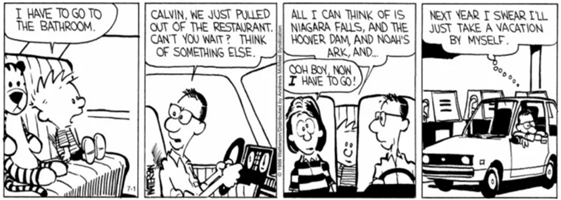
Available at: https://www.gocomics.com/calvinandhobbes/2026/07/01
In the sentence "Think of something else," the word else means:
Ano: 2026
Banca:
Avança SP
Órgão:
Prefeitura de Ubatuba - SP
Prova:
Avança SP - 2026 - Prefeitura de Ubatuba - SP - Professor da Educação Básica II - Inglês |
Q4247266
Inglês

Observe the image, which shows the three tallest buildings in the world, and mark the alternative that uses comparatives and superlatives correctly, according to the information shown in the image.
Ano: 2026
Banca:
Avança SP
Órgão:
Prefeitura de Ubatuba - SP
Prova:
Avança SP - 2026 - Prefeitura de Ubatuba - SP - Professor da Educação Básica II - Inglês |
Q4247265
Inglês
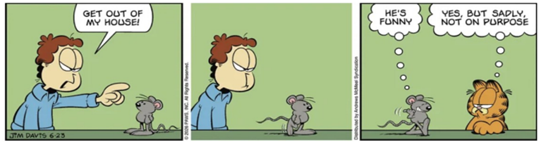
Available at: https://www.gocomics.com/garfield/2026/06/23
In the last panel, the cat says the man is funny, "but sadly, not on purpose." In this context, the expression "not on purpose" suggests that the man's comic effect is:
Ano: 2026
Banca:
Avança SP
Órgão:
Prefeitura de Ubatuba - SP
Prova:
Avança SP - 2026 - Prefeitura de Ubatuba - SP - Professor da Educação Básica II - Inglês |
Q4247264
Inglês
The sentence must report a completed action that occurred at a definite time in the past. Choose the
correct alternative.
Ano: 2026
Banca:
Avança SP
Órgão:
Prefeitura de Ubatuba - SP
Prova:
Avança SP - 2026 - Prefeitura de Ubatuba - SP - Professor da Educação Básica II - Inglês |
Q4247262
Inglês
Mark the alternative in which the "-ed" ending of the highlighted word is pronounced as /1d/.
Ano: 2026
Banca:
Avança SP
Órgão:
Prefeitura de Ubatuba - SP
Prova:
Avança SP - 2026 - Prefeitura de Ubatuba - SP - Professor da Educação Básica II - Inglês |
Q4247261
Inglês
Mark the alternative in which the highlighted
word shows a pronunciation pattern different
from the others regarding the sound of the
vowel(s).
Ano: 2026
Banca:
Avança SP
Órgão:
Prefeitura de Ubatuba - SP
Prova:
Avança SP - 2026 - Prefeitura de Ubatuba - SP - Professor da Educação Básica II - Inglês |
Q4247260
Inglês
Match each sentence in Column I to its
conditional type in Column II. Then choose the
alternative with the correct sequence.
Column I
1 - If you don't water plants, they die.
2 - If I win the lottery, I will buy a house.
3 - If I had a car, I would drive to work.
4 - If we had booked earlier, we would have paid less.
Column II
( ) First conditional
( ) Third conditional
( ) Zero conditional
( ) Second conditional
Column I
1 - If you don't water plants, they die.
2 - If I win the lottery, I will buy a house.
3 - If I had a car, I would drive to work.
4 - If we had booked earlier, we would have paid less.
Column II
( ) First conditional
( ) Third conditional
( ) Zero conditional
( ) Second conditional
Ano: 2026
Banca:
Avança SP
Órgão:
Prefeitura de Ubatuba - SP
Prova:
Avança SP - 2026 - Prefeitura de Ubatuba - SP - Professor da Educação Básica II - Inglês |
Q4247259
Inglês
In a genre-based approach to English teaching,
the key link established in the learning process
is between language learning and:
Ano: 2026
Banca:
Avança SP
Órgão:
Prefeitura de Ubatuba - SP
Prova:
Avança SP - 2026 - Prefeitura de Ubatuba - SP - Professor da Educação Básica II - Inglês |
Q4247258
Inglês
In the passive voice, the focus shifts from who
performs the action to what receives it. To
transform an active sentence into a passive one,
the object of the active sentence becomes the
subject; the verb is formed with the appropriate
tense of the verb "to be" + the past participle of
the main verb; and the original subject (the
agent) may be introduced by "by," when
relevant. The verb tense of the active sentence
must be preserved in the passive construction.
Consider the following sentence in the active voice:
"The manager approved the new project last week."
Mark the alternative that correctly transforms the sentence above into the passive voice.
Consider the following sentence in the active voice:
"The manager approved the new project last week."
Mark the alternative that correctly transforms the sentence above into the passive voice.
Ano: 2026
Banca:
Avança SP
Órgão:
Prefeitura de Ubatuba - SP
Prova:
Avança SP - 2026 - Prefeitura de Ubatuba - SP - Professor da Educação Básica II - Inglês |
Q4247257
Inglês
Mark the alternative in which the conditional
sentence is grammatically correct.
Ano: 2026
Banca:
Avança SP
Órgão:
Prefeitura de Ubatuba - SP
Prova:
Avança SP - 2026 - Prefeitura de Ubatuba - SP - Professor da Educação Básica II - Inglês |
Q4247256
Inglês
Choose the option that correctly completes the
sentence with the appropriate words, in the
order they appear.
"Our department will (1) the additional equipment, (2) the finance team approves the budget and the supplier sends the full (3) by the end of the week."
"Our department will (1) the additional equipment, (2) the finance team approves the budget and the supplier sends the full (3) by the end of the week."

 Conheça nossos planos