Questões de Concurso Sobre inglês
Foram encontradas 25.503 questões
Texto para a questão
How to write, according to the bestselling novelist of all time
Everyone has a book inside them, or so the saying goes. In this day and age, those who want help coaxing the story out can receive instruction online from some of the world’s most popular authors. Lee Child and Harlan Coben, who have sold hundreds of millions of books between them, teach thriller writing; Jojo Moyes offers tips on romance yarns. And now Agatha Christie, the world’s bestselling writer of fiction, with more than 2 bn copies sold, is instructing viewers in the art of the whodunnit—even though she died in 1976.
Christie’s course is the result not of recently unearthed archival footage, but artificial intelligence. BBC Maestro, an online education platform, brought the idea to the Christie family, which still controls 36% of Agatha Christie Ltd (AMC Networks, an entertainment giant, owns the rest). They consented to bring the “Queen of Crime” back to life, to teach the mysterious flair of her style.
A team of almost 100—including Christie scholars as well as AI specialists—worked on the project. Vivien Keene, an actor, provided a stand-in for the author; Christie’s face was mapped on top. Crucially, Ms Keene’s eerily credible performance employs only Christie’s words: a tapestry of extracts from her own writings, notebooks and interviews.
In this way, the creator of Hercule Poirot and Miss Marple shares handy writing tips, such as the neatest ways to dispatch fictional victims. Firearms bring ballistic complications. Be wary of poisons, as each works in a unique way. Novice authors can “always rely on a dull blow to the head”.
Many of Christie’s writing rules concern playing fair. She practiced misdirection and laid “false clues” alongside true ones, but insisted that her plots do not cheat or hide key evidence: “I never deceive my readers.” In sections devoted to plot and setting, she explains how to plant key clues “in plain sight” and plan events with detailed “maps and diagrams”. She advises viewers to watch and listen to strangers on buses or in shops and to spice up motives for murder with a love triangle.
Some of the most engaging sections come from “An Autobiography”, published posthumously in 1977: Poirot’s origins among the Belgian refugees who reached Devon during the First World War, or fond memories of her charismatic, feckless brother Monty, who had “broken the laws of a lot of countries” and provided the inspiration for many of Christie’s “wayward young male figures”.
By relying on Christie’s own words, BBC Maestro hopes to avoid charges of creepy pedagogical deepfakery. At the same time, it is that focus on quotation which limits the course’s value as a creative-writing toolbox. The woman born Agatha Miller in 1890 speaks from her own time and place. She tells wannabe writers to use snowstorms to isolate murder scenes (as they bring down telephone wires) and cites the clue-generating value of railway timetables, ink stains and cut-up newspapers. These charming details are irrelevant to modern scribblers.
Yet anachronism is not the course’s biggest flaw: it is that it lacks vitality. Christie enjoyed a richer life than learners will glean from this prim phantom: she was a wartime nurse (hence her deep knowledge of toxins), thwarted opera singer, keen surfer and archaeological expert who joined her second husband on digs in Iraq. Furthermore, her juiciest mysteries smash crime-writing rules. The narrator does it; the detective does it; all the suspects do it. Sometimes there’s no detective: in “The Hollow” (1946) Christie regretted that Poirot appeared at all. With its working-class antihero and gothic darkness, “Endless Night” (1967) shatters every Christie cliché. This high-tech, retrofitted version of the author feels smaller and flatter than the ingenious original.
The Economist, May, 8th, 2025
Assinale a alternativa que transforma a recomendação direta citada em um pedido ou sugestão mais polida, sem alteração do seu sentido básico.
Read text III to answer the following question.
TEXT III
Realities of Race, by Mike Peed
What’s the difference between an African-American and an American-African? From such a distinction springs a deep-seated discussion of race in Chimamanda Ngozi Adichie’s third novel, “Americanah.” Adichie, born in Nigeria but now living both in her homeland and in the United States, is an extraordinarily self-aware thinker and writer, possessing the abil ity to lambaste society without sneering or patronizing or polemicizing. For her, it seems no great feat to balance high literary intentions with broad social critique. “Americanah” examines blackness in America, Nigeria and Britain, but it’s also a steady-handed dissection of the universal human experience — a platitude made fresh by the accuracy of Adichie’s obser vations. […]
“Americanah” tells the story of a smart, strong-willed Nigerian woman named Ifemelu who, after she leaves Africa for America, endures several harrowing years of near destitution before graduating from college, starting a blog entitled “Raceteenth or Various Observations About American Blacks (Those Formerly Known as Negroes) by a Non-American Black” and winning a fellowship at Princeton (as Adichie once did; she has acknowledged that many of Ifemelu’s experiences are her own). Ever hovering in Ifemelu’s thoughts is her high school boyfriend, Obinze, an equally intelligent if gentler, more self-effacing Nigerian, who outstays his visa and takes illegal jobs in London. (When Obinze trips and falls to the ground, a co-worker shouts, “His knee is bad because he’s a knee-grow!”)
Ifemelu and Obinze represent a new kind of immigrant, “raised well fed and watered but mired in dissatisfaction.” They aren’t fleeing war or starvation but “the oppressive lethargy of choicelessness.” Where Obinze fails — soon enough, he is deported — Ifemelu thrives, in part because she seeks authenticity. […]
Early on, a horrific event leaves Ifemelu reeling, and years later, when she returns to Nigeria, she’s still haunted by it. Meantime, back in Lagos, Obinze has found wealth as a property developer. Though the book threatens to morph into a simple story of their reunion, it stretches into a scalding assessment of Nigeria, a country too proud to have patience for “Americanahs” — big shots who return from abroad to belittle their countrymen — and yet one that, sometimes unwitting ly, endorses foreign values. (Of the winter scenery in a school’s Christmas pageant, a parent asks, “Are they teaching chil dren that a Christmas is not a real Christmas unless snow falls like it does abroad?”)
“Americanah” is witheringly trenchant and hugely empathetic, both worldly and geographically precise, a novel that holds the discomfiting realities of our times fearlessly before us. It never feels false.
(Adapted from: https://www.nytimes.com/2013/06/09/books/review/americanah-by-chimamanda-ngozi-adichie.html)
According to Peed’s book review “Realities of Race” write true ( T ) or false ( F ) in the following sentences:
( ) Chimamanda Ngozi Adichie uses the distinction between “African-American” and “American-African” to promote a thorough discussion of racial issues in her work Americanah.
( ) The author is described as a highly self-aware thinker and writer, capable of criticizing society through disdain and ag gression.
( ) Adichie's book does not aim to make social critiques; instead, it focuses solely on literary analysis and the construction of a fictional narrative.
( ) Americanah examines “blackness” in the United States, Nigeria, and Great Britain, proposing a reflection on the univer sal human experience.
( ) The author successfully balances her literary intentions with a comprehensive social critique, making her observations about reality more relevant and accurate.
Mark the correct alternative.
Read text III to answer the following question.
TEXT III
Realities of Race, by Mike Peed
What’s the difference between an African-American and an American-African? From such a distinction springs a deep-seated discussion of race in Chimamanda Ngozi Adichie’s third novel, “Americanah.” Adichie, born in Nigeria but now living both in her homeland and in the United States, is an extraordinarily self-aware thinker and writer, possessing the abil ity to lambaste society without sneering or patronizing or polemicizing. For her, it seems no great feat to balance high literary intentions with broad social critique. “Americanah” examines blackness in America, Nigeria and Britain, but it’s also a steady-handed dissection of the universal human experience — a platitude made fresh by the accuracy of Adichie’s obser vations. […]
“Americanah” tells the story of a smart, strong-willed Nigerian woman named Ifemelu who, after she leaves Africa for America, endures several harrowing years of near destitution before graduating from college, starting a blog entitled “Raceteenth or Various Observations About American Blacks (Those Formerly Known as Negroes) by a Non-American Black” and winning a fellowship at Princeton (as Adichie once did; she has acknowledged that many of Ifemelu’s experiences are her own). Ever hovering in Ifemelu’s thoughts is her high school boyfriend, Obinze, an equally intelligent if gentler, more self-effacing Nigerian, who outstays his visa and takes illegal jobs in London. (When Obinze trips and falls to the ground, a co-worker shouts, “His knee is bad because he’s a knee-grow!”)
Ifemelu and Obinze represent a new kind of immigrant, “raised well fed and watered but mired in dissatisfaction.” They aren’t fleeing war or starvation but “the oppressive lethargy of choicelessness.” Where Obinze fails — soon enough, he is deported — Ifemelu thrives, in part because she seeks authenticity. […]
Early on, a horrific event leaves Ifemelu reeling, and years later, when she returns to Nigeria, she’s still haunted by it. Meantime, back in Lagos, Obinze has found wealth as a property developer. Though the book threatens to morph into a simple story of their reunion, it stretches into a scalding assessment of Nigeria, a country too proud to have patience for “Americanahs” — big shots who return from abroad to belittle their countrymen — and yet one that, sometimes unwitting ly, endorses foreign values. (Of the winter scenery in a school’s Christmas pageant, a parent asks, “Are they teaching chil dren that a Christmas is not a real Christmas unless snow falls like it does abroad?”)
“Americanah” is witheringly trenchant and hugely empathetic, both worldly and geographically precise, a novel that holds the discomfiting realities of our times fearlessly before us. It never feels false.
(Adapted from: https://www.nytimes.com/2013/06/09/books/review/americanah-by-chimamanda-ngozi-adichie.html)
Read text III to answer the following question.
TEXT III
Realities of Race, by Mike Peed
What’s the difference between an African-American and an American-African? From such a distinction springs a deep-seated discussion of race in Chimamanda Ngozi Adichie’s third novel, “Americanah.” Adichie, born in Nigeria but now living both in her homeland and in the United States, is an extraordinarily self-aware thinker and writer, possessing the abil ity to lambaste society without sneering or patronizing or polemicizing. For her, it seems no great feat to balance high literary intentions with broad social critique. “Americanah” examines blackness in America, Nigeria and Britain, but it’s also a steady-handed dissection of the universal human experience — a platitude made fresh by the accuracy of Adichie’s obser vations. […]
“Americanah” tells the story of a smart, strong-willed Nigerian woman named Ifemelu who, after she leaves Africa for America, endures several harrowing years of near destitution before graduating from college, starting a blog entitled “Raceteenth or Various Observations About American Blacks (Those Formerly Known as Negroes) by a Non-American Black” and winning a fellowship at Princeton (as Adichie once did; she has acknowledged that many of Ifemelu’s experiences are her own). Ever hovering in Ifemelu’s thoughts is her high school boyfriend, Obinze, an equally intelligent if gentler, more self-effacing Nigerian, who outstays his visa and takes illegal jobs in London. (When Obinze trips and falls to the ground, a co-worker shouts, “His knee is bad because he’s a knee-grow!”)
Ifemelu and Obinze represent a new kind of immigrant, “raised well fed and watered but mired in dissatisfaction.” They aren’t fleeing war or starvation but “the oppressive lethargy of choicelessness.” Where Obinze fails — soon enough, he is deported — Ifemelu thrives, in part because she seeks authenticity. […]
Early on, a horrific event leaves Ifemelu reeling, and years later, when she returns to Nigeria, she’s still haunted by it. Meantime, back in Lagos, Obinze has found wealth as a property developer. Though the book threatens to morph into a simple story of their reunion, it stretches into a scalding assessment of Nigeria, a country too proud to have patience for “Americanahs” — big shots who return from abroad to belittle their countrymen — and yet one that, sometimes unwitting ly, endorses foreign values. (Of the winter scenery in a school’s Christmas pageant, a parent asks, “Are they teaching chil dren that a Christmas is not a real Christmas unless snow falls like it does abroad?”)
“Americanah” is witheringly trenchant and hugely empathetic, both worldly and geographically precise, a novel that holds the discomfiting realities of our times fearlessly before us. It never feels false.
(Adapted from: https://www.nytimes.com/2013/06/09/books/review/americanah-by-chimamanda-ngozi-adichie.html)
Read text III to answer the following question.
TEXT III
Realities of Race, by Mike Peed
What’s the difference between an African-American and an American-African? From such a distinction springs a deep-seated discussion of race in Chimamanda Ngozi Adichie’s third novel, “Americanah.” Adichie, born in Nigeria but now living both in her homeland and in the United States, is an extraordinarily self-aware thinker and writer, possessing the abil ity to lambaste society without sneering or patronizing or polemicizing. For her, it seems no great feat to balance high literary intentions with broad social critique. “Americanah” examines blackness in America, Nigeria and Britain, but it’s also a steady-handed dissection of the universal human experience — a platitude made fresh by the accuracy of Adichie’s obser vations. […]
“Americanah” tells the story of a smart, strong-willed Nigerian woman named Ifemelu who, after she leaves Africa for America, endures several harrowing years of near destitution before graduating from college, starting a blog entitled “Raceteenth or Various Observations About American Blacks (Those Formerly Known as Negroes) by a Non-American Black” and winning a fellowship at Princeton (as Adichie once did; she has acknowledged that many of Ifemelu’s experiences are her own). Ever hovering in Ifemelu’s thoughts is her high school boyfriend, Obinze, an equally intelligent if gentler, more self-effacing Nigerian, who outstays his visa and takes illegal jobs in London. (When Obinze trips and falls to the ground, a co-worker shouts, “His knee is bad because he’s a knee-grow!”)
Ifemelu and Obinze represent a new kind of immigrant, “raised well fed and watered but mired in dissatisfaction.” They aren’t fleeing war or starvation but “the oppressive lethargy of choicelessness.” Where Obinze fails — soon enough, he is deported — Ifemelu thrives, in part because she seeks authenticity. […]
Early on, a horrific event leaves Ifemelu reeling, and years later, when she returns to Nigeria, she’s still haunted by it. Meantime, back in Lagos, Obinze has found wealth as a property developer. Though the book threatens to morph into a simple story of their reunion, it stretches into a scalding assessment of Nigeria, a country too proud to have patience for “Americanahs” — big shots who return from abroad to belittle their countrymen — and yet one that, sometimes unwitting ly, endorses foreign values. (Of the winter scenery in a school’s Christmas pageant, a parent asks, “Are they teaching chil dren that a Christmas is not a real Christmas unless snow falls like it does abroad?”)
“Americanah” is witheringly trenchant and hugely empathetic, both worldly and geographically precise, a novel that holds the discomfiting realities of our times fearlessly before us. It never feels false.
(Adapted from: https://www.nytimes.com/2013/06/09/books/review/americanah-by-chimamanda-ngozi-adichie.html)
Read text III to answer the following question.
TEXT III
Realities of Race, by Mike Peed
What’s the difference between an African-American and an American-African? From such a distinction springs a deep-seated discussion of race in Chimamanda Ngozi Adichie’s third novel, “Americanah.” Adichie, born in Nigeria but now living both in her homeland and in the United States, is an extraordinarily self-aware thinker and writer, possessing the abil ity to lambaste society without sneering or patronizing or polemicizing. For her, it seems no great feat to balance high literary intentions with broad social critique. “Americanah” examines blackness in America, Nigeria and Britain, but it’s also a steady-handed dissection of the universal human experience — a platitude made fresh by the accuracy of Adichie’s obser vations. […]
“Americanah” tells the story of a smart, strong-willed Nigerian woman named Ifemelu who, after she leaves Africa for America, endures several harrowing years of near destitution before graduating from college, starting a blog entitled “Raceteenth or Various Observations About American Blacks (Those Formerly Known as Negroes) by a Non-American Black” and winning a fellowship at Princeton (as Adichie once did; she has acknowledged that many of Ifemelu’s experiences are her own). Ever hovering in Ifemelu’s thoughts is her high school boyfriend, Obinze, an equally intelligent if gentler, more self-effacing Nigerian, who outstays his visa and takes illegal jobs in London. (When Obinze trips and falls to the ground, a co-worker shouts, “His knee is bad because he’s a knee-grow!”)
Ifemelu and Obinze represent a new kind of immigrant, “raised well fed and watered but mired in dissatisfaction.” They aren’t fleeing war or starvation but “the oppressive lethargy of choicelessness.” Where Obinze fails — soon enough, he is deported — Ifemelu thrives, in part because she seeks authenticity. […]
Early on, a horrific event leaves Ifemelu reeling, and years later, when she returns to Nigeria, she’s still haunted by it. Meantime, back in Lagos, Obinze has found wealth as a property developer. Though the book threatens to morph into a simple story of their reunion, it stretches into a scalding assessment of Nigeria, a country too proud to have patience for “Americanahs” — big shots who return from abroad to belittle their countrymen — and yet one that, sometimes unwitting ly, endorses foreign values. (Of the winter scenery in a school’s Christmas pageant, a parent asks, “Are they teaching chil dren that a Christmas is not a real Christmas unless snow falls like it does abroad?”)
“Americanah” is witheringly trenchant and hugely empathetic, both worldly and geographically precise, a novel that holds the discomfiting realities of our times fearlessly before us. It never feels false.
(Adapted from: https://www.nytimes.com/2013/06/09/books/review/americanah-by-chimamanda-ngozi-adichie.html)
Text III is a
Read text II to answer question:
TEXT II
"Schön’s work has restructured how professionals conceive their practice and how they go about learning from ex perience. At the very heart of Schön’s theory lies reflection in action; that is, professionals are supposed to learn, not just to reflect after the fact but amidst action. Indeed, this approach to learning and professional development has been a central cornerstone of the training and education of practitioners across many fields. Schön defines reflection as the ability of pro fessionals to examine their actions and decisions to understand and practice with effectiveness better. The theorist is based on two major types of reflection: reflection in action and reflection on action”.
(Adapted from : https://acadfundu.com/what-is-donald-schons-theory-of-reflective-practice/)
As regards Text II, analyse the assertions below:
I. Schön’s approach has been central exclusively to education field.
II. Schön defines reflection as the ability of professionals to critically examine their actions and decisions to improve their effectiveness in practice.
III. Schön’s work is based on how professionals learn from theory.
Choose the correct answer.
Read text I to answer the question.
TEXT I
Teachers in the Movement: Pedagogy, Activism, and Freedom
In this year's Presidential Address, historian Derrick P. Alridge __________ his current research project, Teachers in the Movement: Pedagogy, Activism, and Freedom. The project builds on recent literature about teachers as activists be tween 1950 and 1980 and explores how and what secondary and postsecondary teachers taught. Focusing on teachers in Maryland, Virginia, North Carolina, South Carolina, and Georgia, the project investigates teachers' roles as agents of social change through teaching the ideals of freedom during the most significant social movement in the United States in the twentieth century. Drawing on oral history and archival research, the project plans to produce five hundred videotaped interviews that will generate extensive firsthand knowledge and fresh perspectives about teachers in the civil rights move ment. By examining teachers' pedagogical activism during this period of rapid social change, Alridge hopes to inspire and inform educators teaching in the midst of today's freedom and social justice movements.
(Disponível em: https://eric.ed.gov/?id=EJ1255911)
Read text I to answer the question.
TEXT I
Teachers in the Movement: Pedagogy, Activism, and Freedom
In this year's Presidential Address, historian Derrick P. Alridge __________ his current research project, Teachers in the Movement: Pedagogy, Activism, and Freedom. The project builds on recent literature about teachers as activists be tween 1950 and 1980 and explores how and what secondary and postsecondary teachers taught. Focusing on teachers in Maryland, Virginia, North Carolina, South Carolina, and Georgia, the project investigates teachers' roles as agents of social change through teaching the ideals of freedom during the most significant social movement in the United States in the twentieth century. Drawing on oral history and archival research, the project plans to produce five hundred videotaped interviews that will generate extensive firsthand knowledge and fresh perspectives about teachers in the civil rights move ment. By examining teachers' pedagogical activism during this period of rapid social change, Alridge hopes to inspire and inform educators teaching in the midst of today's freedom and social justice movements.
(Disponível em: https://eric.ed.gov/?id=EJ1255911)
Read text I to answer the question.
TEXT I
Teachers in the Movement: Pedagogy, Activism, and Freedom
In this year's Presidential Address, historian Derrick P. Alridge __________ his current research project, Teachers in the Movement: Pedagogy, Activism, and Freedom. The project builds on recent literature about teachers as activists be tween 1950 and 1980 and explores how and what secondary and postsecondary teachers taught. Focusing on teachers in Maryland, Virginia, North Carolina, South Carolina, and Georgia, the project investigates teachers' roles as agents of social change through teaching the ideals of freedom during the most significant social movement in the United States in the twentieth century. Drawing on oral history and archival research, the project plans to produce five hundred videotaped interviews that will generate extensive firsthand knowledge and fresh perspectives about teachers in the civil rights move ment. By examining teachers' pedagogical activism during this period of rapid social change, Alridge hopes to inspire and inform educators teaching in the midst of today's freedom and social justice movements.
(Disponível em: https://eric.ed.gov/?id=EJ1255911)
Read text I to answer the question.
TEXT I
Teachers in the Movement: Pedagogy, Activism, and Freedom
In this year's Presidential Address, historian Derrick P. Alridge __________ his current research project, Teachers in the Movement: Pedagogy, Activism, and Freedom. The project builds on recent literature about teachers as activists be tween 1950 and 1980 and explores how and what secondary and postsecondary teachers taught. Focusing on teachers in Maryland, Virginia, North Carolina, South Carolina, and Georgia, the project investigates teachers' roles as agents of social change through teaching the ideals of freedom during the most significant social movement in the United States in the twentieth century. Drawing on oral history and archival research, the project plans to produce five hundred videotaped interviews that will generate extensive firsthand knowledge and fresh perspectives about teachers in the civil rights move ment. By examining teachers' pedagogical activism during this period of rapid social change, Alridge hopes to inspire and inform educators teaching in the midst of today's freedom and social justice movements.
(Disponível em: https://eric.ed.gov/?id=EJ1255911)
Em relação ao texto e com base no trecho apresentado, qual é a principal preocupação destacada pelo estudo finlandês?
Em relação ao texto apresentado, qual das seguintes reestruturações desse trecho mantém o sentido original, manifesta ênfase semelhante e é gramaticalmente correta?

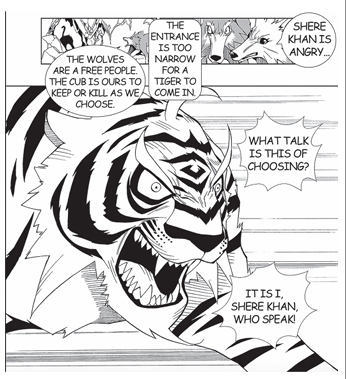
The words of the tiger in the last frame are an example of
Leia a tira.

(https://www.gocomics.com/calvinandhobbes/1993/01/25)
No diálogo entre os personagens, o primeiro uso de um substantivo como verbo é: