Questões de Concurso Sobre inglês
Foram encontradas 25.999 questões


Ano: 2025
Banca:
LEGALLE Concursos
Órgão:
Prefeitura de Caxias do Sul - RS
Prova:
LEGALLE Concursos - 2025 - Prefeitura de Caxias do Sul - RS - Professor de Língua Estrangeira – Inglês |
Q3969211
Inglês
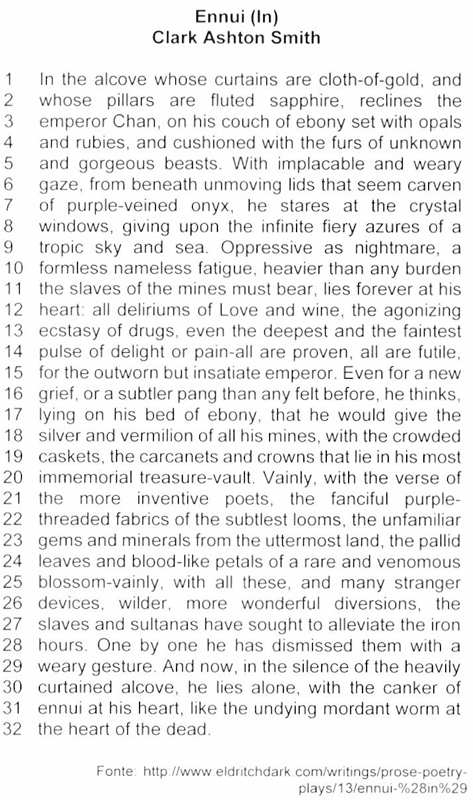
Which lexical item among the options below may, through its orthographic or phonetic resemblance to a Portuguese term, mislead an uncritical L2 reader into a false cognate interpretation when considered in isolation? Mark the CORRECT alternative, considering T for True and F for False.
( ) casket (l.30)
( ) mineral (l.23)
( ) mordant (l.31)
( ) crown (l.19)
( ) casket (l.30)
( ) mineral (l.23)
( ) mordant (l.31)
( ) crown (l.19)
Ano: 2025
Banca:
LEGALLE Concursos
Órgão:
Prefeitura de Caxias do Sul - RS
Prova:
LEGALLE Concursos - 2025 - Prefeitura de Caxias do Sul - RS - Professor de Língua Estrangeira – Inglês |
Q3969210
Inglês
In the sentence Oppressive as nightmare, a formless nameless fatigue, heavier than any burden the slaves of the mines must bear, lies forever at his heart (l.9–12), the simile "Oppressive as nightmare" performs a distinct textual function. It primarily acts as a(n) ______, designed to accentuate the atmosphere of metaphysical oppression and existential suffocation permeating the emperor's condition, rather than to ______ or to ______. Which option correctly completes the blanks in order? Mark the CORRECT alternative.
Ano: 2025
Banca:
LEGALLE Concursos
Órgão:
Prefeitura de Caxias do Sul - RS
Prova:
LEGALLE Concursos - 2025 - Prefeitura de Caxias do Sul - RS - Professor de Língua Estrangeira – Inglês |
Q3969209
Inglês
Considering the thematic substratum of the passage, what constitutes the predominant conceptual axis underpinning the text's imagery and narrative exposition? Mark the CORRECT alternative.
Q3929654
Inglês
Texto associado
Text 1A3-II
The argument for the existence of life in different places in
the universe can lead to endless and aimless (but fascinating)
speculation. Why assume that aliens so far advanced
technologically are still bound by the chains of aging bodies?
As we see our own technology advancing, and our minds
becoming ever more entangled with digital devices, we can
envision a kind of transhuman future whereby our mind’s
essence, what we (loosely) identify with our inner self and
memories, becomes immaterial, soullike, tethered to reality
through information alone. In his novel 2001: A Space Odyssey,
Arthur C. Clarke speculated that aliens would have broken away
from carbon-based and robotic machine structures so “that the
mind would eventually free itself from matter (…) and if there is
anything beyond that, its name could only be God.”
This is where astrotheology begins, as we envision aliens
as the techno-version of godlike creatures, with the obvious
subtext that one day we are going to get there too. So, not only is
their technology magic to us, but their very existence becomes
equivalent to a supernatural presence — omniscient,
omnipresent, and undetectable by our feeble human senses and
machines. Such aliens are indistinguishable from gods inhabiting
the heavenly realm, being as elusive as countless deities have
been throughout human history. They exist only in that intangible
dimension of faith.
Marcelo Gleiser. The dawn of a mindful universe: a manifesto for humanity’s future.
HarperOne, San Francisco (CA) (adapted).
The main objective of text 1A3-II is to
Q3929653
Inglês
Texto associado
Text 1A3-II
The argument for the existence of life in different places in
the universe can lead to endless and aimless (but fascinating)
speculation. Why assume that aliens so far advanced
technologically are still bound by the chains of aging bodies?
As we see our own technology advancing, and our minds
becoming ever more entangled with digital devices, we can
envision a kind of transhuman future whereby our mind’s
essence, what we (loosely) identify with our inner self and
memories, becomes immaterial, soullike, tethered to reality
through information alone. In his novel 2001: A Space Odyssey,
Arthur C. Clarke speculated that aliens would have broken away
from carbon-based and robotic machine structures so “that the
mind would eventually free itself from matter (…) and if there is
anything beyond that, its name could only be God.”
This is where astrotheology begins, as we envision aliens
as the techno-version of godlike creatures, with the obvious
subtext that one day we are going to get there too. So, not only is
their technology magic to us, but their very existence becomes
equivalent to a supernatural presence — omniscient,
omnipresent, and undetectable by our feeble human senses and
machines. Such aliens are indistinguishable from gods inhabiting
the heavenly realm, being as elusive as countless deities have
been throughout human history. They exist only in that intangible
dimension of faith.
Marcelo Gleiser. The dawn of a mindful universe: a manifesto for humanity’s future.
HarperOne, San Francisco (CA) (adapted).
The word “envision”, in “as we envision aliens” (first sentence of
the second paragraph of text 1A3-II), has a similar meaning to
Q3929652
Inglês
Texto associado
Text 1A3-II
The argument for the existence of life in different places in
the universe can lead to endless and aimless (but fascinating)
speculation. Why assume that aliens so far advanced
technologically are still bound by the chains of aging bodies?
As we see our own technology advancing, and our minds
becoming ever more entangled with digital devices, we can
envision a kind of transhuman future whereby our mind’s
essence, what we (loosely) identify with our inner self and
memories, becomes immaterial, soullike, tethered to reality
through information alone. In his novel 2001: A Space Odyssey,
Arthur C. Clarke speculated that aliens would have broken away
from carbon-based and robotic machine structures so “that the
mind would eventually free itself from matter (…) and if there is
anything beyond that, its name could only be God.”
This is where astrotheology begins, as we envision aliens
as the techno-version of godlike creatures, with the obvious
subtext that one day we are going to get there too. So, not only is
their technology magic to us, but their very existence becomes
equivalent to a supernatural presence — omniscient,
omnipresent, and undetectable by our feeble human senses and
machines. Such aliens are indistinguishable from gods inhabiting
the heavenly realm, being as elusive as countless deities have
been throughout human history. They exist only in that intangible
dimension of faith.
Marcelo Gleiser. The dawn of a mindful universe: a manifesto for humanity’s future.
HarperOne, San Francisco (CA) (adapted).
With the question “Why assume that aliens so far advanced
technologically are still bound by the chains of aging bodies?”
(second sentence of text 1A3-II), the author is
Q3929651
Inglês
Texto associado
Text 1A3-II
The argument for the existence of life in different places in
the universe can lead to endless and aimless (but fascinating)
speculation. Why assume that aliens so far advanced
technologically are still bound by the chains of aging bodies?
As we see our own technology advancing, and our minds
becoming ever more entangled with digital devices, we can
envision a kind of transhuman future whereby our mind’s
essence, what we (loosely) identify with our inner self and
memories, becomes immaterial, soullike, tethered to reality
through information alone. In his novel 2001: A Space Odyssey,
Arthur C. Clarke speculated that aliens would have broken away
from carbon-based and robotic machine structures so “that the
mind would eventually free itself from matter (…) and if there is
anything beyond that, its name could only be God.”
This is where astrotheology begins, as we envision aliens
as the techno-version of godlike creatures, with the obvious
subtext that one day we are going to get there too. So, not only is
their technology magic to us, but their very existence becomes
equivalent to a supernatural presence — omniscient,
omnipresent, and undetectable by our feeble human senses and
machines. Such aliens are indistinguishable from gods inhabiting
the heavenly realm, being as elusive as countless deities have
been throughout human history. They exist only in that intangible
dimension of faith.
Marcelo Gleiser. The dawn of a mindful universe: a manifesto for humanity’s future.
HarperOne, San Francisco (CA) (adapted).
In text 1A3-II, the author
Q3929650
Inglês
Texto associado
Text 1A3-II
The argument for the existence of life in different places in
the universe can lead to endless and aimless (but fascinating)
speculation. Why assume that aliens so far advanced
technologically are still bound by the chains of aging bodies?
As we see our own technology advancing, and our minds
becoming ever more entangled with digital devices, we can
envision a kind of transhuman future whereby our mind’s
essence, what we (loosely) identify with our inner self and
memories, becomes immaterial, soullike, tethered to reality
through information alone. In his novel 2001: A Space Odyssey,
Arthur C. Clarke speculated that aliens would have broken away
from carbon-based and robotic machine structures so “that the
mind would eventually free itself from matter (…) and if there is
anything beyond that, its name could only be God.”
This is where astrotheology begins, as we envision aliens
as the techno-version of godlike creatures, with the obvious
subtext that one day we are going to get there too. So, not only is
their technology magic to us, but their very existence becomes
equivalent to a supernatural presence — omniscient,
omnipresent, and undetectable by our feeble human senses and
machines. Such aliens are indistinguishable from gods inhabiting
the heavenly realm, being as elusive as countless deities have
been throughout human history. They exist only in that intangible
dimension of faith.
Marcelo Gleiser. The dawn of a mindful universe: a manifesto for humanity’s future.
HarperOne, San Francisco (CA) (adapted).
Maintaining the original meaning of text 1A3-II, the fragment
“but their very existence becomes equivalent to a supernatural
presence” (second sentence of the second paragraph) can be
correctly replaced with
Q3929649
Inglês
Texto associado
Text 1A3-I
Art and technology have long inspired each other, but
recent advancements are driving their fusion like never before.
From AI-generated art and immersive experiences to new
ownership models, the creative landscape is evolving in ways we
could barely imagine a few years ago. This fusion of creativity
and innovation isn’t just adding to the world of art. It’s
redefining it, making us rethink what art can be and who has the
tools to create it. One such innovation is interactive art.
With interactive art, artists can break down traditional
boundaries between the creator and the viewer. Participatory art
involves the audience directly, allowing them to influence the
outcome of the artwork itself. Artists are using technologies like
motion tracking, sensors, and facial recognition to create
installations that change based on viewer movement, expression,
or even mood.
This level of interactivity invites viewers to move from
passive observation to active participation, making them a part of
the artwork’s story. This trend reflects a cultural shift toward
collaboration and personalization, where audiences expect to be
involved in the creative experience. Participatory art installations
are not only transforming gallery experiences but also allowing
viewers to experience art as an unfolding story that changes with
each interaction.
Petra Ivanigova. The Future of Art and Technology:
Key Trends Shaping the Creative Landscape. Internet: <https://medium.com> (adapted).
In the last sentence of text 1A3-I, the author
Q3929648
Inglês
Texto associado
Text 1A3-I
Art and technology have long inspired each other, but
recent advancements are driving their fusion like never before.
From AI-generated art and immersive experiences to new
ownership models, the creative landscape is evolving in ways we
could barely imagine a few years ago. This fusion of creativity
and innovation isn’t just adding to the world of art. It’s
redefining it, making us rethink what art can be and who has the
tools to create it. One such innovation is interactive art.
With interactive art, artists can break down traditional
boundaries between the creator and the viewer. Participatory art
involves the audience directly, allowing them to influence the
outcome of the artwork itself. Artists are using technologies like
motion tracking, sensors, and facial recognition to create
installations that change based on viewer movement, expression,
or even mood.
This level of interactivity invites viewers to move from
passive observation to active participation, making them a part of
the artwork’s story. This trend reflects a cultural shift toward
collaboration and personalization, where audiences expect to be
involved in the creative experience. Participatory art installations
are not only transforming gallery experiences but also allowing
viewers to experience art as an unfolding story that changes with
each interaction.
Petra Ivanigova. The Future of Art and Technology:
Key Trends Shaping the Creative Landscape. Internet: <https://medium.com> (adapted).
In the context of text 1A3-I, the pronoun “it” in “redefining it”
(fourth sentence of the first paragraph)
Q3929647
Inglês
Texto associado
Text 1A3-I
Art and technology have long inspired each other, but
recent advancements are driving their fusion like never before.
From AI-generated art and immersive experiences to new
ownership models, the creative landscape is evolving in ways we
could barely imagine a few years ago. This fusion of creativity
and innovation isn’t just adding to the world of art. It’s
redefining it, making us rethink what art can be and who has the
tools to create it. One such innovation is interactive art.
With interactive art, artists can break down traditional
boundaries between the creator and the viewer. Participatory art
involves the audience directly, allowing them to influence the
outcome of the artwork itself. Artists are using technologies like
motion tracking, sensors, and facial recognition to create
installations that change based on viewer movement, expression,
or even mood.
This level of interactivity invites viewers to move from
passive observation to active participation, making them a part of
the artwork’s story. This trend reflects a cultural shift toward
collaboration and personalization, where audiences expect to be
involved in the creative experience. Participatory art installations
are not only transforming gallery experiences but also allowing
viewers to experience art as an unfolding story that changes with
each interaction.
Petra Ivanigova. The Future of Art and Technology:
Key Trends Shaping the Creative Landscape. Internet: <https://medium.com> (adapted).
Choose the option in which is presented a word that could
correctly replace “barely” in the second sentence of the first
paragraph, without changing the original meaning of text 1A3-I.
Q3929646
Inglês
Texto associado
Text 1A3-I
Art and technology have long inspired each other, but
recent advancements are driving their fusion like never before.
From AI-generated art and immersive experiences to new
ownership models, the creative landscape is evolving in ways we
could barely imagine a few years ago. This fusion of creativity
and innovation isn’t just adding to the world of art. It’s
redefining it, making us rethink what art can be and who has the
tools to create it. One such innovation is interactive art.
With interactive art, artists can break down traditional
boundaries between the creator and the viewer. Participatory art
involves the audience directly, allowing them to influence the
outcome of the artwork itself. Artists are using technologies like
motion tracking, sensors, and facial recognition to create
installations that change based on viewer movement, expression,
or even mood.
This level of interactivity invites viewers to move from
passive observation to active participation, making them a part of
the artwork’s story. This trend reflects a cultural shift toward
collaboration and personalization, where audiences expect to be
involved in the creative experience. Participatory art installations
are not only transforming gallery experiences but also allowing
viewers to experience art as an unfolding story that changes with
each interaction.
Petra Ivanigova. The Future of Art and Technology:
Key Trends Shaping the Creative Landscape. Internet: <https://medium.com> (adapted).
According to text 1A3-I, art and technology
Ano: 2025
Banca:
CESPE / CEBRASPE
Órgão:
UNIFAL-MG
Prova:
CESPE / CEBRASPE - 2025 - UNIFAL-MG - Vestibular |
Q3928901
Inglês
Texto associado
Text 1A15
Last year, I had a strange dream. My father and I were
walking through a canal with difficulty as thousands of fish were
released around us. In the dream, I knew that the fish thought
they were drowning, as if they had to face death before becoming
adults. The next day, my father told me that when I was three, he
had taken me to see fish being put into a pond. I could not
remember it, but the vision had stayed in my mind. Memories,
like images, can return years later in unexpected ways.
Today, it is common to see old images suddenly appear
online. We spend hours looking at photos that record our daily
lives in ways never seen before. For young people under
twenty-five, who have grown up with social media, childhood is
no longer private or mysterious. According to Kate Eichhorn, a
media historian at the New School, this constant exposure is sure
to affect how identity develops, although we are not yet sure
exactly how.
Eichhorn explains that there are two sides. On the positive
side, children and teenagers have more control than before. In the
past, adults were the ones who decided how childhood should be
remembered, using books, photo albums, or home videos. Today,
young people can create and share their own images without
depending on adults. This gives them the power to tell their own
stories and decide what to remember about their lives.
On the negative side, social media can make it difficult to
leave the past behind. We are not the only ones posting—our
friends and families also share moments of our lives, often
without asking us. This makes it hard to forget mistakes or
change identities. Eichhorn warns that the danger now is not that
childhood disappears, but that it might never end, because the
past is always visible online.
It would, indeed, be surprising if we could see painful
memories as finished and gone. But most difficult experiences
are not captured on screens. Social media shows only part of life,
often the happy or triumphant side, and leaves out the tears and
struggles. What remains online is rarely the full truth, but
fragments that stay with us, shaping how we remember ourselves.
Nausicaa Renner. How Social Media Shapes Our Identity.
Internet:<www.newyorker.com> (adapted).
Choose the option in which the fragment “this constant exposure
is sure to affect how identity develops” (last sentence of the
second paragraph of text 1A15) is adequately translated into
Portuguese.
Ano: 2025
Banca:
CESPE / CEBRASPE
Órgão:
UNIFAL-MG
Prova:
CESPE / CEBRASPE - 2025 - UNIFAL-MG - Vestibular |
Q3928900
Inglês
Texto associado
Text 1A15
Last year, I had a strange dream. My father and I were
walking through a canal with difficulty as thousands of fish were
released around us. In the dream, I knew that the fish thought
they were drowning, as if they had to face death before becoming
adults. The next day, my father told me that when I was three, he
had taken me to see fish being put into a pond. I could not
remember it, but the vision had stayed in my mind. Memories,
like images, can return years later in unexpected ways.
Today, it is common to see old images suddenly appear
online. We spend hours looking at photos that record our daily
lives in ways never seen before. For young people under
twenty-five, who have grown up with social media, childhood is
no longer private or mysterious. According to Kate Eichhorn, a
media historian at the New School, this constant exposure is sure
to affect how identity develops, although we are not yet sure
exactly how.
Eichhorn explains that there are two sides. On the positive
side, children and teenagers have more control than before. In the
past, adults were the ones who decided how childhood should be
remembered, using books, photo albums, or home videos. Today,
young people can create and share their own images without
depending on adults. This gives them the power to tell their own
stories and decide what to remember about their lives.
On the negative side, social media can make it difficult to
leave the past behind. We are not the only ones posting—our
friends and families also share moments of our lives, often
without asking us. This makes it hard to forget mistakes or
change identities. Eichhorn warns that the danger now is not that
childhood disappears, but that it might never end, because the
past is always visible online.
It would, indeed, be surprising if we could see painful
memories as finished and gone. But most difficult experiences
are not captured on screens. Social media shows only part of life,
often the happy or triumphant side, and leaves out the tears and
struggles. What remains online is rarely the full truth, but
fragments that stay with us, shaping how we remember ourselves.
Nausicaa Renner. How Social Media Shapes Our Identity.
Internet:<www.newyorker.com> (adapted).
It is correct to conclude from text 1A15 that what makes it
difficult for young people to “leave the past behind”
(fourth paragraph) is
Ano: 2025
Banca:
CESPE / CEBRASPE
Órgão:
UNIFAL-MG
Prova:
CESPE / CEBRASPE - 2025 - UNIFAL-MG - Vestibular |
Q3928899
Inglês
Texto associado
Text 1A15
Last year, I had a strange dream. My father and I were
walking through a canal with difficulty as thousands of fish were
released around us. In the dream, I knew that the fish thought
they were drowning, as if they had to face death before becoming
adults. The next day, my father told me that when I was three, he
had taken me to see fish being put into a pond. I could not
remember it, but the vision had stayed in my mind. Memories,
like images, can return years later in unexpected ways.
Today, it is common to see old images suddenly appear
online. We spend hours looking at photos that record our daily
lives in ways never seen before. For young people under
twenty-five, who have grown up with social media, childhood is
no longer private or mysterious. According to Kate Eichhorn, a
media historian at the New School, this constant exposure is sure
to affect how identity develops, although we are not yet sure
exactly how.
Eichhorn explains that there are two sides. On the positive
side, children and teenagers have more control than before. In the
past, adults were the ones who decided how childhood should be
remembered, using books, photo albums, or home videos. Today,
young people can create and share their own images without
depending on adults. This gives them the power to tell their own
stories and decide what to remember about their lives.
On the negative side, social media can make it difficult to
leave the past behind. We are not the only ones posting—our
friends and families also share moments of our lives, often
without asking us. This makes it hard to forget mistakes or
change identities. Eichhorn warns that the danger now is not that
childhood disappears, but that it might never end, because the
past is always visible online.
It would, indeed, be surprising if we could see painful
memories as finished and gone. But most difficult experiences
are not captured on screens. Social media shows only part of life,
often the happy or triumphant side, and leaves out the tears and
struggles. What remains online is rarely the full truth, but
fragments that stay with us, shaping how we remember ourselves.
Nausicaa Renner. How Social Media Shapes Our Identity.
Internet:<www.newyorker.com> (adapted).
In the third paragraph of text 1A15, the pronoun “them”, in “This
gives them the power to tell their own stories and decide what to
remember about their lives” (last sentence), refers to
Ano: 2025
Banca:
CESPE / CEBRASPE
Órgão:
UNIFAL-MG
Prova:
CESPE / CEBRASPE - 2025 - UNIFAL-MG - Vestibular |
Q3928898
Inglês
Texto associado
Text 1A15
Last year, I had a strange dream. My father and I were
walking through a canal with difficulty as thousands of fish were
released around us. In the dream, I knew that the fish thought
they were drowning, as if they had to face death before becoming
adults. The next day, my father told me that when I was three, he
had taken me to see fish being put into a pond. I could not
remember it, but the vision had stayed in my mind. Memories,
like images, can return years later in unexpected ways.
Today, it is common to see old images suddenly appear
online. We spend hours looking at photos that record our daily
lives in ways never seen before. For young people under
twenty-five, who have grown up with social media, childhood is
no longer private or mysterious. According to Kate Eichhorn, a
media historian at the New School, this constant exposure is sure
to affect how identity develops, although we are not yet sure
exactly how.
Eichhorn explains that there are two sides. On the positive
side, children and teenagers have more control than before. In the
past, adults were the ones who decided how childhood should be
remembered, using books, photo albums, or home videos. Today,
young people can create and share their own images without
depending on adults. This gives them the power to tell their own
stories and decide what to remember about their lives.
On the negative side, social media can make it difficult to
leave the past behind. We are not the only ones posting—our
friends and families also share moments of our lives, often
without asking us. This makes it hard to forget mistakes or
change identities. Eichhorn warns that the danger now is not that
childhood disappears, but that it might never end, because the
past is always visible online.
It would, indeed, be surprising if we could see painful
memories as finished and gone. But most difficult experiences
are not captured on screens. Social media shows only part of life,
often the happy or triumphant side, and leaves out the tears and
struggles. What remains online is rarely the full truth, but
fragments that stay with us, shaping how we remember ourselves.
Nausicaa Renner. How Social Media Shapes Our Identity.
Internet:<www.newyorker.com> (adapted).
According to the ideas of Kate Eichhorn, media historian
mentioned in text 1A15, one of the positive effects of the use of
social media by young people is that they
Ano: 2025
Banca:
CESPE / CEBRASPE
Órgão:
UNIFAL-MG
Prova:
CESPE / CEBRASPE - 2025 - UNIFAL-MG - Vestibular |
Q3928897
Inglês
Texto associado
Text 1A15
Last year, I had a strange dream. My father and I were
walking through a canal with difficulty as thousands of fish were
released around us. In the dream, I knew that the fish thought
they were drowning, as if they had to face death before becoming
adults. The next day, my father told me that when I was three, he
had taken me to see fish being put into a pond. I could not
remember it, but the vision had stayed in my mind. Memories,
like images, can return years later in unexpected ways.
Today, it is common to see old images suddenly appear
online. We spend hours looking at photos that record our daily
lives in ways never seen before. For young people under
twenty-five, who have grown up with social media, childhood is
no longer private or mysterious. According to Kate Eichhorn, a
media historian at the New School, this constant exposure is sure
to affect how identity develops, although we are not yet sure
exactly how.
Eichhorn explains that there are two sides. On the positive
side, children and teenagers have more control than before. In the
past, adults were the ones who decided how childhood should be
remembered, using books, photo albums, or home videos. Today,
young people can create and share their own images without
depending on adults. This gives them the power to tell their own
stories and decide what to remember about their lives.
On the negative side, social media can make it difficult to
leave the past behind. We are not the only ones posting—our
friends and families also share moments of our lives, often
without asking us. This makes it hard to forget mistakes or
change identities. Eichhorn warns that the danger now is not that
childhood disappears, but that it might never end, because the
past is always visible online.
It would, indeed, be surprising if we could see painful
memories as finished and gone. But most difficult experiences
are not captured on screens. Social media shows only part of life,
often the happy or triumphant side, and leaves out the tears and
struggles. What remains online is rarely the full truth, but
fragments that stay with us, shaping how we remember ourselves.
Nausicaa Renner. How Social Media Shapes Our Identity.
Internet:<www.newyorker.com> (adapted).
In text 1A15, the author mentions that childhood is no longer
private or mysterious for those who grew up with social media.
The main idea behind this statement is that
Ano: 2025
Banca:
VUNESP
Órgão:
UEA
Prova:
VUNESP - 2025 - UEA - Sistema de Ingresso Seriado - 2ª Série do Ensino Médio - Prova de Acompanhamento II |
Q3921817
Inglês
Read the text from the website “Visit Brasil” to answer
the question.
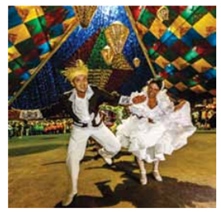
In the month of June, in all regions of Brazil, especially in the Northeast, the traditions and symbols of the country’s rural areas are celebrated with music, lively dances and culinary delights. These celebrations honor Saint John, Saint Peter and Saint Anthony, saints of the Catholic church. Come with us to discover the magic and joy of these festivities, which transform Brazilian cities into colorful and lively scenes.
(https://visitbrasil.com)
The excerpt “Come with us to discover the magic and joy of these festivities” conveys the idea of
In the month of June, in all regions of Brazil, especially in the Northeast, the traditions and symbols of the country’s rural areas are celebrated with music, lively dances and culinary delights. These celebrations honor Saint John, Saint Peter and Saint Anthony, saints of the Catholic church. Come with us to discover the magic and joy of these festivities, which transform Brazilian cities into colorful and lively scenes.
(https://visitbrasil.com)
The excerpt “Come with us to discover the magic and joy of these festivities” conveys the idea of
Ano: 2025
Banca:
VUNESP
Órgão:
UEA
Prova:
VUNESP - 2025 - UEA - Sistema de Ingresso Seriado - 2ª Série do Ensino Médio - Prova de Acompanhamento II |
Q3921816
Inglês
Texto associado
Leia o texto para responder à questão.
Travelling through Brazil and not taking in the variety of
local dishes and tastes of the country’s different regions
definitely makes for an incomplete experience. In the
northern region, for example, strongly influenced by the larger
indigenous presence mixed with European immigration,
local food has evolved to be quite differentiated from that of
other regions. In Brazil, the mixing of several different
peoples over 500 years of history has produced a great mix
of traditions, ingredients and dishes introduced by native and
immigrant populations alike. Brazil’s northern region consists
of the states of Amazonas, Roraima, Amapá, Pará, Tocantins,
Rondônia and Acre. It is also influenced by Portuguese and
African immigrants who arrived in the country since the
beginning of colonisation. However, according to Joseny
Juvito, a chef specialized in northern cuisine, the region
is predominantly indigenous and, therefore, has specific
peculiarities influenced by the fact.
(https://gestaoconteudo.presidencia.gov.br)
No trecho do texto “However, according to Joseny Juvito, a chef
specialized in northern cuisine, the region is predominantly
indigenous”, o termo sublinhado expressa
Ano: 2025
Banca:
VUNESP
Órgão:
UEA
Prova:
VUNESP - 2025 - UEA - Sistema de Ingresso Seriado - 2ª Série do Ensino Médio - Prova de Acompanhamento II |
Q3921815
Inglês
Texto associado
Leia o texto para responder à questão.
Travelling through Brazil and not taking in the variety of
local dishes and tastes of the country’s different regions
definitely makes for an incomplete experience. In the
northern region, for example, strongly influenced by the larger
indigenous presence mixed with European immigration,
local food has evolved to be quite differentiated from that of
other regions. In Brazil, the mixing of several different
peoples over 500 years of history has produced a great mix
of traditions, ingredients and dishes introduced by native and
immigrant populations alike. Brazil’s northern region consists
of the states of Amazonas, Roraima, Amapá, Pará, Tocantins,
Rondônia and Acre. It is also influenced by Portuguese and
African immigrants who arrived in the country since the
beginning of colonisation. However, according to Joseny
Juvito, a chef specialized in northern cuisine, the region
is predominantly indigenous and, therefore, has specific
peculiarities influenced by the fact.
(https://gestaoconteudo.presidencia.gov.br)
No trecho do texto “local food has evolved to be quite
differentiated from that of other regions”, o termo sublinhado
refere-se a

 Conheça nossos planos