Questões de Concurso Comentadas sobre inglês
Foram encontradas 19.377 questões


The x2 is an experimental helicopter being developed by Sikorsky, an American company, which hopes it will be zipping along at more than 460kph. The company, however, is interested in more than just breaking speed records. It plans to use the technology developed for the x2 in commercial helicopters.
Sikorsky reckons that future helicopters built using the x2 technology would be extremely versatile machines. They would dash to and from a medical emergency a lot faster. They would also be very agile in flight, which would increase their capabilities in combat.
(Adapted from The Economist September 11, 2010, page 98)
It was once considered the ‘port of death’ in the 19th century. Ships tended to avoid docking at the wood plank port, fearing the yellow fever. The floods in the city’s area provoked illnesses and once the bubonic plague almost decimated the population.
In the early 20th century, major urbanization created the port’s modern structure seen today, eliminating the risk of diseases and providing the port with modern, industrial-age infrastructure.
The first railway link from the port to the state capital São Paulo City, 79 km away, and the state’s interior, was completed in 1864. This allowed for an easier transportation of the vast masses of migrant workers who headed to São Paulo and the state’s numerous coffee farms.
Millions of immigrants reached Brazil via the port of Santos in the late 19th and early 20th centuries, proceeding to the country’s interior by railway. Santos was for a few decades the true gateway to Brazil for millions of immigrants.
(Adapted from http://en.wikipedia.org/wiki/Port_of_Santos – acesso em 21.01.2011)

The term “better” (l.18) is the opposite of worst.

The term “hope” (l.10) is synonymous with expect

Identifique as afirmativas verdadeiras ( V ) e falsas ( F ), de acordo com o texto.
( ) If you’re not in the room the use of timers to turn of the lights helps to save energy.
( ) Living in a warm region one shouldn’t have curtains at home.
( ) The color that your curtains must be is white, because they reflect the heat.
( ) A car releases the same amount of carbon dioxide into the air than a household generates.
( ) Anybody can preserve and help the Earth’s natural resources.
Assinale a alternativa que indica a sequência correta, de cima para baixo.
As palavras "We" e "Our" estão sendo usadas no texto como:
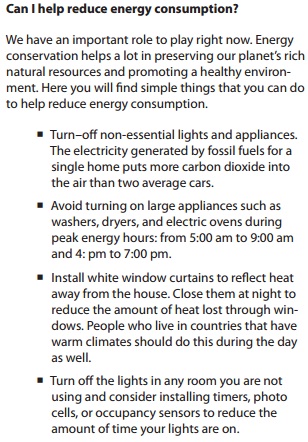
Can I help reduce energy consumption?
We have an important role to play right now. Energy conservation helps a lot in preserving our planet’s rich natural resources and promoting a healthy environment. Here you will find simple things that you can do to help reduce energy consumption.
· Turn–off non-essential lights and appliances. The electricity generated by fossil fuels for a single home puts more carbon dioxide into the air than two average cars.
· Avoid turning on large appliances such as washers, dryers, and electric ovens during peak energy hours: from 5:00 am to 9:00 am and 4: pm to 7:00 pm.
· Install white window curtains to reflect heat away from the house. Close them at night to reduce the amount of heat lost through windows. People who live in countries that have warm climates should do this during the day as well.
· Turn off the lights in any room you are not using and consider installing timers, photo cells, or occupancy sensors to reduce the amount of time your lights are on.
( ) If you’re not in the room the use of timers to turn of the lights helps to save energy.
( ) Living in a warm region one shouldn’t have curtains at home.
( ) The color that your curtains must be is white, because they refect the heat.
( ) A car releases the same amount of car- bon dioxide into the air than a household generates.
( ) Anybody can preserve and help the Earth’s natural resources.
Assinale a alternativa que indica a sequência correta, de cima para baixo.
Can I help reduce energy consumption?
We have an important role to play right now. Energy conservation helps a lot in preserving our planet’s rich natural resources and promoting a healthy environment. Here you will find simple things that you can do to help reduce energy consumption.
· Turn–off non-essential lights and appliances. The electricity generated by fossil fuels for a single home puts more carbon dioxide into the air than two average cars.
· Avoid turning on large appliances such as washers, dryers, and electric ovens during peak energy hours: from 5:00 am to 9:00 am and 4: pm to 7:00 pm.
· Install white window curtains to reflect heat away from the house. Close them at night to reduce the amount of heat lost through windows. People who live in countries that have warm climates should do this during the day as well.
· Turn off the lights in any room you are not using and consider installing timers, photo cells, or occupancy sensors to reduce the amount of time your lights are on.


 Conheça nossos planos