Questões de Concurso Comentadas sobre inglês
Foram encontradas 19.378 questões


“The professional of Teaching English as a Foreign Language”
Author: Anderson Francisco Guimarães Maia
“The professional of Teaching English as a Foreign Language”
Author: Anderson Francisco Guimarães Maia
“The professional of Teaching English as a Foreign Language”
Author: Anderson Francisco Guimarães Maia
I. The article is about different ways to perform as a professional EFL teacher.
II. The word “whose” in line 10 refers to “worker” in the same sentence.
III. The words “requirements” (line 12) and “standards” (line 13) are synonyms.
IV. The article is predominantly denotative.
The following statement(s) is/are true
Atenção! Leia o texto a seguir para responder à questão.
The research paper published in ‘Humanities & Social Sciences Communications’ — an open-access journal, distributed by Springer Nature — examines the impact of AI on “loss in decisionmaking and privacy concerns among university students in Pakistan and China”.
The rise of AI has also exposed students and teachers to a number of challenges, particularly data hacking and systemic and racial biases. “Many people are now concerned with the ethical attributes of AI systems and believe that the security issue must be considered in AI system development,” the researchers claimed. In order to mitigate safety concerns, the paper said there was a need to “continuously re-evaluate and re-design” security practices. However, academia is poorly equipped to deal this issue due to a shortage of funding and technical staff. “No one can run from the threat of AI concerning cybersecurity, it behaves like a double-edged sword.”
As per the research, AI has the potential to revolutionise the education sector but with certain drawbacks. In order to effectively harness this technology, the paper called for steps to ensure AI does not cause at least “severe ethical concerns”, and technology backed by secure algorithms to ensure data security and minimisation of AI’s bias. It also recommended measures to curtail overreliance on AI to address “laziness” and cognitive deficiency.
ABBAS, Zaki. AI making students lazy, impairing cognition: study. Disponível em: https://www.dawn.com/news/1759121/ai-making-students-lazy-impairingcognition-study. Acesso em: 12 jul. 2024. Adaptado.
Atenção! Leia o texto a seguir para responder à questão.
The research paper published in ‘Humanities & Social Sciences Communications’ — an open-access journal, distributed by Springer Nature — examines the impact of AI on “loss in decisionmaking and privacy concerns among university students in Pakistan and China”.
The rise of AI has also exposed students and teachers to a number of challenges, particularly data hacking and systemic and racial biases. “Many people are now concerned with the ethical attributes of AI systems and believe that the security issue must be considered in AI system development,” the researchers claimed. In order to mitigate safety concerns, the paper said there was a need to “continuously re-evaluate and re-design” security practices. However, academia is poorly equipped to deal this issue due to a shortage of funding and technical staff. “No one can run from the threat of AI concerning cybersecurity, it behaves like a double-edged sword.”
As per the research, AI has the potential to revolutionise the education sector but with certain drawbacks. In order to effectively harness this technology, the paper called for steps to ensure AI does not cause at least “severe ethical concerns”, and technology backed by secure algorithms to ensure data security and minimisation of AI’s bias. It also recommended measures to curtail overreliance on AI to address “laziness” and cognitive deficiency.
ABBAS, Zaki. AI making students lazy, impairing cognition: study. Disponível em: https://www.dawn.com/news/1759121/ai-making-students-lazy-impairingcognition-study. Acesso em: 12 jul. 2024. Adaptado.
Em uma atividade de sala, a professora pediu aos alunos que marcassem em suas agendas seus planos para a semana seguinte. Em seguida, eles deveriam sentar-se com um colega e simular um diálogo. Para realizar a atividade, ela escreveu na lousa o seguinte diálogo, a partir do qual os alunos deveriam usar corretamente um repertório linguístico aprendido para preencher a lacuna.
Aluno A: What __________ (do) on Monday/Tuesday/Wednesday…?
Aluno B: I ____________ (play soccer/go dancing/do my homework…) on Monday/Tuesday/Wednesday…
Para que os alunos sejam bem-sucedidos nessa atividade, é preciso que eles saibam usar corretamente qual tempo verbal?
Learning Portuguese-English cognates is a great way to build vocabulary fast! It’s basically using what you already know to get a jump-start.
Cognates are simply words that are very similar in both languages, usually due to a common root.
Below, you can explore some of the typical spelling patterns for English → Portuguese cognates, with examples for each one. Remember that these patterns do not apply every time. But they are a convenient way to help you notice more cognates as you continue to learn English!
Observe os padrões de sufixo abaixo e complete as lacunas indicadas.
ph → f
Ex: telephone → telefone
tion → -ção
Ex: nation → nação
ty → ____________
Ex: society → ____________
fy → ____________
Ex: identify → ____________
(...)
Practice Portuguese. Portuguese-English Cognates. Practice Portuguese, 2024. Disponível em: https://www.practiceportuguese.com/learning-notes/portugueseenglish-cognates/. Acesso em: 12 jul. 2024. Adaptado.
Em sequência, os termos que completam corretamente essas lacunas são:
A Well Respected Man
The Kinks
'Cause he gets up in the morning
And he goes to work at nine
And he comes back home at five-thirty
Gets the same train every time
'Cause his world is built 'round punctuality
It never fails
And he's oh, so good
And he's oh, so fine
And he's oh, so healthy
In his body and his mind
(…)
And his mother goes to meetings
While his father pulls the maid
And she stirs the tea with councilors
While discussing foreign trade
And she passes looks, as well as bills
At every suave young man (…)
DAVIES, Ray. A well respected man. Disponível em: https://lyrics.lyricfind.com/lyrics/the-kinks-a-well-respected-man. Acesso em: 12 jul. 2024. Adaptado.
Letras de música podem ser ótimos recursos para desenvolver uma habilidade exigida pelo currículo escolar. A letra de “A well respected man” poderia ser mais bem usada para trabalhar qual habilidade dos estudantes?
Finding and identifying problems helps students practice detecting problems. Problem identification is found to be more important for reviewer learning, perhaps because reviewers are involved in more highly cognitive demanding activities when identifying problems. Interestingly, it is easier to see problems in documents/objects produced by ____________ than in ____________ documents because learners often “see” what they meant to produce and not what they actually produced. Thus, ____________ may be an easier context in which to practice skills related to repairing errors because errors are more easily detected
SCHUNN, Christian D. The Learning Science of Multi - Peer Feedback for EFL Students. Disponível em: https://www.lrdc.pitt.edu/schunn/papers/The%20Learning%20Sci_for_EFL_Student s_Schunn_Wu_2019.pdf. Acesso em: 12 jul. 2024. Adaptado.
Em sequência, as palavras que completam corretamente essas lacunas são:
Atenção! Leia o texto a seguir para responder à próxima questão.
The Two Goats
Two Goats, frisking gayly on the rocky steeps of a mountain valley, chanced to meet, one on each side of a deep chasm through which poured a mighty mountain torrent. The trunk of a fallen tree formed the only means of crossing the chasm, and on this not even two squirrels could have passed each other in safety. The narrow path would have made the bravest tremble. Not so our Goats. Their pride would not permit either to stand aside for the other.
One set her foot on the log. The other did likewise. In the middle they met horn to horn. Neither would give way, and so they both fell, to be swept away by the roaring torrent below.
Library of Congress. The Aesop for children. Library of Congress, 2024. Disponível em: https://read.gov/aesop/013.html. Acesso em: 12 jul. 2024.
How do most teachers use micro-dictations?
However ‘small’ they are, micro-dictations have great value! They can help students notice connected speech, which is what usually blocks their understanding in a listening lesson. The teacher reads the sentences or plays the recording. They repeat each sentence a few times. Example: He must have gone out.
Students listen and write what they hear.
The teacher now writes the sentence on the whiteboard and asks students to compare it to theirs.
Finally, the teacher asks: which part was difficult to understand and why?
TSATERI, Rachel. World of better learning. Disponível em: https://www.cambridge.org/elt/blog/2023/06/11/using-micro-dictations-to-helpstudents-notice-connected-speech/. Acesso em: 12 jul. 2024. Adaptado.
O texto acima discorre sobre como os professores podem usar micro-dictations. Qual das estratégias abaixo corresponde a uma técnica de micro-dictation?
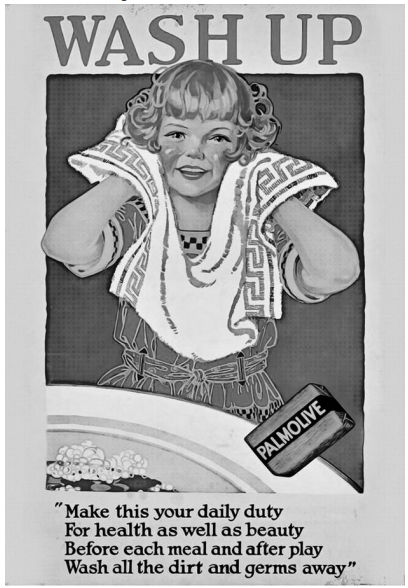
Multidict.net. Advertising language. Multidict.net, 2024. Disponível em: https://multidict.net/clilstore/page.php?id=5243. Acesso em: 12 jul. 2024.
Uma das formas de identificar a função social de um texto é a partir dos recursos linguísticos usados. O anúncio publicitário acima tem a função social de induzir o leitor a ter um certo comportamento, que é alcançada, também, pelo uso de
What does a CCQ mean?
A concept checking question is a question designed to help the teacher check students’ understanding of a language item (grammar structure, vocabulary, fixed expression). “Do you understand?”, “Is that clear?”, “We all know that, right?” or “OK?” should be absolute taboos.
When to ask CCQs?
Every time you explain new material or need to check whether students know what you are talking about. CCQs are particularly useful after guided practice and at the end of the lesson as a review.
How to ask CCQs?
There are some simple rules that can help you create good CCQs and use them effectively:
1. CCQs should be easy to understand, use simple language in CCQs.
2. Don’t use the target language in CCQs;
E.g. I’ll meet her tomorrow.
Bad CCQ: Will I meet her next week?
3. Don’t use new vocabulary in CCQs;
4. Plan CCQs in advance;
5. Ask at least 2 CCQs to cover all of the important aspects of the target language;
6. CCQs should check the meaning of the target language, not of the situation.
E.g. She’s been in bed all day.
Bad CCQ: Is she sick?
7. Some of the most efficient CCQs are yes/no questions along with either/or questions; simple Wh-questions and true/false statements.
My TEFL. Concept Checking Questions (CCQs). My Tefl, 2024. Disponível em: https://mytefl.com/wp-content/uploads/2019/09/CCQs.pdf. Acesso em: 12 jul. 2024. Adaptado.
Considere que você precisa ensinar o sentido do termo em destaque na frase “His pink car stands out on the road”. A partir da leitura sobre as CCQ’s, qual das alternativas abaixo apresenta uma CCQ efetiva para checar o entendimento do aluno sobre o sentido do termo ‘stand out’?
Chunks
Chunks are groups of words that can be found together in language.
They can be words that always go together, such as fixed collocations, or that commonly do, such as certain grammatical structures that follow rules. A listener or reader uses their knowledge of chunks to help them predict meaning and therefore be able to process language in real time. Chunks include lexical phrases, set phrases, and fixed phrases.
Example
'Utter disaster', 'by the way', 'encourage + someone + infinitive', 'dependent + on' are all examples of chunks.
In the classroom
Areas of work such as idioms, collocations and verb patterns all focus on types of chunks. Learners can be encouraged to identify and record lexical and grammatical chunks as they find them.
British Council. Chunks. British Council, 2024. Disponível em: https://www.teachingenglish.org.uk/professional-development/teachers/knowingsubject/c/chunks. Acesso em: 12 jul. 2024.
O texto acima traz informações sobre ‘language chunks’ que podem ser úteis para uma abordagem lexical da língua inglesa. Em qual alternativa a expressão destacada é um exemplo de ‘language chunk’?
Atenção! Leia o texto a seguir para responder à próxima questão.
Ain't It Fun
I don't mind
Letting you down easy, but just give it time
If it don't hurt now then just wait, just wait a while
You're not the big fish in the pond no more
You are what they're feeding on
So what are you gonna do
When the world don't orbit around you?
So what are you gonna do
When the world don't orbit around you?
Ain't it fun?
Living in the real world
Ain't it good?
Being all alone
Where you're from
You might be the one who's running things
Where you can ring anybody's bell and get what you want
See it's easy to ignore trouble
When you're living in a bubble
(…)
WILLIAMS, Hayley; YORK, Taylor. Ain’t it fun. Disponível em: https://www.musixmatch.com/lyrics/Paramore/Ain-t-It-Fun. Acesso em: 12 jul. 2024. Adaptado.
Atenção! Leia o texto a seguir para responder à próxima questão.
Ain't It Fun
I don't mind
Letting you down easy, but just give it time
If it don't hurt now then just wait, just wait a while
You're not the big fish in the pond no more
You are what they're feeding on
So what are you gonna do
When the world don't orbit around you?
So what are you gonna do
When the world don't orbit around you?
Ain't it fun?
Living in the real world
Ain't it good?
Being all alone
Where you're from
You might be the one who's running things
Where you can ring anybody's bell and get what you want
See it's easy to ignore trouble
When you're living in a bubble
(…)
WILLIAMS, Hayley; YORK, Taylor. Ain’t it fun. Disponível em: https://www.musixmatch.com/lyrics/Paramore/Ain-t-It-Fun. Acesso em: 12 jul. 2024. Adaptado.
So what are you ____________ do
____________ fun?
You might be the one who ____________ running things.
See it ____________ easy to ignore trouble.
Atenção! Leia o texto a seguir para responder à próxima questão.
I write with dismay in response to “Flurry of Drama in Sag Harbor” (Sunday Styles, June 23), about Justin Timberlake’s arrest in the Hamptons on a charge of driving while drunk.
The article, while including the particulars of Mr. Timberlake’s arrest, moves quickly to a lighthearted foray into the local community’s reaction to news coverage of the incident.
It would all be in good fun, of course, if not for the fact that, according to the Department of Transportation, each day in the U.S. an average of 37 people suffer serious accidents because of drunken driving, with alarming numbers revealed in 2022.
Instead of sharing those sobering figures, we get a local diner’s perspective that the news coverage of the arrest was over the top because Mr. Timberlake had not gotten into an accident.
That badly misses the point and, with it, The Times badly missed an opportunity to turn a spotlight on the deadly seriousness of drunken driving.
Brad Snyder
Menlo Park, Calif.
SNYDER, Brad. Patients Stunned by Their Medical Bills. Disponível em: https://www.nytimes.com/2024/06/25/opinion/patients-medicalbills.html?auth=login-google1tap&login=google1tap. Acesso em: 11 jul. 2024. Adaptado.
Atenção! Leia o texto a seguir para responder à próxima questão.
I write with dismay in response to “Flurry of Drama in Sag Harbor” (Sunday Styles, June 23), about Justin Timberlake’s arrest in the Hamptons on a charge of driving while drunk.
The article, while including the particulars of Mr. Timberlake’s arrest, moves quickly to a lighthearted foray into the local community’s reaction to news coverage of the incident.
It would all be in good fun, of course, if not for the fact that, according to the Department of Transportation, each day in the U.S. an average of 37 people suffer serious accidents because of drunken driving, with alarming numbers revealed in 2022.
Instead of sharing those sobering figures, we get a local diner’s perspective that the news coverage of the arrest was over the top because Mr. Timberlake had not gotten into an accident.
That badly misses the point and, with it, The Times badly missed an opportunity to turn a spotlight on the deadly seriousness of drunken driving.
Brad Snyder
Menlo Park, Calif.
SNYDER, Brad. Patients Stunned by Their Medical Bills. Disponível em: https://www.nytimes.com/2024/06/25/opinion/patients-medicalbills.html?auth=login-google1tap&login=google1tap. Acesso em: 11 jul. 2024. Adaptado.
Atenção! Leia o poema a seguir para responder à questão.
Twinkle, Twinkle, Little Star
Twinkle, twinkle, little star,
How I wonder what you are!
Up above the world so high,
Like a diamond in the sky.
When the blazing sun is gone,
When he nothing shines upon,
Then you show your little light,
Twinkle, twinkle, all the night.
Then the traveler in the dark
Thanks you for your tiny spark,
How could he see where to go,
If you did not twinkle so?
In the dark blue sky you keep,
Often through my curtains peep
For you never shut your eye,
Till the sun is in the sky.
As your bright and tiny spark
Lights the traveler in the dark,
Though I know not what you are,
Twinkle, twinkle, little star.
TAYLOR, Jane. Twinkle, Twinkle, Little Star. Disponível em: https://www.classicalmusic.com/articles/what-are-the-lyrics-to-twinkle-twinkle-little-star. Acesso em: 11 jul. 2024. Adaptado.
In the dark blue sky you keep, And often through my curtains peep, For you never shut your eye Till the sun is in the sky.
A estrofe vencedora do concurso, cujo criador seguiu corretamente as exigências indicadas, foi
Atenção! Leia o poema a seguir para responder à questão.
Twinkle, Twinkle, Little Star
Twinkle, twinkle, little star,
How I wonder what you are!
Up above the world so high,
Like a diamond in the sky.
When the blazing sun is gone,
When he nothing shines upon,
Then you show your little light,
Twinkle, twinkle, all the night.
Then the traveler in the dark
Thanks you for your tiny spark,
How could he see where to go,
If you did not twinkle so?
In the dark blue sky you keep,
Often through my curtains peep
For you never shut your eye,
Till the sun is in the sky.
As your bright and tiny spark
Lights the traveler in the dark,
Though I know not what you are,
Twinkle, twinkle, little star.
TAYLOR, Jane. Twinkle, Twinkle, Little Star. Disponível em: https://www.classicalmusic.com/articles/what-are-the-lyrics-to-twinkle-twinkle-little-star. Acesso em: 11 jul. 2024. Adaptado.

 Conheça nossos planos