Questões de Concurso Sobre presente perfeito | present perfect em inglês

Foram encontradas 184 questões

Q1728614 Inglês
Read the sentence below.
The widow who spent her life focused on cooking for her children _____ her lesson and suspended all cooking.
Chose the best option that completes the context.
Alternativas
Q1728434 Inglês
Analyze the sentence below.
“We have seen in the past how research that initially set out to tackle diseases in animals _____________________, for example, to prevent cancer in people.”
Choose the best option that completes the context.
Alternativas
Q1727363 Inglês
READ THE FOLLOWING TEXT CAREFULLY, AND THEN CHOOSE THE ALTERNATIVE THAT BEST COMPLETES THE STATEMENTS BELOW, ACCORDING TO THE TEXT. 

Mrs Parker died suddenly in October. She and Mr Parker lived in a Victorian house next to ours, and Mr Parker was my piano teacher. He commuted to Wall Street, where he was a securities analyst, but he had studied at Juilliard and gave lessons on the side – for the pleasure of it, not for money. His only students were me and the church organist.
The word “tragic” was mentioned in connection with her death. She and Mr Parker were in the middle of their middle age, and neither of them had ever been seriously ill. It was heart failure, and unexpected. My parents went to see Mr Parker as soon as they got the news, since they took their responsibilities as neighbours seriously, and two days later they took me to pay a formal condolence call. 
I loved the Parkers’ house. It was a Victorian house, and was shaped like a wedding cake. The living-room was round, and all the walls curved. The third floor was a tower. Every five years the house was painted chocolate brown, which faded gradually to the colour of weak tea. The front-wall window was a stained-glass picture of a fat baby holding a bunch of roses.
On Wednesday afternoons, Mr Parker came home on an early train, and I had my lesson. Mr Parker’s teaching method never varied. He never scolded or corrected. The first fifteen minutes were devoted to a warm-up in which I could play anything I liked. Then Mr Parker played the lesson of the week. His playing was terrifically precise, but his eyes became dreamy and unfocused. Then I played the same lesson, and after that we worked on the difficult passages, but basically he wanted me to hear my mistakes. After that, we sat in the solarium and discussed the next week’s lesson. Mr Parker usually played a record and talked in detail about the composer, his life and times. Mrs Parker used to leave us a tray of cookies and lemonade, cold in the summer and hot in the winter. When the cookies were gone, the lesson was over and I left, passing the Victorian child in the hallway. 

(COLWIN, Laurie. Mr Parker. In: PIERCE, Tina and COCHRANE, Edward (eds.). Twentieth century English short stories. London: Bell & Hyman, 1979, p. 48-9. Adapted.)

The verbal tense in “He had studied at Juilliard” is
Alternativas
Q1722418 Inglês

Analyze the following sentence.


Students access to books ___ not been dramatically limited.


Choose the best option that completes the context.

Alternativas
Q1627582 Inglês
Find the alternative that shows a present perfect tense.
Alternativas
Q1253818 Inglês

Available at:< http://time.com/5363764/argentina-abortion-vote-progress/html>. Access on: Aug. 10, 2018 

Observe a seguinte sentença retirada do texto: “(…) generations of feminists who have been fighting for women’s rights for years” (l. 26-27) e assinale a alternativa que descreve o tempo verbal destacado.
Alternativas
Ano: 2018 Banca: CONPASS Órgão: Prefeitura de Santa Cruz - RN
Q1230109 Inglês
Check the correct answer to fill in the blanks.
My mother ____ already ____ ten books.
Alternativas
Q1094245 Inglês

Text for the question.


Higher life expectancy worldwide 


The present perfect form of “are projected” (line 13) is
Alternativas
Q954046 Inglês
Concerning the verb tense in “They have called on scientific journals” (line 11), it is correct to state that:
Alternativas
Q952137 Inglês

TEXT 1 below, retrieved and adapted from https://chroniclingamerica. loc.gov/lccn/sn83035487/1851-06-21/ed-1/seq-4/ on July 9th, 2018.


Text 1 


                    Women’s rights convention – Sojourner Truth


      One of the most unique and interesting speeches of the convention was made by Sojourner Truth, an emancipated slave. It is impossible to transfer it to paper or convey any adequate idea of the effect it produced upon the audience. Those only can appreciate it who saw her powerful form, her whole-souled, earnest gesture, and listened to her strong and truthful tones. She came forward to the platform and addressing the President said with great simplicity:

      "May I say a few words?" Receiving an affirmative answer, she proceeded: I want to say a few words about this matter. I am a woman's rights. I have as much muscle as any man and can do as much work as any man. I have plowed and reaped and husked and chopped and mowed, and can any man do more than that? I have heard much about the sexes being equal. I can carry as much as any man, and can eat as much too, if I can get it. I am as strong as any man that is now. As for intellect, all I can say is, if a woman has a pint, and a man a quart -- why can't she have her little pint full? You need not be afraid to give us our rights for fear we will take too much; -- for we can't take more than our pint will hold. The poor men seem to be all in confusion, and don't know what to do. Why children, if you have woman's rights, give it to her and you will feel better. You will have your own rights, and they won't be so much trouble. I can't read, but I can hear. I have heard the bible and have learned that Eve caused man to sin. Well, if a woman upset the world, do give her a chance to set it right side up again. The Lady has spoken about Jesus, how he never spurned woman from him, and she was right. When Lazarus died, Mary and Martha came to him with faith and love and besought him to raise their brother. And Jesus wept and Lazarus came forth. And how came Jesus into the world? Through God who created him and the woman who bore him. Man, where was your part? But the women are coming up blessed be God and a few of the men are coming up with them. But man is in a tight place, the poor slave is on him, woman is coming on him, he is surely between a hawk and a buzzard.


Reference: Robinson, M. (1851, June 21). Women’s rights convention: Sojourner Truth. Anti-slavery Bugle, vol. 6 no. 41, Page 160.

Question must be answered by looking at the following sentence from Text 1:


I have plowed and reaped and husked and chopped and mowed, and can any man do more than that?


We may say that the verbs Sojourner uses are:

Alternativas
Ano: 2017 Banca: IMA Órgão: Prefeitura de São Bernardo - MA
Q1182341 Inglês
Which one of the alternatives below is not correct? 
Alternativas
Q1110380 Inglês
From question 53 to 63, choose the CORRECT answers to fll in the blanks.
Anne to Sanjay: “I’ve been running 10 kilometers everyday”. Sanjay to Stef: “Anne says she __________ 10 kilometers everyday, but I bet she can go further. That girl is a machine!”
Alternativas
Q829907 Inglês

Analyse the statements below, considering the context of occurrence in the text.


I. Considering the grammatical context, the expression ‘have always had’ (l.01) should be translated to ‘sempre tiveram’.

II. The phrasal verb ‘went on’ (l.29) has the same meaning as the expression ‘took place’.

III. The verb ‘persuading’ is in the –ing form due to the presence of the preposition ‘at’ (l.24).


Which ones are correct?

Alternativas
Q1780442 Inglês

Instructions: Question are based on the following text.


Source: http://languagemagazine.com/?page_id=124967

Consider the sentence “While visual literacy has always been important, it is even more so today” (line 36). The underlined structure is in the:
Alternativas
Q1112250 Inglês
INSTRUCTIONS: Read the following text carefully and then answer the question.

Why learn a foreign language?
Benefits of bilingualism

Learning a foreign language is more than just a boost to your CV or handy for travelling.
By Anne Merritt
(EFL lecturer currently based in South Korea)

Physiological studies have found that speaking two or more languages is a great asset to the cognitive process. The brains of bilingual people operate differently than single language speakers, and these differences offer several mental benefits.

You become smarter

Speaking a foreign language improves the functionality of your brain by challenging it to recognize, negotiate meaning, and communicate in different language systems. This skill boosts your ability to negotiate meaning in other problem-solving tasks as well. Students who study foreign languages tend to score better on standardized tests than their monolingual peers, particularly in the categories of math, reading, and vocabulary.

You build multitasking skills

Multilingual people, especially children, are skilled at switching between two systems of speech, writing, and structure. According to a study from the Pennsylvania State University, this “juggling” skill makes them good multitaskers, because they can easily switch between different structures. In one study, participants used a driving simulator while doing separate, distracting tasks at the same time. The research found that people who spoke more than one language made fewer errors in their driving.

You stave off Alzheimer’s and dementia

For monolingual adults, the mean age for the first signs of dementia is 71.4. For adults who speak two or more languages, the mean age for those first signs is 75.5. Studies considered factors such as education level, income level, gender, and physical health, but the results were consistent.

Your memory improves

Educators often liken the brain to a muscle, because it functions better with exercise. Learning a language involves memorizing rules and vocabulary, which helps strengthen that mental “muscle.” This exercise improves overall memory, which means that multiple language speakers are better at remembering lists or sequences. Studies show that bilinguals are better at retaining shopping lists, names, and directions.

Your decision-making skills improve

According to a study from the University of Chicago, bilinguals tend to make more rational decisions. Any language contains nuance and subtle implications in its vocabulary, and these biases can subconsciously influence your judgment. Bilinguals are more confident with their choices after thinking it over in the second language and seeing whether their initial conclusions still stand up.
Available on: <http://www.telegraph.co.uk/education/educationopinion/10126883/Why-learn-a-foreign-languageBenefits-of-bilingualism.html> (Edited).
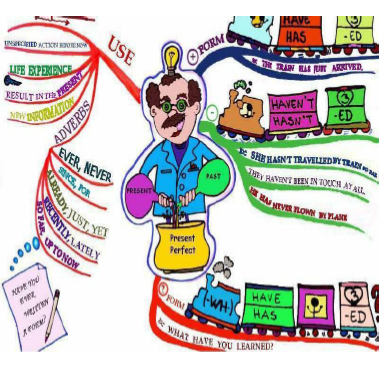
The present perfect is used to refer to events taking place in a past time-frame that connects with the present. Therefore it can, for instance, be used to refer to events that happened in an unspecified time:
“Physiological studies have found that speaking two or more languages is a great asset to the cognitive process.”
Take into consideration the rules for employing the present perfect tense, then choose the following alternative in which this tense is CORRECTLY used.
Alternativas
Q737152 Inglês

      Goods in transit refers to merchandise and other inventory items that have been shipped by the seller, but have ..I.. been received by the purchaser. To illustrate goods in transit, let's use the following example. Company J ships a truckload of merchandise on December 30 to Customer K, which is located 2,000 miles away. The truckload of merchandise arrives at Customer K on January 2. Between December 30 and January 2, the truckload of merchandise is goods in transit. The goods in transit requires special attention if the companies issue financial statements as of December 31. The reason is that the merchandise is the inventory of one of the two companies. However, the merchandise is not physically present at either company. One of the two companies must add the cost of the goods in transit to the cost of the inventory that it has in its possession.

      The terms of the sale will indicate which company should report the goods in transit as its inventory as of December 31. If the terms are FOB shipping point, the seller (Company J) will record a December sale and receivable, and ..II..  include the goods in transit as its inventory. On December 31, Customer K is the owner of the goods in transit and will need to report a purchase, a payable, and must add the cost of the goods in transit to the cost of the inventory which is in its possession.

      If the terms of the sale are FOB destination, Company J will not have a sale and receivable until January 2. This means Company J must report the cost of the goods in transit in its inventory on December 31. (Customer K will not have a purchase, payable, or inventory of these goods until January 2.)

       (Adapted from http://www.accountingcoach.com/blog/what-are-goods-in-transit

A alternativa que preenche corretamente a lacuna I é
Alternativas
Q719149 Inglês
English as a Global Language
For more than half a century, immigrants from the Indian subcontinent and the West Indies have added variety and diversity to the rich patchwork of accents and dialects spoken in the UK. British colonisers originally exported the language to all four corners of the globe and migration in the 1950s brought altered forms of English back to these shores. ___________(1) that time, especially in urban areas, speakers of Asian and Caribbean descent have blended their mother tongue speech patterns with existing local dialects producing wonderful new varieties of English, ___________(2) London Jamaican or Bradford Asian English. Standard British English has also been enriched by an explosion of new terms, such as balti (a dish invented in the West Midlands and defined by a word that would refer to a 'bucket' rather than food to most South Asians outside the UK) and bhangra (traditional Punjabi music mixed with reggae and hiphop).
The recordings on this site of speakers from minority ethnic backgrounds include a range of speakers. You can hear speakers whose speech is heavily influenced by their racial background, alongside those whose speech reveals nothing of their family background and some who are ranged somewhere in between. There are also a set of audio clips that shed light on some of the more recognisable features of Asian English and Caribbean English.
Slang
As with the Anglo-Saxon and Norman settlers of centuries past, the languages spoken by today’s ethnic communities have begun to have an impact on the everyday spoken English of other communities. For instance, many young people, regardless of their ethnic background, now use the black slang terms, nang (‘cool,’) and diss (‘insult’ — from ‘disrespecting’) or words derived from Hindi and Urdu, such as chuddies (‘underpants’) or desi (‘typically Asian’). Many also use the all-purpose tag-question, innit — as in statements such as you’re weird, innit. This feature has been variously ascribed to the British Caribbean community or the British Asian community, although it is also part of a more native British tradition - in dialects in the West Country and Wales, for instance — which might explain why it appears to have spread so rapidly among young speakers everywhere.
Original influences from overseas
The English Language can be traced back to the mixture of Anglo-Saxon dialects that came to these shores 1500 years ago. Since then it has been played with, altered and transported around the world in many different forms. The language we now recognise as English first became the dominant language in Great Britain during the Middle Ages, and in Ireland during the eighteenth and nineteenth centuries. From there it has been exported in the mouths of colonists and settlers to all four corners of the globe. ‘International English’, ‘World English’ or ‘Global English’ are terms used to describe a type of ‘General English’ that has, over the course of the twentieth century, become a worldwide means of communication. 
American English 
The first permanent English-speaking colony was established in North America in the early 1600s. The Americans soon developed a form of English that differed in a number of ways from the language spoken back in The British Isles. In some cases older forms were retained — the way most Americans pronounce the sound after a vowel in words like start, north, nurse and letter is probably very similar to pronunciation in 17th century England. Similarly, the distinction between past tense got and past participle gotten still exists in American English but has been lost in most dialects of the UK. 
But the Americans also invented many new words to describe landscapes, wildlife, vegetation, food and lifestyles. Different pronunciations of existing words emerged as new settlers arrived from various parts of the UK and established settlements scattered along the East Coast and further inland. After the USA achieved independence from Great Britain in 1776 any sense of who ‘owned’ and set the ‘correct rules’ for the English Language became increasingly blurred. Different forces operating in the UK and in the USA influenced the emerging concept of a Standard English. The differences are perhaps first officially promoted in the spelling conventions proposed by Noah Webster in The American Spelling Book (1786) and subsequently adopted in his later work, An American Dictionary of the English Language (1828). Both of these publications were enormously successful and established spellings such as center and color and were therefore major steps towards scholarly acceptance that British English and American English were becoming distinct entities.
Influence of Empire
Meanwhile, elsewhere, the British Empire was expanding dramatically, and during the 1700s British English established footholds in parts of Africa, in India, Australia and New Zealand. The colonisation process in these countries varied. In Australia and New Zealand, European settlers quickly outnumbered the indigenous population and so English was established as the dominant language. In India and Africa, however, centuries of colonial rule saw English imposed as an administrative language, spoken as a mother tongue by colonial settlers from the UK, but in most cases as a second language by the local population.
English around the world
Like American English, English in Australia, New Zealand and South Africa has evolved such that they are distinct from British English. However, cultural and political ties have meant that until relatively recently British English has acted as the benchmark for representing ‘standardised’ English — spelling tends to adhere to British English conventions, for instance. Elsewhere in Africa and on the Indian subcontinent, English is still used as an official language in several countries, even though these countries are independent of British rule. However, English remains very much a second language for most people, used in administration, education and government and as a means of communicating between speakers of diverse languages. As with most of the Commonwealth, British English is the model on which, for instance, Indian English or Nigerian English is based. In the Caribbean and especially in Canada, however, historical links with the UK compete with geographical, cultural and economic ties with the USA, so that some aspects of the local varieties of English follow British norms and others reflect US usage. 
An international language
English is also hugely important as an international language and plays an important part even in countries where the UK has historically had little influence. It is learnt as the principal foreign language in most schools in Western Europe. It is also an essential part of the curriculum in far-flung places like Japan and South Korea, and is increasingly seen as desirable by millions of speakers in China. Prior to WWII, most teaching of English as a foreign language used British English as its model, and textbooks and other educational resources were produced here in the UK for use overseas. This reflected the UK's cultural dominance and its perceived ‘ownership’ of the English Language. Since 1945, however, the increasing economic power of the USA and its unrivalled influence in popular culture has meant that American English has become the reference point for learners of English in places like Japan and even to a certain extent in some European countries. British English remains the model in most Commonwealth countries where English is learnt as a second language. However, as the history of English has shown, this situation may not last indefinitely. The increasing commercial and economic power of countries like India, for instance, might mean that Indian English will one day begin to have an impact beyond its own borders.
https://www.bl.uk/learning/langlit/sounds/case-studies/minority-ethnic/ 
The sentence “For more than half a century, immigrants from the Indian subcontinent and the West Indies have added variety and diversity to the rich patchwork of accents and dialects spoken in the UK” represents a sentence in the:
Alternativas
Q2122701 Inglês
Choose the option where the present perfect is used incorrectly.
Alternativas
Q1239248 Inglês
A Oração: “Doctors are investigating 29 related infant deaths” encontra-se em que tempo verbal? 
Alternativas
Q789653 Inglês
Atenção: Para responder à questão, considere o texto apresentado abaixo: 

What Causes a Super Blood Moon?
By Daniel Victor, Sept, 25, 2015. 

   A rare astronomical phenomenon Sunday night will produce a moon that will appear slightly bigger  usual and have a reddish hue, an event known as a super blood moon. 
  It’s a combination of curiosities that hasn’t  since 1982, and won’t happen again  2033. A so-called supermoon, which occurs when the moon is closest to earth in its orbit, will coincide with a lunar eclipse, leaving the moon in Earth’s shadow. Individually, the two phenomena are not uncommon, but they do not align often. 
  Most people are unlikely to detect the larger size of the supermoon. It may appear 14 percent larger and 30 percent brighter, but the difference is subtle to the plain eye. But the reddish tint from the lunar eclipse is likely to be visible throughout much of North America, especially on the East Coast.
  “You’re basically seeing all of the sunrises and sunsets across the world, all at once, being reflected off the surface of the moon,” said Dr. Sarah Noble, a program scientist at NASA.
(Adapatado de: http://www.nytimes.com/2015/09/26/science/super-blood-moon-to-make-last-appearance-until2033.html
A alternativa que preenche corretamente a lacuna II é
Alternativas
Respostas
141: B
142: A
143: B
144: C
145: A
146: B
147: A
148: D
149: B
150: E
151: D
152: D
153: E
154: B
155: B
156: A
157: C
158: B
159: D
160: D