Questões de Concurso Sobre interpretação de texto | reading comprehension em inglês

Foram encontradas 12.997 questões

Q2016700 Inglês

The text below refers to question that follow it.


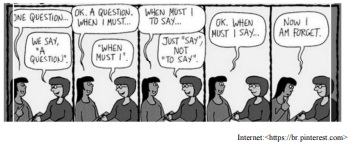
https://br.pinterest.com/pin/211669251227515501/

In the first panel, the question implies is whether or not both pets
Alternativas
Q2016699 Inglês
Critical Literacy

    Critical literacies are not new among scholars and researchers in literacy education. However, due to different theoretical bases, there is no unique definition of “critical literacy”. In their broadest sense, critical literacies refer to the ability to read texts going beyond their superficial meaning. That is, it implies approaching texts in a reflective way to understand working ideologies such as power, inequality, and injustice. In the realm of critical literacy, text is understood as a “vehicle through which individuals communicate with one another using the codes and conventions of society” (Robinson & Robinson, 2003, p. 3). Texts, in this sense, can be either songs, novels, poems, conversations, pictures, movies, and so on. […]

    Hence, the critical literacies approach is generally contrasted with functional literacy. The former views literacy as a social practice, while the latter views literacy as the mastery of linguistic skills. In addition, Manning (1999) developed a framework to distinguish critical literacies from functional literacy by establishing the difference between their respective ideology purpose, literacy curriculum, and instruction. On the one hand, the main objective of functional literacy is to produce skilled workers for the marketplace. Consequently, the curriculum is restrictive and the instruction is individualistic and competitive. On the other hand, for critical literacies, texts are not neutral but marked by power messages, dominating interests, and hidden agendas. In order to deconstruct these texts and unveil their ideological messages and power relationships, the curriculum is to employ materials from the everyday world as text and analytic tools.

    Critical scholars have overtly supported the idea that there is not a single procedure for incorporating critical literacies into the classroom, given that the particularities of the context where the foreign language is taught differ from one another. Thus, an approach to critical literacies “needs to be continually redefined in practice” (Comber, 2001, p. 274).


Adapted from: Jiménez, M.C. G. and Gutiérrez, C.P. “Engaging English as a Foreign Language Students in Critical Literacy Practices: The Case of a Teacher at a Private University” available at http://www.scielo.org.co/scielo.php?script= sci_arttext&pid=S1657-07902019000100091&lng=en&nrm=iso
The phrase “On the one hand” (2nd paragraph) indicates that the text will offer a(n)
Alternativas
Q2016696 Inglês
Critical Literacy

    Critical literacies are not new among scholars and researchers in literacy education. However, due to different theoretical bases, there is no unique definition of “critical literacy”. In their broadest sense, critical literacies refer to the ability to read texts going beyond their superficial meaning. That is, it implies approaching texts in a reflective way to understand working ideologies such as power, inequality, and injustice. In the realm of critical literacy, text is understood as a “vehicle through which individuals communicate with one another using the codes and conventions of society” (Robinson & Robinson, 2003, p. 3). Texts, in this sense, can be either songs, novels, poems, conversations, pictures, movies, and so on. […]

    Hence, the critical literacies approach is generally contrasted with functional literacy. The former views literacy as a social practice, while the latter views literacy as the mastery of linguistic skills. In addition, Manning (1999) developed a framework to distinguish critical literacies from functional literacy by establishing the difference between their respective ideology purpose, literacy curriculum, and instruction. On the one hand, the main objective of functional literacy is to produce skilled workers for the marketplace. Consequently, the curriculum is restrictive and the instruction is individualistic and competitive. On the other hand, for critical literacies, texts are not neutral but marked by power messages, dominating interests, and hidden agendas. In order to deconstruct these texts and unveil their ideological messages and power relationships, the curriculum is to employ materials from the everyday world as text and analytic tools.

    Critical scholars have overtly supported the idea that there is not a single procedure for incorporating critical literacies into the classroom, given that the particularities of the context where the foreign language is taught differ from one another. Thus, an approach to critical literacies “needs to be continually redefined in practice” (Comber, 2001, p. 274).


Adapted from: Jiménez, M.C. G. and Gutiérrez, C.P. “Engaging English as a Foreign Language Students in Critical Literacy Practices: The Case of a Teacher at a Private University” available at http://www.scielo.org.co/scielo.php?script= sci_arttext&pid=S1657-07902019000100091&lng=en&nrm=iso
In the second paragraph, when the authors argue that “Critical scholars have overtly supported the idea”, they mean that the idea has been
Alternativas
Q2016695 Inglês
Critical Literacy

    Critical literacies are not new among scholars and researchers in literacy education. However, due to different theoretical bases, there is no unique definition of “critical literacy”. In their broadest sense, critical literacies refer to the ability to read texts going beyond their superficial meaning. That is, it implies approaching texts in a reflective way to understand working ideologies such as power, inequality, and injustice. In the realm of critical literacy, text is understood as a “vehicle through which individuals communicate with one another using the codes and conventions of society” (Robinson & Robinson, 2003, p. 3). Texts, in this sense, can be either songs, novels, poems, conversations, pictures, movies, and so on. […]

    Hence, the critical literacies approach is generally contrasted with functional literacy. The former views literacy as a social practice, while the latter views literacy as the mastery of linguistic skills. In addition, Manning (1999) developed a framework to distinguish critical literacies from functional literacy by establishing the difference between their respective ideology purpose, literacy curriculum, and instruction. On the one hand, the main objective of functional literacy is to produce skilled workers for the marketplace. Consequently, the curriculum is restrictive and the instruction is individualistic and competitive. On the other hand, for critical literacies, texts are not neutral but marked by power messages, dominating interests, and hidden agendas. In order to deconstruct these texts and unveil their ideological messages and power relationships, the curriculum is to employ materials from the everyday world as text and analytic tools.

    Critical scholars have overtly supported the idea that there is not a single procedure for incorporating critical literacies into the classroom, given that the particularities of the context where the foreign language is taught differ from one another. Thus, an approach to critical literacies “needs to be continually redefined in practice” (Comber, 2001, p. 274).


Adapted from: Jiménez, M.C. G. and Gutiérrez, C.P. “Engaging English as a Foreign Language Students in Critical Literacy Practices: The Case of a Teacher at a Private University” available at http://www.scielo.org.co/scielo.php?script= sci_arttext&pid=S1657-07902019000100091&lng=en&nrm=iso
The phrase “the latter” in “the latter views literacy as the mastery of linguistic skills” (2nd paragraph) refers to
Alternativas
Q2016694 Inglês
Critical Literacy

    Critical literacies are not new among scholars and researchers in literacy education. However, due to different theoretical bases, there is no unique definition of “critical literacy”. In their broadest sense, critical literacies refer to the ability to read texts going beyond their superficial meaning. That is, it implies approaching texts in a reflective way to understand working ideologies such as power, inequality, and injustice. In the realm of critical literacy, text is understood as a “vehicle through which individuals communicate with one another using the codes and conventions of society” (Robinson & Robinson, 2003, p. 3). Texts, in this sense, can be either songs, novels, poems, conversations, pictures, movies, and so on. […]

    Hence, the critical literacies approach is generally contrasted with functional literacy. The former views literacy as a social practice, while the latter views literacy as the mastery of linguistic skills. In addition, Manning (1999) developed a framework to distinguish critical literacies from functional literacy by establishing the difference between their respective ideology purpose, literacy curriculum, and instruction. On the one hand, the main objective of functional literacy is to produce skilled workers for the marketplace. Consequently, the curriculum is restrictive and the instruction is individualistic and competitive. On the other hand, for critical literacies, texts are not neutral but marked by power messages, dominating interests, and hidden agendas. In order to deconstruct these texts and unveil their ideological messages and power relationships, the curriculum is to employ materials from the everyday world as text and analytic tools.

    Critical scholars have overtly supported the idea that there is not a single procedure for incorporating critical literacies into the classroom, given that the particularities of the context where the foreign language is taught differ from one another. Thus, an approach to critical literacies “needs to be continually redefined in practice” (Comber, 2001, p. 274).


Adapted from: Jiménez, M.C. G. and Gutiérrez, C.P. “Engaging English as a Foreign Language Students in Critical Literacy Practices: The Case of a Teacher at a Private University” available at http://www.scielo.org.co/scielo.php?script= sci_arttext&pid=S1657-07902019000100091&lng=en&nrm=iso
The phrase “That is” in “That is, it implies approaching texts in a reflective way” (1st paragraph) can be replaced without change of meaning by
Alternativas
Q2016693 Inglês
Critical Literacy

    Critical literacies are not new among scholars and researchers in literacy education. However, due to different theoretical bases, there is no unique definition of “critical literacy”. In their broadest sense, critical literacies refer to the ability to read texts going beyond their superficial meaning. That is, it implies approaching texts in a reflective way to understand working ideologies such as power, inequality, and injustice. In the realm of critical literacy, text is understood as a “vehicle through which individuals communicate with one another using the codes and conventions of society” (Robinson & Robinson, 2003, p. 3). Texts, in this sense, can be either songs, novels, poems, conversations, pictures, movies, and so on. […]

    Hence, the critical literacies approach is generally contrasted with functional literacy. The former views literacy as a social practice, while the latter views literacy as the mastery of linguistic skills. In addition, Manning (1999) developed a framework to distinguish critical literacies from functional literacy by establishing the difference between their respective ideology purpose, literacy curriculum, and instruction. On the one hand, the main objective of functional literacy is to produce skilled workers for the marketplace. Consequently, the curriculum is restrictive and the instruction is individualistic and competitive. On the other hand, for critical literacies, texts are not neutral but marked by power messages, dominating interests, and hidden agendas. In order to deconstruct these texts and unveil their ideological messages and power relationships, the curriculum is to employ materials from the everyday world as text and analytic tools.

    Critical scholars have overtly supported the idea that there is not a single procedure for incorporating critical literacies into the classroom, given that the particularities of the context where the foreign language is taught differ from one another. Thus, an approach to critical literacies “needs to be continually redefined in practice” (Comber, 2001, p. 274).


Adapted from: Jiménez, M.C. G. and Gutiérrez, C.P. “Engaging English as a Foreign Language Students in Critical Literacy Practices: The Case of a Teacher at a Private University” available at http://www.scielo.org.co/scielo.php?script= sci_arttext&pid=S1657-07902019000100091&lng=en&nrm=iso
The text suggests that if teachers opt for critical literacy activities, they should
Alternativas
Q2016692 Inglês
Critical Literacy

    Critical literacies are not new among scholars and researchers in literacy education. However, due to different theoretical bases, there is no unique definition of “critical literacy”. In their broadest sense, critical literacies refer to the ability to read texts going beyond their superficial meaning. That is, it implies approaching texts in a reflective way to understand working ideologies such as power, inequality, and injustice. In the realm of critical literacy, text is understood as a “vehicle through which individuals communicate with one another using the codes and conventions of society” (Robinson & Robinson, 2003, p. 3). Texts, in this sense, can be either songs, novels, poems, conversations, pictures, movies, and so on. […]

    Hence, the critical literacies approach is generally contrasted with functional literacy. The former views literacy as a social practice, while the latter views literacy as the mastery of linguistic skills. In addition, Manning (1999) developed a framework to distinguish critical literacies from functional literacy by establishing the difference between their respective ideology purpose, literacy curriculum, and instruction. On the one hand, the main objective of functional literacy is to produce skilled workers for the marketplace. Consequently, the curriculum is restrictive and the instruction is individualistic and competitive. On the other hand, for critical literacies, texts are not neutral but marked by power messages, dominating interests, and hidden agendas. In order to deconstruct these texts and unveil their ideological messages and power relationships, the curriculum is to employ materials from the everyday world as text and analytic tools.

    Critical scholars have overtly supported the idea that there is not a single procedure for incorporating critical literacies into the classroom, given that the particularities of the context where the foreign language is taught differ from one another. Thus, an approach to critical literacies “needs to be continually redefined in practice” (Comber, 2001, p. 274).


Adapted from: Jiménez, M.C. G. and Gutiérrez, C.P. “Engaging English as a Foreign Language Students in Critical Literacy Practices: The Case of a Teacher at a Private University” available at http://www.scielo.org.co/scielo.php?script= sci_arttext&pid=S1657-07902019000100091&lng=en&nrm=iso
According to the authors, critical literacy encourages students to 
Alternativas
Q2016691 Inglês
Critical Literacy

    Critical literacies are not new among scholars and researchers in literacy education. However, due to different theoretical bases, there is no unique definition of “critical literacy”. In their broadest sense, critical literacies refer to the ability to read texts going beyond their superficial meaning. That is, it implies approaching texts in a reflective way to understand working ideologies such as power, inequality, and injustice. In the realm of critical literacy, text is understood as a “vehicle through which individuals communicate with one another using the codes and conventions of society” (Robinson & Robinson, 2003, p. 3). Texts, in this sense, can be either songs, novels, poems, conversations, pictures, movies, and so on. […]

    Hence, the critical literacies approach is generally contrasted with functional literacy. The former views literacy as a social practice, while the latter views literacy as the mastery of linguistic skills. In addition, Manning (1999) developed a framework to distinguish critical literacies from functional literacy by establishing the difference between their respective ideology purpose, literacy curriculum, and instruction. On the one hand, the main objective of functional literacy is to produce skilled workers for the marketplace. Consequently, the curriculum is restrictive and the instruction is individualistic and competitive. On the other hand, for critical literacies, texts are not neutral but marked by power messages, dominating interests, and hidden agendas. In order to deconstruct these texts and unveil their ideological messages and power relationships, the curriculum is to employ materials from the everyday world as text and analytic tools.

    Critical scholars have overtly supported the idea that there is not a single procedure for incorporating critical literacies into the classroom, given that the particularities of the context where the foreign language is taught differ from one another. Thus, an approach to critical literacies “needs to be continually redefined in practice” (Comber, 2001, p. 274).


Adapted from: Jiménez, M.C. G. and Gutiérrez, C.P. “Engaging English as a Foreign Language Students in Critical Literacy Practices: The Case of a Teacher at a Private University” available at http://www.scielo.org.co/scielo.php?script= sci_arttext&pid=S1657-07902019000100091&lng=en&nrm=iso
Based on the text, mark the statements below as true (T) or false (F):
( ) The concept of critical literacy lacks precise definition.
( ) Functional and critical literacies have similar aims.
( ) Classroom practices based on critical literacy vary.
The statements are, respectively: 
Alternativas
Q2013440 Inglês
Balloons

Have you ever wondered what keeps a hot air balloon flying? The same principle that keeps food frozen in the open chest freezers at the grocery store allows hot air balloons to fly. It’s a very basic principle: Hot air rises and cold air falls. So while the super-cooled air in the grocery store freezer settles down around the food, the hot air in a hot air balloon pushes up, keeping the balloon floating above the ground. In order to understand more about how this principle works in hot air balloons, it helps to know more about hot air balloons themselves.

A hot air balloon has three major parts: the basket, the burner, and the envelope. The basket is where passengers ride. The basket is usually made of wicker. This ensures that it will be comfortable and add little extra weight. The burner is positioned above the passenger’s heads and produces a huge flame to heat the air inside the envelope. The envelope is the colorful fabric balloon that holds the hot air. When the air inside the envelope is heated, the balloon rises.

The pilot can control the up-and-down movements of the hot air balloon by regulating the heat in the envelope. To ascend, the pilot heats the air in the envelope. When the pilot is ready to land, the air in the balloon is allowed to cool and the balloon becomes heavier than air. This makes the balloon descend.

Before the balloon is launched, the pilot knows which way the wind is blowing. This means that she has a general idea........................... which way the balloon will go. But, sometimes the pilot can actually control the direction that the balloon flies while.......................................... flight. This is because the air above the ground is sectioned .........................................layers in which the direction of the wind may be different. So even though the pilot can’t steer the balloon, she can fly or higher or lower into a different layer ......................................air. Some days the difference between the direction of the wind between layers is negligible. But other days the difference is so strong that it can actually push the balloon in a completely different direction!


Choose the correct alternative according to the text.
Alternativas
Q2013439 Inglês
Balloons

Have you ever wondered what keeps a hot air balloon flying? The same principle that keeps food frozen in the open chest freezers at the grocery store allows hot air balloons to fly. It’s a very basic principle: Hot air rises and cold air falls. So while the super-cooled air in the grocery store freezer settles down around the food, the hot air in a hot air balloon pushes up, keeping the balloon floating above the ground. In order to understand more about how this principle works in hot air balloons, it helps to know more about hot air balloons themselves.

A hot air balloon has three major parts: the basket, the burner, and the envelope. The basket is where passengers ride. The basket is usually made of wicker. This ensures that it will be comfortable and add little extra weight. The burner is positioned above the passenger’s heads and produces a huge flame to heat the air inside the envelope. The envelope is the colorful fabric balloon that holds the hot air. When the air inside the envelope is heated, the balloon rises.

The pilot can control the up-and-down movements of the hot air balloon by regulating the heat in the envelope. To ascend, the pilot heats the air in the envelope. When the pilot is ready to land, the air in the balloon is allowed to cool and the balloon becomes heavier than air. This makes the balloon descend.

Before the balloon is launched, the pilot knows which way the wind is blowing. This means that she has a general idea........................... which way the balloon will go. But, sometimes the pilot can actually control the direction that the balloon flies while.......................................... flight. This is because the air above the ground is sectioned .........................................layers in which the direction of the wind may be different. So even though the pilot can’t steer the balloon, she can fly or higher or lower into a different layer ......................................air. Some days the difference between the direction of the wind between layers is negligible. But other days the difference is so strong that it can actually push the balloon in a completely different direction!


Analyze the sentences below about balloons.
1. Hot air keeps balloons up and flying.
2. Cold air keeps food cooked.
3. The burner produces a huge flash.
4. Usually made of wicker, the envelope is comfortable and warm. .

Choose the alternative which presents the correct sentences.
Alternativas
Q2013438 Inglês
Balloons

Have you ever wondered what keeps a hot air balloon flying? The same principle that keeps food frozen in the open chest freezers at the grocery store allows hot air balloons to fly. It’s a very basic principle: Hot air rises and cold air falls. So while the super-cooled air in the grocery store freezer settles down around the food, the hot air in a hot air balloon pushes up, keeping the balloon floating above the ground. In order to understand more about how this principle works in hot air balloons, it helps to know more about hot air balloons themselves.

A hot air balloon has three major parts: the basket, the burner, and the envelope. The basket is where passengers ride. The basket is usually made of wicker. This ensures that it will be comfortable and add little extra weight. The burner is positioned above the passenger’s heads and produces a huge flame to heat the air inside the envelope. The envelope is the colorful fabric balloon that holds the hot air. When the air inside the envelope is heated, the balloon rises.

The pilot can control the up-and-down movements of the hot air balloon by regulating the heat in the envelope. To ascend, the pilot heats the air in the envelope. When the pilot is ready to land, the air in the balloon is allowed to cool and the balloon becomes heavier than air. This makes the balloon descend.

Before the balloon is launched, the pilot knows which way the wind is blowing. This means that she has a general idea........................... which way the balloon will go. But, sometimes the pilot can actually control the direction that the balloon flies while.......................................... flight. This is because the air above the ground is sectioned .........................................layers in which the direction of the wind may be different. So even though the pilot can’t steer the balloon, she can fly or higher or lower into a different layer ......................................air. Some days the difference between the direction of the wind between layers is negligible. But other days the difference is so strong that it can actually push the balloon in a completely different direction!


Based on its use in paragraph 4 of the text, it can be understood that negligible belongs to which of the following word families?
Alternativas
Q2013437 Inglês
Balloons

Have you ever wondered what keeps a hot air balloon flying? The same principle that keeps food frozen in the open chest freezers at the grocery store allows hot air balloons to fly. It’s a very basic principle: Hot air rises and cold air falls. So while the super-cooled air in the grocery store freezer settles down around the food, the hot air in a hot air balloon pushes up, keeping the balloon floating above the ground. In order to understand more about how this principle works in hot air balloons, it helps to know more about hot air balloons themselves.

A hot air balloon has three major parts: the basket, the burner, and the envelope. The basket is where passengers ride. The basket is usually made of wicker. This ensures that it will be comfortable and add little extra weight. The burner is positioned above the passenger’s heads and produces a huge flame to heat the air inside the envelope. The envelope is the colorful fabric balloon that holds the hot air. When the air inside the envelope is heated, the balloon rises.

The pilot can control the up-and-down movements of the hot air balloon by regulating the heat in the envelope. To ascend, the pilot heats the air in the envelope. When the pilot is ready to land, the air in the balloon is allowed to cool and the balloon becomes heavier than air. This makes the balloon descend.

Before the balloon is launched, the pilot knows which way the wind is blowing. This means that she has a general idea........................... which way the balloon will go. But, sometimes the pilot can actually control the direction that the balloon flies while.......................................... flight. This is because the air above the ground is sectioned .........................................layers in which the direction of the wind may be different. So even though the pilot can’t steer the balloon, she can fly or higher or lower into a different layer ......................................air. Some days the difference between the direction of the wind between layers is negligible. But other days the difference is so strong that it can actually push the balloon in a completely different direction!


Using the text as a guide, identify the alternatives below as ( T ) true or ( F ) false.
( ) Air goes up and out the top of a chimney when you light a fire.
( ) Cool air collects about the ceiling when you open a refrigerator.
( ) Smoke from a candle rises after you blow out the flame.
( ) Cold air coming from an air conditioning vent settles about the floor.

Choose the alternative which presents the correct sequence, from top to bottom.
Alternativas
Q2013436 Inglês
Balloons

Have you ever wondered what keeps a hot air balloon flying? The same principle that keeps food frozen in the open chest freezers at the grocery store allows hot air balloons to fly. It’s a very basic principle: Hot air rises and cold air falls. So while the super-cooled air in the grocery store freezer settles down around the food, the hot air in a hot air balloon pushes up, keeping the balloon floating above the ground. In order to understand more about how this principle works in hot air balloons, it helps to know more about hot air balloons themselves.

A hot air balloon has three major parts: the basket, the burner, and the envelope. The basket is where passengers ride. The basket is usually made of wicker. This ensures that it will be comfortable and add little extra weight. The burner is positioned above the passenger’s heads and produces a huge flame to heat the air inside the envelope. The envelope is the colorful fabric balloon that holds the hot air. When the air inside the envelope is heated, the balloon rises.

The pilot can control the up-and-down movements of the hot air balloon by regulating the heat in the envelope. To ascend, the pilot heats the air in the envelope. When the pilot is ready to land, the air in the balloon is allowed to cool and the balloon becomes heavier than air. This makes the balloon descend.

Before the balloon is launched, the pilot knows which way the wind is blowing. This means that she has a general idea........................... which way the balloon will go. But, sometimes the pilot can actually control the direction that the balloon flies while.......................................... flight. This is because the air above the ground is sectioned .........................................layers in which the direction of the wind may be different. So even though the pilot can’t steer the balloon, she can fly or higher or lower into a different layer ......................................air. Some days the difference between the direction of the wind between layers is negligible. But other days the difference is so strong that it can actually push the balloon in a completely different direction!


According to the text, if the hot air balloon pilot wants to change directions during flight, what might he or she do to accomplish this?
Alternativas
Q2013435 Inglês
Balloons

Have you ever wondered what keeps a hot air balloon flying? The same principle that keeps food frozen in the open chest freezers at the grocery store allows hot air balloons to fly. It’s a very basic principle: Hot air rises and cold air falls. So while the super-cooled air in the grocery store freezer settles down around the food, the hot air in a hot air balloon pushes up, keeping the balloon floating above the ground. In order to understand more about how this principle works in hot air balloons, it helps to know more about hot air balloons themselves.

A hot air balloon has three major parts: the basket, the burner, and the envelope. The basket is where passengers ride. The basket is usually made of wicker. This ensures that it will be comfortable and add little extra weight. The burner is positioned above the passenger’s heads and produces a huge flame to heat the air inside the envelope. The envelope is the colorful fabric balloon that holds the hot air. When the air inside the envelope is heated, the balloon rises.

The pilot can control the up-and-down movements of the hot air balloon by regulating the heat in the envelope. To ascend, the pilot heats the air in the envelope. When the pilot is ready to land, the air in the balloon is allowed to cool and the balloon becomes heavier than air. This makes the balloon descend.

Before the balloon is launched, the pilot knows which way the wind is blowing. This means that she has a general idea........................... which way the balloon will go. But, sometimes the pilot can actually control the direction that the balloon flies while.......................................... flight. This is because the air above the ground is sectioned .........................................layers in which the direction of the wind may be different. So even though the pilot can’t steer the balloon, she can fly or higher or lower into a different layer ......................................air. Some days the difference between the direction of the wind between layers is negligible. But other days the difference is so strong that it can actually push the balloon in a completely different direction!


Analyse these sentences below.
1. As used in paragraph 3, the best synonym for ‘ascend’ is ‘climb’.
2. As used in paragraph 3, the best antonym for ‘descend’ is ‘fall’.
3. According to the author, wicker is “a pliable twig to make items such as furniture and baskets”.
4. The words ‘higher’ and ‘lower’, as used in the last paragraph are examples of the comparative of superiority form of the adjectives ‘high’ and ‘low’.

Choose the alternative which presents the correct sentences.
Alternativas
Q2013434 Inglês
Balloons

Have you ever wondered what keeps a hot air balloon flying? The same principle that keeps food frozen in the open chest freezers at the grocery store allows hot air balloons to fly. It’s a very basic principle: Hot air rises and cold air falls. So while the super-cooled air in the grocery store freezer settles down around the food, the hot air in a hot air balloon pushes up, keeping the balloon floating above the ground. In order to understand more about how this principle works in hot air balloons, it helps to know more about hot air balloons themselves.

A hot air balloon has three major parts: the basket, the burner, and the envelope. The basket is where passengers ride. The basket is usually made of wicker. This ensures that it will be comfortable and add little extra weight. The burner is positioned above the passenger’s heads and produces a huge flame to heat the air inside the envelope. The envelope is the colorful fabric balloon that holds the hot air. When the air inside the envelope is heated, the balloon rises.

The pilot can control the up-and-down movements of the hot air balloon by regulating the heat in the envelope. To ascend, the pilot heats the air in the envelope. When the pilot is ready to land, the air in the balloon is allowed to cool and the balloon becomes heavier than air. This makes the balloon descend.

Before the balloon is launched, the pilot knows which way the wind is blowing. This means that she has a general idea........................... which way the balloon will go. But, sometimes the pilot can actually control the direction that the balloon flies while.......................................... flight. This is because the air above the ground is sectioned .........................................layers in which the direction of the wind may be different. So even though the pilot can’t steer the balloon, she can fly or higher or lower into a different layer ......................................air. Some days the difference between the direction of the wind between layers is negligible. But other days the difference is so strong that it can actually push the balloon in a completely different direction!


From the text, iti is correct to state that balloon pilots control the balloon’s altitude by:
Alternativas
Q2009387 Inglês
Read the following text and answer the questions from 26 to 35:

Text
In our modern world, there are many factors that place the wellbeing of the planet in jeopardy. While some people have the opinion that environmental problems are just a natural occurrence, others believe that human beings have a huge impact on the environment. Regardless of your viewpoint, take into consideration the following factors that place our environment as well as the planet Earth in danger.
Global warming or climate change is a major contributing factor to environmental damage. Because of global warming, we have seen an increase in melting ice caps, a rise in sea levels, and the formation of new weather patterns. These weather patterns have caused stronger storms, droughts, and flooding in places that they formerly did not occur.
Air pollution is primarily caused as a result of excessive and unregulated emissions of carbon dioxide into the air. Pollutants mostly emerge from the burning of fossil fuels in addition to chemicals, toxic substances, and improper waste disposal. Air pollutants are absorbed into the atmosphere, and they can cause smog, a combination of smoke and fog, in valleys as well as produce acidic precipitation in areas far away from the pollution source.
In many areas, people and local governments do not sustainably use their natural resources. Mining for natural gases, deforestation, and even improper use of water resources can have tremendous effects on the environment. While these strategies often attempt to boost local economies, their effects can lead to oil spills, interrupted animal habitats, and droughts.
Ultimately, the effects of the modern world on the environment can lead to many problems. Human beings need to consider the repercussions of their actions, trying to reduce, reuse, and recycle materials while establishing environmentally sustainable habits. If measures are not taken to protect the environment, we can potentially witness the extinction of more endangered species, worldwide pollution, and a completely uninhabitable planet. 
According to the text, which could be the best title for the article?
Alternativas
Q2009386 Inglês
Read the following text and answer the questions from 26 to 35:

Text
In our modern world, there are many factors that place the wellbeing of the planet in jeopardy. While some people have the opinion that environmental problems are just a natural occurrence, others believe that human beings have a huge impact on the environment. Regardless of your viewpoint, take into consideration the following factors that place our environment as well as the planet Earth in danger.
Global warming or climate change is a major contributing factor to environmental damage. Because of global warming, we have seen an increase in melting ice caps, a rise in sea levels, and the formation of new weather patterns. These weather patterns have caused stronger storms, droughts, and flooding in places that they formerly did not occur.
Air pollution is primarily caused as a result of excessive and unregulated emissions of carbon dioxide into the air. Pollutants mostly emerge from the burning of fossil fuels in addition to chemicals, toxic substances, and improper waste disposal. Air pollutants are absorbed into the atmosphere, and they can cause smog, a combination of smoke and fog, in valleys as well as produce acidic precipitation in areas far away from the pollution source.
In many areas, people and local governments do not sustainably use their natural resources. Mining for natural gases, deforestation, and even improper use of water resources can have tremendous effects on the environment. While these strategies often attempt to boost local economies, their effects can lead to oil spills, interrupted animal habitats, and droughts.
Ultimately, the effects of the modern world on the environment can lead to many problems. Human beings need to consider the repercussions of their actions, trying to reduce, reuse, and recycle materials while establishing environmentally sustainable habits. If measures are not taken to protect the environment, we can potentially witness the extinction of more endangered species, worldwide pollution, and a completely uninhabitable planet. 
According to the text, what people and local governments do that can have tremendous effects on the environment?
Alternativas
Q2009385 Inglês
Read the following text and answer the questions from 26 to 35:

Text
In our modern world, there are many factors that place the wellbeing of the planet in jeopardy. While some people have the opinion that environmental problems are just a natural occurrence, others believe that human beings have a huge impact on the environment. Regardless of your viewpoint, take into consideration the following factors that place our environment as well as the planet Earth in danger.
Global warming or climate change is a major contributing factor to environmental damage. Because of global warming, we have seen an increase in melting ice caps, a rise in sea levels, and the formation of new weather patterns. These weather patterns have caused stronger storms, droughts, and flooding in places that they formerly did not occur.
Air pollution is primarily caused as a result of excessive and unregulated emissions of carbon dioxide into the air. Pollutants mostly emerge from the burning of fossil fuels in addition to chemicals, toxic substances, and improper waste disposal. Air pollutants are absorbed into the atmosphere, and they can cause smog, a combination of smoke and fog, in valleys as well as produce acidic precipitation in areas far away from the pollution source.
In many areas, people and local governments do not sustainably use their natural resources. Mining for natural gases, deforestation, and even improper use of water resources can have tremendous effects on the environment. While these strategies often attempt to boost local economies, their effects can lead to oil spills, interrupted animal habitats, and droughts.
Ultimately, the effects of the modern world on the environment can lead to many problems. Human beings need to consider the repercussions of their actions, trying to reduce, reuse, and recycle materials while establishing environmentally sustainable habits. If measures are not taken to protect the environment, we can potentially witness the extinction of more endangered species, worldwide pollution, and a completely uninhabitable planet. 
According to the text, what is the primary cause of air pollution? 
Alternativas
Q2009384 Inglês
Read the following text and answer the questions from 26 to 35:

Text
In our modern world, there are many factors that place the wellbeing of the planet in jeopardy. While some people have the opinion that environmental problems are just a natural occurrence, others believe that human beings have a huge impact on the environment. Regardless of your viewpoint, take into consideration the following factors that place our environment as well as the planet Earth in danger.
Global warming or climate change is a major contributing factor to environmental damage. Because of global warming, we have seen an increase in melting ice caps, a rise in sea levels, and the formation of new weather patterns. These weather patterns have caused stronger storms, droughts, and flooding in places that they formerly did not occur.
Air pollution is primarily caused as a result of excessive and unregulated emissions of carbon dioxide into the air. Pollutants mostly emerge from the burning of fossil fuels in addition to chemicals, toxic substances, and improper waste disposal. Air pollutants are absorbed into the atmosphere, and they can cause smog, a combination of smoke and fog, in valleys as well as produce acidic precipitation in areas far away from the pollution source.
In many areas, people and local governments do not sustainably use their natural resources. Mining for natural gases, deforestation, and even improper use of water resources can have tremendous effects on the environment. While these strategies often attempt to boost local economies, their effects can lead to oil spills, interrupted animal habitats, and droughts.
Ultimately, the effects of the modern world on the environment can lead to many problems. Human beings need to consider the repercussions of their actions, trying to reduce, reuse, and recycle materials while establishing environmentally sustainable habits. If measures are not taken to protect the environment, we can potentially witness the extinction of more endangered species, worldwide pollution, and a completely uninhabitable planet. 
According to the text, which of the following is NOT an environmental damage caused by the global warming? 
Alternativas
Q2009383 Inglês
Read the following text and answer the questions from 26 to 35:

Text
In our modern world, there are many factors that place the wellbeing of the planet in jeopardy. While some people have the opinion that environmental problems are just a natural occurrence, others believe that human beings have a huge impact on the environment. Regardless of your viewpoint, take into consideration the following factors that place our environment as well as the planet Earth in danger.
Global warming or climate change is a major contributing factor to environmental damage. Because of global warming, we have seen an increase in melting ice caps, a rise in sea levels, and the formation of new weather patterns. These weather patterns have caused stronger storms, droughts, and flooding in places that they formerly did not occur.
Air pollution is primarily caused as a result of excessive and unregulated emissions of carbon dioxide into the air. Pollutants mostly emerge from the burning of fossil fuels in addition to chemicals, toxic substances, and improper waste disposal. Air pollutants are absorbed into the atmosphere, and they can cause smog, a combination of smoke and fog, in valleys as well as produce acidic precipitation in areas far away from the pollution source.
In many areas, people and local governments do not sustainably use their natural resources. Mining for natural gases, deforestation, and even improper use of water resources can have tremendous effects on the environment. While these strategies often attempt to boost local economies, their effects can lead to oil spills, interrupted animal habitats, and droughts.
Ultimately, the effects of the modern world on the environment can lead to many problems. Human beings need to consider the repercussions of their actions, trying to reduce, reuse, and recycle materials while establishing environmentally sustainable habits. If measures are not taken to protect the environment, we can potentially witness the extinction of more endangered species, worldwide pollution, and a completely uninhabitable planet. 
The text’s introduction presents:
Alternativas
Respostas
5401: A
5402: A
5403: E
5404: E
5405: A
5406: B
5407: B
5408: D
5409: B
5410: A
5411: D
5412: B
5413: A
5414: E
5415: B
5416: A
5417: E
5418: B
5419: B
5420: D