Questões de Concurso
Sobre interpretação de texto | reading comprehension em inglês
Foram encontradas 12.687 questões


Ano: 2023
Banca:
FURB
Órgão:
Prefeitura de Blumenau - SC
Prova:
FURB - 2023 - Prefeitura de Blumenau - SC - Professor - Inglês |
Q3607757
Inglês
It will demonstrate his effective control over
Congress.
Ano: 2023
Banca:
FURB
Órgão:
Prefeitura de Blumenau - SC
Prova:
FURB - 2023 - Prefeitura de Blumenau - SC - Professor - Inglês |
Q3607755
Inglês
According to Human Rights Watch, how would the bill
impact Indigenous communities?
Ano: 2023
Banca:
FURB
Órgão:
Prefeitura de Blumenau - SC
Prova:
FURB - 2023 - Prefeitura de Blumenau - SC - Professor - Inglês |
Q3607753
Inglês
Read the dialogue below:
Person A: Have you been keeping up with the latest advancements in quantum computing? The concept of qubits and entanglement is revolutionizing computational possibilities.
Person B: Absolutely, it's intriguing how superposition allows qubits to exist in multiple states simultaneously, vastly increasing the computational capacity. However, the challenges in maintaining coherence within these systems remain a critical hurdle.
Based on the dialogue, what is the primary innovation being discussed regarding quantum computing, and what are the challenges associated with this innovation?
Person A: Have you been keeping up with the latest advancements in quantum computing? The concept of qubits and entanglement is revolutionizing computational possibilities.
Person B: Absolutely, it's intriguing how superposition allows qubits to exist in multiple states simultaneously, vastly increasing the computational capacity. However, the challenges in maintaining coherence within these systems remain a critical hurdle.
Based on the dialogue, what is the primary innovation being discussed regarding quantum computing, and what are the challenges associated with this innovation?
Ano: 2023
Banca:
FURB
Órgão:
Prefeitura de Blumenau - SC
Prova:
FURB - 2023 - Prefeitura de Blumenau - SC - Professor - Inglês |
Q3607749
Inglês
According to the Currículo da Educação Básica do
Sistema Municipal de Ensino de Blumenau (2021), the
function of the didactic sequences would be:
Ano: 2023
Banca:
FURB
Órgão:
Prefeitura de Blumenau - SC
Prova:
FURB - 2023 - Prefeitura de Blumenau - SC - Professor - Inglês |
Q3607743
Inglês
Texto associado
Brazilian Indigenous groups protest as lawmakers
approve bill limiting recognition of ancestral lands
(1º§) Brazil's lower house of Congress on Tuesday night
approved a bill that would limit the recognition of
ancestral lands in a vote met by protests from Indigenous
groups.
(2º§) The bill, known as PL 490/2007, would strip the
environment and Indigenous people ministries of some
powers, weakening their oversight__ environmental
protections and the demarcation of Indigenous lands.
(3º§) The proposed legislation, which passed by 283
votes to 155, still requires approval from the Senate and
President Luiz Inacio Lula da Silva.
(4º§) Ahead of the vote, Indigenous groups blocked a
highway just outside the country's largest city Sao Paulo.
Protesters burned tires, fired arrows and threw objects __
the riot and military police, who used water cannons and
tear gas in return.
(5º§) Indigenous groups from across the country also
planned protests in the capital Brasilia, where Lula da
Silva is meeting with South American leaders.
(6º§) The president could still veto the bill, Reuters
reports, but Congress could have enough support to
override the move.
(7º§) "PL490 has been approved by the Chamber: a
serious attack on indigenous peoples and the
environment," Sônia Guajajara, the Indigenous Peoples
minister, tweeted late on Tuesday.
(8º§) "We keep fighting for life. Still in the Senate, we will
dialogue to avoid negotiating our lives in exchange for
profit and destruction. We will not give up!."
(9º§) Lula da Silva has promised to repair the damage to
the Amazon caused during the tenure of his predecessor,
Jair Bolsonaro. A surge in invasions and illegal extraction
of natural resources in protected Indigenous lands were
reported under the far-right former leader's time in office.
(10º§) Last month, Lula da Silva recognized six
Indigenous territories, Reuters reports, fulfilling part of his
campaign promise to protect Indigenous lands from being
taken for farming, gold mining and logging in the
Amazon.
(11º§) But Lula da Silva has had to face a hostile
Congress, which approved expediting the bill's review
process last week.
(12º§) While the bill does not impact fully recognized
Indigenous territories, it would affect territories that are
under claim.
(13º§) Rights groups warn that the bill would "prevent
Indigenous communities from obtaining title of their lands
if they were not physically present on them on October 5,
1988, the day Brazil's current Constitution was adopted,"
writes Human Rights Watch.
(14º§) "Indigenous peoples who were expelled from their
territory before October 1988 and cannot prove they were
involved in an ongoing dispute over their claim on that
date would not be able to secure legal recognition of their
lands," Human Rights Watch wrote in a statement.
(15º§) "Choosing an arbitrary cutoff date and refusing to
recognize ancestral lands claimed after that date is not
__ line with international standards," it added.
(16º§) If the bill passes, it could tarnish Lula da Silva's
climate ambitions. "If Lula loses this battle in Congress, it
will represent yet another political defeat for his
administration and display the conservative force he
faces," Bruna Santos, director of the Wilson Center's
Brazil Institute, told CNN.
i--nt--aaammmmindex.htm
/2023/05/30/americas/brazil-indigenous-protest-bill-intl-latam/index.html
What is the main focus of the bill known as PL 490/2007?
Ano: 2023
Banca:
FURB
Órgão:
Prefeitura de Blumenau - SC
Prova:
FURB - 2023 - Prefeitura de Blumenau - SC - Professor - Inglês |
Q3607741
Inglês
Texto associado
Brazilian Indigenous groups protest as lawmakers
approve bill limiting recognition of ancestral lands
(1º§) Brazil's lower house of Congress on Tuesday night
approved a bill that would limit the recognition of
ancestral lands in a vote met by protests from Indigenous
groups.
(2º§) The bill, known as PL 490/2007, would strip the
environment and Indigenous people ministries of some
powers, weakening their oversight__ environmental
protections and the demarcation of Indigenous lands.
(3º§) The proposed legislation, which passed by 283
votes to 155, still requires approval from the Senate and
President Luiz Inacio Lula da Silva.
(4º§) Ahead of the vote, Indigenous groups blocked a
highway just outside the country's largest city Sao Paulo.
Protesters burned tires, fired arrows and threw objects __
the riot and military police, who used water cannons and
tear gas in return.
(5º§) Indigenous groups from across the country also
planned protests in the capital Brasilia, where Lula da
Silva is meeting with South American leaders.
(6º§) The president could still veto the bill, Reuters
reports, but Congress could have enough support to
override the move.
(7º§) "PL490 has been approved by the Chamber: a
serious attack on indigenous peoples and the
environment," Sônia Guajajara, the Indigenous Peoples
minister, tweeted late on Tuesday.
(8º§) "We keep fighting for life. Still in the Senate, we will
dialogue to avoid negotiating our lives in exchange for
profit and destruction. We will not give up!."
(9º§) Lula da Silva has promised to repair the damage to
the Amazon caused during the tenure of his predecessor,
Jair Bolsonaro. A surge in invasions and illegal extraction
of natural resources in protected Indigenous lands were
reported under the far-right former leader's time in office.
(10º§) Last month, Lula da Silva recognized six
Indigenous territories, Reuters reports, fulfilling part of his
campaign promise to protect Indigenous lands from being
taken for farming, gold mining and logging in the
Amazon.
(11º§) But Lula da Silva has had to face a hostile
Congress, which approved expediting the bill's review
process last week.
(12º§) While the bill does not impact fully recognized
Indigenous territories, it would affect territories that are
under claim.
(13º§) Rights groups warn that the bill would "prevent
Indigenous communities from obtaining title of their lands
if they were not physically present on them on October 5,
1988, the day Brazil's current Constitution was adopted,"
writes Human Rights Watch.
(14º§) "Indigenous peoples who were expelled from their
territory before October 1988 and cannot prove they were
involved in an ongoing dispute over their claim on that
date would not be able to secure legal recognition of their
lands," Human Rights Watch wrote in a statement.
(15º§) "Choosing an arbitrary cutoff date and refusing to
recognize ancestral lands claimed after that date is not
__ line with international standards," it added.
(16º§) If the bill passes, it could tarnish Lula da Silva's
climate ambitions. "If Lula loses this battle in Congress, it
will represent yet another political defeat for his
administration and display the conservative force he
faces," Bruna Santos, director of the Wilson Center's
Brazil Institute, told CNN.
i--nt--aaammmmindex.htm
/2023/05/30/americas/brazil-indigenous-protest-bill-intl-latam/index.html
What does the idiomatic expression "to give up" (8º§)
mean in the context of the text?
Ano: 2023
Banca:
FURB
Órgão:
Prefeitura de Blumenau - SC
Prova:
FURB - 2023 - Prefeitura de Blumenau - SC - Professor - Inglês |
Q3607737
Inglês
Texto associado
Brazilian Indigenous groups protest as lawmakers
approve bill limiting recognition of ancestral lands
(1º§) Brazil's lower house of Congress on Tuesday night
approved a bill that would limit the recognition of
ancestral lands in a vote met by protests from Indigenous
groups.
(2º§) The bill, known as PL 490/2007, would strip the
environment and Indigenous people ministries of some
powers, weakening their oversight__ environmental
protections and the demarcation of Indigenous lands.
(3º§) The proposed legislation, which passed by 283
votes to 155, still requires approval from the Senate and
President Luiz Inacio Lula da Silva.
(4º§) Ahead of the vote, Indigenous groups blocked a
highway just outside the country's largest city Sao Paulo.
Protesters burned tires, fired arrows and threw objects __
the riot and military police, who used water cannons and
tear gas in return.
(5º§) Indigenous groups from across the country also
planned protests in the capital Brasilia, where Lula da
Silva is meeting with South American leaders.
(6º§) The president could still veto the bill, Reuters
reports, but Congress could have enough support to
override the move.
(7º§) "PL490 has been approved by the Chamber: a
serious attack on indigenous peoples and the
environment," Sônia Guajajara, the Indigenous Peoples
minister, tweeted late on Tuesday.
(8º§) "We keep fighting for life. Still in the Senate, we will
dialogue to avoid negotiating our lives in exchange for
profit and destruction. We will not give up!."
(9º§) Lula da Silva has promised to repair the damage to
the Amazon caused during the tenure of his predecessor,
Jair Bolsonaro. A surge in invasions and illegal extraction
of natural resources in protected Indigenous lands were
reported under the far-right former leader's time in office.
(10º§) Last month, Lula da Silva recognized six
Indigenous territories, Reuters reports, fulfilling part of his
campaign promise to protect Indigenous lands from being
taken for farming, gold mining and logging in the
Amazon.
(11º§) But Lula da Silva has had to face a hostile
Congress, which approved expediting the bill's review
process last week.
(12º§) While the bill does not impact fully recognized
Indigenous territories, it would affect territories that are
under claim.
(13º§) Rights groups warn that the bill would "prevent
Indigenous communities from obtaining title of their lands
if they were not physically present on them on October 5,
1988, the day Brazil's current Constitution was adopted,"
writes Human Rights Watch.
(14º§) "Indigenous peoples who were expelled from their
territory before October 1988 and cannot prove they were
involved in an ongoing dispute over their claim on that
date would not be able to secure legal recognition of their
lands," Human Rights Watch wrote in a statement.
(15º§) "Choosing an arbitrary cutoff date and refusing to
recognize ancestral lands claimed after that date is not
__ line with international standards," it added.
(16º§) If the bill passes, it could tarnish Lula da Silva's
climate ambitions. "If Lula loses this battle in Congress, it
will represent yet another political defeat for his
administration and display the conservative force he
faces," Bruna Santos, director of the Wilson Center's
Brazil Institute, told CNN.
i--nt--aaammmmindex.htm
/2023/05/30/americas/brazil-indigenous-protest-bill-intl-latam/index.html
What was the reaction of Indigenous groups ahead of the
vote on the bill?
Ano: 2023
Banca:
OBJETIVA
Órgão:
Prefeitura de Canela - RS
Prova:
OBJETIVA - 2023 - Prefeitura de Canela - RS - Profissional do Magistério – Língua Estrangeira Moderna - Inglês |
Q3594192
Inglês
Texto associado
How would you draw an elephant if you’d never seen one?
For illustrators in medieval Europe, depicting
animals like elephants that they’d never set eyes on was a
key part of their task to shape the morality of humankind.
What mattered most was what such creatures
represented in Christian spiritual terms—and so a lion might
represent the virtues of strength and courage.
Such depictions appeared alongside biblical stories
and in extraordinary illuminated manuscripts—including
illustrated bestiaries—created by hand before printing
became dominant in the 16th century.
And among the earliest medieval European
representations of fantastic ________ were elephants. Their
bond with their solitary children represented devotion, while
stories of elephants taking care to be _________ around
smaller animals symbolized kindness to others. Elephants
were also said to represent the spiritual redemption of Jesus
Christ, possibly because they had the strength to easily lift a
person out of sin.
The problem was, however, that few artists in
medieval Europe had ever seen a real elephant—instead
they created an astonishing variety of fabulous pachyderms
that still fascinates today.
Elephants first appeared in Europe with invading
armies as far back as 280 B.C., when the Hellenistic king
Pyrrhus __________ 20 along for his failed invasion of Italy.
(Source: National Geographic — adaptation.)
What was the primary challenge faced by medieval
European illustrators when depicting animals like elephants?
Ano: 2023
Banca:
OBJETIVA
Órgão:
Prefeitura de Canela - RS
Prova:
OBJETIVA - 2023 - Prefeitura de Canela - RS - Profissional do Magistério – Língua Estrangeira Moderna - Inglês |
Q3594191
Inglês
Texto associado
How would you draw an elephant if you’d never seen one?
For illustrators in medieval Europe, depicting
animals like elephants that they’d never set eyes on was a
key part of their task to shape the morality of humankind.
What mattered most was what such creatures
represented in Christian spiritual terms—and so a lion might
represent the virtues of strength and courage.
Such depictions appeared alongside biblical stories
and in extraordinary illuminated manuscripts—including
illustrated bestiaries—created by hand before printing
became dominant in the 16th century.
And among the earliest medieval European
representations of fantastic ________ were elephants. Their
bond with their solitary children represented devotion, while
stories of elephants taking care to be _________ around
smaller animals symbolized kindness to others. Elephants
were also said to represent the spiritual redemption of Jesus
Christ, possibly because they had the strength to easily lift a
person out of sin.
The problem was, however, that few artists in
medieval Europe had ever seen a real elephant—instead
they created an astonishing variety of fabulous pachyderms
that still fascinates today.
Elephants first appeared in Europe with invading
armies as far back as 280 B.C., when the Hellenistic king
Pyrrhus __________ 20 along for his failed invasion of Italy.
(Source: National Geographic — adaptation.)
Check the item that CORRECTLY fills in the gaps in the
text:
Ano: 2023
Banca:
Fundação CETAP
Órgão:
Prefeitura de Óbidos - PA
Prova:
Fundação CETAP - 2023 - Prefeitura de Óbidos - PA - Professor Licenciatura Plena - Língua Estrangeira Moderna |
Q3592296
Inglês
Texto associado
11 minutes of daily exercise could have a positive
impact on your health, large study shows
By Kristen Rogers, CNN
Updated 1145 GMT (1945 HKT) March 1, 2023
(CNN)When you can't fit your entire workout into a busy
day, do you think there's no point in doing anything at all?
You should rethink that mindset. Just 11 minutes of
moderate-to-vigorous intensity aerobic activity per day
could lower your risk of cancer, cardiovascular disease or
premature death, a large new study has found.
Aerobic activities include walking, dancing, running,
jogging, cycling and swimming. You can gauge the
intensity level of an activity by your heart rate and how
hard you're breathing as you move. Generally, being able
to talk but not sing during an activity would make it
moderate intensity. Vigorous intensity is marked by the
inability to carry on a conversation.
Higher levels of physical activity have been associated
with lower rates of premature death and chronic disease,
according to past research. But how the risk levels for
these outcomes are affected by the amount of exercise
someone gets has been more difficult to determine. To
explore this impact, scientists largely from the University
of Cambridge in the United Kingdom looked at data from
196 studies, amounting to more than 30 million adult
participants who were followed for 10 years on average.
The results of this latest study were published Tuesday in
the British Journal of Sports Medicine.
The study mainly focused on participants who had done
the minimum recommended amount of 150 minutes of
exercise per week, or 22 minutes per day. Compared
with inactive participants, adults who had done 150
minutes of moderate-to-vigorous aerobic physical activity
per week had a 31% lower risk of dying from any cause,
a 29% lower risk of dying from cardiovascular disease
and a 15% lower risk of dying from cancer.
The same amount of exercise was linked with a 27%
lower risk of developing cardiovascular disease and 12%
lower risk when it came to cancer.
"This is a compelling systematic review of existing research," said CNN Medical Analyst Dr. Leana Wen, an
emergency physician and public health professor at
George Washington University, who wasn't involved in
the research. "We already knew that there was a strong
correlation between increased physical activity and
reduced risk for cardiovascular disease, cancer and
premature death. This research confirms it, and
furthermore states that a smaller amount than the 150
minutes of recommended exercise a week can help."
Even people who got just half the minimum
recommended amount of physical activity benefited.
Accumulating 75 minutes of moderate-intensity activity
per week - about 11 minutes of activity per day - was
associated with a 23% lower risk of early death. Getting
active for 75 minutes on a weekly basis was also enough
to reduce the risk of developing cardiovascular disease
by 17% and cancer by 7%.
Beyond 150 minutes per week, any additional benefits
were smaller.
"If you are someone who finds the idea of 150 minutes of
moderate-intensity physical activity a week a bit daunting,
then our findings should be good news," said study
author Dr. Soren Brage, group leader of the Physical
Activity Epidemiology group in the Medical Research
Council Epidemiology Unit at the University of
Cambridge, in a news release. "This is also a good
starting position - if you find that 75 minutes a week is
manageable, then you could try stepping it up gradually
to the full recommended amount."
The authors' findings affirm the World Health
Organization's position that doing some physical activity
is better than doing none, even if you don't get the
recommended amounts of exercise.
"One in 10 premature deaths could have been prevented
if everyone achieved even half the recommended level of
physical activity," the authors wrote in the study.
Additionally, "10.9% and 5.2% of all incident cases of
CVD (cardiovascular disease) and cancer would have
been prevented."
Important note: If you experience pain while exercising,
stop immediately. Check with your doctor before
beginning any new exercise program.
A little exercise every day.
The authors didn't have details on the specific types of
physical activity the participants did. But some experts do
have thoughts on how physical activity could reduce risk
for chronic diseases and premature death.
"There are many potential mechanisms including the
improvement and maintenance of body composition,
insulin resistance and physical function because of a
wide variety of favorable influences of aerobic activity,"
said Haruki Momma, an associate professor of medicine
and science in sports and exercise at Tohoku University
in Japan. Momma wasn't involved in the research.
Benefits could also include improvement to immune
function, lung and heart health, inflammation levels,
hypertension, cholesterol, and amount of body fat, said Eleanor Watts, a postdoctoral fellow in the division of
cancer epidemiology and genetics at the National Cancer
Institute. Watts wasn't involved in the research.
"These translate into lower risk of getting chronic
diseases," said Peter Katzmarzyk, associate executive
director for population and public health sciences at
Pennington Biomedical Research Center in Baton
Rouge, Louisiana. Katzmarzyk wasn't involved in the
research.
The fact that participants who did only half the minimum
recommended amount of exercise still experienced
benefits doesn't mean people shouldn't aim for more
exercise, but rather that "perfect shouldn't be the enemy
of the good," Wen said. "Some is better than none."
To get up to 150 minutes of physical activity per week,
find activities you enjoy, Wen said. "You are far more
likely to engage in something you love doing than
something you have to make yourself do."
And when it comes to how you fit in your exercise, you
can think outside the box.
"Moderate activity doesn't have to involve what we
normally think of (as) exercise, such as sports or
running," said study coauthor Leandro Garcia, a lecturer
in the school of medicine, dentistry and biomedical
sciences at Queen's University Belfast, in a news
release. "Sometimes, replacing some habits is all that is
needed.
"For example, try to walk or cycle to your work or study
place instead of using a car, or engage in active play with
your kids or grand kids. Doing activities that you enjoy
and that are easy to include in your weekly routine is an
excellent way to become more active."
ncee-ddeeahh-rskkwwelnessindex.html
health/moderate-physical-activity-cancer-death-risk-wellness/index.html
Baseado na leitura do texto, pode-se afirmar que:
Ano: 2023
Banca:
Fundação CETAP
Órgão:
Prefeitura de Óbidos - PA
Prova:
Fundação CETAP - 2023 - Prefeitura de Óbidos - PA - Professor Licenciatura Plena - Língua Estrangeira Moderna |
Q3592294
Inglês
Texto associado
11 minutes of daily exercise could have a positive
impact on your health, large study shows
By Kristen Rogers, CNN
Updated 1145 GMT (1945 HKT) March 1, 2023
(CNN)When you can't fit your entire workout into a busy
day, do you think there's no point in doing anything at all?
You should rethink that mindset. Just 11 minutes of
moderate-to-vigorous intensity aerobic activity per day
could lower your risk of cancer, cardiovascular disease or
premature death, a large new study has found.
Aerobic activities include walking, dancing, running,
jogging, cycling and swimming. You can gauge the
intensity level of an activity by your heart rate and how
hard you're breathing as you move. Generally, being able
to talk but not sing during an activity would make it
moderate intensity. Vigorous intensity is marked by the
inability to carry on a conversation.
Higher levels of physical activity have been associated
with lower rates of premature death and chronic disease,
according to past research. But how the risk levels for
these outcomes are affected by the amount of exercise
someone gets has been more difficult to determine. To
explore this impact, scientists largely from the University
of Cambridge in the United Kingdom looked at data from
196 studies, amounting to more than 30 million adult
participants who were followed for 10 years on average.
The results of this latest study were published Tuesday in
the British Journal of Sports Medicine.
The study mainly focused on participants who had done
the minimum recommended amount of 150 minutes of
exercise per week, or 22 minutes per day. Compared
with inactive participants, adults who had done 150
minutes of moderate-to-vigorous aerobic physical activity
per week had a 31% lower risk of dying from any cause,
a 29% lower risk of dying from cardiovascular disease
and a 15% lower risk of dying from cancer.
The same amount of exercise was linked with a 27%
lower risk of developing cardiovascular disease and 12%
lower risk when it came to cancer.
"This is a compelling systematic review of existing research," said CNN Medical Analyst Dr. Leana Wen, an
emergency physician and public health professor at
George Washington University, who wasn't involved in
the research. "We already knew that there was a strong
correlation between increased physical activity and
reduced risk for cardiovascular disease, cancer and
premature death. This research confirms it, and
furthermore states that a smaller amount than the 150
minutes of recommended exercise a week can help."
Even people who got just half the minimum
recommended amount of physical activity benefited.
Accumulating 75 minutes of moderate-intensity activity
per week - about 11 minutes of activity per day - was
associated with a 23% lower risk of early death. Getting
active for 75 minutes on a weekly basis was also enough
to reduce the risk of developing cardiovascular disease
by 17% and cancer by 7%.
Beyond 150 minutes per week, any additional benefits
were smaller.
"If you are someone who finds the idea of 150 minutes of
moderate-intensity physical activity a week a bit daunting,
then our findings should be good news," said study
author Dr. Soren Brage, group leader of the Physical
Activity Epidemiology group in the Medical Research
Council Epidemiology Unit at the University of
Cambridge, in a news release. "This is also a good
starting position - if you find that 75 minutes a week is
manageable, then you could try stepping it up gradually
to the full recommended amount."
The authors' findings affirm the World Health
Organization's position that doing some physical activity
is better than doing none, even if you don't get the
recommended amounts of exercise.
"One in 10 premature deaths could have been prevented
if everyone achieved even half the recommended level of
physical activity," the authors wrote in the study.
Additionally, "10.9% and 5.2% of all incident cases of
CVD (cardiovascular disease) and cancer would have
been prevented."
Important note: If you experience pain while exercising,
stop immediately. Check with your doctor before
beginning any new exercise program.
A little exercise every day.
The authors didn't have details on the specific types of
physical activity the participants did. But some experts do
have thoughts on how physical activity could reduce risk
for chronic diseases and premature death.
"There are many potential mechanisms including the
improvement and maintenance of body composition,
insulin resistance and physical function because of a
wide variety of favorable influences of aerobic activity,"
said Haruki Momma, an associate professor of medicine
and science in sports and exercise at Tohoku University
in Japan. Momma wasn't involved in the research.
Benefits could also include improvement to immune
function, lung and heart health, inflammation levels,
hypertension, cholesterol, and amount of body fat, said Eleanor Watts, a postdoctoral fellow in the division of
cancer epidemiology and genetics at the National Cancer
Institute. Watts wasn't involved in the research.
"These translate into lower risk of getting chronic
diseases," said Peter Katzmarzyk, associate executive
director for population and public health sciences at
Pennington Biomedical Research Center in Baton
Rouge, Louisiana. Katzmarzyk wasn't involved in the
research.
The fact that participants who did only half the minimum
recommended amount of exercise still experienced
benefits doesn't mean people shouldn't aim for more
exercise, but rather that "perfect shouldn't be the enemy
of the good," Wen said. "Some is better than none."
To get up to 150 minutes of physical activity per week,
find activities you enjoy, Wen said. "You are far more
likely to engage in something you love doing than
something you have to make yourself do."
And when it comes to how you fit in your exercise, you
can think outside the box.
"Moderate activity doesn't have to involve what we
normally think of (as) exercise, such as sports or
running," said study coauthor Leandro Garcia, a lecturer
in the school of medicine, dentistry and biomedical
sciences at Queen's University Belfast, in a news
release. "Sometimes, replacing some habits is all that is
needed.
"For example, try to walk or cycle to your work or study
place instead of using a car, or engage in active play with
your kids or grand kids. Doing activities that you enjoy
and that are easy to include in your weekly routine is an
excellent way to become more active."
ncee-ddeeahh-rskkwwelnessindex.html
health/moderate-physical-activity-cancer-death-risk-wellness/index.html
De acordo com o texto, qual das afirmações a seguir
está incorreta?
Ano: 2023
Banca:
Fundação CETAP
Órgão:
Prefeitura de Óbidos - PA
Prova:
Fundação CETAP - 2023 - Prefeitura de Óbidos - PA - Professor Licenciatura Plena - Língua Estrangeira Moderna |
Q3592292
Inglês
Texto associado
11 minutes of daily exercise could have a positive
impact on your health, large study shows
By Kristen Rogers, CNN
Updated 1145 GMT (1945 HKT) March 1, 2023
(CNN)When you can't fit your entire workout into a busy
day, do you think there's no point in doing anything at all?
You should rethink that mindset. Just 11 minutes of
moderate-to-vigorous intensity aerobic activity per day
could lower your risk of cancer, cardiovascular disease or
premature death, a large new study has found.
Aerobic activities include walking, dancing, running,
jogging, cycling and swimming. You can gauge the
intensity level of an activity by your heart rate and how
hard you're breathing as you move. Generally, being able
to talk but not sing during an activity would make it
moderate intensity. Vigorous intensity is marked by the
inability to carry on a conversation.
Higher levels of physical activity have been associated
with lower rates of premature death and chronic disease,
according to past research. But how the risk levels for
these outcomes are affected by the amount of exercise
someone gets has been more difficult to determine. To
explore this impact, scientists largely from the University
of Cambridge in the United Kingdom looked at data from
196 studies, amounting to more than 30 million adult
participants who were followed for 10 years on average.
The results of this latest study were published Tuesday in
the British Journal of Sports Medicine.
The study mainly focused on participants who had done
the minimum recommended amount of 150 minutes of
exercise per week, or 22 minutes per day. Compared
with inactive participants, adults who had done 150
minutes of moderate-to-vigorous aerobic physical activity
per week had a 31% lower risk of dying from any cause,
a 29% lower risk of dying from cardiovascular disease
and a 15% lower risk of dying from cancer.
The same amount of exercise was linked with a 27%
lower risk of developing cardiovascular disease and 12%
lower risk when it came to cancer.
"This is a compelling systematic review of existing research," said CNN Medical Analyst Dr. Leana Wen, an
emergency physician and public health professor at
George Washington University, who wasn't involved in
the research. "We already knew that there was a strong
correlation between increased physical activity and
reduced risk for cardiovascular disease, cancer and
premature death. This research confirms it, and
furthermore states that a smaller amount than the 150
minutes of recommended exercise a week can help."
Even people who got just half the minimum
recommended amount of physical activity benefited.
Accumulating 75 minutes of moderate-intensity activity
per week - about 11 minutes of activity per day - was
associated with a 23% lower risk of early death. Getting
active for 75 minutes on a weekly basis was also enough
to reduce the risk of developing cardiovascular disease
by 17% and cancer by 7%.
Beyond 150 minutes per week, any additional benefits
were smaller.
"If you are someone who finds the idea of 150 minutes of
moderate-intensity physical activity a week a bit daunting,
then our findings should be good news," said study
author Dr. Soren Brage, group leader of the Physical
Activity Epidemiology group in the Medical Research
Council Epidemiology Unit at the University of
Cambridge, in a news release. "This is also a good
starting position - if you find that 75 minutes a week is
manageable, then you could try stepping it up gradually
to the full recommended amount."
The authors' findings affirm the World Health
Organization's position that doing some physical activity
is better than doing none, even if you don't get the
recommended amounts of exercise.
"One in 10 premature deaths could have been prevented
if everyone achieved even half the recommended level of
physical activity," the authors wrote in the study.
Additionally, "10.9% and 5.2% of all incident cases of
CVD (cardiovascular disease) and cancer would have
been prevented."
Important note: If you experience pain while exercising,
stop immediately. Check with your doctor before
beginning any new exercise program.
A little exercise every day.
The authors didn't have details on the specific types of
physical activity the participants did. But some experts do
have thoughts on how physical activity could reduce risk
for chronic diseases and premature death.
"There are many potential mechanisms including the
improvement and maintenance of body composition,
insulin resistance and physical function because of a
wide variety of favorable influences of aerobic activity,"
said Haruki Momma, an associate professor of medicine
and science in sports and exercise at Tohoku University
in Japan. Momma wasn't involved in the research.
Benefits could also include improvement to immune
function, lung and heart health, inflammation levels,
hypertension, cholesterol, and amount of body fat, said Eleanor Watts, a postdoctoral fellow in the division of
cancer epidemiology and genetics at the National Cancer
Institute. Watts wasn't involved in the research.
"These translate into lower risk of getting chronic
diseases," said Peter Katzmarzyk, associate executive
director for population and public health sciences at
Pennington Biomedical Research Center in Baton
Rouge, Louisiana. Katzmarzyk wasn't involved in the
research.
The fact that participants who did only half the minimum
recommended amount of exercise still experienced
benefits doesn't mean people shouldn't aim for more
exercise, but rather that "perfect shouldn't be the enemy
of the good," Wen said. "Some is better than none."
To get up to 150 minutes of physical activity per week,
find activities you enjoy, Wen said. "You are far more
likely to engage in something you love doing than
something you have to make yourself do."
And when it comes to how you fit in your exercise, you
can think outside the box.
"Moderate activity doesn't have to involve what we
normally think of (as) exercise, such as sports or
running," said study coauthor Leandro Garcia, a lecturer
in the school of medicine, dentistry and biomedical
sciences at Queen's University Belfast, in a news
release. "Sometimes, replacing some habits is all that is
needed.
"For example, try to walk or cycle to your work or study
place instead of using a car, or engage in active play with
your kids or grand kids. Doing activities that you enjoy
and that are easy to include in your weekly routine is an
excellent way to become more active."
ncee-ddeeahh-rskkwwelnessindex.html
health/moderate-physical-activity-cancer-death-risk-wellness/index.html
De acordo com o texto, apenas 11 minutos de atividade
aeróbica de intensidade moderada a vigorosa por dia
podem reduzir o risco de:
Ano: 2023
Banca:
Fundação CETAP
Órgão:
Prefeitura de Óbidos - PA
Prova:
Fundação CETAP - 2023 - Prefeitura de Óbidos - PA - Professor Licenciatura Plena - Língua Estrangeira Moderna |
Q3592290
Inglês
Texto associado
Will Vladimir Putin ever face a war crimes trial?
Published by Robert Plummer
BBC News
Although the International Criminal Court (ICC) in The
Hague has issued a warrant for President Vladimir
Putin's arrest, it is no more than the first step in a very
long process.
The United Nations clearly believes there is sufficient
evidence to accuse the Russian leader of war crimes in
Ukraine.
However the practical and logistical problems in pursuing
such a case are immense.
This is what the process of bringing Mr Putin to justice
could look like.
Can President Putin be arrested?
At present, the Russian leader enjoys unchallenged
power in his native land, so there is no prospect of the
Kremlin handing him over to the ICC.
As long as he stays put in Russia, he faces no risk of
being arrested.
Mr Putin could be detained if he leaves the country. But,
given the fact that his freedom of movement is already
severely limited by international sanctions against him, he
is unlikely to show up in a country that would want to put
him on trial.
Since Russian troops invaded Ukraine in February 2022,
he has visited just eight countries. Seven of those would
be considered by him to be part of Russia's "near
abroad" - that is, they were constituent parts of the Soviet
Union before it collapsed at the end of 1991.
His only recent destination that does not fall into this
category is Iran, which he visited in July last year to meet
the theocracy's Supreme Leader, Ali Khamenei.
Since Iran has helped the Russian war effort by
supplying drones and other military hardware, any repeat
visit to Tehran would be unlikely to place Mr Putin in any
jeopardy.
What war crimes is Russia accused of?
Will Putin actually face trial?
There are at least two big obstacles to that. Firstly,
Russia does not recognise the jurisdiction of the ICC.
The court was established in 2002 by a treaty known as
the Rome Statute.
This statute lays down that it is the duty of every state to
exercise its own criminal jurisdiction over those
responsible for international crimes. The ICC can only
intervene where a state is unable or unwilling to carry out
the investigation and prosecute perpetrators.
In all, 123 states have agreed to abide by it, but there are
some significant exceptions, including Russia.
Some countries, including Ukraine, have signed the
treaty, but not ratified it. You can see a full list of
countries that are party to the Rome Statute here.
So you can see that the legal position is already getting
shaky.
And secondly, although it's not unknown for trials to be
held without the defendant in the dock, that's not an
option here. The ICC does not conduct trials in absentia,
so that avenue is closed off too.
Who else has faced this kind of trial?
The idea of trying people for crimes against humanity
pre-dates the existence of the ICC.
It began in 1945 after World War Two with the
Nuremberg Trials, which were held to punish key
members of the hierarchy in Nazi Germany for the
Holocaust and other atrocities.
Those included Nazi leader Adolf Hitler's deputy Rudolf
Hess, who was sentenced to life imprisonment and died
by his own hand in 1987.
Of course, Mr Putin has not actually been charged with
crimes against humanity, even though US Vice-President
Kamala Harris has argued that he should be.
And if he were, that would pose another legal dilemma as
the UN itself says, "crimes against humanity have not yet
been codified in a dedicated treaty of international law,
unlike genocide and war crimes, although there are
efforts to do so."
Other bespoke bodies have sought to convict those
accused of war crimes. That includes the International
Criminal Tribunal for the former Yugoslavia, a UN
organisation that existed from 1993 to 2017.
During that time, it convicted and sentenced 90 people.
But arguably the most notorious of those indicted, former
Yugoslav President Slobodan Milosevic, died of a heart
attack in 2006 while in detention.
As for the ICC itself, it has so far indicted 40 individuals
apart from Mr Putin, all from African countries. Of those,
17 people have been detained at The Hague, 10 have
been convicted of crimes and four have been acquitted.
What does this mean for the war in Ukraine?
The arrest warrant is being seen as a signal from the
international community that what is taking place in
Ukraine is against international law.
The court says the reason it is going public with these
warrants is that these crimes are continuing. In doing so,
it is trying to deter further crimes taking place.
But, the main reaction from Russia so far has been to
dismiss the warrants as meaningless.
In fact, the Kremlin denies its forces have committed any
atrocities in Ukraine, and Mr Putin's spokesman called
the ICC's decision "outrageous and unacceptable".
Faced with such defiance, it seems unlikely that the ICC's
actions will have any impact on Russia's war in Ukraine -
and Mr Putin's "special military operation" will continue to grind mercilessly on.
https://www.bbc.com/news/world-64994992
Após a leitura do texto, assinale a alternativa incorreta.
Ano: 2023
Banca:
Fundação CETAP
Órgão:
Prefeitura de Óbidos - PA
Prova:
Fundação CETAP - 2023 - Prefeitura de Óbidos - PA - Professor Licenciatura Plena - Língua Estrangeira Moderna |
Q3592288
Inglês
Texto associado
Will Vladimir Putin ever face a war crimes trial?
Published by Robert Plummer
BBC News
Although the International Criminal Court (ICC) in The
Hague has issued a warrant for President Vladimir
Putin's arrest, it is no more than the first step in a very
long process.
The United Nations clearly believes there is sufficient
evidence to accuse the Russian leader of war crimes in
Ukraine.
However the practical and logistical problems in pursuing
such a case are immense.
This is what the process of bringing Mr Putin to justice
could look like.
Can President Putin be arrested?
At present, the Russian leader enjoys unchallenged
power in his native land, so there is no prospect of the
Kremlin handing him over to the ICC.
As long as he stays put in Russia, he faces no risk of
being arrested.
Mr Putin could be detained if he leaves the country. But,
given the fact that his freedom of movement is already
severely limited by international sanctions against him, he
is unlikely to show up in a country that would want to put
him on trial.
Since Russian troops invaded Ukraine in February 2022,
he has visited just eight countries. Seven of those would
be considered by him to be part of Russia's "near
abroad" - that is, they were constituent parts of the Soviet
Union before it collapsed at the end of 1991.
His only recent destination that does not fall into this
category is Iran, which he visited in July last year to meet
the theocracy's Supreme Leader, Ali Khamenei.
Since Iran has helped the Russian war effort by
supplying drones and other military hardware, any repeat
visit to Tehran would be unlikely to place Mr Putin in any
jeopardy.
What war crimes is Russia accused of?
Will Putin actually face trial?
There are at least two big obstacles to that. Firstly,
Russia does not recognise the jurisdiction of the ICC.
The court was established in 2002 by a treaty known as
the Rome Statute.
This statute lays down that it is the duty of every state to
exercise its own criminal jurisdiction over those
responsible for international crimes. The ICC can only
intervene where a state is unable or unwilling to carry out
the investigation and prosecute perpetrators.
In all, 123 states have agreed to abide by it, but there are
some significant exceptions, including Russia.
Some countries, including Ukraine, have signed the
treaty, but not ratified it. You can see a full list of
countries that are party to the Rome Statute here.
So you can see that the legal position is already getting
shaky.
And secondly, although it's not unknown for trials to be
held without the defendant in the dock, that's not an
option here. The ICC does not conduct trials in absentia,
so that avenue is closed off too.
Who else has faced this kind of trial?
The idea of trying people for crimes against humanity
pre-dates the existence of the ICC.
It began in 1945 after World War Two with the
Nuremberg Trials, which were held to punish key
members of the hierarchy in Nazi Germany for the
Holocaust and other atrocities.
Those included Nazi leader Adolf Hitler's deputy Rudolf
Hess, who was sentenced to life imprisonment and died
by his own hand in 1987.
Of course, Mr Putin has not actually been charged with
crimes against humanity, even though US Vice-President
Kamala Harris has argued that he should be.
And if he were, that would pose another legal dilemma as
the UN itself says, "crimes against humanity have not yet
been codified in a dedicated treaty of international law,
unlike genocide and war crimes, although there are
efforts to do so."
Other bespoke bodies have sought to convict those
accused of war crimes. That includes the International
Criminal Tribunal for the former Yugoslavia, a UN
organisation that existed from 1993 to 2017.
During that time, it convicted and sentenced 90 people.
But arguably the most notorious of those indicted, former
Yugoslav President Slobodan Milosevic, died of a heart
attack in 2006 while in detention.
As for the ICC itself, it has so far indicted 40 individuals
apart from Mr Putin, all from African countries. Of those,
17 people have been detained at The Hague, 10 have
been convicted of crimes and four have been acquitted.
What does this mean for the war in Ukraine?
The arrest warrant is being seen as a signal from the
international community that what is taking place in
Ukraine is against international law.
The court says the reason it is going public with these
warrants is that these crimes are continuing. In doing so,
it is trying to deter further crimes taking place.
But, the main reaction from Russia so far has been to
dismiss the warrants as meaningless.
In fact, the Kremlin denies its forces have committed any
atrocities in Ukraine, and Mr Putin's spokesman called
the ICC's decision "outrageous and unacceptable".
Faced with such defiance, it seems unlikely that the ICC's
actions will have any impact on Russia's war in Ukraine -
and Mr Putin's "special military operation" will continue to grind mercilessly on.
https://www.bbc.com/news/world-64994992
Após a leitura do texto, pode-se afirmar que:
Ano: 2023
Banca:
Fundação CETAP
Órgão:
Prefeitura de Óbidos - PA
Prova:
Fundação CETAP - 2023 - Prefeitura de Óbidos - PA - Professor Licenciatura Plena - Língua Estrangeira Moderna |
Q3592287
Inglês
Texto associado
Will Vladimir Putin ever face a war crimes trial?
Published by Robert Plummer
BBC News
Although the International Criminal Court (ICC) in The
Hague has issued a warrant for President Vladimir
Putin's arrest, it is no more than the first step in a very
long process.
The United Nations clearly believes there is sufficient
evidence to accuse the Russian leader of war crimes in
Ukraine.
However the practical and logistical problems in pursuing
such a case are immense.
This is what the process of bringing Mr Putin to justice
could look like.
Can President Putin be arrested?
At present, the Russian leader enjoys unchallenged
power in his native land, so there is no prospect of the
Kremlin handing him over to the ICC.
As long as he stays put in Russia, he faces no risk of
being arrested.
Mr Putin could be detained if he leaves the country. But,
given the fact that his freedom of movement is already
severely limited by international sanctions against him, he
is unlikely to show up in a country that would want to put
him on trial.
Since Russian troops invaded Ukraine in February 2022,
he has visited just eight countries. Seven of those would
be considered by him to be part of Russia's "near
abroad" - that is, they were constituent parts of the Soviet
Union before it collapsed at the end of 1991.
His only recent destination that does not fall into this
category is Iran, which he visited in July last year to meet
the theocracy's Supreme Leader, Ali Khamenei.
Since Iran has helped the Russian war effort by
supplying drones and other military hardware, any repeat
visit to Tehran would be unlikely to place Mr Putin in any
jeopardy.
What war crimes is Russia accused of?
Will Putin actually face trial?
There are at least two big obstacles to that. Firstly,
Russia does not recognise the jurisdiction of the ICC.
The court was established in 2002 by a treaty known as
the Rome Statute.
This statute lays down that it is the duty of every state to
exercise its own criminal jurisdiction over those
responsible for international crimes. The ICC can only
intervene where a state is unable or unwilling to carry out
the investigation and prosecute perpetrators.
In all, 123 states have agreed to abide by it, but there are
some significant exceptions, including Russia.
Some countries, including Ukraine, have signed the
treaty, but not ratified it. You can see a full list of
countries that are party to the Rome Statute here.
So you can see that the legal position is already getting
shaky.
And secondly, although it's not unknown for trials to be
held without the defendant in the dock, that's not an
option here. The ICC does not conduct trials in absentia,
so that avenue is closed off too.
Who else has faced this kind of trial?
The idea of trying people for crimes against humanity
pre-dates the existence of the ICC.
It began in 1945 after World War Two with the
Nuremberg Trials, which were held to punish key
members of the hierarchy in Nazi Germany for the
Holocaust and other atrocities.
Those included Nazi leader Adolf Hitler's deputy Rudolf
Hess, who was sentenced to life imprisonment and died
by his own hand in 1987.
Of course, Mr Putin has not actually been charged with
crimes against humanity, even though US Vice-President
Kamala Harris has argued that he should be.
And if he were, that would pose another legal dilemma as
the UN itself says, "crimes against humanity have not yet
been codified in a dedicated treaty of international law,
unlike genocide and war crimes, although there are
efforts to do so."
Other bespoke bodies have sought to convict those
accused of war crimes. That includes the International
Criminal Tribunal for the former Yugoslavia, a UN
organisation that existed from 1993 to 2017.
During that time, it convicted and sentenced 90 people.
But arguably the most notorious of those indicted, former
Yugoslav President Slobodan Milosevic, died of a heart
attack in 2006 while in detention.
As for the ICC itself, it has so far indicted 40 individuals
apart from Mr Putin, all from African countries. Of those,
17 people have been detained at The Hague, 10 have
been convicted of crimes and four have been acquitted.
What does this mean for the war in Ukraine?
The arrest warrant is being seen as a signal from the
international community that what is taking place in
Ukraine is against international law.
The court says the reason it is going public with these
warrants is that these crimes are continuing. In doing so,
it is trying to deter further crimes taking place.
But, the main reaction from Russia so far has been to
dismiss the warrants as meaningless.
In fact, the Kremlin denies its forces have committed any
atrocities in Ukraine, and Mr Putin's spokesman called
the ICC's decision "outrageous and unacceptable".
Faced with such defiance, it seems unlikely that the ICC's
actions will have any impact on Russia's war in Ukraine -
and Mr Putin's "special military operation" will continue to grind mercilessly on.
https://www.bbc.com/news/world-64994992
A partir da leitura do texto, pode-se afirmar que:
Ano: 2023
Banca:
ADVISE
Órgão:
Prefeitura de Lagoa do Carro - PE
Prova:
ADVISE - 2023 - Prefeitura de Lagoa do Carro - PE - Professor - Fundamental II (Inglês) |
Q3587395
Inglês
The future expressed in lines 15 and 16, indicates that:
Ano: 2023
Banca:
ADVISE
Órgão:
Prefeitura de Lagoa do Carro - PE
Prova:
ADVISE - 2023 - Prefeitura de Lagoa do Carro - PE - Professor - Fundamental II (Inglês) |
Q3587390
Inglês
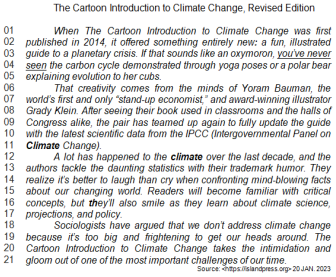
The topic of the text from the question above is:
Ano: 2023
Banca:
ADVISE
Órgão:
Prefeitura de Lagoa do Carro - PE
Prova:
ADVISE - 2023 - Prefeitura de Lagoa do Carro - PE - Professor - Fundamental II (Inglês) |
Q3587389
Inglês
In the lines of ‘The Cartoon Introduction to Climate
Change, Revised Edition’ ‘is mentioned other kind of text,
that is:
Ano: 2023
Banca:
ADVISE
Órgão:
Prefeitura de Lagoa do Carro - PE
Prova:
ADVISE - 2023 - Prefeitura de Lagoa do Carro - PE - Professor - Fundamental II (Inglês) |
Q3587388
Inglês
Analyzing the text and its source, we can classify it as:
Ano: 2023
Banca:
FUNDATEC
Órgão:
Prefeitura de Ibiraiaras - RS
Prova:
FUNDATEC - 2023 - Prefeitura de Ibiraiaras - RS - Professor/Lingua Inglesa |
Q3582034
Inglês
Texto associado
Probiotics and Prebiotics: What’s Really Important

(Available at: https://www.health.harvard.edu/nutrition/are-you-getting-essential-nutrients-from-your-diet/ - text especially adapted for this test).
The words in bold “their” (l. 02), “these” (l. 03), and “these” (l. 05) refer to,
respectively:

 Conheça nossos planos