Questões de Concurso
Sobre interpretação de texto | reading comprehension em inglês
Foram encontradas 12.687 questões


Read text II and answer the four questions that follow it:
Text II

Adapted from: https://br.pinterest.com/pin/428897564482393461/
The sentence that explains the relation between the text and the
smiling characters in the illustration is:
Read text II and answer the four questions that follow it:
Text II
Adapted from: https://br.pinterest.com/pin/428897564482393461/
Based on Text II, mark the statements below as TRUE (T) or FALSE
(F).
( ) Close-minded people tend to back new ideas and
perspectives.
( ) Developing diversity awareness compensates the time and
effort spent.
( ) People should avoid bringing up discussions about diversity.
The statements are, respectively,
Read Text I and answer the fourteen questions that follow it
Text I The “literacy turn” in education: reexamining
what it means to be literate
In response to the phenomena of mass migration and the emergence of digital communications media that defined the last decade of the 20th century, the New London Group (NLG) called for a broader view of literacy and literacy teaching in its 1996 manifesto, A Pedagogy of Multiliteracies: Designing Social Futures. The group argued that literacy pedagogy in education must (1) reflect the increasing cultural and linguistic diversity of the contemporary globalized world, and (2) account for the new kinds of texts and textual engagement that have emerged in the wake of new information and multimedia technologies. In order to better capture the plurality of discourses, languages, and media, they proposed the term ‘multiliteracies’.
Within the NLG’s pedagogy of multiliteracies, language and
other modes of communication are viewed as dynamic resources
for meaning making that undergo constant changes in the
dynamics of language use as learners attempt to achieve their
own purposes. Within this broader view of literacy and literacy
teaching, learners are no longer “users as decoders of language”
but rather “designers of meaning.” Meaning is not viewed as
something that resides in texts; rather, deriving meaning is
considered an active and dynamic process in which learners
combine and creatively apply both linguistic and other semiotic
resources (e.g., visual, gesture, sound, etc.) with an awareness of
“the sets of conventions connected with semiotic activity [...] in a
given social space” (NLG, 1996, p. 74).
Grounded within the view that learning develops in social,
cultural, and material contexts as a result of collaborative
interactions, NLG argued that instantiating literacy-based
teaching in classrooms calls on the complex integration and
interaction of four pedagogical components that are neither
hierarchical nor linear and can at times overlap: situated practice,
overt instruction, critical framing, and transformed practice. […]
Although the NLG’s pedagogy of multiliteracies was
conceived as a “statement of general principle” (1996, p. 89) for
schools, the group’s call for educators to recognize the diversity
and social situatedness of literacy has had a lasting impact on
foreign language (FL) teaching and learning. The reception of the
group’s work along with that of other scholars from critical
pedagogy appeared at a time when the field was becoming less
solidly anchored in theories of L2 acquisition and more interested
in the social practice of FL education itself. In the section that
follows, we describe the current state of FL literacy studies as it
has developed in recent years, before finally turning to some very
recent emerging trends that we are likely to see develop going
forward.
(Adapted from: https://www.colorado.edu/center/altec/sites/default/files/ attachedfiles/moving_toward_multiliteracies_in_foreign_language_teaching.pdf)
Read Text I and answer the fourteen questions that follow it
Text I The “literacy turn” in education: reexamining
what it means to be literate
In response to the phenomena of mass migration and the emergence of digital communications media that defined the last decade of the 20th century, the New London Group (NLG) called for a broader view of literacy and literacy teaching in its 1996 manifesto, A Pedagogy of Multiliteracies: Designing Social Futures. The group argued that literacy pedagogy in education must (1) reflect the increasing cultural and linguistic diversity of the contemporary globalized world, and (2) account for the new kinds of texts and textual engagement that have emerged in the wake of new information and multimedia technologies. In order to better capture the plurality of discourses, languages, and media, they proposed the term ‘multiliteracies’.
Within the NLG’s pedagogy of multiliteracies, language and
other modes of communication are viewed as dynamic resources
for meaning making that undergo constant changes in the
dynamics of language use as learners attempt to achieve their
own purposes. Within this broader view of literacy and literacy
teaching, learners are no longer “users as decoders of language”
but rather “designers of meaning.” Meaning is not viewed as
something that resides in texts; rather, deriving meaning is
considered an active and dynamic process in which learners
combine and creatively apply both linguistic and other semiotic
resources (e.g., visual, gesture, sound, etc.) with an awareness of
“the sets of conventions connected with semiotic activity [...] in a
given social space” (NLG, 1996, p. 74).
Grounded within the view that learning develops in social,
cultural, and material contexts as a result of collaborative
interactions, NLG argued that instantiating literacy-based
teaching in classrooms calls on the complex integration and
interaction of four pedagogical components that are neither
hierarchical nor linear and can at times overlap: situated practice,
overt instruction, critical framing, and transformed practice. […]
Although the NLG’s pedagogy of multiliteracies was
conceived as a “statement of general principle” (1996, p. 89) for
schools, the group’s call for educators to recognize the diversity
and social situatedness of literacy has had a lasting impact on
foreign language (FL) teaching and learning. The reception of the
group’s work along with that of other scholars from critical
pedagogy appeared at a time when the field was becoming less
solidly anchored in theories of L2 acquisition and more interested
in the social practice of FL education itself. In the section that
follows, we describe the current state of FL literacy studies as it
has developed in recent years, before finally turning to some very
recent emerging trends that we are likely to see develop going
forward.
(Adapted from: https://www.colorado.edu/center/altec/sites/default/files/ attachedfiles/moving_toward_multiliteracies_in_foreign_language_teaching.pdf)
Read Text I and answer the fourteen questions that follow it
Text I The “literacy turn” in education: reexamining
what it means to be literate
In response to the phenomena of mass migration and the emergence of digital communications media that defined the last decade of the 20th century, the New London Group (NLG) called for a broader view of literacy and literacy teaching in its 1996 manifesto, A Pedagogy of Multiliteracies: Designing Social Futures. The group argued that literacy pedagogy in education must (1) reflect the increasing cultural and linguistic diversity of the contemporary globalized world, and (2) account for the new kinds of texts and textual engagement that have emerged in the wake of new information and multimedia technologies. In order to better capture the plurality of discourses, languages, and media, they proposed the term ‘multiliteracies’.
Within the NLG’s pedagogy of multiliteracies, language and
other modes of communication are viewed as dynamic resources
for meaning making that undergo constant changes in the
dynamics of language use as learners attempt to achieve their
own purposes. Within this broader view of literacy and literacy
teaching, learners are no longer “users as decoders of language”
but rather “designers of meaning.” Meaning is not viewed as
something that resides in texts; rather, deriving meaning is
considered an active and dynamic process in which learners
combine and creatively apply both linguistic and other semiotic
resources (e.g., visual, gesture, sound, etc.) with an awareness of
“the sets of conventions connected with semiotic activity [...] in a
given social space” (NLG, 1996, p. 74).
Grounded within the view that learning develops in social,
cultural, and material contexts as a result of collaborative
interactions, NLG argued that instantiating literacy-based
teaching in classrooms calls on the complex integration and
interaction of four pedagogical components that are neither
hierarchical nor linear and can at times overlap: situated practice,
overt instruction, critical framing, and transformed practice. […]
Although the NLG’s pedagogy of multiliteracies was
conceived as a “statement of general principle” (1996, p. 89) for
schools, the group’s call for educators to recognize the diversity
and social situatedness of literacy has had a lasting impact on
foreign language (FL) teaching and learning. The reception of the
group’s work along with that of other scholars from critical
pedagogy appeared at a time when the field was becoming less
solidly anchored in theories of L2 acquisition and more interested
in the social practice of FL education itself. In the section that
follows, we describe the current state of FL literacy studies as it
has developed in recent years, before finally turning to some very
recent emerging trends that we are likely to see develop going
forward.
(Adapted from: https://www.colorado.edu/center/altec/sites/default/files/ attachedfiles/moving_toward_multiliteracies_in_foreign_language_teaching.pdf)
Read Text I and answer the fourteen questions that follow it
Text I The “literacy turn” in education: reexamining
what it means to be literate
In response to the phenomena of mass migration and the emergence of digital communications media that defined the last decade of the 20th century, the New London Group (NLG) called for a broader view of literacy and literacy teaching in its 1996 manifesto, A Pedagogy of Multiliteracies: Designing Social Futures. The group argued that literacy pedagogy in education must (1) reflect the increasing cultural and linguistic diversity of the contemporary globalized world, and (2) account for the new kinds of texts and textual engagement that have emerged in the wake of new information and multimedia technologies. In order to better capture the plurality of discourses, languages, and media, they proposed the term ‘multiliteracies’.
Within the NLG’s pedagogy of multiliteracies, language and
other modes of communication are viewed as dynamic resources
for meaning making that undergo constant changes in the
dynamics of language use as learners attempt to achieve their
own purposes. Within this broader view of literacy and literacy
teaching, learners are no longer “users as decoders of language”
but rather “designers of meaning.” Meaning is not viewed as
something that resides in texts; rather, deriving meaning is
considered an active and dynamic process in which learners
combine and creatively apply both linguistic and other semiotic
resources (e.g., visual, gesture, sound, etc.) with an awareness of
“the sets of conventions connected with semiotic activity [...] in a
given social space” (NLG, 1996, p. 74).
Grounded within the view that learning develops in social,
cultural, and material contexts as a result of collaborative
interactions, NLG argued that instantiating literacy-based
teaching in classrooms calls on the complex integration and
interaction of four pedagogical components that are neither
hierarchical nor linear and can at times overlap: situated practice,
overt instruction, critical framing, and transformed practice. […]
Although the NLG’s pedagogy of multiliteracies was
conceived as a “statement of general principle” (1996, p. 89) for
schools, the group’s call for educators to recognize the diversity
and social situatedness of literacy has had a lasting impact on
foreign language (FL) teaching and learning. The reception of the
group’s work along with that of other scholars from critical
pedagogy appeared at a time when the field was becoming less
solidly anchored in theories of L2 acquisition and more interested
in the social practice of FL education itself. In the section that
follows, we describe the current state of FL literacy studies as it
has developed in recent years, before finally turning to some very
recent emerging trends that we are likely to see develop going
forward.
(Adapted from: https://www.colorado.edu/center/altec/sites/default/files/ attachedfiles/moving_toward_multiliteracies_in_foreign_language_teaching.pdf)
Read Text I and answer the fourteen questions that follow it
Text I The “literacy turn” in education: reexamining
what it means to be literate
In response to the phenomena of mass migration and the emergence of digital communications media that defined the last decade of the 20th century, the New London Group (NLG) called for a broader view of literacy and literacy teaching in its 1996 manifesto, A Pedagogy of Multiliteracies: Designing Social Futures. The group argued that literacy pedagogy in education must (1) reflect the increasing cultural and linguistic diversity of the contemporary globalized world, and (2) account for the new kinds of texts and textual engagement that have emerged in the wake of new information and multimedia technologies. In order to better capture the plurality of discourses, languages, and media, they proposed the term ‘multiliteracies’.
Within the NLG’s pedagogy of multiliteracies, language and
other modes of communication are viewed as dynamic resources
for meaning making that undergo constant changes in the
dynamics of language use as learners attempt to achieve their
own purposes. Within this broader view of literacy and literacy
teaching, learners are no longer “users as decoders of language”
but rather “designers of meaning.” Meaning is not viewed as
something that resides in texts; rather, deriving meaning is
considered an active and dynamic process in which learners
combine and creatively apply both linguistic and other semiotic
resources (e.g., visual, gesture, sound, etc.) with an awareness of
“the sets of conventions connected with semiotic activity [...] in a
given social space” (NLG, 1996, p. 74).
Grounded within the view that learning develops in social,
cultural, and material contexts as a result of collaborative
interactions, NLG argued that instantiating literacy-based
teaching in classrooms calls on the complex integration and
interaction of four pedagogical components that are neither
hierarchical nor linear and can at times overlap: situated practice,
overt instruction, critical framing, and transformed practice. […]
Although the NLG’s pedagogy of multiliteracies was
conceived as a “statement of general principle” (1996, p. 89) for
schools, the group’s call for educators to recognize the diversity
and social situatedness of literacy has had a lasting impact on
foreign language (FL) teaching and learning. The reception of the
group’s work along with that of other scholars from critical
pedagogy appeared at a time when the field was becoming less
solidly anchored in theories of L2 acquisition and more interested
in the social practice of FL education itself. In the section that
follows, we describe the current state of FL literacy studies as it
has developed in recent years, before finally turning to some very
recent emerging trends that we are likely to see develop going
forward.
(Adapted from: https://www.colorado.edu/center/altec/sites/default/files/ attachedfiles/moving_toward_multiliteracies_in_foreign_language_teaching.pdf)
Read Text I and answer the fourteen questions that follow it
Text I The “literacy turn” in education: reexamining
what it means to be literate
In response to the phenomena of mass migration and the emergence of digital communications media that defined the last decade of the 20th century, the New London Group (NLG) called for a broader view of literacy and literacy teaching in its 1996 manifesto, A Pedagogy of Multiliteracies: Designing Social Futures. The group argued that literacy pedagogy in education must (1) reflect the increasing cultural and linguistic diversity of the contemporary globalized world, and (2) account for the new kinds of texts and textual engagement that have emerged in the wake of new information and multimedia technologies. In order to better capture the plurality of discourses, languages, and media, they proposed the term ‘multiliteracies’.
Within the NLG’s pedagogy of multiliteracies, language and
other modes of communication are viewed as dynamic resources
for meaning making that undergo constant changes in the
dynamics of language use as learners attempt to achieve their
own purposes. Within this broader view of literacy and literacy
teaching, learners are no longer “users as decoders of language”
but rather “designers of meaning.” Meaning is not viewed as
something that resides in texts; rather, deriving meaning is
considered an active and dynamic process in which learners
combine and creatively apply both linguistic and other semiotic
resources (e.g., visual, gesture, sound, etc.) with an awareness of
“the sets of conventions connected with semiotic activity [...] in a
given social space” (NLG, 1996, p. 74).
Grounded within the view that learning develops in social,
cultural, and material contexts as a result of collaborative
interactions, NLG argued that instantiating literacy-based
teaching in classrooms calls on the complex integration and
interaction of four pedagogical components that are neither
hierarchical nor linear and can at times overlap: situated practice,
overt instruction, critical framing, and transformed practice. […]
Although the NLG’s pedagogy of multiliteracies was
conceived as a “statement of general principle” (1996, p. 89) for
schools, the group’s call for educators to recognize the diversity
and social situatedness of literacy has had a lasting impact on
foreign language (FL) teaching and learning. The reception of the
group’s work along with that of other scholars from critical
pedagogy appeared at a time when the field was becoming less
solidly anchored in theories of L2 acquisition and more interested
in the social practice of FL education itself. In the section that
follows, we describe the current state of FL literacy studies as it
has developed in recent years, before finally turning to some very
recent emerging trends that we are likely to see develop going
forward.
(Adapted from: https://www.colorado.edu/center/altec/sites/default/files/ attachedfiles/moving_toward_multiliteracies_in_foreign_language_teaching.pdf)
Choose the correct answer:
Read Text I and answer the fourteen questions that follow it
Text I The “literacy turn” in education: reexamining
what it means to be literate
In response to the phenomena of mass migration and the emergence of digital communications media that defined the last decade of the 20th century, the New London Group (NLG) called for a broader view of literacy and literacy teaching in its 1996 manifesto, A Pedagogy of Multiliteracies: Designing Social Futures. The group argued that literacy pedagogy in education must (1) reflect the increasing cultural and linguistic diversity of the contemporary globalized world, and (2) account for the new kinds of texts and textual engagement that have emerged in the wake of new information and multimedia technologies. In order to better capture the plurality of discourses, languages, and media, they proposed the term ‘multiliteracies’.
Within the NLG’s pedagogy of multiliteracies, language and
other modes of communication are viewed as dynamic resources
for meaning making that undergo constant changes in the
dynamics of language use as learners attempt to achieve their
own purposes. Within this broader view of literacy and literacy
teaching, learners are no longer “users as decoders of language”
but rather “designers of meaning.” Meaning is not viewed as
something that resides in texts; rather, deriving meaning is
considered an active and dynamic process in which learners
combine and creatively apply both linguistic and other semiotic
resources (e.g., visual, gesture, sound, etc.) with an awareness of
“the sets of conventions connected with semiotic activity [...] in a
given social space” (NLG, 1996, p. 74).
Grounded within the view that learning develops in social,
cultural, and material contexts as a result of collaborative
interactions, NLG argued that instantiating literacy-based
teaching in classrooms calls on the complex integration and
interaction of four pedagogical components that are neither
hierarchical nor linear and can at times overlap: situated practice,
overt instruction, critical framing, and transformed practice. […]
Although the NLG’s pedagogy of multiliteracies was
conceived as a “statement of general principle” (1996, p. 89) for
schools, the group’s call for educators to recognize the diversity
and social situatedness of literacy has had a lasting impact on
foreign language (FL) teaching and learning. The reception of the
group’s work along with that of other scholars from critical
pedagogy appeared at a time when the field was becoming less
solidly anchored in theories of L2 acquisition and more interested
in the social practice of FL education itself. In the section that
follows, we describe the current state of FL literacy studies as it
has developed in recent years, before finally turning to some very
recent emerging trends that we are likely to see develop going
forward.
(Adapted from: https://www.colorado.edu/center/altec/sites/default/files/ attachedfiles/moving_toward_multiliteracies_in_foreign_language_teaching.pdf)
( ) The New London Group (NLG) coined the term ‘literacy’. ( ) One of the factors that triggered a change in the concept of being literate was digital communications media. ( ) The concept of multiliteracies disregards the diversity of discourses.
The statements are, respectively,
1. The team at Rutgers was experimenting with creating electric signals.
2. None of the physicists expected pharmaceutical powders to stick together.
3. The small lightning bolt, or electric charge, followed a short time after the powder had fallen apart.
4. The electrical charge only affected powders that have fallen apart suddenly.
5. In the experiment, the electric charge always appeared before the materials fell apart.
Choose the alternative which contains the correct sentences.
( ) Some years ago, a court found that seven scientists were responsible for 300 deaths and 1,500 injuries in the L’Aquila earthquake.
( ) Several research studies in physics and biology show that electric charges may be able to predict earthquakes in the future.
( ) Scientists in Britain and Russia have developed satellites that can already predict earthquakes accurately.
( ) Scientists believe that rocks may become electrically charged before an earthquake.
Choose the alternative which presents the correct sequence, from top to bottom.
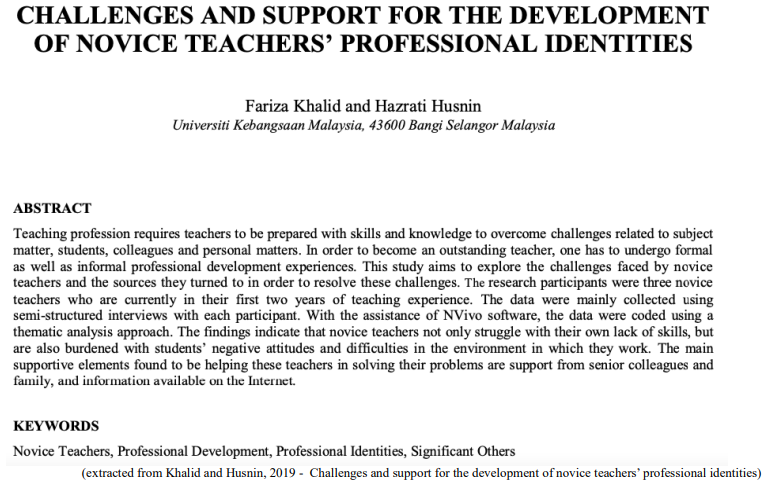
“In order to become effective, teachers have to be professionally prepared. Teachers therefore need to experience continuing professional development so as to become more effective (Harris, 2002). For pre-service teachers, teaching practice is one of the key elements in their training (Haigh and Tuck, 1999; Hill and Brodin, 2004). Through pre-service training, student teachers are provided with experience in teaching and learning in and outside the classroom, as well as opportunities to enhance the development of their characters so as to become ethical and professional (Kennedy, 2006). Some past studies have proven that teaching practice helps pre-service teachers to have better discussions with lecturers and mentors, and thus helps pre-service teachers to determine the approaches to use and their implications in teaching (Botha and Reddy, 2011; Agbo, 2003). In addition, teaching practice has been found to help pre-service teachers to enhance those skills related to problem identification, decision making, and the selection of approaches to overcome problems in classroom situations, and has also been found to be incredibly significant in developing pre-service teachers’ confidence in themselves (Khalid, 2014). Nevertheless, teachers’ professional development is not merely limited to preservice training. Berliner (1995) views the initial stage of new teachers’ professionalism as the critical stage in which novice teachers will face numerous conflicts, responsibilities and tasks”.
That being said, relying on linguistic skills and reading techniques, check the answer which is associated with the global meaning of the excerpt of the paper provided.
(A) The Natural Order hypothesis.
(B) The Affective Filter hypothesis.
(C) The Acquisition-Learning hypothesis
(D) The Monitor hypothesis
(E) The Input hypothesis
( ) This hypothesis reinforces that our ability to produce statements in another language is the result of unconscious knowledge and that conscious knowledge has the function of editing and correcting the output (oral productions).
( ) According to this hypothesis, learners who are poorly motivated, insecure, anxious and with low self-esteem would be prevented from connecting the input with the LAD (Language Acquisition Device).
( ) This hypothesis predicts that there is only one way to acquire the language: understanding messages.
( ) This hypothesis predicts that there are two ways to develop a second language. The first one would be unconscious and the second one would be conscious.
( ) This hypothesis suggests that we acquire the rules of a language regardless of how these rules are taught in the classroom.

Planes top 800 mph as near-record winds sweep high over Mid-Atlantic

(Available at: www.washingtonpost.com/weather/2024/02/18/record-jet-stream-winds-dc-flights/ – text
specially adapted for this test)

 Conheça nossos planos