Questões de Concurso
Sobre interpretação de texto | reading comprehension em inglês
Foram encontradas 12.687 questões


Text 2

Text 1
Romanticism
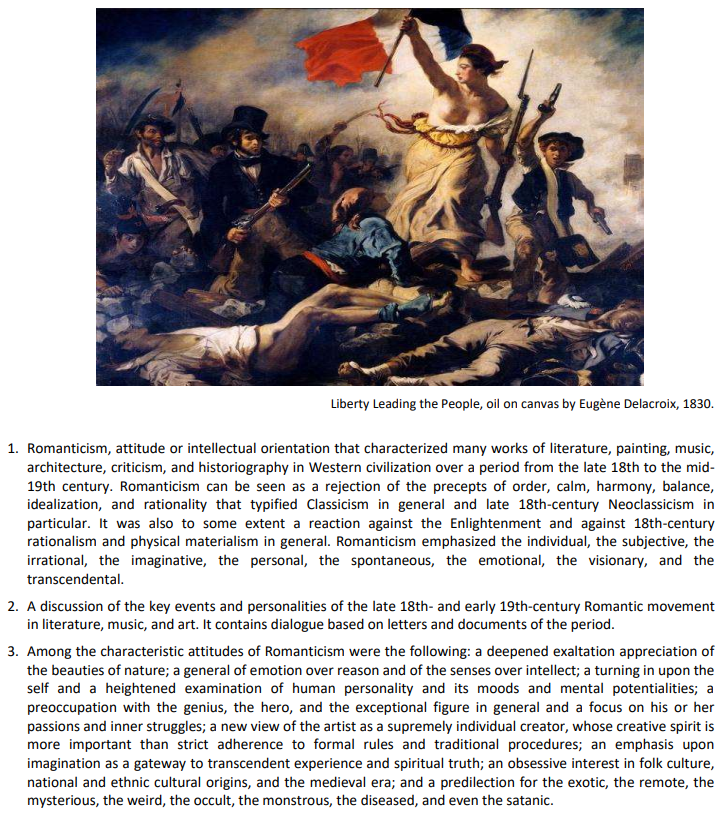
BRITANNICA, The Editors of Encyclopaedia. “Romanticism”. Encyclopedia Britannica, 26 Dec. 2023,
https://www.britannica.com/art/Romanticism. Accessed 1 February 2024
Text 1
Romanticism
BRITANNICA, The Editors of Encyclopaedia. “Romanticism”. Encyclopedia Britannica, 26 Dec. 2023,
https://www.britannica.com/art/Romanticism. Accessed 1 February 2024
“Wonderful experience”: Researcher’s close encounter with Svalbard polar bears
By Miranda Bryant

(Available at: www.theguardian.com/environment/2024/apr/02/wonderful-experience-svalbardresearchers-close-encounter-with-svalbard-polar-bears – text especially adapted for this test).
“Wonderful experience”: Researcher’s close encounter with Svalbard polar bears
By Miranda Bryant
(Available at: www.theguardian.com/environment/2024/apr/02/wonderful-experience-svalbardresearchers-close-encounter-with-svalbard-polar-bears – text especially adapted for this test).
“Wonderful experience”: Researcher’s close encounter with Svalbard polar bears
By Miranda Bryant
(Available at: www.theguardian.com/environment/2024/apr/02/wonderful-experience-svalbardresearchers-close-encounter-with-svalbard-polar-bears – text especially adapted for this test).
( ) The researchers have already seen double the usual number of bears around their station this year. ( ) The woman who saw the bears was on “station duty”, which consists of guarding the base surroundings. ( ) The Polish research station where the polar bears were seen is located in Norway.
The correct order of filling the parentheses, from top to bottom, is
Leia o seguinte texto na língua inglesa.
Explicit Versus Implicit Knowledge
When you are representing knowledge to be used to solve certain problems, you must constantly decide how implicit or explicit to make the knowledge. In conventional programming, the knowledge that is incorporate in a program is nearly always completely implicit. It does not really exist as knowledge in the program other than as knowledge the programmer uses to design its functioning. In AI paradigms such as rule-based programming, the attempt is to make knowledge explicit as general rules so that this knowledge can be applied to new situations that the developer may not have foreseen.
(Object-Oriented Programming for Artificial Intelligence, Ernest R. Tello, Addison Wesley Publishing Company Inc., 1990)
Com base no texto apresentado, em paradigmas de IA (como a baseada em regras), a tentativa é transformar o conhecimento explícito em regras gerais para que esse conhecimento possa ser aplicado a novas situações
Leia o texto a seguir, na língua inglesa, a respeito da tarefa de instalação de impressora no Windows.
Install a printer in Windows 11
When you connect a printer or scanner to your PC or add a new printer or all-in-one device to your home network, you can usually start printing right away. Windows 11 supports most printers, so you probably won´t have to install special printer software. Additional printer drivers and support might be available if you update Windows.
(https://support.microsoft.com/en-us/windows/, acessado em 06.05.2024)
De acordo com o texto, caso o Windows 11 seja atualizado,
Read Text I and answer question.
Text I
How to have a healthier relationship with your phone
A few years ago, a Google employee sent an email to thousands of her co-workers: What if for six weeks straight, you spent one night per week without technology? The email was from Laura Mae Martin, Google’s executive productivity adviser, a role that, among other things, was created to help staff members foster healthier relationships with their gadgets and apps. After she sent the note, Ms. Martin was flooded with responses from coworkers eager for a respite from some of the very products they helped build. Thousands of employees have since participated in the annual “No-Tech Tuesday Night Challenge,” said Ms. Martin.
The problem she was trying to solve isn’t unique to Google workers. One survey found that Americans say they spend too much time on their phones. But dramatic solutions – a digital detox, a phone downgrade or a complete exit from social media – may feel impractical.
Is it possible to have a healthy relationship with technology while still using it daily? Fortunately, according to experts, the answer is a resounding ‘yes’ and here are a few things you can try:
First, start with one simple question.
You know that urge you get to reach for your phone without realizing it? And then, before you know it, you’re an hour into a social media binge? If you want to peacefully coexist with technology, you need to get a handle on those impulses, said Richard J. Davidson, the founder and director of the Center for Healthy Minds at the University of Wisconsin-Madison. According to him, people should start by noticing when they have an urge to lift their phone or open social media on their browser window. By becoming conscious of what you’re about to do, you’re interrupting an automatic behavior and awakening the part of your brain that governs self-control, he added. As one research article suggests, awareness of your actions can help you rein in bad habits.
Secondly, take the “mobile” out of your mobile devices.
Dr. Anna Lembke, a professor of psychiatry and addiction medicine at Stanford University School of Medicine, said one of the biggest problems with smartphones is what she calls “texting while running to catch a bus.” Using our devices while we’re on the move – walking from meeting to meeting, taking a child to school or catching a bus – prevents us from being more engaged in our lives, Dr. Lembke said.
One way to create harmony with technology is to limit your phone use when you’re on the move. Headed out for a walk? Turn off your notifications. Going to grab a coffee? Leave your phone on your desk. If you’re feeling brave, try powering down your phone while in transit. It won’t buzz with notifications, text messages or phone calls, which Dr. Lembke said could help you focus on the world around you.
Last of all, make technology work for you.
One thing experts agree on: To forge a healthy relationship with technology, you need to be in control of it and not the other way around. Think about your gadgets as tools that you decide how to use.
“Make it work for you, not against you; whether it’s an email program or your dishwasher, it’s the intention behind how you’re using it that really makes the big difference”, said Ms. Martin, the productivity expert at Google.
(Adapted from:
https://www.nytimes.com/2024/03/21/well/social-media-phone-addiction.html)
Read Text I and answer question.
Text I
How to have a healthier relationship with your phone
A few years ago, a Google employee sent an email to thousands of her co-workers: What if for six weeks straight, you spent one night per week without technology? The email was from Laura Mae Martin, Google’s executive productivity adviser, a role that, among other things, was created to help staff members foster healthier relationships with their gadgets and apps. After she sent the note, Ms. Martin was flooded with responses from coworkers eager for a respite from some of the very products they helped build. Thousands of employees have since participated in the annual “No-Tech Tuesday Night Challenge,” said Ms. Martin.
The problem she was trying to solve isn’t unique to Google workers. One survey found that Americans say they spend too much time on their phones. But dramatic solutions – a digital detox, a phone downgrade or a complete exit from social media – may feel impractical.
Is it possible to have a healthy relationship with technology while still using it daily? Fortunately, according to experts, the answer is a resounding ‘yes’ and here are a few things you can try:
First, start with one simple question.
You know that urge you get to reach for your phone without realizing it? And then, before you know it, you’re an hour into a social media binge? If you want to peacefully coexist with technology, you need to get a handle on those impulses, said Richard J. Davidson, the founder and director of the Center for Healthy Minds at the University of Wisconsin-Madison. According to him, people should start by noticing when they have an urge to lift their phone or open social media on their browser window. By becoming conscious of what you’re about to do, you’re interrupting an automatic behavior and awakening the part of your brain that governs self-control, he added. As one research article suggests, awareness of your actions can help you rein in bad habits.
Secondly, take the “mobile” out of your mobile devices.
Dr. Anna Lembke, a professor of psychiatry and addiction medicine at Stanford University School of Medicine, said one of the biggest problems with smartphones is what she calls “texting while running to catch a bus.” Using our devices while we’re on the move – walking from meeting to meeting, taking a child to school or catching a bus – prevents us from being more engaged in our lives, Dr. Lembke said.
One way to create harmony with technology is to limit your phone use when you’re on the move. Headed out for a walk? Turn off your notifications. Going to grab a coffee? Leave your phone on your desk. If you’re feeling brave, try powering down your phone while in transit. It won’t buzz with notifications, text messages or phone calls, which Dr. Lembke said could help you focus on the world around you.
Last of all, make technology work for you.
One thing experts agree on: To forge a healthy relationship with technology, you need to be in control of it and not the other way around. Think about your gadgets as tools that you decide how to use.
“Make it work for you, not against you; whether it’s an email program or your dishwasher, it’s the intention behind how you’re using it that really makes the big difference”, said Ms. Martin, the productivity expert at Google.
(Adapted from:
https://www.nytimes.com/2024/03/21/well/social-media-phone-addiction.html)
Read Text I and answer question.
Text I
How to have a healthier relationship with your phone
A few years ago, a Google employee sent an email to thousands of her co-workers: What if for six weeks straight, you spent one night per week without technology? The email was from Laura Mae Martin, Google’s executive productivity adviser, a role that, among other things, was created to help staff members foster healthier relationships with their gadgets and apps. After she sent the note, Ms. Martin was flooded with responses from coworkers eager for a respite from some of the very products they helped build. Thousands of employees have since participated in the annual “No-Tech Tuesday Night Challenge,” said Ms. Martin.
The problem she was trying to solve isn’t unique to Google workers. One survey found that Americans say they spend too much time on their phones. But dramatic solutions – a digital detox, a phone downgrade or a complete exit from social media – may feel impractical.
Is it possible to have a healthy relationship with technology while still using it daily? Fortunately, according to experts, the answer is a resounding ‘yes’ and here are a few things you can try:
First, start with one simple question.
You know that urge you get to reach for your phone without realizing it? And then, before you know it, you’re an hour into a social media binge? If you want to peacefully coexist with technology, you need to get a handle on those impulses, said Richard J. Davidson, the founder and director of the Center for Healthy Minds at the University of Wisconsin-Madison. According to him, people should start by noticing when they have an urge to lift their phone or open social media on their browser window. By becoming conscious of what you’re about to do, you’re interrupting an automatic behavior and awakening the part of your brain that governs self-control, he added. As one research article suggests, awareness of your actions can help you rein in bad habits.
Secondly, take the “mobile” out of your mobile devices.
Dr. Anna Lembke, a professor of psychiatry and addiction medicine at Stanford University School of Medicine, said one of the biggest problems with smartphones is what she calls “texting while running to catch a bus.” Using our devices while we’re on the move – walking from meeting to meeting, taking a child to school or catching a bus – prevents us from being more engaged in our lives, Dr. Lembke said.
One way to create harmony with technology is to limit your phone use when you’re on the move. Headed out for a walk? Turn off your notifications. Going to grab a coffee? Leave your phone on your desk. If you’re feeling brave, try powering down your phone while in transit. It won’t buzz with notifications, text messages or phone calls, which Dr. Lembke said could help you focus on the world around you.
Last of all, make technology work for you.
One thing experts agree on: To forge a healthy relationship with technology, you need to be in control of it and not the other way around. Think about your gadgets as tools that you decide how to use.
“Make it work for you, not against you; whether it’s an email program or your dishwasher, it’s the intention behind how you’re using it that really makes the big difference”, said Ms. Martin, the productivity expert at Google.
(Adapted from:
https://www.nytimes.com/2024/03/21/well/social-media-phone-addiction.html)
I - The best way for someone to be more engaged in their own lives is to text while running to catch a bus because there’s not enough hours in a day to balance everything. II - When someone is conscious of their actions, it can help them spur their bad habits, as one research article suggested. III - Experts agree on the fact that, to forge a healthy relationship with technology, a person needs to be in control of it and not the other way around.
According to Text I, it is correct to affirm that:
Read Text I and answer question.
Text I
How to have a healthier relationship with your phone
A few years ago, a Google employee sent an email to thousands of her co-workers: What if for six weeks straight, you spent one night per week without technology? The email was from Laura Mae Martin, Google’s executive productivity adviser, a role that, among other things, was created to help staff members foster healthier relationships with their gadgets and apps. After she sent the note, Ms. Martin was flooded with responses from coworkers eager for a respite from some of the very products they helped build. Thousands of employees have since participated in the annual “No-Tech Tuesday Night Challenge,” said Ms. Martin.
The problem she was trying to solve isn’t unique to Google workers. One survey found that Americans say they spend too much time on their phones. But dramatic solutions – a digital detox, a phone downgrade or a complete exit from social media – may feel impractical.
Is it possible to have a healthy relationship with technology while still using it daily? Fortunately, according to experts, the answer is a resounding ‘yes’ and here are a few things you can try:
First, start with one simple question.
You know that urge you get to reach for your phone without realizing it? And then, before you know it, you’re an hour into a social media binge? If you want to peacefully coexist with technology, you need to get a handle on those impulses, said Richard J. Davidson, the founder and director of the Center for Healthy Minds at the University of Wisconsin-Madison. According to him, people should start by noticing when they have an urge to lift their phone or open social media on their browser window. By becoming conscious of what you’re about to do, you’re interrupting an automatic behavior and awakening the part of your brain that governs self-control, he added. As one research article suggests, awareness of your actions can help you rein in bad habits.
Secondly, take the “mobile” out of your mobile devices.
Dr. Anna Lembke, a professor of psychiatry and addiction medicine at Stanford University School of Medicine, said one of the biggest problems with smartphones is what she calls “texting while running to catch a bus.” Using our devices while we’re on the move – walking from meeting to meeting, taking a child to school or catching a bus – prevents us from being more engaged in our lives, Dr. Lembke said.
One way to create harmony with technology is to limit your phone use when you’re on the move. Headed out for a walk? Turn off your notifications. Going to grab a coffee? Leave your phone on your desk. If you’re feeling brave, try powering down your phone while in transit. It won’t buzz with notifications, text messages or phone calls, which Dr. Lembke said could help you focus on the world around you.
Last of all, make technology work for you.
One thing experts agree on: To forge a healthy relationship with technology, you need to be in control of it and not the other way around. Think about your gadgets as tools that you decide how to use.
“Make it work for you, not against you; whether it’s an email program or your dishwasher, it’s the intention behind how you’re using it that really makes the big difference”, said Ms. Martin, the productivity expert at Google.
(Adapted from:
https://www.nytimes.com/2024/03/21/well/social-media-phone-addiction.html)
( ) One survey found that, due to spending too much time on their phones, almost fifty percent of people from all around the world are about to make dramatic moves, such as opt for a digital detox or a complete exit from social media. ( ) Experts say it’s quite unlikely for someone to have a healthy relationship with technology while still using it daily because they’re already so addicted to their gadgets that there’s no way to overcome it. ( ) According to the founder and director of the Center for Healthy Minds at the University of Wisconsin-Madison, if someone desires to peacefully coexist with technology, they need to get a handle on impulses that make them reach for their phone without even realizing it.
The statements are, in the order presented, respectively:
In the cartoon below we see a conversation between a student and a professor:
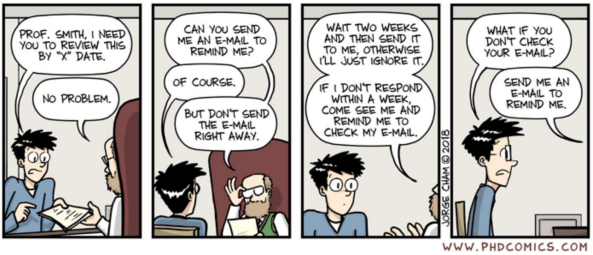
Student: Prof. Smith, I need you to review this by “X” date.
Professor: No problem. Can you send me an e-mail to remind me?
Student: Of course.
Professor: But don’t send the e-mail right away. Wait two weeks and then send it to me, otherwise I’ll just ignore it. If I don’t respond within a week, come see me and remind me to check my email.
Student: What if you don’t check your email?
Professor: Send me an email to remind me.
How would the student report their professor’s line “Don’t send the e-mail right away” to another
person after leaving the professor’s office?
Poor Things – Emma Stone transfixes in Lanthimos’s thrilling carnival of oddness
(Available at: www.theguardian.com/film/2024/jan/14/poor-things-review-yorgos-lanthimos-emma-stonefrankenstein – text specially adapted for this test).
Poor Things – Emma Stone transfixes in Lanthimos’s thrilling carnival of oddness
(Available at: www.theguardian.com/film/2024/jan/14/poor-things-review-yorgos-lanthimos-emma-stonefrankenstein – text specially adapted for this test).
( ) The article considers that the main character develops throughout the story from a “blank slate” to a “self-made woman”.
( ) Duncan Wedderburn’s role in the story was to offer Bella the opportunity to experience the world.
( ) The author highlights the historical accuracy of costumes and props as a captivating feature in the movie.
The correct order of filling the parentheses, from top to bottom, is:

 Conheça nossos planos