Questões de Concurso
Sobre interpretação de texto | reading comprehension em inglês
Foram encontradas 12.687 questões


read the following text.
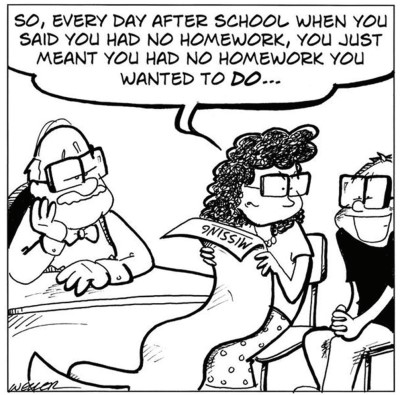
Disponível em: htt ps://new.boredteachers.com/wp-content/uploads/2018/02/92216_grande.jpeg. Acesso em 16 fev. 2024.
A theme present in the text is the
read the following text.
Pooh and his friends on spelling

Pooh said to Piglet: ‘It’s all right, Piglet. Spelling is easy once you get started.’
Piglet nodded. ‘Getti ng started is the worst bit.’
…
Christopher Robin jumped onto the tree stump and made an announcement. ‘Friends, the Spelling Bee has been cancelled, because spelling is diffi cult enough at the best of ti mes, and impossible in the rain.’
David Benedictus, Return to the Hundred Acre Wood, 2009, Ch. 2, ‘In which Owl does a crossword, and a Spelling Bee is held’. Adapted.
You can’t help respecti ng anybody who can spell TUESDAY, even if he doesn’t spell it right; but spelling isn’t everything. There are days when spelling Tuesday simply doesn’t count.
(Rabbit of Owl, in A. A. Milne, The House at Pooh Corner, 1928, Ch. 5)
CrYSTal, david. Spell It Out: The Singular Story of english Spelling. london: Profi le Books, 2012. Adaptado.
Analyze the following statements.
I - The ti tle and the non-verbal aspects must be disregarded to interpret the text.
II - The text, a dissertati on, is about the importance of studying spelling and orthography.
III - Pooh, Piglet, and Christopher Robin are characters in the story.
IV - Pooh and Piglet are talking about spelling.
V - Christopher Robin canceled the Spelling Bee contest.
According to the text, it is correct only what is stated in:
A questão tem como base o texto abaixo:
Text Two:
“I read once, passingly, about a man named Shakespeare. I only read about him passingly, but I remember one thing he wrote that kind of moved me. He put it in the mouth of Hamlet, I think, it was, who said, ‘To be or not to be.’ He was in doubt about something—whether it was nobler in the mind of man to suffer the slings and arrows of outrageous fortune—moderation—or to take up arms against a sea of troubles and by opposing end them. And I go for that. If you take up arms, you’ll end it, but if you sit around and wait for the one who’s in power to make up his mind that he should end it, you’ll be waiting a long time. And in my opinion, the young generation of whites, blacks, browns, whatever else there is, you’re living at a time of extremism, a time of revolution, a time when there’s got to be a change. People in power have misused it, and now there has to be a change and a better world has to be built, and the only way it’s going to be built—is with extreme methods. And I, for one, will join in with anyone—I don’t care what color you are — as long as you want to change this miserable condition that exists on this Earth.”
(Malcolm X speaking at Oxford University in 1964)
A questão tem como base o texto abaixo:
Text Two:
“I read once, passingly, about a man named Shakespeare. I only read about him passingly, but I remember one thing he wrote that kind of moved me. He put it in the mouth of Hamlet, I think, it was, who said, ‘To be or not to be.’ He was in doubt about something—whether it was nobler in the mind of man to suffer the slings and arrows of outrageous fortune—moderation—or to take up arms against a sea of troubles and by opposing end them. And I go for that. If you take up arms, you’ll end it, but if you sit around and wait for the one who’s in power to make up his mind that he should end it, you’ll be waiting a long time. And in my opinion, the young generation of whites, blacks, browns, whatever else there is, you’re living at a time of extremism, a time of revolution, a time when there’s got to be a change. People in power have misused it, and now there has to be a change and a better world has to be built, and the only way it’s going to be built—is with extreme methods. And I, for one, will join in with anyone—I don’t care what color you are — as long as you want to change this miserable condition that exists on this Earth.”
(Malcolm X speaking at Oxford University in 1964)
A questão tem como base o texto abaixo:
Text One:
Good evening. This is the 37th time I have spoken to you from this office in which so many decisions have been made that shape the history of this nation. Each time I have done so to discuss with you some matters that I believe affected the national interest. And all the decisions I have made in my public life I have always tried to do what was best for the nation.
Throughout the long and difficult period of Watergate*, I have felt it was my duty to persevere; to make every possible effort to complete the term of office to which you elected me.
In the past few days, however, it has become evident to me that I no longer have a strong enough political base in the Congress to justify continuing that effort. As long as there was such a base, I felt strongly that it was necessary to see the constitutional process through to its conclusion; that to do otherwise would be unfaithful to the spirit of that deliberately difficult process, and a dangerously destabilizing precedent for the future.
But with the disappearance of that base, I now believe that the constitutional purpose has been served. And there is no longer a need for the process to be pro- longed.
I would have preferred to carry through to the finish whatever the personal agony it would have involved, and my family unanimously urged me to do so. But the interests of the nation must always come before any personal considerations. From the discussions I have had with Congressional and other leaders I have concluded that because of the Watergate matter I might not have the support of the Congress that I would consider necessary to back the very difficult decisions and carry out the duties of this office in the way the interests of the nation will require.
I have never been a quitter.
To leave office before my term is completed is opposed to every instinct in my body. But as President I must put the interests of America first.
America needs a full-time President and a full-time Congress, particularly at this time with problems we face at home and abroad.
To continue to fight through the months ahead for my personal vindication would almost totally absorb the time and attention of both the President and the Congress in a period when our entire focus should be on the great issues of peace abroad and prosperity without inflation at home.
Therefore, I shall resign the Presidency effective at noon tomorrow. (Resignation Speech By Richard Nixon, in August 8, 1974)
Nota: *Watergate foi um escândalo político que culminou no fim da Presidência de Richard Nixon: basicamente, cinco homens foram presos tentando invadir a sede do Partido Democrata (partido de oposição a Nixon) com o intuito de plantar escutas telefônicas, em junho de 1972. Tendo sido descoberto que o Presidente sabia da espionagem e tentou, posteriormente, obstruir a investigação sobre os fatos.
A questão tem como base o texto abaixo:
Text One:
Good evening. This is the 37th time I have spoken to you from this office in which so many decisions have been made that shape the history of this nation. Each time I have done so to discuss with you some matters that I believe affected the national interest. And all the decisions I have made in my public life I have always tried to do what was best for the nation.
Throughout the long and difficult period of Watergate*, I have felt it was my duty to persevere; to make every possible effort to complete the term of office to which you elected me.
In the past few days, however, it has become evident to me that I no longer have a strong enough political base in the Congress to justify continuing that effort. As long as there was such a base, I felt strongly that it was necessary to see the constitutional process through to its conclusion; that to do otherwise would be unfaithful to the spirit of that deliberately difficult process, and a dangerously destabilizing precedent for the future.
But with the disappearance of that base, I now believe that the constitutional purpose has been served. And there is no longer a need for the process to be pro- longed.
I would have preferred to carry through to the finish whatever the personal agony it would have involved, and my family unanimously urged me to do so. But the interests of the nation must always come before any personal considerations. From the discussions I have had with Congressional and other leaders I have concluded that because of the Watergate matter I might not have the support of the Congress that I would consider necessary to back the very difficult decisions and carry out the duties of this office in the way the interests of the nation will require.
I have never been a quitter.
To leave office before my term is completed is opposed to every instinct in my body. But as President I must put the interests of America first.
America needs a full-time President and a full-time Congress, particularly at this time with problems we face at home and abroad.
To continue to fight through the months ahead for my personal vindication would almost totally absorb the time and attention of both the President and the Congress in a period when our entire focus should be on the great issues of peace abroad and prosperity without inflation at home.
Therefore, I shall resign the Presidency effective at noon tomorrow. (Resignation Speech By Richard Nixon, in August 8, 1974)
Nota: *Watergate foi um escândalo político que culminou no fim da Presidência de Richard Nixon: basicamente, cinco homens foram presos tentando invadir a sede do Partido Democrata (partido de oposição a Nixon) com o intuito de plantar escutas telefônicas, em junho de 1972. Tendo sido descoberto que o Presidente sabia da espionagem e tentou, posteriormente, obstruir a investigação sobre os fatos.
A questão tem como base o texto abaixo:
Text One:
Good evening. This is the 37th time I have spoken to you from this office in which so many decisions have been made that shape the history of this nation. Each time I have done so to discuss with you some matters that I believe affected the national interest. And all the decisions I have made in my public life I have always tried to do what was best for the nation.
Throughout the long and difficult period of Watergate*, I have felt it was my duty to persevere; to make every possible effort to complete the term of office to which you elected me.
In the past few days, however, it has become evident to me that I no longer have a strong enough political base in the Congress to justify continuing that effort. As long as there was such a base, I felt strongly that it was necessary to see the constitutional process through to its conclusion; that to do otherwise would be unfaithful to the spirit of that deliberately difficult process, and a dangerously destabilizing precedent for the future.
But with the disappearance of that base, I now believe that the constitutional purpose has been served. And there is no longer a need for the process to be pro- longed.
I would have preferred to carry through to the finish whatever the personal agony it would have involved, and my family unanimously urged me to do so. But the interests of the nation must always come before any personal considerations. From the discussions I have had with Congressional and other leaders I have concluded that because of the Watergate matter I might not have the support of the Congress that I would consider necessary to back the very difficult decisions and carry out the duties of this office in the way the interests of the nation will require.
I have never been a quitter.
To leave office before my term is completed is opposed to every instinct in my body. But as President I must put the interests of America first.
America needs a full-time President and a full-time Congress, particularly at this time with problems we face at home and abroad.
To continue to fight through the months ahead for my personal vindication would almost totally absorb the time and attention of both the President and the Congress in a period when our entire focus should be on the great issues of peace abroad and prosperity without inflation at home.
Therefore, I shall resign the Presidency effective at noon tomorrow. (Resignation Speech By Richard Nixon, in August 8, 1974)
Nota: *Watergate foi um escândalo político que culminou no fim da Presidência de Richard Nixon: basicamente, cinco homens foram presos tentando invadir a sede do Partido Democrata (partido de oposição a Nixon) com o intuito de plantar escutas telefônicas, em junho de 1972. Tendo sido descoberto que o Presidente sabia da espionagem e tentou, posteriormente, obstruir a investigação sobre os fatos.
Available at: http://basenacionalcomum.mec.gov.br/abase/#fu ndamental/lingua-inglesa
Implication of teaching English as a lingua franca for the approach to beliefs about language:
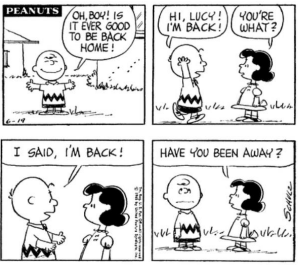
Disponível em: https://www.gocomics.com/peanuts/1965/06/19
What does Lucy's response, "Have you been away?" suggest about Charlie Brown's absence?
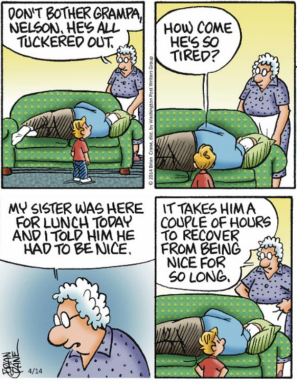
Disponível em: https://www.gocomics.com/pickles/2014/04/14
The grandmother's use of the phrase "tuckered out" suggests that her grandfather is
English is the most widely spoken language in the world, with over 1.5 billion speakers. It is also the most widely used language in international communication, education, and business. As a result, English has become a lingua franca, or common language, used by people of different cultures and backgrounds to communicate with each other.
Which of the following groups of countries has English as an official language?
― Edgar Allan Poe
According to Edgar Allan Poe, how does he perceive the change in human activity over the years?
― Ernest Hemingway, For Whom the Bell Tolls
In the passage, the protagonist expresses his belief that the men guarding the mill are not fascists, but rather poor men who are simply following orders. Which of the following statements best captures the protagonist's attitude towards these men?
“But as, in ethics, evil is a consequence of good, so, in fact, out of joy is sorrow born. Either the memory of past bliss is the anguish of today, or the agonies which are have their origin in the ecstasies which might have been.”
― Edgar Alan Poe, Berenice
In the passage, Poe is suggesting that:
― Ernest Hemingway, For Whom the Bell Tolls
According to the excerpt, what is the relationship between life and death?
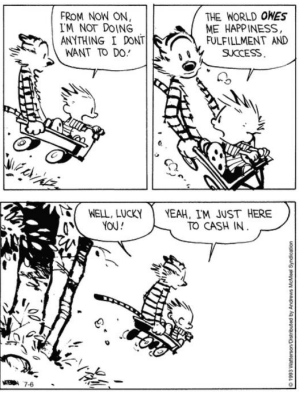
Disponível em: https://www.gocomics.com/calvinandhobbes/20 23/07/06
Calvin declares, "From now on, I'm not doing anything I don't want to do!". What aspect of Calvin's personality does this statement emphasize?
Match the reading strategies to their corresponding descriptions.
1 - Pre-reading:
2 - Active reading
3 - Rereading
4 - Summarizing
5 - Questioning
( ) This strategy involves restating the main points of the text in your own words. Summarizing helps you to understand the text and to remember it better.
( ) This strategy involves actively engaging with the text as you read. You can do this by asking yourself questions, making notes, or highlighting key points. Active reading helps you to understand the text more deeply and to remember it better.
( ) This strategy involves making predictions about the text before you start reading. You can do this by looking at the title, headings, and illustrations, or by thinking about your own knowledge and experience. Pre-reading helps you to focus your attention and to be more engaged in the text.
( ) This strategy involves reading the text again after you have finished the first time. This can help you to catch anything you missed the first time around, or to understand the text in a new way.
( ) This strategy involves asking questions about the text as you read. You can ask questions about the meaning of the text, the author's purpose, or your own understanding of the text. Questioning helps you to think critically about the text and to understand it more deeply.
The correct association is, respectively:
― Charles Dickens, Oliver Twist
In the passage, what is Oliver's desperate plea to those around him?
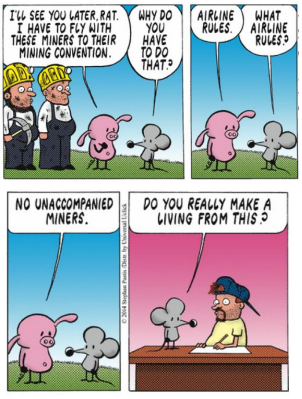
Disponível em: https://www.gocomics.com/pearlsbeforeswine
In the dialog between Pigita and the Rat, what is the humorous element present?
Read the excerpt to answer the question.
“JACK: We must get married at once. There is no time to be lost.
GWENDOLEN: Married, Mr. Worthing?
JACK: Well... surely. You know that I love you, and you let me to believe, Miss Fairfax, that you were not absolutely indifferent to me.
GWENDOLEN: I adore you. But you haven't proposed to me yet. Nothing has been said at all about marriage. The subject has not even been touched on.
JACK: Well... may I propose to you now?
GWENDOLEN: I think it would be an admirable opportunity. And to spare you any possible disappointment, Mr. Worthing, I think it only fair to tell you quite frankly beforehand that I am fully determined to accept you.”
Oscar Wilde, The Importance of Being Earnest

 Conheça nossos planos