Questões de Concurso
Sobre artigos | articles em inglês
Foram encontradas 473 questões


Julgue o item que se segue.
The indefinite article is correctly used in: a hat; a house; a
honor.
Julgue o item subsequente.
Indefinite articles, “a” and “an,” are used to introduce a
non-specific item or entity. The choice between “a” and
“an” depends on the phonetic sound that follows, with “a”
preceding words that start with a consonant sound and
“an” preceding words that begin with a vowel sound.
Julgue o item subsequente.
Definite articles, “the,” specify a particular noun that is
already known or has been previously mentioned in the
context. Understanding the appropriate use of definite
articles is crucial for indicating specificity and reference in
American English.
Julgue o item subsequente.
The zero article, the absence of any article, is used in
specific contexts, such as with plural and uncountable
nouns or when referring to things in general.
Understanding when to omit articles is essential for
precise communication in American English.

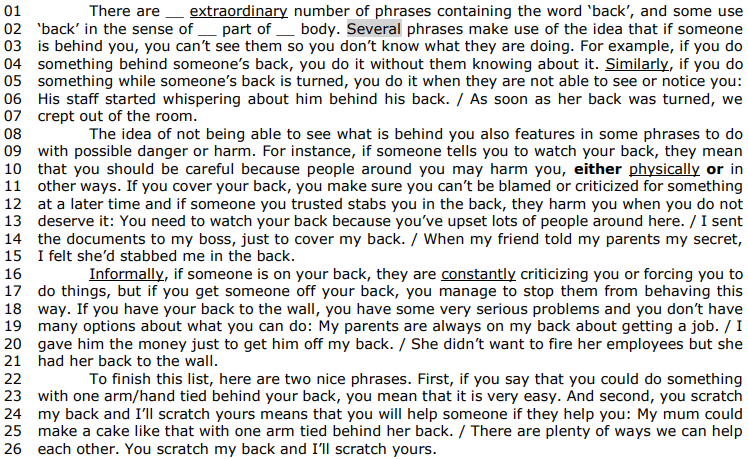
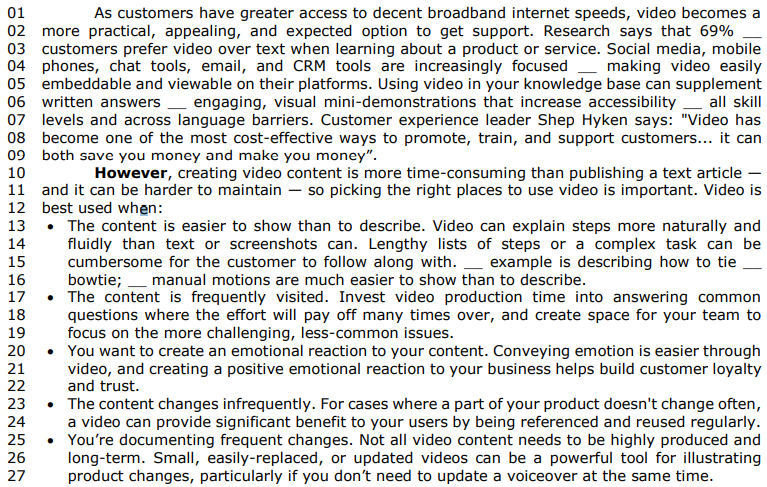
I. MBA. II. unicorn. III. honest
“In (I) __________ rainy weekend, some parents invited me to return to my grandfather’s farm; it would be the first time we went there after his death. We entered by the huge gates, then we opened the heavy dining-room doors. At once I noticed some long-playing records (LP) that he used to listen, I took (II) __________ LP that was in the lowest part of the record player, it was his favorite. Now I need to buy (III) __________ record player, otherwise there was no use of having (IV) __________ old LP like that”.
Assinale a alternativa que preencha correta e respectivamente as lacunas.
Mark the alternative that fills in, correctly and respectively, the gaps in the sentences above:
Julgue o item subsequente.
Julgue o item subsequente.

Text I
Nurturing Multimodalism
[…]
New learning collaborations call on the teacher as learner, and the learner as teacher. The teacher is a lifelong learner; this is simply more apparent in the Information Age. In instances of best practice, collaborative learning partnerships are forged between and among teachers for strategic, bottom-up, in-house professional development. This allows teachers to share in reflective, on-going, contextualized learning, tailored to their collective knowledge. This sharing also includes the learner as teacher. ELT typically employs learner-centered activities: these can include learners sharing their knowledge of strategic digital literacies with others in the classrooms.
The digital universe, so threatening to adult notions of socially sanctioned literacies, is intuitive to children, who have been socialized into it, and for whom digital literacies are exploratory play. Adults may find new ways of communicating digitally to be quite baffling and confronting of our communicative expertise; children do not. Instant messaging systems, such as MSN, AOL, ICQ, for example, provide as natural a medium for communicating to them as telephones did for the baby-boomer generation. It is not fair for the teacher to treat Information and Communication Technologies as auxiliary communication with learners for whom it is mainstream and primary.
Learning spaces are important. Although teachers seldom have much individual say in the layout of teaching spaces, collaborative relationships may help to encourage integrated digitization, where computers are not segregated in laboratories but are interspersed throughout the school environment. In digitally infused curricula, postmodern literacies do not supplant but complement modern literacies, so that access to information is driven by purpose and content rather than by the media available.
Adapted from: LOTHERINGTON, H. From literacy to multiliteracies in ELT. In:
CUMMINS, J.; DAVISON, C. (Eds.) International Handbook of English Language
Teaching. New York: Springer, 2007, p. 820. Available at:
https://www.researchgate.net/publication/226802846_From_Literacy_to_Multiliter
acies_in_ELT

 Conheça nossos planos