Questões Militares
Para aspirante do corpo de bombeiro
Foram encontradas 1.768 questões
Resolva questões gratuitamente!
Junte-se a mais de 4 milhões de concurseiros!


Diana Barros afirma que “ao enunciador é oferecida a possibilidade linguística de jogar com conteúdos implícitos, para fazer passar os valores e deles convencer o enunciatário” (1988, p. 99). Assim, em um texto argumentativo, o enunciador para implicitar conteúdos vale‐se dos seguintes expedientes argumentativos: o pressuposto e o subentendido. O ato de pressupor um conteúdo consiste em situá‐lo como já conhecido do enunciatário e em apresentá‐lo como fundo comum, no interior do qual o discurso deve prosseguir.
Sobre o expediente do pressuposto, analise os enunciados I e II a seguir.
I. Os soldados do Corpo de Bombeiros de Santa Catarina continuam as buscas.
II. O discurso do tenente‐coronel ainda não foi aceito por todos os pares.
Assinale a alternativa correta.
Texto:
O posto de tenente‐coronel foi introduzido nos exércitos europeus no século XVII. “Tenente‐coronel” resulta da contração do termo “tenente do coronel”, ou seja, o oficial que coadjuva ou substitui o coronel. Nos exércitos da época, os coronéis comandantes dos regimentos eram, muitas vezes, aristocratas nomeados para o cargo, com pouca ou nenhuma experiência militar. O cargo de coronel era, assim, quase honorário e os seus titulares encontravam‐se, muitas vezes, ausentes dos seus regimentos. Foi necessária a criação de um posto de oficial profissional, com experiência militar, que auxiliasse o coronel nas suas funções de comando. Os tenentes‐coronéis acabaram por assumir o comando e a administração efetiva dos regimentos. Tal como aos coronéis, aos tenentes‐coronéis, além do comando regimental, estava atribuído o comando de uma das companhias da unidade. (Disponível em: http://saibadascoisas.blogspot.com.br/2013/09/o‐posto‐de‐tenente‐coronel.html.)
A alternativa que apresenta a mesma regra que norteia a composição do plural do substantivo composto, tenente‐coronel é

Disponível em: https://=j&q=&esrc=s&source=images&cd=&cad=rja&uact=8&ved=&url=http%3A%2F%2Fhotneukpopge.890m.com%2Fdia%2Fdia‐do‐ . Acesso em: 18 ago. 2015.)
Disponível em: https://=j&q=&esrc=s&source=images&cd=&cad=rja&uact=8&ved=&url=http%3A%2F%2Fhotneukpopge.890m.com%2Fdia%2Fdia‐do‐ . Acesso em: 18 ago. 2015.)
Disponível em: https://=j&q=&esrc=s&source=images&cd=&cad=rja&uact=8&ved=&url=http%3A%2F%2Fhotneukpopge.890m.com%2Fdia%2Fdia‐do‐ . Acesso em: 18 ago. 2015.)
Sobre a propaganda anterior, analise as afirmativas.
I. É um enunciado híbrido, pois, utiliza‐se da linguagem verbal e não verbal.
II. Apresenta linguagem coloquial e expressões neológicas, típicas do português contemporâneo.
III. Os conectivos “mas” e “mesmo” possuem o mesmo valor semântico nas estruturas frasais em que foram empregados.
IV. O uso dos verbos “conhecer” e “ter” na terceira pessoa do plural, nos remete a ideia de inclusão do enunciador ao discurso.
Estão corretas apenas as afirmativas
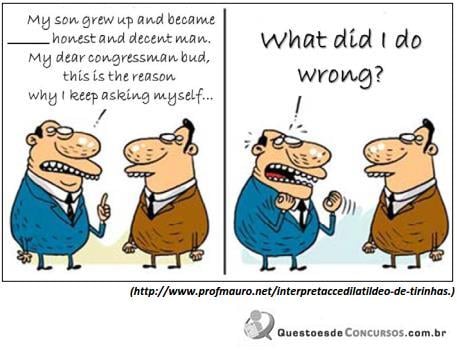
The word myself refers back to
The item that completes the comic strip is
A mysterious ancient cemetery in Egypt could contain more than a million mummified human remains, archaeologists have claimed.
Around 1,700 bodies have so far been uncovered at the Fag el-Gamous (Way of the Water Buffalo) site, around 60 miles south of Cairo. But experts believe that countless more are contained in the burial ground.
“We are fairly certain we have over a million burials within this cemetery. It's large, and it's dense,” said project director Kerry Muhlestein, an associate professor in the Department of Ancient Scripture at Brigham Young University (BYU), which has been examining the site for around 30 years. They were placed there between the 1st and the 7th centuries AD, but the scale of the site has left many baffled. A nearby village has been deemed too small to warrant such a large cemetery, while the closest major settlements had their own burial grounds.
“It's hard to know where all these people were coming from,” Professor Muhlestein told Live Science.
Another interesting find was that the corpses appeared to be grouped together by hair colour, with one section containing the remains of those with blonde hair and another for those with red hair. The bodies, which included a man of more than seven feet in height, are thought to be of ordinary citizens, rather than the royalty found at many famous Egyptian sites. They were not buried in coffins, according to Muhlestein, and were in fact mummified not by design but by the arid natural environment.
“The people in the cemetery represent the common man. They are the average people who are usually hard to learn about because they are not very visible in written sources. A lot of their wealth, or the little that they had, was poured into these burials.”
His team discovered objects including glassware, jewellery and linen. The findings were presented to the Scholars Colloquim at the Society for the Study of Egyptian Antiquities in Toronto last month.
The Telegraph, London.
(http://www.traveller.com.au/mysterious-ancient-cemetery-in-egypt-could-contain-a-
million-mummies-12aaq7.)
A mysterious ancient cemetery in Egypt could contain more than a million mummified human remains, archaeologists have claimed.
Around 1,700 bodies have so far been uncovered at the Fag el-Gamous (Way of the Water Buffalo) site, around 60 miles south of Cairo. But experts believe that countless more are contained in the burial ground.
“We are fairly certain we have over a million burials within this cemetery. It's large, and it's dense,” said project director Kerry Muhlestein, an associate professor in the Department of Ancient Scripture at Brigham Young University (BYU), which has been examining the site for around 30 years. They were placed there between the 1st and the 7th centuries AD, but the scale of the site has left many baffled. A nearby village has been deemed too small to warrant such a large cemetery, while the closest major settlements had their own burial grounds.
“It's hard to know where all these people were coming from,” Professor Muhlestein told Live Science.
Another interesting find was that the corpses appeared to be grouped together by hair colour, with one section containing the remains of those with blonde hair and another for those with red hair. The bodies, which included a man of more than seven feet in height, are thought to be of ordinary citizens, rather than the royalty found at many famous Egyptian sites. They were not buried in coffins, according to Muhlestein, and were in fact mummified not by design but by the arid natural environment.
“The people in the cemetery represent the common man. They are the average people who are usually hard to learn about because they are not very visible in written sources. A lot of their wealth, or the little that they had, was poured into these burials.”
His team discovered objects including glassware, jewellery and linen. The findings were presented to the Scholars Colloquim at the Society for the Study of Egyptian Antiquities in Toronto last month.
The Telegraph, London.
(http://www.traveller.com.au/mysterious-ancient-cemetery-in-egypt-could-contain-a-
million-mummies-12aaq7.)
A mysterious ancient cemetery in Egypt could contain more than a million mummified human remains, archaeologists have claimed.
Around 1,700 bodies have so far been uncovered at the Fag el-Gamous (Way of the Water Buffalo) site, around 60 miles south of Cairo. But experts believe that countless more are contained in the burial ground.
“We are fairly certain we have over a million burials within this cemetery. It's large, and it's dense,” said project director Kerry Muhlestein, an associate professor in the Department of Ancient Scripture at Brigham Young University (BYU), which has been examining the site for around 30 years. They were placed there between the 1st and the 7th centuries AD, but the scale of the site has left many baffled. A nearby village has been deemed too small to warrant such a large cemetery, while the closest major settlements had their own burial grounds.
“It's hard to know where all these people were coming from,” Professor Muhlestein told Live Science.
Another interesting find was that the corpses appeared to be grouped together by hair colour, with one section containing the remains of those with blonde hair and another for those with red hair. The bodies, which included a man of more than seven feet in height, are thought to be of ordinary citizens, rather than the royalty found at many famous Egyptian sites. They were not buried in coffins, according to Muhlestein, and were in fact mummified not by design but by the arid natural environment.
“The people in the cemetery represent the common man. They are the average people who are usually hard to learn about because they are not very visible in written sources. A lot of their wealth, or the little that they had, was poured into these burials.”
His team discovered objects including glassware, jewellery and linen. The findings were presented to the Scholars Colloquim at the Society for the Study of Egyptian Antiquities in Toronto last month.
The Telegraph, London.
(http://www.traveller.com.au/mysterious-ancient-cemetery-in-egypt-could-contain-a-
million-mummies-12aaq7.)

Assim, para se obter a temperatura de 160°C, deve-se ajustar esse botão na posição:
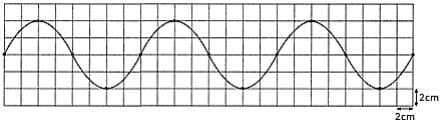
Sobre essa onda, é correto afirmar que

 Conheça nossos planos